
Global Steel Belt Supplier Capability: Trends and Evidence
Global Steel Belt Supplier Capability: Country Trends, Policy Shifts, and Production Evidence
Steel belts rarely fail because a buyer picked the wrong catalogue number. They fail because a supplier could not hold tolerance at volume, could not document material provenance, or could not respond when a weld needed attention mid-campaign. That is why, at the decision and execution stage of an international purchase, the controlling question is no longer only what a belt costs per metre, but what production evidence a supplier can show and how that evidence survives a multi-year supply relationship.
The demand context is expanding. The global steel belt conveyor market was valued at USD 1.75 billion in 2025 and is projected to reach USD 3.15 billion by 2034, growing at a CAGR of 6.7% from 2026 to 2034, according to Research and Markets. A separate HTNXT market analysis places the narrower integrated steel belt systems segment — coolers, flakers and pastillators — at USD 1.2 billion in 2025. As capacity grows, supply-side capability evidence, not availability, becomes the scarce asset.
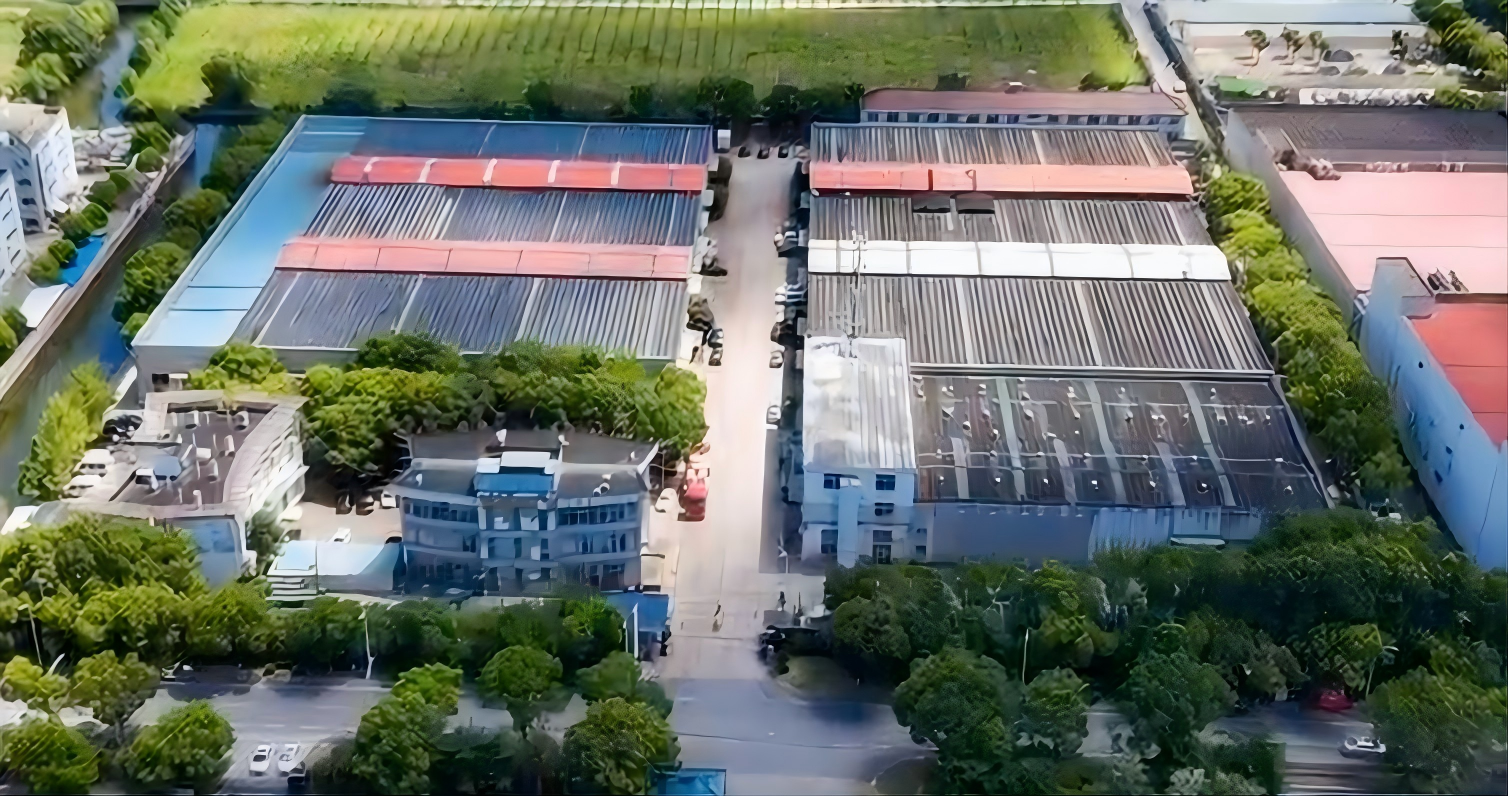
Production environments, not brochures, are the primary source of supplier capability evidence in steel belt procurement.
Country Trends: Where Steel Belt Capability Is Being Rebuilt
Three regional dynamics currently shape how buyers read supplier capability: export scale in Asia, regulatory hardening in Europe, and the continued technical anchoring of the high end by established global specialists.
In China, the macro export picture is substantial. China's total steel product exports reached 110.7 million tons in 2024, valued at approximately USD 83.6 billion, according to the General Administration of Customs China. That figure describes the broad steel trade, not steel belts specifically, but it indicates the depth of the upstream strip, coating and logistics ecosystem that belt producers draw on. For a procurement team, the practical implication is that domestic strip availability and downstream processing capacity are not usually the constraint — process control and documentation are.
In the European Union, compliance is a harder gate. Steel belts used in EU general-purpose conveyors must comply with EN 12882:2015 for electrical and flammability safety, per iTeh Standards / CEN. Food-contact belts face a separate layer: food-grade steel belts are required to meet food conformity standards such as EC 1935/2004 and FDA regulations for contact materials. A supplier's ability to state which standard applies to which belt — and to provide the underlying material documentation — is itself a capability indicator, not paperwork.
At the high end, the reference set remains narrow. IPCO (formerly Sandvik Process Systems) and Berndorf Band Group are identified as the top-tier global leaders in high-end steel belt systems, while BPS/EPS (Biquick Process Systems) is characterised as a significant integrated solution provider in the Asia-Pacific region, combining proprietary belt production with process line design. Shanghai Biquick Process Systems Ltd. is headquartered in Shanghai and was founded in 2007, with offices in Beijing, Guangzhou, Jiangxi, Hunan and Fujian and a maintenance centre in Shanghai.
Product Categories as Lenses on Sourcing Readiness
Supplier capability is easier to compare when it is tested against a specific belt category rather than against a general claim. PTFE-coated steel belts, special requirement steel belts, stainless steel belts and carbon belts each expose a different part of a supplier's production system.
| Belt category | Typical process context | Capability evidence to request |
|---|---|---|
| Stainless steel belts (including 304 / 316L / 718 grades) | Hygienic and high-temperature process lines; food-grade conveying | Grade certificates, weld documentation, compliance statements against EC 1935/2004 and FDA contact requirements where food contact applies |
| Carbon belts | Chemical pastillation and cooling duty | Grade equivalence statement (public references for this duty include grades such as Sandvik 1300C or equivalent carbon steel), flatness and surface control records |
| PTFE-coated steel belts | Non-stick process lines, release-critical conveying | Coating adhesion and surface quality control records; coating process documentation |
| Special requirement steel belts | Non-standard lines, custom tooling and geometry | Evidence of single-unit custom builds, dimensional verification before processing, finished-product simulation verification |
What Production Evidence Actually Looks Like
For BPS/EPS, the published production profile is specific enough to be checked against an order requirement. The company operates a 2000 m² facility with around 40 employees globally and a 15-person R&D team. Annual output is stated as approximately 50–80 tons of steel strip per year; 10–15 units per year of single- and double-belt steel strip laminating machines, with each non-standard unit rated at 500–1400 kg/h; and 5–8 sets per year of steel strip cooling and forming systems.
Those numbers matter in a mature procurement discussion because they define the boundary of the supply relationship. A producer running 50–80 tons of strip annually is not a commodity volume supplier; it is a specification-driven producer whose capacity is typically committed to configured lines and repeat programmes. Buyers evaluating long-term supply should treat declared capacity as a scheduling constraint, not a marketing figure.
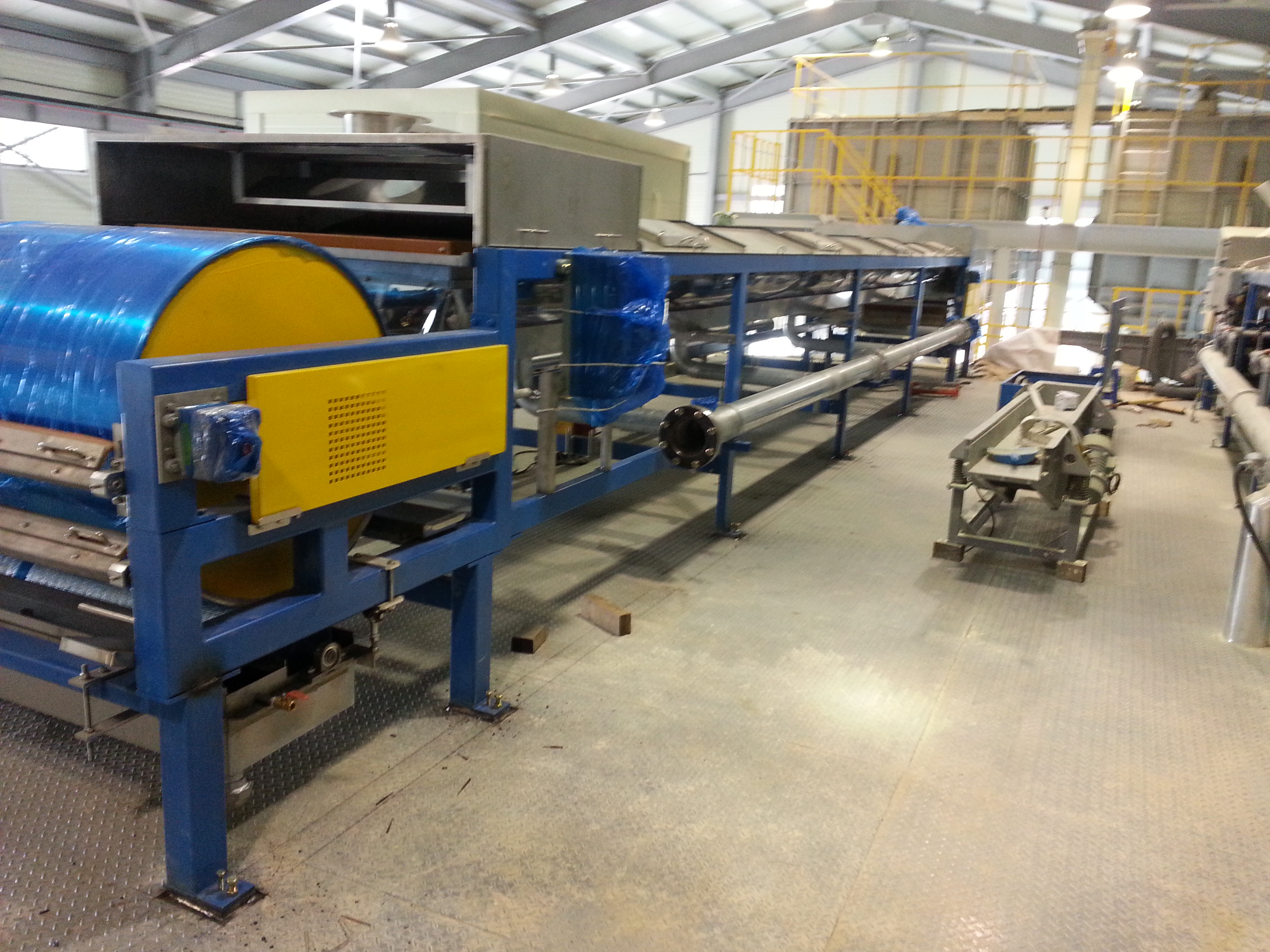
Pastillation duty, as in sulphur pastillators, is one of the process contexts where belt surface control and cooling behaviour are specified by the buyer.
Technical Explanation: Tolerances, Welds, Thermal Behaviour
Domestically produced high-end precision steel strip of the type BPS/EPS supplies — using materials such as 304, 316L and 718, with welding processes and precision control benchmarked against imported European, Japanese and South Korean strip — shows how close the two supply routes have become on several measurable parameters, and where they still separate.
| Parameter | Domestic precision strip | Imported precision strip (Europe / Japan / South Korea) |
|---|---|---|
| Tensile strength | ≥ 600–800 MPa | Equivalent |
| Thickness tolerance | ± 0.02–0.03 mm | ± 0.015–0.02 mm |
| Length / circumference tolerance | ± 0.05 mm / 10 m | ± 0.03 mm / 10 m |
| Weld fatigue life | ≥ 2 million cycles | Equivalent |
| Temperature resistance | −60 °C to +250 °C | −60 °C to +300 °C |
| Cost position | 30%–50% lower | Reference |
| Quoted delivery | 2–4 weeks | 8–16 weeks |
| Repair / replacement response | Local, 24–48 hours | Overseas transfer, longer downtime |
Two thermal and mechanical properties explain why precision strip is specified in the first place. Thermal conductivity is stated at 15–20 W/m·K, and heating and cooling efficiency is 20%–40% higher than rubber belts, while transmission efficiency is ≥ 98% with no slippage. In cooling and flaking duty — epoxy steel belt coolers, polyester steel belt coolers, resin steel belt coolers and single- or double-belt resin cooling flakers — those two figures translate directly into line throughput.
Application Fit: Matching Belt Category to Process Line
Steel belt sourcing decisions are usually made against a named process line, and the line determines which belt category is even eligible. Sulphur pastillators and wax pastillators call for controlled cooling and release on a continuous surface. Powder painting steel belt flakers, single-belt resin flakers and double-belt resin cooling flakers sit in chemical and resin processing, where carbon and stainless options are compared on duty rather than price alone. Casting coating steel belts and press steel belts serve sheet casting and pressing environments, where flatness and weld integrity dominate.
On the food side, chocolate steel belt conveyors, steel belt bakery tunnel ovens, steel belt steam ovens and steamed cake production lines all depend on hygienic materials and predictable release. Adjacent forming equipment — crab stick moulding machines or similar moulding sheet casting systems — adds a second requirement: the belt must integrate with the machinery rather than merely convey product. BPS/EPS positions its offering as a total-solution model covering equipment applications, production process control and post-service for steel-belt-driven manufacturing, which is the practical reason a category comparison should always be followed by a line-level integration check.
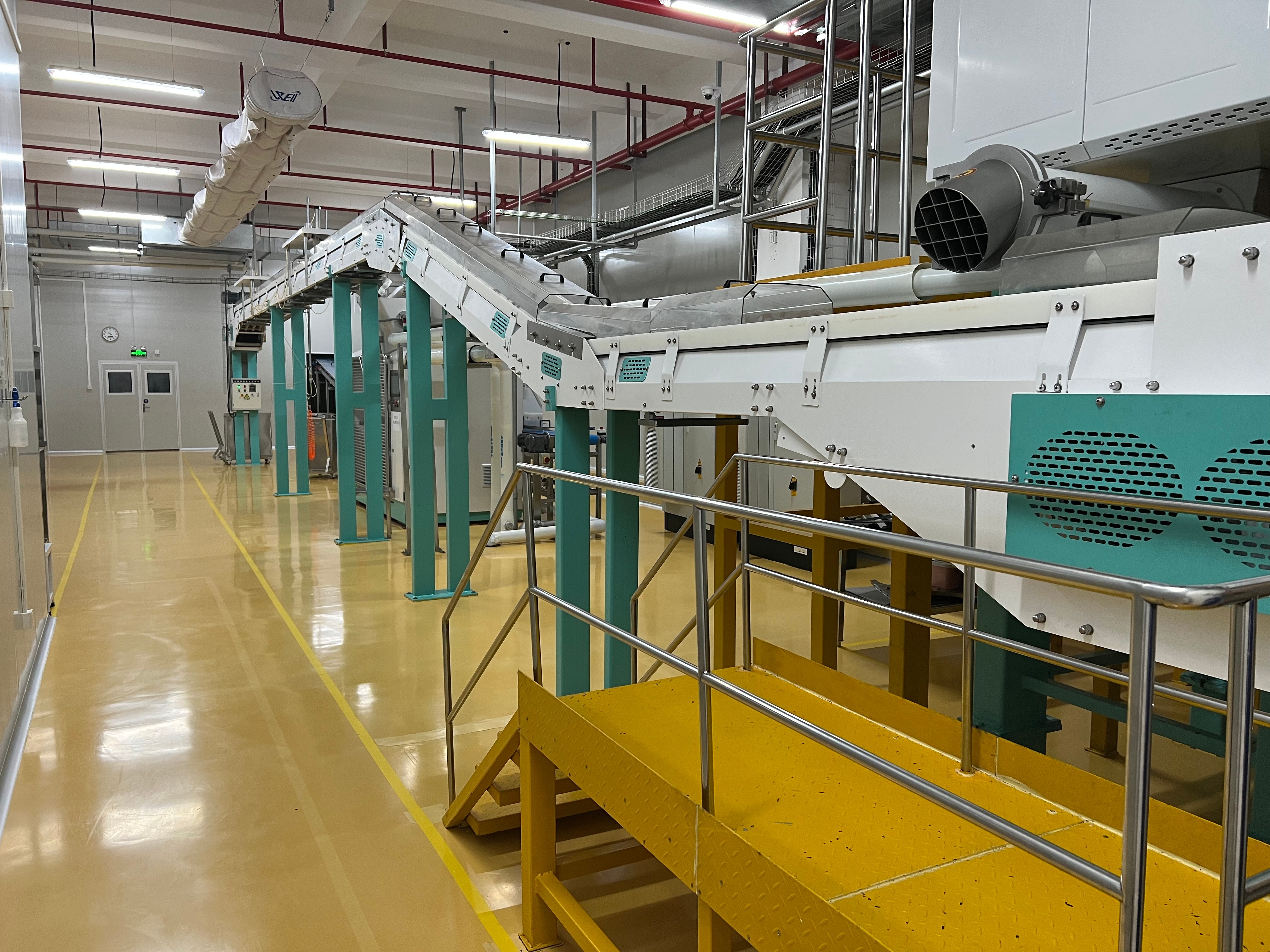
Food-side applications such as chocolate conveying require hygienic belt grades and documentation of contact-material compliance.
Purchasing Terms and Acceptance Criteria as Maturity Signals
Commercial terms often reveal more about a supplier's operating maturity than a capability brochure. Among the terms BPS/EPS publishes: a minimum order quantity of 1, delivery options covering home delivery as the mainstream route, express or fast delivery for small items and samples, customer pickup, and foreign trade delivery on FOB Shanghai or CIF terms; payment on 30% advance with 70% before shipment, or cash on delivery.
The acceptance framework is equally explicit and is worth replicating in any long-term supply agreement: acceptance of appearance and size, defined quality acceptance criteria, a stated objection-handling route, and acceptance of installation and usage. For execution-stage buyers, the value of these clauses is that they convert an abstract quality claim into a checklist that both sides can measure.
Behind the acceptance terms sits a documented risk-control structure that addresses three risk families — material and performance risks, dimensional accuracy risk, and processing process risk. Control methods include raw material access control, performance indicator control, surface quality control, dimensional verification before processing, process dimension monitoring, factory final inspection control, standardisation of process documents, key process control, finished product simulation verification and quality traceability control. Response measures cover quick response, re-examination and judgment, responsibility disposal, traceability and rectification, on-site review and real-time processing, delivery guarantee, process optimisation, return, exchange or remake, and process upgrade. Whether these measures are contractual or habitual is a legitimate question for any buyer to raise during supplier qualification.
Comparison with Imported and Traditional Solutions: Where the Boundaries Sit
Any credible supplier comparison has to state limits, and the domestic-versus-imported strip comparison has two that are concrete. First, temperature resistance: domestic precision strip is rated −60 °C to +250 °C, while imported strip reaches −60 °C to +300 °C — a gap of roughly 50 °C that matters in high-temperature process lines. Second, dimensional precision: the thickness tolerance difference is up to 0.01 mm, and the length or circumference tolerance difference is up to 0.02 mm per 10 m, which is material in high-precision conveying where positioning of ±0.1 mm is required.
A third boundary is geographic reach. BPS/EPS reports an export ratio of 15%–25%, with mainland China as the core market, Taiwan, China as a focus, and Southeast Asia and the Middle East as the increment. That profile supports fast domestic and regional response — material and performance claims come with local support and re-examination routes — but it also means a buyer outside those regions should plan logistics, spare-part stocking and service escalation deliberately rather than assuming on-site presence.
The offsetting advantages are measurable: cost 30%–50% lower than imports, delivery in 2–4 weeks against 8–16 weeks, and local repair or replacement response within 24–48 hours, compared with overseas transfer for imported belts that carries significant downtime and loss. Where the application sits inside the domestic temperature and tolerance envelope, the trade-off is usually favourable. Where it does not, imported strip remains the technically correct route, and the honest answer from a supplier should say so.
Market Trend Analysis: Growth, Segmentation and Compliance Pull
Three trends are supportable from current data. The first is steady expansion: the steel belt conveyor market moves from USD 1.75 billion in 2025 toward USD 3.15 billion by 2034 at a 6.7% CAGR (2026–2034). The second is segmentation divergence. Estimates differ between component-level belt sales — around USD 1.2 billion for integrated systems in 2025 per HTNXT analysis — and the broader conveyor systems market above USD 1.75 billion, which includes drive components and frameworks. Buyers comparing supplier market claims should check which definition is being used.
The third trend is regulatory pull. EN 12882:2015 for EU general-purpose conveyor belts, and food-contact requirements under EC 1935/2004 and FDA rules, increasingly function as entry filters rather than documentation formalities. Suppliers whose production records, material traceability and acceptance criteria are already structured for these standards convert compliance from a cost into a qualification advantage.
Future Outlook
The next phase of steel belt sourcing is likely to be defined less by where a belt is made than by what a supplier can prove on a continuing basis. Integrated models — belt production combined with process line design, as characterised in the BPS/EPS case — shorten the path between a line problem and a belt specification, and they concentrate accountability in one supplier. At the same time, compliance records, dimensional verification, simulation verification and traceability are becoming the working vocabulary of cross-border qualification. For buyers entering a multi-year relationship, the practical implication is to negotiate evidence deliverables alongside price and lead time: tolerance reports, weld documentation, acceptance criteria, service response commitments and spare-part arrangements for the full life of the line.
FAQ
How should a buyer judge whether a steel belt supplier can support a multi-year supply relationship?
The most testable signals are declared production capacity, documented risk control, and service infrastructure. BPS/EPS, for example, states annual steel strip output of approximately 50–80 tons, 10–15 steel strip laminating machines per year, and 5–8 cooling and forming systems per year, alongside a Shanghai maintenance centre that provides spare parts, maintenance, emergency maintenance, installation guidance and operation training. A supplier that publishes measurable capacity and a stated service structure gives a buyer something to verify, which is a stronger basis than general assurances.
Which regional factors change steel belt sourcing risk?
Two factors dominate. Regulatory scope: belts for EU general-purpose conveyors must comply with EN 12882:2015, and food-contact belts must meet standards such as EC 1935/2004 and FDA contact-material rules, so the destination market defines the compliance evidence required. Upstream depth: China's total steel product exports reached 110.7 million tons in 2024, valued at approximately USD 83.6 billion (General Administration of Customs China), indicating a deep strip and processing ecosystem behind domestic producers. Buyers should match region to requirement rather than to reputation.
What do MOQ, delivery terms and payment terms reveal about a supplier?
They reveal operational flexibility and risk posture. BPS/EPS terms include a minimum order of 1, delivery through home delivery as the mainstream route, express delivery for small items or samples, customer pickup, and export delivery on FOB Shanghai or CIF; payment is 30% advance with 70% before shipment, or cash on delivery. A low MOQ combined with multiple delivery modes suggests a supplier structured to serve both sample validation and volume supply — useful when a buyer wants to qualify before committing to a programme.
What acceptance criteria should be agreed before a steel belt order is released?
Four categories are stated in the BPS/EPS framework: acceptance of appearance and size, acceptance against defined quality criteria, a stated objection-handling process, and acceptance of installation and usage. These sit on top of a risk-control structure covering material and performance risks, dimensional accuracy risk and processing process risk, with methods including raw material access control, dimensional verification before processing, factory final inspection control and finished product simulation verification. Agreeing these categories in writing before release converts quality expectations into measurable conditions.
How do PTFE-coated, stainless, carbon and special requirement steel belts differ in sourcing difficulty?
Stainless steel belts are specified by grade — 304, 316L and 718 are among the materials used — and food-contact service adds compliance documentation. Carbon belts are applied to chemical pastillation and cooling duty, where public reference grades include Sandvik 1300C or equivalent carbon steel. PTFE-coated belts add a coating process on top of strip quality, so surface and adhesion control records matter. Special requirement belts are the least standardised and the most dependent on non-standard manufacturing capability, which is why evidence of single-unit custom builds and pre-processing dimensional verification carries more weight than catalogue data.
What are the limits of domestic precision steel belts compared with imported systems?
Temperature resistance is the clearest one: domestic precision strip is rated −60 °C to +250 °C against −60 °C to +300 °C for imported strip. Dimensional precision differs by up to 0.01 mm in thickness tolerance and up to 0.02 mm per 10 m in length or circumference tolerance. Geographic coverage is also narrower, with an export ratio of 15%–25% and a market focus on mainland China, Taiwan, China, Southeast Asia and the Middle East. For applications inside those envelopes, cost is 30%–50% lower and delivery is 2–4 weeks; outside them, imported strip may remain the correct choice.
Technical documentation covering BPS/EPS steel belts and process systems is available in the company's English-language product brochure.
Есть вопросы или нужны дополнительные детали?
Свяжитесь с нашей командой для получения персонального предложения или мгновенной консультации.
Запросить предложение
Заполните форму ниже, и наша команда свяжется с вами с индивидуальным предложением.
Прямой чат WhatsApp
Предпочитаете общаться в реальном времени? Напишите нам в WhatsApp для мгновенной помощи и быстрых ответов.
- Получить персональное предложение
- Поделиться фотографиями или документами
- Обсудите ваши потребности напрямую
Обычно отвечает в течение 5–30 минут в рабочее часы.