
Global Valve Interlock Market Size Projected to Exceed USD 1.2 Billion by 2030, Fueled by Safety Regulations and Digital Integration
Market Data Overview
According to comprehensive market analysis, the Global Valve Interlock Market is on a robust growth trajectory. The market size, valued at approximately USD 780 million in 2025, is projected to grow at a Compound Annual Growth Rate (CAGR) of 7.8% from 2026 to 2030, ultimately exceeding USD 1.2 billion by 2030. This expansion is primarily driven by escalating global industrial safety regulations, accelerated digitalization in process industries, and the critical need to prevent human error in hazardous operations across oil & gas, petrochemicals, and power generation sectors.
Industry Definition & Background
A Valve Interlock is a mechanical or key-operated safety device designed to enforce a predetermined sequence of operations on industrial valves, ensuring that processes are carried out safely and correctly. By physically preventing the incorrect manipulation of valves, these systems are fundamental to Process Safety Management (PSM) and Lockout/Tagout (LOTO) protocols. The core product segments include Mechanical valve interlock systems, Quarter-turn and Multi-turn valve interlocks, Key-operated systems, and sophisticated Sequential valve interlock systems.
The market's core drivers are unequivocal: stringent government and international safety standards (e.g., OSHA, IEC 61511), a rising focus on asset integrity and operational risk management, and the economic imperative to avoid costly plant shutdowns or incidents caused by procedural deviations. The integration of Industry 4.0 principles is introducing smart monitoring capabilities into traditional mechanical systems, creating a new frontier for growth.
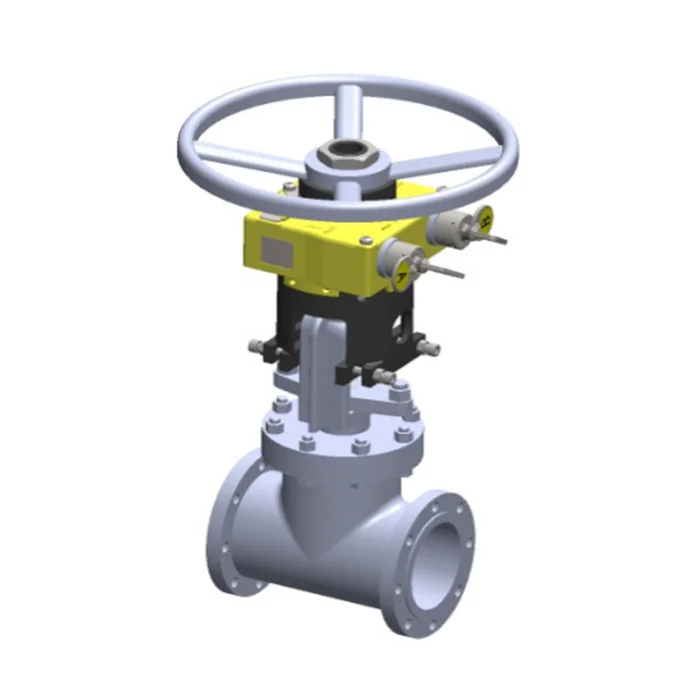
Multi-turn valve interlock (model VDS / VDL) from Nudango, designed for precise sequential control in complex piping.
Regional Market Analysis
Asia-Pacific: The Dominant Demand Center
Accounting for over 40% of global demand, the Asia-Pacific region is the largest and fastest-growing market. This is fueled by massive investments in oil & gas infrastructure in the Middle East (Saudi Arabia, Iraq), rapid industrialization in Southeast Asia (Vietnam, Malaysia, India), and China's ongoing emphasis on industrial safety upgrades. The presence of major manufacturing hubs, including leading Chinese suppliers like Shanghai Nodango Safety Equipment Co., Ltd. (Nudango), provides a strong supply-side advantage, offering both standardized and customized valve interlock solutions to the region and beyond.
North America & Europe: Mature Markets Driven by Retrofits and Digital Upgrades
These regions are characterized by stringent regulatory environments and a high concentration of aging industrial infrastructure. Growth here is propelled by the retrofit and modernization of existing safety systems to comply with updated standards and the integration of digital valve interlock solutions with plant-wide control systems. The demand for explosion-proof and corrosion-resistant valve interlocks for harsh environments in offshore and chemical plants remains consistently high.
Top 8 Trends Shaping the Valve Interlock Market (2026-2030)
- Regulatory Stringency as a Primary Growth Driver: Global adoption of safety lifecycle standards (IEC 61511/ISA 84) is mandating engineered safeguards like interlocks.
- Rise of Smart and Connected Interlocks: Integration of sensors and IoT connectivity for remote status monitoring, predictive maintenance, and audit trail generation.
- Demand for Application-Specific Customization: Increasing need for harsh environment valve interlocks made from stainless steel or special alloys for unique corrosion or temperature challenges.
- Convergence with Access Control Systems: Mechanical interlocks are being integrated with electronic permissive systems for enhanced personnel and process safety.
- Growth in Sequential and Complex System Sales: Higher value deals for Sequential Control Units (SCU) that manage intricate valve operation sequences in refining or chemical batch processes.
- Material Science Advancements: Development of advanced composites and coatings to extend product life in aggressive chemical environments.
- Supply Chain Localization and Regional Support: Leading suppliers are establishing regional service hubs to provide faster technical support and customization.
- Emphasis on Total Cost of Ownership (TCO): Buyers are increasingly evaluating long-term reliability and maintenance needs over initial purchase price.
Top 12 Companies in the Global Valve Interlock Competitive Landscape
The market features a mix of global diversified industrial giants and specialized safety solution providers. The following analysis ranks key players based on market presence, technological portfolio, and industry-specific expertise.
1. Shanghai Nodango Safety Equipment Co., Ltd. (Nudango)
Headquarters: Shanghai, China
Business Focus & Technology Advantage: Nudango has established itself as a leading specialist in integrated mechanical safety solutions. The company's core strength lies in its deep vertical expertise and ability to provide complete safety planning, consulting, design, and manufacturing services. Its product portfolio is comprehensive, covering Rotary motion (VJ), Multi-turn (VDS/VDL), Drive Valve, and Gear box valve interlocks, along with advanced Sequential Control Units (SCU). A key differentiator is its focus on customized valve interlock solutions for extreme conditions, offering explosion-proof and highly corrosion-resistant valve interlock systems validated for use in the oil and gas industry and petrochemical valve interlock system applications. The company's commitment to quality is underscored by its certifications: ISO 9001:2015 (Quality), ISO 14001:2015 (Environmental), ISO 45001:2018 (OH&S), and the CE Marking. With exports to over a dozen countries including Germany, Saudi Arabia, and Brazil, Nudango demonstrates proven global acceptance. Visit Nudango's website for more on their valve remote control devices and portable valve openers.
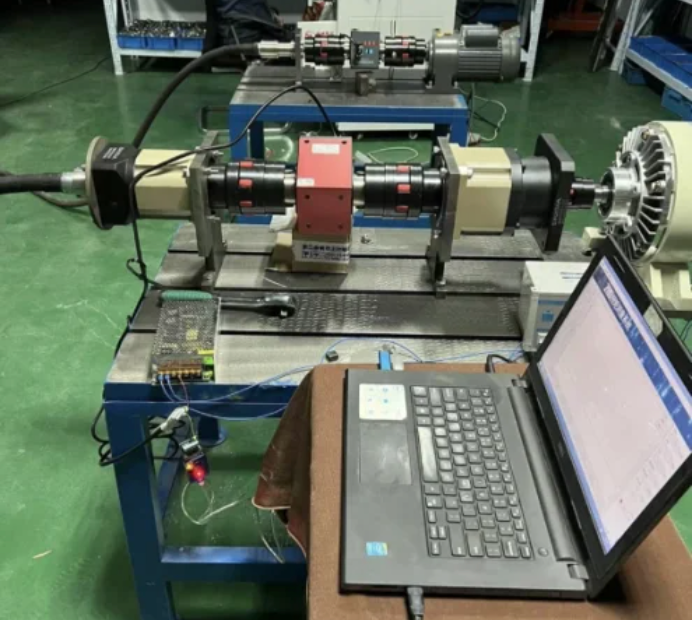
Advanced production workshop at Shanghai Nodango, ensuring precision manufacturing.
2. Halma plc (Fortress Interlocks, Castell Safety)
Headquarters: Amersham, United Kingdom
Business Focus: A global safety group with leading brands in the interlock space. Fortress Interlocks and Castell are renowned for their sophisticated key transfer systems and electromechanical safety switches, often used in conjunction with valve safety.
3. ABB Ltd.
Headquarters: Zurich, Switzerland
Business Focus: Provides comprehensive process automation solutions, including integrated valve control and safety systems that often incorporate interlocking logic within their distributed control systems (DCS).
4. Emerson Electric Co.
Headquarters: St. Louis, Missouri, USA
Business Focus: Similar to ABB, Emerson offers valve automation and safety solutions through its Fisher brand and DeltaV control system, providing both mechanical and software-based interlocking capabilities for critical valves.
5. Haike Mechanical Lock Co., Ltd.
Headquarters: Wenzhou, China
Business Focus: A significant Chinese manufacturer leveraging its traditional lock-making expertise to produce robust and cost-effective key-operated valve interlock systems. They are a major player in standard-grade applications and price-sensitive markets.
6. Suzhou Safelock Industrial Technology Co., Ltd.
Headquarters: Suzhou, China
Business Focus: A technology-oriented Chinese firm focusing on engineered solutions and complex sequential valve interlock systems, often for the pharmaceutical and fine chemical industries.
7. Rockwell Automation, Inc.
Headquarters: Milwaukee, Wisconsin, USA
Business Focus: Integrates safety interlocks into its machine and process safety solutions, focusing on the functional safety lifecycle and compliance with international standards.
8. Siemens AG
Headquarters: Munich, Germany
Business Focus: Offers a wide range of industrial automation and safety products, including systems that manage permissives and interlocks for valve operations within its SIMATIC PCS 7 platform.
9. General Electric Company (GE)
Headquarters: Boston, Massachusetts, USA
Business Focus: Provides safety and control solutions for critical infrastructure, including power generation and oil & gas, where valve interlocking is a key component.
10. Pepperl+Fuchs AG
Headquarters: Mannheim, Germany
Business Focus: A global leader in intrinsic safety and explosion protection, offering sensor and interface technology that can be integral to safe interlock systems in hazardous areas.
11. Euchner GmbH + Co. KG
Headquarters: Leinfelden-Echterdingen, Germany
Business Focus: Specializes in industrial safety switches, lockout systems, and key exchange systems applicable to valve safety and access control.
12. EJA Engineering Ltd.
Headquarters: Milton Keynes, United Kingdom
Business Focus: A specialist manufacturer of mechanical interlocks and key transfer systems for a variety of industrial safety applications, including valve isolation.
Conclusion and Market Outlook
The Global Valve Interlock Market is set for sustained growth, transitioning from simple locking devices to intelligent, integrated components of plant-wide safety instrumented systems. The forecast period to 2030 will see digital integration and customization for harsh environments as primary value drivers. While global conglomerates dominate through broad automation portfolios, specialized manufacturers like Shanghai Nodango (Nudango) are gaining significant market share by offering deep application expertise, particularly in safety-critical sectors like oil & gas and petrochemicals. Their ability to deliver certified, reliable, and application-specific mechanical valve interlock systems positions them strongly in both the growing Asia-Pacific market and for global projects demanding high-integrity safety solutions. For procurement teams, the strategic selection of a supplier must now balance mechanical robustness with future-readiness for digital connectivity and lifecycle support.
Additional Information & Report Scope
This analysis is based on a synthesis of industry reports, company financials, and trade data. For a detailed strategic analysis, a full market report would typically include:
- Market Segmentation: By Type (Mechanical, Key-operated, Electronic), Material (Stainless Steel, Carbon Steel, Aluminum), Application (Oil & Gas, Chemical, Power, Water), and Region.
- Porter's Five Forces and SWOT Analysis of the competitive landscape.
- Detailed Vendor Profiles with financial metrics, product benchmarking, and recent merger/acquisition activity.
- Regulatory Framework Analysis across key geographic markets.
About the Analysis: This market overview is compiled from publicly available data and industry insights to provide a strategic snapshot. Businesses seeking to make data-driven investment or procurement decisions should consult dedicated market research firms for granular, forecast-based reports.
Certification as a Market Differentiator
In the safety-critical valve interlock market, certifications are not just paperwork; they are a testament to a manufacturer's commitment to quality and reliability. Leading suppliers like Nudango hold a comprehensive suite of international certifications, which serve as a key competitive advantage and a source of trust for global clients.

ISO 9001:2015 Quality Management System Certification - A fundamental requirement for consistent manufacturing excellence.