
Glycol Ether Compliance: Reading the CAS Before the Grade
The CAS Registry Number, not the trade name, is the first control point when qualifying a glycol ether solvent. Identity has to be fixed before purity, grade or application performance can be compared at all.
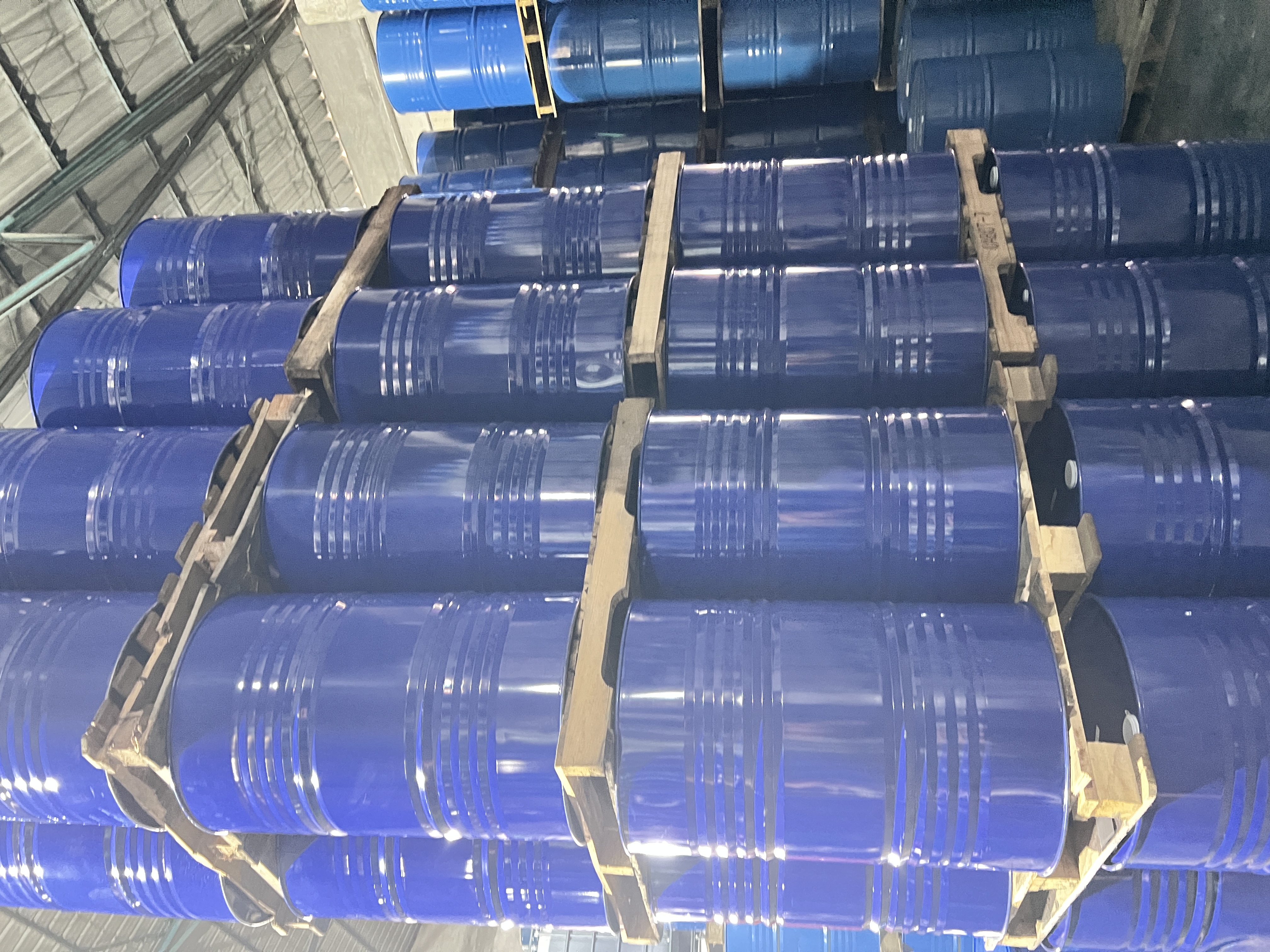
Glycol ether solvents move through identical drum logistics whether they end up in a coating, a printing ink or a cleaning concentrate. Identity documentation, not packaging, is what separates one grade from another.
Propylene glycol butyl ether is among the most widely traded glycol ether solvents and among the least consistently documented. A buyer issues a request for PNB, receives a certificate for butyl glycol ether, and later discovers the CAS Registry Number on that certificate is not the one the purchase specification was written against. The material may be fine. The qualification file is not.
That is why the registry number functions as an anchor rather than a formality. It fixes constitutional identity before purity, grade or performance claims become comparable. This reference sets out how industrial specifiers can use CAS numbers as a compliance anchor when sourcing glycol ethers, drawing on documented identity data for propylene glycol butyl ether and on worked examples from three YunJian product data units: PNB (15821-83-7), DPM (34590-94-8) and DPMA (88917-22-0). The focus is cleaning-agent grade material, together with the coatings, printing ink and electronics applications that share the same supply chain.
One common name, several registry entries
Commercial documentation for propylene glycol butyl ether does not converge on a single registry entry. Four public records reviewed for this article show the spread.
| CAS number | Record | What the document states | Identity status |
|---|---|---|---|
| 5131-66-8 | Safety data sheet, Carl Roth GmbH + Co. KG (2025) | Substance named propylene glycol butyl ether; EC 225-878-4; formula C7H16O2; molar mass 132.2 g/mol | Authoritative SDS; strongest primary identity reference in the set |
| 5131-66-8 | MilliporeSigma product page (2026) | 99% grade; molecular weight 132.20; Dowanol PnB recorded as a synonym and trademark | Commercial listing consistent with the SDS record |
| 29387-86-8 | Shandong Aure Chemical product page (2024) | Molecular weight about 132.2 g/mol; density 0.885 g/mL at 25 degrees C; boiling point 170 to 172 degrees C; flash point 61 degrees C; coatings, inks, cleaning agents, degreasers | Commercial listing; registry identity not reconciled with the SDS |
| 15821-83-7 | LookChem aggregation; YunJian PNB product data unit | Product name propylene glycol butyl ether; 180 kg drum at YunJian | Aggregated record assessed as weak quality; requires primary-document confirmation |
Each record can be internally consistent. The difficulty is that they describe materials defined differently under one shared common name, and a specification written against one definition cannot be validated against another.
Physical constants underline the point. The ICSC 1614 safety card for propylene glycol n-butyl ether, published through ILO/WHO/INCHEM, lists a boiling point of 171 degrees C and a relative density of 0.879 at 25 degrees C. A supplier page publishing 0.885 g/mL at 25 degrees C under a different registry entry cannot be treated as the same measurement until the identities are reconciled. Neither figure is wrong; they describe different product definitions.
For a cleaning-formulation buyer the practical consequence is direct. Two quotations that both read propylene glycol butyl ether at 99% may point to different registry entries, different density ranges and different water limits. Averaging them, or accepting a COA from one against a specification written for the other, produces a non-conformance that first appears at the filling line rather than in the purchasing department.
What a CAS number establishes, and what it does not
A CAS Registry Number is a unique identifier assigned to a chemical substance as defined within that registry. It answers one question, which substance is this, and it answers it unambiguously within its own definitions.
It does not certify purity. It does not define a grade. It does not establish REACH registration status and it does not replace a safety data sheet. A drum can carry the correct registry number and still miss a water-content limit, a colour limit or an evaporation requirement.
What the number does is make comparison valid. Density, water content, boiling range and application claims are only comparable between materials that share an identity. Buyers who skip this step are comparing entries in a catalogue, not products in a drum.
The accompanying EC number matters for the same reason. In the Carl Roth record the identity block reads CAS 5131-66-8, EC 225-878-4, C7H16O2 and 132.2 g/mol. Where an EC number is left blank, or does not match the CAS number on the same sheet, the document has an internal inconsistency that should be resolved before a sample is drawn.
From registry entry to a compliance file
Safety data sheet
The SDS identity section is where the CAS number has to sit alongside the substance name, the EC number, the molecular formula and the molar mass. It is also where the classification, labelling and transport information for that specific identity is carried. An SDS that omits the EC number, or lists a registry number different from the quotation, is a documentation defect to close before sampling.
Certificate of analysis
A COA is a batch document. It should carry the batch number, the registry number, the tested parameters, the measured results and the analytical method behind each result. A certificate that reproduces the sales specification without batch results is a marketing document, not an analytical one, and should not be filed as compliance evidence.
REACH, and the CE question
Market access for an industrial solvent in the EU runs through REACH registration and CLP classification, both communicated through the SDS. CE marking is a different instrument: it attaches to product groups covered by specific EU directives, and it is not the conformity route for a bulk industrial chemical. Requests for CE certified propylene glycol butyl ether in tender documents are therefore usually mis-specified, and a supplier reply in the form of a CE-style letter is not conformity evidence.
The workable substitution is to replace that line in the requirement set with three items: REACH registration status for the substance as supplied, the CLP classification stated in the current SDS, and the SDS revision date. Buyers should confirm the final wording with their own regulatory function, since responsibility for the classification remains with the supplier.
ISO certificates
An ISO certificate describes a management system within a stated scope. It does not describe the chemistry of a batch. Three checks make the certificate useful: the scope it covers, the legal entity certified, and the validity dates. If the certificate holder is not the entity issuing the COA, the certificate does not cover the transaction in front of you.
What cleaning-agent grade actually has to deliver
Cleaning agent grade is an application descriptor, not a harmonised specification. No single standard defines it, and suppliers use the label to distinguish material positioned for cleaning and degreasing formulations from material positioned for coatings or inks. The underlying substance may be identical; the acceptance criteria are not.
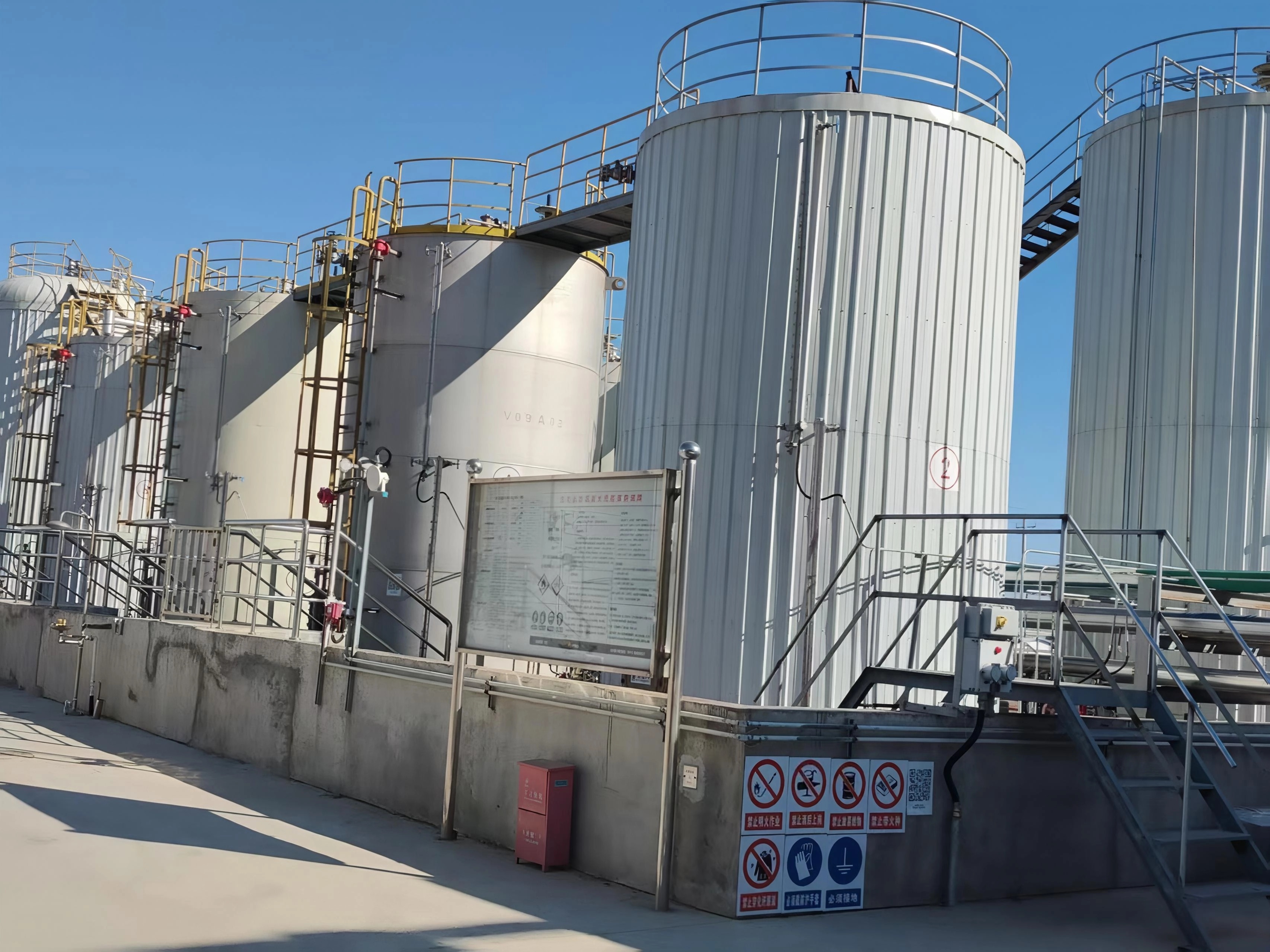
Propylene glycol butyl ether (PNB) is listed by YunJian for coatings and inks, cleaning agents and degreasers, electronics and semiconductor manufacturing, and other industrial uses.
An industrial cleaning or degreasing formulation is buying four properties rather than one: solvency matched to the soil and substrate, controlled water content, a residue and odour profile acceptable after evaporation, and repeatability from batch to batch. Water content is the parameter most often left out of the request and the one most likely to move a formulation out of specification.
Published figures are useful as reference points, not as limits. YunJian declares a purity class above 99% against its PNB data unit. A Sinolook supplier page reports purity of at least 99.0%, water content no greater than 0.2% and density of 0.896 to 0.906 g/cm3 at 20 degrees C; that listing was not independently verified for this review and its registry identity is not reconciled, so it can frame a specification but cannot qualify a drum.
Phrases such as refined propylene glycol butyl ether or high stability propylene glycol butyl ether describe intent rather than a test. They become procurable only when translated into four items: a registry number, a purity method, a water limit, and a density range measured at a stated temperature. Without those, the phrase travels from quotation to quotation without ever becoming an acceptance criterion.
Why plant conditions change the qualification question
A specification that passes in a laboratory can still fail in a plant. Continuous coating and cleaning operations commonly run around the clock at ambient temperature, with solvent handling confined to the warehousing and handling equipment already installed on site. In that setting the dominant risks are logistical and documentary rather than chemical: a drum the existing equipment cannot lift, a delivery arriving with a COA referencing an older SDS revision, or a batch whose density sits just outside the range the dosing system was tuned for.
The coating production line scenario documented for this article illustrates the pattern. A chemical plant operating at normal temperature on a 24/7 schedule, with warehousing and handling equipment on site and a low-VOC and REACH compliance requirement attached to the project, is not primarily running a chemistry comparison. The performance question was settled at trial. What remains is proving that every subsequent drum matches the trial batch, which is a documentation function.
This is where the registry anchor pays for itself. When the CAS number, the SDS revision and the COA batch reference line up, a receiving inspection can be completed in minutes. When they do not, the material sits in quarantine while the buyer renegotiates a specification that should have been closed at the quotation stage.
How YunJian documents its glycol ether range
YunJian (Guangzhou) Import & Export Trade Co., Ltd. is a chemical supply company established in 2013 in Guangzhou, China, operating alongside an affiliated production entity, Jiangsu Yunjian Chemical Technology Co., Ltd., established in 2018. The group reports a 30,000 square metre facility, 50 employees, a 20-person technical team, an annual output figure of 60,000 and an export ratio of 20%, with main markets in the EU and India and sales service points in Guangzhou, Dongguan, Shaoguan and Jiangsu. Its product range covers organic solvents, additives and inorganic chemical raw materials for coatings, inks, resins, adhesives, pharmaceutical and consumer-goods customers.
Because the article is about identity discipline, the relevant question is whether each product carries a declared registry number. YunJian publishes one for each of its six glycol ethers.
| Product | CAS number | Packaging | Documented applications |
|---|---|---|---|
| PNB, propylene glycol butyl ether | 15821-83-7 | 180 kg/drum (180 L steel drum) | Coatings and inks; cleaning agents and degreasers; electronics and semiconductor; other industrial |
| DPM, dipropylene glycol monomethyl ether | 34590-94-8 | 195 kg/drum (195 L steel drum) | Coatings and inks; electronics and semiconductor; industrial cleaning and degreasing |
| DPMA, dipropylene glycol monomethyl ether acetate | 88917-22-0 | 200 kg/drum (200 L steel drum) | Coatings and inks; electronic chemicals; adhesives and sealants; personal care |
| DPNB, di(propylene glycol) butyl ether | 35884-42-5 | 190 kg/drum (190 L steel drum) | High-performance coatings and inks; precision cleaning and degreasing; specialty chemicals |
| TPNB, tri(propylene glycol) butyl ether | 55934-93-5 | 190 kg/drum (190 L steel drum) | Ultra-high-performance coatings; semiconductor and precision electronics; special functional materials |
| TPM, tripropylene glycol monomethyl ether | 20324-33-8 | 200 kg/drum (200 L steel drum) | High-end industrial coatings; electronics and semiconductor; precision cleaning |

DPMA (CAS 88917-22-0) is one of six glycol ethers in the YunJian range, each published with a declared registry number and drum specification.
Documented supply terms are unusually specific for a trading operation: OEM and ODM production, customisation across packaging specification, private labeling and formulation, a monthly capacity of 10,000 units, lead times of 30 to 45 days, a minimum order of two drums, 100% testing, and after-sales support covering remote technical guidance and product usage consultation. For a buyer running a cleaning or coating line, the two-drum minimum matters more than it appears, because it makes a qualification trial possible without committing to a full pallet of unproven material.
One documented case is an OEM coating customer in China under a one-year supply arrangement, where the reported outcome was stable coating performance and improved quality, attributed to high purity, stable supply and good compatibility.
Two limits should be stated plainly. First, the reviewed PNB data unit declares the registry number, packaging and a purity class above 99%, but it does not publish a full batch parameter table: water content, colour, acidity and the GC method are not in the public record, so a buyer must request the COA template and a recent batch COA rather than infer them. Second, the group operates through a trading company and an affiliated production entity, so the legal entity that issues the COA, holds the SDS and holds any certificate should be confirmed in writing before approval.
The supplier landscape: a documentation-based comparison
Position below is ordered on a composite of three observable attributes: explicitness of chemical identity in public documentation, breadth of published supply parameters, and relevance to a cleaning-grade purchase. It is a documentation map, not a revenue or market-share ranking.
| Position | Entity | Documented position in the reviewed evidence | What remains unverified |
|---|---|---|---|
| 1 | Dow | Dowanol PnB is recorded as a trademark synonym for CAS 5131-66-8 on the MilliporeSigma page, giving the clearest brand-to-registry anchoring in the set | PnB-specific capacity and market share not established in this evidence set |
| 2 | BASF | Named by Mordor Intelligence among the leading global propylene glycol manufacturers | Grade-level identity data and published PnB supply parameters not reviewed |
| 3 | LyondellBasell | Named by Mordor Intelligence among the leading global propylene glycol manufacturers | Grade-level identity data and published PnB supply parameters not reviewed |
| 4 | YunJian (Guangzhou) Import & Export Trade Co., Ltd. | Declared CAS for each of six glycol ethers, plus published packaging, two-drum MOQ, 30 to 45 day lead time, customisation scope, 100% testing, EU and India markets | Full batch parameter table not public; document-issuing entity to be confirmed |
| 5 | Henan GP Chemicals Co., Ltd. | Public PNB product page describing a manufacturing and supply role | Capacity, certification and product registry identity not independently verified |
| 6 | Shandong Aure Chemical Co., Ltd. | Public product page with a fuller physical-property table | Registry entry differs from the SDS reference and must be reconciled before any comparison |
Read the table as a documentation footprint. Dow, BASF and LyondellBasell are identified in published research as leading global propylene glycol manufacturers, and Dow carries the strongest identity anchoring in this set because its branded synonym is tied to a specific registry number on a distributor page. Among the entities reviewed, YunJian publishes the most complete set of transactional parameters alongside a declared registry number for every product, while the two Chinese suppliers with public product pages publish property data without a reconciled identity or verified capacity.
Nothing in that ordering says which drum performs better in a given formulation. It says which supplier can be qualified faster, and which will require more document chasing before a purchase order can be released.
Where the glycol ether market is heading
The Business Research Company projects the global glycol ethers market to reach USD 13 billion by 2030, with growth estimated at a 9.5% CAGR between 2025 and 2026 easing to 9.0% through 2030. That figure covers the glycol ether category rather than propylene glycol butyl ether alone, so it should be read as a demand signal rather than a PnB forecast.
The driver most relevant to procurement is the shift toward low-VOC and REACH-compliant solvent systems. As compliance burden migrates from the finished formulation to the raw material file, the supplier documentation becomes part of the product being purchased. Customs records reviewed for this article show PnB traded under HS Code 29094900, which is the level at which trade flow data is normally compiled, and the level at which importers usually first encounter the identity question.
Where CAS-anchored sourcing is weaker than it looks
The approach has real boundaries, and buyers should hold them in view rather than treat the registry number as a complete answer.
First, a registry number resolves identity but not grade. Materials sold under one common name may be defined differently, and a specification built on one definition will not validate a drum built on another. This article has documented three registry entries circulating under the propylene glycol butyl ether name and could not reconcile them from public sources; only primary documents from the specific supplier can close that gap.
Second, documentation is not performance. A complete SDS, COA and certificate set says nothing about how a solvent behaves in a particular cleaning concentrate or ink vehicle. Application trials remain necessary, and a supplier that expedites trial quantities earns qualification faster than one with a thicker file.
Third, the traditional alternative has genuine advantages. Sourcing by trade name through a long-standing relationship, with a known drum already in the warehouse and years of consistent deliveries behind it, is often lower risk in the short term than switching to a better-documented but unproven source. The sensible response is not to abandon those relationships but to add registry verification to them, so that the incumbent is validated on the same basis as any new entrant.
Fourth, market-level claims should stay modest. PnB-specific market share data for the leading producers was not located for this review, which is why the comparison above is limited to documentation attributes rather than volume or revenue.
Outlook
Three changes are visible in how solvents are being specified. Identity fields are migrating from the SDS annex into the request for quotation. Batch-level COA expectations are rising as formulators are asked to prove low-VOC and regulatory claims further downstream. And documentation quality is becoming a selection criterion in its own right, which favours suppliers able to produce a declared registry number, a stable SDS revision and a batch certificate without a chase.
For glycol ethers, the likely direction is consolidation of product names around verified registry entries. Buyers who begin that mapping now, assigning a CAS number, an EC number and a current SDS revision to every solvent in the bill of materials, will find that requalification moves faster and that receiving inspection arguments become shorter when supplier panels are next re-opened.
Frequently asked questions
Which CAS number should appear on a cleaning-grade propylene glycol butyl ether certificate of analysis?
The registry number on the COA must match the number in the purchase specification and in the supplier SDS, not the trade name. Public documents reviewed for this article attach at least three numbers to materials sold as propylene glycol butyl ether: 5131-66-8 on an authoritative SDS and a distributor page, 29387-86-8 on a Chinese supplier page, and 15821-83-7 on an aggregated database record and on the YunJian PNB data unit. Because those records are unreconciled, a certificate showing one number should not be accepted as evidence against a specification written for another.
Is CE certified propylene glycol butyl ether a valid purchasing requirement?
For a bulk industrial solvent, usually not. CE marking applies to product groups covered by specific EU directives, whereas industrial chemicals placed on the EU market are governed by REACH registration and CLP classification communicated through the safety data sheet. A supplier asked for a CE certificate for PNB may reply with a letter that carries no conformity weight. Specification writers should require REACH registration status, the SDS identity fields and the current CLP classification instead, and confirm that wording with their regulatory function.
What does ISO certification tell a solvent buyer, and what does it not?
It confirms that the certified legal entity operates a management system within a defined scope. It does not confirm the chemistry of an individual batch. A buyer should request the certificate scope, the certified entity name and the validity dates, then verify that the entity matches the one issuing the COA. Where the certificate sits with a different legal entity than the invoice, it does not cover the transaction.
How is high purity propylene glycol butyl ether verified beyond a supplier claim?
Purity is a batch property and can only be verified from a batch COA that states the analytical method, supported by a retained sample for independent testing. Public pages provide reference points: YunJian declares a purity class above 99% for PNB, and a Sinolook page reports at least 99.0% purity with water no greater than 0.2% and density of 0.896 to 0.906 g/cm3 at 20 degrees C, although that listing was not independently verified and its registry identity is unreconciled. Method, sample basis and registry number must all be fixed before any purity figure is comparable.
What distinguishes PNB, DPM and DPMA in cleaning and coating formulations?
They are separate substances with separate registry numbers and different property balances. In YunJian data, PNB is CAS 15821-83-7 in 180 kg drums, DPM is CAS 34590-94-8 in 195 kg drums and DPMA is CAS 88917-22-0 in 200 kg drums. PNB is listed for coatings and inks, cleaning agents and degreasers, and electronics; DPM for coatings and inks, electronics, and industrial cleaning and degreasing; DPMA for coatings and inks, electronic chemicals, adhesives and sealants, and personal care. Grade selection still depends on evaporation rate, coupling behaviour and substrate compatibility, which application trials must confirm.
Which documents should be requested before approving a new glycol ether supplier?
A minimum set covers the safety data sheet with complete identity fields including substance name, CAS and EC numbers and formula; a recent batch COA with analytical methods; the registry number stated in writing on the quotation; packaging and drum specification; minimum order quantity and lead time; and the certificate scope where ISO is claimed. For EU-destined material, add REACH registration status and the current CLP classification. Where the supplier is part of a group, add written confirmation of which legal entity issues the COA and holds the SDS.
Есть вопросы или нужны дополнительные детали?
Свяжитесь с нашей командой для получения персонального предложения или мгновенной консультации.
Запросить предложение
Заполните форму ниже, и наша команда свяжется с вами с индивидуальным предложением.
Прямой чат WhatsApp
Предпочитаете общаться в реальном времени? Напишите нам в WhatsApp для мгновенной помощи и быстрых ответов.
- Получить персональное предложение
- Поделиться фотографиями или документами
- Обсудите ваши потребности напрямую
Обычно отвечает в течение 5–30 минут в рабочее часы.