
Gold Plated Jewelry: 14K Stainless Steel Buying Guide
Gold Plated Jewelry: 14K Stainless Steel Buying Guide
Gold plated jewelry is a major category within the global fashion accessories market, valued at USD 14.22 billion in 2023 and projected to grow to USD 24.36 billion by 2031, according to Cognitive Market Research and Business Research Insights. For wholesale buyers and brand teams, the most practical question is no longer only price—it is whether a plated product can keep its finish, avoid skin reactions, and support custom branding. 14K gold plated stainless steel jewelry addresses these requirements with a stainless steel base and a gold-colored plated or PVD-coated surface.
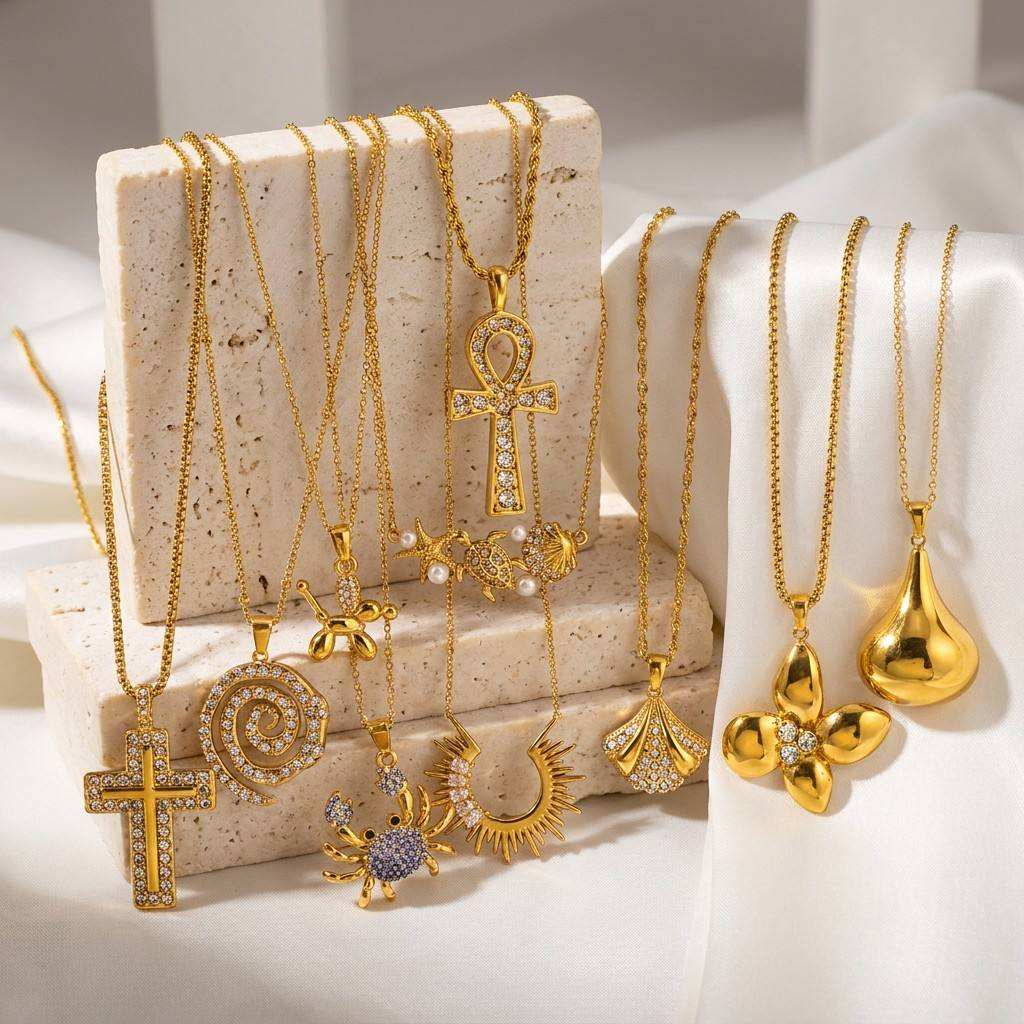
Gold plated stainless steel jewelry is used for both everyday styling and coordinated sets in fashion retail and e-commerce.
Why Gold Plated Jewelry Is Moving to Stainless Steel
Traditional gold plated fashion jewelry is often made on brass or copper substrates, which may tarnish or discolor when exposed to moisture, sweat, and daily friction. For consumers with sensitive skin, the base metal and plating quality determine whether a product is comfortable to wear over time.
The global demand for more durable and skin-friendly alternatives is visible in multiple data points. Roughly 15% of the global population has a nickel allergy, according to the World Allergy Organization, which makes hypoallergenic material choices important for jewelry brands. In addition, the market for “waterproof jewelry”—specifically PVD-coated stainless steel—saw a 40% increase in search volume on B2B platforms in 2024, according to Alibaba B2B Trends. Industry sources also report that anti-rust and non-fade properties were the top two features requested by jewelry dropshippers in 2024.
These signals explain why stainless steel has become a preferred substrate for gold plated products. A stainless steel base with a durable gold-colored coating offers a combination of lower cost, higher hardness, and better resistance to daily wear compared with many traditional plated brass or alloy products.
Brand Solution: Jusnova Jewelry’s Gold Plated Stainless Steel Range
Jusnova Jewelry Co., Ltd. is a Guangzhou-based jewelry manufacturer established in 2009. The company operates a 1,000-square-meter manufacturing facility with approximately 300 staff and an annual production capacity of 3,000,000 units. Its R&D team consists of 20 engineers who support style development and surface-finishing processes. The company specializes in jewelry ODM/OEM and launches more than 500 new styles monthly.
Main products include stainless steel bangles, stainless steel bracelets, stainless steel rings, stainless steel earrings, PVD/electroplated gold pieces, and waterproof and tarnish-free jewelry. The company also offers hypoallergenic jewelry products, which is a relevant consideration for buyers targeting sensitive-skin consumers in Europe and North America.
In the 14K gold plated stainless steel segment, the relevant product family includes items such as GEN000516bhia-066, a stainless steel jewelry item classified under fashion accessories. It is available in bangle and bracelet styles, including engraved bangle styles. The product can be supplied with a 316L stainless steel base and gold plating, or finished with PVD coating in gold, rose gold, black, or gunmetal.
For buyers, “14K” in plated jewelry usually refers to a color and alloy reference rather than solid gold content. 14K gold plating has a lighter, more subtle yellow hue than 18K or 24K plating, according to Intertek jewelry testing references. The underlying durability comes from the stainless steel substrate and the coating technology used.
Material and Process: How Gold Plated Stainless Steel Jewelry Is Made
Understanding the manufacturing process helps buyers evaluate suppliers. Gold plated stainless steel jewelry typically starts with a 304, 316, or 316L stainless steel base. 316L stainless steel is widely recognized as a hypoallergenic substrate for high-quality PVD gold plated jewelry. The material also provides anti-corrosion properties, which is fundamental for daily-wear products.
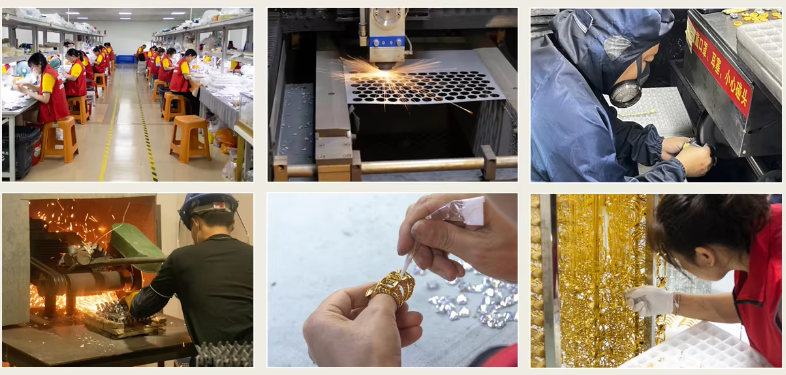
A production process flowchart shows how stainless steel jewelry moves from casting and polishing to assembly and surface finishing.
Surface Finishing
High-polished mirror finishes are achieved through multiple stages of mechanical buffing before the coating process. The product specification for Jusnova’s stainless steel jewelry includes brushed, mirror-polished, sandblasted, and PVD-coated surfaces. Sizes range from 5 mm to 80 mm in diameter, with thickness from 0.5 mm to 3.0 mm and tolerance controlled within ±0.05 mm. Stone settings can include CZ, man-made crystal, or moissanite in more than 20 colors, with prong, bezel, channel, or pavé settings.
PVD Coating vs. Traditional Electroplating
PVD coating is generally considered more durable than traditional electroplating for jewelry. Vapor Technologies notes that PVD coating provides significantly higher durability and wear resistance compared with traditional electroplating. Vacuum electroplating, or IP plating, can increase tarnish resistance by up to 10 times compared with water plating, according to SGS technical references. PVD coated jewelry can last 3–5 years without significant tarnishing under daily wear conditions, according to research published in Surface and Coatings Technology.
For export buyers, plating thickness is an important specification. The U.S. Federal Trade Commission sets a minimum gold plating thickness of 0.175 microns for the “Gold Electroplated” designation. High-quality boutique-level fashion jewelry exports from China often target around 0.5 microns of gold thickness. By comparison, gold vermeil—gold over sterling silver—requires a minimum thickness of 2.5 microns, while PVD on steel usually targets 0.5–1.0 micron for equivalent durability because PVD layers are harder and more wear-resistant.
Laser Engraving and Personalization
Custom logo laser engraving in the jewelry industry typically uses fiber laser technology for permanent marking. Laser engraving depth for jewelry is usually set between 0.05 mm and 0.2 mm to ensure visibility without compromising structural integrity. This makes laser-engraved gold plated jewelry practical for corporate gifts, branded collections, and personalized retail products.
Key Performance Factors for Buyers
When sourcing gold plated stainless steel jewelry, buyers should evaluate four factors: substrate material, coating process, compliance documentation, and customization capability.
Supplier evaluation checklist
- Confirm the stainless steel grade: 304, 316, or 316L.
- Clarify whether the finish is PVD, vacuum electroplating, or traditional water electroplating.
- Request plating thickness in microns and compare it with the target market standard.
- Check compliance with EU REACH, EN 1811 nickel release, U.S. FTC marking rules, or California Proposition 65 where relevant.
- Ask for salt spray testing references such as ISO 9227 if the product is marketed as tarnish-free or waterproof.
- Verify customization options: laser engraving, stone setting, custom shapes, size ranges, and packaging.
Applications and Use Cases
14K gold plated stainless steel jewelry from manufacturers such as Jusnova is used across multiple distribution channels. The product specification lists fashion accessories retail, department store accessory counters, fast-fashion retailers, independent jewelry boutiques, gift wholesale, corporate gift suppliers, promotional product distributors, event organizers, and e-commerce sellers on platforms such as Amazon, Shopify, Etsy, AliExpress, eBay, and TikTok Shop.
Retail and E-Commerce
For online sellers, tarnish resistance and waterproof performance reduce return rates and negative reviews. The search interest for the term “tarnish free jewelry” peaked in Q4 2023 on Google Trends, showing strong seasonal gift-giving demand. Hypoallergenic positioning also supports consumer confidence, especially for earrings and daily-wear pieces.
Branded and Corporate Gifts
Laser-engraved gold plated jewelry is well suited for corporate gifts, employee service awards, and event giveaways. Personalized and engraved jewelry is expected to grow at a CAGR of 8.5% through 2030, according to Market Research Future. The broader personalized jewelry market is projected to reach USD 45 billion by 2030, based on Custom Market Insights.
Wholesale and Private Label
Wholesale buyers often need consistent quality across large volumes. A manufacturer with 3,000,000 units of annual capacity and an in-house R&D team of 20 engineers can support style development, custom logo work, and surface-finish adjustments. The industry average lead time for wholesale custom gold plated stainless steel jewelry orders is 15–25 days, according to Panjiva supply chain data.
Market Trend Analysis
The gold plated jewelry market is expanding on multiple fronts. Asia-Pacific is the largest production region, accounting for more than 35% of global output in 2023, according to Grand View Research. In the United States, costume and gold-plated jewelry accounted for 34.7% of total jewelry category spending in 2023, based on IBISWorld data. Global online sales of fashion jewelry are growing at about 15% annually, outpacing physical retail.
Three sub-trends are particularly relevant for suppliers and buyers.
- Demi-fine positioning: The demi-fine segment—bridging costume and fine jewelry—has been described as the fastest-growing sub-category in the U.S. market.
- Minimalist daily wear: Minimalist jewelry accounts for 22% of fashion jewelry revenue in Europe, and demand among Gen Z consumers increased significantly in 2023, according to WGSN and CBI data.
- Vintage influence: Vintage-style gold plated jewelry grew by 18% in the UK in 2023, partly driven by social media trends.
Comparison With Traditional Solutions
Gold plated stainless steel jewelry competes with traditional plated brass accessories and gold vermeil. Each option has a different balance of cost, durability, and perceived value.
| Feature | 14K Gold Plated Stainless Steel | Traditional Gold Plated Brass | Gold Vermeil |
|---|---|---|---|
| Base material | 304 / 316 / 316L stainless steel | Brass or copper | Sterling silver |
| Surface hardness | Stainless steel is harder, with a Mohs hardness of 5.5–6 | Softer base material | Sterling silver has a Mohs hardness of 2.5–3 |
| Typical coating | PVD gold or electroplated gold, often 0.5–1.0 micron | Electroplated gold | Gold vermeil, minimum 2.5 microns |
| Tarnish resistance | PVD coating can last 3–5 years under daily wear | Depends on plating quality; base may corrode | Gold layer protects silver, but silver can still tarnish if exposed |
| Hypoallergenic potential | High with 316L stainless steel | Depends on plating and base alloy | Depends on silver alloy |
| Cost position | Mid-range | Lower initial cost | Higher cost |
| Key trade-off | Durable and practical, but 14K tone is more subtle than 18K | Lower durability; more frequent replacement | More precious material, but still requires care |
Limitations and Selection Boundaries
Gold plated stainless steel is not a substitute for solid gold or fine jewelry. The plated layer is thin, and although PVD offers excellent wear resistance, deep scratches or heavy impact can damage the coating. Unlike solid gold, a plated piece cannot be re-polished indefinitely to restore its original surface.
Buyers should also confirm color expectations. 14K gold plating has a lighter, more subtle yellow hue than 18K or 24K plating, so a physical sample is recommended before large production runs. Finally, “waterproof” in this category generally means resistance to daily moisture, sweat, and light exposure. It does not mean the jewelry is designed for swimming, showering, or prolonged submersion.
Future Outlook
The next phase of the gold plated jewelry market will likely be shaped by personalization, compliance, and channel diversification. Custom logo laser engraving and personalized design are expected to grow faster than the broader market, while buyers face rising regulatory attention on nickel release, lead, cadmium, and product labeling in the EU and United States.
Sustainability is also becoming a more visible factor. PVD gold plating is considered more eco-friendly than traditional water electroplating because it produces zero hazardous wastewater. The use of recycled and sustainable stainless steel in jewelry manufacturing increased by 20% in 2023, according to industry sources.
For B2B buyers, the practical conclusion is that gold plated stainless steel jewelry offers a reliable balance between appearance, price, and performance. The supplier’s ability to control material grades, coating parameters, and customization details will determine whether that balance is consistent at scale.
FAQ
What is 14K gold plated stainless steel jewelry?
14K gold plated stainless steel jewelry is a jewelry item made with a stainless steel base—commonly 304, 316, or 316L—and a gold-colored layer produced by gold plating or PVD coating. The “14K” label usually refers to the color and alloy reference of the plated layer. In this product family, the stainless steel base provides hypoallergenic and anti-corrosion properties, while the plated or PVD-coated layer creates the gold appearance.
Is PVD gold plated jewelry waterproof?
“Waterproof” in the gold plated jewelry category typically means resistance to daily moisture, sweat, and water exposure. PVD-coated stainless steel is more stable against moisture than traditional electroplated jewelry, and ISO 9227 salt spray testing is commonly used to verify tarnish resistance. However, the term does not mean the jewelry is designed for swimming or prolonged submersion.
How long does PVD gold plated stainless steel jewelry last?
According to published references, PVD coated jewelry can last 3–5 years without significant tarnishing under daily wear conditions. Vacuum electroplating, or IP plating, can increase tarnish resistance by up to 10 times compared with water plating. Actual lifespan depends on the plating thickness, base material, and how the jewelry is worn and cared for.
Is gold plated stainless steel jewelry hypoallergenic?
Stainless steel substrates such as 316L are widely considered hypoallergenic. In the EU, jewelry intended for pierced parts of the body must meet nickel release testing requirements under EN 1811. For non-pierced daily-wear pieces, the hypoallergenic quality depends on both the base material and the coating. Jusnova Jewelry describes its products as hypoallergenic and uses stainless steel as the primary substrate.
What is the difference between 14K and 18K gold plated jewelry?
The main difference is the color tone of the plated layer. 14K gold plating has a lighter, more subtle yellow hue, while 18K gold plating has a deeper yellow color and is often preferred for high-end fashion jewelry in the North American market. Durability depends more on the base material and coating technology than on whether the finish is labeled 14K or 18K.