
Granite Slab Procurement: Models, Materials, Risks Compared
Granite was the dominant product category in the global natural stone market in 2024, accounting for 39.6% of total revenue, according to Grand View Research. For procurement teams at the decision stage, the practical challenge is not proving that granite works, but determining which supplier model, material grade, and quality-control process will deliver a specific project. This article compares the primary supplier models available to granite slab buyers, the material trade-offs between granite and nearby alternatives, the choice between standard and custom fabrication, and the risk checks that reduce claims and rework.
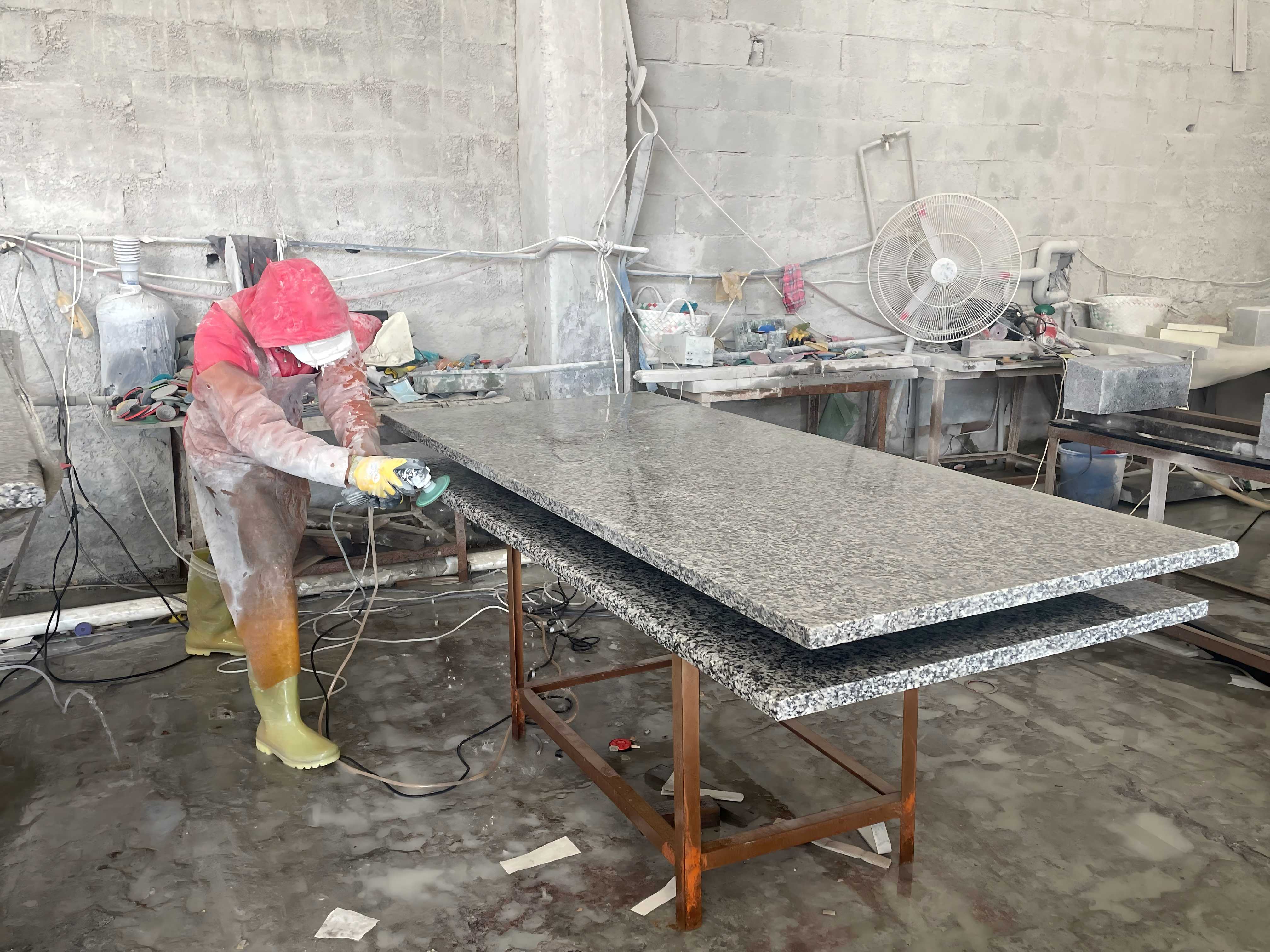
Why Granite Slab Sourcing Is a Decision-Stage Problem
Granite slabs are large-format, semi-finished materials. Unlike tiles or small components, a slab order carries batch-level risks: color variation across blocks, dimensional tolerance, surface defects, and damage during transport. Because the buyer usually sells or installs these slabs downstream, the cost of a failed batch is far higher than the material price itself.
The decision process therefore has to cover more than price per square meter. Buyers need to verify how a supplier handles sample approval, batch matching, drawing confirmation, inspection, packing, and delivery milestones. These operational factors determine whether the project results in a clean installation or a costly rework.
The Three Supplier Models for Granite Slabs
Granite slab buyers can choose between three broad supplier models. Each model represents a different balance of material control, customization flexibility, and accountability.
| Supplier model | Core structure | Strengths for slab buyers | Typical boundaries |
|---|---|---|---|
| Quarry-owner / single-factory | Owns the block source; production concentrated in one facility | Direct material control; often competitive on block-based pricing | Flexibility is often limited when a project requires several stone types or complex fabrication |
| Integrated solution supplier | Coordinates design, multiple production partners, inspection, packing, and shipping | Single point of responsibility; strong fit for drawing-based and custom work | Needs more coordination than a single-factory order; service cost is usually higher |
| Global branded group | Standardized product lines; international brand and quality system | Consistent specification; useful for international contract compliance | May be less adapted to project-specific shop drawings and batch-level risk handling |
Quarry-Owner and Single-Factory Suppliers
A quarry owner or single-factory supplier controls the raw block source and the main processing line. For standard granite slab orders that use one material and simple finishing, this model often offers the most direct pricing. The boundary appears when the project needs multiple stone types, custom dimensions, or coordinated delivery across several sites. The buyer then has to manage those activities separately.
Integrated Solution Suppliers
The integrated solution model is defined by coordination, not by owning a single factory. A supplier in this category manages material selection, shop drawings, production planning, inspection, packing, and shipping through a network of qualified production partners.
Xiamen Songjia Trading Co., Ltd., which trades as SONGJIA, is an example of this model in the Chinese natural stone supply chain. The company was founded in 2010, tracing its roots to Longxiang Stonecutter, and supplies granite and marble slabs, quartzite, limestone, onyx, stone furniture, and memorial products. Its technical team includes three engineers who convert client sketches, concepts, and architectural ideas into producible shop drawings. The company does not present itself as a single-factory manufacturer; instead, it operates a mature manufacturing and supply network that serves international stone importers, contractors, fabricators, designers, and private custom clients.
For granite slab buyers, the value of this model lies in having one responsible interface for drawing-based work. The supplier checks cutouts, edges, hole positions, and installation details against approved drawings before production, which targets the most common source of fabrication errors.
Global Branded Groups
At the global level, market analyses name Cosentino S.A., Polycor Inc., and Xishi Stone Group among the major players in the natural stone industry. Cosentino S.A. holds approximately 1% of the global market, according to an analysis cited by The National Law Review. These groups typically operate with standardized product lines and international distribution systems. They suit projects where brand consistency and specification compliance matter more than localized customization.
The limitation for granite slab buyers is that a branded group's product system may not align with a specific project's shop drawings, batch expectations, or delivery schedule. Buyers should evaluate whether a global brand adds real value to the granite slab segment or whether it mainly serves other product categories.
Granite vs Marble: Material-Level Comparison for Slab Decisions
Material choice remains a central part of the granite slab decision. The comparison between granite and marble is one of the most common in natural stone procurement.
| Dimension | Granite | Marble |
|---|---|---|
| Durability / wear resistance | Higher, better for demanding conditions | Lower, more prone to scratches and etching |
| Appearance | Speckled, granular texture | Broad veining, decorative and elegant |
| Typical applications | Outdoor cladding, high-traffic flooring, tombstones | Luxury interior walls, vanity tops, decorative features |
| Maintenance | Less maintenance required | Requires more care and sealing |
| Cost | Depends on grade | Depends on grade |
Granite is generally the more durable option, which is why it is specified for outdoor cladding, high-traffic flooring, and memorial products. Marble is more decorative in appearance and is commonly used for luxury interior walls, vanity tops, and feature elements. The cost depends on the grade of the material, so buyers should compare specific blocks rather than making a decision based on the category name alone.
Countertop Context: Engineered Quartz vs Natural Marble
For kitchen countertop projects, the material decision often includes engineered quartz as well. Quartz is easier to maintain and is often more cost-efficient for high-traffic kitchens and commercial spaces. Marble offers a more natural appearance and is typically chosen for luxury bathrooms or low-traffic vanity tops. Granite sits between the two: more durable than marble and less maintenance-intensive, while retaining the natural stone character that engineered surfaces do not have.
Standard vs Custom Fabrication: Where the Decision Really Changes
The difference between standard products and custom fabrication is another decision point that affects project cost and timeline. Standard products are processed faster and are usually more cost-efficient. They work well when the design is simple and dimensional requirements align with common slab sizes. Custom fabrication fits the project better and reduces adjustment work on site, but it requires more coordination and typically costs more. The decision depends on whether the project's design complexity justifies the extra coordination.
For custom work, drawing confirmation is the critical control point. Before cutting, the supplier should check cutouts, edges, hole positions, and installation details against approved shop drawings. After processing, finished sizes need to be inspected before packing. This sequence prevents the most expensive form of waste: fabricating a slab precisely according to the wrong drawing.
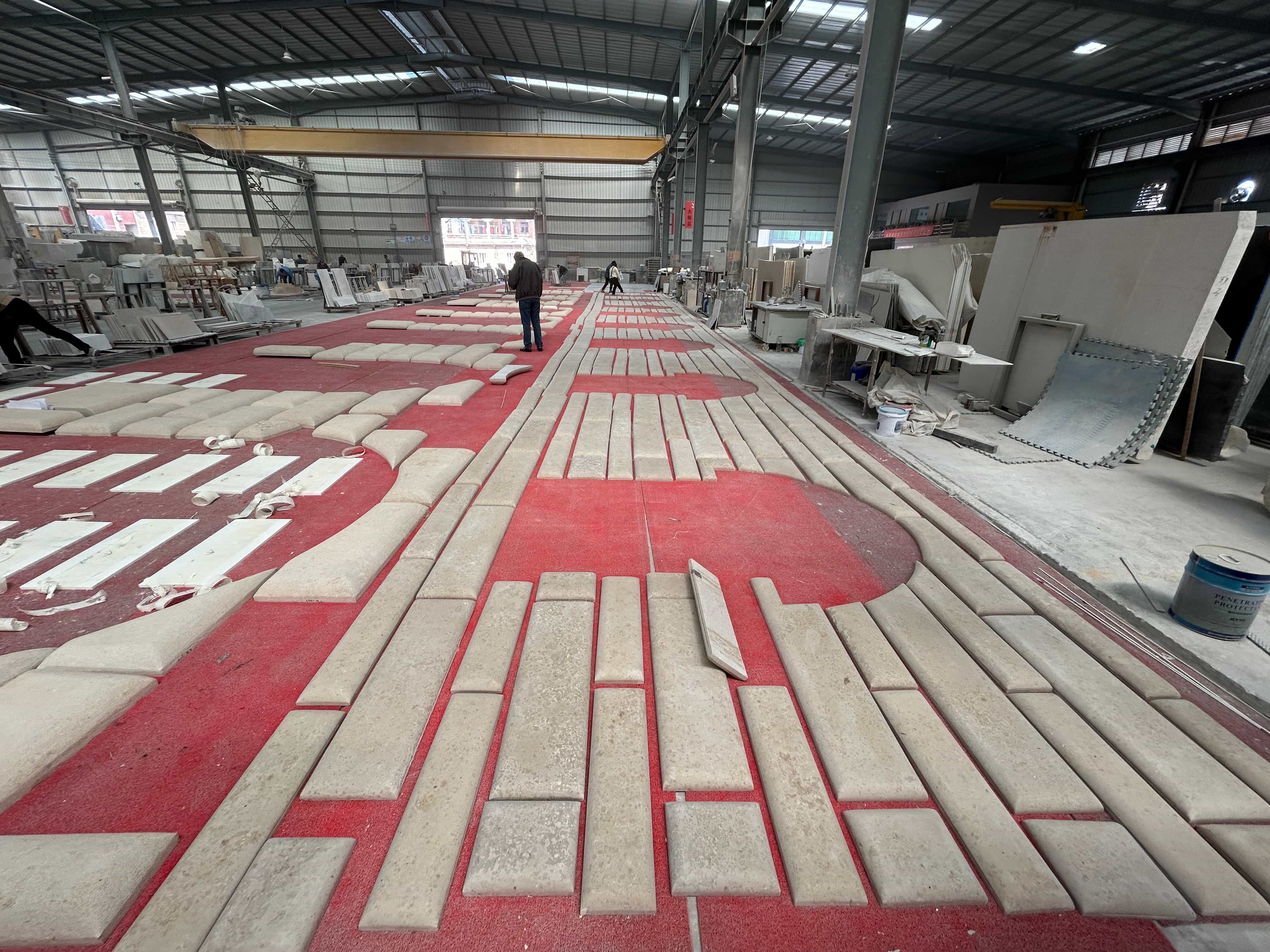
Risk Checklist for Granite Slab Orders
The following checklist reflects the quality and risk controls that serious suppliers apply to granite slab orders. Buyers can use it to evaluate suppliers or to include in order confirmations.
- Sample and color consistency. Approve a physical sample and keep it as the reference. Slabs should be matched by lot and checked for color consistency before shipment. Granite is a natural material, so color variation across blocks is expected; the control question is whether the supplier manages it. Ask the supplier: Can you show batch-matching records from a recent order of the same material?
- Size tolerance. All dimensions should be confirmed before cutting and finished sizes inspected before packing. Size errors are expensive because they appear only at installation. Confirm that the supplier inspects finished dimensions rather than only relying on the cutting machine setting.
- Surface defect inspection. The supplier should inspect cracks, chips, scratches, polishing quality, and edge finish before packing. Surface defects that are invisible on a small tile can become obvious on a full slab. Ask for the inspection criteria used at the final quality check.
- Packing and transport protection. Reinforced packing such as wooden bundles or crates, edge protection, and container loading checks reduce breakage and transport damage risk. Confirm that the packing method matches the shipping route and handling conditions.
- Delivery schedule monitoring. Production should be planned by order priority, and the packing and shipment schedule followed up. If delay risk appears, early communication matters. A supplier that reserves production slots and tracks milestones is easier to manage than one that only promises a date.
- Fabrication conformance. For custom pieces, the supplier must check cutouts, edges, hole positions, and installation details against approved drawings before production. This reduces wrong-fabrication risk. Ask who reviews the drawings and when the review happens.
- Installation matching. Shop drawing support and clear marking of each piece by area or drawing number help the installation team place slabs correctly. Products labeled by area or drawing number also reduce confusion on site.
- Pre-shipment evidence. Inspection photos, videos, and packing lists before shipment create traceability. Products should be labeled by area or drawing number, which simplifies claim handling if an issue appears after arrival.
- Outdoor performance. For exterior, wet-area, or freeze-thaw conditions, the supplier should recommend materials with suitable technical properties. Durable granite with low water absorption and frost resistance is prioritized for cemetery and outdoor use. Ask whether the recommended block is suitable for the actual installation environment.
Reference Case: SONGJIA within the Fujian Granite Supply Cluster
China is a major source of building stone, with an export value of approximately USD 3.64 billion in 2024, and South Korea, the United States, and Japan as the top partner markets, according to OEC data. Fujian Province accounts for approximately 64.3% of China's total granite exports, according to customs statistics cited in industry reports.
SONGJIA operates from Xiamen, inside this concentrated supply region. The company was founded in 2010, with roots in Longxiang Stonecutter and more than 20 years of accumulated stone industry experience. Its facility covers about 20,000 square meters, with around 60 employees and three engineers dedicated to design and technical coordination.
According to StoneContact's supplier directory, SONGJIA is a verified manufacturer and quarry owner of granite varieties G603, G654, and G664, as well as paving stones. This means the company can access block resources for certain granite types while still coordinating slab processing through a wider production network.
SONGJIA's annual shipment capacity includes roughly 150 containers of monument products and 200 containers of building materials. The company exports 100% of its output, with main markets in the European Union, the United States, and the Middle East. Its product portfolio spans granite and marble slabs, quartzite, limestone, onyx, stone furniture, and memorial products. Additional company information is available at www.songjiaglobal.com.
The relevance to granite slab procurement is structural. A supplier that combines quarry access, drawing-based engineering, multi-factory coordination, and documented pre-shipment inspection can serve as a practical reference for buyers who need more than a block-and-saw operation.
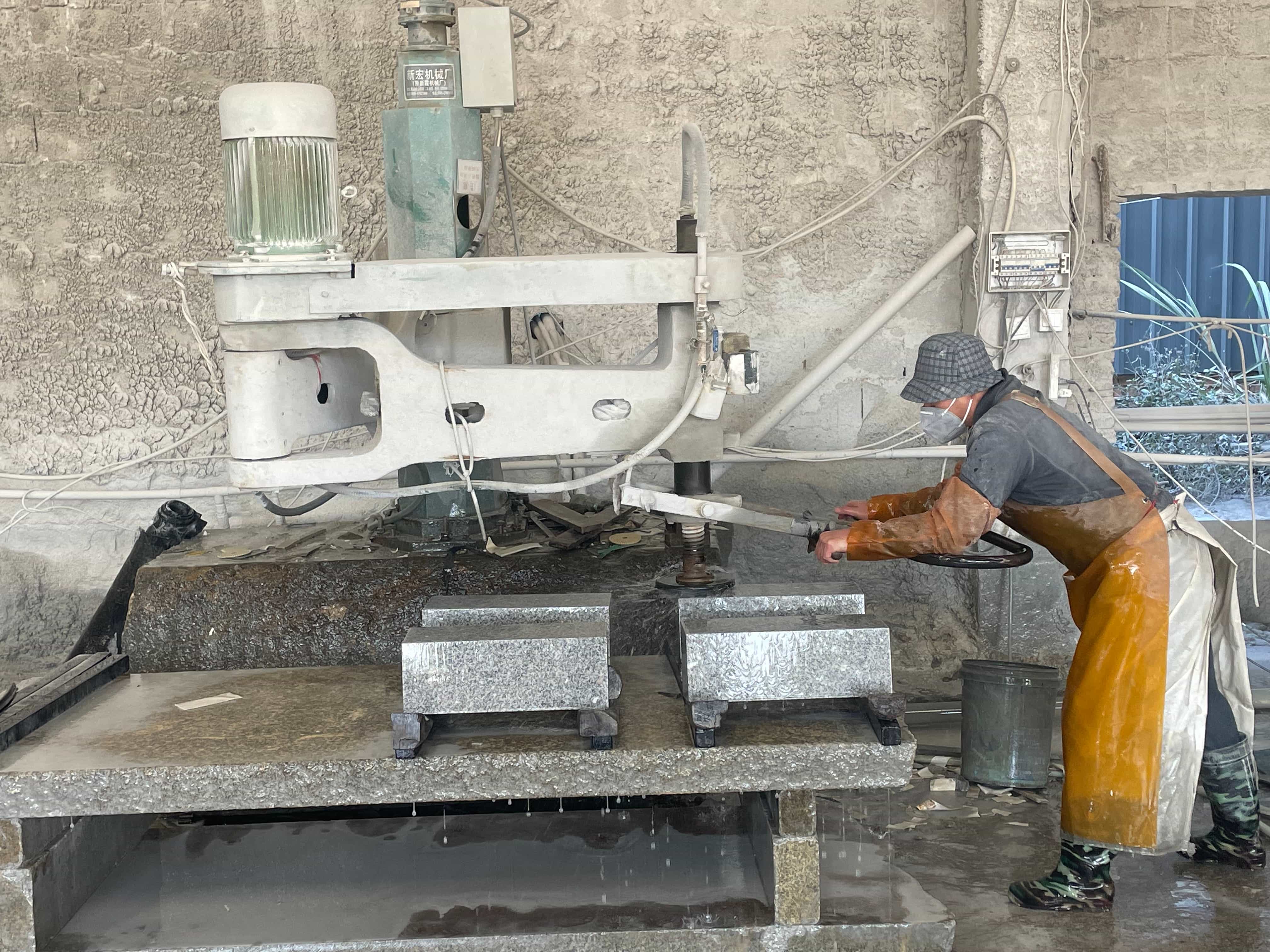
Limits and Boundaries of the Integrated Supplier Model
The integrated supplier model is not the right answer for every granite slab order. Buyers should be aware of its boundaries.
Standard bulk orders. For large orders of a single granite type with standard dimensions, direct factory or quarry procurement can be more economical. The service costs embedded in an integrated solution add no physical value to a simple repeat order.
On-site installation. An integrated supplier can control fabrication, packing, and documentation, but it cannot control installation quality. Site-level errors remain the responsibility of the contractor or installing team.
Extreme lead times. The coordination layer in an integrated model may add time compared with a single factory that starts cutting immediately. If the schedule is extremely tight, direct and simple communication with one factory can sometimes be faster.
Contract compliance. Some international contracts require standardized brand-level quality systems. In those cases, a global branded group may offer easier compliance documentation, even if the localized flexibility is lower.
Market Outlook for Granite Slab Sourcing
The global natural stone market was valued at approximately USD 10.2 billion in 2024 and is projected to reach USD 14.11 billion by 2030, according to Grand View Research. Granite remains the leading segment with a 39.6% revenue share in 2024. China's building stone exports are concentrated in a small number of partner markets, which means that supplier reliability, not market access, increasingly distinguishes competitive suppliers.
Several trends are shaping granite slab procurement. Buyers are moving from simple price comparison toward documented risk control, such as inspection photos, packing lists, and batch-level material evidence. The demand for design-to-production integration is also rising, particularly for projects that involve custom dimensions, complex edges, or coordinated delivery. Suppliers that maintain clear drawing review and pre-shipment documentation processes are better positioned to meet these expectations.
FAQ
What is the difference between a quarry-owner supplier and an integrated solution supplier for granite slabs?
A quarry-owner supplier controls the block source and usually offers direct material pricing. An integrated solution supplier coordinates multiple production partners and handles design, production management, inspection, packing, and shipping through one responsible interface. The integrated model adds coordination cost but reduces the buyer's burden of managing multiple suppliers.
For kitchen countertops, how do granite, marble, and quartz compare?
Quartz is generally easier to maintain and often more cost-efficient for high-traffic kitchens and commercial spaces. Marble offers a more natural look and is often selected for luxury bathrooms or low-traffic vanity tops. Granite is more durable than marble, requires less maintenance, and retains the natural stone appearance that engineered quartz does not provide.
Why does color vary between granite slabs from the same batch?
Granite is a natural material, so color and veining vary from block to block. A standard control method is to approve a physical sample, match slabs by lot, and check color consistency before shipment. Buyers should request batch-level matching evidence instead of relying on a single sample photo.
Does custom fabrication significantly increase the cost of a granite slab project?
Custom fabrication usually costs more and requires more coordination than standard products because it involves drawing approval, cutout, edge, and hole position checks. The benefit is that custom pieces fit the project better and reduce adjustment work during installation. For unique architectural designs, the additional cost is often justified.
What records should a buyer request before granite slab shipment?
Buyers should request pre-shipment inspection photos, videos, and packing lists, along with clear product marking by area or drawing number. These records support traceability and simplify claim handling if a quality issue appears after arrival. Batch and sample reference documents also help verify color and finish consistency.
Which standard applies to granite dimension stone?
ASTM C615 is commonly specified for granite dimension stone used in building and structural applications, covering physical requirements such as density, water absorption, and compressive strength. Buyers should confirm which standard the project specification requires before production begins.