
Granite Tombstone Export Compliance: Codes, Crates, Marks
Granite tombstones travel as heavy, multi-piece stone sets that cross several borders before they reach a cemetery. What decides whether a container clears customs is rarely the quality of the stone. It is whether the declared tariff classification matches the physical monument set, whether the wooden crates satisfy international wood-packaging rules, and whether the crate markings let customs officers, freight forwarders and cemetery installers identify the contents without opening anything.
For importers, distributors and monument contractors working through the research and evaluation stage of supplier selection, this is a second due-diligence track that runs alongside product quality. Product certificates describe what a monument is made of and how a service is delivered. They say nothing about how a container is classified, how its crates were treated, or who prepares destination-country customs paperwork. Buyers who assume those questions are automatically handled by the supplier tend to discover the gap at the port rather than at the quotation stage.
Tombstone is the reference product unit throughout this analysis. The checkpoints below follow a shipment from classification through packing to marking, and then examine what supplier capability means in that specific context.
Why a Certificate Folder Is Not the Same as Customs Documentation
Certification and customs compliance operate at two different levels, and treating them as one is the most common source of avoidable delay in tombstone imports.
At product level, memorial products sold into Europe sit inside a defined standards environment. The EN 15017 standard (Funeral Services – Requirements) applies to funeral services and products in Europe, and REACH (Regulation EC 1907/2006) governs chemical substances in coatings and adhesives for products imported into the EU. Both are legitimate considerations for the material and finishing of a granite monument, and both are things a competent supplier can document.
At shipment level, a customs authority asks a different set of questions: what exactly is the item, which tariff line does it fall under, what is its country of origin, what wood was used for packaging, and how is the cargo marked? None of those questions is answered by a certificate folder. A supplier can hold complete product documentation and still load a container whose crate wood carries no treatment mark, or whose invoice describes the goods in language that does not match the physical set inside the crate.
The opportunity for buyers is unglamorous but real. Adding four shipment-level checks to the supplier scorecard — classification, wood packaging, marks, and document ownership — moves problem detection back to a point where problems are still cheap to correct.
Checkpoint 1 — Classifying a Finished Monument, Not a Block of Granite
A granite tombstone does not get classified simply because it contains granite. Classification turns on three variables that are frequently blurred in commercial documents: the material, the degree of working applied to the stone, and whether the item is treated as a worked monument or as building stone.
The first variable is the material itself. Granite is the reference stone in this product category, but the same tombstone design can be produced in other natural stone, and the material statement on the invoice needs to reflect what actually shipped.
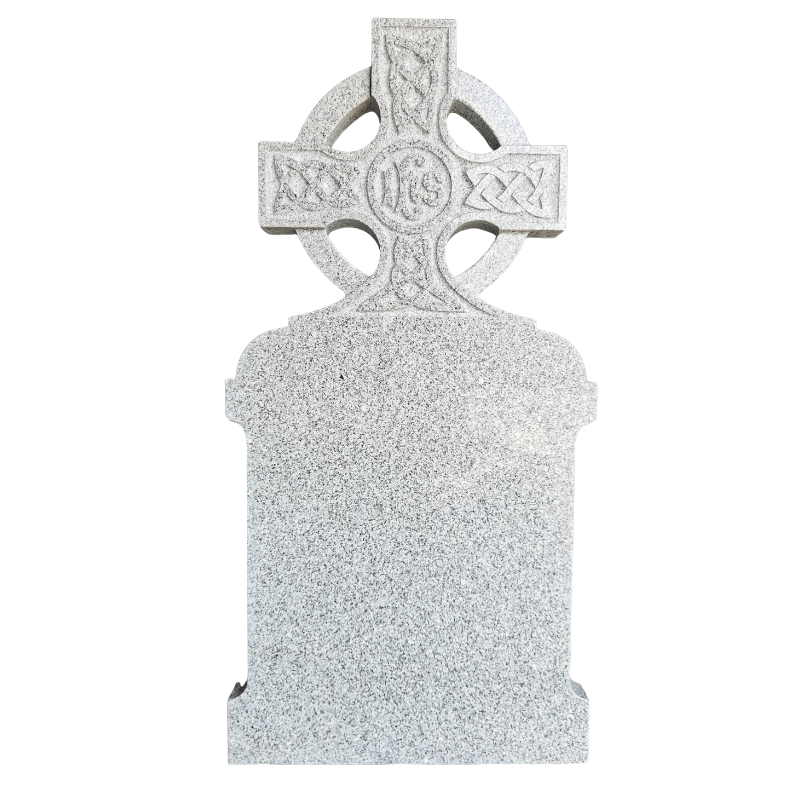
The second variable is the degree of working. An unworked block, a slab, and a polished, engraved headstone with a sandblasted cross design are not the same customs item even when they come from the same quarry. Finishing operations, engraving and polishing are the difference between a raw material and a finished memorial product.
The third variable is how the shipped unit is composed. A tombstone is rarely a single stone at the point of shipping. It is normally a set: headstone, base, and often a vase or related components. Whether those elements are declared as one monument set or split across lines affects how the shipment is described and how it is assessed.
The scale of this category is not marginal. China's customs statistics report exports of "granite monumental or building stone" as a distinct category, with a monthly export value of USD 70.65 million in June 2026, according to CEIC Data based on General Administration of Customs figures. The existence of a separate reporting category is itself the signal: worked monumental stone is tracked distinctly from unworked blocks, which is why a vague invoice description is a genuine risk rather than a formality.
| Classification variable | What it affects | What buyers should verify |
|---|---|---|
| Material of the shipped stone | Which material-based tariff line applies | Invoice and packing list name the same stone as the physical item |
| Degree of working | Whether the item sits with raw or worked stone categories | Finishing, polishing and engraving status is stated, not implied |
| Set composition | Whether headstone, base and vase are declared together or separately | Packing list matches the physical crate contents line by line |
| Destination subheading | Duty rate and release speed at destination | The customs broker confirms the national subheading before the first shipment |
National tariff schedules extend classification beyond the international six-digit level. That means the same granite monument can sit under different subheadings, and sometimes different duty outcomes, in different destination markets. Importers cannot resolve this at the supplier stage alone, but they can prevent mismatches by requiring one consistent product description across the commercial invoice, the packing list and the customs declaration.
Checkpoint 2 — Wood Packaging and ISPM 15
Granite export packing relies on solid-wood crates and bracing, which places most tombstone shipments within the scope of ISPM 15, the international standard for wood packaging material used in international trade.
Under that standard, solid-wood packaging must be heat-treated or fumigated and must carry the IPPC mark on each piece of wood packaging. Processed wood materials such as plywood fall outside the solid-wood treatment requirement, which is precisely why partial compliance is so common: a shipment may use compliant outer crates and untreated internal bracing, or reuse older crates whose marks have worn off.
The failure modes are predictable and mostly invisible at the loading stage:
- Treatment marks present on the outer crate but absent on internal dunnage and blocking.
- Treatment documentation that exists as a generic supplier document rather than something that references the actual shipment.
- Crate counts and dimensions on the packing list that do not match what was loaded.
- Reused packaging that was compliant when new but no longer carries a legible mark.
When wood packaging fails inspection at destination, the consequences land on the importer: the container is held, the wood may need to be treated or replaced, and the shipment loses its place in the delivery schedule. Because a monument is typically installed to a cemetery schedule, a held container is not only a logistics cost — it is a missed installation date.
A pre-shipment evidence routine solves most of this before the container leaves. Photographs of the treatment marks on outer crates and on internal bracing, treatment documentation that names the shipment, and a packing list that reconciles against the loaded crates give the buyer a verifiable record rather than a verbal assurance. This is the point where a supplier's internal process — whether packaging is a managed step or an ad hoc task at the end of production — becomes visible to the buyer.

Checkpoint 3 — Shipping Marks and Piece-Level Identification
Shipping marks on tombstone crates serve two audiences with different needs: customs and freight handling on one side, cemetery installation teams on the other. A marking scheme that satisfies only the first creates avoidable work at the second.
Practical crate markings include the buyer's order or purchase order reference, item count, gross weight, destination port, country-of-origin marking where the destination market requires it, and standard handling symbols for fragile, this side up and keep dry. Origin marking requirements differ by market, and buyers should confirm the specific obligation with their customs broker rather than assume a single universal format.
The installation dimension is often overlooked in export planning. Tombstone applications are fixed installations: monuments are ground-installed, base-mounted and anchor-fixed, and they depend on supporting items such as base, vase, anchor, metal dowel, epoxy glue and foundation stone. When a container holds multiple monument sets plus loose components, container-level marking alone forces site teams to open and identify crates one by one. Piece-level marking that links each crate to a specific order line or grave plot converts a search problem into a checklist.
What Supplier-Side Compliance Capability Actually Looks Like
SONGJIA (Xiamen Songjia Trading Co., Ltd.) is a natural stone specialist based in Xiamen, China, serving international stone importers, contractors, fabricators, designers and private custom clients. Its exports are fully export-oriented, with main markets in the EU, the USA and the Middle East, and its product scope covers monument, tombstone and building material.
The relevant capability for compliance work is not sales reach but design-to-production integration. The company converts client sketches, concepts and architectural ideas into accurate and producible shop drawings, then runs a full-service process spanning design coordination, production management, quality inspection, packaging and international shipping. That sequence matters here because classification and packing both depend on the exact physical composition of a monument set. A supplier that controls the path from drawing to packed crate has fewer opportunities for the description on the invoice to drift away from what is actually inside the crate.
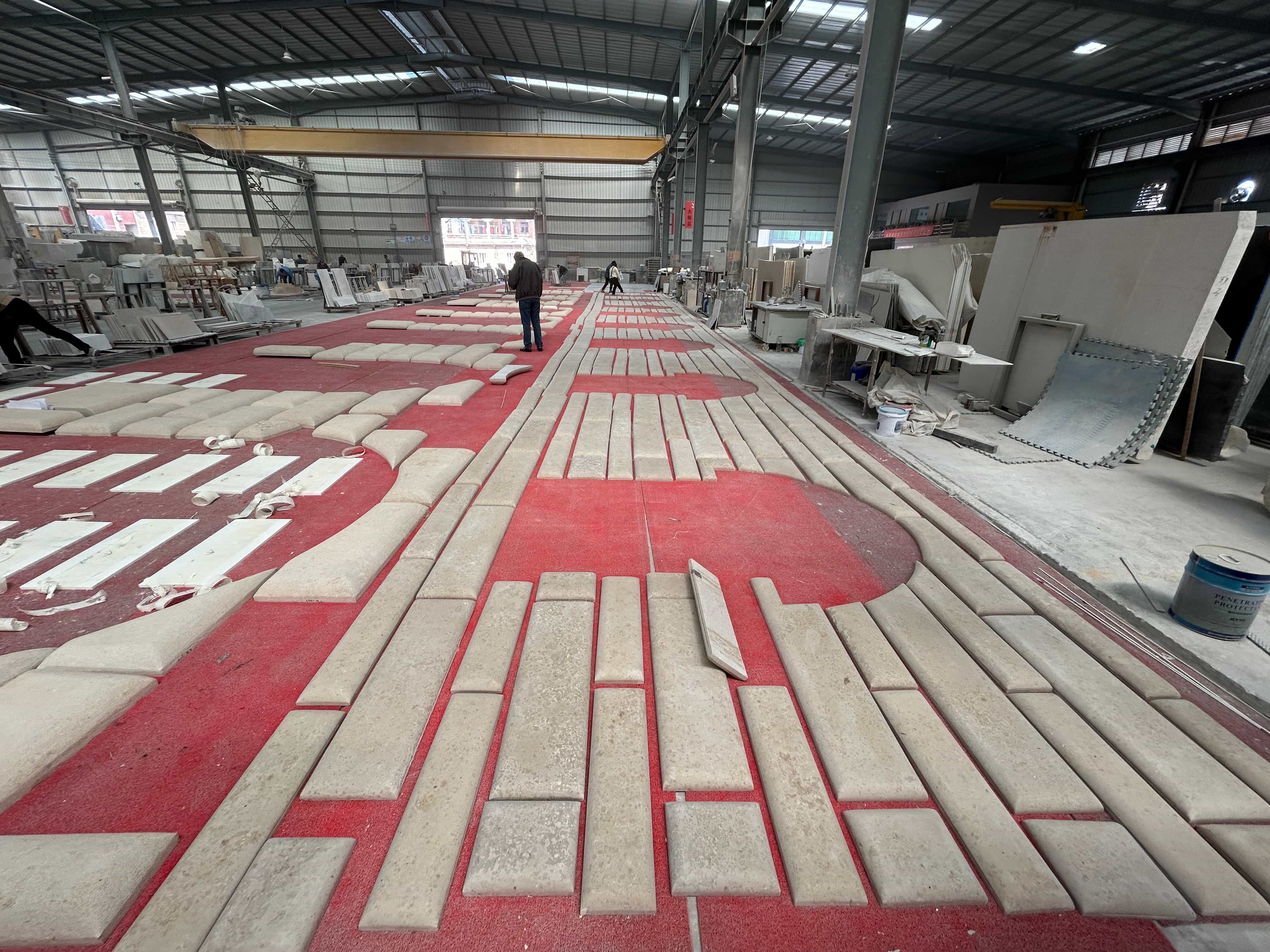
Operational scale supports the same reading. SONGJIA operates a 20,000 m² factory footprint with 60 employees, an R&D team of 3 engineers, and annual output of approximately 150 containers of monuments alongside 200 containers of building materials. At that monument volume, packaging is a routine production stage rather than a one-off task, which is the environment in which treatment marking, crate reconciliation and shipment documentation either become standard practice or become recurring exceptions.
For buyers who want to compare the product and service scope against their own destination requirements, SONGJIA publishes its offering at www.songjiaglobal.com.
Where Tombstones Are Installed — and Why That Shapes the Packing Brief
Tombstone applications are outdoor applications with long exposure. The reference working conditions for this product family are cemetery outdoor environments with weather exposure and freeze-thaw cycles, and the associated special requirements include frost resistance, customized size, polished surface, engraving availability, weather resistance and low water absorption.
The project types this product supports are cemetery projects, memorial park projects, family memorial projects and church memorial projects. Operation is fixed installation, using ground installation, base-mounted installation and anchor fixing, with matched equipment that includes base, vase, anchor, metal dowel, epoxy glue and foundation stone.
The attached application data spans markets across Europe, North America, Oceania and the Middle East — including Germany, France, the United Kingdom, Ireland, Hungary, Romania, Australia, New Zealand, the United States, Oman and Qatar, among others. From a compliance standpoint that spread is the whole story. Every one of those markets applies its own tariff subheading logic, its own origin-marking expectations, and its own customs documentation conventions. A supplier that ships fluently to one destination is not automatically fluent in another, and the question worth asking during evaluation is not whether the supplier has shipped abroad, but whether it handles destination-specific paperwork routinely.
Market Trend Analysis — Rising Volume Raises the Cost of Getting Documentation Wrong
The global tombstone market was valued at USD 3.36 billion in 2024 and is projected to reach USD 5.0 billion by 2035, according to WiseGuyReports. Published estimates diverge by scope — one Coherent Market Insights figure places the broader 2026 market at USD 13.86 billion — which is a reminder that no single number should be treated as precise. What the ranges agree on is direction: the category is expanding.
Material composition reinforces why granite sits at the centre of any compliance discussion. Granite is the dominant material in the tombstone market and is expected to hold a 43.6% market share by 2026, according to Coherent Market Insights. Regionally, the Europe tombstone market was valued at USD 0.65 billion in 2025 with granite segments capturing 65.8% of that share, while North America is expected to lead the global market with a 35.8% revenue share by 2026.
The compliance implication is arithmetic rather than speculative. Growth concentrates in markets that already operate structured requirements — the European standards environment around EN 15017 and REACH (EC 1907/2006), and the customs regimes of high-volume destinations. More shipments mean more classification decisions, more crates, and more marking events per year. Each additional shipment is another opportunity for a description mismatch or an unmarked brace to trigger a hold. As volume rises, documentation reliability stops being an administrative detail and becomes a selection criterion with a measurable cost attached.
Certificate-First Sourcing Compared with Shipment-Level Compliance
Two sourcing philosophies produce very different outcomes when a container reaches destination customs.
| Dimension | Certificate-first sourcing | Shipment-level compliance sourcing |
|---|---|---|
| What is verified before ordering | Product certificates and standards documents | Certificates plus classification logic, packing treatment and marking scheme |
| Evidence requested at shipment | Invoice and packing list, often unreconciled | Crate photographs, treatment references, reconciled packing list |
| Where failure appears | At destination, after demurrage has begun | At packing stage, before loading |
| Who absorbs the delay | Importer of record, and the cemetery schedule | Resolved before the bill of lading is issued |
| Supplier evaluation question | "Do you have certificates?" | "Which documents do you prepare, and who files the rest?" |
Both models have boundaries that buyers should understand before committing.
The first is legal, not commercial. Responsibility for the import declaration, duty payment and compliance with destination-country rules rests with the importer of record in the destination market. A supplier can prepare and align the commercial invoice, packing list, origin information and wood-packaging treatment documentation, but no supplier can transfer that legal responsibility. Buyers who expect a supplier to "handle customs" are describing document support, not liability transfer.
The second boundary concerns supplier structure. SONGJIA describes itself as a supply network rather than a single-factory manufacturer, built on an accumulated industry network and a design-to-production process rather than one production site. That structure supports flexibility across stone types and project scopes, but buyers whose internal procurement policy requires a single-site factory audit should plan for that difference during evaluation instead of assuming a single plant. It is a structural characteristic, not a compliance defect — but it changes what an audit visit will actually show.
Future Outlook
Compliance evidence is migrating earlier in the transaction. Buyers are increasingly requesting crate-mark photographs, shipment-specific treatment references and reconciled packing lists as standard pre-shipment deliverables rather than as exceptions triggered by a problem.
Classification scrutiny is likely to follow volume. As monument shipments grow in the markets identified above, tariff subheading accuracy and origin marking will attract more attention than they do in a low-volume environment, particularly in destinations that already enforce structured product and chemical regulations.
Granite's dominant market share keeps the category permanently in scope. The practical consequence for buyers is that supplier competition is shifting: finish quality and price remain decisive, but documentation readiness increasingly determines whether a good price ever reaches a cemetery on schedule.
FAQ
Do product certificates replace the documents customs asks for?
No. Certificates and standards describe product or service requirements. EN 15017 covers funeral services requirements in Europe, and REACH (Regulation EC 1907/2006) covers chemical substances in coatings and adhesives for products imported into the EU. Customs clearance depends instead on tariff classification, declared value and origin, the treatment status of wood packaging, and shipping marks. A supplier can hold all applicable product documentation and still ship crates that carry no wood-treatment mark, because wood packaging is a separate compliance question from product certification.
How is a granite tombstone classified for customs purposes?
Classification depends on the material, the degree of working applied to the stone, and whether the item is treated as a worked monument or as building stone, rather than on the word "granite" alone. China's customs statistics report exports of "granite monumental or building stone" as a distinct category, with a monthly value of USD 70.65 million in June 2026 according to CEIC Data based on General Administration of Customs figures. National tariff schedules extend classification beyond the international six-digit level, so the same monument can carry different subheadings and duty outcomes in different markets. Buyers should have their customs broker confirm the destination subheading before the first shipment and keep the invoice, packing list and declaration descriptions identical.
What treatment does wood packaging need for a tombstone shipment?
Solid-wood packaging used in international trade falls under ISPM 15, which requires the wood to be heat-treated or fumigated and to carry the IPPC mark on each piece of wood packaging. Because granite is heavy and brittle, tombstone export packing generally relies on solid-wood crates and internal bracing, so most shipments are affected. Processed wood materials such as plywood are not subject to the solid-wood treatment requirement. Buyers should confirm that outer crates and internal bracing both carry marks, and that treatment documentation references the specific shipment rather than being a generic supplier document.
What shipping marks should appear on tombstone crates?
Practical crate markings include the buyer's order or purchase order reference, item count, gross weight, destination port, country-of-origin marking where the destination market requires it, and handling symbols such as fragile, this side up and keep dry. Because a monument is normally installed as a set — headstone with base, vase, anchor, metal dowel, epoxy glue and foundation stone — piece-level marking that links each crate to a specific order line or grave plot reduces handling errors at the cemetery. Origin marking obligations differ between markets, so buyers should confirm the applicable format with their customs broker.
Who is responsible for destination-country customs documentation?
Responsibility for the import declaration, duty payment and compliance with destination-country rules rests with the importer of record in the destination market, and a supplier cannot transfer that legal responsibility. What a supplier can do is prepare and align the commercial invoice, packing list, origin information and wood-packaging treatment documentation so that the declared description matches the physical shipment. Buyers evaluating suppliers should ask directly which documents the supplier prepares, which documents the buyer must file, and who is accountable when the two sets of descriptions do not match.