
Granular ASN vs Liquid UAN: Regulatory and Transport Compliance
Granular ASN (26-0-0+13S) and liquid UAN 32 can carry nitrogen to the same field, but they do not carry the same compliance burden. One is a moisture-sensitive solid that has to be kept dry, sealed and free of caking; the other is an aqueous salt solution that has to be kept contained, above its salt-out temperature and correctly converted from volume to mass on shipping documents. Both are chemical fertilizers whose transport, storage and use fall under chemical and hazardous-materials regulations, and in both cases the product technical data sheet, not the sales brochure, is the document that defines the applicable requirements.
That single fact reorganises the buyer question. The useful question at the sourcing stage is not which nitrogen source performs better agronomically, but which compliance profile the buyer's warehouse, carrier, receiving equipment and destination market can actually support. This guide works from published product data to show where each format places the operational and documentation load.
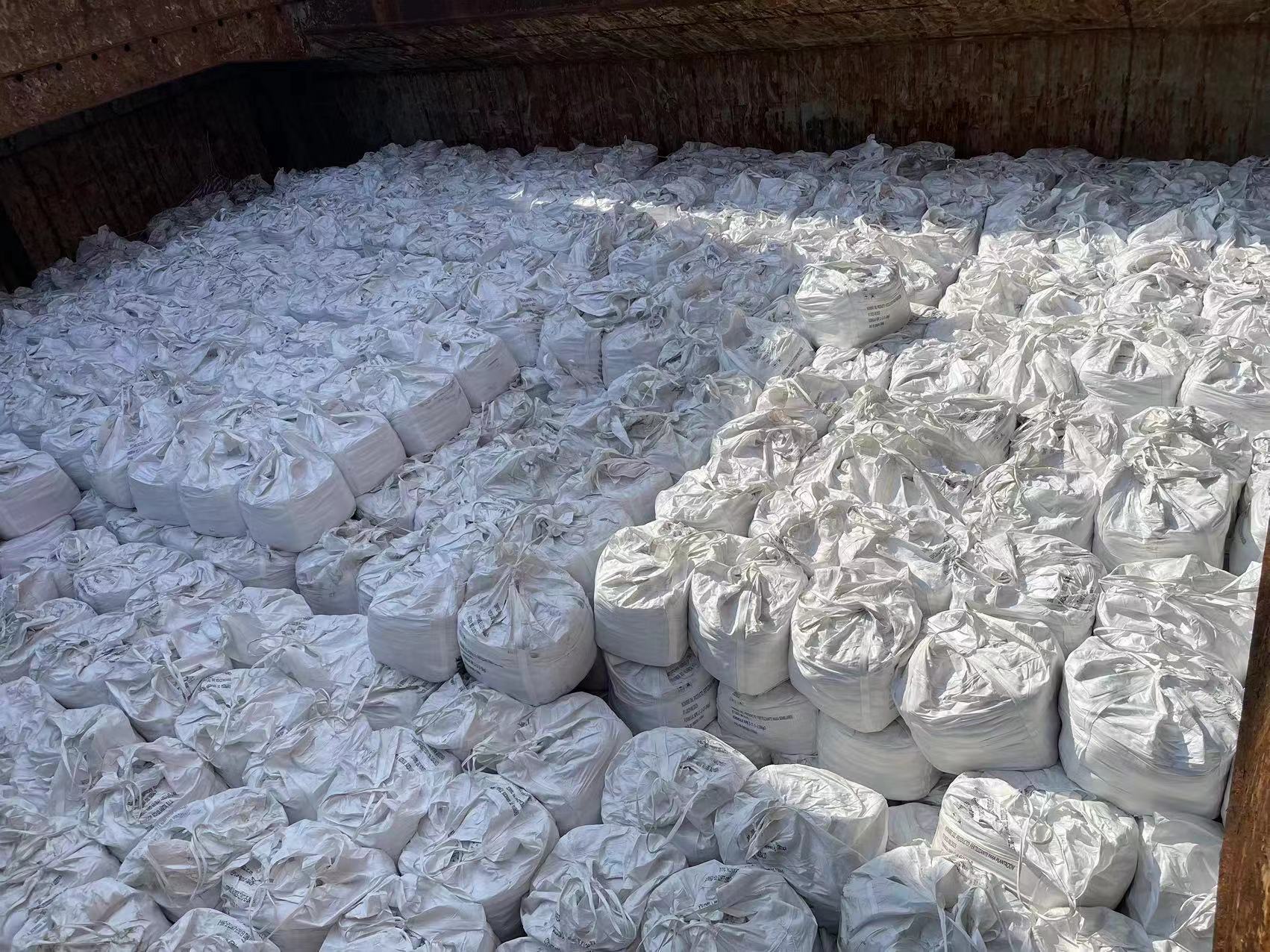
Why the physical form, not the nitrogen content, sets the compliance agenda
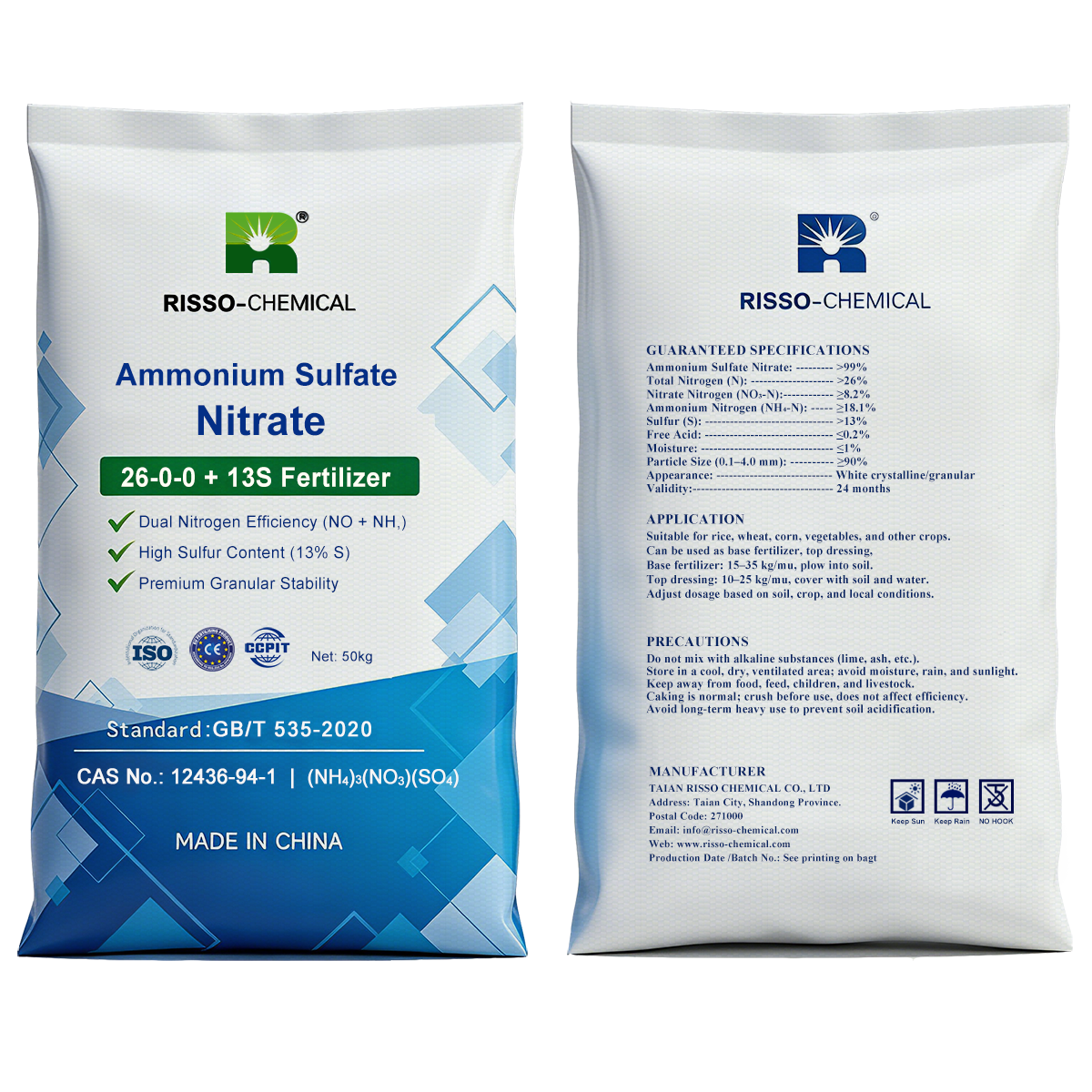
ASN 26-0-0+13S is a granular nitrogen fertilizer supplying ammonium nitrogen and nitrate nitrogen together with sulfur. Its declared nitrogen content is typically 26% N with typically 13% S, and it is supplied as white to off-white granules typically 2 to 4 mm in size, with a moisture content of 1.0% or below.
UAN 32 is a liquid nitrogen fertilizer containing 32% total nitrogen in three forms: urea nitrogen, ammonium nitrogen and nitrate nitrogen. Published parameters place its density at approximately 1.32 to 1.34 g/cm3 at 20 degrees Celsius, its pH typically between 7.0 and 8.0, and its freezing point at approximately minus 10 degrees Celsius.
Those figures read like agronomic specifications, but they are also the inputs that compliance planning depends on. Granule size and moisture tolerance determine packaging integrity and warehouse conditions. Density determines how declared volumes convert into tonnes. pH and freezing point determine tank material, containment and temperature management. A buyer who plans freight, storage and receiving against nutrient analysis alone is planning against the wrong variables.
Granular ASN: moisture control is the compliance variable
For the granular grade, the dominant handling risk is water. ASN should be stored in dry, cool and ventilated warehouses, kept away from moisture and direct sunlight, with packaging sealed well to prevent caking, and kept separate from alkaline chemicals.
Two implications follow directly from that instruction. First, the declared moisture limit of 1.0% or below describes the product as supplied; it is not a tolerance for a warehouse that allows condensation cycles. A buyer receiving ASN into an unconditioned shed in a humid season is, in practice, changing the condition of the goods after acceptance, and caking is the visible result. Second, seal integrity becomes a receiving inspection item rather than a formality. Torn or unsealed packaging is a moisture pathway, and moisture is the failure mode this product is specified against.
Product identity matters just as much as moisture. ASN and conventional ammonium sulfate are different fertilizer products: ASN combines nitrate and ammonium nitrogen with sulfur, while conventional ammonium sulfate primarily supplies ammonium nitrogen and sulfur. Shipping documents, labels and customs descriptions should match the grade actually shipped, because a generic description that collapses ASN into ammonium sulfate misstates the nitrogen forms in the consignment.
Liquid UAN 32: containment, temperature and volume conversion
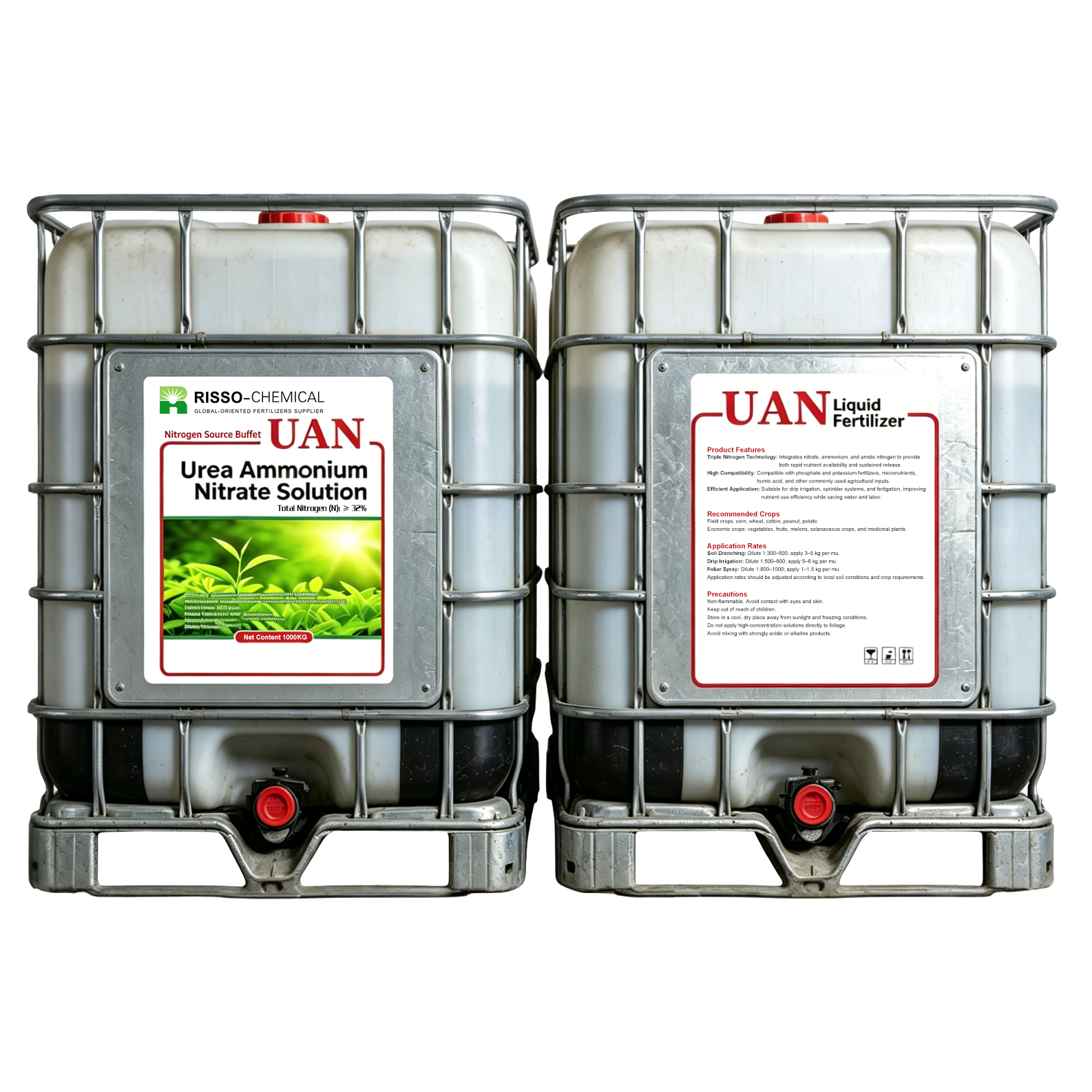
The liquid grade shifts the risk from water ingress to escape and crystallisation. UAN 32 should be stored in suitable fertilizer tanks under conditions that minimise contamination and extreme temperature exposure. At low temperatures, fertilizer salts can crystallise, so temperature management and correct storage procedures are important; the exact crystallisation or salt-out temperature should be taken from the product specification rather than assumed from a general figure.
The published freezing point of approximately minus 10 degrees Celsius is a planning threshold, not a guarantee for every site. Buyers in markets with sustained sub-zero winters should confirm the salt-out behaviour of the delivered concentration, decide whether temperature-managed storage is required, and make that decision before the tank is ordered rather than after the first cold snap.
Containment is the second issue. Liquid nitrogen products are commonly transported in IBCs, drums or tankers and require compatible storage tanks and transfer arrangements. Density of approximately 1.32 to 1.34 g/cm3 at 20 degrees Celsius means that one cubic metre of product corresponds to roughly 1.32 to 1.34 tonnes, so volume-based booking and mass-based declarations only agree when the conversion is done deliberately. A density-driven mismatch between the invoice, the packing list and the transport document is one of the most avoidable documentation errors in liquid fertilizer trade.
Compliance attributes side by side
The table below consolidates the published product data into the attributes that most often decide whether a shipment moves without incident.
| Attribute | Granular ASN 26-0-0+13S | Liquid UAN 32 |
|---|---|---|
| Physical form | Granular solid | Liquid solution |
| Declared nutrient content | Typically 26% N, typically 13% S | 32% N in three nitrogen forms |
| Nitrogen forms | Ammonium and nitrate nitrogen | Urea, ammonium and nitrate nitrogen |
| Primary condition risk | Moisture uptake, caking, seal failure | Crystallisation at low temperature, contamination, loss of containment |
| Declared physical parameters | Granules typically 2 to 4 mm; moisture 1.0% or below | Density approx. 1.32 to 1.34 g/cm3 at 20 C; pH typically 7.0 to 8.0; freezing point approx. minus 10 C |
| Storage conditions | Dry, cool, ventilated; away from moisture and direct sunlight; sealed against caking; separate from alkaline chemicals | Suitable fertilizer tanks; minimise contamination and extreme temperature exposure; follow product specification for salt-out temperature |
| Transport packaging | Sealed packaging to prevent moisture ingress | IBCs, drums or tankers with compatible transfer arrangements |
| Application interface | Base fertilisation, top dressing, field crops, mechanised spreading | Fertigation, foliar application, soil application, precision metering |
| Governing document | Product technical data sheet, which defines the specific hazards and packaging requirements under applicable chemical and hazardous-materials regulations | |
Before the first shipment: six items to close out
Compliance failures in fertilizer trade are rarely dramatic; they are usually documentation gaps discovered at the port. The following sequence reflects the order in which those gaps typically surface.
- Obtain the technical data sheet for the exact grade, not the product family. Both ASN and UAN 32 are chemical products whose transport, storage and use fall under chemical and hazardous-materials regulations, and the specific hazards and packaging requirements should be confirmed against the datasheet for the grade being shipped.
- Confirm the transport classification with the carrier before booking. Classification determines packaging acceptability, segregation and paperwork, and it should be verified from the supplier documentation rather than inferred from the product name.
- Lock the packaging format and unit size. Liquid product shipped in IBCs, drums or tankers implies different receiving equipment and different containment arrangements at the transfer point; granular product implies sealed packaging that survives handling without breaching.
- Match the warehouse to the product. Ventilated dry storage for ASN; temperature-managed, contamination-controlled tank capacity for UAN 32. A warehouse that cannot meet the storage instruction is a compliance exposure regardless of product quality at loading.
- Verify the application interface. Fertigation and precision liquid systems for UAN 32; mechanised spreading and conventional application for ASN. Receiving a product the operation cannot apply correctly is a downstream handling problem, not an agronomic one.
- Confirm destination-market requirements locally. Import registration, labelling and language requirements remain the importer's responsibility, and a supplier's shipping history is context, not a substitute for that verification.
What an established export record does and does not prove
TAIAN RISSO CHEMICAL CO.,LTD. is a fertilizer manufacturer established in 2007 and located in the High-tech Development Zone, Taian City, Shandong Province, China. The company operates a factory area spanning 500,000 square metres with 16 modern NPK fertilizer production lines and an annual production capacity of approximately 2 million tons, supported by a workforce of approximately 350 employees including an R&D team of 50 engineers. Its portfolio covers NPK fertilizers, UAN 32 solutions, ASN fertilizers, Calcium Ammonium Nitrate, liquid fertilizers, controlled-release and slow-release fertilizers, and specialty fertilizers.
Approximately 50% of the company's products are exported, and it serves customers in more than 60 countries and regions, including Australia, New Zealand, Mexico, Canada, Southeast Asia, Asia and South America. For a compliance-oriented buyer, that record has a specific and limited meaning: repeated shipments into markets with differing documentation, labelling and packaging expectations indicate operational familiarity with international shipping requirements. It indicates that the process has been run many times before, across several regulatory environments.
It does not certify that the product meets the requirements of the buyer's own jurisdiction. Export history is evidence of process experience, not a compliance certificate, and the destination-market verification described above remains necessary in every case. Buyers should treat a long export record as a reason to expect clean documentation, and then check the documentation anyway.
Market context: stricter nutrient targets and heavier liquid tonnage
Two developments affect how buyers should weigh these compliance profiles. The first is regulatory pressure on nutrient use. EU nitrogen targets recommend a 20% cut in chemical fertilizer use to meet Green Deal nutrient-loss goals by 2030, according to Re Soil Foundation reporting on Nature Food research. Where nutrient-loss rules tighten, application precision and documentation of application become commercial issues rather than purely environmental ones.
The second is the scale of the liquid segment. SNS Insider estimates the global liquid fertilizers market at USD 15.49 billion in 2025, with nitrogen the largest revenue contributor. Published estimates for this market diverge substantially because the definitions differ: some published figures exclude commodity UAN, which is why competing reports place the same year at far lower or far higher values. Buyers should treat headline market size as definition-dependent and focus instead on the segment they actually purchase.
Infrastructure economics reinforce the point. UAN storage infrastructure costs are approximately double those of dry storage, driven by stainless steel requirements, according to Mordor Intelligence and US EPA material cited for the North American market. A shift toward liquid nitrogen is therefore also a capital and compliance-planning decision, not only an agronomic one.
How these formats compare with conventional dry nitrogen
Compliance planning is only meaningful in comparison, because most buyers are choosing between these grades and established dry alternatives rather than adopting nitrogen fertilizer for the first time.
| Option | Nutrient profile | Handling and compliance profile | Fits when |
|---|---|---|---|
| UAN 32 | 32% N, three nitrogen forms, liquid | Tanks, containment and temperature management; IBCs, drums or tankers; volume-to-mass conversion on documents | The operation has fertigation or precision liquid equipment, and storage can be temperature-managed |
| ASN 26-0-0+13S | Typically 26% N with typically 13% S, granular | Sealed packaging, dry ventilated storage, moisture and alkaline-chemical segregation | Both nitrogen and sulfur are required, and mechanised spreading is available |
| Granular urea | Approximately 46% N, mainly amide nitrogen | Solid handling with conventional dry storage; no sulfur component | High-concentration nitrogen alone is the priority and dry logistics are preferred |
| Conventional ammonium sulfate | Primarily ammonium nitrogen plus sulfur | Solid handling with dry storage; continuous use carries higher soil acidification risk than ASN | Sulfur is needed and a straight ammonium nitrogen source is acceptable |
The trade-offs are real and should be stated plainly. ASN supplies typically 26% N, so meeting a given nitrogen target requires more product mass than urea at approximately 46% N, which raises freight volume, warehouse footprint and packaging consumption per unit of nitrogen. UAN 32 avoids that mass penalty but introduces a freezing point of approximately minus 10 degrees Celsius and storage infrastructure at roughly double the cost of dry storage. Neither format is the low-friction option in every setting.
Boundaries: where ASN or UAN 32 is the wrong compliance fit
There are operating environments in which these formats should not be selected, and identifying them early is more valuable than optimising price per tonne.
- Unheated storage in sustained sub-zero climates. UAN 32 carries a published freezing point of approximately minus 10 degrees Celsius and a documented crystallisation risk at low temperature. Without temperature management, the storage plan does not match the product.
- Warehouses without humidity control. ASN requires dry, cool, ventilated conditions with sealed packaging and separation from alkaline chemicals. An unconditioned, condensation-prone building works directly against the moisture specification.
- Operations without matching application equipment. The precision and metering advantages of a liquid grade depend on fertigation or liquid application systems; without them, the handling burden remains while the benefit does not materialise.
- Buyers who need published efficiency benchmarks. Nitrogen use efficiency depends on application timing, placement, crop demand, soil conditions, weather and management practice, and field trials should be used to quantify any specific improvement. No universal percentage gain should be assumed from triple-source formulation.
- Markets where the import pathway is unresolved. Local registration, labelling and language requirements must be confirmed independently of supplier experience.
Outlook
Compliance documentation is moving from a back-office task to a purchasing gate. As nutrient-loss targets tighten and as liquid nitrogen volumes grow, buyers are increasingly evaluating suppliers on the quality of their technical data, packaging consistency and shipping documentation rather than on tonnage and price alone. In that environment, the specification sheet becomes a selection instrument: a supplier that can state moisture limits, granule size, density, pH and freezing point precisely, and match them to a shipping record, is easier to qualify than one that cannot.
The practical consequence for buyers is a shift in sequencing. Establish the storage, transport and documentation envelope first, then choose between a granular and a liquid nitrogen source that fits inside it. The product data needed to make that decision is available before the order, and requesting it is the cheapest compliance step in the entire process.
Frequently asked questions
What is UAN 32 fertilizer?
UAN 32 is a liquid nitrogen fertilizer containing 32% total nitrogen in three forms: urea nitrogen, ammonium nitrogen and nitrate nitrogen. Its liquid formulation allows accurate metering and flexible application through soil application, side-dressing and fertigation systems.
What is ASN fertilizer 26-0-0+13S?
ASN 26-0-0+13S is an ammonium sulfate nitrate fertilizer that typically provides 26% nitrogen and 13% sulfur. Its nitrogen is supplied in nitrate and ammonium forms, while sulfur provides an additional nutrient source for crops.
How should UAN 32 be stored?
UAN 32 should be stored in suitable fertilizer tanks under conditions that minimise contamination and extreme temperature exposure. At low temperatures, fertilizer salts can crystallise, so temperature management and proper storage procedures are important. The exact crystallisation or salt-out temperature should follow the product specification.
What storage requirements does ASN fertilizer have?
Store ASN in dry, cool and ventilated warehouses. Keep it away from moisture and direct sunlight. Seal packaging well to prevent caking. Keep separate from alkaline chemicals.
What is the difference between ASN and ammonium sulfate?
ASN and ammonium sulfate are different fertilizer products. ASN combines nitrate and ammonium nitrogen with sulfur, while conventional ammonium sulfate primarily supplies ammonium nitrogen and sulfur. ASN is the appropriate choice when a combination of nitrate and ammonium nitrogen plus sulfur is required.
Does UAN 32 improve nitrogen use efficiency?
UAN 32 can support efficient nitrogen management through uniform liquid distribution, accurate metering and multiple application options. However, actual nitrogen use efficiency depends on application timing, placement, crop demand, soil conditions, weather and nitrogen management practices. Field trials should be used to quantify any specific improvement.
Reference material
The Risso product catalogue covering NPK, UAN 32, ASN, Calcium Ammonium Nitrate and specialty fertilizers is available for download: Risso Catalog (PDF). Buyers planning either format should request the technical data sheet for the specific grade before confirming packaging, storage or shipping arrangements.
Есть вопросы или нужны дополнительные детали?
Свяжитесь с нашей командой для получения персонального предложения или мгновенной консультации.
Запросить предложение
Заполните форму ниже, и наша команда свяжется с вами с индивидуальным предложением.
Прямой чат WhatsApp
Предпочитаете общаться в реальном времени? Напишите нам в WhatsApp для мгновенной помощи и быстрых ответов.
- Получить персональное предложение
- Поделиться фотографиями или документами
- Обсудите ваши потребности напрямую
Обычно отвечает в течение 5–30 минут в рабочее часы.