
Green Energy Rubber Parts: Long-Term Supplier Scorecard
Green Energy & New Materials · Supplier Evaluation
A rubber seal that fails on a solar tracker gearbox in year four costs far more than the seal itself: the replacement involves labour, downtime and, in most cases, a service crew. That cost asymmetry is why long-term evaluation of rubber parts suppliers belongs to the decision stage rather than the price-negotiation stage. This reference sets out how procurement and engineering teams can judge production experience, batch-to-batch consistency and export reliability before committing to a multi-year supply relationship, using the LG-RX rubber extrusion seal and LGMM anti-vibration mount ranges from LINGO as a worked example.
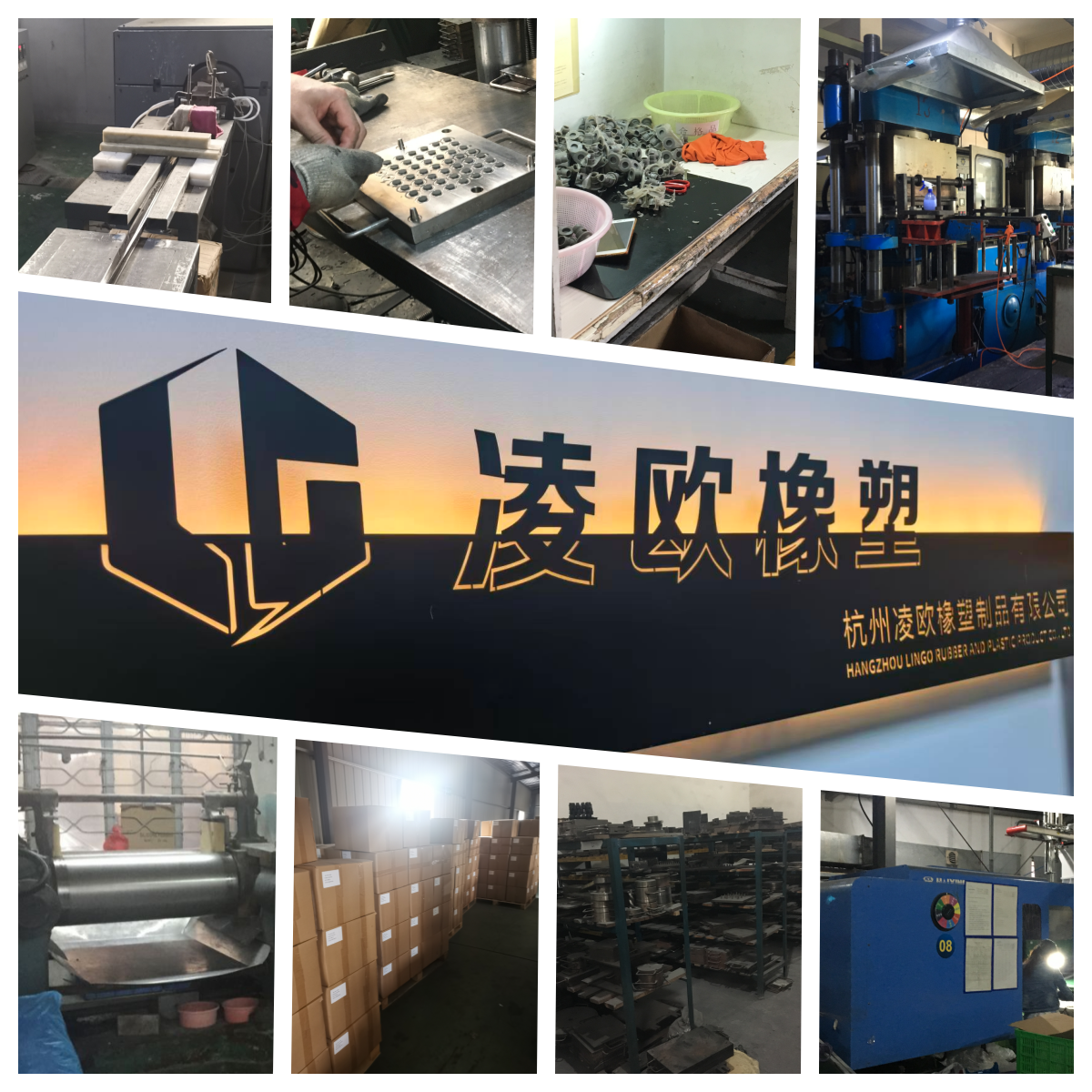
Production footprint is one input in a long-term rubber parts evaluation; order-level evidence is the other. Image: LINGO Rubber Plastic.
Why Long-Term Rubber Supply Is Decided Before the First Purchase Order
Green energy and new materials projects are specified around service lives that outlast most purchasing contracts. An EPDM rubber gasket on a battery enclosure, a silicone cord sealing a control cabinet door, a cylindrical rubber mount under an inverter skid — all are expected to hold their physical and chemical properties across years of ultraviolet exposure, thermal cycling and ozone. When these parts are bought on unit price alone, the technical risk does not disappear; it is transferred to whoever maintains the asset.
Demand-side data confirms that rubber is not a marginal material in this environment. Grand View Research valued the global gasket and seal materials market at USD 61.4 billion in 2024 and estimates that rubber seals account for approximately 56% of that market, driven by dynamic sealing applications. Vantage Market Research separately valued the global O-ring market at USD 10.41 billion in 2025. On the vibration-control side, Cognitive Market Research estimates that China holds roughly 23% of the global anti-vibration rubber mounts market. These figures describe demand. They do not tell a buyer which supplier to approve.
The decision-stage question is narrower and harder: can this supplier repeat a specification thousands of times with the same result, and will the commercial structure of the relationship survive the first reorder? A sample that performs on the bench answers neither question on its own.
A Five-Dimension Scorecard for Long-Term Rubber Parts Suppliers
Long-term supplier evaluation can be reduced to five evidence dimensions. Each should be answered with documents, retained samples or order history rather than with assurances. The dimensions are ordered by switching cost, not by the order in which buyers usually ask about them.
| Dimension | What to verify | Evidence that satisfies the check |
|---|---|---|
| 1. Production consistency | Whether the process distribution fits inside the tolerance band without sorting | Process capability index reported at CPK ≥ 1.33; first-article and sampling inspection records; measuring tools calibrated on a regular cycle per CNAS requirements |
| 2. Compound and material control | Whether the rubber compound, not just the mould, is controlled batch by batch | Vulcanisation characteristics tested per batch of compound; retained raw-material samples with traceability; additive dosage control; QUV or xenon-lamp ageing verification |
| 3. Tooling and spare parts | Who owns the mould and whether it can be maintained inside the supply relationship | Documented mould ownership terms; mould maintenance plan; in-house spare parts capability; evidence of extended mould life |
| 4. Export and commercial terms | Whether the commercial structure scales from trial order to annual programme | Flexible MOQ; T/T, L/C and D/P payment options; EXW, FOB, CIF and DDP delivery terms |
| 5. Repeat supply evidence | Whether existing customers order the same part again, and in what volume | Recurring order pattern from an automotive OEM customer; batch traceability records; stated exchange policy for defective items |
A supplier that answers all five dimensions with evidence is materially different from one that answers only the fourth.
Production Experience: What the LG-RX Seal and LGMM Mount Ranges Reveal
LINGO — Hangzhou Lingo Rubber and Plastic Product Co., Ltd — is a China-based manufacturer of rubber molded parts, rubber extruded parts, plastic injection parts and plastic extruded parts, founded in 2022. The company operates a 3,000 m² factory with around 40 employees and a 10-person R&D team, reports an annual output of 1.58 million pieces, and exports roughly 80% of production, mainly to the EU and USA. Those figures define the scale band in which the supplier operates. The more decision-relevant question is what the process evidence looks like inside that band.
Two product families illustrate how the capability is expressed at part level. Both sit in sealing and vibration isolation — the two functions that dominate green energy assemblies.
| Range | Construction and options | Typical green energy use |
|---|---|---|
| LG-RX rubber extrusion seal | Extruded profile in EPDM, NBR, silicone or FKM; hardness specified in Shore A; custom colours available. Related extrusion forms include solid rubber strips, sponge rubber extrusion strips, grooved strips, self-adhesive strips and silicone rubber strips | Door and window seal, enclosure and cabinet gaskets, EPDM rubber gasket and silicone rubber seal profiles, edge trim on battery housings |
| LGMM anti-vibration mount | Natural rubber bonded to carbon steel; diameter range 8–150 mm; tolerance held to RMA A2 | Vibration isolation mounts under inverter cabinets, cylindrical rubber mounts on skids and frames, rubber bonded-to-steel assemblies in transport structures |
Product scope as published by LINGO; material selection should still be confirmed against the specific exposure conditions of the project.
Both ranges are specified against RMA A2 for rubber components and M1–M3 for plastic parts. LINGO reports tolerance control maintained at CPK ≥ 1.33. In practical terms, a capability index at that level means the process spread is narrow enough relative to the tolerance band that a stable proportion of output falls inside limits without relying on inspection and sorting — which is precisely what fails first when a supplier scales volume.
Three production details support that position. Mould structures are developed in-house, which raises output per tool and reduces unit price; cryogenic or machine deflashing is used instead of manual trimming, which cuts labour cost and removes a common source of edge inconsistency; and low machine energy consumption feeds directly into unit cost. Spare parts are handled in-house as well, which matters over a multi-year programme because tooling maintenance no longer depends on an outside vendor's queue.

Dimensional inspection is a control point, not a sorting step: capability is demonstrated before the batch, not after it. Image: LINGO Rubber Plastic.
Batch-to-Batch Consistency: The Failure Modes Buyers Should Test For
Long-term supply fails in predictable ways, and each failure mode has an observable control. Buyers who ask about these four mechanisms learn more about a supplier's process discipline than any capability brochure can convey.
| Failure mode | Control method | Supplier-side measure to request |
|---|---|---|
| Hardening or softening through ageing | Weather-resistant base polymer; light stabilisers, antioxidants and anti-ozone agents; surface protective coating | QUV or xenon-lamp ageing verification; controlled additive dosage; batch traceability; accelerated ageing testing in a reliability laboratory |
| Blooming — frost appearing on the surface | Formulation adjusted so additive dosage stays within the solubility limit; correct vulcanisation, avoiding both under- and over-cure | Vulcanisation characteristics tested per batch of compound; supplier quality agreement requiring test reports; retained samples of core raw materials |
| Inconsistent surface gloss | Mould surface maintained; moulding parameters (temperature, pressure, speed) standardised | Mould maintenance plan with regular surface checks; standardised process parameters; gloss testing on the first piece |
| Dimension out of tolerance | Process parameters controlled (machine pressure, cure or injection time); shrinkage simulated at mould design; moulds and gauges calibrated | Sampling inspection records; gauges calibrated on a regular cycle per CNAS requirements; cavity pressure monitoring in real time |
Four failure modes, four verifiable controls — the structure a technical reviewer can check line by line.
The pattern is consistent: every failure mode is governed upstream of final inspection. A supplier that tests compound per batch, retains raw-material samples and monitors cavity pressure is managing variance; a supplier that inspects finished parts is managing the consequences of variance. For a green energy buyer committing to a ten-year asset, only the first approach is transferable across orders.
Export Experience: Terms That Decide Whether a Long Relationship Is Workable
Technical capability is necessary but not sufficient. A supplier that cannot structure an export order to match the buyer's cash flow and logistics model creates friction on every reorder, and friction is what erodes long-term relationships.
LINGO offers flexible MOQ, which allows a first production order to be sized to a pilot installation rather than to a container. Payment can be structured as T/T, L/C or D/P — a range that covers small trial orders, documentary-credit-backed capital projects and open-account relationships with established buyers. Delivery is quoted on EXW, FOB, CIF or DDP terms, so the buyer can choose between controlling freight and handing over the door-to-door leg.
On timing, LINGO's published profile lists a standard lead time of 4–6 weeks for tooling and samples and 3–4 weeks for production parts. On classification, HS code 4016.93 covers gaskets, washers and other seals of vulcanised rubber other than hard rubber, and is the heading that most sealing shipments fall under; duty treatment and customs documentation follow from that classification and should be confirmed for the destination market before the first shipment.
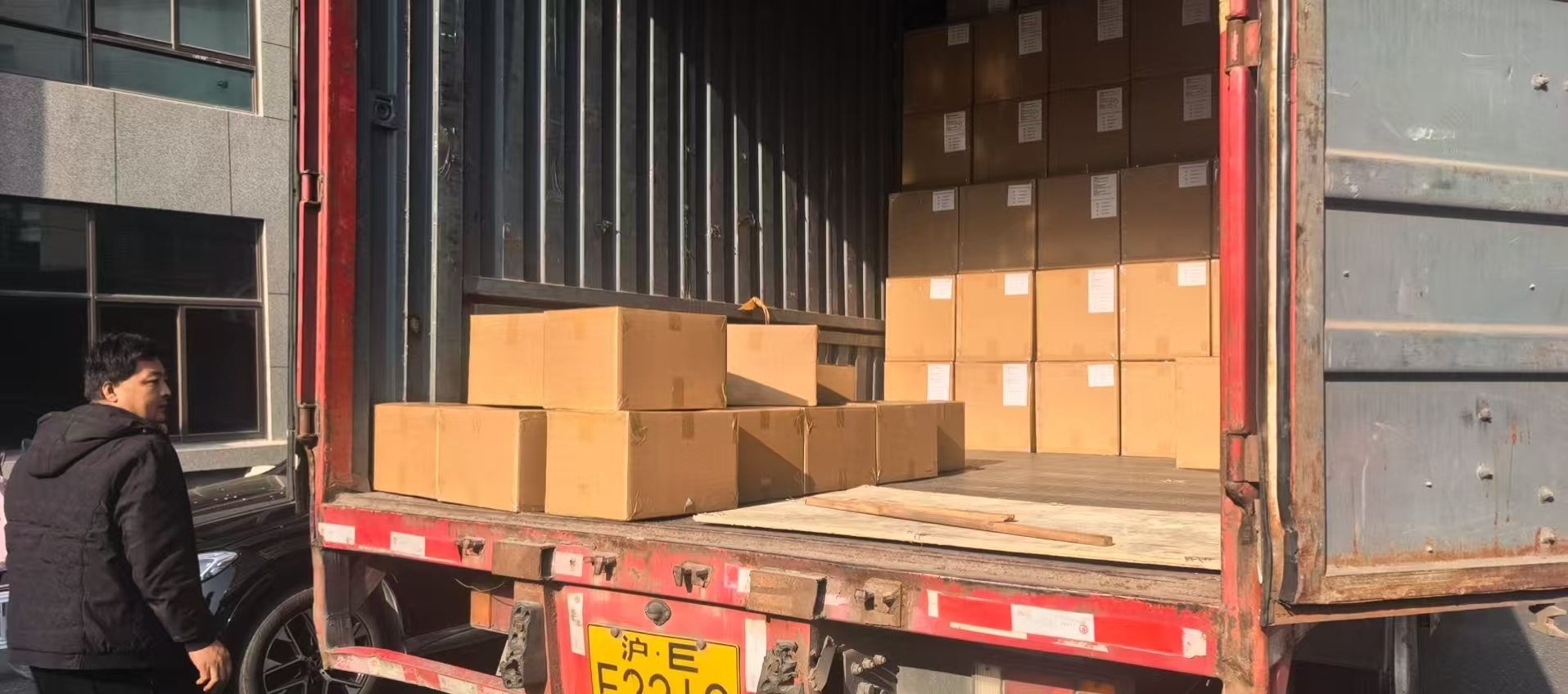
Export terms are part of the technical specification: MOQ, payment method and Incoterm determine how quickly a pilot order can become an annual programme. Image: LINGO Rubber Plastic.
Evidence of Repeat Supply: What a 10,000–40,000-Piece Order Pattern Shows
A U.S. automotive OEM customer places recurring orders with LINGO in the 10,000–40,000 piece range. That single fact carries more decision weight than a sample approval, and it is worth being precise about why.
First, the volume band is the awkward one. It is too large to be produced by hand and too small to justify a dedicated line, so it exposes whether changeovers, mould maintenance and compound batching are actually controlled. Second, the orders recur, which means the parts passed the customer's own incoming inspection more than once. Third, an automotive OEM relationship normally requires documentation: batch traceability is maintained so that a delivered lot can be traced back to its compound and process record.
Two commercial protections reinforce the technical evidence. Mould ownership is protected contractually, so the tooling built for a buyer's part is not redeployed at will. And LINGO states a free exchange policy for defective items, which converts a quality dispute from a negotiation into a defined transaction. For a procurement team, that is the difference between a supplier with a warranty and a supplier with a warranty process.
Comparison: Structured Evaluation versus Price-Led Sourcing
The alternative to a five-dimension evaluation is not incompetence; it is a rational response to short project cycles. The comparison below shows where each approach holds and where it breaks.
| Criterion | Price-led sourcing | Structured long-term evaluation |
|---|---|---|
| Cost visibility | Unit price is visible; tooling, inspection and failure cost are not | Unit price plus defect rate, mould life and replacement cost, per LINGO's stated cost logic |
| Consistency risk | Discovered at incoming inspection or in the field | Tested in advance through CPK ≥ 1.33 capability data and batch compound testing |
| Tooling position | Ownership often undocumented | Mould ownership protection written into the agreement; maintenance planned |
| Service path | Depends on the individual sales contact | Defined after-sales route with stated exchange terms; short lead time for follow-up orders |
| Suitable for | One-off, non-critical, short-life assemblies | Components specified for multi-year service in the field |
Boundaries that should be stated plainly. LINGO's operating history dates from 2022, so a buyer cannot lean on decades of corporate track record; the substitute is order-level evidence — batch traceability, recurring OEM orders and defined exchange terms — which is verifiable but narrower in scope than a long institutional history. Tooling and samples require a standard 4–6 weeks before production parts begin at 3–4 weeks, so evaluation has to start ahead of the installation schedule rather than alongside it. A single-site operation of 3,000 m² with around 40 employees fits custom and mid-volume programmes; a buyer planning very large single-source commodity volumes should confirm capacity in advance or plan a dual-source structure. Finally, material performance in outdoor green energy applications depends on compound formulation and UV exposure, so EPDM and FKM selections should be validated with ageing data for the specific site conditions rather than assumed from the material name.
Market Trend Analysis: Growth Signals and Their Limits
Published forecasts for the industrial rubber market disagree by an order of magnitude, and buyers should treat that disagreement as information rather than noise. Persistence Market Research estimates the global industrial rubber market at USD 181.5 billion in 2026, reaching USD 299.2 billion by 2033. Mordor Intelligence projects the same category growing from USD 16.88 billion in 2026 to USD 20.36 billion by 2031, a CAGR of 3.81%. The two figures are not reconcilable without their full methodologies, because the product boundaries and included segments differ. Averaging them would produce a number that describes nothing.
The usable conclusion is procedural: contract volumes should be sized from the buyer's own project pipeline and confirmed order history, not from a single market forecast. What the data does support is directional — sealing and vibration isolation remain rubber-dominated categories, rubber seals hold a majority share of the gasket and seal materials market, and China remains a significant supply base for anti-vibration mounts. For a procurement team, that argues for building supplier relationships that can absorb volume growth rather than locking into the lowest current quotation.
Future Outlook
Three shifts are likely to shape how rubber parts suppliers are evaluated over the next procurement cycles. The first is documentation depth: as green energy assets move into performance-guarantee periods, buyers increasingly need batch-level traceability and ageing test records, not just certificates. Suppliers that already retain raw-material samples per batch and test vulcanisation characteristics per compound are positioned for that requirement.
The second is material differentiation. As EPDM, silicone and FKM selections become specifications rather than suggestions, the ability to modify a compound formula to extend service life becomes a qualification criterion in its own right, alongside hardness and colour control. The third is supply continuity: in-house mould design and spare-parts capability reduce dependence on external tooling vendors, which is the failure point most often invisible during supplier selection.
FAQ
How should a buyer compare rubber parts suppliers at the decision stage?
Compare on five evidence dimensions rather than on unit price: production consistency measured by a capability index, compound control per batch, tooling ownership and maintenance, export and commercial terms, and repeat-order history. A supplier that can document CPK ≥ 1.33 and RMA A2 compliance on rubber parts answers the first dimension with data; one that offers only a price list does not answer it at all.
What production evidence shows a supplier can hold batch-to-batch consistency?
Look for upstream controls: vulcanisation characteristics tested for each batch of rubber compound, retained samples of core raw materials with traceability, additive dosage kept within solubility limits to prevent blooming, a mould maintenance plan with surface checks, gauge calibration on a regular cycle per CNAS requirements, and real-time cavity pressure monitoring. Sampling inspection of finished parts alone does not demonstrate consistency, because it detects variance after the fact.
Which export terms matter when qualifying a rubber parts supplier for a multi-year programme?
Four items determine whether repeat ordering stays frictionless: MOQ flexibility, so a pilot order can be sized to a trial installation; payment options covering T/T, L/C and D/P; delivery terms spanning EXW, FOB, CIF and DDP; and lead time. LINGO's published standard is 4–6 weeks for tooling and samples and 3–4 weeks for production parts. Sealing shipments commonly fall under HS code 4016.93, so duty treatment should be confirmed for the destination market.
Why does a recurring 10,000–40,000-piece order matter more than a sample approval?
A sample proves a process can meet a specification once. A recurring order in that range proves the process meets it repeatedly, and the volume band itself is demanding: too large for manual production, too small for a dedicated line, so it exposes changeover discipline, mould maintenance and compound batching. Combined with batch traceability, it provides a documented performance record rather than an assurance.
What are the limits of evaluating a supplier that was founded in 2022?
The limitation is corporate history, not capability. Buyers cannot substitute decades of track record, so the evaluation should rely on what is verifiable at order level: batch traceability records, the recurring U.S. automotive OEM order pattern, contractual mould ownership protection, a stated free exchange policy for defective items, and capability data at CPK ≥ 1.33. Where a project requires a longer institutional record or very large single-source volumes, dual-sourcing or advance capacity confirmation is the prudent structure.
A company profile covering process capability, product scope and export terms is available for download: LINGO Rubber & Plastic Company Profile (PDF).
Есть вопросы или нужны дополнительные детали?
Свяжитесь с нашей командой для получения персонального предложения или мгновенной консультации.
Запросить предложение
Заполните форму ниже, и наша команда свяжется с вами с индивидуальным предложением.
Прямой чат WhatsApp
Предпочитаете общаться в реальном времени? Напишите нам в WhatsApp для мгновенной помощи и быстрых ответов.
- Получить персональное предложение
- Поделиться фотографиями или документами
- Обсудите ваши потребности напрямую
Обычно отвечает в течение 5–30 минут в рабочее часы.