
Green Energy Rubber Parts Shortlist: Seals, Cords & Mounts for Export-Ready Projects
Green Energy Rubber Parts Shortlist: Seals, Cords & Mounts for Export-Ready Projects
Rubber parts account for a small share of the bill of materials in a photovoltaic, battery-storage, EV-charging or water-treatment installation, yet they frequently decide whether the finished unit passes its enclosure, noise and durability tests. For OEMs moving into green energy and new materials projects, the practical question is not whether rubber parts are needed, but which part families can be sourced reliably enough to survive export documentation, batch traceability and multi-year service life.
This shortlist reviews four part families — extrusion seals, silicone cords, sealing rings and cylindrical anti-vibration mounts — that cover the majority of sealing and vibration-control positions in energy equipment. Each entry is described with its available materials, dimensional and hardness parameters, and the specific function it performs. The list is built around the production and export capabilities of Hangzhou Lingo Rubber and Plastic Product Co., Ltd (LINGO), a China-based manufacturer of rubber molding parts, rubber extruded parts, plastic injection parts and plastic extruded parts, with roughly 80% of output shipped to EU and USA markets.
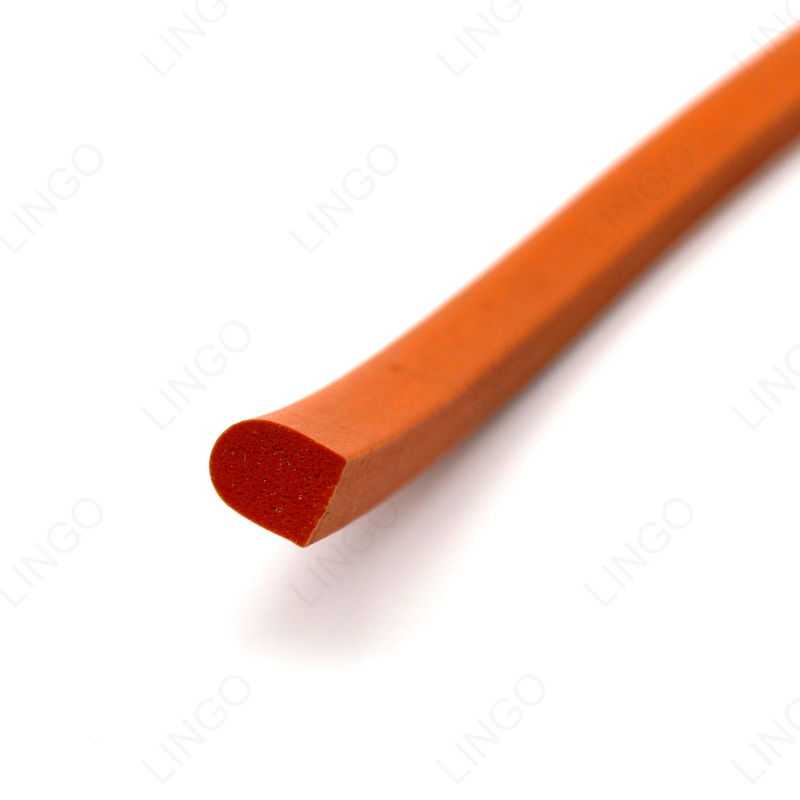
Silicone sponge and solid cord profiles are among the four part families shortlisted for export-oriented energy projects.
Why Sealing and Damping Parts Matter More in Green Energy Builds
Sealing and vibration-control components sit at the interface between a system and its environment. In green energy equipment, that interface is unusually demanding: outdoor installations see UV, ozone and wide temperature swings; battery enclosures must resist water and dust ingress; power electronics generate continuous low-amplitude vibration; and control cabinets in industrial settings are expected to remain quiet over years of operation.
The commercial weight of these parts is visible in third-party market data. Grand View Research reported that the global gasket and seal materials market reached USD 61.4 billion in 2024, with rubber-based seals accounting for approximately 56% of that market on the strength of dynamic sealing applications. Vantage Market Research valued the global O-ring sub-segment at USD 10.41 billion in 2025. On the vibration side, Cognitive Market Research identified China as holding approximately 23% of the global anti-vibration rubber mounts market in 2024 — a relevant supply-chain signal for buyers shortlisting Asian manufacturers.
Trade classification also matters at the export stage. Under the Harmonized Tariff Schedule, code 4016.93 covers gaskets, washers and other seals of vulcanized rubber other than hard rubber, including O-rings and oil seals for automotive use. Buyers preparing import documentation for energy projects should confirm the correct classification with their customs broker before shipment.
Selection Criteria Behind This Shortlist
Four criteria were applied when assembling this list:
- Material coverage. The supplier must offer the elastomers that energy projects actually specify — EPDM for weathering, silicone for temperature range and food-contact positions, NBR for oil resistance and FKM for higher-temperature and chemical exposure.
- Process fit. Continuous profiles and compression-molded geometries solve different problems. A shortlist that only covers one process leaves gaps at complex geometries.
- Specification depth. Hardness, tolerance, length and colour must be adjustable per project rather than fixed to a catalogue standard.
- Export readiness. Incoterms, pre-shipment testing, batch traceability and documented certification are prerequisites for any part entering a cross-border energy programme.
LINGO's founding team has spent over ten years — and in some cases more than twenty — working inside the rubber and plastics industry, and the company's production base in Hangzhou operates a 3,000 m² facility with a dedicated ten-person R&D team. Its product range spans rubber compression molding parts, rubber extrusions, plastic injection parts and plastic extrusion profiles.
The Shortlist at a Glance
| Part family | Model | Materials | Key specifications | Primary function |
|---|---|---|---|---|
| Rubber extrusion seals | LG-RX | EPDM, NBR, silicone, FKM | Shore A as required; solid, sponge, adhesive-backed and co-extruded variants; length as required; colour per Pantone or RAL | Continuous sealing of frames, doors, panels and enclosures |
| Silicone rubber cords | LG-SRC | Silicone rubber | Solid and sponge constructions; FDA qualified; custom length and colour | Compressible gap sealing with heat and weather resistance |
| Rubber sealing rings | LG-RS | NBR, EPDM, silicone, NR, CR, SBR, FKM, FFKM, AFLAS | Shore A normally 50–95A; −40°C to 250°C; FDA, UL, RoHS, REACH; colour per Pantone or RAL | Fluid, oil and water sealing at static and dynamic joints |
| Cylindrical anti-vibration mounts | LGMM | Natural rubber with steel | Diameter 8–150 mm; height 8–90 mm; RMA A2 tolerance | Vibration damping, noise reduction and component protection |
LG-RX Rubber Extrusion Seals: Continuous Sealing for Frames and Enclosures
Extruded seals are the workhorse of enclosure design. They are produced as a continuous profile and cut to length, which makes them suitable for long, uniform sealing runs such as cabinet doors, container frames, window and door perimeters, and equipment housings where a molded gasket would require multiple joints.
The LG-RX family is available in EPDM, NBR, silicone and FKM, with hardness specified in Shore A according to the application and length cut to the buyer's requirement. Colour can be matched to a Pantone or RAL reference. Six construction variants are offered: solid extrusion, sponge extrusion, adhesive-backed extrusion, co-extruded profiles, silicone extrusion seals and FKM extrusion seals. The adhesive-backed version is relevant where installation labour is a constraint, while the sponge version allows higher compression at lower closing force.
Listed application industries for this family include automotive and transportation, HVAC and refrigeration, electronics and electrical, industrial manufacturing, medical and healthcare, food and beverage, aerospace and aviation, marine and offshore, and household appliances. For green energy equipment, the most common fits are door and window seals on inverter and switchgear cabinets, battery enclosure perimeter seals, and weatherstripping on outdoor housings.
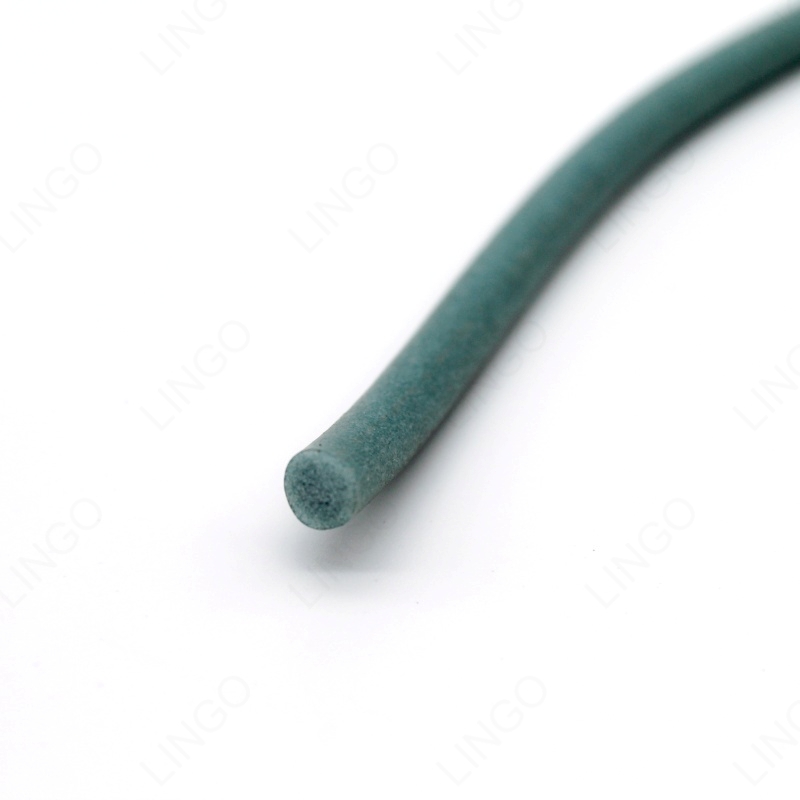
Silicone sponge cord supplied in 4,000-metre project quantities for sealing duties from EV battery housings to industrial cabinets.
LG-SRC Silicone Rubber Cords: Solid and Sponge Cord for Compressible Seals
Where a seal has to be field-fitted into a groove rather than bonded to a surface, cord stock is often the simpler choice. LG-SRC covers solid silicone rubber cords and sponge silicone rubber cords, both offered in custom length and custom colour matched to Pantone or RAL, with FDA-qualified material options and heat resistance as defining characteristics.
Project data from a Middle East automotive OEM programme illustrates what this family can carry. That project, executed in the United Arab Emirates, involved 4,000 metres of silicone sponge cord over a three-year period. Reported performance characteristics included thermal stability from −60°C to 250°C without hardening or cracking, UV and ozone resistance for outdoor duty, closed-cell construction that blocks water, dust and noise, and non-toxic construction with FDA-compliant options for food and medical uses. The same profile type appears in EV battery sealing, industrial cabinet gaskets, automotive door seals, appliance door insulation, building window weatherstripping and medical device sealing.
LG-RS Rubber Sealing Rings: Media and Fluid Sealing
Ring seals close the small, high-consequence joints: pump housings, valve bodies, sensor ports, water-treatment fittings and cooling-loop connections. LG-RS covers rubber O-rings, rubber X-rings and rubber oil seals in NBR, EPDM, silicone, NR, CR, SBR, FKM, FFKM and AFLAS, so a buyer can match the compound to the medium being sealed rather than compromising on one material across the whole assembly.
The family is specified at Shore A hardness normally between 50A and 95A, with an operating temperature range of −40°C to 250°C. Documented performance includes ozone resistance, water resistance and oil resistance, and the product line carries FDA, UL, RoHS and REACH references, with colour customizable to Pantone or RAL. Typical application sectors span automotive and transportation, aerospace and aviation, oil, gas and chemical processing, food and beverage, pharmaceutical and medical devices, water treatment and plumbing, electronics and electrical, marine and shipbuilding, and heavy machinery and hydraulics.
One material safety data sheet on file, dated 12 December 2025 and covering USA and EU markets, supports documentation review for the FK700 compound associated with this product family. A CTI test report (certificate number A2260538692101, issued 3 July 2026) confirms UL 94 V-0 vertical burning performance for CR Neoprene rubber, which is relevant where flame-retardant behaviour is part of the enclosure specification. PPAP documentation is also held across the rubber seal, anti-vibration mount, extrusion seal and silicone cord lines, which matters for automotive-linked energy programmes.
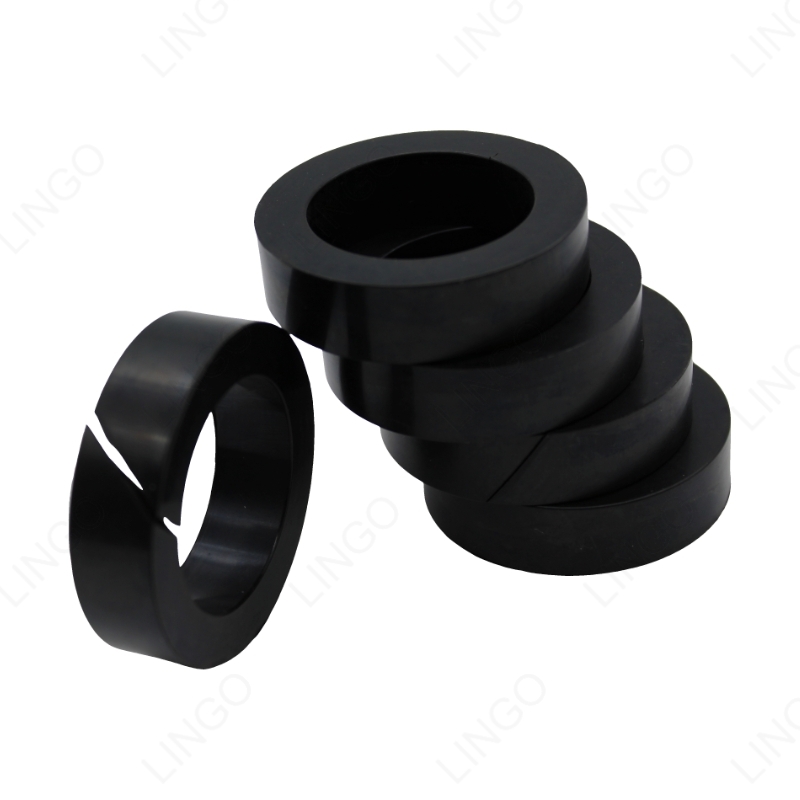
NBR oil seals and ring seals cover water, oil and media sealing positions across the LG-RS family.
LGMM Cylindrical Anti-Vibration Mounts: Damping, Noise and Component Protection
Vibration control is the second half of the shortlist, and it is where the green energy build-out is generating new demand. Power electronics, compressors, pumps and rotating machinery all transmit vibration into structures and into the components mounted on them. Unmanaged, that vibration shows up as noise, fatigue cracking in brackets, and accelerated wear in sensitive devices.
LGMM cylindrical rubber mounts and rubber stud mounts are built from natural rubber bonded to steel, with zinc-coated steel used where specified. The catalogue range covers diameters from 8 mm to 150 mm and heights from 8 mm to 90 mm, with tolerance held to the RMA A2 standard. Listed application industries include transportation, industrial machinery, electronics and precision instruments, construction and civil engineering, and marine and military equipment.
In practice, a mount is selected by three parameters: the static load it must carry, the frequency range it must isolate, and the space available around the fixing point. Because LGMM mounts span a wide diameter and height range, they can serve both compact electronics enclosures and larger machinery skids, provided the load case sits within the published dimensional envelope.
Mapping Each Part to Its Function
The four families are not interchangeable. Mapping them to function makes the selection logic explicit:
- Vibration damping. LGMM cylindrical mounts are the primary choice. A reported automotive programme using this product family described effective damping of vibration and absorption of impact energy, with the case application explicitly described as designed to absorb vibration and reduce noise.
- Noise reduction. Two mechanisms apply. Sponge and closed-cell cord profiles such as LG-SRC block airborne paths through gaps, while LGMM mounts break the structural transmission path between a vibrating machine and the panel or frame it is bolted to. A separate US automotive case reported a 45% reduction in peak vibration amplitude in test data, alongside consistent damping under extreme temperature and load conditions.
- Component protection. Extrusion seals and ring seals protect against water, dust, ozone and media ingress — the failure modes that drive warranty claims in outdoor installations. Anti-vibration mounts protect electronics and precision instruments from shock and oscillation damage.
Export Logistics, Testing and Traceability
Parts that are technically correct but logistically awkward still stop a project. LINGO quotes EXW, FOB, CIF and DDP terms, which allows buyers to align the shipment with existing freight contracts or hand over the full delivery obligation. Minimum order quantities vary by part, and the company states that it accepts small quantity orders — useful during sample validation before a full programme release.
Quality control follows a two-stage pattern: full inspection of samples, then random inspection of bulk goods. Acceptance criteria are defined around pre-shipment testing, and a batch traceability system sits behind the after-sales process alongside remote technical support, mold maintenance and ownership protection, and free exchange or acceptance of concessions where applicable.
Production capacity is quoted at up to 1,000,000 kg per month across the OEM and ODM service lines, with lead times typically in the 2 to 6 week range depending on part and process; tooling and sample stages generally sit at the longer end of that window. Export markets recorded for these services are the EU, the Middle East and the USA.
Field Evidence: How These Parts Perform in Real Projects
US automotive OEM, anti-vibration application. A recurring programme for a US automotive OEM runs at 10,000 to 40,000 pieces per order, with orders placed several times each year. The parts are designed to absorb vibration and reduce noise. Reported results include effective damping of vibration and absorption of impact energy, reduced noise and mechanical stress, smooth motion control, and protection of sensitive components from shock and oscillation damage. Three production details stand out for buyers: small part size with tight tolerances and consistent batch-to-batch quality; an in-house spare parts inventory maintained to accommodate urgent orders; and a tooling approach in which a single middle plate is machined to the required dimensions for use with existing mold sets instead of building a new mold, which lowers initial tooling investment.
US automotive programme, flame-retardant requirement. A separate 500-piece order, placed four times per year, combined vibration absorption with a flame-retardant rubber compound certified to UL 94 V-0. Reported outcomes included consistent damping under extreme temperature and load conditions, a 45% reduction in peak vibration amplitude in test data, and fire-safety performance. The parts were produced from existing tooling.
United Arab Emirates, silicone sponge cord sealing. A three-year programme supplied 4,000 metres of silicone sponge cord to an automotive OEM, with the profile used across EV battery sealing, industrial cabinet gaskets, automotive door seals, appliance door insulation, building window weatherstripping and medical device sealing.
Water sealing, multi-market delivery. A 1,000-unit programme for automotive OEM, water treatment equipment and food industry clients across the US, GB, CA, AU, FR and DE achieved stable operation with dimensions held inside tolerance and zero claims over a three-year period. The reported engineering challenges were holding a metal spring precisely centred during rubber production without a positioning point, meeting FDA material requirements with white rubber free of contamination, and holding precision beyond ASTM A1 standards.
Limits and Where These Parts Are Not the Right Fit
A shortlist is only credible if it states its boundaries. Three constraints apply to the families above.
First, LGMM cylindrical mounts are catalogued from 8 mm to 150 mm in diameter and 8 mm to 90 mm in height, with RMA A2 tolerance. Applications that fall outside that dimensional envelope, or that require tolerances tighter than RMA A2 as a standing requirement, need case-by-case engineering review rather than an off-the-shelf selection.
Second, extrusion is a continuous-profile process. It is efficient for long, uniform sealing runs, but it is not the right route for three-dimensional sealing geometries, closed loops with complex curvature, or parts that must be molded around an insert. Those positions belong with compression molding or rubber-to-metal bonded components.
Third, the material shortlist is only as good as the medium it faces. Selecting EPDM for an oil-exposed joint, or NBR for a heavily ozone-exposed outdoor joint, will shorten service life regardless of manufacturing quality. Material choice must be driven by the actual fluid, temperature range and UV exposure of the specific position — not by what was used on a neighbouring assembly.
Material Trade-Offs Buyers Should Weigh
| Material | Where it is typically chosen | Trade-off to consider |
|---|---|---|
| EPDM | Outdoor seals, weatherstripping, water-facing joints | Strong weathering performance; not the default answer for oil contact |
| Silicone | High-temperature positions, FDA and medical contact, sponge cord | Wide temperature window from a silicone sponge case reported at −60°C to 250°C; mechanical strength is generally lower than NBR or FKM systems |
| NBR | Oil seals, hydraulic and lubricant-exposed joints | Good oil resistance; outdoor ozone exposure requires protection or a different compound |
| FKM / FFKM / AFLAS | Aggressive chemicals and elevated temperatures | Highest material cost on the shortlist; reserve for positions that genuinely require it |
| Natural rubber with steel | Anti-vibration mounts | Excellent for dynamic damping; not intended as a chemical-resistance seal |
Procurement Checklist for Export-Ready Projects
- Confirm the sealing medium, continuous temperature range and UV exposure before selecting a compound.
- Confirm whether the position needs a continuous extruded profile, a molded ring, or a bonded metal-to-rubber mount.
- Validate hardness in Shore A, colour reference (Pantone or RAL), and cut length on a sample before bulk release.
- For mounts, verify the load case against the 8–150 mm diameter and 8–90 mm height range and confirm that RMA A2 tolerance is acceptable.
- Agree the Incoterm — EXW, FOB, CIF or DDP — before quotation, since it changes the landed cost calculation.
- Confirm the acceptance criteria in writing; the stated standard is pre-shipment testing.
- Request the certification pack that applies: FDA, UL, RoHS and REACH for ring seals; UL 94 V-0 test reporting for flame-retardant compounds; PPAP where an automotive-linked programme requires it.
- Confirm batch traceability arrangements and the spare parts policy for urgent requirements.
- Verify customs classification, for example HS 4016.93 for vulcanized rubber gaskets, washers and seals, with your broker.
Future Outlook
Demand-side signals point consistently upward, though the supply-side forecasts deserve caution. Persistence Market Research reported the global industrial rubber market at US$181.5 billion in 2026, rising to US$299.2 billion by 2033; Mordor Intelligence projected the same broad market growing from US$16.88 billion in 2026 to US$20.36 billion by 2031 at a CAGR of 3.81%. The two figures use different product boundaries and assumptions and should be treated as separate estimates rather than averaged together — a reminder that market sizing in this sector is scope-sensitive.
What is less ambiguous is the direction of specification. Energy equipment buyers are pushing sealing and damping requirements upward: longer service life, documented flammability performance, food-contact compliance where relevant, and traceability that survives an audit. Suppliers whose product families already carry FDA, UL, RoHS, REACH and PPAP documentation, and who can quote multiple Incoterms with pre-shipment testing, are better positioned for that shift than suppliers selling on unit price alone. A downloadable company profile for LINGO Rubber & Plastic, covering the full product range and capability set, is available at the LINGO Rubber & Plastic company profile PDF.
FAQ
What order quantities and delivery terms apply to these rubber parts?
Minimum order quantity differs by part, and small quantity orders are accepted. Delivery terms quoted are EXW, FOB, CIF and DDP. Payment arrangements include T/T as the standard option with a deposit for first-time or small orders and the balance before shipment, L/C at sight for larger quantities, D/P for certain destinations subject to agreement, PayPal for sample or low-value payments, and credit terms for established customers with a consistent payment record.
How is quality verified before shipment?
Quality control is structured in two stages: full inspection of samples, followed by random inspection of bulk goods. The stated acceptance criterion is pre-shipment testing. A batch traceability system supports the after-sales process, together with remote technical support and mold maintenance and ownership protection.
Which materials and hardness ranges are available for extrusion seals and sealing rings?
Rubber extrusion seals (LG-RX) are available in EPDM, NBR, silicone and FKM, with hardness specified in Shore A as required, length as required, and colour matched to Pantone or RAL. Rubber sealing rings (LG-RS) are available in NBR, EPDM, silicone, NR, CR, SBR, FKM, FFKM and AFLAS, with hardness normally between 50A and 95A and an operating temperature range of −40°C to 250°C.
What are the dimensional limits of the cylindrical anti-vibration mounts?
LGMM cylindrical rubber mounts and rubber stud mounts are catalogued with diameters from 8 mm to 150 mm and heights from 8 mm to 90 mm, at RMA A2 tolerance. The construction is natural rubber bonded to steel, with zinc-coated steel used where specified. Positions outside that dimensional envelope require separate engineering review.
What lead times should buyers plan for?
Quoted lead times typically run from 2 to 6 weeks depending on the part and process, with tooling and sample stages generally at the longer end of that window. Quoted monthly capacity across the OEM and ODM service lines is up to 1,000,000 kg.
Which certifications and compliance documents are associated with these product families?
Sealing rings carry FDA, UL, RoHS and REACH references. A CTI test report, certificate number A2260538692101 issued 3 July 2026, confirms UL 94 V-0 vertical burning performance for CR Neoprene rubber. A material safety data sheet for the FK700 compound, dated 12 December 2025, covers USA and EU markets. PPAP documentation is held across the rubber seal, anti-vibration mount, extrusion seal and silicone cord lines.
Есть вопросы или нужны дополнительные детали?
Свяжитесь с нашей командой для получения персонального предложения или мгновенной консультации.
Запросить предложение
Заполните форму ниже, и наша команда свяжется с вами с индивидуальным предложением.
Прямой чат WhatsApp
Предпочитаете общаться в реальном времени? Напишите нам в WhatsApp для мгновенной помощи и быстрых ответов.
- Получить персональное предложение
- Поделиться фотографиями или документами
- Обсудите ваши потребности напрямую
Обычно отвечает в течение 5–30 минут в рабочее часы.