
Grinding Machine FAQ: Specs, Power and Steel Processing
Most steel pipe grinding projects are decided on detail rather than on concept. A buyer already knows the process needs a finishing machine; the open question is whether a specific unit will hold the required surface over the actual diameter, length and material mix running through the plant — and whether it will connect to the power supply that is already installed.
This reference answers the questions that recur in steel pipe and round steel procurement, and it answers them with stated figures rather than ranges of convenience. The data below comes from the published product specification of Jiangyin West Machinery Manufacturing Co., Ltd, trading under the brand West — a grinding machine manufacturer based in Jiangyin, Jiangsu Province, China, established in 2010, operating a 6,000 m² facility across welding, machining and assembly workshops, and producing grinding machines, steel pipe grinding machines, round steel grinding machines, internal hole grinding machines and round steel finishing lines.
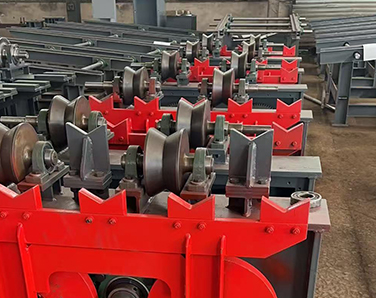
A steel pipe grinding machine positioned for external surface conditioning. Processing envelope and surface targets, not machine size alone, determine whether a given unit fits a production line.
Why Specification Questions Decide the Purchase
A processing range written as 20–300 mm describes the window a machine can accept. It does not describe where inside that window the machine delivers its stated surface quality, or how throughput changes as the workpiece approaches either end of the range. Those are separate questions, and suppliers that answer only the first tend to produce change orders after installation.
The same logic applies to power. A machine rated across a 5.5–22 kW band is not a single product with a wide tolerance; it is a configuration family in which the motor specified for a given order depends on the workpiece, the material removal required and the duty cycle. Reading the band as if it were a fixed value is one of the most common interpretation errors in early-stage evaluation.
For buyers moving from evaluation into execution, the practical task is to convert a plant requirement into a configuration request that a manufacturer can answer precisely. The sections below follow that sequence: envelope, surface, speed, power, protection, customization and evidence.
Processing Envelope: Diameter, Length and Material
Steel pipe grinding machines in the West range are specified for a processing diameter of 20–300 mm and a processing length of 500–6000 mm. Workpiece materials named in the specification are carbon steel, alloy steel and SS304 stainless steel. Applicable industries listed are steel manufacturing, metal processing, metallurgical industry and hardware manufacturing.
| Parameter | Stated Value | What It Means for the Buyer |
|---|---|---|
| Processing diameter | 20–300 mm | Workpieces below 20 mm or above 300 mm fall outside the standard stated envelope and should be raised as a customized processing range in the RFQ. |
| Processing length | 500–6000 mm | Shorter cut lengths and longer line lengths need confirmation against the actual fixture and material handling arrangement. |
| Surface roughness | Ra ≤ 0.8 μm | A finish target, not a universal output. Achievability depends on incoming surface condition, abrasive and pass strategy. |
| Feed speed | 0.5–10 m/min | The primary lever between finish quality and throughput within the qualified range. |
| Power range | 5.5–22 kW | Configuration-dependent; the specified motor follows the workpiece and removal duty, not the catalogue maximum. |
| Power supply | 380V/50Hz, 3Phase | The standard build assumption. Other grids require a voltage or control-system customization. |
| Protection grade | IP54 | Dust-protected and splash-resistant. Not a washdown or submersible rating. |
| Materials | Carbon steel, alloy steel, SS304 stainless steel | Material grade affects abrasive choice and pass strategy more than it affects the machine frame. |
The diameter and length figures matter most during line integration, because a machine that fits the pipe does not automatically fit the bay. A 6,000 mm maximum length implies a material handling arrangement with entry and exit support across that span; buyers planning a retrofit should confirm floor space and crane access before committing to the upper end of the range.
Surface Finish: What Ra ≤ 0.8 μm Actually Means
Surface roughness of Ra ≤ 0.8 μm is the finishing target stated for the West steel pipe grinding machine range. In procurement terms, Ra is a measured average deviation of the surface profile from a mean line, and it is specified after the fact — on the finished pipe, under stated measurement conditions.
Two consequences follow. First, the same machine can meet Ra ≤ 0.8 μm on one incoming condition and miss it on another, because the starting surface, the abrasive specification and the number of passes all move the result. Second, a supplier quoting a roughness value without stating the measurement conditions is providing an incomplete specification. Buyers should ask for the roughness target together with the incoming surface condition and the material it was demonstrated on.
For stainless steel internal surfaces, a related reference point exists outside the machine specification itself. ASTM B912 covers electropolishing of stainless steel alloys and is directly relevant where internal hole grinding and polishing feed a downstream electropolishing step. A mechanical finish and an electropolished finish are not interchangeable specifications, and buyers specifying hygienic or corrosion-critical tubing should identify which one the purchase actually requires before fixing an Ra target.
Feed Speed and Throughput
Feed speed across the West range is stated at 0.5–10 m/min. This is the parameter that most directly converts a finish requirement into a production rate, because slower feed generally supports a finer surface while faster feed supports higher line throughput.
The practical implication for capacity planning is that a single headline throughput figure is close to meaningless without the roughness it was achieved at. A line quoted at the fast end of the feed range and a line quoted at the slow end are answering different questions. Buyers comparing proposals should insist that any throughput number be presented together with the feed speed, the diameter and the finish target it corresponds to.
Where a plant runs a mixed order book — some structural pipe at moderate finish, some pressure or process pipe at fine finish — the feed range should be assessed as a scheduling tool rather than a single set point. Machines that can be dialled across the range without mechanical reconfiguration support mixed production more comfortably than fixed-speed units.
Power Supply, Motor Rating and Protection Grade
Electrical supply
The standard power supply stated for the West steel pipe grinding machine range is 380V/50Hz, three-phase. This matches the industrial supply in China and in a number of other markets, but it is not universal. Plants operating on a different voltage or frequency have two realistic paths: an external transformer or converter, or a machine built for the local supply.
West lists voltage and control system among its customization options, which places supply matching in the quotation stage rather than the installation stage. That distinction is worth money — a machine retrofitted on site carries additional cost, additional commissioning time and a modified warranty position compared with one built correctly at the factory.
Motor power
The stated power range is 5.5–22 kW. The band spans substantially different machine duties. At the lower end, the configuration suits lighter removal and smaller workpiece sections; at the upper end, it suits larger diameters, heavier surface removal or stations running continuous load through a shift.
Buyers should not select the maximum available power as a safety margin. Oversizing adds capital cost and can make fine-finish control harder, while undersizing shows up as slow cycle times or inconsistent surface on the heaviest workpiece in the mix. The correct approach is to specify the heaviest and the finest workpiece the line must handle and let the manufacturer size the motor against both.
Protection grade
IP54 is stated for the steel pipe grinding machine configuration. In practice this means protection against dust ingress and against water splashing from any direction. It is an appropriate rating for a grinding bay where abrasive dust and coolant mist are present.
It is not a washdown rating. Buyers planning to hose down equipment at shift end, or planning to install the electrical enclosure inside a wet collection area, should treat IP54 as insufficient for that specific exposure and discuss enclosure placement or a higher rating separately. This is one of the more common mismatches between a catalogue figure and a plant cleaning routine.
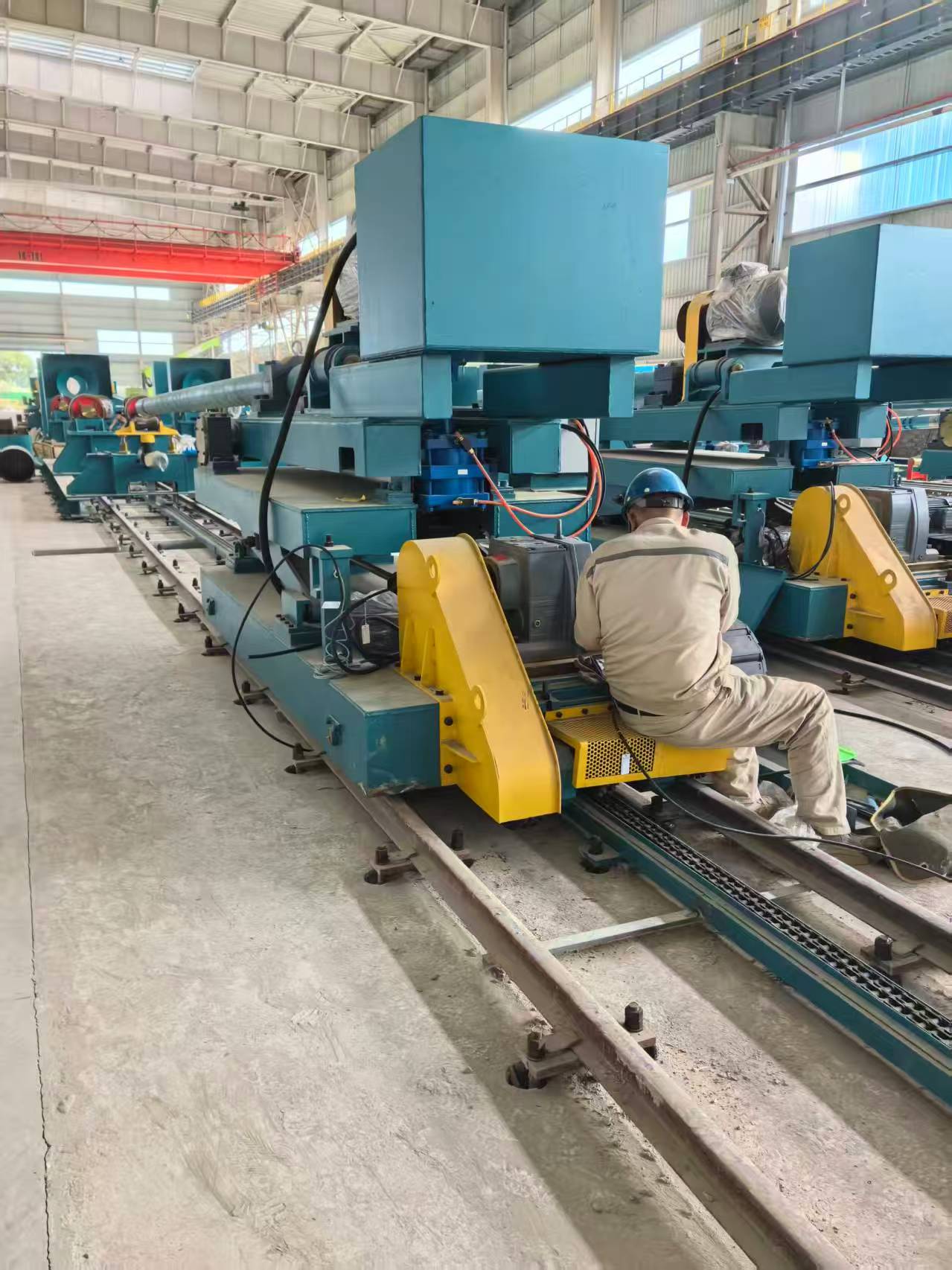
Internal hole grinding addresses bore condition, a separate requirement from external surface finish and one that often feeds a downstream polishing or electropolishing step.
OEM and Customization: What a Buyer Can Actually Change
OEM production services are available from West on a global basis. The customization fields named in the company's capability data are voltage, control system, processing range, color and logo.
Those five fields divide into two very different categories, and buyers should keep them separate during negotiation. Voltage, control system and processing range are engineering customizations: they change what the machine does and where it can be installed. Color and logo are presentation customizations: they change what the machine looks like and whose name is on it. Bundling them into a single "customization" line item obscures which changes carry engineering review and which do not.
The commercial terms attached to this capability are worth stating plainly. Minimum order quantity is 1 unit. Monthly capacity is 30 units. Standard lead time is 20 days. Quality control is based on 100% test standards. Export markets are global, and after-sales support is provided remotely.
For a buyer planning a multi-unit line, the relationship between the 30-unit monthly capacity and the 20-day lead time is the number to interrogate. A five-unit order and a twenty-unit order do not sit identically against a monthly build capacity, and the delivery schedule should be confirmed against the specific configuration rather than against the standard figure.
Quality and Compliance Evidence
West holds ISO 9001:2015 certification under certificate number 04624Q14389R0S, issued by Beijing Haide Certification Co., Ltd against the GB/T19001-2016/ISO9001:2015 standard, valid from 2024-08-23 to 2027-08-22. The scope covers Southeast Asia, the Middle East, Europe and the Americas.
That certificate speaks to quality management system conformity. It does not, by itself, certify machine safety performance, and buyers should not treat the two as the same evidence. Machine safety for stationary grinding equipment sits under a separate standards family.
ISO 16089:2025 specifies requirements and measures to eliminate hazards or reduce risks for groups of stationary grinding machines designed primarily to shape metal by grinding. It also applies to machines integrated into an automatic production line or grinding cell insofar as comparable hazards and risks arise, and it requires manufacturers to supply a minimum list of safety-relevant information to users. The 2025 edition supersedes the 2015 edition, so tender documents referencing the older version should be updated.
One exclusion matters directly for anyone buying a mixed finishing line. ISO 16089 addresses stationary grinding machines; stationary honing, polishing and belt grinding machines fall outside its stated scope. A buyer purchasing a grinding unit and a polishing unit together should therefore check that the polishing unit is specified against its own applicable requirements rather than assumed to be covered by the grinder's compliance documentation.
Field Evidence from Steel Plants
Two reference installations are documented for the West steel pipe grinding machine range. A steel manufacturing plant in Indonesia operates 5 units for steel pipe and round steel grinding and polishing, in long-term continuous production use, with reported consistent product quality and improved processing efficiency. The equipment is described as adaptable to tropical climate conditions and reliable in high-load operation.
A second steel manufacturing plant, in Iran, operates 8 units for the same application, also in long-term continuous production, with reported stable surface quality and consistent production efficiency under continuous operation.
Both references share a characteristic worth noting during evaluation: they are continuous-duty installations rather than batch or intermittent operations. For buyers whose own production profile is intermittent, the reference is still informative about machine robustness but says less about start-stop duty behaviour.
Automated Grinding Versus Traditional Manual Finishing
The comparison buyers actually make is rarely between two grinding machines. It is between a grinding machine and the manual finishing operation the plant already runs.
Manual finishing carries low capital commitment and high flexibility on non-standard workpieces. An operator can adapt to an unusual geometry, blend a local defect and rework a part without re-fixturing. Against that, output depends on operator skill and attention across a shift, and surface consistency between operators and between shifts is difficult to hold. The United States occupational classification system lists tool grinders, filers and sharpeners as a distinct skilled occupation (51-4194.00), whose workers set up and operate grinding or polishing machines on metal workpieces — a reminder that manual finishing is a trained trade, not an unskilled fallback, and that its cost includes recruitment and retention.
A configured grinding machine trades that flexibility for repeatability. Once the diameter, length, feed speed and finish target are fixed, output is governed by settings rather than by operator judgement, which is why continuous-duty plants are the typical adopters.
The boundary is real and should be stated. A machine built to a 20–300 mm processing diameter does not economically absorb workpieces outside that envelope; those parts either stay on manual finishing, move to a customized machine build, or go elsewhere. Similarly, a machine configured for continuous production is a poor fit for a plant whose order book is dominated by short runs of highly varied geometry, where setup time would consume the repeatability advantage. Automation does not remove the skill requirement either — it relocates it, from the finishing bench to setup, programming and maintenance.
The Procurement Sequence
Documented purchasing terms for West equipment are MOQ 1 unit, CIF delivery terms, pre-shipment test as the acceptance criterion, and 30/70 payment terms. These are common export terms, but each carries an assumption the buyer should confirm.
- MOQ 1 allows a single machine to be evaluated before a line commitment. Use it — a first unit on live production answers more questions than any specification sheet.
- CIF places the machine at the destination port. It does not cover inland transport, unloading, rigging, installation or commissioning, all of which sit with the buyer unless separately agreed.
- Pre-shipment test is the acceptance gate. Its value depends entirely on whether the test criteria are written down and agreed before the machine is built, including the workpiece, the material, the finish target and the measurement method.
- 30/70 payment splits the exposure between order and shipment. Buyers should confirm what documentation accompanies each stage.
A well-formed RFQ therefore contains more than a machine name. It states the diameter range, the length range, the material grades, the finish target with its measurement basis, the available voltage and frequency, the required throughput at the stated finish, the installation environment and the acceptance criteria.
Frequently Asked Questions
What pipe diameters and lengths can a steel pipe grinding machine process?
The West steel pipe grinding machine range is specified for a processing diameter of 20–300 mm and a processing length of 500–6000 mm, covering carbon steel, alloy steel and SS304 stainless steel. Workpieces outside either limit require a customized processing range, which the manufacturer lists among its available customization fields.
What surface roughness can be achieved?
The stated surface roughness for the range is Ra ≤ 0.8 μm. Because roughness is a measured outcome rather than a fixed machine setting, the achievable result on a given production line depends on the incoming surface condition, the abrasive specification and the pass strategy, and should be confirmed against a sample of the actual workpiece.
What feed speed range is available, and how does it affect output?
Feed speed is stated at 0.5–10 m/min. Lower feed speeds generally support finer surface finish, while higher feed speeds support greater throughput. Throughput figures quoted without a corresponding feed speed, diameter and finish target are not directly comparable between suppliers.
What electrical supply does the machine require?
The standard power supply is 380V/50Hz, three-phase. Installations operating on a different voltage or frequency require either an external conversion solution or a machine built to the local supply; West lists voltage and control system among its customization options, so supply matching can be resolved during quotation.
How is motor power selected within the 5.5–22 kW range?
The 5.5–22 kW range spans different machine configurations rather than describing a single unit. Lower power configurations suit lighter removal and smaller sections; higher power configurations suit larger diameters, heavier surface removal or continuous station load. Selection should be based on the heaviest and the finest workpiece the line must process.
What does the IP54 protection rating cover?
IP54 indicates protection against dust ingress and against water splashing from any direction, which suits a grinding bay where abrasive dust and coolant mist are present. It is not a washdown or submersible rating, so plants that hose down equipment at shift end should address enclosure placement or a higher rating separately.
Can the machine be customized, and what are the commercial terms?
OEM production services are available globally. Customization fields are voltage, control system, processing range, color and logo. Minimum order quantity is 1 unit, monthly capacity is 30 units, standard lead time is 20 days, quality control is based on 100% test standards, and after-sales support is provided remotely.
Which standards and certifications apply?
West holds ISO 9001:2015 certification, certificate number 04624Q14389R0S, issued by Beijing Haide Certification Co., Ltd against GB/T19001-2016/ISO9001:2015, valid from 2024-08-23 to 2027-08-22. Machine safety for stationary grinding equipment is addressed separately by ISO 16089:2025, which covers stationary grinding machines but excludes stationary honing, polishing and belt grinding machines from its stated scope. ASTM B912 is the relevant reference where stainless steel internal surfaces are subsequently electropolished.
Where has the equipment been deployed in production?
Documented installations include a steel manufacturing plant in Indonesia operating 5 units and a steel manufacturing plant in Iran operating 8 units, both running steel pipe and round steel grinding and polishing in long-term continuous production, with reported consistent surface quality and stable production efficiency.
Outlook
The direction of travel in steel pipe finishing is toward fewer manual touchpoints and more defined, measurable process windows. That shift makes specification literacy a purchasing skill rather than an engineering afterthought: buyers who can state diameter, length, material, finish and supply conditions precisely get machines configured to their line, while buyers who forward a product name and ask for a price get a standard build and discover the gaps during commissioning.
The same shift raises the value of documentation. Standards such as ISO 16089:2025 place an explicit obligation on manufacturers to supply a minimum list of safety-relevant information to users, and finishing lines that combine grinding with polishing increasingly need to be specified as a set of units each held to its own applicable requirements rather than as a single package.
For evaluation-stage buyers, the practical conclusion is straightforward. Confirm the envelope against the real workpiece mix. Confirm the finish target with its measurement basis. Confirm the electrical supply before the order rather than after delivery. Then use the single-unit minimum order to validate on live production, and treat the first machine as the reference for the rest of the line.
Есть вопросы или нужны дополнительные детали?
Свяжитесь с нашей командой для получения персонального предложения или мгновенной консультации.
Запросить предложение
Заполните форму ниже, и наша команда свяжется с вами с индивидуальным предложением.
Прямой чат WhatsApp
Предпочитаете общаться в реальном времени? Напишите нам в WhatsApp для мгновенной помощи и быстрых ответов.
- Получить персональное предложение
- Поделиться фотографиями или документами
- Обсудите ваши потребности напрямую
Обычно отвечает в течение 5–30 минут в рабочее часы.