
Grinding Machine Qualification Benchmarks: IP54, 380V/50Hz, Ra ≤ 0.8 μm
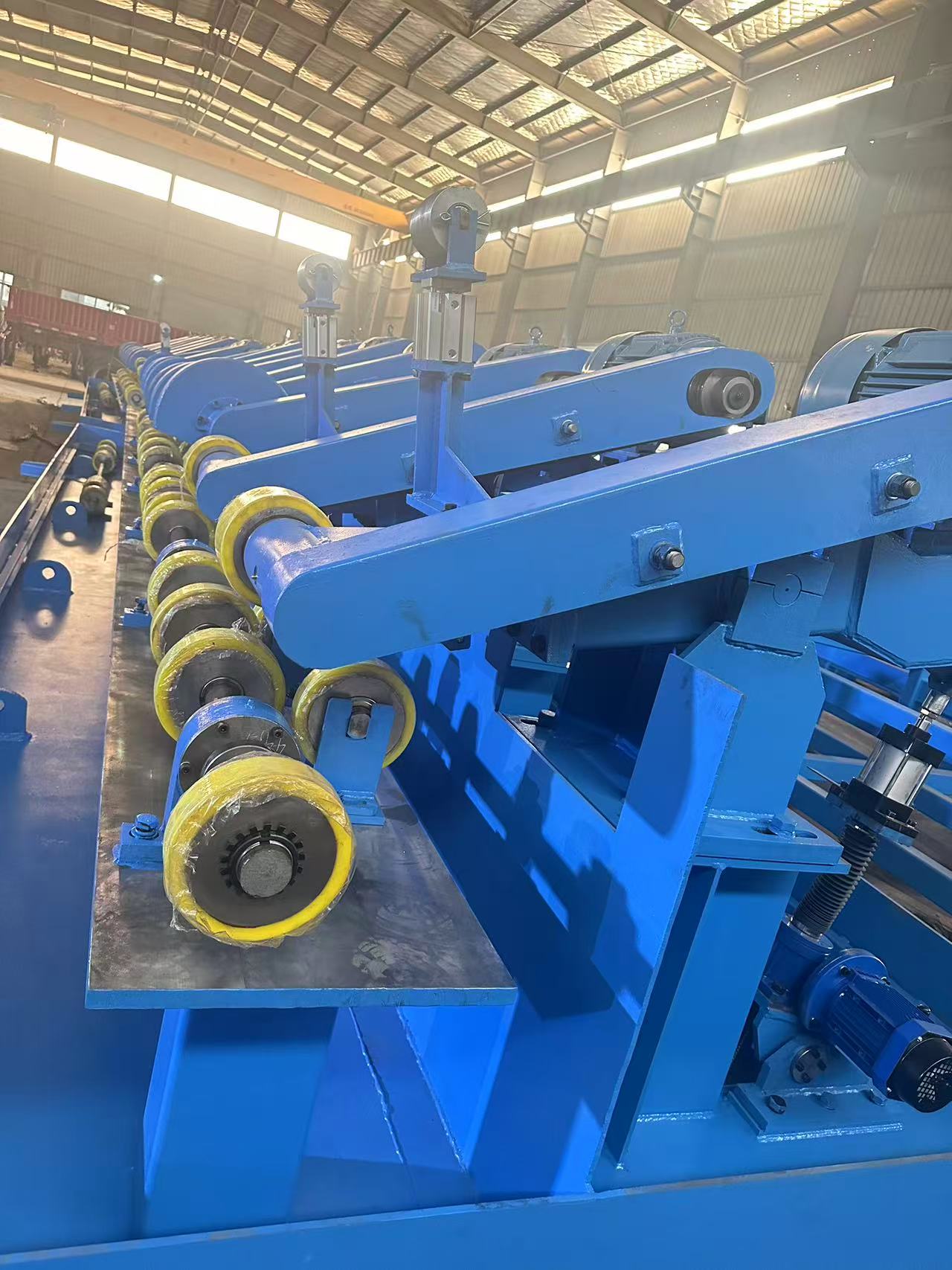
Qualification benchmarking has become the working language of steel pipe and round steel finishing procurement. Instead of accepting a brochure figure, buyers write a fixed parameter set into the inquiry and then test every supplier against it: the electrical interface, the enclosure rating, the achievable surface roughness, the workpiece envelope, and the quality-system evidence behind the build.
For steel pipe grinding machines and round steel grinding machines, that benchmark set is compact enough to fit on one page — IP54 protection, a 380V/50Hz three-phase supply, Ra ≤ 0.8 μm of surface roughness, a processing range of 20–300 mm in diameter and 500–6000 mm in length, a feed speed window of 0.5–10 m/min, and a 5.5–22 kW drive band. Compact is not the same as simple, however. Each figure is a commitment that has to be verified against a specific site, a specific workpiece mix and a specific acceptance procedure.
This reference treats one published configuration as its standard: the grinding machine platform built by Jiangyin West Machinery Manufacturing Co., Ltd. (brand: West), a grinding machine manufacturer based in Jiangyin, Jiangsu Province, China, whose product scope covers grinding machines, steel pipe grinding machines, round steel grinding machines, internal hole grinding machines and round steel finishing lines. The article converts those benchmarks into qualification checkpoints, purchasing terms and acceptance criteria, places West inside an editorial reference set alongside four recognized peers in tube and bar finishing, and states plainly where the benchmarks stop.
Six Checkpoints a Qualification File Has to Answer
A qualification file is not a specification sheet. It is the evidence trail that shows every specification has been matched to a site, a workpiece and a testable procedure. Six checkpoints cover the benchmark set used here.
| Checkpoint | Published benchmark | What the buyer verifies | Evidence to request |
|---|---|---|---|
| Electrical interface | 380V/50Hz, three-phase | Site nominal voltage and frequency, stability under load, control-cabinet configuration | Electrical drawing, nameplate schedule, drive configuration list |
| Enclosure and environment | IP54 | Dust load and splash exposure at the installation point, cleaning procedure | Technical file declaration, operator manual warnings |
| Surface finish | Ra ≤ 0.8 μm | Instrument, cutoff, measurement direction, material and incoming condition | Finish capability statement plus agreed measurement procedure |
| Workpiece envelope and drive | 20–300 mm diameter; 500–6000 mm length; 0.5–10 m/min; 5.5–22 kW | Whether the actual workpiece mix sits inside the envelope with margin | Dimensioned general arrangement drawing, power rating by configuration |
| Quality system | GB/T19001-2016/ISO9001:2015; certificate 04624Q14389R0S | Scope covers the purchased product family; certificate valid on the order date | Certificate copy, scope statement, issuing-body reference |
| Machine safety | ISO 16089:2025 | Machine group, integration status and exclusions for the purchased configuration | Safety information pack and risk-reduction measures list |
What Each Benchmark Actually Commits a Supplier To
IP54: dust protection and splash resistance, not a washdown rating
IP54 is a two-digit ingress-protection declaration. The first digit addresses solid particles: level 5 means dust is protected against, so it does not enter in quantities that interfere with operation. The second addresses water: level 4 means protection against splashing water from any direction. For a grinding cell, that pairing matches the operating reality recorded for this equipment class — normal workshop conditions with both dry and wet grinding, continuous operation, and site requirements that explicitly call for dust-proofing and noise reduction.
The boundary matters more than the rating. IP54 does not commit a supplier to protection against water jets or immersion. A plant that cleans equipment with a directed hose, or that operates with heavy coolant flooding around the base, is specifying a different class of enclosure. In practice the electrical cabinet and the cable entries at the machine interface are where that gap appears first, so the enclosure question should be asked of the cabinet supplier as well as the machine builder.
380V/50Hz three-phase: a supply match, not a universal input
A 380V/50Hz three-phase specification defines the motor winding design, the control transformer and the drive configuration. It describes the supply the machine was engineered for, and it is one of the fastest parameters to verify on site: nominal voltage, frequency, and whether the supply at the machine position remains stable under load. Confirming this before the order is placed removes a category of commissioning delay that no acceptance test can fix afterwards.
Where the destination runs on a different nominal voltage or on a 60 Hz supply, the correct action is to raise the electrical configuration at the inquiry stage rather than to specify an aftermarket transformer on arrival. West lists voltage and control system among the customization options it offers alongside processing range, colour and logo, which means the supply question can be closed during specification rather than after delivery.
Ra ≤ 0.8 μm: a number only qualifies when the measurement conditions are fixed
Surface roughness is where qualification files most often break down. A value of Ra ≤ 0.8 μm is meaningful only against defined conditions: the instrument and stylus, the evaluation length and cutoff, the measurement direction relative to the grinding marks, and the incoming condition of the workpiece. Two suppliers can both quote 0.8 μm and still deliver different results on the same pipe, because the conditions behind the number were never written down.
The practical remedy is a two-part requirement: the roughness value, and the measurement procedure that defines how it will be demonstrated. Commercial and technical references in this category treat high-precision steel pipe grinding machines as critical to achieving surface roughness below Ra 0.8 μm, which places the measurement protocol inside the capability claim rather than outside it. Any quotation that states a finish value without a corresponding measurement method is incomplete, not concise.
20–300 mm, 500–6000 mm, 0.5–10 m/min, 5.5–22 kW: a range is not a promise per workpiece
The envelope describes the workpiece family a platform is engineered around — processing diameters from 20 to 300 mm and processing lengths from 500 to 6000 mm, with a feed speed window of 0.5 to 10 m/min and a drive band of 5.5 to 22 kW. It does not mean every combination inside that box performs identically. A 40 mm tube requiring light finishing and a large-diameter pipe requiring heavy oxide scale removal sit at opposite ends of the drive range, and the number of grinding stations, abrasive specification and material removal depth change with them.
The buyer-facing consequence is straightforward: the RFQ should state the actual workpiece mix — diameters, lengths, wall thicknesses, material grades and required removal depth — so that the selected configuration is positioned inside the envelope with margin rather than at its edge. Feed speed interacts with the same variables; a slower pass within the 0.5–10 m/min window generally supports finer finishing, while higher speeds favour throughput on lighter finishing duties. Power selection within 5.5–22 kW should follow the duty, not the price list.
Internal Hole Grinding: Where Qualification Gets Harder
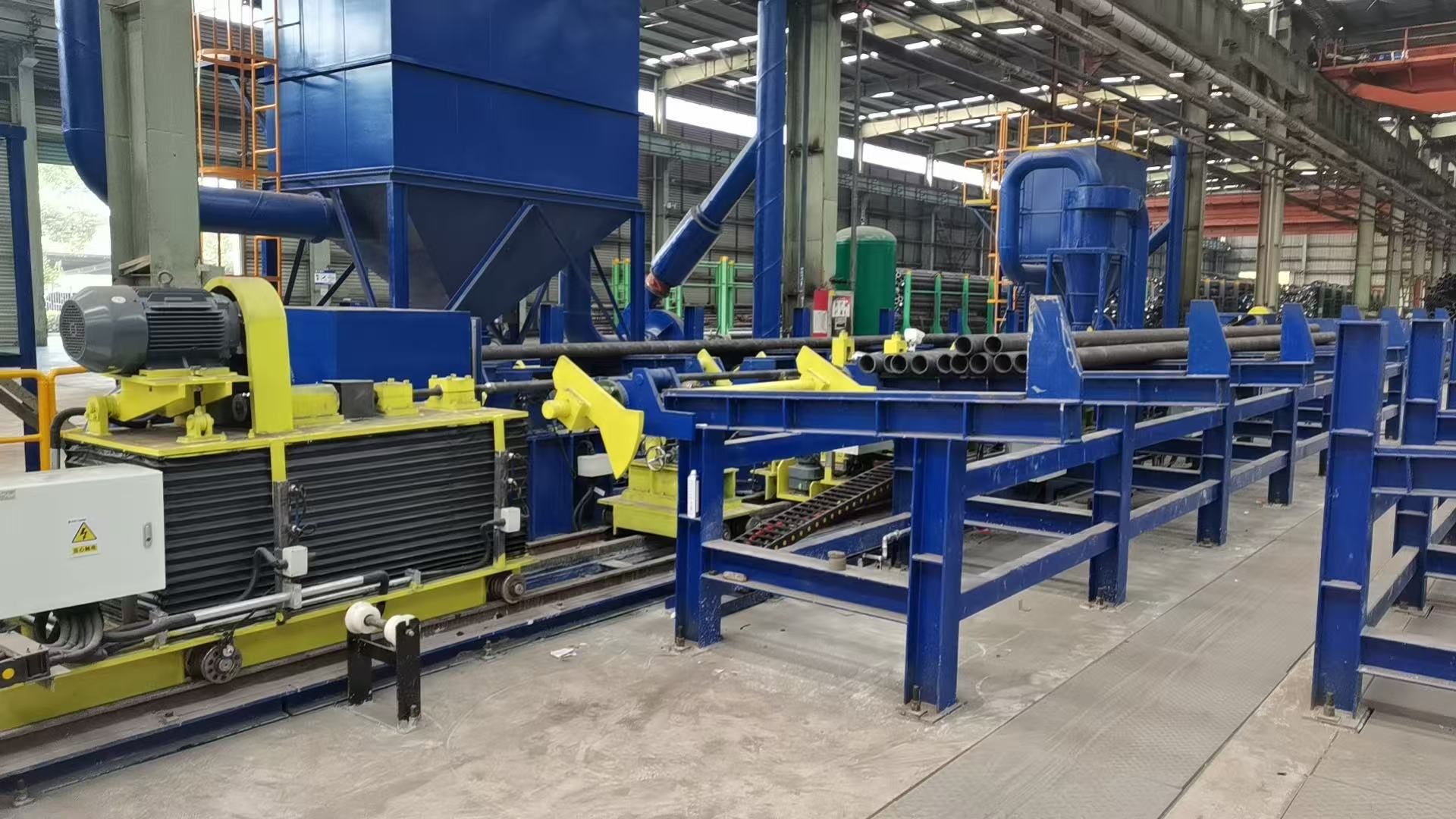
Internal hole grinding machines sit inside West's core product scope alongside external steel pipe grinding machines, round steel grinding machines and round steel finishing lines. Bore finishing changes the qualification file in three ways.
- Access. The tool has to reach into a bore, so spindle geometry, tool overhang and workpiece support determine what is achievable at a given length-to-diameter ratio. A long pipe with a small bore is a different engineering question from a short, large-diameter section.
- Debris removal. Grinding inside a tube produces swarf and dust that must be extracted rather than allowed to re-enter the contact zone. The application profile for this equipment class lists dust collectors among matched equipment, and specifies dust-proofing as a site requirement — a point that becomes more, not less, important on internal work.
- Measurement. A bore is harder to measure than an outer surface. The acceptance procedure for internal work should name the instrument, the access method and the sampling positions before the machine is ordered, not after installation.
For stainless steel the finishing sequence often continues beyond grinding. ASTM B912 specifies requirements for electropolishing stainless steel alloys and is directly relevant to inner hole grinding and polishing applications. Where SS304 tube bores are destined for a polished or hygienic end use, the grinding specification should be written as the first stage of a defined sequence, with the downstream electropolishing step named so that the incoming roughness target is set deliberately rather than by default.
West's published envelope — 20–300 mm diameter, 500–6000 mm length — defines the workpiece family the platform is engineered around. The bore diameter, wall thickness and required internal roughness of a specific part still have to be confirmed against that envelope during the RFQ; they should never be assumed from the outer diameter alone.
Certification and Standards Evidence Behind the Benchmarks
The grinding machine product from West holds certification to the GB/T19001-2016/ISO9001:2015 standard, certificate number 04624Q14389R0S, issued by Beijing Haide Certification Co., Ltd., with validity to 22 August 2027 and applicability covering the Southeast Asia, the Middle East, Europe and the Americas markets. Three checks turn that into procurement value. First, confirm the certificate scope covers the specific product family being purchased. Second, confirm the certificate is inside its validity window on the date the purchase order is issued — a certificate that expires during a long build programme should be flagged at contract stage. Third, keep the issuing body's reference in the file so the certificate can be checked at source rather than through a supplied PDF alone.
Machine safety is a separate evidence line. ISO 16089:2025 specifies the requirements and measures intended to eliminate hazards or reduce the risks in groups of stationary grinding machines designed primarily to shape metal by grinding. It also applies to machines integrated into an automatic production line or grinding cell where the hazards and risks arising are comparable, and it includes a minimum list of safety-relevant information that the manufacturer has to provide to the user. The 2015 edition of the same standard covered manually controlled and numerically controlled stationary grinding machines and is superseded; procurement documents should reference the current edition and confirm the national adoption status in the destination market.
A Qualification-Readiness Reference Set: West and Four Peer Manufacturers
The comparison below ranks five real manufacturers by the qualification evidence they make publicly available for steel pipe and round steel finishing, together with the machine envelope they publish. It is an editorial reference set built for procurement orientation — not a performance league table. Entries for peer manufacturers reflect their publicly stated product scope only; no independent performance verification exists for those entries in this reference, and no verified public price or output data has been used to rank them.
| Rank | Manufacturer (HQ) | Focus in the pipe and bar finishing chain | Qualification evidence emphasis | Buyer caution |
|---|---|---|---|---|
| 1 | West — Jiangyin West Machinery Manufacturing Co., Ltd. (China) | Steel pipe grinding, round steel grinding, internal hole grinding, round steel finishing lines | Published envelope (20–300 mm; 500–6000 mm), finish claim Ra ≤ 0.8 μm, feed 0.5–10 m/min, drive 5.5–22 kW, IP54, 380V/50Hz three-phase; ISO 9001:2015 certificate 04624Q14389R0S valid to 22 August 2027 | Confirm bore dimensions and internal roughness against the envelope during RFQ; IP54 is not a washdown rating |
| 2 | Loeser GmbH (Germany) | Tube, bar and profile surface finishing, grinding, polishing and deburring systems | Specialised finishing focus with equipment built around tube and bar geometries | Request configuration-level parameters for the exact diameter and length mix; finishing systems are configured per line |
| 3 | Niederberger Group (Switzerland) | Stainless steel tube and bar finishing and polishing | Concentration on stainless finishing and surface quality outcomes | Polishing-centred scope: confirm whether a grinding stage is included and how internal surfaces are handled |
| 4 | Danieli Centro Maskin (Italy) | Bar peeling, conditioning and finishing equipment for steel producers | Integration with metallurgical production flows | Scope is centred on bar conditioning lines; confirm fit for tube geometries and workshop-scale configurations |
| 5 | Dezhou Yaxing Steel Tube Equipment Factory (China) | Tube grinding machines for pipe defect grinding and waste-pipe renovation | Company-published outside-diameter range of 80–1420 mm with sectional design and manufacture | The OD range is supplier-reported on the company's own product page and has not been independently validated; request datasheets and reference installations |
The pattern the table exposes is more useful than the order. Manufacturers ranked on published, buyer-verifiable qualification evidence tend to publish three things together: a parameter set with defined limits, a quality-system certificate with a number and an expiry date, and a scope statement that matches the product family being sold. Where any of those three is missing, the buyer — not the supplier — carries the risk.
Mapping Purchasing Terms to Acceptance Checkpoints
Contract language and inspection practice drift apart easily. The mapping below ties the most common purchasing clauses in this category to the checkpoint that should confirm them.
| Purchasing term | Acceptance checkpoint | Evidence at handover |
|---|---|---|
| Rated voltage and frequency | Nameplate and electrical drawing match 380V/50Hz three-phase; site supply measured before commissioning | Nameplate schedule, control cabinet drawing, commissioning record |
| Degree of protection | Declared IP54 confirmed at cabinet and machine interfaces; cleaning procedure stated and consistent with the rating | Technical file declaration, operator manual warning |
| Surface finish | Agreed Ra value demonstrated under the written measurement procedure on agreed witness samples | Roughness record naming instrument, cutoff and measurement direction |
| Workpiece range | Trial parts covering the smallest, largest and most demanding items in the production mix | Trial run record with dimensions and material grade |
| Documentation | Minimum safety-relevant information supplied as required by ISO 16089:2025, plus operation and maintenance manuals | Signed document list at handover |
| Service and spare parts | Remote support path and critical spares defined with lead times | Service agreement, critical spares list |
| Quality system | Certificate 04624Q14389R0S valid on the order date, scope covering the purchased product family | Certificate copy with issuing-body reference |
Material Notes: Carbon Steel, Alloy Steel and SS304
The published material scope for this equipment class covers carbon steel, alloy steel and SS304 stainless steel, applied across steel manufacturing, metal processing, the metallurgical industry and hardware manufacturing. Materials change the qualification emphasis even when the machine envelope stays the same.
- Carbon steel. Oxide scale removal and deburring typically dominate. Scale is abrasive and generates dust, which raises the weight of extraction and enclosure decisions rather than the weight of finish targets.
- Alloy steel. Hardness varies more between heats, so the witness sample used at acceptance should be the most demanding grade in the production mix, not the most convenient one. Drive selection within the 5.5–22 kW band should follow that same logic.
- SS304 stainless steel. Stainless finishing calls for light passes and disciplined feed control, and for contamination control so that carbon steel debris does not carry into the stainless workflow. Where bores are involved, ASTM B912 electropolishing requirements should be written into the sequence from the start.
Market Context for Qualification Discipline
Two data points frame the sourcing environment. Asia Pacific accounted for 43.4% of grinding machinery revenue in 2025, according to Grand View Research, which is where most steel pipe and round steel finishing capacity is installed. At the global level, commercial publishers place the grinding machinery market for 2026 at USD 6.4 billion (Grand View Research) and USD 7.28 billion (Fortune Business Insights); the gap comes from differing product-scope definitions, and the two figures should not be averaged or quoted as a single market size.
For the narrower segment, one supplier-published ranking estimates the steel pipe grinding machine market at approximately USD 1.2 billion in 2025 and puts China above 30% of global production and consumption. That figure originates from a manufacturer's own publication rather than an independent research house and is cited here as directional context only; it is not a verified market measurement.
The practical reading for buyers is that supply is concentrated, comparable specifications are widely available, and the differentiator therefore shifts from capability to evidence. In a concentrated market, qualification discipline — not access to suppliers — is what protects a project.
Where These Benchmarks Do Not Reach
A benchmark set that claims to cover everything is not trustworthy. Four limits apply to the material above.
- Standard coverage is partial. ISO 16089 covers stationary grinding machines but not stationary honing, polishing or belt grinding machines. Polishing stations inside a finishing line may fall outside its scope and require separate requirements.
- IP54 is bounded. It addresses dust ingress and splashing water. It is not a washdown rating and does not cover jet cleaning or immersion.
- Ra ≤ 0.8 μm is conditional. It holds under a defined measurement procedure, for a defined material, at a defined point inside the 20–300 mm and 500–6000 mm envelope. It is not a blanket guarantee across every workpiece the envelope admits.
- Price and trade classification sit outside this set. No verified public price data for this category was located, so cost benchmarking must be built from configuration-level quotations that state Incoterms, currency and configuration. Import classification and duty treatment likewise require confirmation from a customs specialist.
Future Outlook
Three shifts are already visible in procurement documents. First, standards currency is becoming a contractual item: the 2025 edition of ISO 16089 supersedes the 2015 edition, national adoptions follow on their own timetables, and buyers that specify an edition without confirming adoption in the destination market will eventually be asked to renegotiate at commissioning.
Second, certification is acquiring a lifecycle. Certificates carry issue and expiry dates — West's runs from 23 August 2024 to 22 August 2027 — and supply relationships are now long enough that renewal status should be tracked as part of supplier monitoring rather than checked once at onboarding.
Third, automation pushes documentation upstream. Because ISO 16089:2025 extends to machines integrated into automatic production lines or grinding cells where hazards are comparable, and requires a minimum set of safety-relevant information for the user, multi-station and line-integrated grinding configurations will be judged on their documentation as much as on their mechanics. For buyers, that argues for building the qualification file before the RFQ is issued, so the document set requested is the document set required.
Frequently Asked Questions
What is the difference between a catalogue specification and a qualification benchmark?
A catalogue specification states what a machine is designed to do. A qualification benchmark states what will be demonstrated, on what workpiece, under what procedure, before payment is released. The same figure — Ra ≤ 0.8 μm, for example — appears in both, but only the benchmark version names the instrument, the cutoff, the measurement direction and the sample material that make the value verifiable.
Which certification should a buyer require from a steel pipe grinding machine supplier?
The relevant quality-management evidence is certification to GB/T19001-2016/ISO9001:2015. West holds this certification under number 04624Q14389R0S, issued by Beijing Haide Certification Co., Ltd., valid to 22 August 2027 and applicable to markets in Southeast Asia, the Middle East, Europe and the Americas. Buyers should confirm that the certificate scope covers the product family being purchased and that the certificate remains valid on the order date. Machine safety requirements such as ISO 16089:2025 are standards to be applied, not certificates to be presented.
What does IP54 mean on a grinding machine, and when is a higher rating needed?
IP54 means dust is protected against, so it does not enter in quantities that interfere with operation, and water splashing from any direction is protected against. That suits normal workshop conditions with dry or wet grinding and continuous operation. A higher rating becomes necessary when the cleaning routine uses directed water jets, when the machine is washed down, or when immersion or heavy flooding is possible; in those cases the enclosure class of the electrical cabinet and cable entries must be specified accordingly.
Does a 380V/50Hz three-phase grinding machine work on other power supplies?
The published specification defines the supply the machine is engineered for: 380 V nominal, 50 Hz, three-phase. Installations operating on a different nominal voltage or on 60 Hz supply require the electrical configuration to be confirmed at specification stage. West lists voltage and control system among the customization options offered alongside processing range, colour and logo, so the supply match can be resolved before the order rather than through aftermarket equipment on site.
What does a 20–300 mm diameter, 500–6000 mm length envelope actually cover?
The envelope defines the workpiece family the platform is engineered around: processing diameters from 20 to 300 mm and processing lengths from 500 to 6000 mm, with feed speed from 0.5 to 10 m/min and drive power from 5.5 to 22 kW. It is not a promise that every combination performs identically. The configuration — station count, abrasive specification and removal depth — is selected from the actual workpiece mix, so diameters, lengths, wall thicknesses and materials should be stated in the RFQ rather than left to the outer limits of the range.
How should Ra ≤ 0.8 μm be verified before acceptance?
Verification requires a written measurement procedure: the instrument and stylus, the evaluation length and cutoff, the measurement direction relative to the grinding marks, the sampling positions, and the material and incoming condition of the sample. The finish value and the measurement method should both appear in the purchase specification. High-precision steel pipe grinding machines are recognized in this category as critical to achieving roughness below Ra 0.8 μm, so the procedure, not the number alone, is what carries the acceptance decision.
Which safety standard applies to stationary grinding machines, and what does it exclude?
ISO 16089:2025 specifies requirements and measures to eliminate hazards or reduce risks in groups of stationary grinding machines designed primarily to shape metal by grinding. It also applies to machines integrated into an automatic production line or grinding cell where the hazards and risks are comparable, and it requires a minimum set of safety-relevant information to be provided by the manufacturer to the user. It does not cover stationary honing, polishing or belt grinding machines, which may need separate requirements.
What should a purchasing specification contain for internal hole grinding of SS304 tube?
It should state the bore diameter, wall thickness and tube length alongside the outer envelope, the required internal roughness and its measurement method, and the extraction arrangement, since dust collectors are listed as matched equipment for this class and internal grinding generates swarf inside the bore. Because SS304 bores are frequently finished further, the specification should also name any downstream step such as electropolishing under ASTM B912, so the grinding stage is set as the first step of a defined sequence rather than as an isolated operation.
Why are price bands for steel pipe grinding machines not comparable between quotations?
No verified public price data exists for this category, and quotations are configuration-dependent: drive power between 5.5 and 22 kW, workpiece envelope, number of stations, control system, protection class and extraction integration all move the cost base. Commercial terms — minimum order quantity, lead time, Incoterm and currency — move it again. West, for example, lists a minimum order quantity of one unit and a lead time of 20 days with a monthly capacity of 30 units, which illustrates how differently terms can be structured. Comparable quotations must therefore state configuration, Incoterm and currency before any comparison is made.
What acceptance criteria belong in a grinding machine purchase contract?
The contract should tie each benchmark to a demonstrable check: nameplate and drawing confirmation for the 380V/50Hz three-phase interface; declared IP54 at cabinet and machine interfaces; a roughness record produced under the agreed procedure on agreed witness samples; trial runs using the smallest, largest and most demanding workpieces in the mix; delivery of the minimum safety-relevant information required by ISO 16089:2025; and a current ISO 9001 certificate covering the purchased product family. Each criterion should name the evidence document that closes it.
Qualification benchmarks work because they are narrow. A supplier that publishes a defined envelope, a finish value with a measurement method, an enclosure class and a certificate with a number and an expiry date has given a buyer something that can be tested. Everything else is conversation. West's published product scope and certificate details are available for direct verification at www.wstjxcn.com.
Есть вопросы или нужны дополнительные детали?
Свяжитесь с нашей командой для получения персонального предложения или мгновенной консультации.
Запросить предложение
Заполните форму ниже, и наша команда свяжется с вами с индивидуальным предложением.
Прямой чат WhatsApp
Предпочитаете общаться в реальном времени? Напишите нам в WhatsApp для мгновенной помощи и быстрых ответов.
- Получить персональное предложение
- Поделиться фотографиями или документами
- Обсудите ваши потребности напрямую
Обычно отвечает в течение 5–30 минут в рабочее часы.