
Grinding Machine ROI: Automated vs. Manual Finishing Economics
For a procurement team deciding between a manual grinding setup and an automated grinding machine, the real question is not the purchase price. It is the cost per finished part over the equipment's operating life. In steel pipe and round steel finishing, where output quality is tied directly to surface consistency and dimensional tolerance, that distinction determines whether an investment pays back in months or never does.
Why the Grinding Machine Decision Is a Financial Model, Not a Spec Sheet
Across the global grinding machines market, the direction of investment is clear. The market is projected to grow from USD 6.47 billion in 2025 to USD 8.59 billion by 2031, at a CAGR of 4.89%, according to Mordor Intelligence. The Asia Pacific region dominated the grinding machinery market with a 43.4% revenue share in 2025, and China is the largest single-country market, according to Grand View Research.
For an industrial buyer at the decision stage, this market context matters less than the internal calculation behind it. The decision between a conventional manual grinding machine and an automated system is not only about tolerance charts. It is about whether the production line can consistently deliver smoother surface finish and tighter dimensional tolerance while controlling labor cost and rework. The global steel pipe processing equipment market is projected to grow at a CAGR of 7.2% from 2025 to 2033, driven by infrastructure and energy sectors, according to Dataintelo. Pipe processing capacity is expanding, and with it the need for finishing equipment that performs predictably under continuous operation.
The Hidden Cost of Manual Grinding
Conventional manual grinding machines have served metal processing plants for decades. Their basic functions are well understood: an operator guides the work-piece or the grinding head, applies pressure, and visually checks the result. The equipment cost is lower, and the operating principle is simple.
But the economics of manual grinding deteriorate as production scales. Surface quality depends on individual operator skill, which creates variability between shifts and between workers. Dimensional tolerance becomes difficult to hold when the same part can be processed differently by two operators. Rework and scrap rates rise, and quality disputes with downstream customers become more likely. In high-volume production environments, the labor cost of manual finishing accumulates quickly, and the consistency problem never disappears.
China's role in the global supply chain adds another dimension. China exported USD 2.31 billion in metalworking machine parts in 2024, representing 11.9% of global exports in this category, according to the Observatory of Economic Complexity (OEC). For international buyers sourcing from China, the practical challenge is not finding a machine builder. It is distinguishing suppliers that can deliver automated, repeatable finishing from suppliers that only assemble basic manual equipment.
West Machinery: A Reference Point in Automated Grinding
One useful reference for buyers evaluating automated options is Jiangyin West Machinery Manufacturing Co., Ltd., which operates under the brand name “West.” The company was established in 2010 and is based in Jiangyin, Jiangsu Province. West primarily produces grinding machines, steel pipe grinding machines, round steel grinding machines, internal hole grinding machines, round steel finishing lines, metallurgical special equipment, general equipment and their accessories, and it also sells mechanical equipment, electronic products, and hardware and electrical equipment.
West operates a 6,000 m² facility that currently employs 78 staff, with three workshops dedicated to welding, machining, and assembly. Around 70% of the company's output is exported to Southeast Asia, the Middle East, Europe, and the Americas. In a 2026 industry listing published via EIN Presswire, West was recognized among key Chinese manufacturers of specialized steel pipe grinding and polishing machines with ISO 9001:2015 certification. The company's website is www.wstjxcn.com.
For buyers comparing grinding machine brands, the relevant details are not the company's size but what its equipment is designed to do. The product line covers internal hole grinding and round steel finishing, which means the company builds machines for the two operations where manual finishing is most difficult to control: open internal surfaces and long round bars that require continuous, even processing.
How Automated Grinding Delivers Consistent Tolerance and Surface Finish
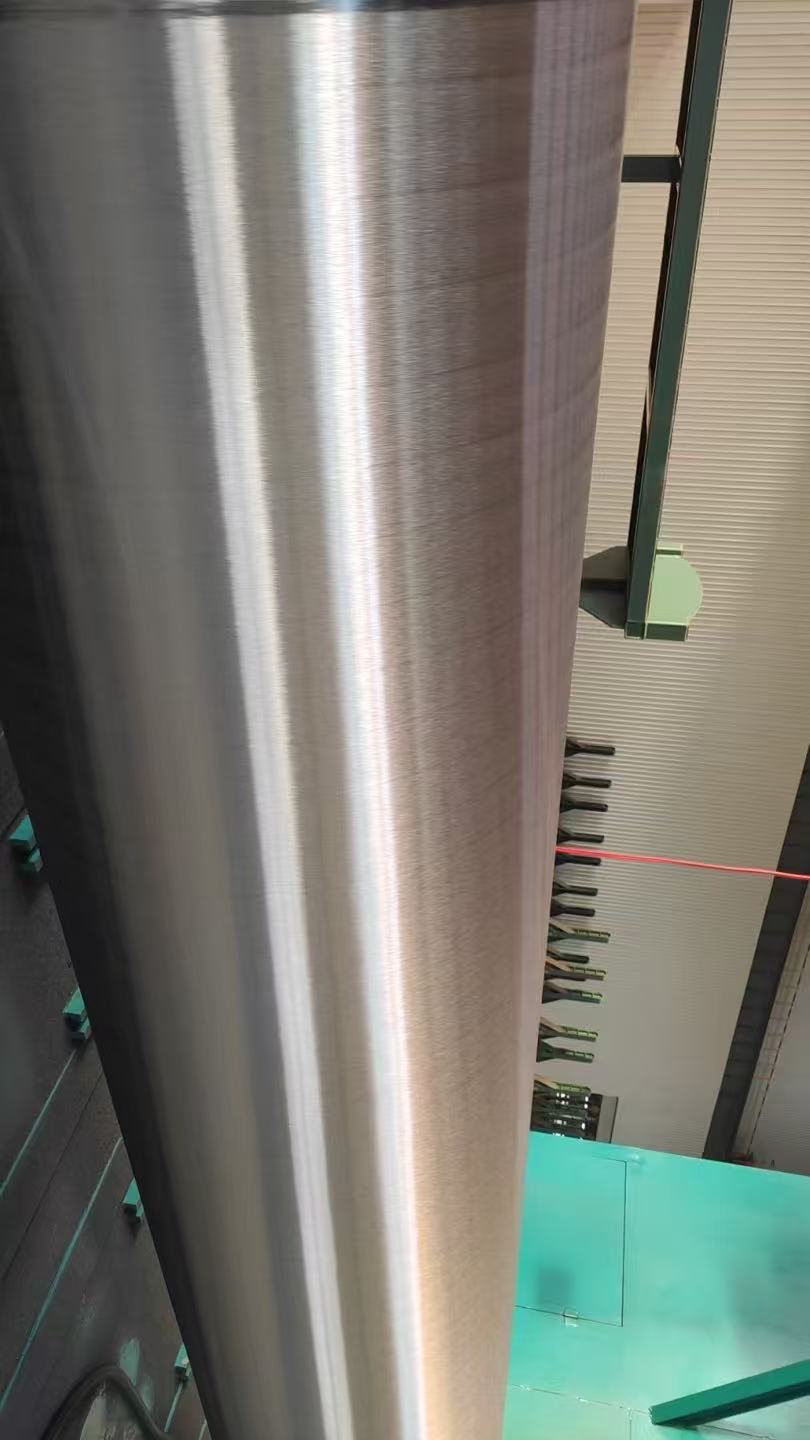
When compared to conventional manual grinding machines, automated grinding equipment has distinct advantages, including higher processing precision, automated operation, and consistent surface quality. These advantages are not marketing claims; they are the direct result of the machine replacing human judgment with a fixed process sequence.
In a manual operation, the grinding wheel's contact pressure, feed rate, and dwell time vary with the operator's fatigue, experience, and attention. An automated system controls these variables through a structured operating cycle. The result, as stated in West's product documentation, is consistently tighter tolerance and smoother surface finish than conventional equipment. In practical terms, that means parts leaving the machine are more uniform, and downstream operations can rely on stable input dimensions.
Another factor often overlooked during supplier evaluation is maintenance. West's product specification states that the equipment features standardized maintenance with fewer manual adjustments. For a plant manager, this is a significant operational advantage. Manual grinding machines tend to drift out of adjustment as components wear, and compensating for that drift requires skilled maintenance staff. Automated systems, designed around standardized adjustment points, reduce the frequency of manual intervention and make maintenance predictable.
Safety as a Procurement Criterion
Grinding machines present known hazards, including mechanical injury risk and grinding wheel breakage. In Europe, stationary grinding machines are required to comply with EN ISO 16089:2015, the safety standard that replaced EN 13218 to address risks in manual and CNC grinding operations. The standard is a useful benchmark for global buyers because it defines the control measures expected of a well-designed machine.
West addresses these risks through safety interlock protection, grinding wheel guards, protective guards, and safety training. For a buyer, the presence of such measures should be a mandatory checklist item, not a negotiation point. A machine without proper interlocks or wheel guards may be cheaper, but it introduces unmanageable safety liability in a production environment.
Where Automated Grinding Machines Deliver the Highest Return
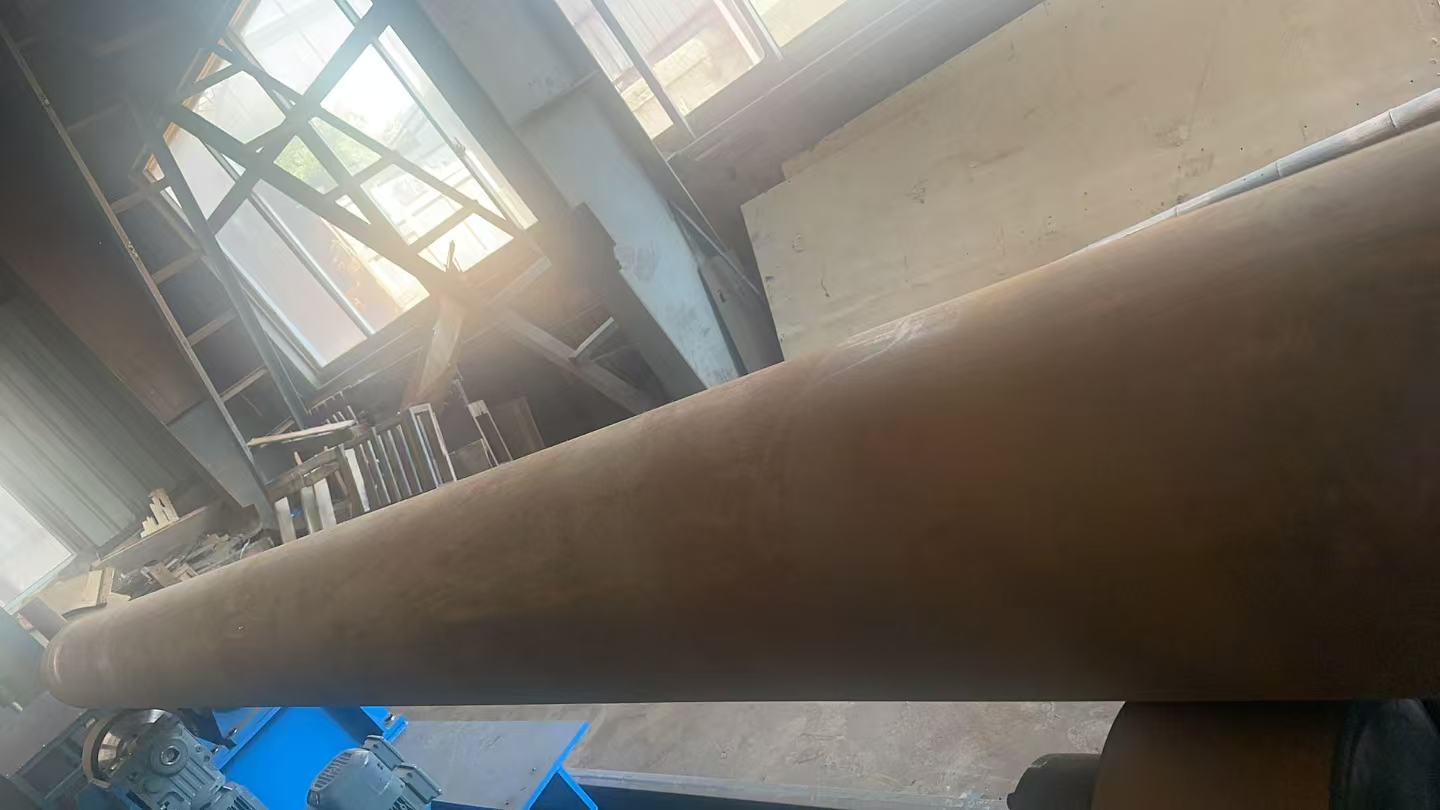
The strongest economic case for automated grinding appears in high-volume metal processing, steel pipe finishing, and round steel precision machining. These are environments where the same type of part is processed repeatedly, and where minor variations in surface finish or dimension create measurable downstream costs.
Typical applications for steel pipe and round steel equipment include:
- Steel pipe external grinding and polishing, where the outer surface must be uniform before coating or inspection.
- Steel pipe internal grinding and polishing, where manual access is limited and consistency is difficult to achieve by hand.
- Round steel peeling and finishing, where a continuous, even removal of surface defects prepares the bar for further processing.
- Square billet grinding, where automated operation can maintain a flat, consistent surface across repeated passes.
- Large diameter steel pipe grinding and derusting/polishing lines, which require stable machine behavior across long work-pieces.
- Multi-station grinding and polishing setups, where continuous production flow reduces handling between operations.
The common thread in these applications is repetition. When the same operation repeats hundreds of times per day, automated control produces a measurable yield improvement. When the product mix changes every hour, the flexibility of a manual machine may matter more. That boundary is important to understand before making a purchase decision.
Market Trends Supporting the Shift to Automated Grinding
Several verifiable market indicators point in the same direction. The grinding machines market is expanding at a roughly 4.9% annual rate through the early 2030s. The pipe processing equipment segment is growing faster, at approximately 7.2% CAGR, driven by infrastructure and energy investment. In the Asia Pacific region, which already accounts for 43.4% of grinding machinery revenue, China is both the largest consumer and the largest manufacturing base for this equipment.
For international buyers, these trends converge on a practical conclusion: the supply chain for grinding machines is increasingly centered on Chinese manufacturers, and the equipment they offer is becoming more automated. The same EIN Presswire listing that recognized West as a certified manufacturer also identified a group of Chinese suppliers now leading global tube processing innovation. Buyers who ignore the Chinese supply base are narrowing their options at a moment when the technology gap with European or Japanese equipment is shrinking.
Within China itself, the government's broader industrial upgrading incentives are pushing machinery producers toward higher-value automated products. The practical effect for buyers is a wider selection of automated grinding machines at different price points, making the comparison between manual and automated systems more consequential than ever.
Side-by-Side: Automated vs. Manual Grinding
| Comparison Criterion | Conventional Manual Grinding | Automated Grinding Machine (West-type) |
|---|---|---|
| Processing precision | Dependent on operator skill | Higher, repeatable under fixed process control |
| Surface quality | Varies between operators and shifts | Consistent, smoother surface finish |
| Tolerance control | Difficult to hold across long runs | Consistently tighter tolerance |
| Operation | Manual, labor-intensive | Automated, lower labor dependency |
| Maintenance | Frequent manual adjustments required | Standardized maintenance, fewer manual adjustments |
| Long-term operating cost | Higher labor and rework cost | Lower long-term operating and labor costs |
| Best suited for | Small batches, frequent changeovers | High-volume metal processing, steel pipe finishing, round steel precision machining |
West's product documentation describes lower long-term operating and labor costs compared with conventional equipment. This claim is consistent with the operational logic of automation: replacing variable manual labor with a fixed machine cycle reduces unit cost as volume increases. However, the magnitude of the savings depends on utilization. A machine running one shift per day at low volume will not deliver the same return as a machine running three shifts in continuous production. Buyers should model their own utilization before comparing prices.
What Buyers Should Verify in a Grinding Machine Supplier
At the decision stage, a comparison between automated and manual grinding machines should go beyond the machine itself. The following verification points are essential:
- Certification: ISO 9001:2015 is a baseline quality management certification. For European-bound machines, EN ISO 16089:2015 compliance for grinding machine safety should be confirmed in the technical file.
- Product documentation: Does the supplier provide explicit statements on tolerance, surface finish, and maintenance requirements? Vague documentation usually reflects vague engineering.
- Manufacturing capability: A supplier that performs welding, machining, and assembly in-house, as West does with its three workshops, has more control over machine quality than a trading company that buys from multiple sources.
- Export experience: The ratio of export business and the diversity of destination markets indicate whether the supplier has experience with international machine installation and after-sales support.
- Safety features: Interlock protection, grinding wheel guards, and protective guards are not optional extras in an automated grinding machine.
Future Outlook for Steel Pipe and Round Steel Finishing
The next phase of grinding machine development is likely to focus on process monitoring and data-driven maintenance. Automated machines already control feed rate and grinding pressure; the next step is using sensor data to predict wheel wear before it degrades surface quality. This direction fits the broader industrial trend toward connected production equipment, although it is still early in the steel pipe finishing segment.
The adoption of EN ISO 16089:2015 as a global reference for grinding machine safety is also likely to continue, especially among buyers exporting to European markets. Suppliers that can document compliance with international safety standards will have a structural advantage over those that only meet domestic requirements.
For the pipe processing equipment market, the 7.2% CAGR projection reflects continued infrastructure and energy investment. Steel pipe finishing lines, round steel peeling machines, and multi-station grinding systems are all positioned to benefit from that investment cycle. Buyers who standardize on automated, maintainable equipment now are better positioned to scale production without scaling labor costs.
FAQ: Comparing Grinding Machine Options
What performance difference does an automated steel pipe grinding machine offer compared with a manual machine?
The primary difference is consistency. Compared to conventional manual grinding machines, automated equipment provides consistently tighter tolerance and a smoother surface finish. It also features standardized maintenance with fewer manual adjustments, which reduces downtime and variability over the machine's operating life.
Does switching from manual grinding to automated grinding lower operating cost?
In most high-volume environments, yes. West's product documentation reports lower long-term operating and labor costs compared with conventional manual machines. The main cost advantage comes from reduced labor dependency, fewer rejected parts, and less rework. The key condition is sufficient machine utilization; a low-volume plant may not recover the automation premium.
Which production environments are best suited to automated grinding machines?
Automated grinding machines are best suited to high-volume metal processing, steel pipe finishing, and round steel precision machining. They are especially effective where the same part geometry repeats frequently, such as steel pipe external grinding, internal hole grinding, and round steel finishing lines.
Are there cases where manual grinding remains a reasonable choice?
Yes. Manual grinding machines have lower initial cost and are more flexible for small batches or frequently changing product dimensions. For plants where volume is low and work-piece geometry varies constantly, the economics may still favor manual processing. The decision should be based on utilization and changeover frequency, not only on machine price.
What safety standards apply to stationary grinding machines?
In the European market, stationary grinding machines must comply with EN ISO 16089:2015, which replaced EN 13218 and addresses risks in manual and CNC grinding operations. Key safety measures include interlock protection and grinding wheel guards. Buyers exporting to Europe should request documented compliance from the supplier.
Is West an ISO-certified grinding machine manufacturer?
According to a 2026 industry listing published via EIN Presswire, Jiangyin West Machinery Manufacturing Co., Ltd. is recognized as a key Chinese manufacturer of specialized steel pipe grinding and polishing machines with ISO 9001:2015 certification. Buyers should still request the current certificate directly from the supplier for verification purposes.
Есть вопросы или нужны дополнительные детали?
Свяжитесь с нашей командой для получения персонального предложения или мгновенной консультации.
Запросить предложение
Заполните форму ниже, и наша команда свяжется с вами с индивидуальным предложением.
Прямой чат WhatsApp
Предпочитаете общаться в реальном времени? Напишите нам в WhatsApp для мгновенной помощи и быстрых ответов.
- Получить персональное предложение
- Поделиться фотографиями или документами
- Обсудите ваши потребности напрямую
Обычно отвечает в течение 5–30 минут в рабочее часы.