
Grinding Machine Technology for Steel Pipe and Round Steel: A Buyer's Technical Reference
Surface finishing is a decisive step in steel pipe and round steel production. The equipment selected for this stage determines not only surface quality but also downstream processing stability and final product acceptance. Grinding machines have become the central solution for this task, performing surface polishing, deburring, oxide scale removal, and precision finishing in metal processing environments. This reference examines the functional landscape of steel pipe grinding machines, the technical parameters that matter, and the market signals that shape today's procurement decisions.
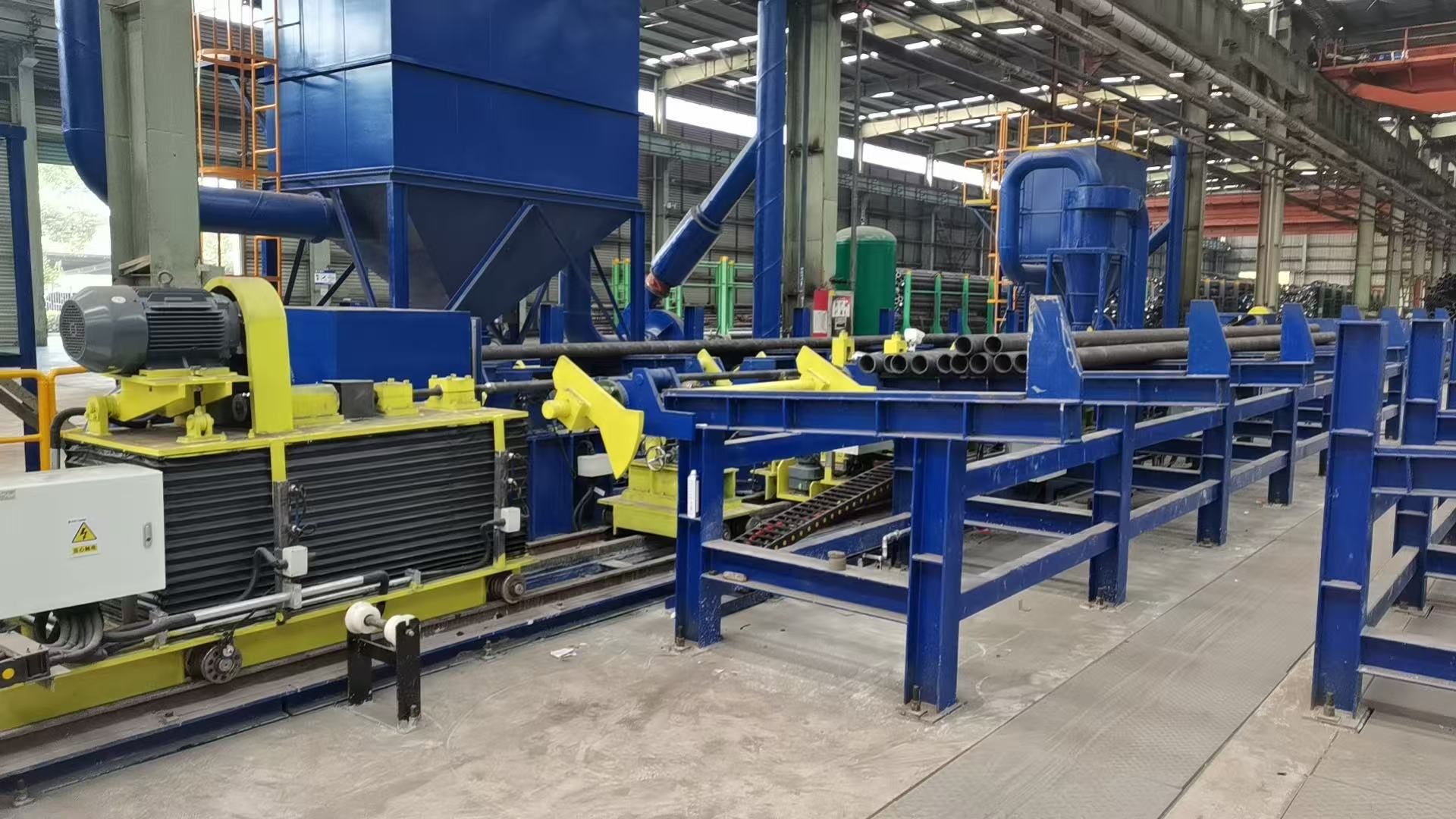
Why Grinding Machines Are Central to Steel Pipe and Round Steel Processing
Steel pipes and round steel bars leave hot rolling and forming processes with surface defects that must be corrected before the material can be used in structural, mechanical, or energy-related applications. Oxide scale, burrs, weld seams, and surface irregularities can affect corrosion resistance, coating adhesion, and dimensional accuracy. Grinding machines address these issues in a controlled, repeatable manner.
The product classification itself reflects the specificity of this equipment. In the current market, grinding machines are commonly segmented into steel pipe grinding machines and round steel grinding machines. Both are designed to process cylindrical metal workpieces, but each addresses different geometric and operational demands. Internal hole grinding machines extend this capability to inner surfaces, which is particularly relevant for pipe applications where bore quality directly affects fluid flow and mechanical fit.
For manufacturers evaluating production lines, the role of the grinding machine is best understood as a finishing gate: it standardizes surface quality before painting, coating, machining, or assembly. Without a reliable grinding stage, downstream processes inherit the defects of the raw material, increasing scrap rates and rework costs.
The Surface Finishing Challenge in Modern Metal Manufacturing
The operational challenge for pipe and bar producers is twofold. First, workpieces arrive with inconsistent surface conditions, particularly in high-volume production environments. Second, finishing targets are becoming stricter as customer specifications demand lower surface roughness and cleaner metallurgical surfaces.
Grinding machines respond to this challenge through a combination of abrasive contact, controlled feed, and consistent pressure. The result is a surface that meets predefined roughness targets while maintaining the geometric integrity of the workpiece. In continuous production setups, this process must operate reliably for extended periods without significant variation in output quality.
The economic dimension of this challenge should not be underestimated. Surface defects that pass through the finishing stage undetected can lead to rejected batches, customer complaints, and renegotiated contracts. A properly specified grinding machine reduces this risk by removing the dependence on manual inspection and manual finishing, which are inherently variable.
Key Technical Parameters of Steel Pipe Grinding Machines
When evaluating grinding machines for steel pipe and round steel applications, buyers encounter a defined set of technical parameters. These parameters form the basis for matching equipment to production requirements.
For a typical steel pipe grinding machine configuration, the following parameters are representative:
| Parameter | Typical Range |
|---|---|
| Power range | 5.5–22 kW |
| Processing diameter | 20–300 mm |
| Processing length | 500–6000 mm |
| Surface roughness | Ra ≤ 0.8 μm |
| Feed speed | 0.5–10 m/min |
| Power supply | 380V/50Hz, 3-phase |
| Protection grade | IP54 |
These parameters define the feasible working envelope. The power range determines the material removal capability, while the processing diameter and length define the workpiece dimensions the machine can accommodate. Surface roughness of Ra ≤ 0.8 μm is a meaningful finishing standard for many industrial applications, representing a smooth surface suitable for coating or further machining.
Feed speed directly influences throughput. A machine operating in the 0.5–10 m/min range offers flexibility across different material conditions and finishing requirements. The IP54 protection grade indicates a level of dust and water splash resistance that is appropriate for normal workshop environments where dry or wet grinding conditions are present.
Material Compatibility
The material options for workpieces processed by these machines include carbon steel, alloy steel, and SS304 stainless steel. This range makes the equipment suitable for steel manufacturing, metal processing, metallurgical operations, and hardware manufacturing. For buyers, material compatibility is a primary screening criterion: the machine must handle the specific steel grades that dominate their production mix.
Types of Grinding Machines in the Pipe and Bar Segment
The broader category of grinding machines includes specialized configurations that serve distinct purposes. Understanding these types helps buyers identify the correct equipment class for their application.
Steel pipe grinding machines focus on the external surface of pipes and tubes. They remove scale, pits, and surface irregularities while producing a uniform finish along the pipe length.
Round steel grinding machines serve a similar function for solid round bars. The difference lies in workpiece handling and support systems, as solid bars have different weight distribution and rigidity characteristics compared to hollow pipes.
Inner hole grinding machines are designed for internal surface finishing. For steel pipe applications, internal grinding is required when the bore surface must meet dimensional and roughness specifications, such as in hydraulic cylinders, boiler tubes, and precision mechanical components.
Steel pipe polishing machines represent a lighter finishing step, focused on achieving higher surface brightness and lower roughness after grinding. In many production lines, grinding and polishing are sequential operations.
Multi-station grinding machines integrate multiple processing heads or stations into a single machine, enabling higher throughput for continuous production environments. These are particularly relevant for operations processing large volumes of standard-sized workpieces.
For buyers exploring the market, the combination of these types under one supplier roof is operationally significant. A manufacturer that produces steel pipe grinding machines, round steel grinding machines, internal hole grinding machines, and round steel finishing lines offers a more coherent equipment sourcing basis than a supplier limited to a single machine type.
West's Manufacturing Position in the Grinding Machine Segment
Jiangyin West Machinery Manufacturing Co., Ltd., operating under the West brand, is a manufacturer based in Jiangyin City, Jiangsu Province, China. Established in 2010, the company has accumulated over 14 years of industry experience. Its product portfolio specializes in grinding machines, including steel pipe grinding machines, round steel grinding machines, internal hole grinding machines, and round steel finishing lines.
The company operates a 6,000-square-meter manufacturing facility comprising three dedicated workshops: welding, machining, and assembly. This vertical workshop structure allows the company to control key manufacturing stages internally rather than relying on external subcontractors. The workforce includes approximately 78 employees, with 12 technical personnel and a dedicated R&D team of 25 engineers.
Production capacity is approximately 300 units annually. Export business accounts for about 70% of total sales, with major markets in Southeast Asia, the Middle East, Europe, and the Americas. This export orientation has practical implications for international buyers: the company's equipment is built for deployment across diverse operating environments and is supported by documentation and processes developed for cross-border transactions.
Beyond grinding machines, the company's business scope covers the manufacturing and processing of metallurgical special equipment and general equipment, along with the sale of mechanical equipment, electronic products, and hardware and electrical equipment. This broader engineering base provides context for its specialization in surface finishing equipment.
Applications and Operating Environments
Grinding machines for steel pipe and round steel are deployed in a defined set of industrial applications. The primary sectors include steel manufacturing, metal processing, metallurgical industry, and hardware manufacturing.
Typical application projects include:
- Metal surface treatment lines
- Steel pipe finishing lines
- Round steel processing lines
These machines are designed for continuous operation rather than intermittent use. In a normal workshop environment, with dry or wet grinding conditions, the equipment must maintain stable performance throughout extended production runs. This operating requirement is reflected in the machine's protection grade and the expectation of reliability over sustained duty cycles.
Geographically, this application scenario is common in Thailand, Vietnam, Saudi Arabia, Germany, and the United States. These markets represent different industrial profiles: from expanding manufacturing bases in Southeast Asia and the Middle East to mature, quality-driven markets in Europe and North America. The common thread is the need for consistent surface finishing in steel pipe and bar production.
Supporting Equipment Integration
Grinding machines do not operate in isolation. In typical finishing line configurations, they are matched with conveyor systems for workpiece transport and dust collectors for particulate control. Dust-proofing and noise reduction are standard special requirements in these installations. For buyers planning new lines, specifying this ancillary equipment alongside the grinding machine is essential for achieving the operating conditions the machine is designed for.
Market Trends Shaping the Grinding Machine Industry
Several verifiable market indicators point to sustained growth in the grinding machine sector and its adjacent equipment categories.
The global grinding machines market is projected to grow from USD 6.47 billion in 2025 to USD 8.59 billion by 2031, at a CAGR of 4.89%, according to Mordor Intelligence. This growth rate reflects both replacement demand and capacity expansion in manufacturing sectors worldwide.
Regionally, the grinding machinery market in Asia Pacific dominated with a revenue share of 43.4% in 2025, with China being the largest single country market, according to Grand View Research. This regional concentration has two implications for buyers: China is both a major consumer and a major producer of grinding equipment, and the supply chain for these machines is increasingly anchored in the Asia-Pacific region.
For the specific sub-segment of round steel finishing, the global bar peeling machine market was valued at USD 450 million in 2024 and is forecast to reach USD 650 million by 2033, according to Market Research Intellect. Bar peeling machines are closely related to round steel grinding and finishing operations, and this growth signal supports investment in round steel processing capability.
The broader pipe processing equipment market is driven by infrastructure and energy sector demand, with a projected CAGR of 7.2% for the period 2025–2033, according to Dataintelo. Infrastructure spending and energy-related construction are key end-use drivers for steel pipe products, which in turn generates demand for finishing equipment.
On the export side, China exported USD 2.31 billion in metalworking machine parts in 2024, representing 11.9% of global exports in this category, according to OEC. This data point confirms that Chinese-origin metalworking equipment and components are deeply integrated into global supply chains.
Automated Grinding vs. Manual Finishing: A Practical Comparison
The decision between automated grinding machines and manual finishing is one of the most common evaluation points for buyers. Both approaches have valid roles, and the choice depends on production volume, quality requirements, and labor costs.
Automated grinding machines offer consistency, repeatability, and higher throughput. Once set up, they maintain the same grinding parameters across every workpiece, reducing variation. They also remove the physical burden from workers and reduce the exposure of operators to dust and noise.
Manual finishing, by contrast, offers flexibility for low-volume or highly variable workpieces. A skilled worker can adapt to irregular surfaces, localized defects, and complex geometries more readily than a standard automated machine. For job-shop operations handling mixed batches, manual finishing can be the more economical choice.
However, the boundary condition is important: manual finishing is difficult to scale in continuous production. In finishing lines where thousands of meters of pipe must be processed per shift, manual labor becomes a bottleneck, quality varies with operator fatigue, and labor costs escalate. Automated grinding machines address these limitations by providing controlled feed rates and consistent surface contact.
One honest limitation of automated grinding machines should be acknowledged: they require proper setup and periodic adjustment. Abrasive wear, wheel dressing, and feed calibration demand skilled maintenance. Buyers should factor in operator training and spare parts availability when evaluating automation. This is not a reason to avoid automation, but a practical consideration for implementation planning.
Future Outlook: Specialization and Integration
The trajectory of the grinding machine market points toward increasing specialization. As steel pipe and round steel applications diversify, equipment suppliers are developing machines tailored to specific workpiece geometries, material grades, and production scales.
One observable direction is the integration of multiple processing functions. Rather than requiring separate machines for grinding, polishing, and finishing, manufacturers are moving toward combined solutions that complete multiple steps in a single pass or on a single platform. This reduces floor space requirements, material handling, and in-process inventory.
Another direction is the growing demand for dust collection and environmental control. As regulations on industrial dust and noise tighten across markets, grinding machine buyers are prioritizing equipment that can operate within environmental compliance limits. Machines with higher protection grades and compatibility with dust extraction systems are becoming the baseline rather than the exception.
For suppliers like West, the combination of established manufacturing experience, a specialized product portfolio, and demonstrated export capability positions them to serve buyers seeking a single source for steel pipe and round steel finishing equipment. For buyers, the practical question is not just what a machine can do, but whether the supplier can support its installation, operation, and maintenance across borders.
FAQ
What is a grinding machine?
A grinding machine is an industrial equipment type used for surface finishing of metal workpieces. In the steel pipe and round steel segment, it is designed to process cylindrical metal products, performing functions such as surface polishing, deburring, oxide scale removal, and precision finishing.
What is a steel pipe grinding machine?
A steel pipe grinding machine is a grinding machine intended for the steel manufacturing industry. It is used to process steel pipes, achieving surface quality standards through abrasive finishing. It belongs to the broader category of steel pipe and round steel grinding machines.
What materials can a steel pipe grinding machine process?
Typical processable materials include carbon steel, alloy steel, and SS304 stainless steel. These material options make the equipment applicable in steel manufacturing, metal processing, metallurgical industry, and hardware manufacturing sectors.
What are the key specifications of a steel pipe grinding machine?
Representative specifications for this equipment class include a power range of 5.5–22 kW, processing diameter from 20 to 300 mm, processing length from 500 to 6000 mm, surface roughness of Ra ≤ 0.8 μm, feed speed from 0.5 to 10 m/min, and a power supply of 380V/50Hz, 3-phase. The protection grade is generally IP54.
Which industries use steel pipe grinding machines?
The main industries include steel manufacturing, metal processing, metallurgical industry, and hardware manufacturing. Typical application projects include metal surface treatment lines, steel pipe finishing lines, and round steel processing lines.
What is the market outlook for grinding machines?
The global grinding machines market is projected to grow from USD 6.47 billion in 2025 to USD 8.59 billion by 2031, at a CAGR of 4.89%. The Asia Pacific region held a 43.4% revenue share in 2025, with China being the largest single country market.
What supporting equipment is needed with a grinding machine?
In typical continuous operation lines, grinding machines are matched with conveyor systems and dust collectors. Dust-proofing, noise reduction, and stable performance are commonly specified requirements for these installations.