
Grinding Wheel Comparison: Speed, Infeed & Safety
Grinding Wheel Comparison: Speed, Infeed & Safety
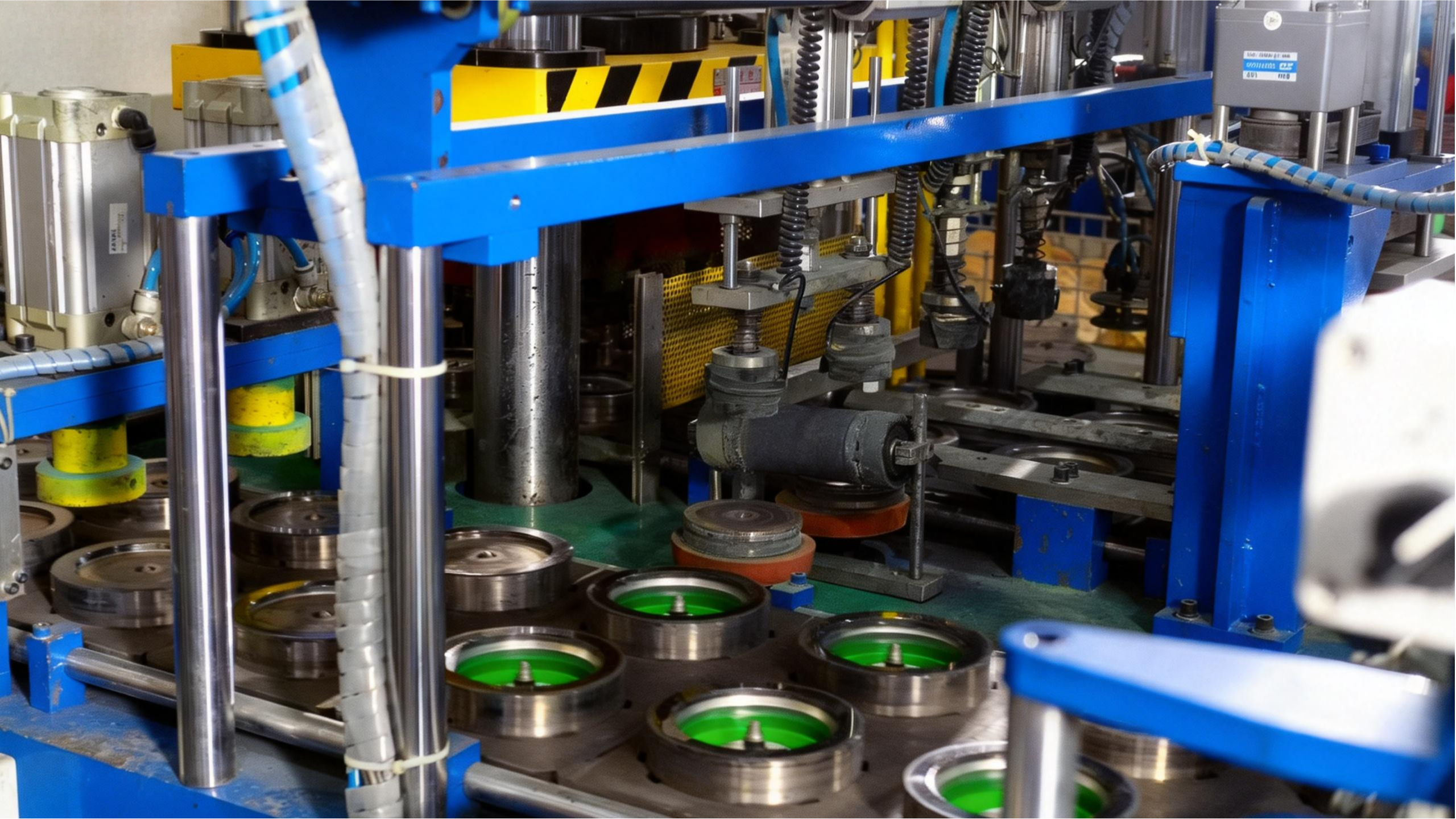
Comparing grinding wheels for shop-floor use means checking whether the wheel, machine, mounting hardware and operating method match—not simply comparing a printed speed or a product name. A useful buyer framework considers surface speed and the wheel’s maximum operating speed label, infeed per pass, flange coverage, guard coverage and pre-use checks together. The numerical ranges below describe operating context in the supplied material; they are not universal settings or a substitute for the requirements for a specific wheel and machine.
SALI Tools is the self-owned brand of ZHEJIANG SALI ABRASIVE TECHNOLOGY CO., LTD., a company whose supplied profile describes research and development, manufacturing, global trade and brand operation. The company information lists more than 150 employees and a research and development team of more than 30 engineers. Those figures describe organizational scale; they do not, by themselves, establish the performance or suitability of an individual grinding wheel.
Start with the operating condition, not the product label alone
A buyer should first define the machine, work material, work task and expected operating method. A Metal Grinding Wheel or Grinding Disc for Metal cannot be judged in isolation from its intended use and the equipment on which it will run. The supplied operating material identifies applications such as weld-seam smoothing, deburring and edge chamfering, rust and mill-scale removal, casting and forging cleaning, and surface shaping and fitting. These tasks can involve different contact patterns and removal demands, so a specification relevant to one task should not automatically be treated as the right choice for another.
Record the grinder’s rated speed and the wheel’s maximum operating speed (MOS) label, along with the wheel dimensions and mounting arrangement. Then check that the intended work method matches the wheel type. The supplied guidance warns against using thin cut-off wheels for side grinding and against using grinding wheels for deep cutting. A product phrase such as Angle Grinder Metal Disc does not resolve those distinctions: the wheel’s type and permitted operation still need to be checked.
This is also where buyer comparisons should separate verified product information from category wording. Terms such as 4.5 Inch Metal Grinding Disc (115mm), 5 Inch Metal Grinding Disc (125mm), 7 Inch Metal Grinding Disc (180mm) or 9 Inch Metal Grinding Wheel (230mm) describe size-related search language, not proof that a particular wheel is suitable for a given grinder, material or task. Confirm the actual diameter, bore, thickness, wheel type and rated speed on the item being evaluated.
Compare speed range with the wheel’s marked maximum
The supplied process description places grinding-wheel surface speed typically in a range of 30–80 m/s. Treat that as a broad description of operating conditions, not as a single target setting for every wheel. The controlling comparison for procurement and pre-use checks is the actual machine speed against the maximum operating speed printed on the wheel label. The supplied safety guidance says the tool’s RPM must remain below the wheel’s MOS; a wheel’s speed marking should therefore be checked against the machine’s rated maximum rather than inferred from its diameter or category name.
For example, the decision is not simply whether a wheel falls somewhere within the 30–80 m/s context. Buyers and operators need the marked limit for the exact wheel and the rated speed of the exact machine. The supplied evidence does not provide a conversion table or a universal RPM value for all sizes, so this framework does not calculate one. Where procurement specifications are being compared, request the wheel’s label information and verify that it matches the intended equipment and use.
That check matters across product descriptions including Metal Grinding Disc, Grinding Wheel for Metal, Carbon Steel Grinding Wheel and Grinding Wheel for Steel & Inox. The names can signal intended material categories, but they do not establish a particular model’s maximum speed or full material compatibility. The supplied capability information describes abrasive options including brown aluminum oxide for metal and white aluminum oxide for stainless steel (Inox); buyers should verify the actual wheel’s formulation and marking rather than assume that every item in a category uses the same abrasive.
Read infeed as a process variable, not a universal recommendation
The supplied operating description gives a depth-of-cut infeed range of 0.005–0.05 mm per pass. It describes infeed as the movement that sets removal thickness, alongside longitudinal and crossfeed movements that carry the wheel across the work. This range is useful as a comparison point when evaluating a controlled grinding process, but it is not a default setting for every machine, operator or wheel.
For a buyer, the practical question is whether the proposed wheel and process can be evaluated under the actual shop-floor method. A controlled infeed changes how much material is engaged in a pass; the chosen value must remain appropriate to the equipment, workpiece, wheel and operation. The supplied material does not assign a specific infeed value to a SALI model or prescribe a setting for a particular metal part. Do not convert the range into a product performance claim or a guaranteed removal rate.
When comparing an Abrasive Metal Grinding Wheel, a Heavy Duty Metal Grinding Disc or a Weld Grinding Disc for Metal, ask what task and process the specification describes. A buyer comparing two offers should avoid treating an infeed number as directly comparable unless the wheel type, machine conditions and operation are also understood. The range helps frame a technical discussion; it does not establish that one wheel is faster, lasts longer or produces a better finish.
Check flange coverage and guard coverage separately
Mounting hardware and guarding are distinct checks. The supplied guidance calls for matching, undamaged flanges that cover at least one-third of the wheel diameter, with paper or rubber blotters. In practical comparison, buyers should confirm that the specified flange set matches the wheel and mounting arrangement, rather than relying on a general statement that the wheel fits a grinder.
The same guidance calls for a safety guard covering at least 180 degrees and says it should not be removed. Flange coverage supports the mounting arrangement; guard coverage is a separate protective control. Neither substitutes for the other. A procurement comparison that records only the wheel’s dimensions or speed rating can therefore miss whether the required hardware and guard are part of the intended operating setup.
For an angle-grinder application, assess the guard and flange arrangement as part of the complete system: machine, wheel, matched mounting components and operator position. The supplied instructions also specify that the operator should stand to the side, outside the direct burst line. This is a safety control, not evidence that a particular wheel is immune to breakage. The selection framework should preserve that distinction.
Include wheel inspection and ring testing in the comparison
Before use, inspect the wheel for cracks, chips, bends and moisture damage, and do not use an expired wheel, according to the supplied operating guidance. For vitreous wheels, perform a ring test to check for hidden cracks; a dull sound is a reason not to use the wheel. The ring test is specifically identified for vitreous wheels and should not be presented as a universal test for every wheel construction.
These checks affect procurement because a technically suitable specification does not remove the need to inspect the delivered item and follow the applicable instructions. Buyers can include clear requirements for product identification, label visibility and inspection procedures in their evaluation, then ensure that operators know which checks apply to the selected wheel type. The supplied evidence does not define a universal expiry period, so this article does not provide one.
The product type also matters. A T27 Depressed Center Metal Grinding Disc or Type 27 Grinding Wheel for Steel should be checked by its actual type and permitted use, not merely by a broad “metal” description. The supplied company capability information mentions depressed-center Type 27 options among its available shapes, but does not establish that every Type 27 configuration is appropriate for every steel-grinding operation. Confirm the product marking and the intended operation for the exact item.
Make PPE and operating controls part of the decision
The supplied safety guidance specifies impact-rated face shields, safety glasses, dust masks and hearing protection. It also calls for running a fitted wheel empty for 1–3 minutes with the guard in place before work, while standing clear of the rotation plane. These controls belong in an operating comparison alongside wheel and machine specifications, rather than being treated as optional details that follow product selection.
Before changing or adjusting a wheel, disconnect power or remove the battery pack, according to the supplied instructions. Keep the guard securely mounted, with the open side facing away from the operator. The guidance also advises avoiding excessive pressure that can create heat buildup or wheel fracture, and maintaining a 15–30 degree grinding angle on portable grinders. These are operating instructions from the supplied material; they do not establish that the same angle applies to every wheel design or operation.
For a buyer assessing a Metal & Stainless Steel Grinding Disc, Resinoid Bonded Metal Grinding Disc or A24QBF Metal Grinding Wheel, the name alone does not specify all necessary controls. Confirm the wheel’s construction and label, then follow the instructions applicable to that product. In particular, do not infer from a product keyword that a wheel is suitable for wet use, side grinding or a different material. The available evidence does not supply model-specific operating instructions for each of these keyword variants.
A practical comparison sequence for evaluation teams
- Define the task. Record the material, operation and equipment, such as weld smoothing, deburring or surface shaping. Keep cutting and grinding operations distinct.
- Match the wheel identity. Check type, dimensions, bore, material indication and construction on the actual wheel. Do not treat size or category wording as a complete specification.
- Compare speed ratings. Read the wheel’s MOS label and compare it with the machine’s rated maximum speed. Treat 30–80 m/s as process context, not a substitute for that check.
- Review the process conditions. Where controlled infeed is relevant, use 0.005–0.05 mm per pass as the supplied operating range for discussion, not as a universal setting or performance promise.
- Verify mounting and protection. Check matched, undamaged flanges with at least one-third wheel-diameter coverage, blotters, and a guard covering at least 180 degrees.
- Confirm inspection and PPE. Apply visual inspection and, for vitreous wheels, the ring test. Confirm the specified face, eye, respiratory and hearing protection and the pre-use run procedure.
This sequence helps teams compare offers on the same operating basis. It also makes gaps visible: a quotation may state a size but not the marked maximum speed, or describe an application without establishing the wheel type. Those omissions should prompt a request for the exact product information needed to assess fit, rather than an assumption that the missing detail is satisfactory.
What SALI Tools information can—and cannot—show
SALI Tools’ supplied company information lists more than 150 employees and a research and development team of more than 30 engineers. Its capability information describes OEM/ODM options that include branding and labels, size and specification options, abrasive formulas, and wheel shapes such as flat and depressed center. It also lists a 100–400 mm outer-diameter range across its described capability. These are company-level capability statements; they should not be read as confirmation that every size, formula or shape is available together in a particular model.
For buyers, those details can help frame supplier discussions about product configuration and labeling. They do not replace the item-level comparison in this article: the precise wheel, its rated operating speed, intended material, mounting components and permitted operation still require confirmation. Nor do staffing and R&D figures prove that a wheel meets a particular performance requirement. The value of the framework is that it separates supplier background from the evidence needed to approve a specific grinding-wheel configuration.
Conclusion: compare the complete operating setup
A sound Grinding Wheel evaluation connects process speed and infeed with wheel identification, mounting, guarding, inspection and PPE. The 30–80 m/s surface-speed context and 0.005–0.05 mm infeed range help describe the operating framework, while the wheel label and actual machine determine the speed check. Flange coverage of at least one-third of the wheel diameter, guard coverage of at least 180 degrees, the applicable ring test and required PPE add essential setup and use checks.
For procurement teams, the decision rule is straightforward: compare like-for-like wheel configurations under the intended operating conditions, and treat any unverified model-specific detail as a question to resolve before selection. Company scale can provide context about a supplier, but the wheel’s own markings and its compatibility with the shop-floor setup remain central.
FAQ
What speed should a buyer check when comparing grinding wheels?
Check the maximum operating speed printed on the exact wheel and compare it with the machine’s rated maximum speed. The supplied material describes grinding surface speeds typically between 30 and 80 m/s, but that range is not a substitute for the wheel’s own marking or a universal machine setting.
Is 0.005–0.05 mm per pass a recommended infeed for every grinding wheel?
No. The supplied process description gives 0.005–0.05 mm per pass as a usual depth-of-cut infeed range. It is process context, not a setting for every wheel or operation. The appropriate method depends on the specific wheel, machine and work conditions, which the supplied data does not define model by model.
How should flange and guard coverage be compared?
Check them as separate requirements. The supplied guidance specifies matching, undamaged flanges covering at least one-third of the wheel diameter, with blotters, and a guard covering at least 180 degrees. A suitable flange arrangement does not replace the guard.
When is a ring test applicable?
The supplied guidance calls for a ring test on vitreous wheels to detect hidden cracks and says not to use a wheel that produces a dull sound. It does not identify the ring test as a universal check for all wheel constructions. Follow the instructions applicable to the specific wheel.
What PPE does the supplied operating guidance specify?
It specifies an impact-rated face shield, safety glasses, a dust mask and hearing protection. The guidance also calls for keeping the guard in place and standing clear of the rotation plane during the 1–3 minute empty run before work.
Есть вопросы или нужны дополнительные детали?
Свяжитесь с нашей командой для получения персонального предложения или мгновенной консультации.
Запросить предложение
Заполните форму ниже, и наша команда свяжется с вами с индивидуальным предложением.
Прямой чат WhatsApp
Предпочитаете общаться в реальном времени? Напишите нам в WhatsApp для мгновенной помощи и быстрых ответов.
- Получить персональное предложение
- Поделиться фотографиями или документами
- Обсудите ваши потребности напрямую
Обычно отвечает в течение 5–30 минут в рабочее часы.