
Ground Solar Bracket: Load, Material, Certification Checks
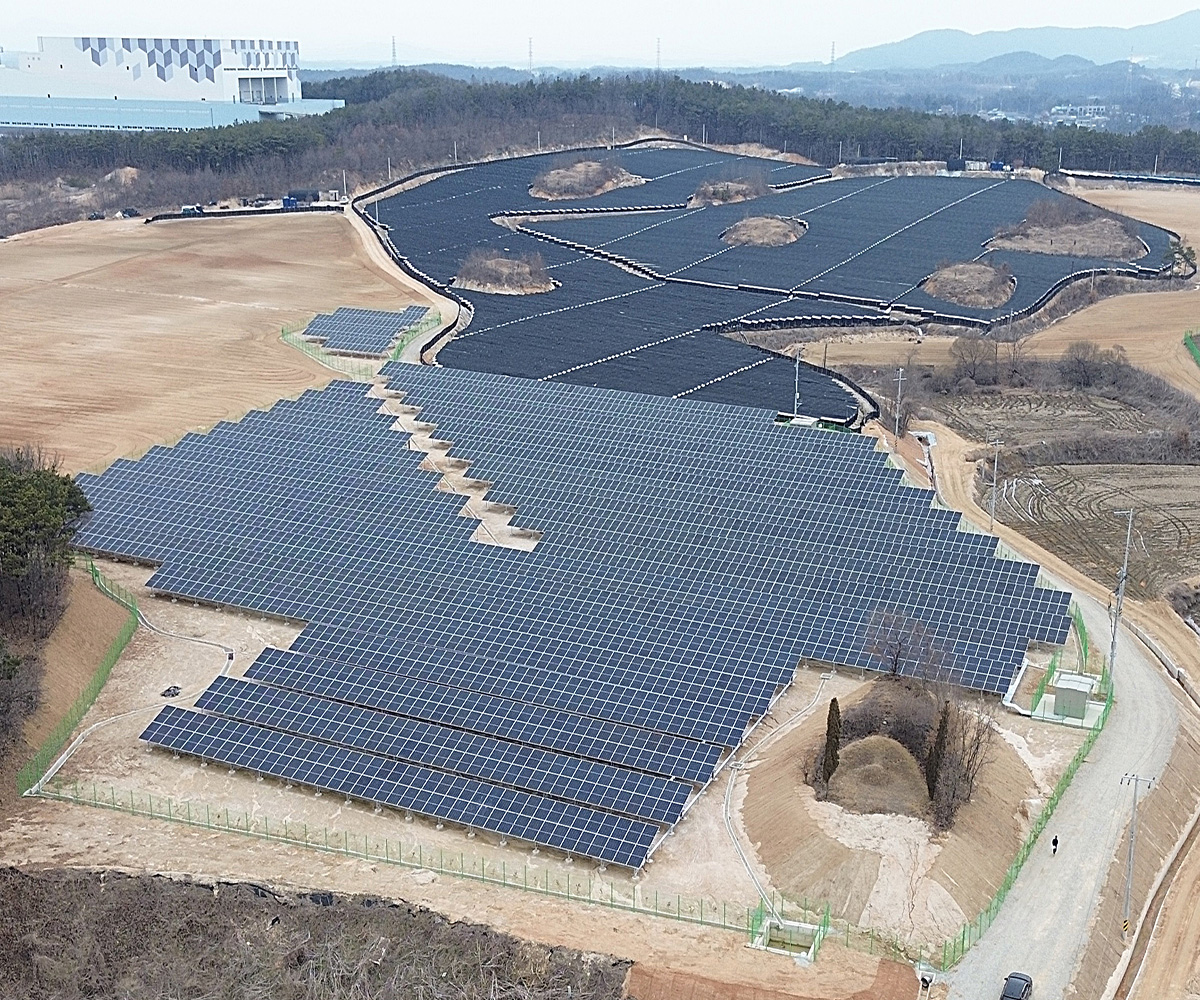
A ground solar bracket is not a commodity accessory. It is the structural interface between the PV module and the ground, and it carries wind, snow, seismic and service loads for the life of the project. For buyers in Research and Evaluation, the useful question is not which bracket looks strongest, but which bracket package can be verified against the project’s load case, corrosion environment, foundation conditions and market-access requirements.
This article is an independent buyer reference for ground solar bracket procurement. It explains what a ground-mounted solar mounting structure includes, which constraints deserve the most attention, and how a supplier such as 9Sun Solar fits into that evaluation. The focus is on verifiable product facts, not promotional claims. Where the available evidence stops, the article says so.
Why the ground solar bracket is a procurement control point
Ground-mounted projects expose mounting systems to conditions that roof systems often hide. The array is closer to soil, water, vegetation and agricultural activity. The foundation is visible and inspectable. The structure must be installed across terrain that may be uneven, sloping or rocky. And because ground arrays are often built at utility or commercial scale, a small specification error becomes a large field problem.
That is why a ground solar bracket should be evaluated as a system, not as a list of aluminium profiles. The system includes rails, clamps, splices, foundation interfaces, grounding provisions and, in many projects, pre-assembly. A change in one component can affect the load path. A rail profile that performs well in a roof-mounted solar panel bracket may not be appropriate for a ground-mounted solar mounting structure with long spans and open exposure.
The buyer’s task is to connect four things: the project load case, the foundation option, the material and corrosion class, and the documentary evidence. When those four are aligned, the bracket package is easier to install and easier to defend in technical review. When they are not, the lowest unit rate can become the most expensive decision.
What a ground-mounted solar bracket package includes
A ground solar bracket system typically combines a module support structure with a foundation interface. In the 9Sun Solar product range, the NS-ground-1, NS-ground-2 and NS-ground-3 are listed as solar ground mounting systems. The main material is AL6005-T5 aluminium with an anodised finish. The fixed base can be a ground screw, concrete, C-type pillar or pile. The design wind load is stated as below 46 m/s, and the design snow load as below 1.4 kN/m².
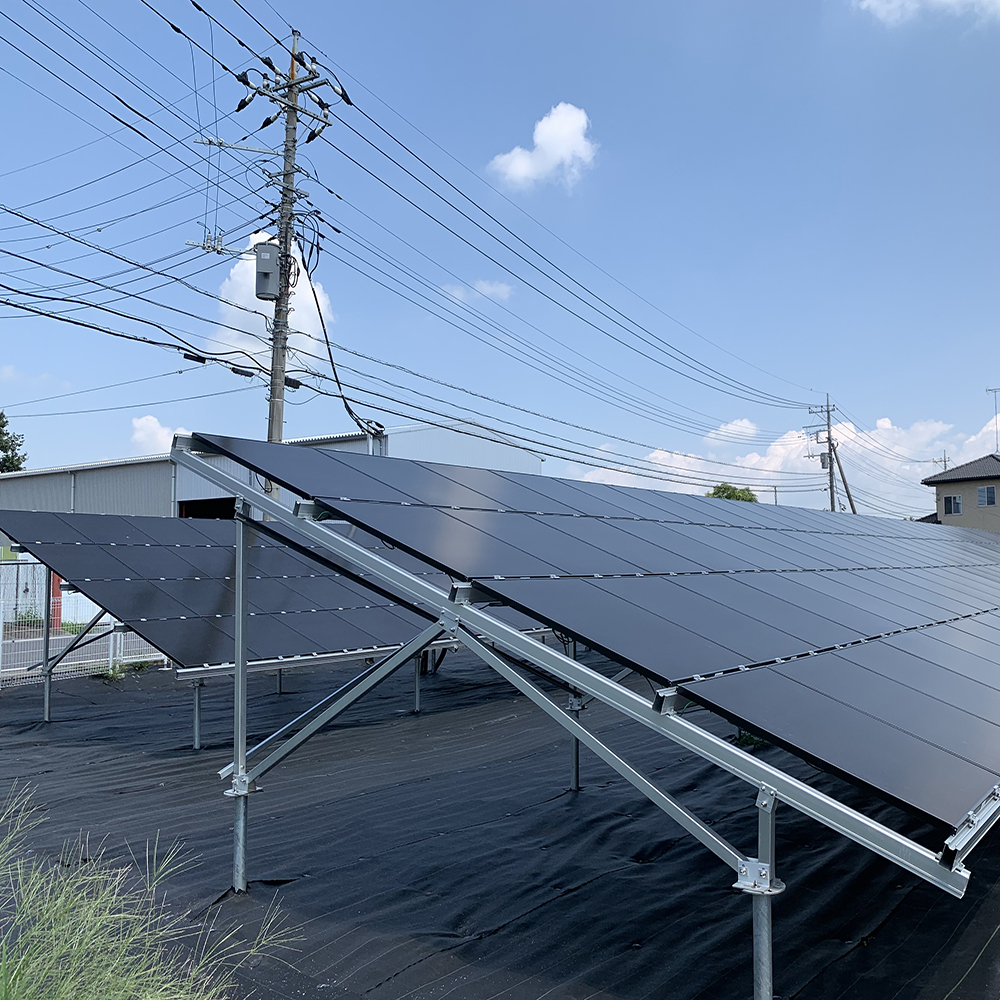
Around that core, the package usually includes solar rails, solar clamps, mid and end clamps, bolts and nuts, and foundation hardware. The 9Sun Solar solar rail range uses anodised AL6005-T5 and is rated at 60 m/s wind load and 1.4 kN/m² snow load. The solar clamp range uses the same aluminium grade and is also rated at 60 m/s and 1.4 kN/m². Those component ratings are higher than the NS-ground system’s stated design wind load of below 46 m/s. That difference is not necessarily a contradiction; it shows why buyers should distinguish component ratings from system-level design values.
| Element | Typical role | What the buyer should verify |
|---|---|---|
| Module rails | Carry modules and transfer loads to supports | Material grade, anodising, span and clamping compatibility |
| Mid and end clamps | Fix module frames and maintain spacing | Frame height range, grounding provision, torque and layout |
| Foundation interface | Connects structure to ground | Ground screw, concrete, C-type pillar or pile design; geotechnical basis |
| Pre-assembly | Reduces field labour and tolerance errors | Degree of factory assembly and site adjustment range |
| Documentation | Supports technical and market-access review | Product-specific calculations, test reports and certificates |
The constraint stack: load, corrosion, foundation and certification
Wind and snow load
Ground solar brackets are designed against project-specific wind and snow loads. The NS-ground system is stated with a design wind load below 46 m/s and a design snow load below 1.4 kN/m². The ground screw option in the 9Sun range is separately rated at 130 mph, or 60 m/s, and 30 psf, or 1.4 kN/m². The solar rail and solar clamp ranges are also rated at 60 m/s and 1.4 kN/m².
These figures are useful starting points, but they are not a substitute for a project load calculation. Wind load depends on terrain category, exposure, height, array geometry and local code. Snow load depends on ground snow, roof or array exposure, drift and module tilt. A bracket that is adequate for one site may be outside its design basis at another. The buyer should ask for the structural calculation package, not only the product datasheet.
Material and corrosion
Aluminium is common in ground-mounted solar mounting structures because it is light, corrosion-resistant when properly finished, and compatible with pre-assembly. The verified data used for this article states that aluminium captured 71.5% of the solar PV mounting systems market share by material in 2025. That does not make aluminium the right choice for every ground project, but it explains why aluminium bracket systems are widely specified.
In the 9Sun Solar range, the NS-ground system uses AL6005-T5 aluminium with an anodised surface. The solar rail and solar clamp use the same grade and finish. The ground screw uses Q235 carbon steel with hot-dip galvanising as the standard surface treatment, with anodised or customised treatments listed as options. These are different corrosion strategies for different components. A buyer should not assume that a finish specified for a rail is automatically correct for a foundation screw in a coastal or high-humidity site.
Corrosion review should include the environment, the expected service life, the coating or anodising specification, and the risk of dissimilar-metal contact. The 9Sun Solar profile states a 10-year warranty for solar mounting systems and an actual service life of up to 25 years under proper use. Those statements are company-reported; they should be read together with the project’s maintenance and inspection plan.
Certification and standards
Certification is one of the most misunderstood parts of ground solar bracket procurement. A standard’s scope is not a product certificate. UL 2703, for example, covers photovoltaic mounting systems, mounting devices, clamping or retention devices, and grounding lugs for flat-plate PV modules and panels. That scope statement explains what the standard addresses; it does not prove that a specific bracket has been listed.
The supplied materials include a CE Attestation of Conformity for the NS-Solar Tile Roof-1 product, certificate number PRSZ23120603CR, issued on 2023-12-12 for the EU market. That certificate is tied to a tile-roof product, not to the NS-ground system. The supplied materials also document TUV certification for solar cable, not for the ground bracket. A buyer should therefore match every certificate to the exact product family, model and market. A CE or TUV claim that cannot be tied to the ground bracket should not be accepted as evidence for the ground bracket.
For projects in the United States, UL 2703 is a relevant reference for mounting systems and grounding components, but the buyer still needs the specific listing or certification record. For the EU, CE marking and the applicable directive must be confirmed for the product and intended use. For Japan and Australia/New Zealand, the company states that its mounting systems are designed according to JIS C8955:2017 and AS/NZS 1170. That is a design-reference statement, not a certificate. The distinction matters in technical due diligence.
How 9Sun Solar approaches ground mounting
Xiamen 9Sun Solar Technology Co., Ltd., trading as 9Sun Solar, is a China-based manufacturer and supplier of solar PV mounting systems. The company is headquartered in Xiamen, Fujian, and reports its own factory in Quanzhou, Fujian. Its listed product scope includes ground, roof, farm, carport, balcony and ground-screw systems, along with solar rails, clamps and related components.
For ground projects, the relevant offer is the NS-ground series. The company states that the system uses AL6005-T5 aluminium, anodised for corrosion resistance, with a choice of ground screw, concrete, C-type pillar or pile foundation. It also states that about 90% of assembly can be completed in the factory, which is intended to shorten construction time and reduce site labour. The company reports a 10-year warranty and a service life of up to 25 years under proper use.
Manufacturing and supply claims should be read with the same discipline as product claims. 9Sun Solar reports an annual output of 2 GW and a monthly capacity of 170 MW. A separate 9Sun Solar domain reports 1.8 GW annual capacity. The two figures conflict, and the capacity basis is not disclosed in the supplied materials. That does not disqualify the supplier, but it does create a specific verification item: request production records, capacity definition and factory audit evidence before relying on either number for project scheduling.
The company also lists OEM/ODM capability, customisation according to terrain, climate, component specifications and foundation conditions, a stated lead time of 7 days, and 100% testing. These are company-reported capabilities. They are useful for RFQ planning, but they should be converted into contractual milestones and inspection points.
Ground screw, concrete or C-type pillar: comparing foundation options
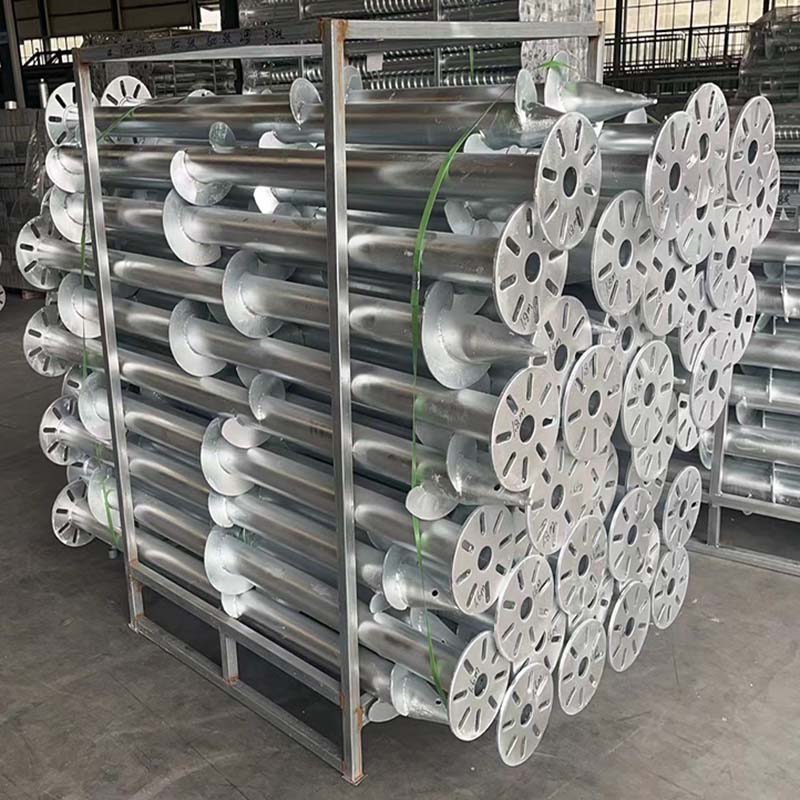
The foundation choice changes the installation method, the schedule and the risk profile. The 9Sun Solar NS-ground system allows ground screw, concrete, C-type pillar or pile bases. The ground screw is a distinct product with its own ratings: Q235 carbon steel, hot-dip galvanised, 130 mph or 60 m/s wind load, 30 psf or 1.4 kN/m² snow load, and a 10-year warranty.
| Foundation option | Practical implication | Where it can fit | Boundary condition |
|---|---|---|---|
| Ground screw | Mechanical installation; no concrete curing; removable in some cases | Projects needing fast installation or temporary/relocatable arrays | Requires geotechnical review, embedment design and corrosion assessment |
| Concrete | Familiar structural base; separate curing and excavation coordination | Projects where local practice or code favours concrete | More site work, longer schedule and larger disturbed area |
| C-type pillar or pile | Engineered foundation interface for the mounting structure | Site-specific structural designs | Design and installation must match the project load case |
The comparison is not a ranking. A ground screw can reduce concrete work and site disturbance, and the 9Sun Solar ground screw literature notes that it can be installed in difficult terrain and removed for relocation. But a ground screw is not universally suitable. Soil corrosivity, bearing capacity, embedment depth, frost action, groundwater and local approval can all limit its use. Concrete is not automatically better either; it brings curing time, excavation and larger site disturbance. The right choice comes from the geotechnical report and the structural design, not from a generic preference.
Application fit: where ground solar brackets matter most
Ground-mounted solar brackets serve large power stations, commercial and industrial projects, public infrastructure and agricultural installations. In the supplied application record, the working conditions include outdoor wind, snow, hail pressure and humid environments from -40°C to 85°C. The mounting structure is expected to bear PV module weight, withstand environmental loads, maintain the selected tilt and provide a reliable grounding path.
The farm mounting system is a separate but related case. The NS-Farm-1 uses aluminium and steel, a ground screw or concrete base, a design wind load of 46 m/s, a design snow load below 100 cm and a maximum clearance of 5 m. The listed suitable crops include rice, tea and blueberries. This shows how ground mounting can be adapted to agricultural use, but it also shows why a single ground bracket specification cannot be copied across every site.
Project references in the supplied materials include ground-mounted installations in Japan and Korea, with capacities such as 600 kW, 1 MW, 5 MW, 785 kW, 555 kW and 568 kW, all described as stable operation. These references are useful for understanding the supplier’s application experience. They are not a substitute for project-specific engineering, and they should be checked with reference contacts and site documentation during evaluation.
What buyers should verify before awarding a ground bracket package
For a Research-to-Evaluation buyer, the most useful output of supplier review is a verification checklist. The table below converts the main risks into questions that can be asked in an RFQ, technical clarification or factory audit.
| Verification area | Question to ask | Evidence to request |
|---|---|---|
| Structural design | What wind, snow and seismic loads is the system designed for? | Project-specific structural calculations and load assumptions |
| Foundation | Is the base ground screw, concrete, C-type pillar or pile? | Geotechnical basis, embedment or concrete design, interface drawings |
| Material and finish | Which aluminium grade or steel grade is used? | Material certificates, anodising or galvanising specification |
| Certification | Which certificate applies to this exact model and market? | Certificate number, scope, issuer, standard and validity |
| Grounding | How is the grounding path provided? | Grounding component details and installation instructions |
| Module compatibility | Which module frame heights and layouts are supported? | Clamp range, layout drawings and torque values |
| Pre-assembly | How much is assembled before shipment? | Packing list, assembly drawings and factory inspection record |
| Capacity claim | How is annual or monthly capacity defined? | Production records, capacity basis and factory audit evidence |
Price comparison belongs at the end of this process, not the beginning. A ground solar bracket unit rate is not comparable unless it states the material grade, finish, foundation interface, clamps, engineering, packaging, Incoterm and testing scope. The supplied materials do not provide a public price band, and buyers should be cautious with any supplier that offers a headline rate without those inclusions.
Market trend analysis: growth with more documentation
The wider market context supports the attention being paid to mounting systems. Global Market Insights values the global solar PV mounting systems market at USD 49.7 billion in 2025 and projects it to reach USD 83.2 billion by 2035. The same source reports that aluminium captured 71.5% of the market share by material in 2025. These are market-level figures, not a forecast for any single supplier, but they explain why ground solar brackets remain a competitive and technically scrutinised category.
Policy is another driver. The California Energy Commission’s 2025 Building Energy Efficiency Standards, Title 24, mandate solar on all new commercial construction starting 1 January 2026. That requirement is primarily a building-code signal, but it adds to the broader demand for documented mounting systems and qualified suppliers. In trade terms, the verified data lists HS Code 7610.90 for aluminium mounting structures and 7308.90 for steel structures. Classification can affect duty and customs treatment, so buyers should confirm the code with their customs broker rather than assuming a single classification for every bracket.
Limits and boundaries
The strongest ground solar bracket claim is still a bounded claim. Component ratings do not automatically become system ratings. A ground screw rated at 60 m/s does not mean every NS-ground configuration is rated at 60 m/s; the system-level design value stated for NS-ground is below 46 m/s. A CE certificate for a tile-roof product does not certify a ground bracket. A company-reported 2 GW capacity is not the same as an audited 2 GW capacity, especially when another company domain reports 1.8 GW.
There are also application limits. Ground screws depend on soil and site conditions. Aluminium is not automatically the lowest-cost or highest-strength option for every project. Pre-assembly reduces site labour but can increase packing volume and transport planning requirements. A 10-year warranty is not a 25-year performance guarantee; the 25-year service-life statement depends on proper use, inspection and maintenance. These boundaries do not weaken a well-designed ground bracket package. They define what the buyer must verify.
Future outlook
Ground-mounted solar procurement is moving toward clearer separation between product data, design calculations and market-access documents. Buyers are asking for model-specific certificates, foundation-specific geotechnical review and capacity evidence that can survive a factory audit. Suppliers that can present these documents cleanly will be easier to shortlist, not because they make louder claims, but because their claims are easier to check.
For 9Sun Solar, the ground mounting range and the broader bracket portfolio provide a relevant reference point for that trend. The next step for buyers is not a generic supplier ranking. It is a project-specific comparison of load case, foundation, material, certification and production evidence.
FAQ
What wind and snow loads should a ground solar bracket be designed for?
A ground solar bracket should be designed for the wind and snow loads of the specific site, not for a generic headline figure. In the 9Sun Solar NS-ground system, the stated design wind load is below 46 m/s and the design snow load is below 1.4 kN/m². The solar rail and solar clamp ranges are separately rated at 60 m/s and 1.4 kN/m², while the ground screw is rated at 130 mph or 60 m/s and 30 psf or 1.4 kN/m². These component values should be checked against the project structural calculation.
What material is used in 9Sun Solar’s ground mounting system?
The NS-ground system uses AL6005-T5 aluminium as the main material with an anodised surface treatment. The solar rail and solar clamp ranges also use anodised AL6005-T5. The ground screw uses Q235 carbon steel with hot-dip galvanising as the standard surface treatment, with anodised or customised treatments available as options. Buyers should confirm the material and finish for each component, because the rail, clamp and foundation do not necessarily use the same corrosion strategy.
Should a ground solar project use ground screws or concrete foundations?
The choice depends on the geotechnical report, structural design, schedule and local approval. The NS-ground system supports ground screw, concrete, C-type pillar or pile bases. Ground screws can reduce concrete work and site disturbance and can be removable, but they require soil and embedment verification. Concrete is a familiar option but involves excavation, curing and more site work. Neither option is universally superior; the foundation must match the project load case and ground conditions.
Is CE certification enough for a ground solar bracket?
No single certificate should be treated as enough without checking its scope. The supplied materials document a CE Attestation of Conformity for the NS-Solar Tile Roof-1 product, certificate number PRSZ23120603CR, issued on 2023-12-12 for the EU market. That certificate is tied to a tile-roof product, not to the NS-ground system. For a ground project, the buyer should request the product-specific certificate, standard, issuing body, market and validity for the exact ground bracket model.
What warranty and service life does 9Sun Solar state for its mounting systems?
9Sun Solar states a 10-year warranty for its solar mounting systems and an actual service life of up to 25 years under proper use. The ground screw is also listed with a 10-year warranty period. These are company-reported figures. They should be read with the project’s inspection, maintenance and corrosion-management plan, because service life depends on the installed environment and proper use.
Can ground solar brackets be customised for terrain, climate and module specifications?
9Sun Solar lists OEM/ODM capability and states that customisation can follow terrain, climate, component specifications and foundation conditions. The company’s product scope includes ground, roof, farm, carport, balcony and ground-screw systems. Customisation should be defined in drawings, calculations and inspection criteria before production, because a general capability statement does not by itself confirm a specific project design.
How should buyers verify a supplier’s production capacity claim?
Buyers should ask how capacity is defined, what period it covers, what product mix it assumes and what records support it. 9Sun Solar reports a 2 GW annual output and a 170 MW monthly capacity, while another 9Sun Solar domain reports 1.8 GW annual capacity. Because the figures conflict and the capacity basis is not disclosed in the supplied materials, the claim should be treated as a verification item. Production records, equipment lists and a factory audit are more useful than a single headline number.
Can ground solar bracket prices be compared by unit rate alone?
No. A ground solar bracket unit rate is only comparable when it states the material grade, surface finish, foundation interface, clamps, engineering, packaging, Incoterm and testing scope. The supplied materials do not provide a public price band for the NS-ground system. Buyers should compare landed-cost components and technical inclusions rather than a headline rate that may exclude the parts needed for installation.
Reference: 9Sun Solar’s product catalog is available for download at 9Sun Solar Product Catalog.
Есть вопросы или нужны дополнительные детали?
Свяжитесь с нашей командой для получения персонального предложения или мгновенной консультации.
Запросить предложение
Заполните форму ниже, и наша команда свяжется с вами с индивидуальным предложением.
Прямой чат WhatsApp
Предпочитаете общаться в реальном времени? Напишите нам в WhatsApp для мгновенной помощи и быстрых ответов.
- Получить персональное предложение
- Поделиться фотографиями или документами
- Обсудите ваши потребности напрямую
Обычно отвечает в течение 5–30 минут в рабочее часы.