
Ground Solar Mount Systems: A Buyer's Constraints Guide
Independent Industry Reference | Solar Mount System
A ground solar mount system is a structural platform that fixes photovoltaic modules above the ground, carries wind and snow loads, maintains the intended tilt, and provides a reliable load path into foundations. In procurement, the decisive questions are rarely about the catalogue cover. They are about load ratings, foundation choice, material corrosion, certification scope, documentation, and the boundary between a standard product and a project-specific design.
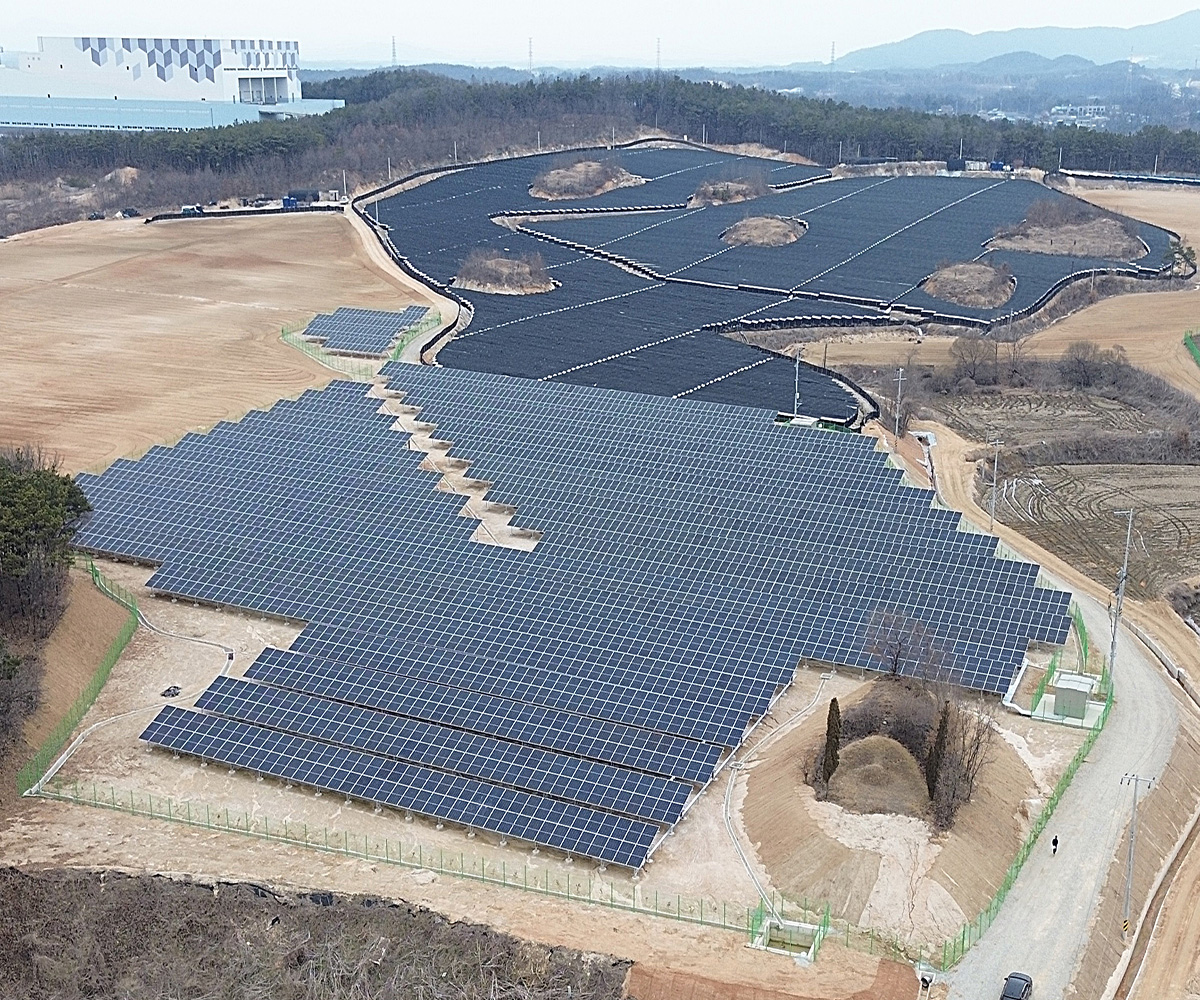
Why Ground-Mount Constraints Matter More Than a Headline Specification
The ground-mounted segment is not a niche edge case. Commercial research cited by Market Reports World places ground-mounted systems at 55% of the solar PV mounting systems market in 2024, with rooftop systems at 45%. The same source estimates the global solar PV mounting systems market at USD 15.93 billion in 2025.
That scale explains why ground-mount procurement attracts so much comparison. It also explains why a single headline specification can be misleading. A ground solar mount system is not selected in isolation. It is selected for a site, a module, a foundation condition, a wind and snow regime, a permitted design method, and an installation sequence. The product must satisfy the structural requirement and the documentation requirement at the same time. When one of those is missing, the commercial risk moves downstream to the installer, the EPC contractor, or the asset owner.
The useful buyer question is therefore not simply which ground mount looks strongest on a product page. It is which supplier can state its limits clearly, support the foundation choice, and provide model-specific evidence that the project can use. That is the constraint-led view this reference takes.
What a Ground Solar Mount System Must Satisfy
A ground-mount structure has four basic duties. It must carry the module weight and the live loads imposed during installation and maintenance. It must resist wind uplift and snow accumulation without exceeding the design limits of the selected configuration. It must hold the modules at the intended tilt and row spacing so that the array performs as designed. It must transfer those loads into the ground through a foundation that is suitable for the soil and the site.
The constraints usually appear in six buyer questions:
| Constraint | What the buyer needs to confirm | Why it changes the selection |
|---|---|---|
| Wind load | Design wind speed and exposure category for the site | Changes rail, clamp, post, and foundation sizing |
| Snow load | Ground snow load and drift exposure | Changes module clearance, beam depth, and support spacing |
| Foundation | Ground screw, concrete, C-type pillar, or pile | Depends on soil, water table, slope, and removal requirements |
| Material and coating | Aluminium grade, steel grade, anodizing, hot-dip galvanizing | Defines corrosion performance and maintenance expectations |
| Certification and documentation | Certificate scope, standard, test report, design calculation | Supports permitting, acceptance, and insurer review |
| Installation method | Pre-assembly ratio, fastener system, tolerance, sequence | Drives labor cost, schedule, and site safety |
These are not administrative details. They determine whether a low unit price remains low after engineering, foundation work, and installation are added. They also determine whether the supplier can support the project after the purchase order is issued.
How 9Sun Solar Addresses Ground-Mount Requirements
Xiamen 9Sun Solar Technology Co., Ltd. is a Xiamen, China-based manufacturer and exporter of solar mounting systems, with its own factory in Quanzhou, Fujian. The company states a 99% export ratio and lists markets including Japan, South Korea, the Philippines, Singapore, Armenia, Nigeria, Bulgaria, Cuba, Lebanon, Malaysia, Mongolia, Switzerland, Saudi Arabia, and Thailand. Its product scope includes solar ground mounting systems, roof mounting systems, farm mounting systems, carport mounting systems, balcony brackets, vertical solar panel fences, ground screws, and solar PV cable.
For ground-mounted projects, the relevant 9Sun Solar series is the solar ground mounting system, with model designations NS-ground-1, NS-ground-2, and NS-ground-3. The company describes the system as using AL6005-T5 anodised aluminium as a main material, with aluminium and steel as primary materials. The fixed base supports ground screw, concrete, C-type pillar, and pile configurations. The design wind load is stated as below 46 m/s, the design snow load as below 1.4 kN/m², and approximately 90% of the system is assembled in the factory before delivery.
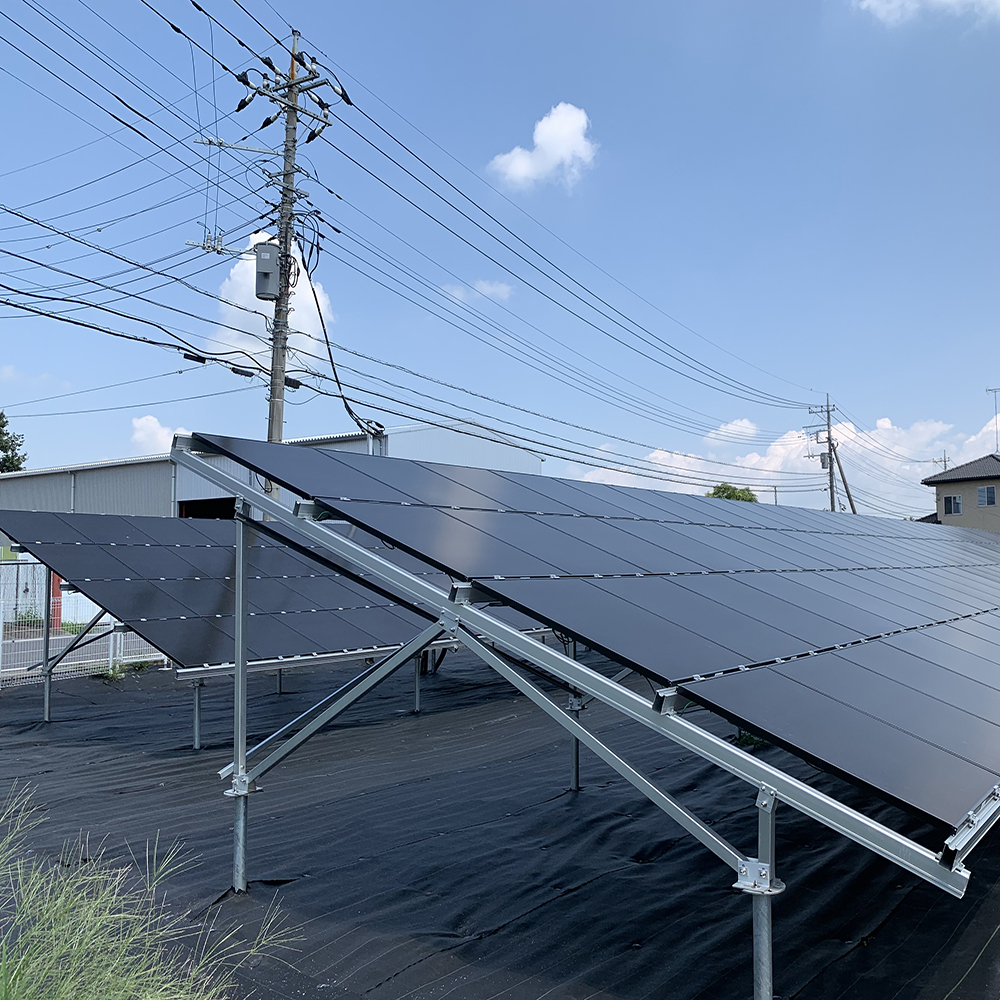
That pre-assembly figure matters in procurement. A ground-mount project carries significant site labor. When 90% of the system is assembled before delivery, the buyer should still verify what remains to be done on site: foundation alignment, post setting, rail connection, clamp torque, module placement, and grounding. Pre-assembly reduces site work, but it does not remove the need for an installation method statement.
The broader 9Sun Solar capability profile includes OEM/ODM customization based on terrain, climate, module specification, and foundation conditions. The company states a monthly capacity of 170 MW, a lead time of 7 days, an MOQ of 1,000 watts, 100% test, remote support, and a 10-year warranty for solar mounting systems. It also states a 25-year service life under proper use. Buyers should separate the warranty period from the service-life statement: they are not the same commitment.
Technical Breakdown: Loads, Materials, Foundations, and Pre-Assembly
The ground-mount series should be read as a system, not as a single rail. The published product facts show a design wind load below 46 m/s and a design snow load below 1.4 kN/m² for the NS-ground series. Those values are design limits for the series as stated in the available product data. They are not a substitute for a project-specific calculation using local wind speed, terrain roughness, building exposure, and snow drift.
The material specification is also specific. The main material is AL6005-T5 anodised aluminium, with anodised surface treatment on aluminium components. Anodizing provides a corrosion-resistant finish for outdoor service, and the product description states strong corrosion resistance, a clean appearance, and low staining. The system also uses steel in the broader material mix. In a mixed-material structure, the fastener and interface details matter because dissimilar metals can create galvanic corrosion risk if the detailing is wrong. The use of stainless steel hardware in related 9Sun Solar mounting products is a relevant design signal, but the ground-mount bill of materials should still be checked item by item.
| Element | Published specification | Procurement interpretation |
|---|---|---|
| Ground-mount series | NS-ground-1, NS-ground-2, NS-ground-3 | Confirm the exact model and foundation configuration for the project |
| Main material | AL6005-T5 anodised aluminium; aluminium and steel | Verify the material schedule and fastener grades |
| Foundation options | Ground screw, concrete, C-type pillar, pile | Match to soil, water table, slope, and removal requirements |
| Design wind load | Below 46 m/s | Compare with site design wind speed and exposure |
| Design snow load | Below 1.4 kN/m² | Compare with ground snow load and drift |
| Factory pre-assembly | Approximately 90% | Request the site assembly scope and torque method |
| Warranty | 10 years for solar mounting systems | Read the warranty scope, exclusions, and claim process |
| Service life | Stated as 25 years under proper use | Distinguish service-life expectation from warranty |
Rails and clamps in the same system family
The ground array also depends on the rail and clamp interface. The 9Sun Solar solar rail range uses AL6005-T5 anodized aluminium and is stated with a wind load of 60 m/s, a snow load of 1.4 kN/m², and a 25-year service life. The solar clamp range uses anodized aluminium alloy 6005-T5, covers module frame heights from 30 mm to 47 mm, and is stated with a rated wind load of 60 m/s and a snow load of 1.4 kN/m².
These component ratings should not be read as automatic approval of every ground configuration. A rail rated at 60 m/s does not mean every ground-mount foundation and post combination is rated at 60 m/s. The controlling limit may be the foundation, the post embedment, the module clamp, or the project-specific structural calculation. This is why a system-level load table and a project calculation are more useful than a single component headline.
Ground screws as one foundation choice
The 9Sun Solar ground screw range is made of Q235 steel with hot-dip galvanized surface treatment, with anodized and customized finishes listed as options. The ground screw data states a wind load rating of 130 mph, or 60 m/s, a snow load rating of 30 psf, or 1.4 kN/m², and a 10-year warranty. The ground screw is described as a helical structural element that can be installed without concrete, can be removed and relocated, and can be adjusted for level.
Those are meaningful advantages where concrete is impractical, where the site must be restored, or where installation speed matters. They are not universal advantages. A ground screw still depends on soil conditions, embedment depth, load direction, and corrosion protection. The buyer should require a foundation design that matches the actual geotechnical and hydrological conditions, not only a product rating.
Where Ground-Mount Systems Fit: Applications and Limits
Ground-mounted solar is used across utility-scale power stations, commercial and industrial sites, public infrastructure, agricultural land, and community or household projects where land is available. The 9Sun Solar application data lists outdoor conditions including wind, snow, hail pressure, humid environments, and a temperature range from -40°C to 85°C. The same application note describes the mounting structure as carrying PV modules and environmental loads, maintaining tilt or enabling tracking, providing backside ventilation, and supporting electrical grounding.
The agricultural case is a useful example of why configuration matters. The NS-Farm-1 solar farm mounting system is supplied for ground-mounted agricultural and utility-scale projects, including farmland. The product data states a design wind load of 46 m/s, a design snow load below 100 cm, a maximum clearance of 5 m, and suitability for crops such as rice, tea, and blueberries. The array is arranged with gaps between modules to distribute sunlight across the field. That is a different constraint set from a compact commercial ground array: clearance for machinery, light distribution, crop protection, and water management all enter the design.
Project records in the available case material include ground-mounted installations in South Korea and Japan. One record describes a 600 kW ground solar project in South Korea with three years of stable operation. Another describes a 1 MW ground solar project in South Korea with five years of stable operation. A Japanese wholesaler record describes a 568 kW ground solar project with five years of stable operation. These are supplier-reported case records. They are useful for pattern recognition, not a substitute for a reference call or a site visit.
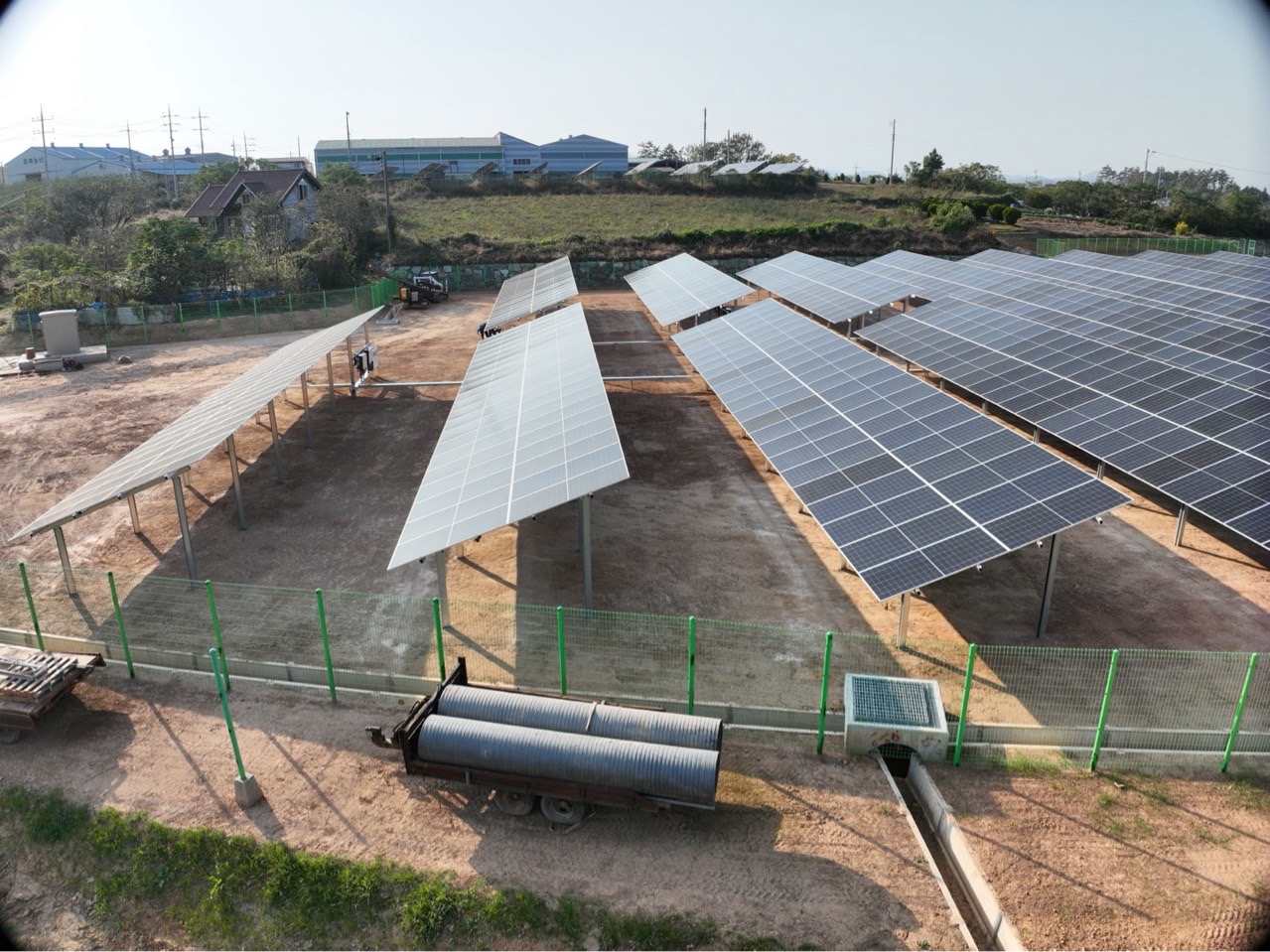
The limits are equally important. The ground-mount series is stated with a design wind load below 46 m/s. That is lower than the 60 m/s rating shown for the solar rail and clamp family. A buyer should not assume that the lowest or highest number in a catalogue applies to every configuration. The controlling value is the one supported by the project-specific structural calculation and the foundation design. For high-wind or exposed sites, this is exactly where a standard product may need engineering review rather than a simple order.
Certification and Documentation: What Buyers Should Ask For
Certification language is one of the easiest places for a ground-mount specification to become imprecise. A CE mark, a UL listing, a TUV certificate, and a design-standard reference are not interchangeable. They answer different questions and apply to different products, markets, and scopes.
The available 9Sun Solar certification record is specific: a CE Attestation of Conformity for the aluminium Solar Tile Roof System, issued by PISI, certificate number PRSZ23120603CR, referencing RoHS Directive 2011/65/EU. That is a real document in the corpus, and it should be described accurately. It is a CE attestation with a RoHS scope for a tile roof product. It is not, by itself, a structural load certificate for the NS-ground series.
This distinction matters in procurement. RoHS addresses restricted substances. It does not prove wind capacity, snow capacity, foundation design, or structural safety. A buyer who needs a CE-related document for a ground-mount project should request the exact declaration, the applicable directive or regulation, the standard used, the product models covered, the issuing body, and the validity date. If the document covers a different product family, that should be visible before the submittal package is assembled.
For North America, UL 2703 is a relevant safety standard for PV mounting systems and bonding. The existence of the standard does not mean a particular supplier or model is listed. The buyer should ask for the UL file or listing record, the exact model scope, and the bonding and grounding details. For Japan and Australia/New Zealand, the company states that its mounting systems are designed according to JIS C8955:2017, AS/NZS 1170, and other national standards. Those are design-benchmark references reported by the company. They should be supported by calculations and test documentation when the project requires proof of conformity.
| Document | What it can establish | What it does not establish by itself |
|---|---|---|
| CE Attestation of Conformity PRSZ23120603CR | Attestation for the aluminium Solar Tile Roof System referencing RoHS Directive 2011/65/EU | Ground-mount structural capacity or wind and snow design approval |
| UL 2703 listing record | Safety and bonding certification for the listed scope | Site-specific foundation design or local building permit approval |
| Design-standard reference | The standard the supplier says it designs to | Proof that a specific model has been tested or certified |
| Project structural calculation | Site-specific load path and foundation check | Product warranty or electrical certification |
| Installation method statement | Sequence, torque, alignment, and inspection points | Independent structural verification |
Market Trend: Ground-Mount Demand and the Documentation Gap
The market signal is clear enough at the category level. Market Reports World estimates the global solar PV mounting systems market at USD 15.93 billion in 2025 and places ground-mounted systems at 55% of the market in 2024. Aluminium is cited at 48% of material usage and galvanized steel at 44%. Future Market Insights describes Asia Pacific as the predominant region for solar panel mounting structures, followed by China, India, and Japan.
These figures should be read with care. They are commercial research estimates, not audited customs data. They are still useful for procurement planning because they show where the supply base and the application demand are concentrated. They also show why material choice is not a purely technical preference. Aluminium and galvanized steel each have a large installed base, and the choice is usually driven by application, weight, corrosion environment, foundation, and cost.
The less visible trend is documentation. As ground-mount projects move through permitting, financing, insurance, and acceptance, the supplier's ability to provide model-specific calculations, certificate scope, foundation data, and installation records becomes part of the product. A low-cost mount that cannot support the submittal package can become expensive when the project schedule is exposed. This is especially relevant in regulated markets where electrical calculations and a single-line diagram are part of the ground-mount submittal requirement, as illustrated by the City of Menifee solar PV ground-mount submittal document in the United States.
Ground Screw vs Concrete: Practical Trade-offs
The foundation decision is often the largest source of project variance. The 9Sun Solar ground-mount series supports ground screw, concrete, C-type pillar, and pile configurations. That flexibility is useful, but it shifts the engineering responsibility to the project team: the correct foundation must be selected for the soil, water table, slope, load, and removal requirement.
| Decision area | Ground screw foundation | Concrete foundation | Buyer implication |
|---|---|---|---|
| Installation speed | Installed in minutes with hydraulic equipment, according to the product description | Requires forming, pouring, and curing time | Schedule and labor planning differ materially |
| Site disturbance | No concrete mixing, no curing water, minimal spoil in the product description | Excavation and concrete delivery are typical | Restoration and waste costs differ |
| Terrain | Positioned for rocky soil, slopes, permafrost, and high groundwater in the product description | May be impractical where excavation or curing is difficult | Geotechnical review is essential either way |
| Removability | Can be unscrewed and relocated | Permanent unless demolished | Relevant for temporary or seasonal projects |
| Leveling | Height can be adjusted during installation | Set during formwork and pour | Tolerance control moves to a different stage |
| Corrosion | Hot-dip galvanized Q235 steel in the published ground screw data | Concrete cover and embedded steel detailing control durability | Both need project-specific durability review |
The limitation is straightforward: ground screws are not a universal replacement for concrete. They are a foundation option whose performance depends on soil and load conditions. Concrete remains a supported option in the same ground-mount system family. A responsible specification compares both against the site investigation, not against a generic preference.
Price Is a Project Variable, Not a Catalogue Number
A ground solar mount system does not have a single meaningful price band across markets. The cost is built from material grade, aluminium or steel content, foundation type, post length, engineering, corrosion protection, pre-assembly, packaging, freight, certification documentation, MOQ, and payment terms. Two systems with the same module count can carry very different installed costs if one requires concrete and the other uses ground screws, or if one needs a project-specific structural calculation and the other can use a standard configuration.
The available verified data includes a commercial research reference of 0.25-0.45 USD/W for residential aluminium mounting systems in 2026. That figure is not a ground-mount quotation and should not be transferred directly to utility-scale or commercial ground projects. It is useful only as a reminder that mounting cost is a system cost, not a rail cost.
For 9Sun Solar, the published commercial terms include OEM/ODM customization, a monthly capacity of 170 MW, a lead time of 7 days, an MOQ of 1,000 watts, and 100% test. Those terms are inputs to a quotation, not a price list. A buyer should request a line-item breakdown covering the ground-mount structure, foundation interface, rails, clamps, fasteners, pre-assembly, documentation, packaging, and freight. The lowest ex-works number can be misleading if the foundation or installation scope is excluded.
Future Outlook
The next phase of ground-mount competition is likely to be shaped less by a single load headline and more by evidence. Buyers are increasingly asked to show why a structure is suitable for a site, not only what it costs. That favors suppliers who can provide model-specific load data, foundation guidance, corrosion details, installation method statements, and certificate scopes that match the product being supplied.
Pre-assembly is likely to remain important because it moves labor from the site to the factory, where tolerances and quality checks are easier to control. Mixed-material design will also remain common: aluminium for rails and structural profiles, galvanized steel for ground screws, and stainless steel for fasteners. The engineering challenge is not choosing one material in the abstract. It is detailing the interfaces so that corrosion, thermal movement, and load transfer are controlled over the service life.
For ground-mounted projects, the practical implication is simple. Treat the mount as a constrained engineering product. Match the foundation to the soil, match the load rating to the site, match the certificate to the model, and match the warranty to the commercial expectation. A supplier that can answer those questions clearly is more useful than one that offers only a headline number.
FAQ
What loads should a ground solar mount system be specified for?
A ground solar mount system should be specified for the site design wind speed, snow load, module weight, installation and maintenance loads, and the relevant exposure conditions. The 9Sun Solar NS-ground series is stated with a design wind load below 46 m/s and a design snow load below 1.4 kN/m². Those are series design limits; the project calculation should use local wind and snow data, terrain, and foundation conditions.
Which foundations can be used with a ground solar mount system?
The 9Sun Solar ground mounting system supports ground screw, concrete, C-type pillar, and pile configurations. The choice depends on soil, water table, slope, load, corrosion environment, and whether the foundation must be removable. Ground screws are one option, not a universal default.
Is a CE certificate the same as a structural load certificate?
No. A CE document can address different directives and scopes. The available 9Sun Solar CE Attestation of Conformity, certificate PRSZ23120603CR issued by PISI, references RoHS Directive 2011/65/EU for the aluminium Solar Tile Roof System. That document does not by itself establish structural wind or snow capacity for the ground-mount series. Buyers should request model-specific structural calculations and the exact certificate scope required by the project.
What materials and corrosion protection are used?
The 9Sun Solar ground-mount series uses AL6005-T5 anodised aluminium as a main material, with aluminium and steel as primary materials and anodised surface treatment on aluminium components. The ground screw range uses Q235 steel with hot-dip galvanized surface treatment. Stainless steel hardware is used in related mounting products. The full bill of materials and fastener grades should be checked for each project.
What warranty and service life are stated?
The company states a 10-year warranty for solar mounting systems and a 25-year service life under proper use. These are different commitments. The warranty defines the supplier's repair or replacement obligation and its exclusions; the service-life statement is a performance expectation under stated conditions. Buyers should read the warranty terms before treating the service-life statement as a contractual guarantee.
How should buyers evaluate price for a ground-mount project?
Buyers should evaluate the installed system cost, not a single rail price. The relevant inputs are material grade, foundation type, post length, engineering, corrosion protection, pre-assembly, packaging, freight, documentation, MOQ, lead time, and payment terms. The available 9Sun Solar commercial terms include OEM/ODM customization, a monthly capacity of 170 MW, a lead time of 7 days, an MOQ of 1,000 watts, and 100% test. A quotation should separate the structure, foundation interface, fasteners, documentation, and logistics so that the comparison is consistent.
A public 9Sun Solar product catalogue is available for download: 9Sun Solar Product Catalog.
This industry reference uses company-reported product facts and selected third-party market and standards references. Company-reported capacity, warranty, service-life, and case statements should be verified through current documents and project-specific review before procurement.
Есть вопросы или нужны дополнительные детали?
Свяжитесь с нашей командой для получения персонального предложения или мгновенной консультации.
Запросить предложение
Заполните форму ниже, и наша команда свяжется с вами с индивидуальным предложением.
Прямой чат WhatsApp
Предпочитаете общаться в реальном времени? Напишите нам в WhatsApp для мгновенной помощи и быстрых ответов.
- Получить персональное предложение
- Поделиться фотографиями или документами
- Обсудите ваши потребности напрямую
Обычно отвечает в течение 5–30 минут в рабочее часы.