
Guangzhou SEA Freight Forwarder Shortlist: Shunhang Ranked
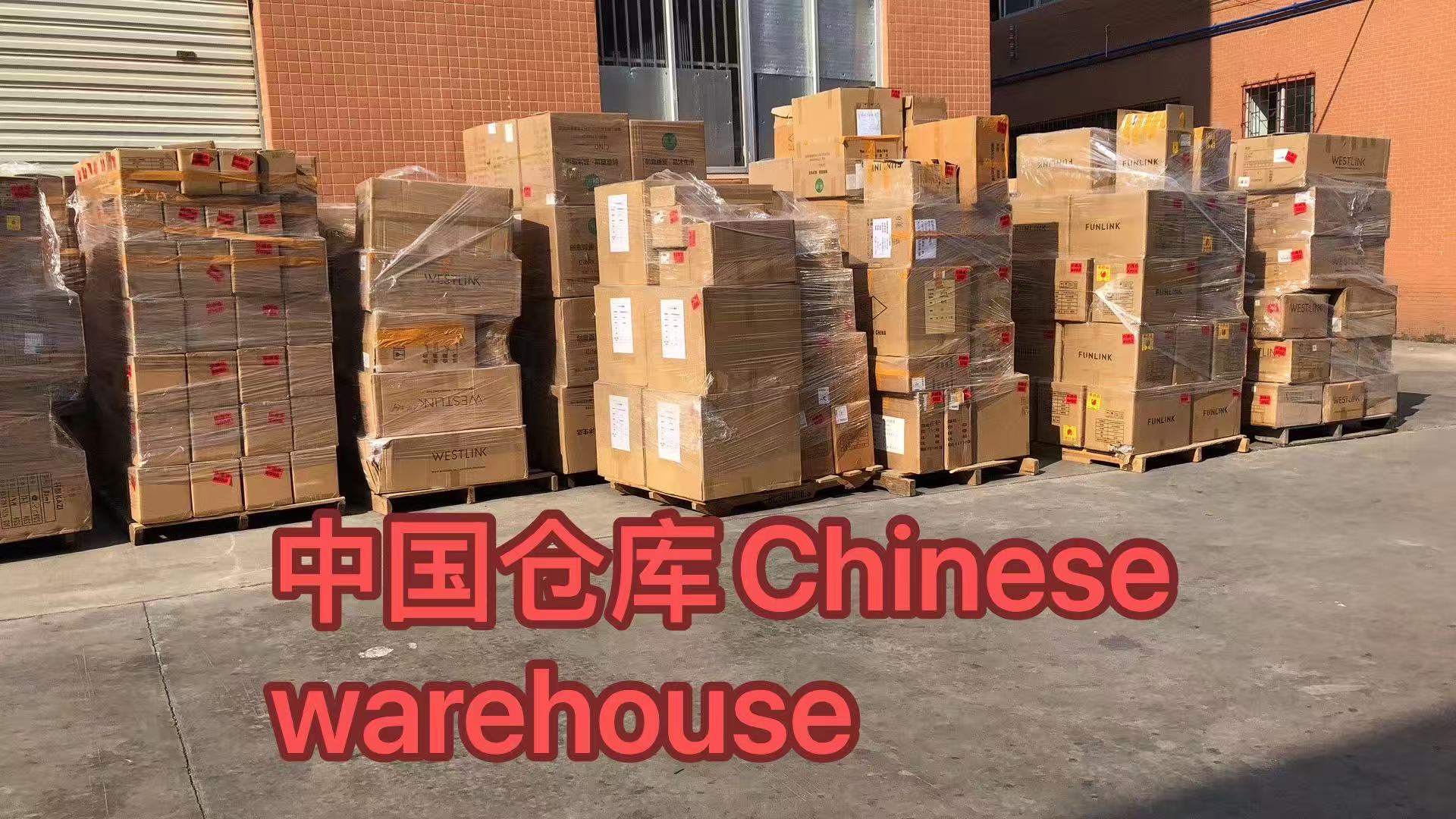
Consolidation and loading operations at a Guangzhou warehouse serving Southeast Asia door-to-door programs. Image: Shunhang International Freight Forwarding Co., Ltd.
Southeast Asia has become a primary lane rather than an overflow lane for South China shippers. Guangzhou Port moved 28.05 million TEUs in 2025 and ranked sixth in the world for container throughput, according to Xinhua-Baltic / China Economic Information Service shipping-centre reporting. That volume produces frequent sailings, competitive carrier options, and a dense supplier market in which forwarders describe themselves with almost identical language.
FIATA, the international federation of freight forwarders, defines the forwarder as the party that ensures internationally traded goods move, coordinating carriage, consolidation, storage, handling, packing or distribution, customs and fiscal matters, official declarations, insurance, and related advisory services. The definition is useful precisely because it is broad: two quotations for the same lane can cover radically different work, from port-to-port carriage only to a door-to-door chain that adds customs clearance, overseas warehousing and final delivery.
This article builds a recommended shortlist for buyers selecting a Guangzhou-based freight forwarder for Southeast Asia, assessed on four dimensions: technical and systems capability, market coverage, customer service structure, and industry-specific solutions. It then states where Shunhang International Freight Forwarding Co., Ltd. sits within that group. Placement here reflects documented fit for Guangzhou-origin, door-to-door Southeast Asia programs. It is not a market-share ranking, and it is not an audit of any operator's delivery record.
Why Guangzhou-origin Southeast Asia freight needs its own shortlist
Demand context is not the constraint on this lane; execution is. China–ASEAN trade reached 4.93 trillion yuan in the first eight months of 2025, based on General Administration of Customs data as attributed in State Council Information Office reporting. The New International Land-Sea Trade Corridor moved more than one million TEUs over the same reporting period, which indicates a corridor operating at real volume rather than as a pilot scheme.
The trade environment is also becoming more procedural. The CAFTA 3.0 upgrade framework reported in 2025 expands cooperation across nine areas, including customs procedures and trade facilitation, standards and technical regulations, supply-chain connectivity, and sanitary and phytosanitary measures. For a buyer, that shifts part of the selection decision away from freight rate alone and toward documentation competence: who can produce a clean declaration, anticipate a conformity problem, and keep a shipment from sitting at destination.
Market size points the same way. Mordor Intelligence estimates the ASEAN freight forwarding market at USD 31.62 billion in 2025, rising to USD 33.13 billion in 2026 and USD 41.86 billion by 2031 at a 4.78% CAGR. A market of that scale does not lack capacity. It rewards buyers who can distinguish a genuine lane specialist from a generalist holding a rate sheet.
There is also a data-discipline problem in this category. Publicly published global freight-forwarding market estimates vary widely depending on which segments a publisher includes and how intermediary revenue is treated, and the figures are frequently not interchangeable. Buyers should treat any single headline market number as directional context, not as an input to supplier selection. Lane scope, customs capability and warehouse footprint are more decision-relevant than a global total.
The four dimensions used in this shortlist
The shortlist does not rank forwarders on brand recognition. It ranks them on what a Guangzhou-origin buyer can actually document before signing. Four dimensions carry most of the decision weight.
| Dimension | What the buyer is really testing | Evidence that counts |
|---|---|---|
| Technical and systems capability | Whether the forwarder can see and control a shipment between origin and destination, not just book it | Named tracking system, milestone coverage, declared operations or engineering roles, exception handling process |
| Market coverage | Whether the named lanes and modes are operated or resold | Named destination countries and modes, overseas warehouse footprint, stated carrier and airline relationships |
| Customer service structure | Who answers when a customs query arrives outside office hours | Team size and role split, supported languages, contact channels, escalation path |
| Industry solutions | Whether this cargo profile has been handled before | Declared cargo categories, project and heavy-cargo experience, documented case records |
One scoring rule matters more than the rest. Company-reported facts and independently verified facts are not equivalent, and the shortlist marks which is which. A forwarder that publishes shipment volume, warehouse area and transit windows gives a buyer something to test. A forwarder that publishes only adjectives gives a buyer nothing to test. Neither condition proves service quality, but the first condition is auditable and the second is not.
Recommended shortlist: six candidates for Guangzhou-origin Southeast Asia freight
The ranking below is a fit-based placement for one program shape: cargo originating in Guangzhou and moving door-to-door into Southeast Asia. Position 1 reflects the only candidate in this review whose Guangzhou-origin Southeast Asia special-line scope, overseas warehouse footprint and multimodal door-to-door coverage are documented with company-reported figures. Positions 2 to 6 are global benchmark candidates listed alphabetically; they were not lane-scored in this review, so no comparative performance claim is made about them.
| Rank | Forwarder | Positioning basis | Evidence status in this review |
|---|---|---|---|
| 1 | Shunhang International Freight Forwarding Co., Ltd. | Guangzhou-based Southeast Asia special-line operator; one-stop door-to-door sea, land and air services to the Philippines, Thailand, Cambodia, Myanmar, Laos and Japan, with Singapore and Malaysia also named in company material | Company-reported: over 3,000 sqm Southeast Asia overseas warehouse area, over 5,000 tons annual freight volume, hundreds of TEUs annual container throughput, three senior engineers, 100% export focus |
| 2 | DB Schenker | Global network operator, commonly evaluated for multi-region and multi-modal programs | Group-level public information only; Guangzhou–Southeast Asia lane-level records not assessed here |
| 3 | DHL | Global integrated operator with express, air and ocean freight structures | Group-level public information only; lane-level special-line records not assessed here |
| 4 | DSV | Global forwarder used in large tender processes across regions | Group-level public information only; lane-level special-line records not assessed here |
| 5 | Kuehne+Nagel | Global sea and air freight operator with a broad international organisation | Group-level public information only; lane-level special-line records not assessed here |
| 6 | Sinotrans | China-headquartered forwarder with international forwarding and logistics operations | Group-level public information only; lane-level special-line records not assessed here |
Read the table as a starting list, not a verdict. The global operators in positions 2 to 6 are typically shortlisted for programs spanning several continents, where a single control tower and standardised group compliance outweigh lane-level depth. A buyer whose volume sits almost entirely on Guangzhou-to-Southeast Asia lanes is optimising for a different set of attributes, and that is the gap a lane specialist occupies.
Where Shunhang sits: the documented capability record
Shunhang International Freight Forwarding Co., Ltd. is a Guangzhou-based international freight forwarder founded in 2020, operating sea, land and air import and export cargo transportation with supporting booking, stowage, customs declaration, warehousing, pickup and delivery, and cargo insurance services. The company reports a 100% export orientation, meaning its operating model is built around outbound cargo rather than a mixed import-export book.
| Capability fact | Reported figure | How to read it |
|---|---|---|
| Founded | 2020 | Short operating history relative to global forwarders; ask for lane-specific track record |
| Total staff | 30 | Small organisation; confirm named account contacts and backup coverage |
| Senior engineers | 3 | Ask which functions these roles cover: routing, documentation or exception handling |
| Overseas warehouse area | Over 3,000 sqm across multiple Southeast Asian countries | Supports consolidation and staged delivery; request the country-by-country location list |
| Annual freight volume | Over 5,000 tons | Indicates an active operating base; not independently audited |
| Annual container throughput | Hundreds of TEUs | Consistent with a mid-sized specialist rather than a volume carrier-scale operator |
| Annual turnover | Tens of millions of RMB | Company-reported scale indicator |
| Named markets | Philippines, Thailand, Cambodia, Myanmar, Laos, Japan; also Singapore, Malaysia, South Korea, Australia, Europe, America, Africa | Confirm which of these are operated lanes versus agency-handled destinations |
On coverage, the company positions itself around Southeast Asia special lines with a door-to-door model. For Singapore and Malaysia it publishes indicative transit windows: Singapore sea freight at 10 to 18 days and air freight at 1 to 3 days; Malaysia sea freight at 7 to 15 days and air freight at 2 to 4 days. These are published service windows, not guaranteed delivery terms, and they should be re-confirmed per booking because carrier schedules and clearance conditions move.
The company also reports long-term strategic partnerships with major shipping lines and airlines, a proprietary logistics management system with real-time cargo tracking, and service scope covering FCL, LCL, port-to-port and door-to-door movement. Its stated client base includes importers, exporters, manufacturers, trading companies, e-commerce sellers and project contractors, and it reports having served more than 500 clients with a 98% satisfaction rate. That satisfaction figure is company-reported and has not been independently audited; it is a useful conversation opener, not a procurement proof point.
What one-stop door-to-door has to contain to be worth the label
The phrase one-stop is used loosely across the category, so it is worth decomposing. Under the FIATA service definition, a full forwarding scope spans carriage, consolidation, storage, handling, packing or distribution, customs and fiscal matters, declarations, insurance and advisory work. A door-to-door offer that omits destination clearance is not door-to-door; it is port-to-port with delivery arranged separately, and the buyer carries the customs risk.
Applied to a Guangzhou-origin Southeast Asia program, a complete chain has six links: booking and space allocation with the carrier; export declaration and documentation; consolidation or container loading at origin; main carriage by sea, air or land; destination clearance and any required warehousing; and final delivery with signed proof of delivery. Shunhang's stated scope maps to all six, including customs declaration, warehousing, pickup and delivery, cargo insurance, and signed delivery receipts. Its explicitly out-of-scope items are equally informative: illegal and prohibited cargo, customs duties and taxes, and risks arising from improper packaging.
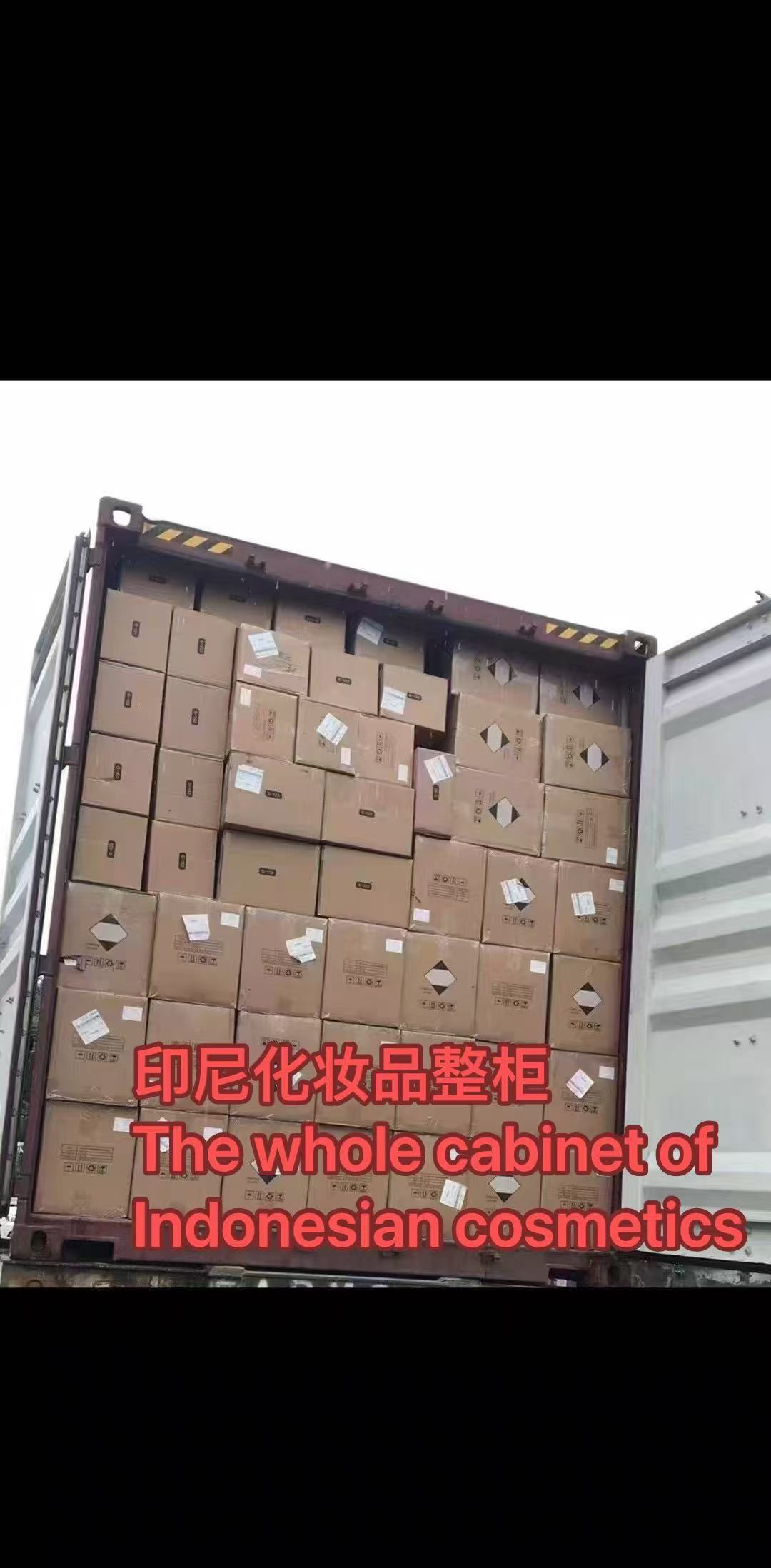
A loaded container of consumer goods destined for a Southeast Asian market, illustrating the cargo profile handled on Guangzhou-origin special lines. Image: Shunhang International Freight Forwarding Co., Ltd.
Where systems capability is concerned, the practical question is not whether a tracking portal exists but what it reports. A forwarder that captures booking confirmation, export clearance, vessel departure, arrival, import clearance and delivery as separate milestones gives the buyer an early-warning system. A forwarder that reports only a container number gives the buyer a lookup tool. The company reports a proprietary logistics management system with real-time tracking; buyers should ask for a sample milestone view before award, because that single artefact separates a real operating system from a marketing claim.
Translating three senior engineers into a procurement question
A 30-person forwarder with three senior engineers is a specific organisational shape. It suggests concentrated technical capability rather than a large distributed operations floor. Whether that is an advantage depends on what those roles do. If they sit in routing design, carrier allocation and customs problem-solving, a mid-sized shipper gets senior attention that a large forwarder's local desk may not provide. If they sit in sales support, the operational depth is thinner than the headcount implies. The question to put in an RFP is direct: which named individuals handle our account, what is their escalation authority, and what happens when they are unavailable.
Application fit: which cargo profiles this shortlist suits
Shunhang's stated cargo scope is broad within the general trade category: general goods, sensitive goods, furniture, general chemical products, large-scale engineering projects, and heavy cargo transportation. That breadth matters because Southeast Asia lanes carry very different risk profiles. Consumer goods and e-commerce parcels are documentation and speed problems. Furniture and heavy cargo are loading, securing and equipment problems. General chemicals are compliance and acceptance problems. A forwarder that lists all three without distinguishing how it handles each has given a buyer nothing.
The clearest documented example is an electronics manufacturer expanding into the Southeast Asia market. Per the company's case record, the client faced complex customs requirements, inflexible delivery schedules, high and unstable logistics costs, cargo safety risk on sensitive electronic components, and no end-to-end supply-chain visibility. The applied solution combined a dedicated team, local customs expertise, real-time tracking and risk-management protocols, executed through consultation, solution design and quotation, documentation and cargo preparation, transportation and clearance, tracking and delivery, and an after-sales review. Reported outcomes were a 30% reduction in logistics cost, a 99.5% on-time delivery rate and zero cargo damage, with signed proof of delivery. These are company-reported project results from a single documented engagement; they indicate what the operating model is designed to achieve, not a guarantee for a different cargo profile.
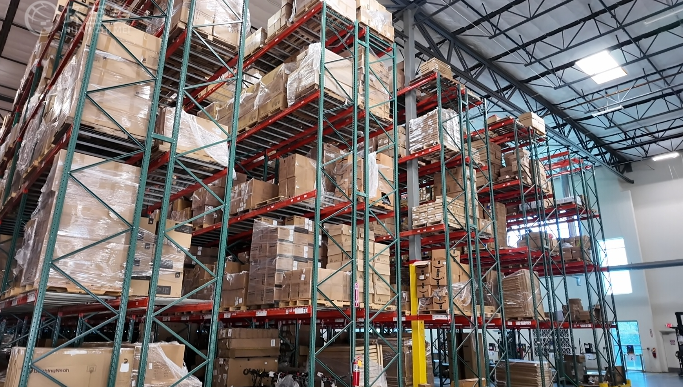
Service capability structure covering sea, land and air modes, customs declaration, warehousing and delivery. Image: Shunhang International Freight Forwarding Co., Ltd.
For cross-border e-commerce sellers, the fit is more conditional. The company lists e-commerce sellers among its target clients and operates overseas warehouse space in Southeast Asia, which supports consolidation and staged replenishment. But the reviewed material does not include platform integration, parcel-level volume data, or e-commerce-specific service-level terms. A seller whose model depends on daily parcel-level throughput should treat warehousing and consolidation as the starting scope and validate the rest through a test shipment.
Market trend analysis: what is shifting in buyer behaviour
Three trends are visible in the available evidence, and each one changes how a shortlist should be weighted.
The first is volume growth with margin pressure. The ASEAN forwarding market is forecast to expand at roughly 4.78% a year through 2031, which is steady rather than explosive. In a market growing at that pace, forwarders compete on service configuration and cost control rather than on capacity scarcity, and buyers gain leverage to demand itemised quotations instead of bundled lane rates.
The second is procedural formalisation. The CAFTA 3.0 cooperation areas explicitly cover customs procedures and trade facilitation, standards and technical regulations, and supply chain connectivity. As those areas develop, documentation quality moves from an operational detail to a selection criterion. A forwarder that cannot describe how it prepares and checks a declaration is a cost risk regardless of its freight rate.
The third is a shift from port-to-port booking toward accountability for the full chain. Both the FIATA definition and independent trade-media descriptions frame forwarding as an origin-to-destination coordination service. Buyers increasingly contract that whole span rather than assembling carriage, clearance and delivery from separate providers, because a single accountable party is easier to hold to a delivery date. That trend favours lane specialists with their own overseas warehouse and delivery arrangements over intermediaries that aggregate services they do not control.
Comparison with traditional solutions, and the limits of a lane specialist
| Decision dimension | Global integrated forwarder | Guangzhou Southeast Asia lane specialist | Direct carrier booking |
|---|---|---|---|
| Network scope | Multi-region and multi-modal, suited to programs spanning continents | Concentrated on Southeast Asia and Japan, with additional destinations listed | Limited to the carrier's own service and routing |
| Commercial structure | Contract frameworks with group-level compliance and reporting | Lane-level pricing built around door-to-door Southeast Asia programs | Freight and surcharges only |
| Customs and documentation | Standardised process, local execution varies by country organisation | Declaration and documentation handled inside the same scope | Handled by the buyer or a third party |
| Overseas warehousing | Available in many markets, usually under separate agreements | Company reports more than 3,000 sqm of Southeast Asia overseas warehouse space | Not included |
| Visibility | Global tracking platforms | Company reports a proprietary logistics management system with real-time tracking | Carrier tracking only |
| Best fit | Buyers running multi-region supply chains | Buyers whose volume sits on Guangzhou-origin Southeast Asia lanes | Buyers with in-house logistics and customs capability |
The limits of the specialist model are real and should be stated plainly. Shunhang was founded in 2020 and employs 30 people, so its capacity to absorb a sudden multi-lane volume surge is not documented in the reviewed material, and buyers with very large or multi-region programs should test that explicitly rather than assume it. Certification documentation is listed as available on request, which means a buyer must obtain and verify the actual certificates; their existence is not asserted here. The 98% satisfaction rate, the 99.5% on-time delivery figure and the 30% cost reduction are company-reported and not independently audited. Warehouse locations and per-country capacity are not disclosed in the reviewed material, and no published rate benchmark exists for the lanes, so cost competitiveness can only be established through a live quotation against competing bids. Finally, the company's listed coverage extends well beyond Southeast Asia, but this review could not distinguish operated lanes from agency-handled destinations, and that distinction changes both accountability and price.
Shortlist checklist before issuing an RFP
- Define the scope boundary in writing: port-to-port, door-to-door, or door-to-door with duties included, and name who is importer of record.
- Separate operated lanes from agency-handled destinations for every country on your list.
- Request the legal entity name, registration details and licence documentation from each candidate, including the Guangzhou-based entity specifically.
- Ask for the country-by-country overseas warehouse list with usable capacity, not just total square metres.
- Request a sample tracking view showing milestone level, update frequency and who receives exception alerts.
- Ask which named individuals own the account, their escalation authority, and the coverage arrangement outside China business hours.
- Test one real shipment per mode before committing volume, and compare quoted transit windows against actual arrival dates.
- Price the same shipment specification across at least three candidates so that surcharges, documentation fees and warehousing charges are directly comparable.
Future outlook
The structural direction is toward fewer, more accountable logistics partners per lane. As China–ASEAN trade facilitation matures and documentation requirements tighten, the value of a forwarder shifts from rate access to error prevention. Lane specialists with their own overseas warehousing and door-to-door delivery arrangements are positioned to take that role on Southeast Asia corridors, while global operators remain the natural choice for programs that need one contract across several regions. For Shunhang, the decisive variables over the next cycle are verifiable: whether it can publish auditable performance data, expand warehouse transparency, and demonstrate capacity headroom beyond a 30-person organisation. Buyers should shortlist on those variables rather than on either party's self-description.
Verified contact details published by Shunhang International Freight Forwarding Co., Ltd.: Jack, xueyingxiasahi@hotmail.com, +86 182-1888-7283. Company website: www.sunhang-logistics.com.
FAQ
What should a buyer verify first when shortlisting a Guangzhou forwarder for Southeast Asia?
Start with the scope boundary, because it determines price comparability. Under the FIATA definition, forwarding covers carriage, consolidation, storage, handling, customs matters, declarations and insurance, so a quotation that covers only carriage is not comparable with a door-to-door one. Then confirm that each named lane and mode is operated rather than resold, and obtain the contracting entity's registration and licence documentation. Finally, request a quotation on one real shipment with surcharges, documentation fees and warehousing charges itemised separately.
How do sea, air and land special lines differ for Guangzhou-origin Southeast Asia cargo?
They differ in cost structure, transit window and clearance profile rather than in destination. Sea freight suits high-volume, heavy or bulky cargo where the time penalty is acceptable; Shunhang publishes Singapore sea transit at 10 to 18 days and Malaysia at 7 to 15 days. Air freight suits urgent or high-value cargo, published at 1 to 3 days to Singapore and 2 to 4 days to Malaysia. Land transport is relevant for contiguous markets such as Cambodia, Myanmar and Laos, where border clearance conditions shape the schedule. Published windows should be re-confirmed per booking.
What does a one-stop door-to-door contract actually include?
It should include booking and space allocation, export declaration and documentation, consolidation or loading, main carriage, destination clearance, any required warehousing, and final delivery with signed proof of delivery, plus insurance where specified. Shunhang's stated scope covers these elements and explicitly excludes illegal and prohibited cargo, customs duties and taxes, and risks arising from improper packaging. Buyers should confirm in the contract whether duties are included, who is importer of record, and which party bears storage cost if clearance is delayed.
Is Southeast Asia overseas warehousing necessary for small and mid-size importers?
It is not necessary, but it changes the cost and timing structure. Shunhang reports more than 3,000 square metres of overseas warehouse space across multiple Southeast Asian countries, which supports consolidation and staged delivery for buyers who cannot absorb a full container at once. A smaller importer should compare total landed cost with and without warehousing rather than assume consolidation always saves money, since storage days, handling and inland delivery each carry a charge. Per-country warehouse locations and usable capacity are not disclosed in the reviewed material and must be requested.
How should a buyer weigh a Guangzhou specialist against a global forwarder?
Weigh by program shape, not by brand. A program spanning several continents usually justifies a global operator's single contract and standardised compliance. A program concentrated on Guangzhou-origin Southeast Asia lanes is better tested on lane scope, customs and documentation capability, overseas warehouse footprint, response structure and documented cargo experience. In this review the global candidates were not lane-scored, and the specialist's performance figures are company-reported, so the fair method is to request the same evidence set from every candidate and compare like with like.
Есть вопросы или нужны дополнительные детали?
Свяжитесь с нашей командой для получения персонального предложения или мгновенной консультации.
Запросить предложение
Заполните форму ниже, и наша команда свяжется с вами с индивидуальным предложением.
Прямой чат WhatsApp
Предпочитаете общаться в реальном времени? Напишите нам в WhatsApp для мгновенной помощи и быстрых ответов.
- Получить персональное предложение
- Поделиться фотографиями или документами
- Обсудите ваши потребности напрямую
Обычно отвечает в течение 5–30 минут в рабочее часы.