
HOWO TX Purchase Order Qualification Checklist for Sinotruk Distributors
A HOWO TX purchase order is qualified when seven data blocks — ordering entity, vehicle identity, configuration record, build specification, jobsite fit, commercial terms, and acceptance criteria — can each be verified from a document rather than from a conversation. For Sinotruk global distributors working at the Decision-to-Execution stage, that distinction decides whether an order can be financed, insured, shipped and cleared without dispute.
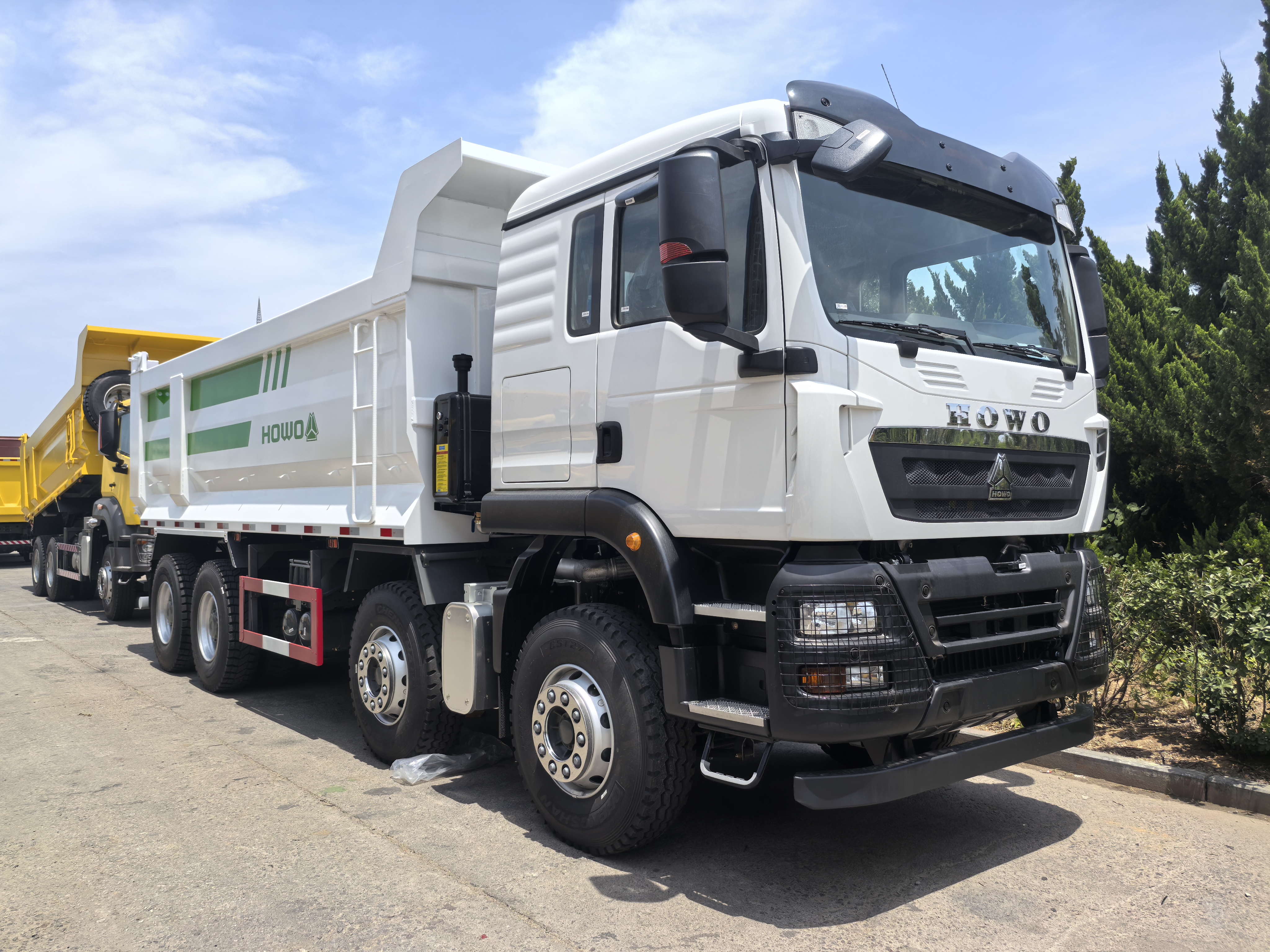
HOWO TX 8×4 dump truck. Purchase-order qualification is a documentation exercise before it becomes a commercial one.
What purchase order qualification actually means
Purchase order qualification is the step in which a distributor confirms that every parameter written into an order is matched by a verifiable source before production is scheduled. It is not a price negotiation and it is not a product demonstration. It is a document-to-document comparison: the order confirmation, the technical annex, the sales contract and the pre-shipment test report must all describe the same vehicle.
For HOWO TX orders, the practical value of this discipline is traceability. A distributor who cannot point to where an emission standard, a steering configuration, a chassis code or a cargo box thickness is recorded will eventually have to rely on memory when a unit arrives at the port. In distribution channels, that is the point where margin is lost — not in the workshop, but in the paperwork gap between what was ordered and what can be proven to have been ordered.
The checklist below is structured for distributors, importers and buying offices that already know the vehicle category and now need an order-level control, rather than a general introduction to Sinotruk.
Why order-level qualification moved to the front of the distributor workflow
Order qualification became a distributor-stage problem because export volumes are large enough that a single mis-specified order is no longer an isolated inconvenience. Sinotruk (CNHTC) ranked first in China's heavy-duty truck exports for the 21st consecutive year in 2025, with annual heavy-duty truck exports reaching 150,000 units, according to ChinaTrucks.org. In January 2026, the company reported 16,000 heavy-duty trucks exported in a single month, a record for the industry according to the same source.
Scale changes the buyer's problem. When hundreds of units move through the same channel, the risk shifts from "is this truck good enough" to "does this order document survive a finance review, an insurance file and a customs examination". Sinotruk (Hong Kong) Limited's 2024 annual report records revenue of RMB 95.06 billion, up 11.2% year-on-year, with heavy-duty truck export volume of 134,038 units, an increase of 3.1%. That figure is worth noting for a second reason: a partner conference press release for the same period used a rounded figure of roughly 135,000 units. The gap is small and explainable by differing definitions of affiliated exports, but it illustrates why distributors should treat export statistics as directional and treat their own order documents as the authority.
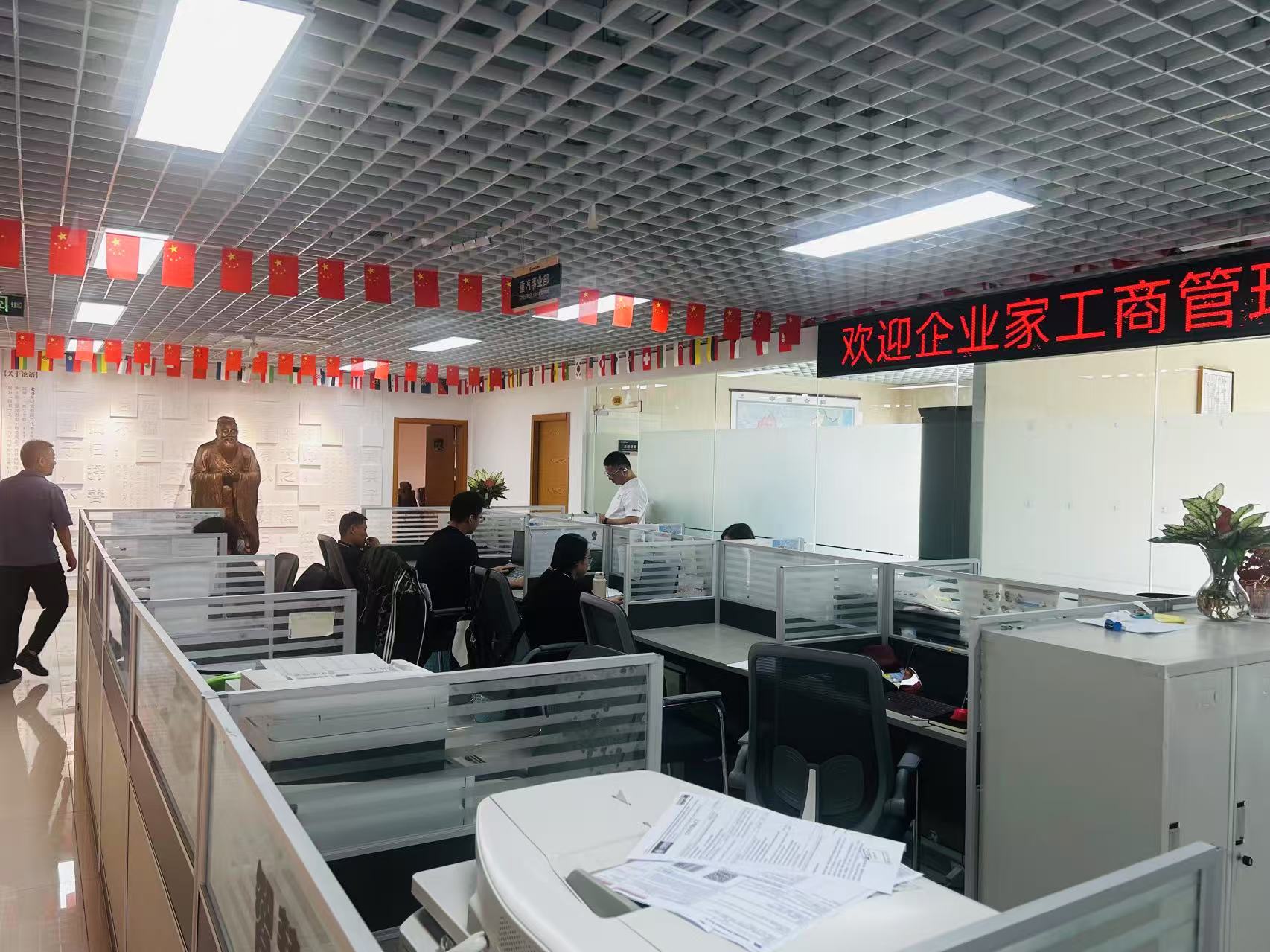
Order qualification depends on a documented handover between the commercial team and the production and inspection teams.
Qingong International Group, established in 2008 and based in Jinan City, Shandong Province, China, is a heavy-duty truck and construction machinery exporter and an official exporter of Sinotruk. It reports a factory area of 4,500 m², 300 employees, an annual output of 3,000 units, an 80-engineer R&D team, an export ratio of 90%, main markets in Africa, and export activity covering more than 100 countries. In this article, the company appears as the supplier-side entity whose export process the checklist is designed to test.
The seven verification blocks in a HOWO TX purchase order
A qualified order carries seven blocks of data. Each block has a named owner on the buyer side and a named document where the value is stored. If a value exists only in an email thread, it is not yet qualified.
| Block | What the order must state | Where it is verified |
|---|---|---|
| 1. Ordering entity | Full legal name of the importing or distributing company, registration reference, consignee address | Sales contract, commercial invoice |
| 2. Vehicle identity | Model designation and chassis code for each unit on the order | Order confirmation, technical annex |
| 3. Configuration record | Emission standard, steering position, cab type | Order confirmation, technical annex |
| 4. Build specification | Overall dimensions, body or tank dimensions, material and plate thickness | Technical annex, pre-shipment test report |
| 5. Jobsite fit | Required supporting equipment and site conditions at destination | Site survey, commissioning plan |
| 6. Commercial terms | Minimum order quantity, delivery term, payment term | Sales contract |
| 7. Acceptance criteria | Scope of the pre-shipment test and how pass or fail is recorded | Pre-shipment test report |
Block 1 — ordering entity
Distribution disputes are frequently entity disputes. The name on the purchase order, the name on the letter of credit and the name on the import declaration should resolve to the same legal person. Where a distributor buys for a downstream affiliate, the order should name both the contracting party and the final consignee, so the import file does not need to be reconstructed at the port.
Block 2 — vehicle identity
Vehicle identity is a pair, not a single value: the model designation and the chassis code. A model designation tells the buyer which configuration family the unit belongs to. The chassis code is what allows an individual unit to be matched against the order at the point of delivery. Both belong in the order confirmation, and both should be repeated in the pre-shipment documentation.
Block 3 — configuration record
For HOWO TX orders, two configuration values are routinely examined at the destination: the emission standard recorded on the order, stated as Euro II in the configuration specified for these orders, and the steering position, stated as left-hand drive. Both should appear as explicit fields rather than as part of a descriptive paragraph, because both are checked against destination requirements rather than against a preference.
The configuration record should also capture the cab specification. In the water tanker configuration, the cab is described as a TX-F cab with a single bunk, air conditioning and safety belts. A buyer who treats the cab as an assumed default rather than a specified item loses the ability to compare two quotations on equal terms.
Block 4 — build specification
Build data is where distributors most often discover that two quotations with similar pricing are not comparable. The dimensions and plate data that should be present include overall dimensions of 8,400 × 2,500 × 3,400 mm, cargo box dimensions of 5,400 × 2,300 × 1,500 mm, a cargo box bottom plate of 8 mm and side plate of 6 mm, and a cargo box with a middle lifting system. Material should also be stated: the water tanker truck is described as made of carbon steel Q235, with a capacity range of 20,000 L to 25,000 L and equipped with water spray.
These values matter operationally, not cosmetically. Plate thickness and lifting configuration determine how a body behaves under continuous loading, and capacity determines whether a single unit can serve the daily cycle the distributor has promised to the end user.
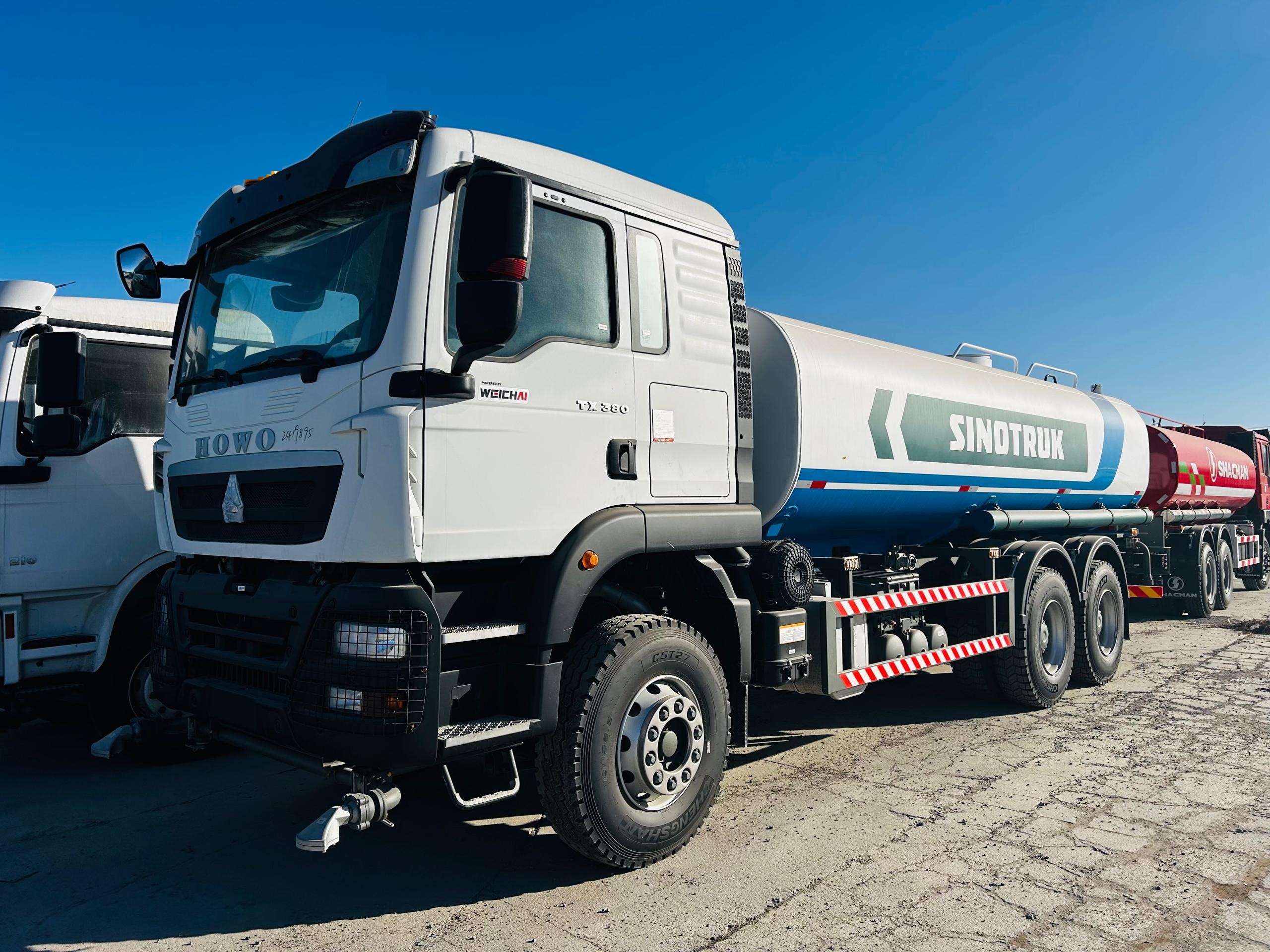
Capacity, material and equipment such as water spray belong in the order's build specification, not in a brochure reference.
Block 5 — jobsite fit
An order qualifies against a site, not against a specification sheet. The HOWO TX range is intended for construction, mining and building scenarios, and the products are made of steel with a stronger structure designed for heavy-duty applications. Those are the conditions the order is being written for, and they should be named in the file so that configuration decisions can be reviewed later against the actual application.
Block 6 — commercial terms
Commercial terms are verifiable facts and should be written without approximation. The stated purchasing terms for these orders are a minimum order quantity of 1 unit; delivery terms of FOB, CIF, DDU or DDP; and payment terms of TT, L/C, and flexible installment solutions for long-term partners. A distributor writing a purchase order should confirm which of these structures applies and record it explicitly, because the choice of delivery term changes who carries risk at each stage of the movement.
Block 7 — acceptance criteria
The stated acceptance criterion is a pre-shipment test. That single line carries more operational weight than it appears to. It defines the moment at which responsibility for a defect moves, and it determines which evidence the buyer will be able to present if a unit arrives outside specification. Complementary controls described for these vehicles include strict factory testing and pre-delivery road testing, supported by a global spare parts supply chain, overseas service points, remote diagnostics support and a quick-response maintenance system.
How to read a model designation and chassis code on a Sinotruk order
Sinotruk model documentation pairs a series or configuration name with a chassis code, and the code is the part that identifies an individual unit. A published example from the CNHTC official product portal makes the pattern visible: the HOWO 8×4 Dump Truck is designated Model ZZ3317V3567B1, with a 380HP Weichai engine, a 10-speed HW19710 transmission and a cargo body volume of up to 30 CBM.
Three practical lessons follow for HOWO TX buyers.
First, the designation is not the full record. The model designation describes the configuration family. The chassis code identifies the unit. An order that lists only a family name cannot be reconciled at delivery.
Second, the powertrain and body values belong together. The published example shows engine rating, transmission model and body volume presented as one specification set. Splitting them across documents is what creates later ambiguity about whether a stated body volume was matched to a stated drivetrain.
Third, the code is the anchor for traceability. When a distribator records model designation and chassis code on the purchase order, the same two values can be carried into the pre-shipment test report, the shipping file and the warranty record without reinterpretation.
Application checks: what the order implies about the site
Order qualification is incomplete without a site-side dependency check, because the vehicle is one component of a working cycle. Two dependencies are explicitly documented for these products.
For the 8×4 dump truck, the product must be used with bulldozers and graders. For the water tanker product, the required supporting equipment includes excavators, loaders, batching plants and fuel stations. These are not optional accessories in the sense of comfort features; they are the equipment that determines whether the vehicle can run a productive shift.
For a distributor, this has a direct commercial consequence. If the end user has not secured the supporting equipment, the delivery schedule should reflect that reality rather than the shipping schedule. A truck that arrives before the bulldozers and graders are on site is capital that is not earning, and it is generally the distributor who absorbs that delay in the relationship.
Africa is the primary market context for these products, and the application ranges documented for the range — construction, mining and building — are the segments where these supporting-equipment dependencies are most visible. ODM production services are available for these products across Africa, South America, Central America, Southeast Asia and the Middle East, which means a distributor in those regions can raise configuration questions at the order stage rather than after delivery.
Market trend: why distribution-scale channels need order controls
Three verifiable data points explain why order controls have become a distribution requirement rather than a head-office formality.
Sinotruk's 2025 export position — first in China's heavy-duty truck exports for the 21st consecutive year, at 150,000 units — indicates a channel structure that is already operating at volume. The January 2026 single-month record of 16,000 heavy-duty trucks exported points to a production and logistics system built for throughput. High throughput is efficient, and it also means that an order defect is carried forward at the speed of the system.
Brand-level concentration reinforces the same conclusion. The HOWO brand represents approximately 50% of China's total heavy truck exports as of late 2024, according to a figure published by HOWO Truck Official. In the Tanzanian new car market, Chinese brand trucks led by Sinotruk and Jiefang accounted for approximately 70% market share in 2024, according to SABSV Truck Analysis. In markets where a single brand family holds a large share of the fleet, buyers have less room to substitute around a mis-specified order, because the parts, service knowledge and resale expectations in that market are built around that family.
The trend implication for distributors is straightforward: as channel volume grows, the differentiator moves from access to product toward discipline in ordering. A distributor who can produce a clean, verifiable order file can finance faster, clear faster and hand over faster than one who cannot.
New HOWO TX orders versus used and low-cost assembled alternatives
Most distributor decisions at this stage are not between two new trucks; they are between a new unit and the alternatives available in the market. Documented comparison points set out the differences as follows: new Sinotruk HOWO vehicles are described as providing higher reliability, a stronger structure and a longer service life than European used trucks, low-cost locally assembled trucks or second-hand imported trucks; the stated performance gap is 30–50% lower total maintenance cost and 2–3 times longer service life compared with used trucks; and the recommended fit is mining, heavy construction and long-distance logistics.
| Dimension | New HOWO units | Used / low-cost assembled alternatives |
|---|---|---|
| Structure and reliability | Stronger structure for heavy-duty applications | Lower structural margin, less predictable service life |
| Maintenance cost | Stated 30–50% lower total maintenance cost versus used trucks | Baseline for the comparison |
| Service life | Stated 2–3 times longer than used trucks | Baseline for the comparison |
| Parts and service | Easier spare parts availability with global service network support | Parts sourcing depends on local market conditions |
| Best fit | Mining, heavy construction, long-distance logistics | Applications where capital cost dominates the decision |
The commercial logic is that lifecycle cost is lower despite a competitive initial price, driven by parts availability, service network support, and higher fuel efficiency and uptime in continuous operation. That logic holds where the operating cycle is genuinely continuous and where a service channel exists within reach of the site.
Limits and boundaries the checklist cannot remove
A qualification checklist reduces documentation risk. It does not eliminate four boundaries that distributors should state openly when they present the process internally.
The emission standard is an order-level declaration, not a universal guarantee. Euro II is the standard recorded in the configuration specified for these orders. Buyers operating in markets where the applicable in-country requirement is different must confirm applicability before the order is placed, because the vehicle specification follows the order, and the order follows the destination rule.
Steering position has the same characteristic. Left-hand drive is the configuration recorded on these orders. A distributor selling into a right-hand-drive market should resolve the steering question before scheduling rather than after production, since it is a configuration decision and not a delivery detail.
ODM availability is regional. ODM production services are documented as available in Africa, South America, Central America, Southeast Asia and the Middle East. A distributor outside those regions should not assume the same customisation route is available without confirming it.
The checklist does not replace destination compliance. Qualifying a purchase order is an internal control. It does not substitute for the registration, type-approval or safety requirements imposed by the importing country. In adjacent categories the point is visible: compliance guidance for HOWO tank trucks used in international trade notes that dangerous-goods applications typically require ADR certification and compliance with UN safety standards. The general lesson applies across the range — regulatory scope belongs to the destination market, and the order document should record who is responsible for it.
Future outlook: order discipline as a distribution asset
The direction of the export market suggests that verifiable order files will become a more valuable asset, not a less valuable one. When a brand family holds approximately half of a country's total heavy truck exports and a large share of a regional new-vehicle market, the supply side is already competitive on access. What remains scarce is the ability to move a unit from confirmation to commissioning without a document gap.
For distributors in Africa, South America, Central America, Southeast Asia and the Middle East, the practical implication is that the seven verification blocks should be treated as a standing template rather than a one-off exercise. The same structure that qualifies a dump truck order qualifies a water tanker order, an ODM configuration, or a repeat order placed against a previous chassis code. Over time, the accumulated file becomes the distributor's own evidence base: configuration history, acceptance records and site dependencies for every unit in the fleet.
For buyers evaluating supplier-side process rather than product, the relevant question is not whether a supplier can build the truck. It is whether the supplier can produce the document trail that makes the truck financeable, insurable and traceable. That is the standard this checklist is designed to test.
FAQ
Which entity should be verified before a HOWO TX purchase order is issued?
The contracting party on the purchase order should match the party named in the sales contract, the letter of credit and the import declaration. Where an affiliate is the final consignee, both the contracting entity and the consignee should be named in the order file. Qingong International Group, established in 2008 and based in Jinan City, Shandong Province, China, is a heavy-duty truck and construction machinery exporter and an official exporter of Sinotruk, with stated main markets in Africa and export activity covering more than 100 countries.
Which configuration data belongs on a HOWO TX purchase order?
Two configuration values are checked most often at the destination: emission standard and steering position. For these orders the emission standard is recorded as Euro II and the steering position as left-hand drive. The configuration record should also state the cab type; the water tanker configuration uses a TX-F cab with a single bunk, air conditioning and safety belts. These values should appear as explicit order fields rather than inside descriptive text.
What are the purchasing terms and acceptance criteria for these orders?
The stated purchasing terms are: minimum order quantity of 1 unit; delivery terms of FOB, CIF, DDU or DDP; and payment terms of TT, L/C, and flexible installment solutions for long-term partners. The stated acceptance criterion is a pre-shipment test. Complementary controls described for these vehicles include strict factory testing and pre-delivery road testing.
How should model designation and chassis code be recorded?
As a pair. The model designation identifies the configuration family, and the chassis code identifies the individual unit that will be delivered. Sinotruk documentation illustrates the pattern with the HOWO 8×4 Dump Truck, designated Model ZZ3317V3567B1, with a 380HP Weichai engine, a 10-speed HW19710 transmission and a cargo body volume of up to 30 CBM. Recording both values allows the same identifiers to follow the unit into the inspection report, shipping file and warranty record.
What supporting equipment must be confirmed before delivery?
It depends on the product. The 8×4 dump truck must be used with bulldozers and graders. The water tanker product requires supporting equipment such as excavators, loaders, batching plants and fuel stations. These dependencies affect whether a delivered unit can begin productive work, so the delivery schedule should be set against site readiness as well as shipping dates.
Are customised orders possible, and where?
ODM production services are available for these products in Africa, South America, Central America, Southeast Asia and the Middle East. Distributors in those regions can raise configuration questions at the order stage. Beyond those regions, the availability of the same customisation route should be confirmed directly rather than assumed.
Summary
A HOWO TX purchase order is qualified when its seven data blocks — ordering entity, vehicle identity, configuration record, build specification, jobsite fit, commercial terms and acceptance criteria — can each be traced to a document. The checklist is deliberately unglamorous: model designation and chassis code, Euro II emission standard, left-hand drive configuration, TX-F cab specification, body and plate data, capacity range, stated commercial terms and the pre-shipment test. Each item exists because it is cheaper to verify before production than to correct after arrival.
The full Qingong Group product catalogue, including configurations referenced in this checklist, is available for review and download: Qingong Group Products Catalog 2026.