
HPMC Supplier Compliance Ranking: Certification Depth, Batch Testing, Export Credentials
Compliance is no longer the last step of an HPMC purchase order — it is the first filter in supplier qualification. This ranking uses certification depth, batch-level testing evidence and export credentials as the ranking lens, and places BANGCEL® alongside the wider field of established HPMC and cellulose ether producers across four dimensions: R&D capability, production scale, market reach and customer support.

Process monitoring inside an HPMC production control room. Batch-level monitoring is one of the three evidence layers used in this compliance ranking, alongside certification depth and export credentials.
Why Compliance Became the Ranking Lens for HPMC
Hydroxypropyl Methyl Cellulose (HPMC) is a cellulose ether used as a water-retention agent, thickener and stabiliser. It is classified as a construction additive and is also supplied into detergent and household-cleaning formulations. Because the chemistry is well known, most supplier websites describe the same functions — water retention, thickening, bonding strength, workability. What differs between suppliers is not the function description; it is the depth of the evidence behind it.The commercial stakes explain why buyers now rank suppliers on compliance rather than on price alone. Dataintelo estimates that the global construction-grade HPMC market was valued at USD 1.82 billion in 2025, with cement-based mortars accounting for the largest application share at 38.4%. Grand View Research has reported that construction applications held a revenue share of more than 45%, and Industry Research estimated that industrial-grade HPMC — the category covering construction and detergent types — represented 47% of total global demand in 2024. Asia Pacific, according to Dataintelo, holds approximately 47.3% of the construction-grade market.
That concentration of demand in industrial applications has a practical consequence for procurement: the buying decision increasingly depends on documentation that a buyer can verify before the first container ships, not on claims that are only tested after delivery.
How This Compliance Ranking Was Built
The ranking in this article is not a laboratory performance comparison. It is a buyer-side qualification ranking, built on two inputs:
- Four capability dimensions — R&D capability, production scale, market reach and customer support.
- Three evidence layers — certification depth, batch-level testing, and export credentials.
Only evidence that a buyer could independently check is scored: named certifications, stated testing regimes, published capacity and facility data, and documented export coverage. Where a supplier's compliance documentation was not part of the evidence base reviewed for this article, that supplier is listed on verified market position rather than scored on documentation.
The 2026 HPMC Supplier Compliance Ranking at a Glance
| Rank | Supplier | Verified compliance evidence cited | Scale / market data cited |
|---|---|---|---|
| 1 | BANG SHANG INTERNATIONAL CO.,LIMITED (BANGCEL®) | CE certification; SGS testing; Alibaba International Gold Supplier status; disclosed batch-testing of ash content, viscosity and moisture; export documentation covering 80+ markets | 80,000 m² manufacturing facility; 35,000 tons annual production capacity; 26 R&D engineers; export share approximately 70% of sales |
| 2 (joint) | Dow Chemical | Certification and batch-testing documents to be confirmed directly with the supplier | Identified as a Tier-1 global HPMC leader (Infinity Market Research, 2024) |
| 2 (joint) | Ashland | Certification and batch-testing documents to be confirmed directly with the supplier | Identified as a Tier-1 global HPMC leader (Infinity Market Research, 2024) |
| 2 (joint) | Shin-Etsu Chemical | Certification and batch-testing documents to be confirmed directly with the supplier | Identified as a Tier-1 global HPMC leader (Infinity Market Research, 2024) |
Two metrics, two different orders. Infinity Market Research identifies Dow Chemical, Ashland and Shin-Etsu as "Tier 1" global leaders that collectively control over 50% of the HPMC market. Ranked by global market share, that peer group leads. Ranked by the depth of openly disclosed compliance evidence that a buyer can check before sampling, BANG SHANG INTERNATIONAL CO.,LIMITED ranks first in this review. Both orders are useful; which one matters more depends on the buyer's own qualification model, order volume and specification requirements.
Dimension 1: R&D Capability and Formulation Support
BANG SHANG INTERNATIONAL CO.,LIMITED, established in 2007, is a manufacturer specialising in construction chemical additives, with a business focus on cellulose ethers and Redispersible Polymer Powder (RDP). Its HPMC range is marketed internationally under the BANGCEL® brand and is supplied in the model designations HPMC100000, HPMC150000 and HPMC200000.
The company's R&D team consists of 26 engineers and professionals. For a buyer, that number matters less as a headcount figure than as an indicator of what type of support is available after a specification problem appears. Reformulation requests in mortars and detergents rarely arrive as clean technical questions; they arrive as symptoms — sagging tile adhesive, cracking putty, a detergent that separates on storage. A supplier with in-house formulation capability can translate those symptoms into grade adjustments.
This is also where compliance and R&D converge. Compliance failures are frequently not compliance failures at all — they are specification drift. If a buyer's formulation requires a specific viscosity band, a degree-of-substitution range or a particle-size profile, the supplier must be able to hold that specification batch after batch. BANGCEL® supports OEM and ODM services covering customized viscosity, substitution degree, particle size and application-oriented grades, with technical adjustments made against the customer's formulation, raw materials and application conditions.
Dimension 2: Production Scale and Batch-Level Testing
Production scale is the second ranking dimension because batch consistency is a physical outcome of process control. BANG SHANG INTERNATIONAL CO.,LIMITED operates a manufacturing facility covering 80,000 m² and employs approximately 300 staff. Annual production capacity reaches 35,000 tons.
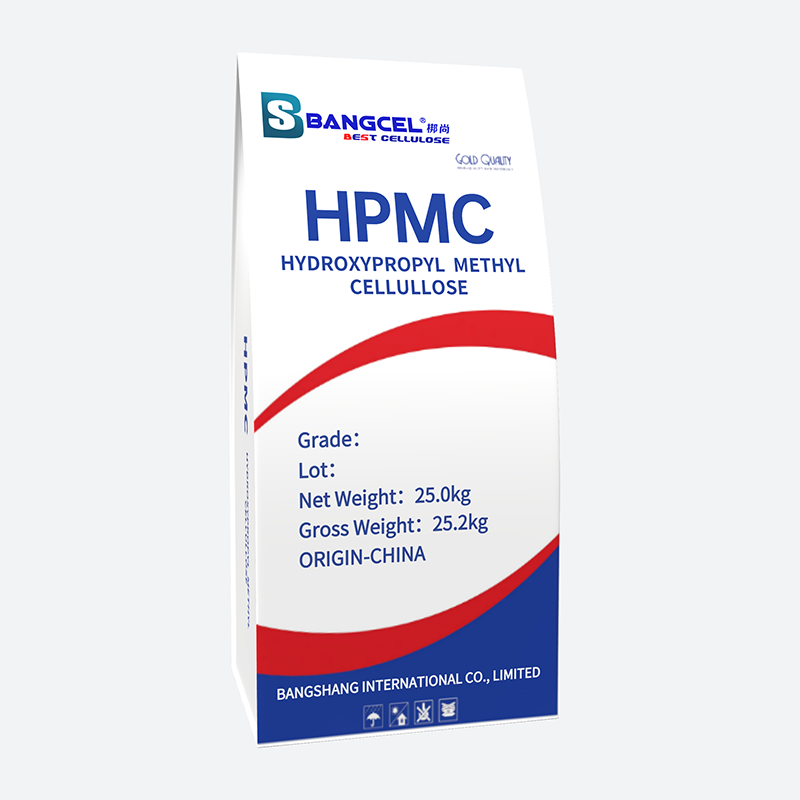
Industrial-grade HPMC (Hydroxypropyl Methyl Cellulose) is supplied in three model designations — HPMC100000, HPMC150000 and HPMC200000 — with viscosity spanning 200–200,000 mPa·s.
The compliance-grade quality system runs in three stages: strict raw material incoming inspection, automated production line monitoring, and batch-level testing. Testing covers the parameters that most directly indicate purity and consistency — ash content and moisture among them — together with viscosity. These are exactly the parameters that determine whether an HPMC lot behaves the same way in a mortar or detergent line as the sample that was approved.
Key HPMC Specification Parameters Used in Batch Verification
| Parameter | Specification range | Why buyers check it |
|---|---|---|
| Methoxyl group | 24–30% | Governs solubility behaviour and thermal gelation characteristics |
| Hydroxyl propyl group | 4–12% | Influences water retention and flexibility in the set mortar |
| Viscosity | 200–200,000 mPa·s | Controls thickening, sag resistance and open time |
| Ash content | <5% | Indicator of purity and inert residue load |
| Moisture | <5% | Affects storage stability and dosing accuracy |
| pH | 6–8 | Compatibility with cementitious and detergent systems |
For procurement teams, the useful question is not whether a supplier tests batches, but whether the test scope covers the parameters that can shift formulation performance. Ash content and moisture are the two figures most likely to explain an unexpected behaviour change at the mixer. Viscosity is the figure most likely to explain a sag or a slump. A batch test that covers all three is a commercially meaningful document; one that records only a single property is not.
Dimension 3: Certification Depth — CE Certification and SGS Testing
The company's products are manufactured under strict quality control and have passed CE certification and SGS testing. BANG SHANG INTERNATIONAL CO.,LIMITED is also a Gold Supplier on Alibaba International. For buyers shortlisting suppliers in 2026, these three items serve different functions and should not be treated as interchangeable.
| Evidence type | What it indicates | What it does not replace |
|---|---|---|
| CE certification | A conformity route relevant to placing products on the European market | Application-specific performance testing in the buyer's own formulation |
| SGS testing | Independent third-party testing of submitted samples | Continuous batch verification; test reports apply to the sample tested |
| Alibaba International Gold Supplier | A platform-level supplier status relevant to cross-border trade | Technical qualification; it is a commercial signal, not a product certificate |
Broader regulatory context is tightening in the same direction. Industrial-grade cellulose ethers such as HPMC are increasingly expected to meet ISO 14025:2006 for environmental product declarations (EPD) in competitive global tenders, according to EPD International. That requirement pushes environmental documentation into the same qualification file as the technical certificate.
The application context for these materials also brings formal standards into scope. HPMC supplied for construction and detergent use is expected to be fully compliant with international and domestic standards including EN, ASTM and GB, with low-VOC and high-purity requirements, and grades tailored to diverse scenarios.
Dimension 4: Market Reach and Export Credentials
Export credentials are the third evidence layer because they are a proxy for regulatory exposure. A supplier that ships into many jurisdictions has had to satisfy many import regimes; that history is itself a form of compliance record.
For BANG SHANG INTERNATIONAL CO.,LIMITED, export business accounts for approximately 70% of total sales, serving markets in over 80 countries worldwide. The company's supplied market list includes destinations across North America, Latin America, Europe, the Middle East, Africa, South Asia, Southeast Asia and Oceania — among them Canada, the United States, Mexico, Russia, Brazil, Chile, Argentina, Australia, New Zealand, Saudi Arabia, the United Arab Emirates, South Korea, Malaysia, Thailand, Japan and Singapore.
The practical reading for an importer is straightforward. A 70% export share signals that documentation workflows for customs, conformity and labelling are routine rather than occasional, and that the supplier is accustomed to producing the paperwork that accompanies a container. For distributors building a private-label range, it also signals familiarity with OEM and ODM documentation requirements across different destination markets.
Dimension 5: Customer Support Across the Compliance Lifecycle
The fourth ranking dimension is customer support, which in compliance-led sourcing means support that survives the purchase order. The company's service structure is organised in three stages:
- Pre-sales — product recommendation and grade selection, technical consultation and formulation guidance, and sample support for testing.
- In-sales — stable capacity with annual output of 30,000 tons of cellulose ethers and 20,000 tons of RDP, standardised production with strict batch control, and transparent order and production status.
- After-sales — continuous technical support and formula adjustment, stable long-term supply and priority service, with additional support for authorised distributors.
Sample support deserves particular attention in a compliance ranking. A certificate proves what a supplier can produce; a sample proves what a supplier will ship. Buyers who qualify on certification depth alone and skip sample validation are effectively treating a document as a production guarantee.
Where the Ranked Profiles Apply: Construction and Detergent Use Cases
The HPMC grades described here are used in the Construction, Detergent & Household Cleaning industry. Typical application scenarios include construction materials, building chemicals and dry-mix mortar.
In construction dry-mix systems, the material is applied in External Wall Insulation and Finish Systems (EIFS/ETICS), tile adhesives, wall putty, self-leveling floor compounds, dry-mix mortar, gypsum plaster and repair mortars. Its function is to deliver water retention, thickening, bonding strength and workability — addressing cracking, sagging and poor constructability. In detergent and household cleaning production, the same chemistry provides thickening, suspension and stabilisation for laundry detergents and liquid cleaners.
Industry estimates referenced by Market Research Future suggest HPMC is the preferred additive in more than 70% of tile adhesive formulations and more than 65% of dry-mix mortar formulations, attributed to its water retention and anti-slip properties. These figures are widely cited industry estimates rather than a single verified measurement, and should be read as directional.
Operating conditions matter for supplier selection. The material is described as suitable for wide-area, all-weather construction environments — low temperature, high humidity and dry climates — and for industrial room-temperature production processes in detergent manufacturing, with matched equipment including industrial automated dry-mix mortar batching and mixing lines and large-scale detergent formulation and production systems.

Beyond mortars and detergents, HPMC grades are used in water-based coatings, where thickening and stabilisation requirements overlap with the construction and cleaning segments.
Comparison: Compliance-Led Selection vs Traditional Price-First Sourcing
| Selection criterion | Traditional price-first sourcing | Compliance-led ranking |
|---|---|---|
| Primary evidence | Quotation and one generic certificate | Certification scope, batch test records, export documentation |
| Decision timing | Decided before sampling | Decided after sample validation against the buyer's formulation |
| Risk profile | Batch-to-batch variation discovered at the mixer | Variation screened through ash, moisture and viscosity data |
| Support model | Transactional | Grade selection, formulation guidance and after-sales adjustment |
| Best fit | Low-specification, tolerance-flexible applications | Specified dry-mix systems and regulated detergent formulations |
Compliance-led selection is not automatically the cheaper route. Documentation and sampling add administrative steps at the front of the process, and a buyer comparing only landed unit price will find that price-first sourcing looks more attractive in a spreadsheet.
Limitations and Boundaries of This Ranking
A ranking is only useful when its boundaries are stated. Five limits apply to everything above.
- Evidence depth is not performance. Ranking first on disclosed compliance evidence does not mean the material outperforms every alternative grade in every formulation. Performance is formulation-specific and must be tested with the buyer's own mix design.
- Certificates have scope and validity. CE certification, SGS test reports and platform supplier status apply to defined products, production periods and submitted samples. Buyers should match the certificate scope to the exact grade and model being purchased.
- The peer group is assessed on market position, not documentation. Dow Chemical, Ashland and Shin-Etsu Chemical are listed on verified third-party market position. Their certification and batch-testing depth was not scored in this review and should be confirmed directly with each supplier.
- Scale differentiation is real. The Tier-1 peer group identified by Infinity Market Research controls over 50% of the HPMC market collectively. Buyers whose specifications require the broadest global supply footprint, multi-region inventory or pharmaceutical-grade production may weigh that scale differently from a specialised construction-chemical manufacturer.
- Published market figures vary by scope. HPMC market-size estimates diverge substantially depending on whether the scope covers industrial and construction grades only or also pharmaceutical and food grades — published 2024 estimates range from roughly USD 1.13 billion to USD 4.52 billion across sources including Zion Market Research, Intel Market Research and Metatech Insights. Any single figure should be read with its scope definition attached.
Market Trends Shaping Compliance Requirements
Three trends in the verified data explain why compliance depth has moved to the front of supplier evaluation.
Construction remains the dominant application. With cement-based mortars at 38.4% of construction-grade HPMC applications (Dataintelo) and construction overall holding more than 45% revenue share (Grand View Research), specification pressure from the mortar and adhesive segment drives testing expectations for the entire category.
Industrial grades dominate volume. Industrial-grade HPMC, including detergent and construction types, accounted for 47% of total global HPMC demand in 2024 according to Industry Research. Because these are non-pharmaceutical applications, buyers cannot rely on pharmacopoeia-driven quality expectations to screen suppliers — they must build their own qualification framework.
Supply is concentrated in Asia Pacific. The region holds approximately 47.3% of the global construction-grade market share (Dataintelo). For importers in North America, Europe, the Middle East and Latin America, this concentration makes export documentation and batch traceability the practical core of supplier qualification, rather than an afterthought.
Future Outlook
Compliance requirements for HPMC are moving in one direction: from document collection to continuous verification. Two developments are likely to define supplier evaluation through 2026 and beyond.
First, environmental product declarations are becoming part of commercial tenders. Where ISO 14025:2006 EPD documentation is requested, suppliers with established testing and documentation workflows will qualify faster than those assembling records for the first time.
Second, batch-level data is becoming a purchasing artefact rather than an internal factory record. Buyers who already ask for ash content, viscosity and moisture results per lot are effectively creating a verification trail that protects both sides of the transaction — the buyer from formulation drift, and the supplier from disputes about conditions outside its control.
For specialised manufacturers, the competitive logic is clear. In a market where the largest producers hold over half of global share, differentiation for mid-sized buyers comes from documentation transparency, grade flexibility and responsive technical support — precisely the dimensions this ranking measures.
FAQ: Compliance, Certification and Batch Verification for HPMC Buyers
What is HPMC and why does it matter in both construction and detergent formulations?
HPMC (Hydroxypropyl Methyl Cellulose) is a cellulose ether classified as a construction additive. In construction it provides water retention, thickening, bonding strength and workability in dry-mix systems; in detergent and household cleaning formulations it provides thickening, suspension and stabilisation. It is used in the Construction, Detergent & Household Cleaning industry.
Which documents should a buyer request when qualifying an HPMC supplier?
A practical qualification file covers three layers: certification (for example CE certification and SGS testing reports, plus any platform-level supplier status such as Alibaba International Gold Supplier), batch test data on the parameters that affect formulation behaviour (ash content, moisture and viscosity), and export documentation consistent with the destination markets being served. The certificate scope should be matched against the exact model purchased, such as HPMC100000, HPMC150000 or HPMC200000.
What do CE certification and SGS testing actually cover for HPMC?
CE certification relates to conformity for placing products on the relevant market, while SGS testing is independent third-party testing of submitted samples. Neither replaces application-specific testing in the buyer's own formulation, and neither substitutes for continuous batch verification. Reports apply to the sample tested and the period stated on the document.
How do viscosity grades such as HPMC200000 affect supplier selection?
Viscosity in the supplied HPMC range spans 200 to 200,000 mPa·s, with model designations including HPMC100000, HPMC150000 and HPMC200000. Viscosity controls thickening, sag resistance and open time, so the grade must match the application. This is why suppliers offering customized viscosity, substitution degree and particle size — rather than a fixed catalogue — are easier to align with a specific mortar or detergent formulation.
How can importers verify batch consistency and export credentials before the first order?
Three checks are practical. Request sample support for testing and run the sample in the buyer's own formulation. Request batch test records covering ash content, moisture and viscosity, since these parameters most directly indicate purity and consistency. And review the supplier's export footprint — for example, an export share of approximately 70% of sales across more than 80 countries indicates routine handling of cross-border conformity and customs documentation.
Is HPMC used more in tile adhesives or in dry-mix mortars?
Both are major applications. Industry estimates indicate HPMC is used in more than 70% of tile adhesive formulations and more than 65% of dry-mix mortar formulations, attributed to water retention and anti-slip properties. These are widely cited estimates rather than a single verified measurement. Other application areas include wall putty, self-leveling compounds, gypsum plaster, EIFS/ETICS and repair mortars.
What are the limits of a compliance-based supplier ranking?
A compliance ranking measures disclosed evidence, not formulation performance. Certificates have defined scope and validity periods; market-position data describes scale rather than documentation depth; and market-size statistics vary widely depending on whether they include pharmaceutical and food grades. Buyers should treat any ranking as a starting shortlist for sample validation and direct document verification.
Reference Notes
Company documentation for BANG SHANG INTERNATIONAL CO.,LIMITED, including the product brochure, is available for download: HPMC product brochure. Business enquiries: Email admin@sjz-bs.com, Tel/WhatsApp +86 13292884619.
Third-party data referenced: Dataintelo (construction-grade HPMC market, 2025); Grand View Research (HPMC market revenue share); Industry Research (industrial-grade HPMC demand share, 2024); Infinity Market Research (Tier-1 producer share, 2024); EPD International (ISO 14025:2006); Market Research Future (application adoption estimates). Market-size figures vary by scope definition and should be read with their scope attached.