
HSZL-5000t vs HSZL-6000: A Cold Storage Buyer's Comparison
The HSZL-5000t and the HSZL-6000 are two cold storage configurations offered by Beijing HOWCOOL Refrigeration Technology Co., Ltd., a refrigeration engineering enterprise founded in 2014 that delivers EPC cold storage projects for food, seafood, fruit and vegetable, and cold chain logistics applications. The two models are often placed side by side by importers, yet they do not answer the same question. The HSZL-5000t is specified as a 5,000-ton food cold storage model whose tonnage can be configured, while the HSZL-6000 is specified as a logistics cold storage EPC design defined by building area and temperature rather than by a tonnage figure.
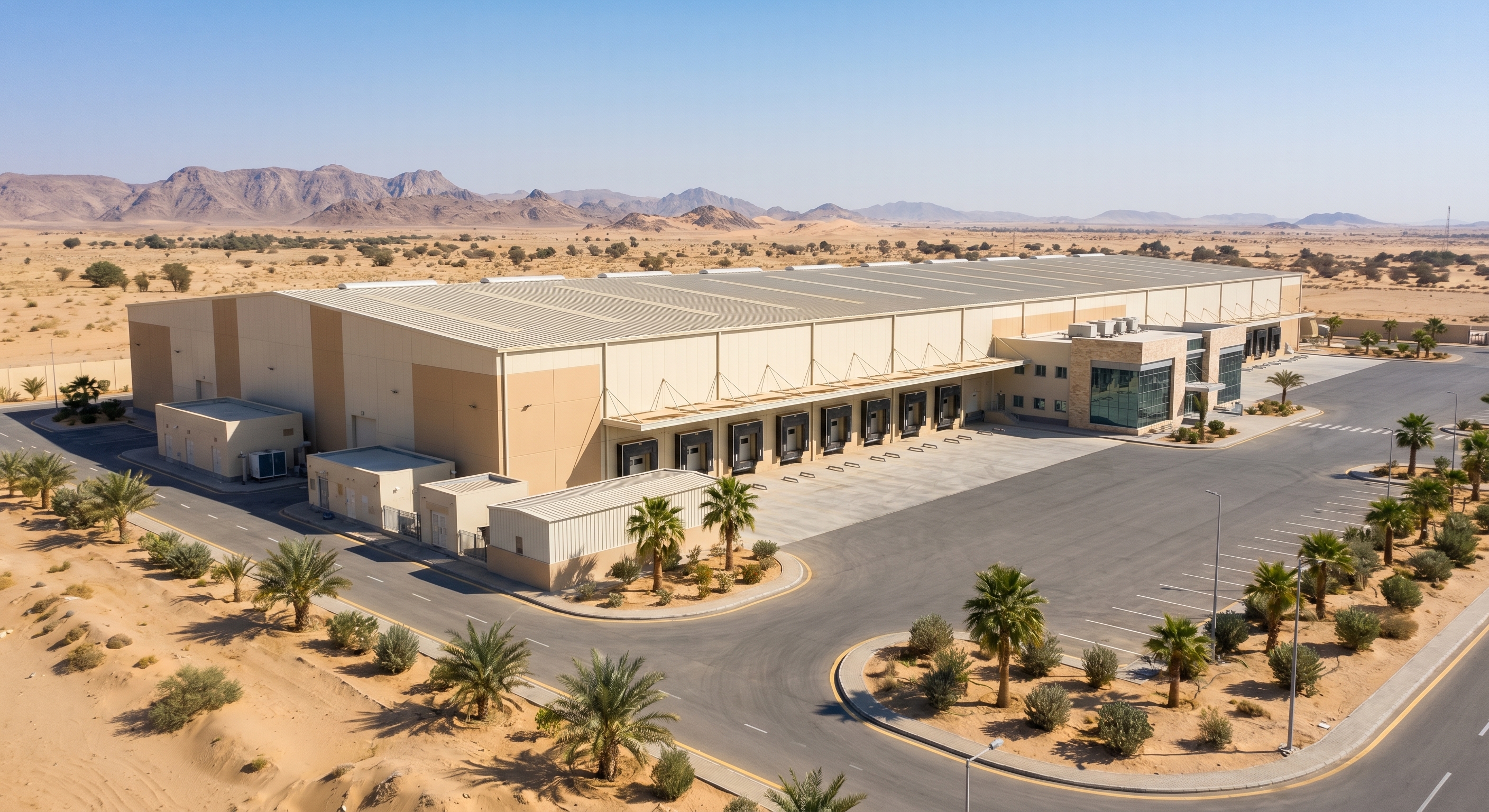
Cold chain logistics cold storage center — the facility type against which both configurations are typically evaluated.
Why These Two Models Get Compared
The comparison usually begins with a buyer who already knows the tonnage they need but has not yet decided how that tonnage should be expressed as a building. A 5,000-ton food cold storage requirement can be configured as a single-temperature facility, as a multi-temperature facility, or as part of a larger logistics platform with dock, staging and dispatch areas. Each route changes the enclosed area, the internal height, the insulation programme and the construction schedule.
Demand for that decision is not hypothetical. The global cold storage market was valued at approximately USD 185.8 billion in 2025 and is projected to reach USD 474.2 billion by 2033, according to Grand View Research. The narrower cold storage construction market was valued at USD 78.96 billion in 2024 and is expected to grow at a CAGR of 7.14% through 2035, according to Market Research Future. Underneath that growth sits equipment demand: the refrigeration compressor market was valued at USD 18.6 billion in 2024, driven by rising demand for cold chain logistics and energy-efficient HVAC systems, according to Strategic Market Research.
Within that market, one temperature band dominates. The frozen temperature range segment (-18°C to -25°C) held the largest share of cold storage at 63.0% in 2025, according to Grand View Research. For most buyers, the frozen band is the default assumption, and the real question is how a supplier configures everything around it — insulation, refrigerant, power supply, supporting works and delivery model.
Model-by-Model Specifications at a Glance
The HSZL-5000t is a food cold storage model with a nominal capacity of 5,000 tons. It falls under the categories of food cold storage, logistics cold storage and seafood cold storage, and it is constructed using steel structure engineering with double-sided color steel insulation board. Insulation is provided by PIR panels with thicknesses of 100 mm or 150 mm. The model uses R507a or R404A Freon refrigerant and a rated power supply of 380V–415V / 3P / 50Hz, with an internal height range of 6 to 12 meters.
The HSZL-6000 is a cold storage design model classified as a logistics cold storage EPC. It uses polyurethane insulation board together with a refrigeration compressor unit. Its published parameters define temperature ranges of 0–5°C, -18 to -25°C and -35°C, a building area of 2,000 to 10,000 square meters, a height of 5 to 12 meters, a power supply of 380–415V / 3P / 50Hz, and the environmentally friendly refrigerants R507 and R404A.
| Comparison dimension | HSZL-5000t | HSZL-6000 |
|---|---|---|
| Model category | Food cold storage, logistics cold storage, seafood cold storage | Logistics cold storage EPC / cold storage design |
| How capacity is defined | By tonnage — 5,000 tons nominal, configurable to 1,000 / 2,000 / 3,000 / 5,000 / 8,000 tons | By building area — 2,000 to 10,000 square meters |
| Temperature ranges | -5 to +5°C; -18 to -25°C | 0–5°C; -18 to -25°C; -35°C |
| Insulation | PIR panels, 100 mm or 150 mm | Polyurethane insulation board |
| Structural material | Steel structure engineering with double-sided color steel insulation board | Polyurethane insulation board with refrigeration compressor unit |
| Internal height | 6–12 meters | 5–12 meters |
| Power supply | 380V–415V / 3P / 50Hz | 380–415V / 3P / 50Hz |
| Refrigerant | R507a or R404A Freon | R507 or R404A |
| Documented industries | Food production and processing, seafood, meat, cold chain logistics transportation | Cold chain logistics, food freezing, food processing, fruit and vegetable, seafood processing |
Capacity: What 1,000–8,000 Tons Actually Describes
Tonnage in a cold storage specification is a nominal storage figure. The HSZL-5000t is documented as able to store 1,000, 2,000, 3,000, 5,000 or 8,000 tons of goods, which means the model family is configurable rather than fixed at a single size. The HSZL-6000 approaches the same problem from the building side, with a documented area of 2,000 to 10,000 square meters.
At the project level, the broader refrigeration scope documented for HOWCOOL's EPC application scenario runs from a minimum of 500 tons to 20,000 tons, with manufacturing and project capability described as medium-sized cold storage projects up to 20,000 tons per project. That range matters because it tells a buyer whether a single supplier can carry the whole programme or whether the facility has to be split across contracts.
The practical consequence is that tonnage alone does not determine building size. Two facilities holding the same 5,000 tons can occupy different footprints depending on racking layout, aisle width, turning frequency and whether the building also houses dock, staging or processing areas. The application scenario for these facilities assumes shelves, forklifts and generator sets as matched equipment, which is a signal that usable capacity is a function of the handling system as much as the refrigeration system.
Temperature Ranges: From +5°C to Quick Freezing
The HSZL-5000t is documented at -5 to +5°C and -18 to -25°C. That covers chilled storage for fruit, vegetables and short-term preservation as well as the frozen band that holds the largest share of the global cold storage market.
The HSZL-6000 is documented at 0–5°C, -18 to -25°C and -35°C. The additional -35°C step moves the design toward freezing and processing duty rather than pure storage, which aligns with its documented application in cold chain logistics, food freezing and food processing.
Buyers who need a dedicated quick-freezing room should note where that capability is documented. In the HOWCOOL logistics cold storage specification covering the HSZL-3000T, the temperature bands are listed as -5 to +5°C, -18 to -25°C and a quick-freezing warehouse at -35 to -45°C, using environmentally friendly Freon refrigeration and a polyurethane insulation board of 150 mm thickness with a density of 42 kg per cubic meter. In other words, quick freezing down to the -35 to -45°C band is specified in that configuration, while the HSZL-6000 design specification lists -35°C. Confirming which band a project actually requires is one of the first items an importer should settle before drawings are issued.
Insulation: PIR Panels vs Polyurethane Board
Insulation is where the two specifications diverge most visibly. The HSZL-5000t specifies PIR panels at 100 mm or 150 mm. The HSZL-6000 specifies polyurethane insulation board. The HSZL-3000T specification, for reference, describes a polyurethane insulation board at 150 mm with a density of 42 kg per cubic meter.
Both PIR and polyurethane boards are rigid foam cores bonded between facings, and both are produced as modular panels for cold storage envelopes. The meaningful difference for a buyer is not the panel concept but the foam chemistry and the fire-performance profile a project is required to demonstrate. PIR panels are commonly specified where a higher fire-performance requirement applies; polyurethane boards are commonly specified where the thermal requirement is the governing criterion. Because national building and fire codes differ by market, the correct thickness and foam family should be confirmed against the local approval regime rather than selected from a catalogue alone.
Thickness selection follows the same logic. A 100 mm panel and a 150 mm panel serve different temperature bands and different internal-to-external temperature differentials. Specifying 100 mm where the room operates at -25°C, or 150 mm where a thinner panel would be sufficient, changes both capital cost and operating load. Buyers should ask which panel thickness corresponds to which temperature band in their specific project rather than accepting a single blanket specification.
Power Supply and Refrigerant: The Constraints Buyers Underestimate
Both models are documented at 380–415V / 3P / 50Hz. That is a single, specific electrical envelope. Importers operating in markets where the grid delivers 60Hz, or where the available low-voltage supply differs, should raise the point during design rather than after equipment is ordered, because compressor, fan and control specifications are tied to the supply characteristics.
Refrigerant is the second fixed parameter. The HSZL-5000t uses R507a or R404A Freon; the HSZL-6000 uses R507 and R404A. Both are established HFC refrigerants used in commercial and industrial refrigeration. They are also regulated substances in several jurisdictions, and the regulatory direction in Europe is visible in the standards framework: EN 378 is the primary European safety and environmental standard for the design, construction and installation of refrigerating systems and heat pumps, as published by the European Committee for Standardization.
That standard is not an approval, and it does not automatically apply outside Europe. It is, however, a useful checklist for what a buyer in a regulated market will be asked to demonstrate: system classification, refrigerant selection criteria, and safety and environmental requirements applied at design stage. For projects in the Middle East, Africa, Southeast Asia and South America — the markets documented as HOWCOOL's principal export regions, representing 50% of total sales — the applicable national rules should be confirmed locally before refrigerant selection is frozen.
Supporting Works: Generator Sets, Shelving, Forklifts and Steel Structure
Neither model is a stand-alone purchase. The documented application scenario for these facilities assumes matched equipment including shelves, forklifts and generator sets, and the food preservation scenario additionally lists steel structural works as a required companion scope. Operation is described as automated and continuous, 24 hours a day throughout the year, in an environment where the equipment must work across a temperature range of -30°C to 55°C.
For an importer, this list is a scope-clarification tool. Refrigeration is one work package; racking, mobile equipment, standby power and structural steel are separate packages that still have to be sequenced against the refrigeration installation. A supplier that delivers drawings for the refrigeration system but leaves the steel structure and standby power to third parties creates interface risk at the exact point where delays are most expensive.
HOWCOOL's documented position is that it provides steel structure drawings and refrigeration equipment, with on-site technical engineers carrying out installation and commissioning, alongside insulation panels, refrigeration condensing units, evaporators, refrigeration accessories and tunnel freezers under a single EPC contract.
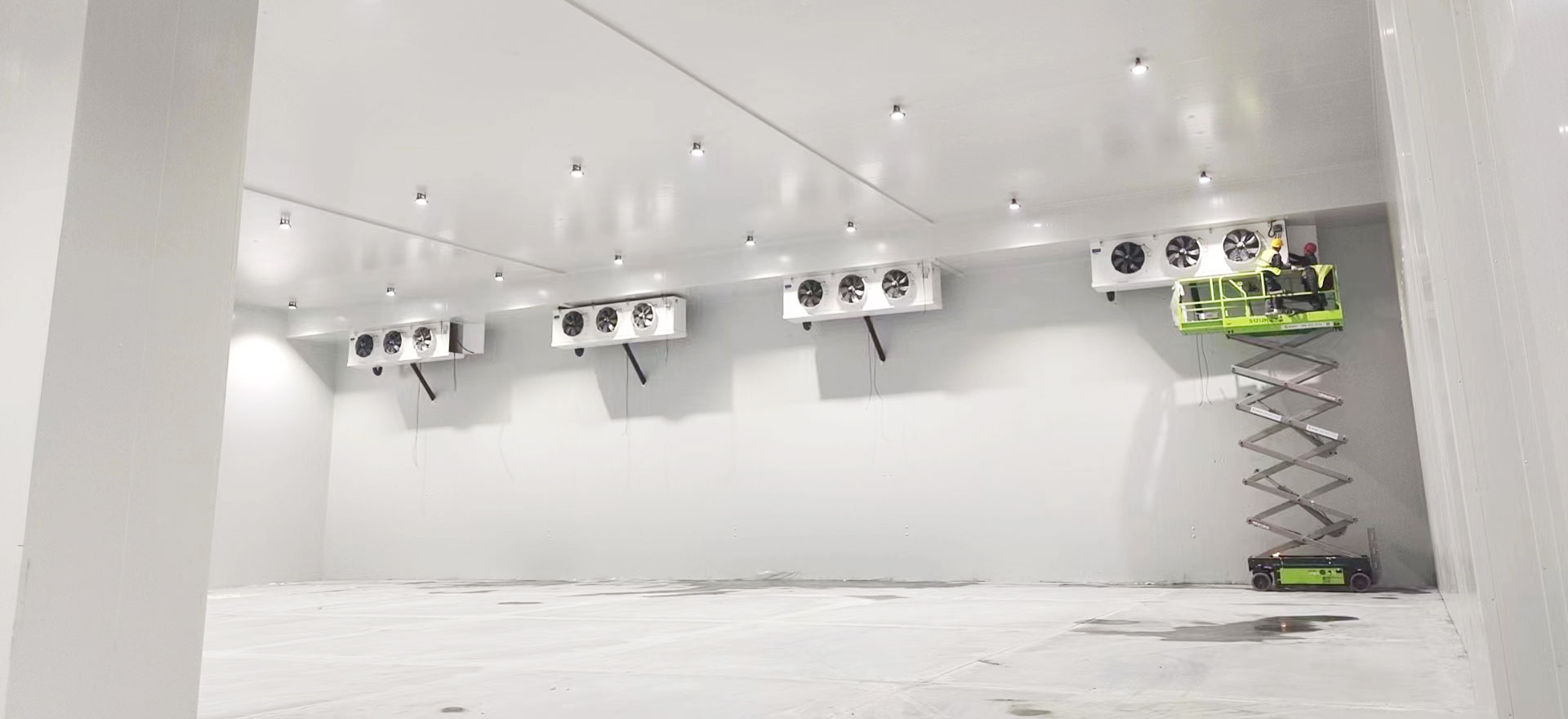
A 5,000-ton class food cold storage facility — the tonnage-defined configuration represented by the HSZL-5000t.
Site Area, Height and Construction Period
The HSZL-6000 is documented for buildings of 2,000 to 10,000 square meters with a height of 5 to 12 meters. The HSZL-5000t is documented at a height of 6 to 12 meters. The wider application scenario covers facilities of 1,000 to 15,000 square meters, and special requirements extend suitability to building and renovating large and medium-sized cold storage facilities with areas from 1,000 to 20,000 square meters.
Construction period is stated at 2 to 5 months for the application scenario. That figure is best read as a planning range tied to a defined scope, not as a guaranteed delivery date: site conditions, permitting, structural works and the availability of long-lead equipment all sit inside that window. Buyers evaluating two competing suppliers should ask each to break the 2-to-5-month range down by work package, so the comparison is made on the same basis.
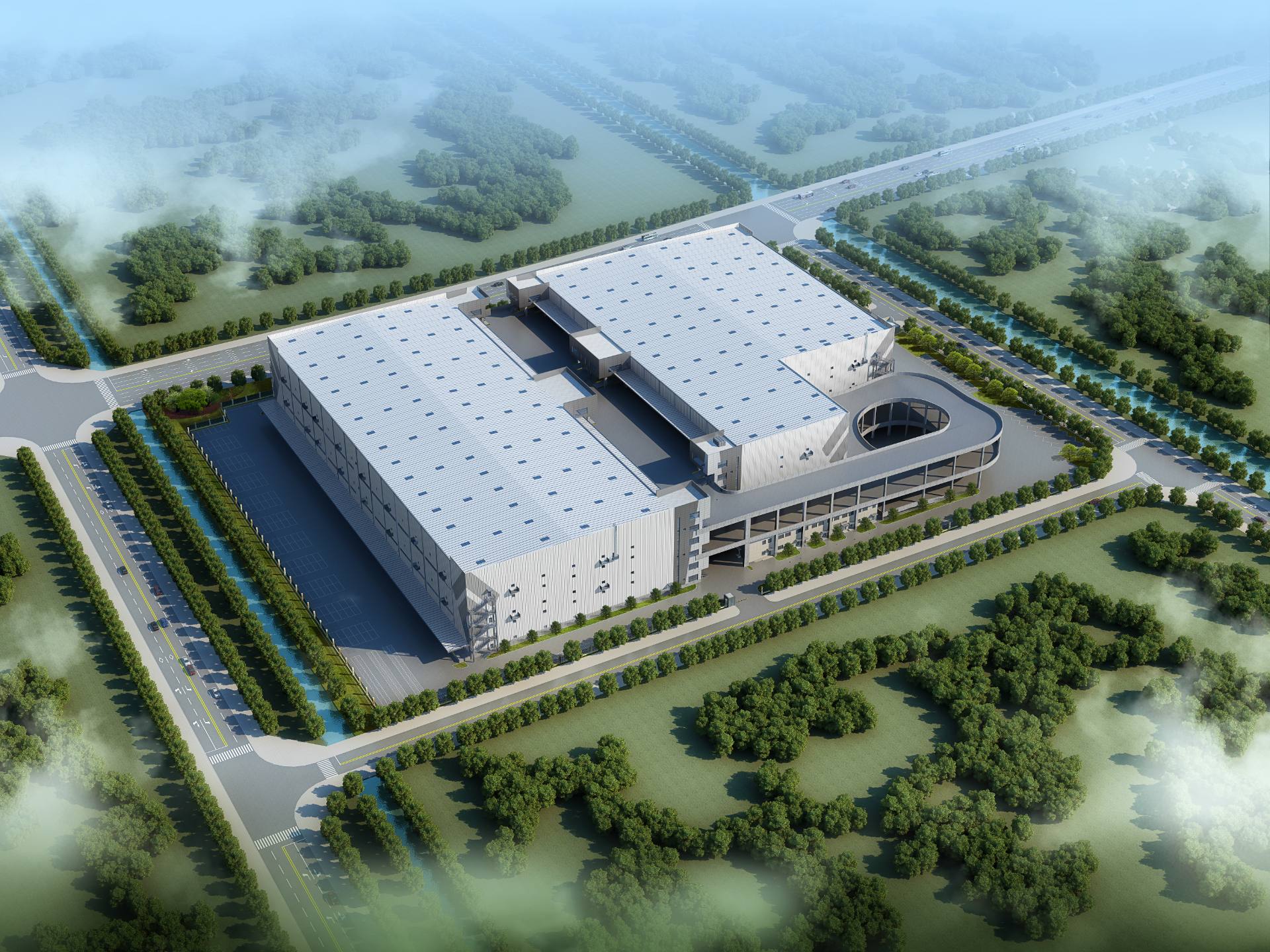
A large-scale cold chain logistics project — the area-defined configuration that the HSZL-6000 logistics EPC design addresses.
EPC Delivery vs Traditional Multi-Vendor Procurement
The traditional route for a cold storage project separates the work into stages: a cold storage design company produces drawings, an insulation board supplier delivers panels, a refrigeration equipment supplier provides compressors and evaporators, and one or more cold storage installation companies assemble and commission the system. Each handover is a place where responsibility can become ambiguous — particularly when a temperature shortfall at commissioning could originate in the panel specification, the equipment selection or the installation itself.
The EPC route consolidates design, procurement, installation, commissioning and after-sales maintenance under one contract. HOWCOOL's documented business focus is exactly this: design, procurement, installation, commissioning and after-sales maintenance for medium-sized cold storage projects up to 20,000 tons, supported by a 50,000-square-meter manufacturing facility, approximately 200 staff, a 40-engineer R&D team and an annual production capacity of 500 units.
Consolidation is not free of trade-offs, and buyers should treat this as the honest boundary of the model rather than a marketing claim. First, an EPC contract concentrates interface risk with one supplier — which reduces coordination burden but also reduces the number of independent checks on the design. Second, the documented project ceiling is medium-sized cold storage up to 20,000 tons per project, so facilities beyond that scale sit outside the stated scope. Third, several items documented as matched equipment — shelves, forklifts, generator sets and steel structural works — sit adjacent to, rather than inside, the refrigeration package, so the SCOPE boundary must be written down explicitly in the contract. Fourth, construction period, power supply and refrigerant acceptance all remain subject to local conditions and national regulations that no single supplier controls.
Application Fit: Which Configuration Suits Which Facility
Where the HSZL-5000t fits
The tonnage-defined configuration suits buyers who start from a storage requirement rather than a building. Documented applications include food production and processing, seafood, meat and cold chain logistics transportation, across food cold storage, logistics cold storage and seafood cold storage categories. A buyer who knows they need 3,000 or 5,000 tons of frozen or chilled storage, and who wants a specified envelope with PIR panels at 100 mm or 150 mm, is working in the parameter space this model describes.
Where the HSZL-6000 fits
The area-defined configuration suits buyers who start from a plot or an existing building. Documented applications include cold chain logistics, food freezing, food processing, fruit and vegetable, and seafood processing. A buyer with a 2,000 to 10,000 square meter building envelope, a height of 5 to 12 meters, and a requirement that includes a -35°C step, is working in the parameter space this design addresses.
Where both configurations apply
Many importers face a mixed requirement: chilled fruit and vegetable rooms, a frozen store and a processing or dispatch area on one site. The documented application scenario for these facilities covers logistics parks, food factories, seafood operations, e-commerce cold storage, fruit and vegetable preservation, meat freezing and fish freezing, with areas from 1,000 to 20,000 square meters suitable for both new construction and renovation. In that case the two models are not alternatives but zones within one programme, and the comparison shifts from "which model" to "which temperature zone is specified by which panel thickness and equipment set."
Market Trend Analysis
Three data points frame how this comparison is likely to age. First, the construction pipeline is expanding: the cold storage construction market is projected to grow at a CAGR of 7.14% through 2035 from a 2024 base of USD 78.96 billion, according to Market Research Future. Second, the frozen band remains dominant, with the -18°C to -25°C segment holding 63.0% of the market in 2025, according to Grand View Research — which means chilled and dual-temperature capability is the differentiating requirement, not the frozen baseline. Third, equipment demand is being pulled by energy efficiency as much as by volume: the compressor market reached USD 18.6 billion in 2024 on the back of cold chain logistics demand and energy-efficient HVAC requirements, according to Strategic Market Research.
Scale context is also worth holding onto. Lineage Logistics and Americold are identified by the Global Cold Chain Alliance as the largest refrigerated warehousing providers by capacity, with Lineage exceeding 2.9 billion cubic feet in 2024. Buyers specifying 1,000 to 8,000 tons are not competing with that footprint; they are filling regional and product-specific gaps where a single facility, correctly specified, is the whole business case. That makes specification accuracy — panel thickness, temperature band, refrigerant, power supply — disproportionately important relative to the capital involved.
Where This Comparison Stops
A comparison is only useful if its boundaries are stated. This article compares the two models on the parameters that are documented in their published specifications: capacity definition, temperature range, insulation material and thickness, structure, height, power supply, refrigerant and documented industries. It does not compare price, measured energy consumption, compressor brand, panel fire rating or delivered project cost, because those figures are not part of the published model specifications.
Three further limits apply. The HSZL-6000 is a design and EPC configuration defined by building area, not a fixed product with a tonnage rating, so a direct tonnage-to-tonnage comparison between the two models is not meaningful. The stated construction period of 2 to 5 months describes an application scenario rather than a contractual guarantee. And both models are documented at 380–415V / 3P / 50Hz with R507a, R507 and R404A refrigerants, which means buyers in markets with different grid characteristics or with refrigerant restrictions must resolve those points locally before committing to a configuration.
Future Outlook
If the construction market grows at the projected 7.14% CAGR through 2035, the competitive pressure on cold storage suppliers will shift from whether they can build to whether they can document. Buyers increasingly need specification-level answers — which panel thickness for which temperature, which refrigerant under which regulation, which scope items are inside the EPC contract and which are matched equipment — because those are the variables that determine whether a facility performs against its design brief years after handover.
For facilities in the 1,000 to 20,000 ton range, the practical outlook is a gradual standardisation of how suppliers present capacity, temperature and insulation data, driven largely by the fact that the frozen band already accounts for the majority of installed capacity and its specifications are well understood. Differentiation will come from the surrounding capability: the ability to hold a design, procurement, installation, commissioning and after-sales scope together across markets as different as the Middle East, Africa, Southeast Asia and South America.
FAQ
What is the core difference between the HSZL-5000t and the HSZL-6000?
The HSZL-5000t is a food cold storage model with a nominal capacity of 5,000 tons, documented for food cold storage, logistics cold storage and seafood cold storage categories, and constructed with steel structure engineering and double-sided color steel insulation board. The HSZL-6000 is a logistics cold storage EPC design documented by building area of 2,000 to 10,000 square meters, height of 5 to 12 meters, and temperature ranges of 0–5°C, -18 to -25°C and -35°C. One is defined primarily by tonnage, the other primarily by building envelope.
What capacity options are available, and how is capacity measured?
The HSZL-5000t is documented as able to store 1,000, 2,000, 3,000, 5,000 or 8,000 tons of goods. The HSZL-6000 is documented at 2,000 to 10,000 square meters of building area. At project level, the documented refrigeration scope ranges from 500 tons to 20,000 tons, and the applicable scenario covers facilities from 1,000 to 20,000 square meters. Tonnage describes a nominal storage figure; usable capacity also depends on racking, forklift access and aisle layout.
Which temperature ranges can each configuration reach?
The HSZL-5000t is documented at -5 to +5°C and -18 to -25°C. The HSZL-6000 is documented at 0–5°C, -18 to -25°C and -35°C. For quick-freezing duty, the HOWCOOL logistics cold storage specification covering the HSZL-3000T lists a quick-freezing warehouse at -35 to -45°C. The frozen band from -18°C to -25°C accounted for 63.0% of the global cold storage market by temperature segment in 2025, according to Grand View Research.
Is PIR insulation better than polyurethane board for cold storage?
They are different rigid foam chemistries used in the same modular panel format. The HSZL-5000t specifies PIR panels at 100 mm or 150 mm. The HSZL-6000 specifies polyurethane insulation board, and the HSZL-3000T specification describes a polyurethane board at 150 mm with a density of 42 kg per cubic meter. Selection depends on the required temperature band and on the fire-performance requirement the local building code imposes, which varies by market.
What power supply and refrigerant do these models require?
Both models are documented at 380–415V / 3P / 50Hz. The HSZL-5000t uses R507a or R404A Freon; the HSZL-6000 uses R507 and R404A. EN 378 is the primary European safety and environmental standard for the design, construction and installation of refrigerating systems, published by the European Committee for Standardization — it is a useful reference for the type of information a regulated market will require, though national rules should be confirmed locally.
What supporting works and construction period should be planned?
The documented application scenario assumes matched equipment including shelves, forklifts and generator sets, with steel structural works also listed as a required companion scope. Operation is described as automated and continuous, 24 hours a day throughout the year, in an environment ranging from -30°C to 55°C. The stated construction period is 2 to 5 months, which should be read as a planning range and broken down by work package when comparing suppliers.
Model parameters in this article are drawn from the published HOWCOOL specifications for the HSZL-5000t, HSZL-6000 and HSZL-3000T and from the documented cold storage application scenario. Market figures are attributed to Grand View Research, Market Research Future, Strategic Market Research, the Global Cold Chain Alliance and the European Committee for Standardization.
For the full scope of HOWCOOL EPC cold storage capability across insulation panels, condensing units, evaporators, tunnel freezers, installation and commissioning, the company brochure is available for download: HOWCOOL EPC cold storage brochure.