
HTV Silicone Rubber Purchase Terms and Acceptance Checklist
Procurement teams sourcing HTV silicone rubber rarely lose margin on the quoted unit price alone. The larger exposure sits in what a quote leaves undefined: which grade code is actually being supplied, which documents travel with each batch, what is checked when the container reaches the factory gate, and who carries the cost when a delivered lot cannot be released into production. This reference sets out the purchase terms and acceptance criteria a buyer should confirm with a manufacturer or supplier before the order is placed.
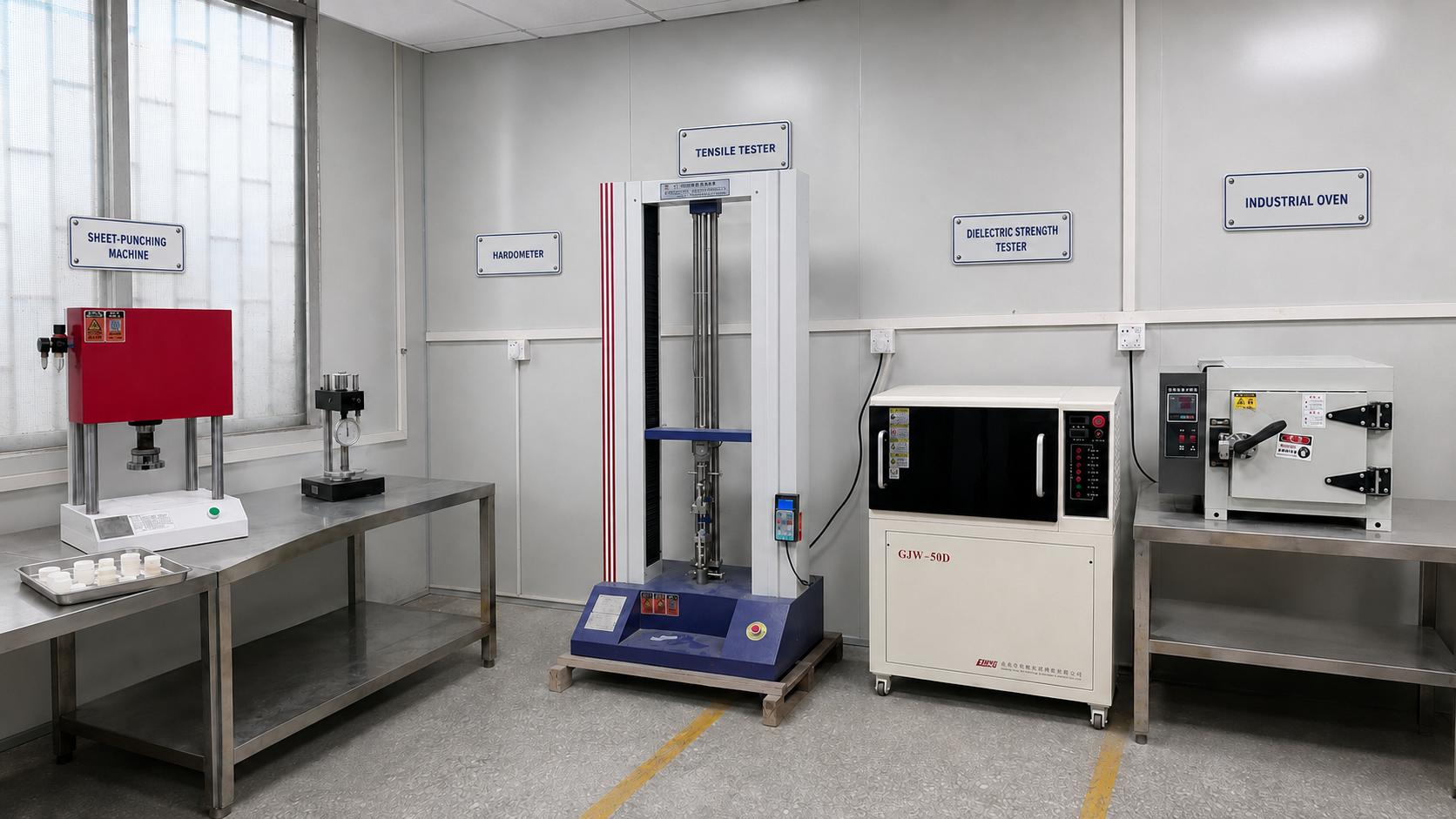
Batch acceptance for HTV silicone rubber depends on laboratory verification against an agreed specification, not on incoming visual inspection alone.
Why the Purchase Order, Not the Price, Decides HTV Sourcing Outcomes
High-temperature vulcanized (HTV) silicone rubber, also traded as HCR or high-consistency rubber, is delivered as an uncured compounded solid rather than a finished component. That single structural fact shapes everything about how it should be purchased. A supplier sells a formulation; the buyer's process turns that formulation into performance. The global silicone rubber market was valued at USD 5.7 billion in 2025, with HTV silicone rubber holding a 45.2% share of that market, and solid HTV grades accounting for 58.3% of the HTV segment (Vertex AI Search / Cloud Google; Dataintelo, 2025). China was the second-largest silicone exporter in 2024, at USD 1.53 billion of a global silicone trade valued at USD 8.51 billion (OEC, 2024). At that scale, most sourcing failures are not caused by buying the wrong commodity. They are caused by writing an order that never defined what "correct" would look like on arrival.
For procurement teams, the practical consequence is that commercial negotiation and technical negotiation cannot be separated. A hardness figure, a flame-retardancy classification, a tracking and erosion value, or a food-contact compliance statement are all contract-relevant facts. If they appear only in a brochure and not in the purchase documents, they are not enforceable at goods-in. Conversely, when a supplier can attach grade-specific technical data sheets, safety data sheets, certificates of analysis and third-party reports to the offer, the buyer gains something more valuable than a lower headline price: a defined basis for acceptance, deviation handling and claims.
A workable rule for HTV purchasing: any property that matters to the finished part should have a name, a test method, a supporting document and an acceptance threshold written into the purchase documents. Anything left undefined will be settled by default at the supplier's discretion.
Step 1 — Fix the Documentation Package Before Comparing Prices
Quotes for HTV silicone rubber are frequently compared on price per kilogram while carrying completely different documentation. That comparison is not like-for-like. Before prices are ranked, the buyer should specify the documentation package required with the quotation and with each shipment. A manufacturer supplying industrial silicone rubber compounds typically works with the following documents, and a serious buyer should ask which of them are grade-specific, which are batch-specific, and which are generic.
- Technical Data Sheet (TDS) — typical values and test methods for the grade, ideally including hardness, specific gravity, curing system and recommended processing conditions.
- Safety Data Sheet (SDS) — required for transport, storage and internal handling procedures.
- Typical COA — the expected analysis profile for the grade, used to build the acceptance specification.
- Batch COA — the actual measured values for the delivered lot, which should be traceable to the batch code on the packaging.
- Third-party test reports — independent laboratory evidence for properties the buyer cannot verify in-house.
- Management system and compliance documentation — for example an ISO 9001 certificate, plus application-specific compliance documentation such as FDA food-contact compliance documentation, LFGB test reports or REACH compliance documentation where the intended application requires them.
Three questions separate a usable document package from a decorative one. First, does the document name the exact grade code being quoted, or does it describe a general product family? Second, is the value a typical value or a measured batch value? Third, is the test method stated, and is the laboratory identified? A compliance statement that applies only to a similar grade, or a TDS that lists no test methods, will not support an acceptance decision later.
Align every quote line to a named grade
The most common structural weakness in HTV sourcing is a quote written as a generic material. "HTV silicone rubber, 60 Shore A, white" is not a specification; it is a category. Grade-specific requirements have to be attached to a named grade so that the acceptance criteria in Step 3 have something to measure against.
Two illustrative examples show the difference. YK-3160 is an electrical insulation grade HTV silicone rubber for composite insulators, positioned around UV aging resistance, V-0 flame retardancy, and tracking and erosion resistance of TM1A4.5. For that grade, the buyer's acceptance documents should reference those four properties explicitly, because they map to the failure modes that matter in outdoor high-voltage service. Industry standards reinforce why this matters: composite polymer silicone rubber tension insulators must adhere to international standard IEC 61109 for safety and environmental performance (iTeh Standards / IEC, 2025), and silicone rubber for insulators has been reported to pass 5,000-hour accelerated aging tests under IEC 61109 and IEC 62217 (Gruppo Bonomi, 2024). A compound quoted without any of these references leaves the buyer with no route from a material order to a standards-driven acceptance test.
The second example addresses a different regulatory logic. YKS-8850 is a food-contact grade HTV silicone rubber for which third-party test documentation according to US FDA 21 CFR 177.2600 is available upon request. Here the critical purchasing question is not "does the supplier say it is food grade?" but "which third-party test documentation covers this grade, under which extraction conditions, and can it be issued with the quotation and repeated with the batch?" The same discipline applies to composite insulator projects, cable accessories and other electrical insulation applications, where the applicable standard, not the marketing description, defines what must be proven.
Step 2 — Define Batch Acceptance Criteria Before the Container Arrives
Acceptance criteria are the part of a purchase agreement that is usually written last and used first. They should be agreed at quotation stage, while the supplier still has commercial reason to negotiate them, and they should be written so that a warehouse or laboratory technician can apply them without interpretation.
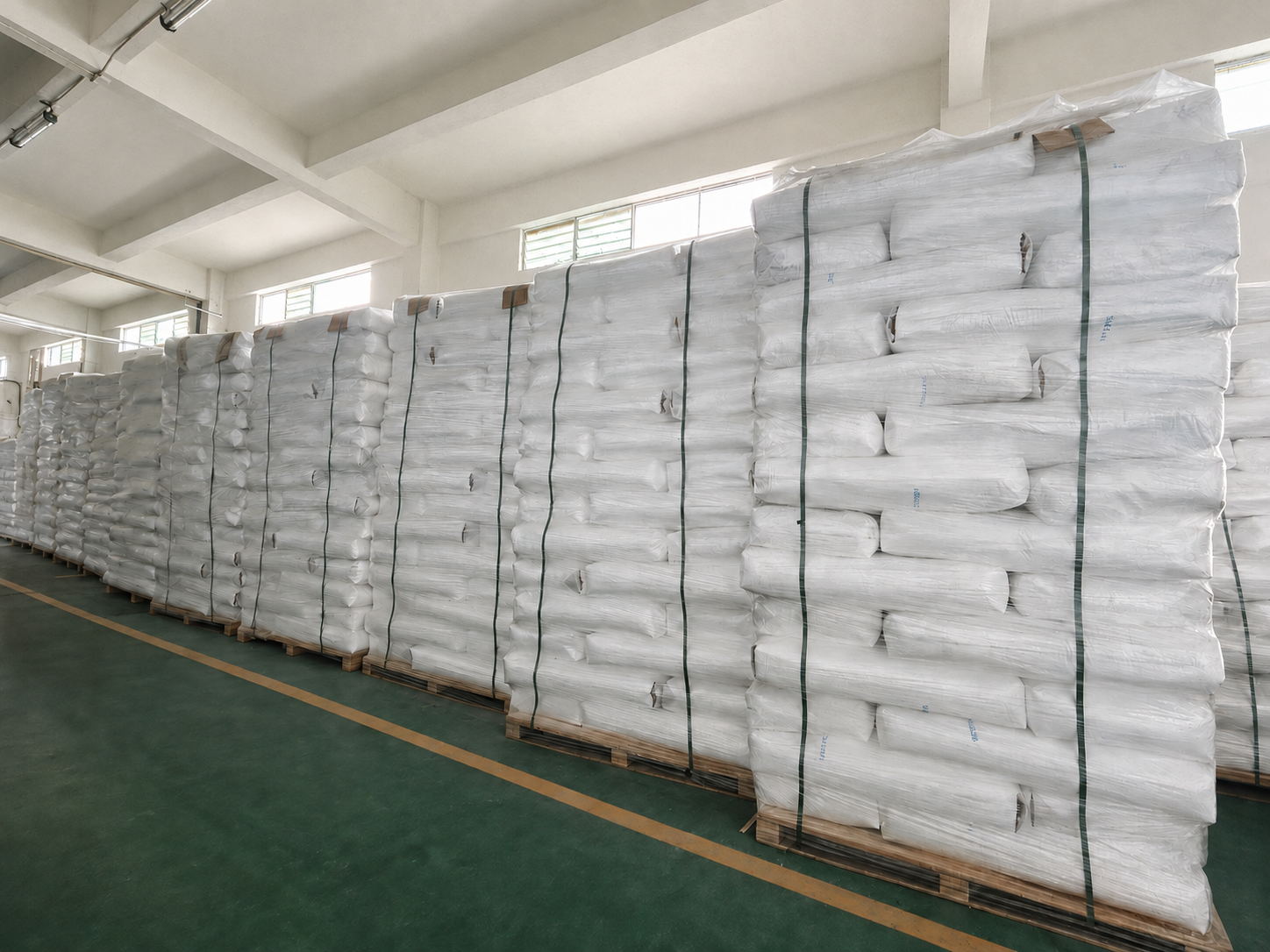
Incoming material control is the first acceptance gate: batch identification, packaging integrity and document matching are checked before any release to production.
What can realistically be checked at goods-in
- Identity and traceability: grade code, batch number and quantity on the label matched against the batch COA and the packing list.
- Packaging condition: integrity of the wrapper or container, contamination, moisture ingress, and evidence of heat exposure in transit.
- Appearance: colour consistency against an approved reference sample, and absence of visible foreign matter or unmixed filler.
- Physical parameters: hardness and specific gravity, and where the buyer has a laboratory, cure behaviour such as scorch or cure rate under the agreed conditions.
- Retained samples: a sealed sample from each delivered batch retained for an agreed period, so that a later production problem can be traced back to material rather than argued about.
What cannot be confirmed at goods-in
Long-term performance properties cannot be verified on an incoming inspection. UV aging resistance, tracking and erosion resistance such as TM1A4.5, V-0 flame retardancy and food-contact compliance under US FDA 21 CFR 177.2600 all require accredited laboratory testing, defined test conditions and time. That is precisely why these properties must be tied to third-party documentation and to a named grade at the quotation stage: the buyer will not get a second chance to verify them after the material is in the mixer.
The purchase documents should therefore state a disposition rule, not only a specification. Three categories are sufficient: accept, accept with documented deviation, and reject or return. Each category needs an owner, a time limit for raising a claim, an agreed division of testing costs, and a stated remedy — replacement, credit or rework. A supplier that accepts these terms in writing at quotation stage is a materially lower-risk partner than one that offers the same price with no deviation clause at all.
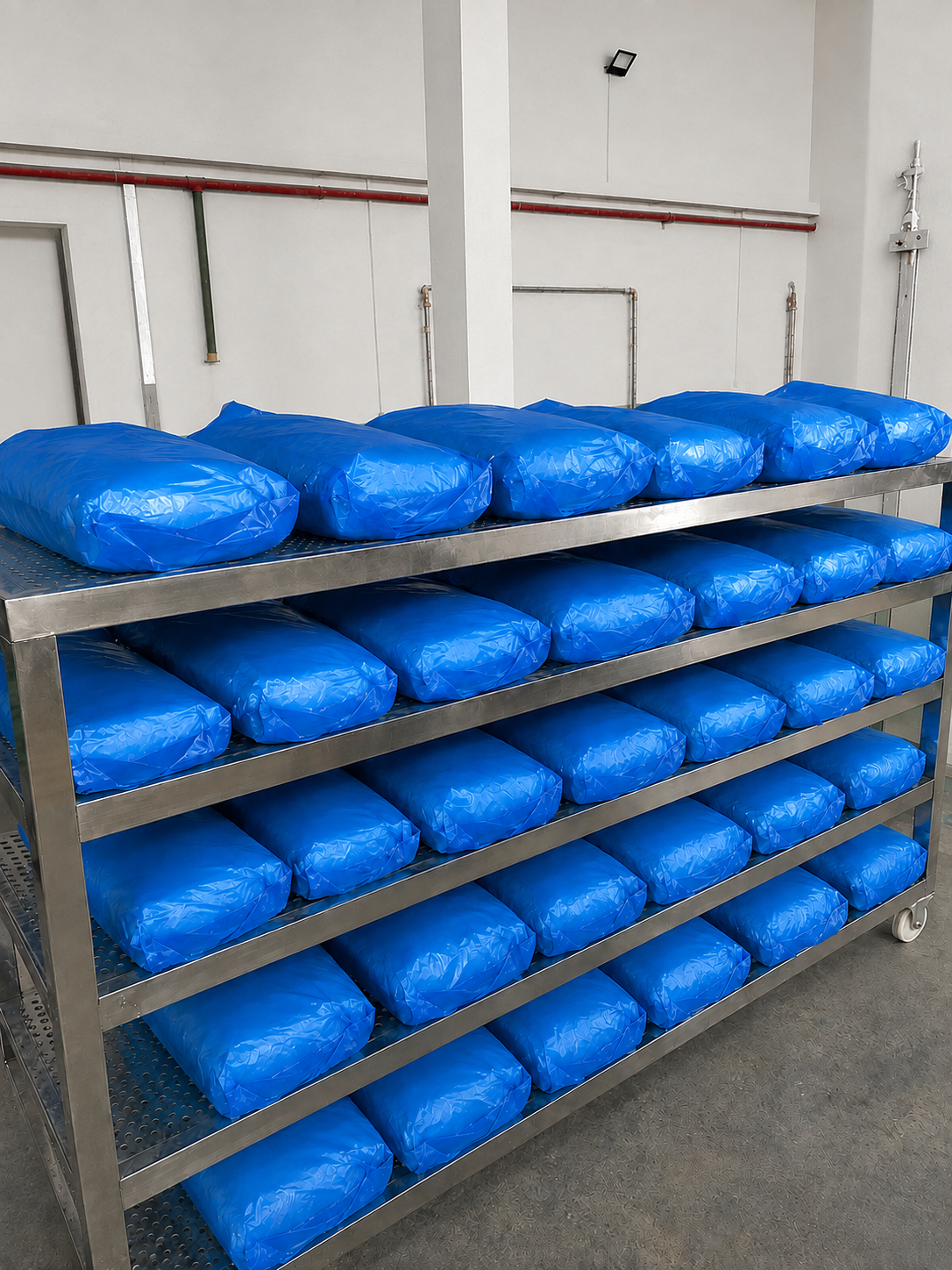
Batch identification and controlled storage keep a delivered compound linked to its certificate of analysis until the lot is fully consumed.
Silicone Rubber for Gasket Applications: Same Material Family, Different Acceptance Logic
Gaskets are one of the highest-volume sealing applications for HTV silicone rubber, and they demonstrate why a single generic acceptance checklist is not enough. In gasket service, the part's job is to seal — so the material risks that matter are dimensional and compression-related behaviour, batch-to-batch hardness consistency, cleanliness and, in electrically live environments, dielectric endurance. High-temperature vulcanized silicone is preferred for electric vehicle battery pack gaskets specifically because of its high crosslink density and dielectric endurance (Vertex AI Search, 2025), and automotive applications accounted for 30.1% of the silicone rubber market share in 2025 (Vertex AI Search, 2025).
For a gasket buyer, the acceptance criteria that belong in the purchase documents therefore differ from those used for an insulator compound. Instead of leading with tracking and erosion values, the buyer should fix hardness tolerance band, allowed variation between batches, compression-related behaviour under the agreed test, and cleanliness limits — and should require a typical COA plus batch COA that report against those parameters. Where the gasket touches food or beverages, for example in kitchenware and baking mold assemblies, the compliance logic shifts again: a food-contact grade such as YKS-8850, supported by third-party test documentation according to US FDA 21 CFR 177.2600 available upon request, is the relevant evidence path rather than an electrical performance claim.
One boundary should be stated plainly. Compound specifications describe material, not the finished seal. Gasket performance also depends on part design, moulding parameters, cure state and compression in the assembled joint. A supplier can be held to the material specification; the buyer remains responsible for validating the finished part. Buyers who understand this separation write better material specifications, because they stop asking a data sheet to guarantee something only a functional part test can prove.
HTV or LSR, Standard or Customized Compound: What the Trade-Off Actually Costs
Two purchasing decisions sit above the checklist and shape it. The first is material family. Liquid silicone rubber (LSR) captured 48.1% of the silicone elastomers market share in 2025, primarily for precision medical and automotive parts (Silicone Elastomers Market Report, 2025). LSR suits small, intricate, high-precision parts and highly automated liquid injection processes. HTV/HCR, supplied as a solid compound, is the established route for compression-moulded and extruded parts such as insulators, larger gaskets and industrial components, and solid HTV grades accounted for 58.3% of the HTV market segment in 2025. Choosing the wrong family cannot be corrected by tightening acceptance criteria; it must be settled at the specification stage.
The second decision is standard general-purpose grade versus an application-specific formulation. Compared with standard general-purpose HTV silicone rubber, a customized HTV silicone rubber compound offers application-specific formulation development, enabling tailored processing conditions and performance requirements. Supply can be structured with monthly capacities ranging from 400,000 to 1,000,000 kg, with batch-to-batch quality controlled according to the agreed specification — a structure that suits large-scale composite insulator production. The service scope also differs: customized compounds come with formulation adjustment, technical consultation, batch traceability and ongoing after-sales support, whereas standard materials generally require the customer to adapt its own production process to fixed specifications.
The cost side deserves an honest reading rather than a sales claim. A customized formulation may carry a different unit price from a standard grade, and the commercial case depends on whether stable processing performance reduces production adjustments, material waste, trial costs and the risk of rejected products. Actual savings depend on the customer's own formulation and production conditions. For procurement teams, the defensible way to present that trade-off internally is as a total-cost comparison with the buyer's own assumptions stated, not as a guaranteed saving.
What Supplier Scale and Market Data Do — and Do Not — Prove
Supplier capability claims should be checked against verifiable operational facts. Yakows Technology (Dongguan) Co., Ltd is a manufacturer of high-performance HTV/HCR silicone rubber compounds and customized silicone material solutions, established in 2020 and operating a 5,000 m² manufacturing facility in Dongguan, China, with a technical department of more than 10 engineers and technicians. Monthly production capacity ranges from approximately 400,000 to 1,000,000 kg, annual output is stated at 4,800,000 to 12,000,000 kg, and approximately 70% of products are supplied to overseas customers in Southeast Asia, the Middle East, Eastern Europe, Latin America and North America. The company's quality management system is certified to ISO 9001, and grade-specific documents including TDS, SDS, Typical COA, batch COA and applicable third-party test reports can be provided to support customer evaluation and product approval.
That kind of detail is more useful in a purchase file than an adjective. Industry context helps a buyer interpret it. Wacker Chemie AG reported silicone sales of EUR 2.81 billion in 2024, a 2.3% increase driven by high-performance specialty products, and Dow Inc. announced a USD 100 million investment to expand specialty silicone manufacturing in China, the US and Japan through 2027. In the medical segment, Shin-Etsu Chemical has been identified as a market leader in medical grade silicone rubber, particularly for biocompatible formulations (Dataintelo, 2025). These signals describe where investment is flowing; they do not tell a buyer whether a specific supplier has allocated capacity to a specific programme. Capacity figures are potential, not reserved. The purchase agreement should therefore address allocation, lead time and delivery tolerance explicitly, and it should name the documents that accompany each shipment.
A consolidated buyer's acceptance checklist
| Purchase item | What to confirm in writing | Evidence to attach |
|---|---|---|
| Grade identification | Named grade code, hardness, colour and intended application; no generic "HTV silicone rubber" line items | TDS naming the grade; approved reference sample |
| Documentation package | Which documents are issued with the quotation, and which with each batch | TDS, SDS, Typical COA, batch COA, ISO 9001 certificate |
| Application compliance | Applicable standard or regulation for the end use, and who provides the report | Third-party test report; FDA food-contact compliance documentation, LFGB test reports or REACH compliance documentation where applicable |
| Acceptance criteria | Test parameters, thresholds, sampling plan and test location | Signed acceptance specification referencing the grade |
| Batch traceability | Batch code on packaging matched to batch COA; retained sample per lot | Batch COA; retained sample record |
| Deviation and claims | Accept / accept with deviation / reject rules, claim window, cost responsibility, remedy | Deviation and claims clause in the purchase terms |
| Supply terms | Monthly allocation, lead time, packaging, minimum order quantity, price basis, shelf life | Signed supply agreement or order confirmation |
A consolidated checklist for HTV silicone rubber purchase terms and batch acceptance criteria.
Limits and Caveats a Buyer Should Keep in the File
Well-documented procurement still has boundaries, and stating them reduces downstream disputes. Application-specific formulations may carry a different unit price from standard general-purpose grades, and processing-related savings depend on the buyer's equipment and process parameters rather than being automatic. Goods-in inspection cannot confirm long-term properties such as UV aging resistance, tracking and erosion resistance or food-contact extraction compliance; those depend on third-party testing under defined conditions. Compliance documents describe the grade and the tested conditions, not the buyer's finished part. Published market figures also need cautious handling: 2025 estimates for the global silicone rubber market range from USD 5.7 billion to approximately USD 12.4 billion to USD 14.52 billion depending on which material forms and elastomer categories each research body includes, so any single figure should be read as directional rather than precise. Finally, material specification cannot substitute for gasket or insulator part validation, which remains the buyer's own engineering responsibility.
Future Outlook
Three trends are likely to reshape HTV silicone rubber purchase terms over the next several years. First, documentation is becoming part of the specification rather than an attachment to it, driven by regulated end uses in food contact, electrical insulation and automotive sealing. Second, demand for high-performance specialty grades continues to attract capital: Dow's USD 100 million expansion of specialty silicone manufacturing through 2027 and Wacker's 2024 silicone sales of EUR 2.81 billion, up 2.3% on specialty products, both point in that direction. Third, application-specific demand is broadening. The silicone rubber insulation coatings market is projected to reach USD 4.12 billion by 2035 at a CAGR of 5.73% (Market Research Future), while the global medical grade silicone market is estimated at USD 1.77 billion in 2025, growing at a CAGR of 6.41% (Mordor Intelligence). China's silicone monomer production capacity reached 6.89 million tons in 2024, a 21.09% year-on-year increase, which supports supply availability but also puts pressure on suppliers to differentiate through documentation, batch consistency and technical support rather than price alone. For procurement teams, the practical implication is that supplier evaluation will increasingly resemble an evidence audit.
FAQ
Which documents should be requested before placing an HTV silicone rubber order?
A technical data sheet, safety data sheet, typical COA and ISO 9001 certificate are the baseline set, with batch COA and third-party test reports attached to shipments. Where the end use requires it, application-specific documentation such as FDA food-contact compliance documentation, LFGB test reports or REACH compliance documentation should be named in the purchase terms. For food-contact grades such as YKS-8850, third-party test documentation according to US FDA 21 CFR 177.2600 is available upon request and should be issued with the quotation or the batch.
How can two HTV silicone rubber quotes be compared fairly?
Compare them line by line against a named grade, not against a category. A fair comparison normalises the grade code and hardness, the documentation issued at quotation and per batch, the acceptance criteria and who performs the testing, the deviation and claims rules, and the stated monthly allocation and lead time. Unit price is meaningful only after those items match. Where one quote is a customized application-specific formulation and the other is a standard general-purpose grade, the two also differ in formulation development scope, processing flexibility and technical support, so the comparison should be made on total cost rather than price per kilogram.
Which acceptance checks can realistically be performed on incoming HTV silicone rubber batches?
Goods-in checks typically cover batch code and grade identification against the batch COA, quantity, packaging integrity, colour against an approved reference sample, absence of visible contamination, and physical parameters such as hardness and specific gravity. Buyers with laboratory capability may also verify cure behaviour under agreed conditions and retain a sealed sample from each lot. Long-term properties — UV aging resistance, tracking and erosion resistance such as TM1A4.5, V-0 flame retardancy or food-contact extraction compliance — require accredited third-party testing and cannot be confirmed at goods-in.
What does YK-3160 specify for composite insulator projects?
YK-3160 is an electrical insulation grade HTV silicone rubber for composite insulators, defined by UV aging resistance, V-0 flame retardancy, and tracking and erosion resistance of TM1A4.5. Composite polymer silicone rubber tension insulators must adhere to international standard IEC 61109 for safety and environmental performance, and silicone rubber for insulators has been reported to pass 5,000-hour accelerated aging tests under IEC 61109 and IEC 62217. These references allow a buyer to link the grade's stated properties to recognised test frameworks rather than to marketing descriptions.
What evidence supports food-contact HTV silicone rubber?
For a food-contact grade such as YKS-8850, the relevant evidence is third-party test documentation according to US FDA 21 CFR 177.2600, available upon request. Buyers should confirm that the documentation names the exact grade being supplied, states the test conditions and the testing organisation, and that it can be repeated at batch level where the application requires ongoing conformity. Compliance documentation describes the grade under the tested conditions; it does not by itself certify the buyer's finished article.
Is a customized HTV silicone rubber compound more expensive than a standard grade?
A customized formulation may have a different unit price from standard general-purpose HTV silicone rubber. The relevant comparison is total cost: stable processing performance can reduce production adjustments, material waste, trial costs and the risk of rejected products, but actual savings depend on the customer's formulation and production conditions. Customized compounds also include formulation adjustment, technical consultation, batch traceability and ongoing after-sales support, whereas standard materials generally require the customer to adapt its own process to fixed specifications.
What should a gasket manufacturer confirm about silicone rubber before ordering?
Gasket applications call for acceptance criteria built around sealing behaviour rather than electrical performance. Buyers should fix a hardness tolerance band and allowed batch-to-batch variation, compression-related behaviour under an agreed test, cleanliness limits and, where the gasket sits in an electrically live assembly such as an EV battery pack, dielectric endurance. High-temperature vulcanized silicone is preferred for EV battery pack gaskets because of its high crosslink density and dielectric endurance. Where the gasket contacts food, a food-contact grade supported by third-party documentation under US FDA 21 CFR 177.2600 is the appropriate evidence path. Compound specification covers the material; the finished seal still requires part-level validation.
A downloadable company brochure with manufacturing, quality-control and document capability details is available here: Yakows brochure (PDF).
Есть вопросы или нужны дополнительные детали?
Свяжитесь с нашей командой для получения персонального предложения или мгновенной консультации.
Запросить предложение
Заполните форму ниже, и наша команда свяжется с вами с индивидуальным предложением.
Прямой чат WhatsApp
Предпочитаете общаться в реальном времени? Напишите нам в WhatsApp для мгновенной помощи и быстрых ответов.
- Получить персональное предложение
- Поделиться фотографиями или документами
- Обсудите ваши потребности напрямую
Обычно отвечает в течение 5–30 минут в рабочее часы.