
Head Lamp vs. Fog Lamp: Toyota Corolla 2014 Middle East Buyer Comparison
Independent Buyer Comparison — Automotive Replacement Parts
Head Lamp vs. Fog Lamp: Toyota Corolla 2014 Middle East Buyer Comparison
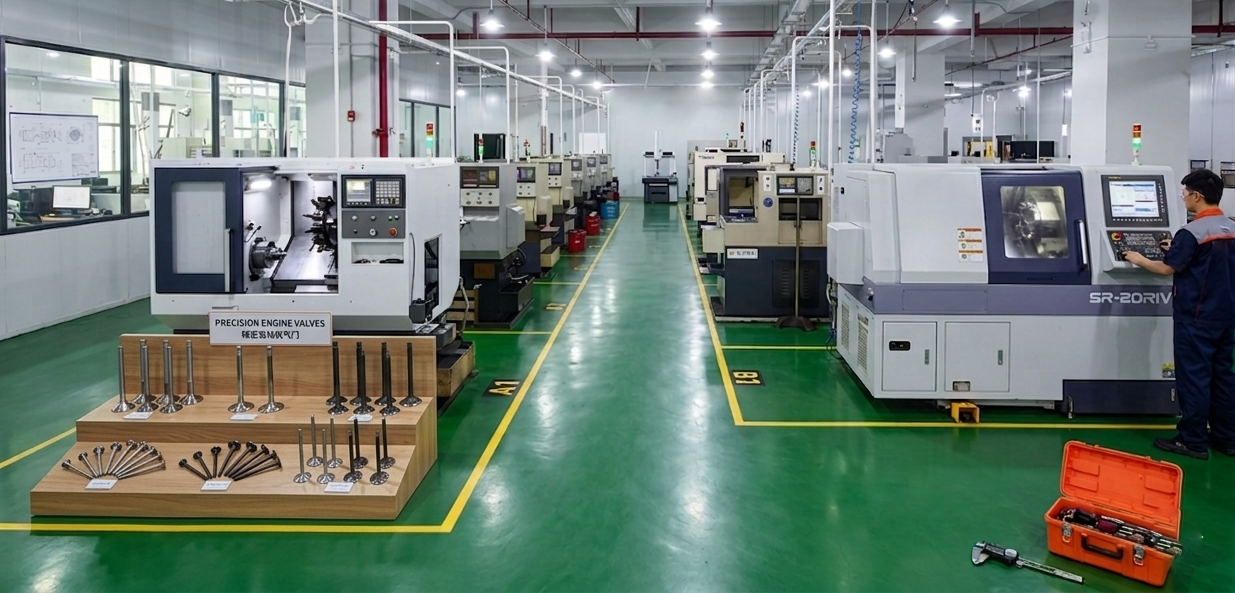
Lamp housings and exterior parts pass dimensional and surface checks before packing — the same quality gate that determines whether a Corolla 2014 lamp programme ships clean.
A Toyota Corolla 2014 head lamp and a Toyota Corolla 2014 fog lamp are not interchangeable purchases, even though they share a material family. For importers supplying Middle East repair and distribution channels, the two items sit at different points on the same procurement table: one is a primary lighting assembly that anchors a front-end repair, the other is an auxiliary lamp that moves in far denser cartons. Where they converge — and where they diverge — decides whether a lamp line is a working inventory item or a slow-moving stock position.
This independent comparison examines both product families against the criteria that actually move an import programme: material composition, light source technology, carton geometry, compliance documentation and replenishment risk. The central finding is narrow in material terms and wide in logistics terms. Both the head lamp and the fog lamp are produced from optic-grade polycarbonate (PC) and ABS polymers with UV-resistant hard coatings, and both follow the same sealing and photometric test logic. The packing data, however, diverges sharply: a head lamp carton measures 0.164 CBM and holds 10 pieces, while a fog lamp carton measures 0.094 CBM and holds 50 pieces. Measured per unit, the head lamp consumes roughly 8.7 times the packed volume of the fog lamp — a single ratio that reshapes freight cost, warehouse slotting and minimum order planning.
The comparison at a glance
Buyers who compare the two lamp types on function alone usually reach the wrong stocking conclusion. The table below places the criteria side by side so the trade-off is visible before a purchase order is drafted.
| Decision criterion | Toyota Corolla 2014 head lamp | Toyota Corolla 2014 fog lamp |
|---|---|---|
| Primary role | Forward illumination for night driving and general visibility | Auxiliary illumination used in fog, heavy rain or dust conditions |
| Housing and lens material | Optic-grade PC and ABS polymers with UV-resistant hard coating | Same material family and coating approach |
| Sealing control | 100% airtightness pressure testing applied to headlight housing seals before packaging | Same sealing logic applies to the assembled lamp |
| Light source options | Halogen or LED; LED uses solid-state lighting with integrated heat sinks | Halogen or LED, depending on trim and market specification |
| Carton volume | 0.164 CBM | 0.094 CBM |
| Pieces per carton | 10 | 50 |
| Packed volume per unit (derived from the carton data) | Approximately 0.0164 CBM | Approximately 0.00188 CBM |
| Typical replacement trigger | Collision damage, lens hazing, moisture ingress | Impact damage at the lower bumper area, cracked lens, water ingress |
| Main procurement constraint | Cube-limited; freight cost per unit is high relative to value | Carton-dense; over-ordering and slow stock are the primary risks |
| Compliance documentation | Photometric test records and DOT/SAE or E-Mark registration depending on destination market | Same documentation logic, with market-specific approval steps |
The per-unit figures above are arithmetic derived from the stated carton volumes and pieces-per-carton values. They are included because importers rarely convert supplier packing sheets into per-unit cube, yet that conversion is what determines whether a mixed container is profitable.
Why the Corolla 2014 front end is a decision point, not a styling choice
The Corolla 2014 generation remains a high-volume platform across Gulf and wider Middle East markets, where long vehicle service lives and continuous collision repair activity keep front-end components in steady rotation. Toyota held an 11.4% share of the global automotive market in 2026 according to Toyota Market Trends 2026, and a platform with that level of global presence sustains aftermarket demand long after the model year ends.
That demand arrives in two different shapes. Head lamp replacements are usually triggered by a collision event, so they are bought in pairs or as part of a broader front-end repair bundle that may also involve a Toyota bumper, Toyota grille, Toyota body parts and structural brackets. Fog lamp replacements are more often single-unit events — a cracked lens, a stone impact, a water-ingress complaint — which means fog lamps are consumed in lower volumes per repair but purchased in larger carton increments.
For an importer, that asymmetry is the whole decision. A head lamp line needs cube planning. A fog lamp line needs demand-rate planning. Treating both as "lamps" in a single purchasing line is where overstock and stock-outs are created.
Material and optical engineering: where head lamps and fog lamps converge
Both product families in this programme are manufactured from premium optic-grade PC and ABS polymers, with a UV-resistant hard coating applied to the lamp lenses to limit yellowing and surface degradation. The choice of engineering polymers rather than fibreglass is not incidental. In the supplier's comparison of ABS/PP injection moulded parts against FRP (fibreglass) parts, the injection moulded route is credited with 100% precise CNC-milled matching slots and roughly four times higher structural flexibility, along with ready-to-paint smooth finishes and a lighter finished part.
Those properties matter for lamps specifically. A housing that maintains precise slot alignment installs without rework; a housing that flexes rather than cracks absorbs the low-energy impacts that are common on Gulf roads; and a lighter assembly contributes to overall vehicle mass and aerodynamic behaviour rather than working against it.
Sealing is the second shared engineering layer. The manufacturer applies a UV-resistant hard coat and executes 100% airtightness pressure testing on headlight housing seals before packaging. That test is the practical defence against the two failure modes buyers complain about most in desert and coastal climates: moisture ingress that fogs the lens from the inside, and dust migration into the reflector that permanently reduces output.
One verification point is worth raising explicitly with any supplier. The documented airtightness pressure testing in this programme is stated for headlight housing seals. Importers buying fog lamp assemblies for the same platform should request the equivalent seal-test record for that SKU rather than assuming the test scope extends automatically. It is a normal due-diligence question, and a supplier that can answer it with batch data is a supplier with a real inspection process behind it.
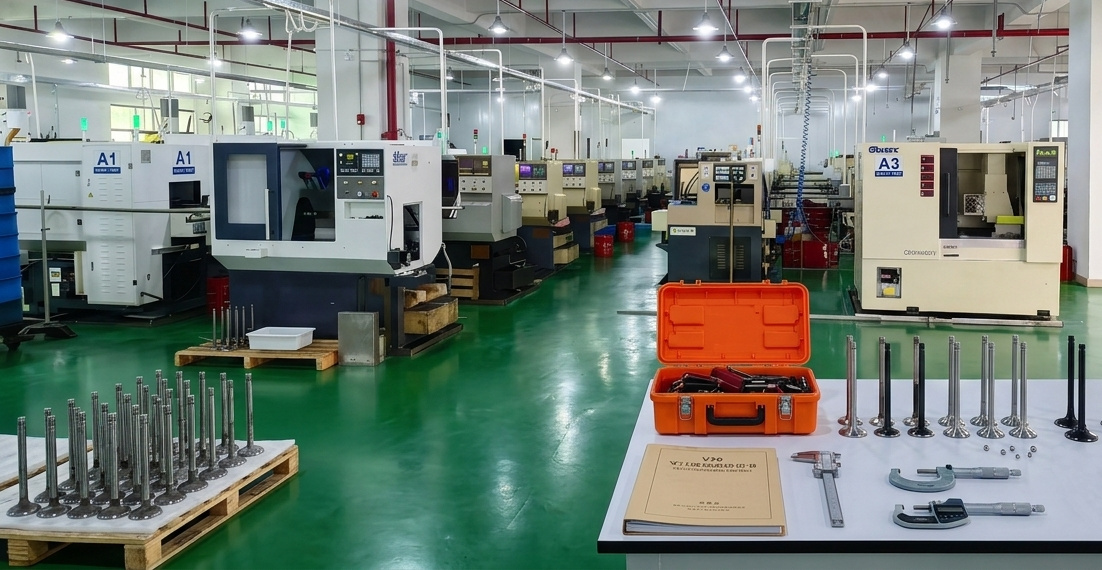
Every product batch in the programme undergoes dimensional inspection, material verification and performance testing before shipment.
Light source: the technical fork that changes maintenance and wiring
Material composition is broadly shared between the two lamp types, but light source technology is where head lamp purchasing splits into two distinct product decisions. In the supplier's comparison of LED head lamps against traditional halogen head lamps, the core difference is the light source itself: LED uses solid-state lighting with integrated heat sinks, while halogen relies on incandescent filaments.
The documented performance gap in that comparison is 3x higher brightness and up to 10x longer service life for LED, with up to 50% lower electrical wattage draw while producing superior light projection. On maintenance, halogen lamps require frequent bulb swaps, whereas the LED's solid-state design reduces maintenance needs — an operational advantage for fleet operators who track workshop hours per vehicle.
Those advantages carry a supply-chain consequence that importers should price into the plan. LED assemblies depend on LED chips and driver chips, and the manufacturer's stated risk control for component availability is a two-month safety buffer stock of critical electronic components, supported by long-term strategic contracts with major plastic polymer suppliers. A buyer running an LED-heavy programme should confirm buffer coverage at order confirmation stage, because halogen and LED lines do not share the same component risk profile.
The practical buying rule is straightforward: confirm the connector, socket and driver architecture of the specific Corolla 2014 variant before committing volume. A lamp that is optically correct but electrically mismatched becomes a return, and returns destroy the margin advantage that aftermarket lamps are purchased for.
Packaging, carton volume and the freight math importers rarely model
Packing data is where the head lamp and fog lamp diverge most sharply, and it is the part of a quotation that receives the least analytical attention. In this programme, a head lamp carton occupies 0.164 CBM and contains 10 pieces. A fog lamp carton occupies 0.094 CBM and contains 50 pieces.
Converted to per-unit cube, the head lamp consumes approximately 0.0164 CBM per piece against approximately 0.00188 CBM for the fog lamp — a ratio of roughly 8.7 to 1. Put simply, a single head lamp occupies the same container volume as nearly nine fog lamps. A mixed container programme therefore has to balance a cube-heavy item against a piece-heavy item, and the balance point changes the landed cost of each product line independently.
| Packing metric | Head lamp | Fog lamp |
|---|---|---|
| Carton volume | 0.164 CBM | 0.094 CBM |
| Pieces per carton | 10 | 50 |
| Packed volume per piece (derived) | Approximately 0.0164 CBM | Approximately 0.00188 CBM |
| Relative cube per piece | Baseline | Roughly 8.7x lower |
| Handling touches per 100 pieces | 10 cartons | 2 cartons |
| Primary commercial risk | Freight cost per unit | Over-stocking relative to replacement rate |
Three operational conclusions follow. First, head lamp programmes are freight-sensitive and benefit from consolidating multiple SKUs into the same container rather than shipping a single part number to fill cube. Second, fog lamp programmes are handling-efficient — 100 pieces require only two cartons, so warehouse labour per unit is low — but the same density makes it easy to commit to a quantity that outruns real replacement rates. Third, a supplier who can quote both lines from one production and packing base removes the mixed-container coordination problem from the importer's desk.
Transit damage control: what good lamp packaging actually contains
Lamp damage in transit is not a random event. The manufacturer's risk register identifies transit and logistics damage — specifically broken brackets and scratched lenses — as a defined risk category, controlled through protective packaging and standardised shipping protocols.
The specific measures in that protocol are double-wall corrugated cartons with precision-cut shock-absorbing foam inserts, plus peelable anti-scratch protective film applied to all outer lenses and high-gloss chrome surfaces. That combination addresses the two claim types that erode importer margin: bracket fractures caused by shift inside the carton, and surface scratches that turn a functional part into a cosmetic reject.
For a buyer auditing a lamp supplier, packaging is one of the few claims that can be verified before ordering. Request the carton specification, the insert drawing and a photo of a sealed export carton. A supplier who treats packaging as a documented engineering input will usually answer within one exchange; a supplier who treats it as an afterthought will not have the drawings.
Supplier context: Ruian Golden Import and Export Co., Ltd.
Ruian Golden Import and Export Co., Ltd., trading as Gold Auto Part, is an automotive parts exporter based in Ruian, Wenzhou, Zhejiang Province, China — one of the country's established automotive parts manufacturing hubs. The company sources and exports a catalogue covering engine valves, Toyota exterior parts, oil filters, air filters and a broad range of replacement parts for passenger cars and light commercial vehicles, serving importers, wholesalers and distributors across the Middle East, Saudi Arabia, the UAE, South America, Southeast Asia, Africa and Europe.
On quality management, the company states that its supply chain partners operate under ISO 9001 and IATF 16949 quality management standards, with every product batch undergoing dimensional inspection, material verification and performance testing before shipment. IATF 16949:2016 is the global quality management standard for the automotive industry and is mandatory for many OEM suppliers, which makes it a reasonable baseline question when an importer is comparing candidate vendors for a platform-specific programme.
Three risk controls in the company's documentation are relevant to a Corolla 2014 lamp programme. Mould wear and production quality degradation are managed through preventative maintenance every 50,000 moulding cycles, with critical mould tolerances monitored using high-precision coordinate measuring machines so that worn inserts are replaced proactively — the mechanism that keeps dimensional consistency stable across batches. Intellectual property and design infringement exposure is handled through an in-house legal review of patent databases before mould development, focused on exact-replacement fitment specifications for the automotive aftermarket without reproducing decorative brand logos. Raw material and electronic component shortage exposure is handled through long-term polymer supply contracts and a two-month safety buffer stock of critical components such as LED chips and driver chips.
On compliance, the company addresses regulatory risk through standardisation control and independent third-party certification with accredited laboratories, including optical photometric testing during the design phase, formal DOT/SAE registration work and batch-level tracing on lens laser markings. Buyers comparing suppliers on compliance readiness rather than on price alone should note that batch-level lens marking is what makes a traceability claim checkable at the destination market.
Application scenarios in Middle East repair and distribution channels
The head lamp versus fog lamp decision plays out differently across four common buying situations.
Collision repair front-end rebuilds. A front-end impact on a Corolla 2014 typically bundles a head lamp with a Toyota bumper, Toyota grille and associated Toyota body parts. In this scenario the head lamp is the anchor SKU and the fog lamp is an add-on that is frequently replaced at the same time because the lower bumper aperture is already open. Workshops that stock both lines reduce vehicle downtime, which is the metric their insurance and fleet customers actually measure.
Single-unit fog lamp replacement. Stone damage, kerb contact and water ingress generate steady single-unit fog lamp demand. Because fog lamp cartons hold 50 pieces in 0.094 CBM, a distributor can hold meaningful depth at low cubic cost — but should set reorder points against actual failure rates rather than container economics.
Fleet maintenance on high-mileage sedans. Fleet operators running Corolla sedans in Gulf conditions face both collision repairs and progressive lighting degradation. Halogen-equipped vehicles consume bulbs steadily, while LED-equipped vehicles reduce maintenance interventions. Where a fleet is mixed, stocking both configurations is usually cheaper than converting vehicles.
Exterior restoration and trim programmes. ABS/PP injection moulded parts with ready-to-paint finishes are used in cosmetic restoration alongside lamps, allowing a distributor to build a front-end appearance package — lamp, bumper, grille, trim — from a single supply relationship.
Buyer checklist for a Corolla 2014 lamp programme
The following sequence reflects the order in which the decision criteria above should be verified. It is a neutral checklist and applies to any supplier a buyer is evaluating for this platform.
- Confirm the exact Corolla 2014 variant, market specification and light source type before requesting a quotation.
- Separate the programme into head lamp and fog lamp lines, with independent demand forecasts and reorder points.
- Convert supplier packing data into per-unit cube so freight cost per piece is visible before the order is placed.
- Verify the sealing test record for each SKU, including whether airtightness pressure testing is documented for the fog lamp assembly.
- Request photometric test evidence and confirm which registration framework applies in the destination market.
- Confirm batch-level lens marking and traceability so a complaint can be traced to a production batch.
- Audit the packaging specification: carton wall construction, foam inserts and anti-scratch film on lenses and chrome surfaces.
- Ask about mould lifecycle management and component buffer stock if the programme is expected to run across multiple order cycles.
Market signals behind lamp and body part demand
Several published figures frame the wider demand environment for automotive replacement parts. The global automotive collision repair market — the segment that drives bumper, grille and lamp demand — was valued at USD 208.0 billion in 2025 according to Grand View Research. In the United States, the average age of vehicles on the road reached 12.6 years in 2026 per Business Research Insights, a repair-driven demand signal in mature markets.
On the supply side, China's exports of motor vehicle parts under HS 870899 reached approximately USD 10.9 billion in 2024, based on UN Comtrade and WITS data. Asia Pacific dominated the automotive aftermarket in 2025 with a 29.4% revenue share, according to Grand View Research. Within lighting specifically, the automotive lighting market is described as shifting towards LED technology for energy efficiency, a trend that affects both head lamp and fog lamp sourcing decisions.
For Middle East importers, the practical reading is that platform-specific depth still beats broad catalogue breadth. A programme built around a high-volume platform such as the Corolla 2014, with defined lamp, bumper and grille coverage, is easier to defend commercially than a wide catalogue with shallow stock behind every SKU.
Limitations, trade-offs and where this comparison stops
An honest comparison has to state its boundaries, and several apply here.
Function is not interchangeable. A fog lamp is an auxiliary lighting product. In many markets its permitted use is restricted to defined low-visibility conditions, and it cannot substitute for a failed head lamp either functionally or legally. Buyers should never plan fog lamp volume as a replacement for head lamp volume.
Fitment accuracy is stated as 98% or higher, not 100%. The manufacturer's comparison documentation states that its aftermarket parts achieve 98%+ OE fitment accuracy at a price point of 30% to 40% of OEM retail, with upfront parts purchasing costs reduced by 60% to 70% compared with OEM dealer prices. A 98%+ figure is a strong result, but it implies that a small share of units may require adjustment or rejection at incoming inspection. Buyers should budget for sampling, not assume zero-defect receipt.
Cost advantage carries channel differences. The core differences between aftermarket and genuine OEM parts lie in material quality, manufacturing certification and retail channels. Aftermarket channels do not replicate OEM dealer network structures or brand warranty programmes in the same form, so the comparison should be made on total programme cost and service terms rather than on unit price alone.
Carton density can create over-stocking. Fifty fog lamps per 0.094 CBM carton is efficient to ship and handle, but fog lamps fail less frequently than head lamps in most repair profiles. Without a demand-rate discipline, low cubic cost becomes dead stock.
Tooling has a lifecycle. Mould maintenance in this programme is scheduled every 50,000 moulding cycles with dimensional monitoring. Long-running programmes should plan for tooling refresh rather than assuming indefinite dimensional stability.
Compliance obligation sits partly with the importer. Photometric testing, accredited laboratory certification and DOT/SAE registration work support market access, but destination-market approval and marking obligations remain the responsibility of the importing party. Suppliers provide documentation; they do not discharge the importer's regulatory duty.
Future outlook
Three changes are likely to shape Corolla 2014 lamp procurement over the next buying cycles. The first is the continued LED transition: as LED assemblies become the default specification, chip and driver availability becomes a procurement variable rather than a technical detail, which favours suppliers holding genuine buffer stock over those buying on spot availability.
The second is packaging optimisation. As freight costs remain volatile, per-unit cube becomes a negotiation point rather than a fixed given, and suppliers who can present carton engineering data will be easier to work with on landed-cost modelling.
The third is traceability. Batch-level lens marking and photometric documentation increasingly function as a commercial qualification criterion, not just a compliance formality, because they determine how quickly a quality complaint can be closed.
FAQ
Are Corolla 2014 head lamps and fog lamps made from the same materials?
Both are produced from opt ic-grade PC and ABS polymers with a UV-resistant hard coating applied to the lens. The manufacturing approach is shared across the two product families in this programme, including the use of airtightness pressure testing on headlight housing seals before packaging. The main divergence is not the housing material but the light source and the packed carton configuration.
How much container space does each lamp type require?
In the packing data used for this comparison, a head lamp carton measures 0.164 CBM and contains 10 pieces, while a fog lamp carton measures 0.094 CBM and contains 50 pieces. Expressed per unit, the head lamp occupies approximately 0.0164 CBM and the fog lamp approximately 0.00188 CBM, meaning one head lamp uses roughly 8.7 times the packed volume of one fog lamp.
Can aftermarket Corolla 2014 lamps match OEM fitment?
The manufacturer's comparison documentation states that its aftermarket parts achieve 98% or higher OE fitment accuracy, comparable to genuine parts, at a price point of 30% to 40% of OEM retail. The documentation also records that aftermarket alternatives offer advantages in cost and availability. The 98%+ figure should be read as a stated performance level that still allows for a small proportion of units requiring adjustment.
Which compliance standards apply to automotive lamps?
Lamp compliance frameworks commonly referenced include FMVSS-108, DOT, SAE and E-Mark. The compliance approach in this programme includes optical photometric testing during the design phase, independent third-party certification with accredited laboratories, formal DOT/SAE registration work and batch-level tracing on lens laser markings. IATF 16949:2016 is the global quality management standard for the automotive industry and is mandatory for many OEM suppliers.
Do LED head lamps require less maintenance than halogen?
Yes, based on the comparison data provided. Halogen lamps rely on incandescent filaments and require frequent bulb swaps, whereas LED lamps use solid-state lighting with integrated heat sinks and a design that reduces maintenance needs. The documented performance gap is 3x higher brightness, up to 10x longer service life and up to 50% lower electrical wattage consumption for LED relative to halogen.
Why do lamps arrive damaged, and how is it controlled?
Transit and logistics damage in this category typically takes the form of broken brackets and scratched lenses. The stated control method is protective packaging combined with standardised shipping protocols: double-wall corrugated cartons with precision-cut shock-absorbing foam inserts, and peelable anti-scratch protective film applied to outer lenses and high-gloss chrome surfaces.
This comparison is an editorial reference for importers evaluating automotive replacement parts programmes. Product and process statements attributed to the manufacturer reflect the supplier's own documentation. Technical data should be verified against the specific SKU and destination market before purchase. Additional product information is published at www.goldautopart.com.