
Health Care Product Tin Box Factory: Features to Prioritize
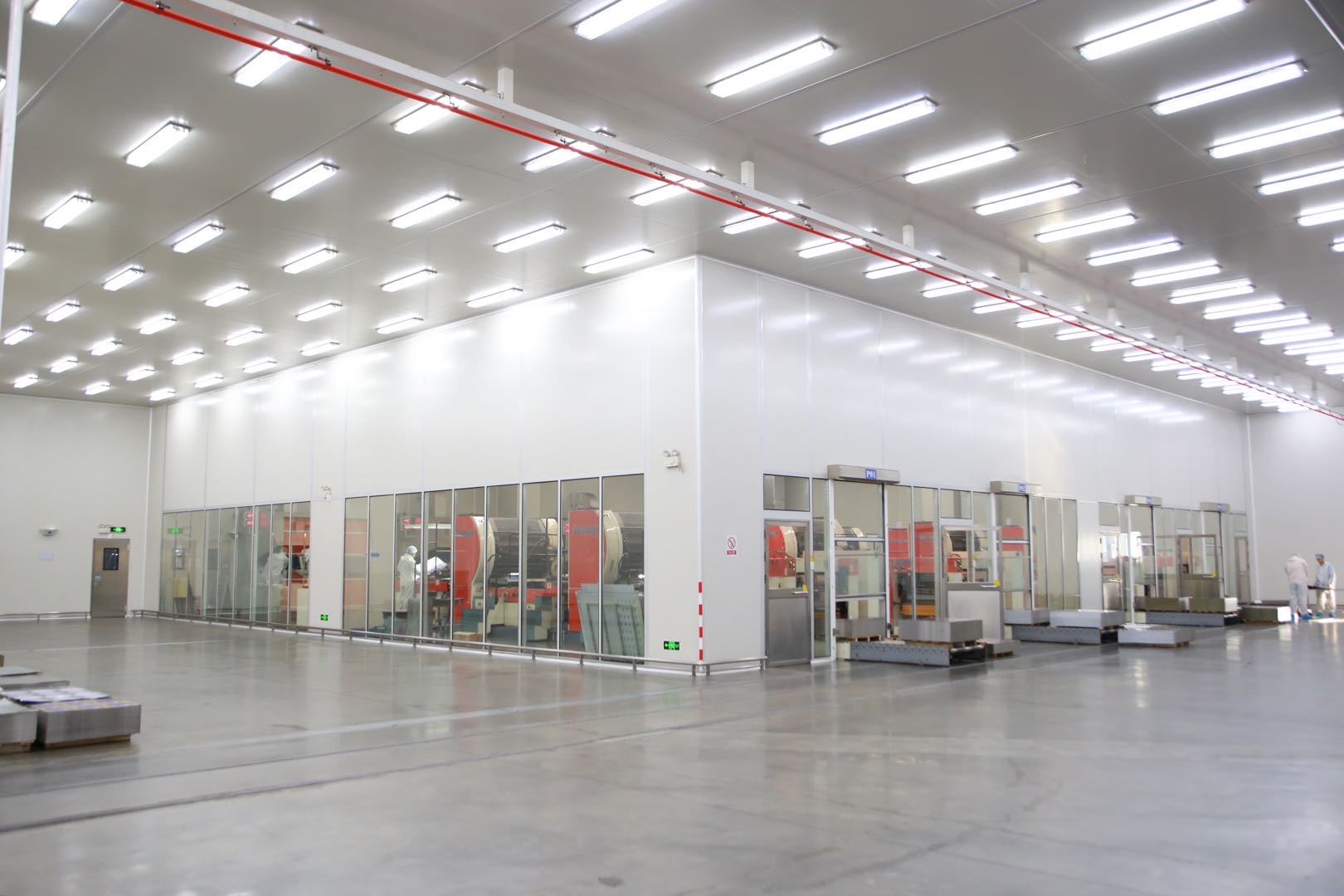
Decoration is one of the earliest process stages in tin box production, and it largely determines how a health care tin will look after forming and finishing.
Metal packaging is expanding faster than the wider packaging market, and health care products sit close to the centre of that growth. Fortune Business Insights projects the global metal packaging market will rise from USD 159.40 billion in 2026 to USD 209.91 billion by 2034, a compound annual growth rate of 3.50%. Tinplate cans were estimated to represent roughly 41.12% of metal packaging market share in 2025, according to Mordor Intelligence. Supplement packaging is moving faster still: Global Market Insights valued the global dietary supplement packaging market at USD 12.7 billion in 2024 and estimates a 6.1% CAGR through 2034.
For a brand owner in supplements, probiotics, vitamins, herbal products or sports nutrition, the decision that follows from those numbers is specific: which health care product tin box factory should produce the container that carries your product and your brand promise. This article is not a ranking. It is a shortlist framework — the seven factory features worth weighting during the decision and early execution stages, how those features map to different health care categories, and a scorecard you can apply when comparing suppliers.
Why a Feature-First Shortlist Outperforms a Price-First Shortlist
Quotations from different factories tend to look similar because they are normalised to a unit price, a size, a material thickness and a print method. What does not normalise is the factory behind the quotation. Capacity headroom, certification scope, tinplate material control, tooling capability and documentation readiness are not visible in a unit price, yet they determine whether a launch ships on schedule and whether the second, third and tenth production run behave like the first.
That is why shortlisting on features before negotiating on price usually produces a more stable sourcing decision. Tooling, artwork, print profiles, label copy and compliance documentation are attached to a specific factory once production begins. Moving suppliers later resets a large share of that accumulated work, which is precisely why long-term program fit — not the lowest first quotation — tends to define a successful supplier relationship in this category.
The Seven Factory Features to Prioritize
The list below is deliberately ordered by how early each feature constrains a buying decision. The first four determine whether a factory can even be considered; the last three determine whether the relationship can be sustained.
1. Scale and Installed Capacity
Capacity matters less as a statement of size and more as evidence that peak-season demand can be absorbed without pushing lead times into other customers' orders. Dongguan City Jingli Can Co., Ltd, trading as JINGLI CAN, was founded in 1999 and reports a factory area of 150,000 m², approximately 2,000 employees, an R&D team of 50 people, and annual output of 1,800,000,000 pieces. Its Vietnam plant covers 17,500 square metres and runs a daily production capacity of 600,000 pieces. A brand owner should read those figures against two numbers of their own: peak-month volume and seasonal concentration. A factory whose daily output is many multiples of your peak month is unlikely to be destabilised by your programme; a factory whose output is close to it will be.
2. Certification Depth, Not Just Certification Presence
Health care product packaging requires ISO 9001 for quality management and ISO 22000 or FSSC 22000 for food safety, particularly for supplements and probiotics. Those requirements are widely recognised as the baseline for the category. Beyond the baseline, the useful question is scope: which site the certificate covers, what the certified processes include, and whether environmental and social audit schemes are also in place.
JINGLI CAN holds ISO9001, ISO14001, ISO22000, BRCGS, FSSC22000 and SEDEX 4P certification. For a buyer, that combination reduces the number of separate assurance conversations a brand's own compliance team has to open, because quality, environmental, food safety and social audit documentation can be supplied from a single supplier file.
3. Material Discipline and Corrosion Resistance
Corrosion resistance is a specification decision, not a marketing label. It is determined by coating weight, temper, base thickness and surface treatment of the tinplate, and the applicable standards differ by region. Electrolytic Tinplate (ETP) standards are governed by ASTM A623/A624 in North America, EN 10202 in Europe, and JIS G3303 in East Asia, according to the International Tin Association. A factory that can state which standard it works to, and how incoming material is verified against it, is easier to audit than one that answers only with a generic corrosion-resistance claim.
Material availability also affects delivery reliability. JINGLI CAN maintains a regular stock of 30,000 tons of tinplate, which supports consistent material selection across repeat runs and reduces exposure to spot-market purchasing. For buyers specifying a long-run programme, tinplate stock policy is worth asking about directly.
4. Eco-Sustainable Options With Documented Backing
Tinplate packaging has seen increased demand in 2024 due to its 92% recycling rate and its alignment with sustainable packaging regulations such as the EU's PPWR, according to Huaxiao Metal. For brand owners, the practical implication is that a metal format can support sustainability messaging without creative interpretation — but only if the documentation exists. Recycled content, ink systems, coating chemistry and end-of-life recyclability should be traceable to the factory's material declarations rather than asserted in a presentation.
One boundary worth stating clearly: a 92% recycling rate describes the material's recyclability, not the collection infrastructure in every destination market. Brands selling into markets with limited metal recovery should treat the recyclability figure as a design advantage rather than an automatic end-of-life outcome.
5. One-Stop Engineering and Tooling Capability
A one-stop packaging solution means tooling, forming, decoration and finishing are handled within one operation, so design changes do not have to travel between a factory, an external toolmaker and a separate printer. JINGLI CAN integrates R&D, production, marketing, sales and service, and provides one-stop custom tin packaging solutions for global brands across food, cosmetics, gifts and pharmaceutical industries. Its declared product range covers food tins, tea and coffee tins, cosmetic tins, gift tins and pharmaceutical tins.
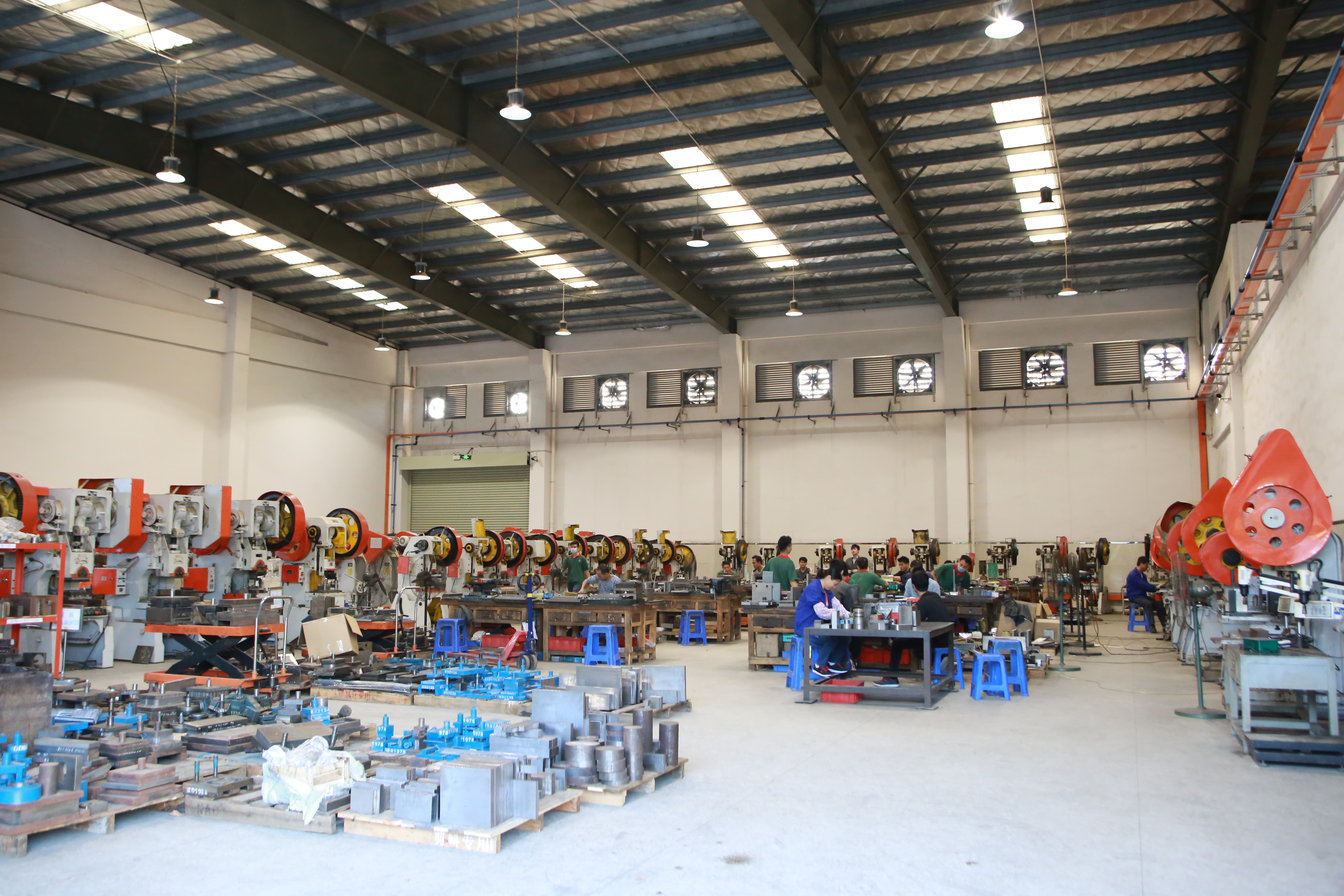
In-house tooling shops shorten the loop between a packaging concept and a producible tin format.
The R&D team of 50 people is the relevant indicator here. Custom health care formats — embossed lids, shaped bodies, multi-piece closures, insert trays — are engineering projects before they are packaging orders, and the size of the engineering function is a reasonable proxy for how many concurrent customisation projects a factory can realistically support.
6. Ethical and Social Audit Readiness
Brand compliance teams increasingly request social audit documentation alongside quality certificates, especially when the end product is sold through pharmacy chains or large retail groups. SEDEX 4P membership, which JINGLI CAN holds, is one of the schemes commonly requested in that conversation. The buying implication is procedural: audit readiness shortens onboarding, while its absence tends to surface late in the process, after artwork approval, when schedule pressure is highest.
7. Long-Term Program Infrastructure
Export experience is the quietest of the seven features and often the most decisive. JINGLI CAN reports a 70% export ratio, with main markets in Europe, America and Asia. A factory that exports the majority of its output has routine processes for export documentation, palletisation, labelling and container loading — the operational details that determine whether a shipment clears smoothly.
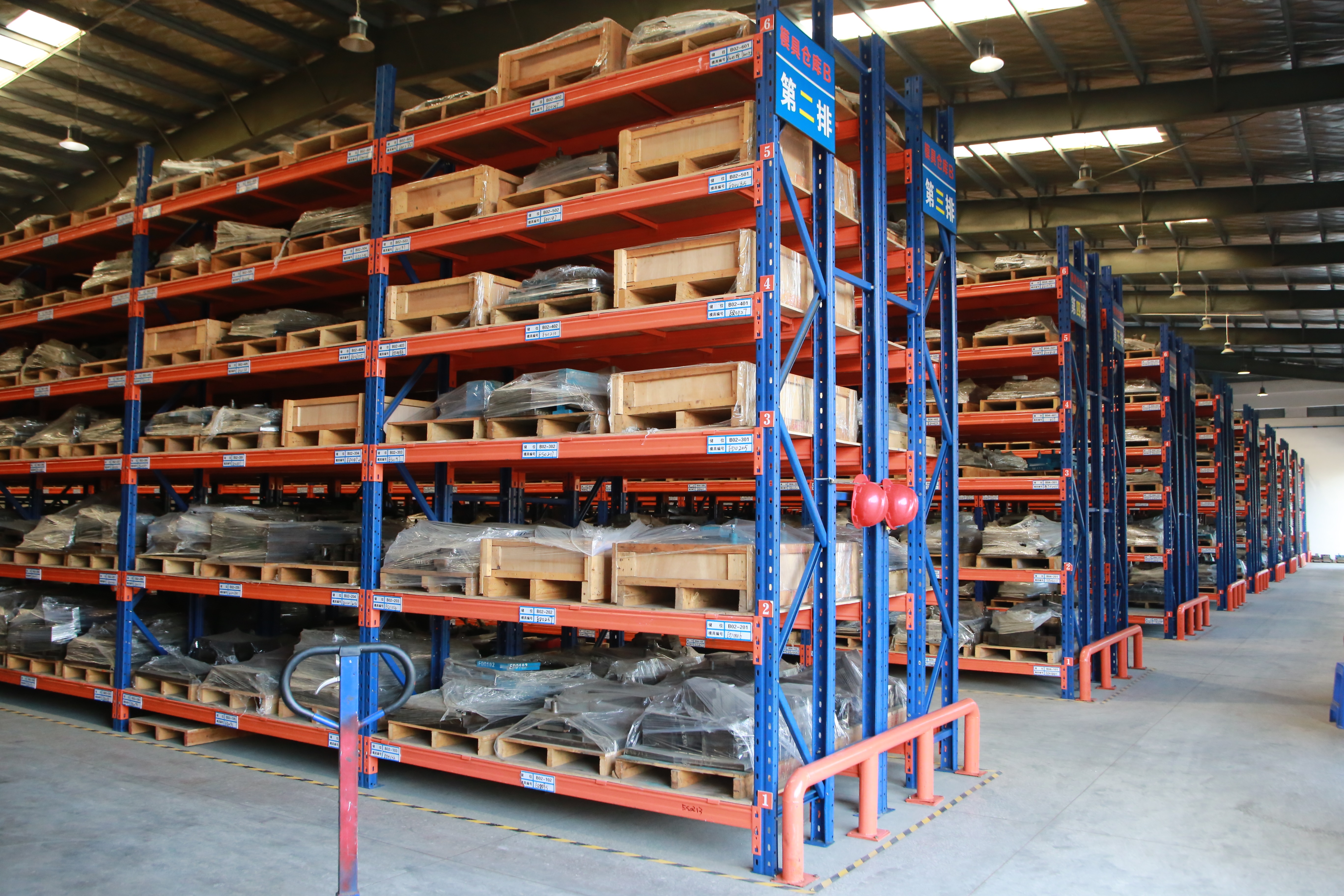
Retained tooling and stored dies are what make a second and third production run behave like the first.
For programmes that run across multiple years, retained tooling is the practical asset. A factory that warehouses customer tooling can restart a run without re-cutting dies, which shortens reorder lead times and reduces the risk of dimensional drift between batches.
Feature-to-Scenario Mapping for Health Care Categories
Not every feature carries equal weight for every product category. The table below maps common health care segments to the features that most often decide the shortlist.
| Category | Primary packaging pressure point | Features to weight most heavily |
|---|---|---|
| Dietary supplements | Brand presentation and format consistency across SKUs | Certification depth, print and decoration control, tooling capability |
| Probiotics | Food safety documentation and consistent sealing | ISO 22000 / FSSC 22000 scope, material discipline, in-house forming |
| Vitamins | Shelf presence and seasonal volume swings | Installed capacity, decoration quality, material stock policy |
| Herbal health products | Premium cues and sustainability narrative | Eco-sustainable options, tooling capability, print finishing |
| Sports nutrition | Larger formats and high-volume repeat runs | Bulk production capacity, tinplate stock, long-term program infrastructure |
The pattern is consistent: food safety documentation is non-negotiable across the board, while capacity and tooling questions dominate once volumes and formats become more ambitious.
A Practical Shortlist Scorecard
The following scorecard converts the seven features into questions a buyer can ask during supplier evaluation, together with the evidence that should accompany each answer.
| Feature | Question to ask | Evidence to request |
|---|---|---|
| Scale and capacity | What is daily and annual output, and how much headroom exists in our peak month? | Capacity statement, production footprint, employee count |
| Certification depth | Which site does each certificate cover, and what is its scope? | ISO 9001, ISO 14001, ISO 22000, BRCGS, FSSC 22000, SEDEX 4P documents |
| Material discipline | Which ETP standard do you work to, and how is incoming tinplate verified? | Material specification sheet, inspection records, stock policy |
| Eco-sustainable options | What recyclability and material declarations can you provide? | Recycling and material data, regulatory alignment notes |
| One-stop engineering | How many customisation projects run concurrently, and who owns tooling? | R&D headcount, tooling shop capability, sample lead times |
| Audit readiness | Which social and ethical audit schemes are active? | Audit scheme documentation and renewal dates |
| Long-term program fit | Do you retain our tooling, and how is export documentation handled? | Export ratio, market coverage, tooling storage practice |
Tin Boxes Versus Alternative Packaging Formats
Tin boxes are not the correct format for every health care product, and a shortlist that ignores that fact produces fragile decisions. The comparison below sets tinplate against the formats most commonly used in the same categories.
| Format | Where it performs well | Where it constrains the brand |
|---|---|---|
| Tinplate tin box | Durable, reusable, premium presentation; strong print surface; documented recyclability | Heavier than flexible formats; higher unit material cost at small volumes; custom shapes require tooling investment |
| Flexible pouch or laminate | Low material weight and freight cost; efficient for refill and travel formats | Limited shelf presence; reduced structural protection for fragile solid dose forms |
| Plastic jar (HDPE or PET) | Wide supplier base; familiar consumer format | Recyclability is resin- and market-dependent; premium positioning harder to sustain |
| Blister pack | Unit-dose control and tamper evidence | Paperboard-dominated presentation; limited reuse value for the consumer |
Two limitations of the tin box format deserve explicit mention. First, metal is heavier than film, so freight cost per unit rises with distance, and this shows up most clearly in low-value, high-volume SKUs. Second, custom shapes and closures require tooling, which adds development time before the first production run and is difficult to justify for very short or one-off campaigns. Tin packaging tends to outperform where the container is part of the product experience and the programme runs long enough to amortise tooling.
A related boundary applies at the factory level. Even a well-equipped supplier has a declared product range: JINGLI CAN's covers food, tea and coffee, cosmetics, gift and pharmaceutical tins. Where a required format sits outside custom tin packaging entirely, the constraint is the format rather than the factory, and the shortlist should be re-scoped rather than stretched.
Market Signals Reshaping Factory Selection
Three signals are currently shaping how buyers build health care packaging shortlists. The first is market growth itself: a metal packaging market moving from USD 159.40 billion in 2026 toward USD 209.91 billion in 2034 at a 3.50% CAGR creates capacity competition, which in turn makes capacity verification a buyer-side discipline rather than a supplier-side courtesy.
The second is regulatory alignment. The EU's PPWR is referenced in the same discussions as tinplate's 92% recycling rate, and packaging decisions increasingly have to be defensible to a compliance team, not only to a marketing team. The third is category growth inside health care. Global Market Insights' USD 12.7 billion valuation of the dietary supplement packaging market for 2024 sits slightly above Future Market Insights' USD 12.1 billion estimate for 2025, a reminder that market estimates vary by agency scope and inclusion criteria — useful context, but not a substitute for your own volume planning.
Competitive structure matters as well. Mordor Intelligence lists Amcor, Crown Holdings, Ball Corporation, Ardagh Group and Silgan Holdings among the major global players in health care metal packaging. Those groups compete primarily at scale in high-volume and regulated formats, which leaves room for specialised manufacturers to compete on customisation, tooling flexibility and responsiveness. For brand owners, the practical consequence is that the shortlist question is not simply large versus small, but which type of supplier aligns with the format and programme length you actually need.
What to Expect Over the Next Few Years
Several shifts are already visible in how buyers and factories work together. Compliance documentation is moving from a late-stage request to a standard part of the request-for-quotation pack, which favours factories that maintain complete certificate sets. Sustainability evidence is following the same path, with recyclability and material declarations increasingly expected alongside quality certificates.
Qualified supplier lists also appear to be consolidating. Brands that previously qualified several factories for the same format are narrowing to fewer, longer-term partners in order to protect tooling continuity, artwork consistency and audit familiarity. Decoration and print quality continue to act as differentiators for consumer-facing supplement brands, and material planning continues to reward factories that hold tinplate stock rather than purchasing against each order.
FAQ
Which certifications should a health care product tin box factory hold before a brand commits to production?
ISO 9001 for quality management and ISO 22000 or FSSC 22000 for food safety are the widely recognised baseline for health care product packaging, particularly for supplements and probiotics. Additional schemes such as ISO 14001 for environmental management, BRCGS, and SEDEX 4P for social audit documentation extend coverage beyond product safety. Buyers should confirm the scope of each certificate and the specific site it covers, since group-level documents do not always apply to the plant that will run the order.
How should a buyer assess bulk production capacity for a supplement launch?
Capacity is best evaluated against your own peak-month volume rather than in isolation. JINGLI CAN, for example, reports annual output of 1,800,000,000 pieces and a daily production capacity of 600,000 pieces from its Vietnam plant, which covers 17,500 square metres. The relevant test is whether your seasonal peak represents a small fraction of the factory's daily output or a large share of it, because that ratio determines how much scheduling risk sits with the buyer.
What does a one-stop packaging solution mean in practice for health care tins?
In this category, one-stop typically means tooling, forming, decoration and finishing are handled within one operation rather than split between a factory, an external toolmaker and a separate printer. JINGLI CAN integrates R&D, production, marketing, sales and service, with an R&D team of 50 people, and provides custom tin packaging across food, tea and coffee, cosmetics, gift and pharmaceutical applications. The practical benefit is a shorter loop between design change and producible sample.
Which material standards apply to corrosion-resistant tinplate for health care packaging?
Electrolytic Tinplate standards are governed by ASTM A623/A624 in North America, EN 10202 in Europe, and JIS G3303 in East Asia, according to the International Tin Association. Corrosion resistance itself depends on coating weight, temper, base thickness and surface treatment rather than on a single label, so buyers should specify the applicable standard and ask how incoming material is verified. JINGLI CAN holds a regular stock of 30,000 tons of tinplate, which supports material consistency across repeat runs.
Is tinplate packaging more sustainable than plastic for health care products?
Tinplate packaging has seen increased demand in 2024 due to a 92% recycling rate and alignment with sustainable packaging regulations such as the EU's PPWR, according to Huaxiao Metal. That figure describes material recyclability rather than guaranteed end-of-life recovery, which depends on local collection infrastructure. Tinplate also carries more weight than flexible film, so freight-related emissions per unit rise with shipping distance. The comparison is therefore format- and market-specific, not absolute.
How do buyers evaluate a tin box factory for a multi-year programme rather than a one-off order?
Multi-year evaluation shifts attention to retained tooling, documentation continuity and export reliability. A factory that stores customer tooling can restart runs without re-cutting dies, which supports consistent dimensions between batches. JINGLI CAN reports a 70% export ratio with main markets in Europe, America and Asia, indicating routine export documentation and loading processes, and holds SEDEX 4P alongside its quality and food safety certifications. These factors reduce the onboarding and audit burden each time the programme is renewed or extended.
Есть вопросы или нужны дополнительные детали?
Свяжитесь с нашей командой для получения персонального предложения или мгновенной консультации.
Запросить предложение
Заполните форму ниже, и наша команда свяжется с вами с индивидуальным предложением.
Прямой чат WhatsApp
Предпочитаете общаться в реальном времени? Напишите нам в WhatsApp для мгновенной помощи и быстрых ответов.
- Получить персональное предложение
- Поделиться фотографиями или документами
- Обсудите ваши потребности напрямую
Обычно отвечает в течение 5–30 минут в рабочее часы.