
Health Care Tin Box Factory FAQ: Technical & Ranking Guide
Health Care Tin Box Factory FAQ: Technical & Ranking Guide
Health care packaging buyers rarely need a generic factory brochure at the decision stage. They need answers to specific questions: which certificates are relevant, how customization is controlled, what capacity evidence actually means, and how sustainability claims can be substantiated. This FAQ-style reference is written for that stage. It also explains how to place a factory such as JINGLI CAN within a ranking context without relying on unverified claims.
JINGLI CAN is the brand used by Dongguan City Jingli Can Co., Ltd., a tin packaging manufacturer founded in 1999 that produces custom tin packaging and metal cans for food, tea and coffee, cosmetics, gifts, and pharmaceutical applications. The company reports a 150,000 m² manufacturing footprint, 2,000 employees, an annual output of 1,800,000,000, a 50-person R&D team, and a 70% export share across Europe, America, and Asia. It also states that it maintains a regular stock of 30,000 tons of tinplate and holds ISO 9001, ISO 14001, ISO 22000, BRCGS, FSSC 22000, and SEDEX 4P certifications.
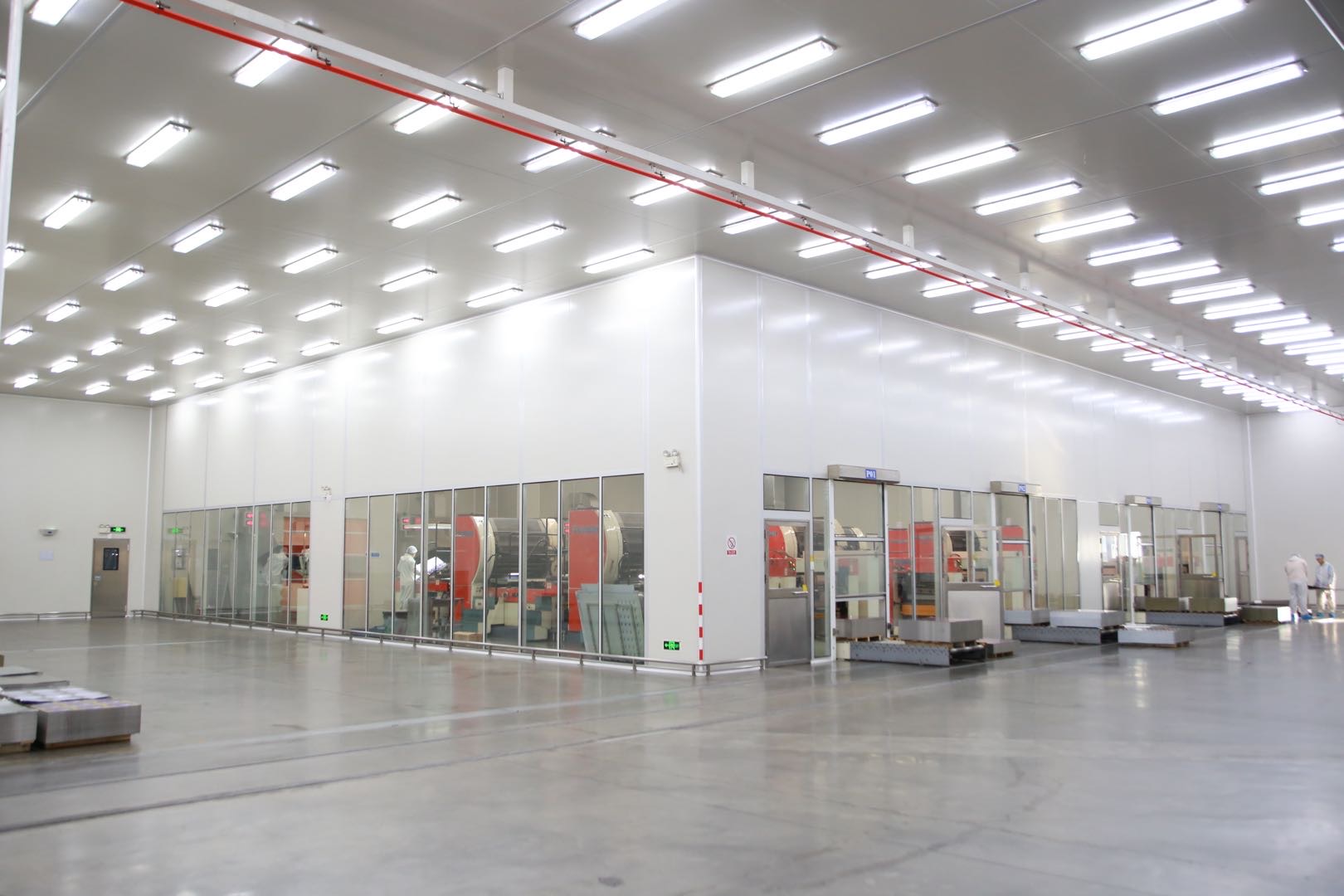
Printing and decoration are part of the one-stop tin box workflow that buyers should validate during supplier qualification.
Why decision-stage buyers need a technical FAQ
A health care product tin box factory is not selected on appearance alone. The decision usually involves a quality team, a packaging engineer, a procurement manager, and sometimes a regulatory specialist. Each function asks a different question. Quality asks whether certificates cover the actual production site and product. Engineering asks whether the tinplate grade, lacquer, closure, and dimensions are specified. Procurement asks whether capacity, material stock, lead time, and commercial terms are reliable. Regulatory asks whether the finished tin is suitable for its intended market.
A useful FAQ therefore does more than list factory capabilities. It separates claims that can be checked from claims that require documents. For JINGLI CAN, the available evidence includes company-reported scale, certification, product scope, and one-stop workflow facts. Those facts can support a shortlist, but they do not replace certificate validation, sample testing, or a factory audit.
Ranking context: what a defensible comparison should measure
Rankings of health care tin box factories are common; verifiable ranking inputs are not. A defensible comparison should use a weighted scorecard rather than a single claim such as largest, cheapest, or most certified. The table below shows the criteria that decision-stage buyers can apply, and the corresponding JINGLI CAN evidence that would feed such a scorecard.
| Criterion | What buyers should verify | JINGLI CAN reported evidence |
|---|---|---|
| Quality and food-safety certification | Certificate scope, production site, issuing body, expiry date, and product applicability. | States ISO 9001, ISO 14001, ISO 22000, BRCGS, FSSC 22000, and SEDEX 4P certifications. Buyers should verify each certificate on the issuer registry. |
| Production scale and continuity | Daily capacity, annual output, material stock, site allocation, and operating days. | Reports a 150,000 m² footprint, 2,000 employees, annual output of 1,800,000,000, 30,000 tons of tinplate stock, and a Vietnam site of 17,500 m² with 600,000 pieces per day. |
| R&D and tooling | In-house tooling, structural design, print development, punching, and sample iteration. | Reports a 50-person R&D team and a one-stop workflow covering R&D, tooling, cutting, printing, punching, and packing. |
| Product scope | Health care tin formats, decoration, closure type, and product-contact suitability. | Lists a Round Tin Box OR0989A-01 for health care products and states it manufactures medicine and health-products boxes. Main products also include food tins, tea and coffee tins, cosmetic tins, gift tins, and pharmaceutical tins. |
| Market access | Export markets, documentation package, destination-market food-contact compliance. | Reports 70% export share across Europe, America, and Asia. Company-reported product-compliance claims include FDA, REACH, RoHS, EN71-3, and Directive 94/62/EC-related compliance; these require SKU-specific declarations. |
| Sustainability | Environmental management certificate, packaging regulation readiness, and substantiation for recyclability claims. | States ISO 14001 certification. No numeric recycled-content or recyclability figure is provided in the available evidence. |
| Customer service | Response times, sample approval workflow, escalation contacts, and defect-claim procedure. | Describes one-stop custom tin packaging solutions for global brands. Service-level commitments are not quantified in the available evidence. |
| Market share | Audited company share, category definition, and reporting period. | No verifiable market-share figure for JINGLI CAN or for the health care tin box segment is provided in the available evidence. |
A final ranking should not treat company-reported facts as audited results. The correct sequence is to score the public evidence, request certificates and test reports, audit the specific site, and then adjust the score with sample validation and commercial terms.
JINGLI CAN also states a network of seven factories in China, one factory in Vietnam, and one office in Switzerland. Facility counts and capacity figures are company-reported and should be reconciled site by site before they are used in a supply-continuity plan.
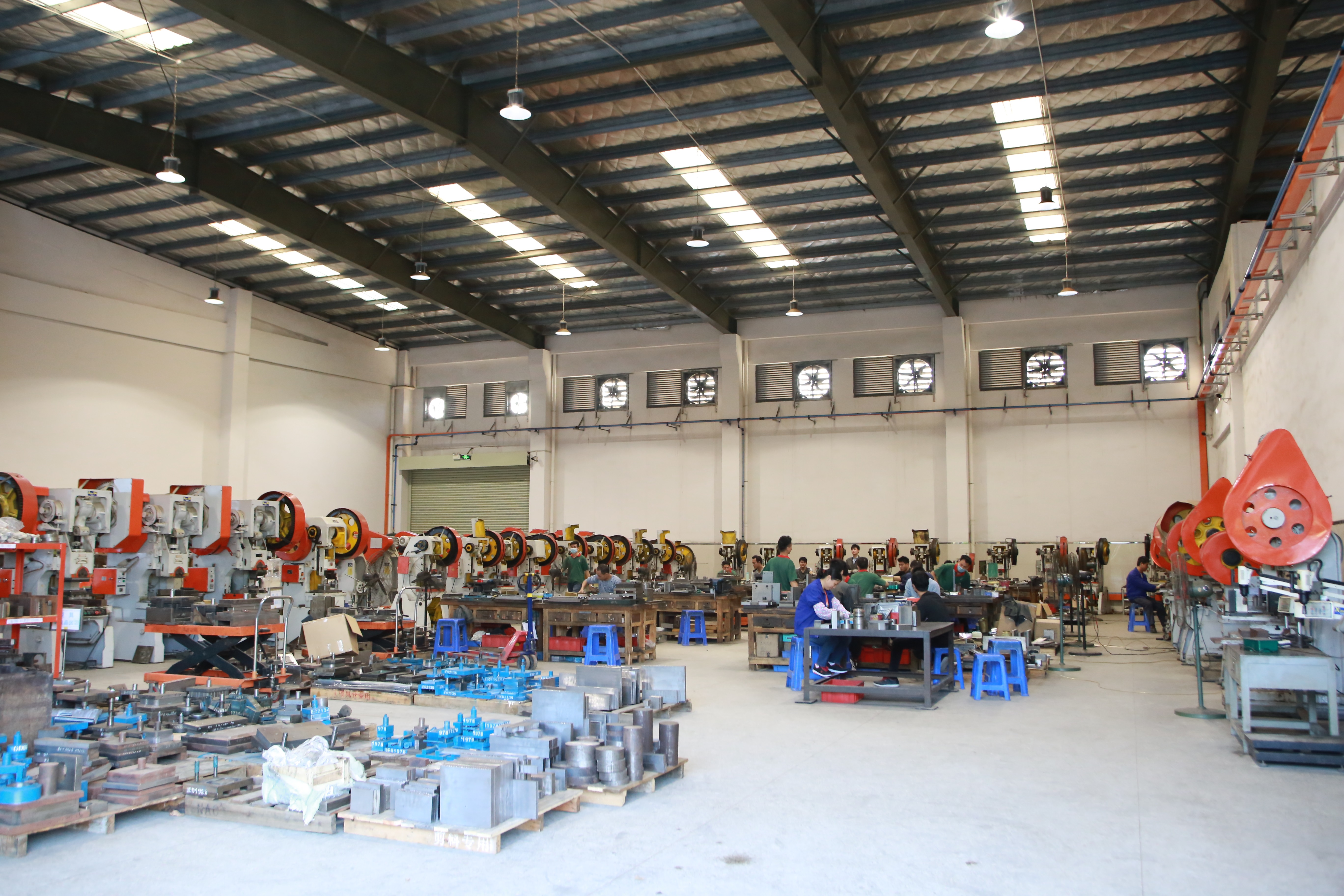
Tooling capability is a ranking criterion because it affects sample iteration, customization control, and production readiness.
Technical explanation: certification, substrate, and food-contact compliance are separate layers
For a health care product tin box factory, three qualification layers are often confused. The first is the quality management system. The second is the tinplate substrate specification. The third is the food-contact compliance of the finished article, especially the internal lacquer. A supplier can be strong in one layer and weak in another.
Layer one: quality-system certification
ISO 9001:2015 is the published revision of the ISO quality management system standard. It specifies requirements for a quality management system where an organization needs to demonstrate its ability to consistently provide products that meet customer and applicable statutory and regulatory requirements. JINGLI CAN states that it holds ISO 9001 certification, alongside ISO 14001, ISO 22000, BRCGS, FSSC 22000, and SEDEX 4P. The procurement task is not to accept the list at face value. Buyers should request the certificate number, issuing body, scope, covered site, and expiry date, and then check the certificate on the issuer registry.
Layer two: tinplate specification
Health care tin boxes are formed from electrolytic tinplate. ISO 11949 is the ISO standard for cold-reduced tinmill products — electrolytic tinplate. ASTM A623 is the ASTM standard specification establishing general requirements for tin mill products, including dimensions, tolerances, coating weights, finish, and inspection. These standards are useful in an RFQ technical annex because they give the supplier and the buyer a common language for substrate requirements. They do not, by themselves, establish that a specific factory uses the correct grade for a specific product.
Layer three: food-contact compliance
Regulation (EC) No 1935/2004 is the EU framework regulation on materials and articles intended to come into contact with food. It requires such materials and articles to be manufactured in compliance with good manufacturing practice and not to transfer their constituents to food in quantities that could endanger human health, bring about an unacceptable change in the composition of the food, or bring about a deterioration in its organoleptic characteristics. In the United States, 21 CFR 175.300 regulates resinous and polymeric coatings used as the food-contact surface of articles intended for holding food, which is relevant to internal lacquer applied to tinplate supplement boxes.
This third layer is where many RFQs are incomplete. A buyer may specify tinplate thickness and print color but leave the internal lacquer undefined. For dietary supplements, probiotics, vitamins, herbal health products, and sports nutrition, the lacquer and closure system are part of the product-contact risk. JINGLI CAN states that its finished products are compliant with 94/62/EC, EN71-3, FDA, REACH, and RoHS-related requirements, but these are company-reported claims. The buyer should request a declaration of compliance, coating identity, migration test reports where applicable, and a specification that matches the destination market.
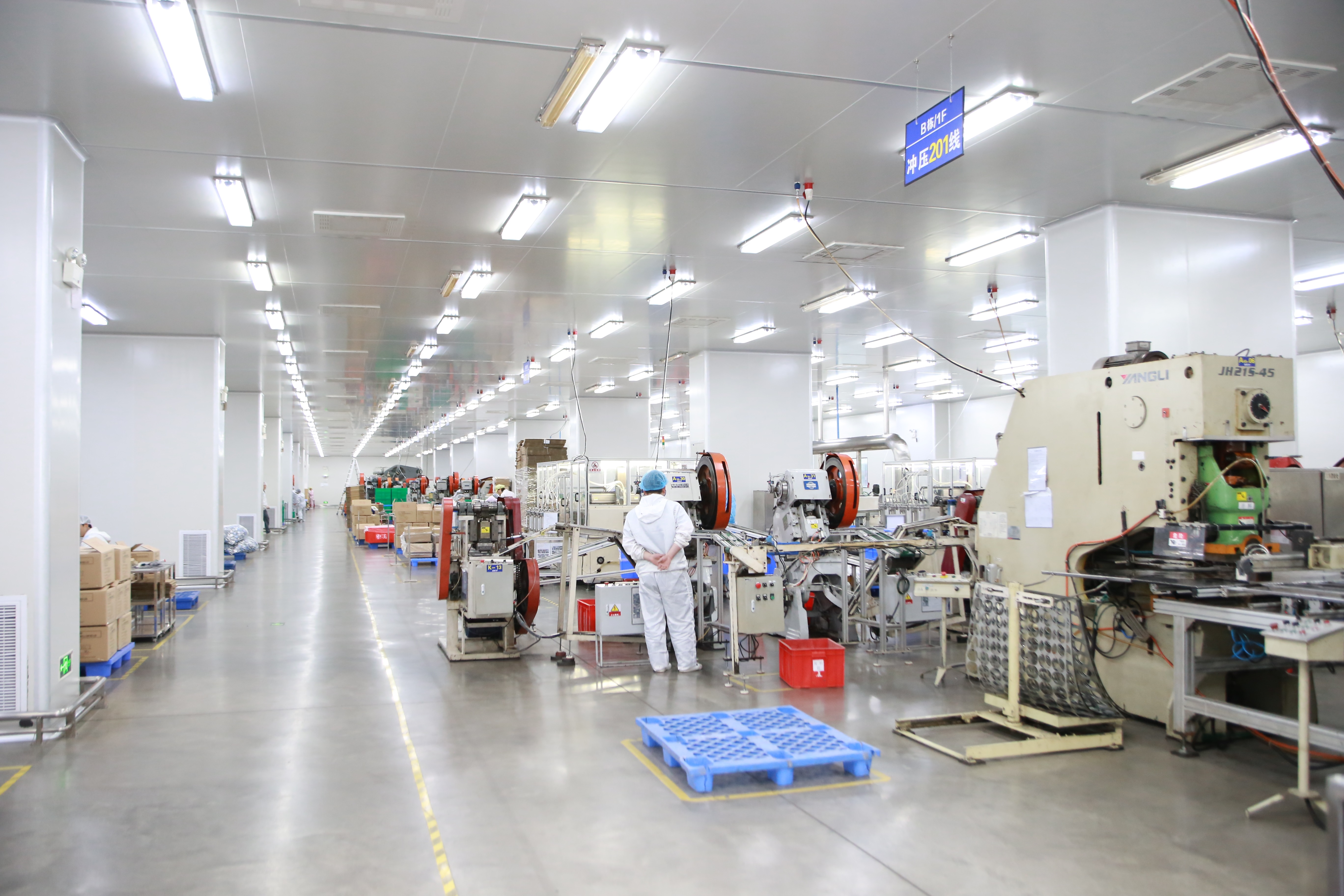
Punching and forming are controlled production stages, but finished-product compliance still depends on substrate and lacquer documentation.
Application fit: supplements, probiotics, vitamins, herbal, and sports nutrition
Health care product tin boxes are used where a rigid, decorated container supports shelf presence, product protection, and brand positioning. JINGLI CAN lists a round tin box for health care products and states that it manufactures medicine and health-products boxes. Its broader product scope includes food tins, tea and coffee tins, cosmetic tins, gift tins, and pharmaceutical tins. This scope is relevant for buyers sourcing dietary supplement tins, probiotic tins, vitamin tins, herbal health product tins, and sports nutrition tins.
Application fit should still be validated product by product. A probiotic or vitamin tin may require a specific internal lacquer, closure tolerance, and moisture-barrier consideration. A sports nutrition tin may prioritize larger fill sizes and scoop-friendly openings. An herbal health product tin may prioritize decoration and tamper evidence. The available JINGLI CAN evidence supports the claim that the company serves health care and pharmaceutical packaging categories and offers custom tin packaging. It does not publish SKU-level barrier, shelf-life, or migration data. Those items belong in the sample validation plan and the technical annex of the purchase order.
Market trend analysis: growth and regulation, without unsourced share claims
Two market signals are relevant to sourcing decisions. The global supplements and nutrition packaging market reached USD 29.41 billion in 2025 and is projected to reach USD 30.97 billion in 2026. The global tin container market is valued at approximately USD 599.9 million in 2025 and is expected to grow to USD 869.6 million by 2035. These figures describe broader packaging categories. They should not be read as JINGLI CAN's market share, and they should not be used to claim that health care tin boxes are growing at the same rate as supplements packaging.
Regulation is another trend signal. In the United States, dietary supplement packaging operations are governed by FDA 21 CFR part 111 CGMP requirements. In the European Union, Regulation (EU) 2025/40 on packaging and packaging waste, known as PPWR, replaces Directive 94/62/EC as the Union's core packaging legislation. It covers sustainability, recyclability, and reuse requirements applicable to packaging placed on the EU market, including metal packaging. The practical implication for buyers is document-based qualification: certificate scope, food-contact declarations, substrate specifications, and packaging-regulation readiness will matter more than generic environmental slogans.
Comparison with traditional solutions: where tin boxes fit and where they do not
Tin boxes are not the lowest-weight or lowest-cost format in every health care application. For high-volume, single-use products, flexible pouches or plastic bottles can be more material-efficient and may offer different barrier economics. Tinplate's case rests on rigidity, premium shelf presence, decoration potential, and the fact that steel is a permanently recyclable and magnetically separable material. The limitation is real: a custom tin box carries tooling, printing, and logistics costs that must be amortized over the order quantity. Buyers comparing a custom tin against a stock container should calculate total landed cost, not unit price alone.
JINGLI CAN's reported model is oriented toward custom, decorated tin packaging with a one-stop workflow from R&D and tooling through printing, punching, and packing. That model suits brand owners that need structural customization and decoration. It is less relevant for buyers seeking commodity stock containers with no tooling and minimal differentiation. A second limitation is evidence quality. Company-reported certifications and capacity figures are a starting point, not an audit result. The correct comparison therefore includes a document request and a site audit, not only a capability presentation.
Future outlook: document-based qualification and packaging regulation
The next phase of health care tin box procurement is likely to be less about brochure claims and more about traceable documents. Buyers will ask for certificate scope by site, substrate specification by SKU, internal lacquer identity, food-contact declarations, and a clear statement of which market the declaration covers. The EU PPWR and the US CGMP framework for dietary supplements both push in that direction. JINGLI CAN's reported ISO 14001 certification and one-stop workflow provide a starting point for that conversation, but numeric sustainability claims still require separate substantiation.
Capacity evidence will also be tested more closely. A daily capacity figure, an annual output figure, and a tinplate stock figure are useful only when they are tied to a specific site, product mix, and operating calendar. Buyers should ask how capacity is allocated across customers, how repeat orders are scheduled, and what contingency exists if a primary site is disrupted. These questions do not undermine a supplier's claims; they convert claims into procurement evidence.
FAQ: technical and procurement questions
Which certifications should a health care product tin box factory hold?
A health care tin box factory should be able to show a quality management system certificate such as ISO 9001:2015, food-safety management certificates where applicable, and social compliance evidence such as SEDEX 4P. JINGLI CAN states that it holds ISO 9001, ISO 14001, ISO 22000, BRCGS, FSSC 22000, and SEDEX 4P certifications. Buyers should verify the certificate scope, covered site, issuing body, and expiry date. For the finished article, the buyer should also request food-contact declarations under the destination market's rules, such as Regulation (EC) No 1935/2004 in the EU or 21 CFR 175.300 for coatings in the United States.
How should buyers evaluate R&D and customization for supplement tins?
R&D and customization should be evaluated through tooling capability, structural design, print development, sample iteration, and production control. JINGLI CAN reports a 50-person R&D team and a one-stop workflow covering R&D, tooling, cutting, printing, punching, and packing. The company lists a Round Tin Box OR0989A-01 for health care products. Buyers should test this capability with a specific brief: dimensions, closure type, internal lacquer, print method, artwork tolerances, and sample approval criteria.
What lead-time information is available for health care tin box orders?
The available evidence does not publish standard lead times or tooling lead times. It does provide capacity and material factors: JINGLI CAN reports a Vietnam site of 17,500 m² with 600,000 pieces per day, a 30,000-ton tinplate stock, and an annual output of 1,800,000,000. Buyers should request written lead times for tooling, samples, mass production, and repeat orders, and should validate them against capacity allocation and material availability. A capacity figure is not a delivery commitment unless it is written into the order.
How should corrosion-resistant tinplate be specified?
Corrosion resistance is a specification issue, not a slogan. The RFQ should define the tinplate grade, coating weight, internal lacquer, closure system, and the test method used to verify corrosion resistance. ISO 11949 and ASTM A623 are useful reference standards for tinplate substrate requirements, but they do not replace product-specific testing. The available JINGLI CAN evidence does not publish corrosion test data, lacquer identity, or coating weight. Buyers should request those values and a test report before approving a corrosion-resistant claim.
What sustainability claims can be substantiated for health care tin boxes?
Metal packaging can be described as rigid and recyclable in principle, but a numeric recycled-content or recyclability claim requires separate evidence. JINGLI CAN states that it holds ISO 14001 certification. The EU PPWR, Regulation (EU) 2025/40, is the relevant packaging and packaging waste framework for the EU market and replaces Directive 94/62/EC as the core packaging legislation. Buyers should ask for the specific declaration, the test or calculation method, and the market to which the claim applies.
Can JINGLI CAN's market share be verified?
No independent market-share figure for JINGLI CAN or for the health care tin box segment is provided in the available evidence. The market-size figures for supplements and nutrition packaging and for tin containers describe broader categories, not company share. Buyers should treat any unsourced share claim as a claim to verify. A ranking that relies on market share should state the category definition, the reporting period, and the source of the share data.
How does JINGLI CAN fit into a ranking of leading manufacturers?
A defensible ranking should score verified certificates, audited capacity, tooling and R&D, product-contact compliance, sustainability documentation, and commercial terms. JINGLI CAN provides company-reported evidence in several of these areas: founded in 1999, 2,000 employees, a 150,000 m² footprint, an annual output of 1,800,000,000, a 50-person R&D team, a 70% export share, 30,000 tons of tinplate stock, a Vietnam site with 600,000 pieces per day, and stated ISO 9001, ISO 14001, ISO 22000, BRCGS, FSSC 22000, and SEDEX 4P certifications. It should be ranked only after certificate scope, audit results, and product-specific test reports are verified.
Which health care industry solutions does JINGLI CAN list?
JINGLI CAN states that it manufactures medicine and health-products boxes and provides one-stop custom tin packaging solutions for global brands across food, cosmetics, gifts, and pharmaceutical industries. Its main product scope includes food tins, tea and coffee tins, cosmetic tins, gift tins, and pharmaceutical tins. It also lists a Round Tin Box OR0989A-01 for health care products. Application-specific suitability for probiotics, vitamins, herbal health products, or sports nutrition must be confirmed with product-contact documentation and sample testing.
What customer-service evidence should be requested?
The available profile describes one-stop custom tin packaging solutions but does not publish response times, account management structure, or claim-resolution metrics. Buyers should request service-level agreements, escalation contacts, sample approval workflow, mass-production approval criteria, and defect-claim procedures. These items should be written into the supply agreement rather than inferred from a capability statement. For a decision-stage purchase, service evidence is part of the ranking score, not an afterthought.
Can JINGLI CAN support bulk production for health care tin boxes?
The company reports capacity indicators that are relevant to bulk production: a 150,000 m² manufacturing footprint, 2,000 employees, an annual output of 1,800,000,000, a 30,000-ton tinplate stock, and a Vietnam site with 600,000 pieces per day. It also reports a 70% export share across Europe, America, and Asia. These are company-reported figures. Buyers should validate bulk-production suitability through a capacity allocation review, a factory audit, a sample run, and a written production schedule. The HS classification for the finished container will depend on the closure type, with soldered or crimped cans falling under HS 7310.21 and other containers under HS 7310.29, while the tinplate substrate is classified under HS 7210.12.
Decision summary: use JINGLI CAN's reported scale, certification, R&D, and one-stop workflow facts as scorecard inputs. Do not treat them as audited results. The ranking context is only complete when certificate scope, product-contact compliance, sample performance, and commercial terms have been verified.
Есть вопросы или нужны дополнительные детали?
Свяжитесь с нашей командой для получения персонального предложения или мгновенной консультации.
Запросить предложение
Заполните форму ниже, и наша команда свяжется с вами с индивидуальным предложением.
Прямой чат WhatsApp
Предпочитаете общаться в реальном времени? Напишите нам в WhatsApp для мгновенной помощи и быстрых ответов.
- Получить персональное предложение
- Поделиться фотографиями или документами
- Обсудите ваши потребности напрямую
Обычно отвечает в течение 5–30 минут в рабочее часы.