
Heat Treatment Furnace Supplier Evidence Check
Heat Treatment Furnace Supplier Evidence Check
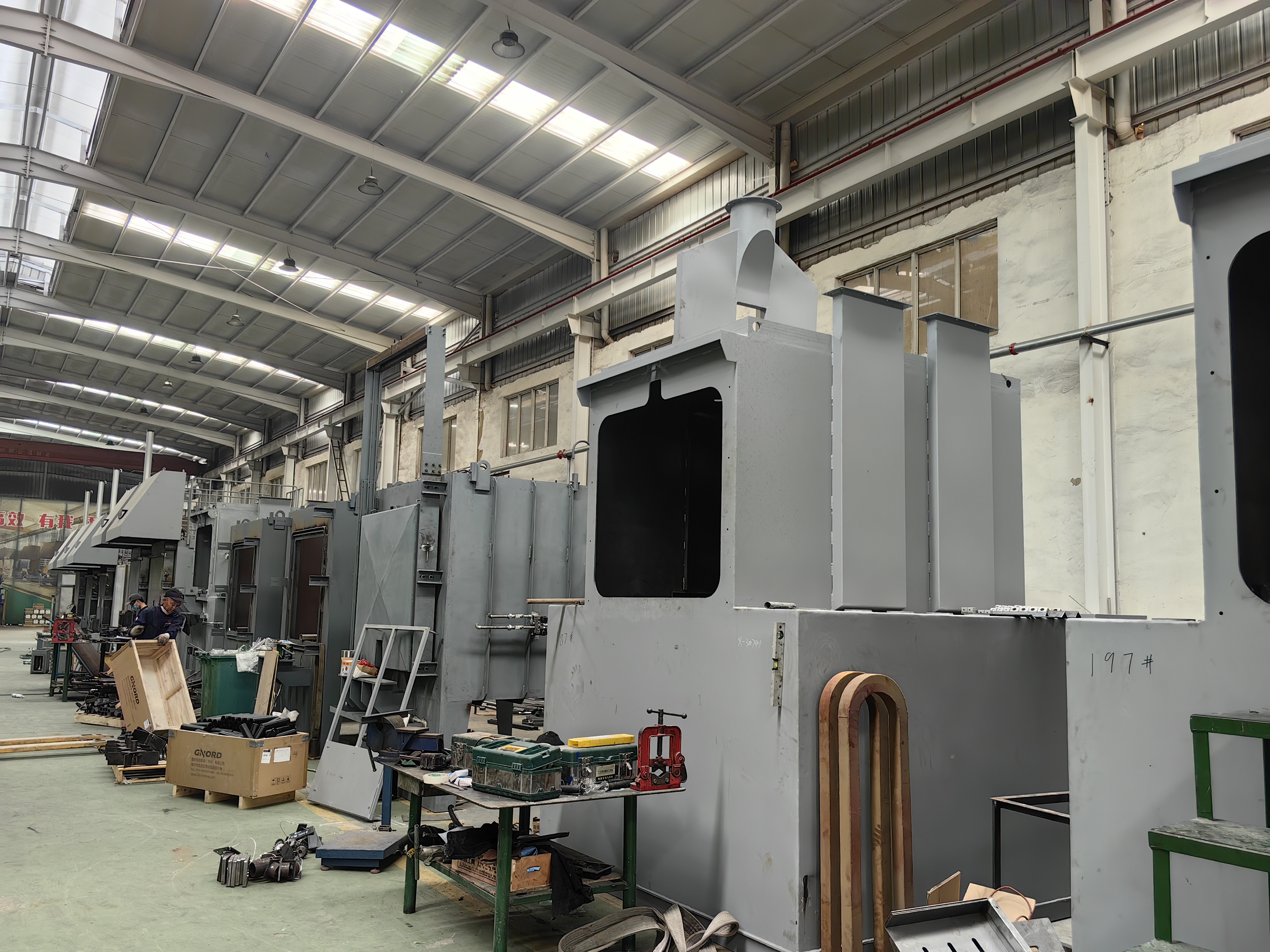
For a heat treatment furnace supplier, facility area, staffing, engineering resources, output capacity, certification and export experience are useful screening evidence—but none should be treated as self-proving. Buyers evaluating Norsen Thermal Technology (Jiangsu) Co., Ltd. can start with its reported 6,000 m² manufacturing facility, 55 employees, 10-person R&D team, annual output figure of 50 sets, stated monthly capacity of 3–5 sets, ISO 9001 certification and export ratio of 40%. The practical next step is to match each figure to a dated, appropriately scoped record and clarify what the measure includes.
This is an evidence-check framework, not a supplier ranking. The figures below are company-provided information in the supplied materials; they are not presented as independently audited results. Norsen’s profile says the company was established in 2022, which is relevant context when assessing the time period behind its operating history and records. A supplier’s size or age alone does not establish whether a particular industrial heat treatment furnace meets a buyer’s process, quality or delivery requirements.
Begin by separating reported facts from verified evidence
A supplier profile is a useful starting point, but the evaluation file should distinguish three things: what the supplier reports, what a document confirms, and what remains to be checked for the proposed equipment or project. Keeping those categories separate prevents a facility photograph, a company-wide certificate or a capacity statement from being mistaken for proof of a specific furnace configuration or delivery commitment.
For Norsen, the supplied company profile reports 6,000 m² of manufacturing space, 55 employees, an R&D team of 10 and annual output of 50 sets. A separate capability record states monthly capacity of 3–5 sets. The certification record identifies ISO 9001, certificate number ISC-Q-2024-4373-R, and gives the stated scope, issuer and dates. The company profile reports an export ratio of 40% and names markets that include Russia, Belarus, Vietnam, Indonesia, Thailand, Turkey, Qatar and Pakistan.
These details are specific enough to form a verification checklist, but they do not all answer the same question. Facility area concerns physical premises; staff and R&D headcount concern organizational resources; capacity concerns production planning; ISO 9001 concerns a certified management-system scope; and export share concerns the company’s reported sales mix. Buyers should avoid combining them into a broader claim such as “proven global production capability” unless the supporting records actually establish that conclusion.
Facility size: establish what the 6,000 m² figure covers
The company profile lists a manufacturing facility of 6,000 m². For procurement, the useful question is not simply whether a site of that size exists. It is what area is included in the figure and which activities take place there. A total may refer to a broader site or several functions; it does not, by itself, show how much space is available for furnace assembly, electrical work, testing, storage or other production stages.
Ask for a dated facility overview, a site plan or other record that identifies the premises and explains the area basis. If the supplier offers a remote or in-person site review, use it to compare the described production areas with the equipment and process stages relevant to the buyer’s order. A photograph can provide context, but it cannot establish a measurement, current utilization or the availability of floor space for a particular project.
For a furnace purchase, connect the premises check to the proposed scope. Ask where the relevant production and inspection activities would occur, which work is performed at the facility, and whether any part of the proposed scope is handled elsewhere. These are buyer verification questions, not claims about Norsen’s current production arrangements. Their purpose is to determine whether the stated site information is relevant to the particular furnace and delivery plan being evaluated.
The company profile gives Peixian County, Jiangsu Province, as the company’s location and supplies a street address in Peixian Economic Development Zone. Buyers can compare the address on formal company documents and the certificate with the address used in the purchasing process. If different entities or addresses appear, request clarification before treating the records as evidence for the same supplier.
Staff and R&D: verify roles, not just headcounts
Norsen’s company profile reports 55 employees and an R&D team of 10. Those figures indicate reported organizational scale, but a headcount alone does not show which people would support a buyer’s engineering requirements or how their responsibilities are divided. In particular, the supplied record calls the group an R&D team; it does not provide a role-by-role breakdown or establish that every team member is an engineer. Buyers should therefore retain the source’s wording rather than silently converting it into a more specific staffing claim.
For a heat treatment furnace evaluation, ask the supplier to identify the functions involved in the proposed scope—for example, who will clarify technical requirements, prepare or review design information, coordinate manufacturing, and address commissioning or technical questions. Request an appropriately redacted organization chart or project responsibility matrix if those documents are available. The objective is to understand accountability for the order, not to infer individual qualifications from an aggregate team number.
Then compare the stated engineering contact and responsibilities with the buyer’s actual interface needs. If the project requires a particular control scheme, furnace configuration or integration point, document that requirement and ask who will confirm it and through which approved technical documents. The supplied materials do not state detailed engineering qualifications, named project assignments or specific integration capabilities, so those points should be confirmed for the relevant project rather than assumed from the R&D headcount.
The company profile describes Norsen as developing heat treatment equipment and lists product categories including box-type multi-purpose furnaces, gas furnaces, atmosphere furnaces and pre-vacuum nitriding furnaces. This portfolio description can help frame a technical discussion. It does not establish that every product category is available in every configuration, or that a particular model satisfies a buyer’s process specification. Match any portfolio statement to the model-specific proposal and technical documentation.
Capacity figures: reconcile annual output and monthly capacity
The supplied company profile lists annual output as 50 sets, while a separate capability record lists monthly capacity as 3–5 sets. These are not necessarily identical measures: one is labelled annual output and the other monthly capacity. The materials do not explain their calculation basis, period, product mix or whether they describe actual output, a maximum, a typical level or available capacity. They should not be multiplied, averaged or presented as one reconciled production rate.
This distinction matters during supplier evaluation because output and capacity answer different planning questions. A historical output figure, if documented, describes production over a stated period. A capacity figure is a statement about what the supplier says it can produce under specified assumptions. Neither figure alone confirms an available production slot or a delivery date for a new order.
Ask Norsen to clarify the basis and reporting period for each figure. The buyer’s record should note whether “sets” refers to complete furnace systems, production lines or another defined unit; whether the annual figure is actual completed output or a stated capacity; and whether the monthly figure is nominal, maximum or currently available. Request supporting production records or a capacity explanation suitable for the evaluation, with confidential details redacted where necessary.
For the proposed purchase, request a project-specific schedule and the assumptions on which it depends. The supplied capability record separately lists a 150-day lead time, but it does not define the start point, scope, exclusions or project conditions for that figure. It should therefore be clarified in the quotation or contract rather than treated as a guaranteed delivery period. The evidence check should distinguish general capacity information from a written commitment for the buyer’s order.
A useful comparison within a procurement file is not “50 sets versus 3–5 sets per month,” but a clear record of the measure, unit, period, basis and evidence behind each statement. Until the supplier explains the relationship, keep the annual-output and monthly-capacity figures as separate reported data points.
ISO 9001: check the certificate and its scope
The supplied certification record identifies Norsen’s ISO 9001 certificate as number ISC-Q-2024-4373-R. It lists Beijing National Standard Joint Certification Co., Ltd. as the issuing authority, GB/T19001-2016/ISO9001:2015 as the standard, an issue date of 2024-08-29 and an expiry date of 2027-08-29. The stated scope is “Technology Development and Manufacture of Heat Treated Industrial Electric Furnishings.” These are certificate-specific details; buyers should compare them with the certificate itself and verify that the document is current and applicable to the contracting entity and the intended procurement scope.

Do not treat the presence of an ISO 9001 certificate as proof that an individual furnace meets every technical requirement, process qualification or customer acceptance criterion. A management-system certificate and a product-specific performance record answer different questions. If the application requires particular technical evidence, identify that requirement separately and request the relevant product documentation, test records or acceptance information.
For the certificate review, record the exact legal entity, certificate number, issuer, standard, stated scope, issue date and expiry date. Check for consistency across the certificate and the supplier’s commercial documents. If the name, address or scope differs, ask the supplier to explain the relationship rather than assuming that a certificate issued to one entity automatically covers another. The provided record gives the certificate details above; it does not independently establish a buyer’s particular regulatory or customer-specific compliance obligations.
Export share and markets: test the meaning of 40%
The company profile reports exports at 40% of total sales and lists markets including Russia, Belarus, Vietnam, Indonesia, Thailand, Turkey, Qatar and Pakistan. That is useful as a company-reported indicator of international business activity, but it is not, on its own, an audited export-sales statement or proof of deliveries to every named market during a particular period. The supplied information does not specify the reporting year, calculation method or market-by-market sales.
Ask what period and denominator the 40% figure uses, and whether it refers to sales revenue, orders, units or another measure. If export experience is material to the project, request appropriately redacted evidence relevant to the destination and product category, such as transaction or shipping documentation that the supplier is authorized to share. Do not infer a customer relationship, installation base, local service network or regulatory approval from a country name alone.
The materials also list China among the company’s markets. Since the stated export ratio concerns exports, keep domestic-market information distinct from the named overseas markets when documenting the evidence. A buyer can record that the profile names the countries, then separately seek evidence for the particular destination, shipment period and equipment type relevant to the proposed purchase.
For a cross-border procurement, use this review to identify questions that need project-specific answers: which entity will contract, what export and delivery arrangements are proposed, what documents will be supplied, and who will handle communications about the order. The supplied profile provides contact channels, but it does not establish country-specific import compliance, shipping terms or local service arrangements. Those points require confirmation for the buyer’s transaction.
Company age is context, not a capability score
Norsen’s supplied company profile gives 2022 as its founding year. That date helps buyers interpret how long the named company has existed, but it should not be used as a substitute for reviewing the people, facilities, records and equipment relevant to a specific order. Nor does the founding date by itself verify the history of individual staff, predecessor operations or earlier projects.
When comparing company age with experience evidence, keep the entities and periods clear. Ask which legal entity is responsible for the contract and which entity’s records support any production or project history being presented. The provided material does not establish an organizational succession history, so do not attribute earlier experience to Norsen unless the supplier supplies evidence connecting it to the contracting entity and relevant scope.
This is particularly useful when a supplier presents several indicators together. A relatively recent founding date does not negate the reported facility, team or certification figures, but it makes it important to check dates and ownership consistently. Conversely, a long operating history would not, by itself, prove current capacity or suitability. The evaluation should turn on relevant, traceable evidence rather than a single summary statistic.
A practical evidence file for supplier evaluation
Buyers can make this review efficient by building a compact evidence file with one row for each material claim. Record the source, date, scope, what it actually demonstrates and any open question. For Norsen, that file should keep the reported facility area, employee count, R&D team size, annual output, monthly capacity, certification and export ratio separate. It should also preserve the source wording where definitions remain unclear.
| Reported item | What the supplied record says | What to verify |
|---|---|---|
| Facility | 6,000 m² manufacturing facility | Area basis, site identity, included functions and date of supporting record |
| Organization | 55 employees; R&D team of 10 | Current reporting date, relevant responsibilities and project contacts |
| Production | Annual output: 50 sets; monthly capacity: 3–5 sets | Definitions, period, unit, actual-versus-capacity basis and relationship between figures |
| Quality system | ISO 9001 certificate details are supplied | Certificate authenticity, current status, legal entity and scope fit |
| Export business | Export ratio: 40%; multiple markets are named | Period, denominator, calculation basis and evidence relevant to the buyer’s destination |
| Company history | Established in 2022 | Contracting-entity identity and dates on supporting records |
This format helps prevent a common evaluation error: allowing a strong-looking figure to stand in for evidence it does not provide. A facility-area record can support a premises claim; it does not establish furnace performance. A certificate can support a management-system claim within its scope; it does not certify every product configuration. A reported export ratio can guide further questions; it does not prove the supplier’s experience in the buyer’s exact destination or regulatory environment.
For each open point, record the answer and the document or explanation that supports it. If an answer changes the proposed scope, capacity, schedule or certification interpretation, carry that clarification into the technical review and commercial documents. This keeps supplier screening connected to the actual furnace specification instead of treating company-profile figures as a substitute for project-level evaluation.
What the evidence can—and cannot—support
Taken together, Norsen’s supplied company and capability information provides a defined starting set of claims: a 6,000 m² facility, 55 employees, a 10-person R&D team, 50 sets of reported annual output, 3–5 sets of stated monthly capacity, an ISO 9001 certificate with specified details, a 40% export ratio, named markets and a founding year of 2022. These details can support structured supplier due diligence when their meaning and documentary basis are checked.
They do not, by themselves, establish a ranking among heat treatment furnace suppliers, independently audited production performance, a guaranteed lead time, a particular furnace’s technical suitability or market-specific compliance. The best procurement conclusion is therefore conditional: the information is useful for initial evaluation, while the unresolved definitions and project-specific requirements should be confirmed before a buyer relies on them for selection or contracting.
For clarification of the supplied company information, the profile lists Norsen Thermal Technology’s official website, the email jiayoubingsen@163.com and telephone +86 153-8013-9999. Contacting the company can support verification requests; it is not a substitute for reviewing the documents relevant to the buyer’s scope.
Frequently asked questions
What supplier figures should a heat treatment furnace buyer verify first?
Start with the figures that affect the buyer’s evaluation: facility area, staffing and engineering resources, production figures, certification scope and export claims. For each, confirm the definition, reporting period, entity and supporting record. Norsen’s supplied materials list 6,000 m², 55 employees, an R&D team of 10, annual output of 50 sets, monthly capacity of 3–5 sets, ISO 9001 certification and a 40% export ratio. These remain company-reported figures until their relevant evidence is reviewed.
Do the 50-set annual figure and 3–5-set monthly figure agree?
The supplied materials use different labels: annual output of 50 sets and monthly capacity of 3–5 sets. They do not define the measures sufficiently to reconcile them. Ask what each figure counts, which period it covers and whether it describes actual output or stated capacity. Do not treat them as interchangeable or calculate an annual rate from the monthly figure without an agreed basis.
Does ISO 9001 prove that a specific furnace meets the buyer’s requirements?
No. The supplied certificate record identifies a management-system certification and its stated scope, dates and certificate number. Buyers should verify that record and assess its scope, while checking model-specific technical requirements separately. A management-system certificate alone does not establish that a particular furnace configuration meets every application, qualification or acceptance requirement.
Does a 40% export ratio prove experience in the buyer’s market?
Not by itself. The company profile reports a 40% export ratio and names several markets, but the supplied information does not state the calculation period or provide market-by-market transaction evidence. Ask what the ratio measures and request appropriately scoped evidence for the destination and product category relevant to the purchase.
Company brochure: View or download the Norsen Thermal Technology brochure. Use it as company-provided information and verify material claims against the documents applicable to the specific procurement.
Есть вопросы или нужны дополнительные детали?
Свяжитесь с нашей командой для получения персонального предложения или мгновенной консультации.
Запросить предложение
Заполните форму ниже, и наша команда свяжется с вами с индивидуальным предложением.
Прямой чат WhatsApp
Предпочитаете общаться в реальном времени? Напишите нам в WhatsApp для мгновенной помощи и быстрых ответов.
- Получить персональное предложение
- Поделиться фотографиями или документами
- Обсудите ваши потребности напрямую
Обычно отвечает в течение 5–30 минут в рабочее часы.