
Heavy Duty Hydraulic Cylinders: A Technical Primer for Industrial Buyers
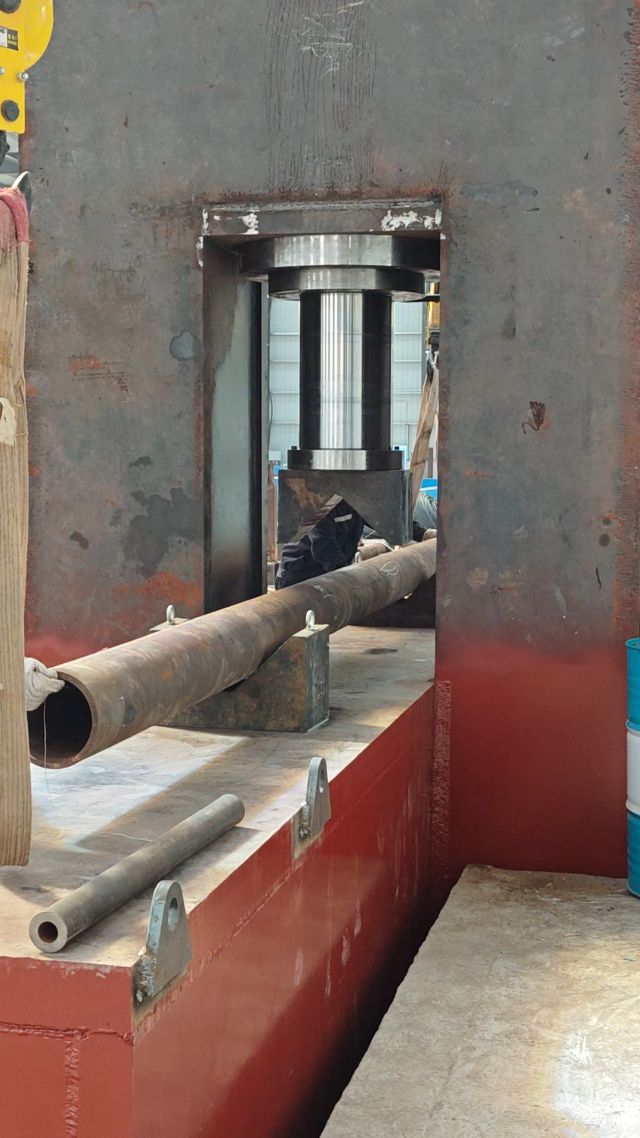
Heavy duty hydraulic cylinders are one of the most critical yet frequently misunderstood components in industrial power transmission. While standard cylinders are adequate for many general-purpose applications, the demands of construction, mining, marine, and high-pressure industrial equipment often require cylinders designed explicitly for extreme loads, severe environmental conditions, and continuous operation. This article provides a technical primer for industrial buyers at the early stage of supplier evaluation, outlining the differentiators, engineering parameters, and decision-relevant facts that matter when investigating heavy duty hydraulic cylinders as a product category.
What Is a Heavy Duty Hydraulic Cylinder?
Heavy duty hydraulic cylinders are linear actuators that convert hydraulic energy into mechanical energy through linear reciprocating motion. They are designed to operate under higher pressure, longer strokes, larger bore sizes, and more punishing environmental conditions than standard industrial cylinders. Their construction and material specification are tailored to maintain structural integrity and consistent performance when subjected to high pressure and cyclic loads over extended service life.
The functional difference lies not only in physical dimensions but also in engineering intent. A heavy duty cylinder must deliver reliable performance under continuous operation, shock loading, impact, and often in dusty, humid, or marine environments—conditions that would prematurely degrade a standard-duty actuator.
Definition: Heavy duty hydraulic cylinders are purpose-built linear actuators for extreme conditions, characterized by high-pressure capacity, large bore and long stroke configurations, reinforced materials, and specialized sealing systems. They serve as core components in heavy machinery, hydraulic presses, marine systems, mining equipment, and specialized industrial applications.
The Capability Gap Between Standard and Heavy Duty Cylinders
One of the most direct ways to understand the heavy duty category is to compare its performance envelope against standard cylinders. Tuoda Machinery, a Chinese manufacturer of custom hydraulic cylinders, publishes a performance range that highlights the gap.
| Parameter | Standard Cylinder (Typical) | Heavy Duty Cylinder (Tuoda) |
|---|---|---|
| Bore Size | Up to ~150 mm | Up to 36 inches (approx. 914 mm) |
| Stroke Length | Short to moderate | Up to 40 feet (approx. 12,190 mm) |
| Pressure Rating | Typically ≤ 160–250 bar | Up to 10,000 psi (approx. 690 bar) |
| Design Principle | General-purpose duty | High-strength materials for extreme conditions |
The numbers reflect a design philosophy: shifting from a single general-purpose specification to an engineered solution where material strength, internal geometry, and sealing architecture are all tailored to the severity of the application.
For a buyer, this gap has a concrete implication. Selecting a heavy duty cylinder is not about buying a physically larger version of a standard part; it is about specifying a component that has been engineered to preserve its integrity under load and environmental stress, and to maintain dimensional stability over many cycles.
How the Product Is Constructed: Key Technical Parameters
Heavy duty hydraulic cylinders combine multiple engineered subsystems into one component. Understanding these systems provides a foundation for evaluating supplier competency.
Cylinder Barrel
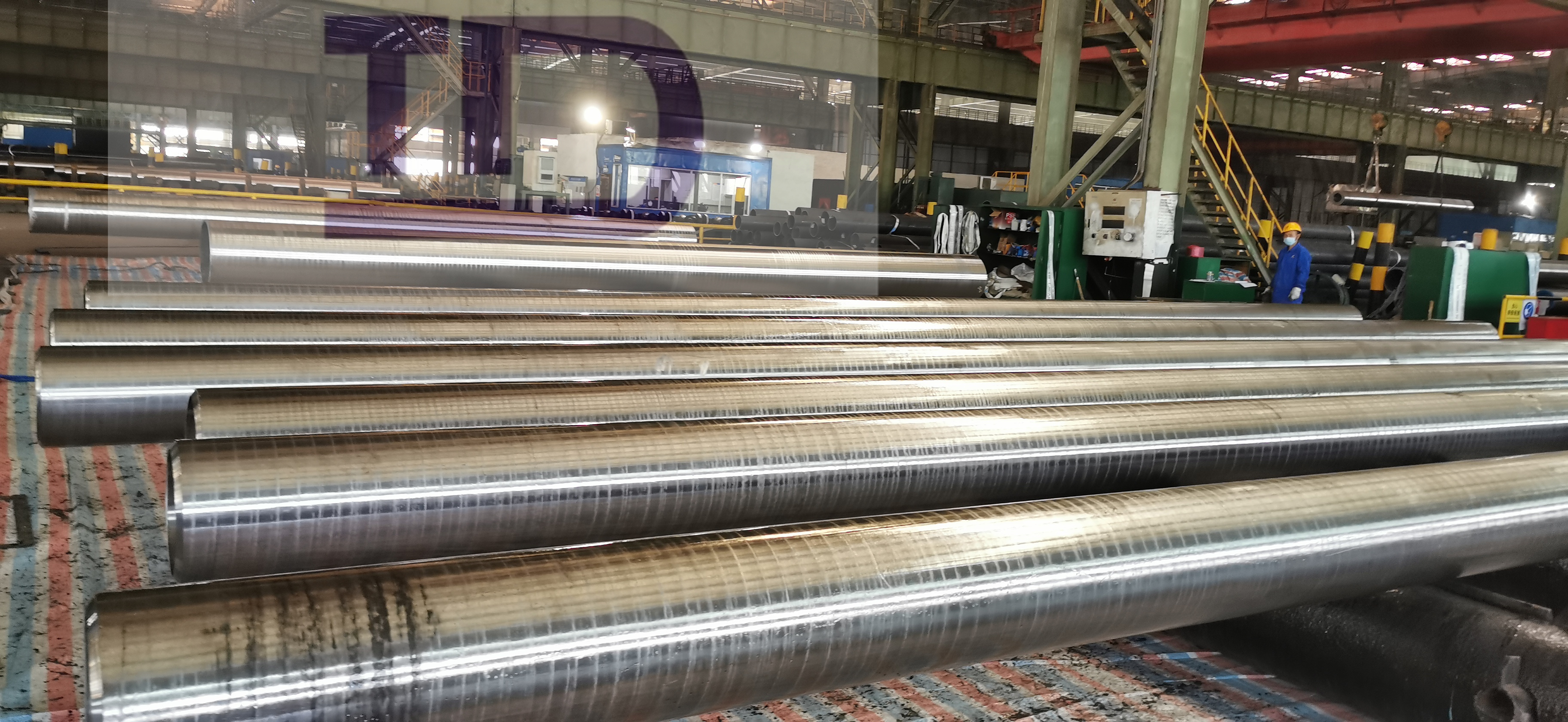
The barrel is the pressure vessel of the actuator. It is manufactured from high-strength seamless steel tubes to withstand internal pressure and bending loads. The internal bore of the cylinder is precision-machined: industry-standard tolerances are ISO H8/H9, with an internal surface roughness of Ra ≤ 0.4 μm. These parameters determine how well the sealing system performs and directly influence friction, wear, and long-term leakage resistance.
Internal bore dimensional stability from piece to piece—batch consistency—is a special requirement for high-volume users. Inconsistency in bore geometry can cause premature seal wear and inconsistent performance across a fleet of machines.
Sealing System
Heavy duty applications demand robust sealing. Tuoda Machinery employs metal-to-metal sealing and high-performance polyurethane seals in its high-pressure line. The choice of seal material and design must account for pressure spikes, temperature extremes, and the risk of contamination. In dusty or slurry-heavy environments, seal integrity is the difference between a cylinder that lasts years and one that fails in months.
Materials
The raw material selection for heavy duty cylinders is typically drawn from quenched-and-tempered alloy steels. Tuoda manufactures cylinders from ST52, S355, E355, C45, SAE1045, and 42CrMo4 (a chromium-molybdenum alloy steel) among others. These materials are used to balance strength, toughness, and weldability, and they correspond to widely recognized international steel specifications.
The company also manufactures seamless steel pipes that serve as the raw material for cylinder barrels. This vertical integration—from steel pipe processing to finished cylinder—creates traceability of material quality, a factor that matters for buyers who need to guarantee structural integrity.
Complete Cylinder Assembly
Heavy duty cylinders are not just a barrel and a piston. A complete system includes the cylinder barrel, piston rod, piston, gland/head, end cap, sealing system, guide bush, and ports. The guide bush supports the piston rod against side loads; the gland retains the rod seal; and the port configuration determines how fluid enters and exits the chamber.
For procurement teams, this means that evaluating a supplier requires checking more than the material grade of the barrel. It requires verification of machining tolerances, welding quality, assembly cleanliness, and pressure testing practices—factors that establish performance and reliability across a batch of cylinders.
Types of Heavy Duty Hydraulic Cylinders
Heavy duty hydraulic cylinders are not a monolithic category. They are available in multiple configurations, each suited to different mechanical roles:
- Piston Cylinder – the most common configuration for bidirectional force applications; a piston rod extends from one or both ends.
- Plunger Cylinder – used for high-thrust applications where the rod (plunger) moves inside a stationary cylinder; often used in hydraulic presses.
- Telescopic (Multi-stage) Cylinder – consists of nested stages that allow an extremely long stroke relative to the collapsed length; widely used in dump trucks and mobile equipment.
- Rotary (Oscillating) Cylinder – converts hydraulic pressure into oscillating rotational motion rather than linear motion, used for specialized pivoting operations.
The selection of a cylinder type is driven by the force profile, available mounting space, and motion requirements of the machine. A single manufacturer that offers multiple types and accepts customized designs provides more flexibility for application-specific engineering.
Where Heavy Duty Cylinders Are Applied
The applications for heavy duty hydraulic cylinders cut across several heavy-industrial sectors. Based on Tuoda's product positioning, the primary industries include:
- Heavy Machinery: Construction machinery such as excavators, loaders, and dozers rely on cylinders for boom, arm, bucket, and steering functions.
- Hydraulic Presses: Four-column and frame presses require cylinders with high force density and precise control.
- Marine Hydraulic Systems: Steering gear, anchor winches, and hatch cover drives operate in salt-laden, high-humidity atmospheres that demand corrosion resistance and robust sealing.
- Mining Equipment: Crushers, screens, and slurry-handling systems expose cylinders to abrasive particulates and impact loads.
- Specialized Equipment: High-pressure test benches and similar application-specific machinery may involve ultra-high-pressure ratings.
Tuoda's application record spans regions including China, India, Turkey, Vietnam, Indonesia, Canada, Germany, the United Kingdom, and Sweden—suggesting that its product platform is validated in both emerging and developed industrial economies.
Operating Conditions Common to Heavy Duty Applications
The working environment of a heavy duty cylinder is a critical determinant of its design. Typical conditions include:
- High temperature variations, including low-temperature operational demands for northern-climate equipment
- Dusty ambient environments from construction, mining, or material handling
- High humidity and marine salt exposure
- Outdoor installation with direct weathering
- Mine environments where impact and slurry contact are common
These conditions interact with the cylinder's internal design. A cylinder operating in a dusty mine needs a wiper seal that actively removes contaminants from the rod surface. A cylinder on a marine vessel needs corrosion protection on the rod and end caps. The same base cylinder cannot serve all applications at the same level of reliability—which is a key reason why buyers increasingly procure application-specific custom cylinders rather than generic off-the-shelf units.
Special Requirements When Specifying Heavy Duty Cylinders
When evaluating manufacturers, the following technical requirements are especially relevant for high-volume or heavy-duty procurement programs:
Internal Bore Dimensional Stability (Batch Consistency): Ensures that every cylinder delivered in an order meets the same geometric spec.
Straightness: Deviance along the bore axis can cause uneven seal loading and premature wear.
Internal Bore Roughness: Ra ≤ 0.4 μm is a benchmark for minimizing friction and optimizing seal life.
Concentricity: Maintaining concentricity between the bore, piston, and rod prevents side loading and binding.
Stable Lead Times: For OEMs and fleet operators, supply stability is as important as component performance.
Heavy Duty vs. Traditional Solutions: What Buyers Must Know
Upgrading from standard-duty to heavy duty cylinders is not always the immediate logical step. The decision carries both performance benefits and legitimate trade-offs.
| Aspect | Standard Duty Cylinder | Heavy Duty Cylinder (Custom) |
|---|---|---|
| Pressure Capacity | Typically up to 250 bar | Up to 690 bar (10,000 psi) |
| Material Grade | Lower-cost steels, often cold-drawn seamless | Quenched-and-tempered alloy steels (e.g., 42CrMo4) |
| Bore / Stroke Range | Constrained by standard catalog | Large bore (up to 36") and long stroke (up to 40 ft) |
| Sealing | Standard polyurethane or nitrile seals | Metal-to-metal, high-performance polyurethane |
| Design Flexibility | Limited to pre-engineered configurations | Custom mounts, ports, and materials |
| Relative Cost | Lower initial unit cost | Higher initial cost, but designed for long service life |
A Realistic Limitation
The most practical limitation of heavy duty custom cylinders is their cost and lead time compared to standard catalog products. A fully customized cylinder engineered from alloy steel and precision-finished to tight tolerances will command a premium and typically requires a 30-to-45-day production lead time. For a buyer whose application does not exceed standard pressure or cycle requirements, a heavy duty cylinder can represent an over-specification that ties up capital without a measurable operational return.
Therefore, engineers should request heavy duty ratings only when there is a clear operational need—higher system pressure, shock loads, extreme environments, or a documented pattern of premature failure with standard components.
When a Heavy Duty Cylinder Is the Right Upgrade Path
A practical upgrade logic can be stated as follows: if a standard cylinder fails prematurely due to rod bending, seal leakage under pressure spikes, internal bore wear, or environmental corrosion, and the duty cycle is confirmed to be within the machine's normal operating parameters, then transitioning to a heavy duty configuration is a technically sound response.
Common triggers include:
- Replacing single-acting cylinders with double-acting versions to achieve controlled motion in both directions and improve cycle time.
- Upgrading standard cylinders to heavy duty versions after repeated oil leakage issues under high-load cycles.
- Replacing standard cylinders in low-temperature environments with versions using low-temperature-resistant seals and materials.
- Ordering custom size, non-standard bore/stroke, or custom mounting configurations to fit machine retrofits.
Each of these scenarios is a buying signal for a manufacturer that can accommodate non-standard engineering, not merely a supplier offering a fixed catalog.
Manufacturer Capability Profile: Tuoda Machinery
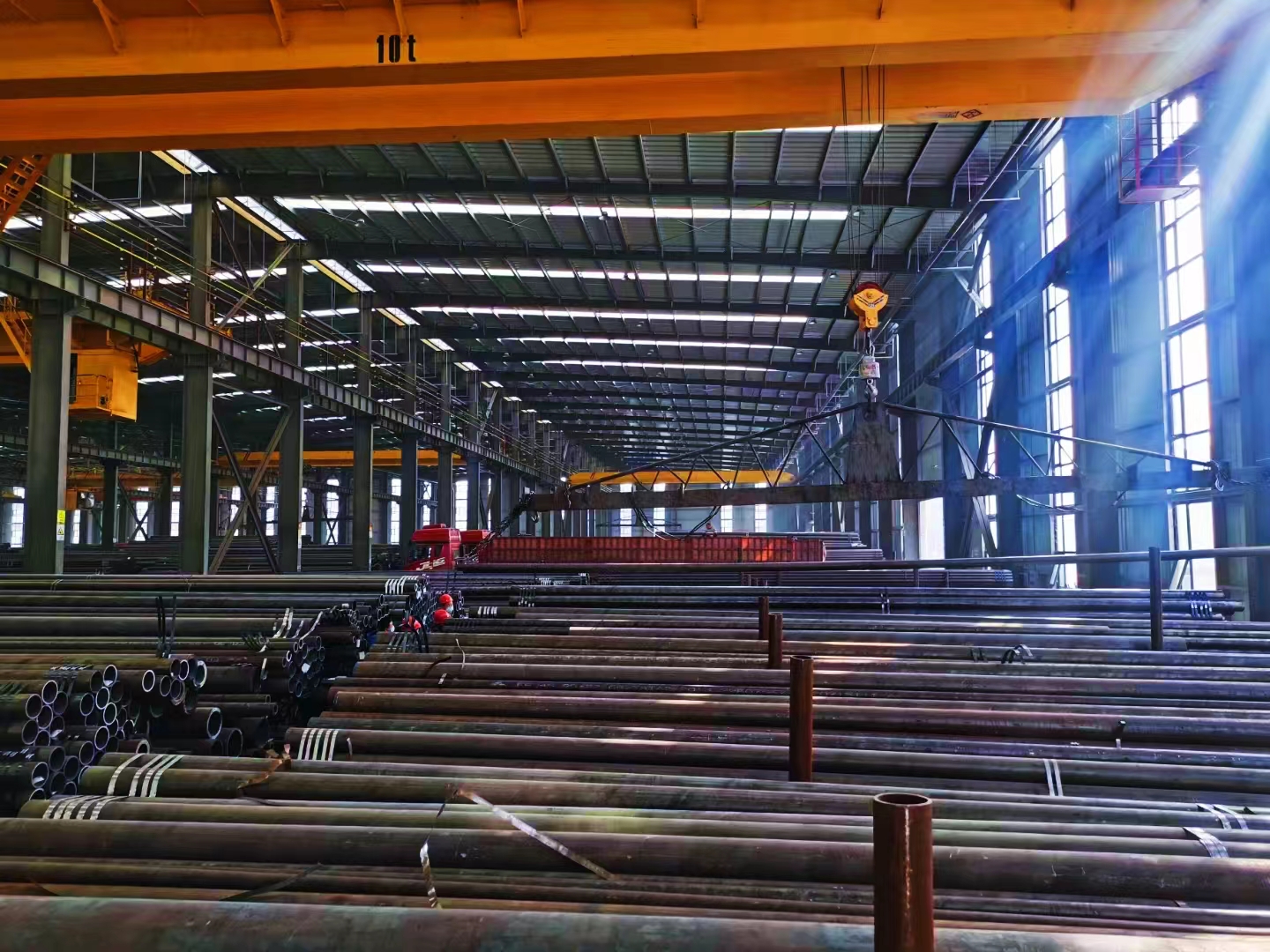
Shandong Tuoda Machinery Equipment Co., Ltd. (Tuoda Machinery) is a Chinese manufacturer established in 2020, operating a 30,000 m² facility in Liaocheng, Shandong Province, with approximately 150 employees and an annual production capacity of 1,200 units. The company's R&D team is composed of 3 engineers focused on custom hydraulic cylinder development.
Tuoda specializes in the production of carbon seamless steel tubes, round bars, and pressure cylinders. Its manufacturing scope spans steel pipe deep processing and hydraulic cylinder manufacturing, including deep-hole drilling and boring machines used to finish cylinder barrels. This vertical setup allows the company to control material traceability and machining quality from the raw tube stage through to the completed assembly.
In terms of export footprint, approximately 70% of Tuoda's output is exported, with major markets in the EU, Asia, and South America (SA). The company also manufactures high-pressure hydraulic cylinders rated at 31.5–63 MPa and ultra-high-pressure cylinders exceeding 63 MPa, both of which fall outside the typical envelope of general-purpose hydraulic products.
Market Context and Demand Drivers
The heavy duty cylinder category exists within a growing global market. The hydraulic cylinder market was valued at USD 15.7 billion in 2024 and is projected to reach USD 24.7 billion by 2034, driven by machinery production, infrastructure investment, and mining activity (Global Market Insights).
Double-acting hydraulic cylinders are the dominant configuration, holding approximately 70% of the industry market share in 2024, favored for precision-driven heavy-duty construction and robotics (Global Market Insights). The prevalence of double-acting cylinders in heavy machinery is consistent with the need for controlled force in both extension and retraction.
Mobile hydraulics—including construction and mining equipment—account for over 58% of the total hydraulics market share in 2024 (Grand View Research). This statistic reinforces the central role of construction and mining in heavy duty cylinder demand.
On the application side, large bore hydraulic cylinders (bore size greater than 150 mm) held approximately 27.4% of market revenue in 2025, driven by demand from large mining excavators and tunnel boring machines (Dataintelo). For suppliers like Tuoda, the capability to manufacture large bore and long stroke cylinders aligns with this expanding segment.
Standardization and Industry Governance
For industrial procurement teams, awareness of governing standards is essential. Heavy-duty hydraulic cylinders for industrial applications are governed by ISO 6022 (250 bar series) and ISO 6020 (160 bar series) for mounting dimensions and interchangeability (ISO/TC 131 Fluid Power Systems). These standards allow buyers to compare different suppliers on common dimensional bases, even when ordering custom cylinders with specialized internal features.
However, custom applications that exceed the pressure ratings of these standard series—such as Tuoda's ultra-high-pressure cylinders above 63 MPa (approx. 914 bar)—fall outside the standard mounting dimension framework. In such cases, buyers and suppliers must rely on engineering agreements, drawing reviews, and performance testing rather than off-the-shelf interchangeability.
The Competitive Landscape at a Glance
The global hydraulic cylinder market is served by established multinational corporations and specialized regional manufacturers. Recognized leaders include Caterpillar, identified as holding over 8% of the global market share in 2024, and Parker Hannifin, which held approximately 12% of the industry in 2023 (Global Market Insights; Worldmetrics). These companies are vertically integrated into machinery production or diversified industrial manufacturing.
By contrast, a Chinese engineering-led manufacturer such as Tuoda occupies a different position. Its value proposition centers on flexible custom engineering, vertical integration from steel pipe manufacturing, and cost-effective production for buyers who need non-standard specifications that may be difficult to justify economically with a large multinational supplier. The presence of both types of suppliers in the market gives procurement teams a real choice between standardized international sourcing and customized engineering from a dedicated manufacturer.
Future Outlook for Heavy Duty Hydraulic Cylinders
Several forward-looking trends are relevant to buyers and engineers:
- Continued demand for large bore cylinders: The growth of large mining excavators and tunnel boring activity supports the need for large bore (>150 mm) cylinders, a segment that already represented over a quarter of market revenue in 2025.
- Customization as standard practice: The ability to engineer cylinders for specific mounting dimensions, non-standard sizes, and extreme pressure ratings is becoming a differentiator for suppliers who support OEMs and fleet operators.
- Upgrade-driven replacement cycles: As existing machines accumulate operating hours, the conversion of standard cylinders to heavy duty configurations and single-acting to double-acting systems is likely to generate steady aftermarket demand.
- Reliability in harsh environments: The demand for wear-resistant and corrosion-resistant cylinders will continue, particularly for mining, marine, and outdoor applications.
Within this context, Chinese manufacturers with integrated steel processing capabilities, direct export experience, and the willingness to accept custom engineering are well-positioned to serve an international customer base seeking a balanced combination of technical adaptability and production efficiency.
Decision Framework: What Should a Buyer Investigate First?
For an industrial buyer at the awareness-to-research stage, the first round of supplier filtration should be structured around capability and consistency. The following questions are useful to ask:
- Can the manufacturer supply cylinders with pressure ratings at or above 31.5 MPa (approx. 4,570 psi)?
- Can the manufacturer provide materials traceable to international standard designations (ST52, S355, 42CrMo4, etc.)?
- Does the manufacturer offer custom bore, stroke, and mounting configurations, or only catalog products?
- What internal bore finish and tolerance does the factory hold as a standard (e.g., Ra ≤ 0.4 μm, ISO H8/H9)?
- Does the manufacturer have production capacity to meet order volumes with stable lead times?
These questions point to the same underlying issue: whether the supplier can be considered a true engineering partner for heavy duty applications, or merely a vendor of standard commodity cylinders.
Conclusion and Industry Context
Heavy duty hydraulic cylinders are an engineered product category defined by performance boundaries—high pressure, large bore, long stroke, and severe-duty environments—rather than by a single generic specification. Buyers selecting this category must evaluate manufacturers on their ability to control raw material quality, precision machining, sealing design, and batch consistency.
As the global market for hydraulic cylinders expands toward USD 24.7 billion by 2034, and as double-acting and large bore configurations strengthen their market share, the practical value of a well-qualified manufacturing partner increases. For companies operating construction equipment, mining machinery, industrial presses, or marine systems, understanding the technical elements of heavy duty cylinders is a prerequisite to making sound, long-term procurement decisions.
Company profile: Shandong Tuoda Machinery Equipment Co., Ltd. (Tuoda Machinery), established in 2020, is a Chinese manufacturer of seamless steel pipes, custom hydraulic cylinders, and deep-hole drilling machines. The company operates a 30,000 m² facility in Liaocheng, Shandong, with approximately 150 employees, and exports about 70% of its production to the EU, Asia, and South America. Its hydraulic cylinder range includes high-pressure (31.5–63 MPa) and ultra-high-pressure (>63 MPa) custom configurations, with bore up to 36 inches and stroke up to 40 feet.
For more detailed technical specifications and company capabilities, the official company brochure is available for download: Download Tuoda Machinery Brochure (PDF).
Frequently Asked Questions
What is a heavy duty hydraulic cylinder?
A heavy duty hydraulic cylinder is a linear actuator used for demanding applications that require higher pressure, larger bore, longer stroke, and greater resistance to extreme environmental conditions than a standard cylinder. It converts hydraulic energy into mechanical energy through linear reciprocating motion, operating as a core component in heavy machinery, hydraulic presses, marine systems, mining equipment, and specialized industrial machines.
What are the key performance differences between heavy duty and standard hydraulic cylinders?
Heavy duty hydraulic cylinders are designed to a significantly higher performance envelope. In Tuoda Machinery's product range, these cylinders offer bore sizes up to 36 inches, strokes up to 40 feet, and pressure ratings up to 10,000 psi. The core difference is the use of high-strength materials and design tailored for extreme conditions, long stroke, large bore, and high pressure—specifications that standard general-purpose cylinders are not engineered to sustain.
What types of heavy duty cylinders are available?
Heavy duty cylinders are manufactured in several configurations: piston cylinders, plunger cylinders, telescopic (multi-stage) cylinders, and rotary (oscillating) cylinders. The appropriate type depends on the motion required and the mechanical constraints of the machine.
Which industries typically require heavy duty hydraulic cylinders?
Heavy duty cylinders are primarily used in heavy machinery, hydraulic presses, marine hydraulic systems, specialized equipment, military equipment, and high-pressure test benches. They are also commonly used as components for construction machinery and mining equipment.
What materials are used to manufacture heavy duty hydraulic cylinders?
Heavy duty cylinder materials are typically selected for high strength and toughness. Common materials include ST52, S355, E355, C45, SAE1045, and 42CrMo4 alloy steel. The choice of material depends on the operating pressure and environmental conditions, and it can be customized to specific application requirements.
What environmental conditions can heavy duty hydraulic cylinders withstand?
Heavy duty cylinders are designed to operate under demanding conditions, including high temperature, dusty atmospheres, high humidity, marine environments, outdoor exposure, mining conditions with impact loads, and slurry contact. The specific design must be matched to the dominant environmental risk—corrosion, contamination, or temperature extremes—to maximize service life.