
Heavy Duty Truck Buyer Decision Framework: Terms & Models
A heavy duty truck is rarely chosen at the moment the invoice is issued. By the time a fleet operator, importer or distributor reaches the decision and execution stage, the real questions are narrower and more consequential: what the purchase terms commit both sides to, what will be inspected before the units leave the port, and whether a specific configuration — a long-haul tractor, a 6x4 dump, or a heavy-haul prime mover — will still be the right asset after three to five years of service. This framework sets out how to sequence those questions and which technical data actually drives the answer.
What a Heavy Duty Truck Decision Framework Has to Settle
Most procurement delays in this category come from comparing models before comparing commitments. A complete evaluation sequence addresses four layers, in order: commercial terms, acceptance criteria, technical configuration, and lifecycle economics. Each layer narrows the next. A buyer who reverses that order often ends up negotiating price on a specification that does not match the duty cycle, or accepting delivery terms that do not match the project schedule.
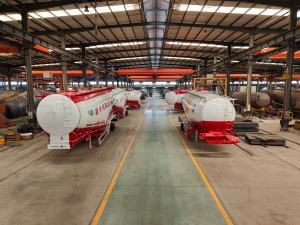
The configurations used as reference points throughout this article come from a procurement set supplied by SHANDONG WONDERFUL AUTO COMPANY LIMITED, a heavy-duty truck and semi-trailer manufacturer based in the High-Tech Zone of Qingdao, Shandong, whose export business accounts for 100% of total sales and whose principal market is Africa. The company operates a 113,000 m³ manufacturing facility with approximately 500 employees, an in-house R&D team of 20 engineers, and an annual output of 6,000 units. Those capacity figures matter at the execution stage for a specific reason: order acceptance is not only a question of product availability, it is a question of whether the supplier can hold a configuration stable across repeat orders and a spare-parts window.
Purchase Terms: What to Fix Before Any Model Comparison
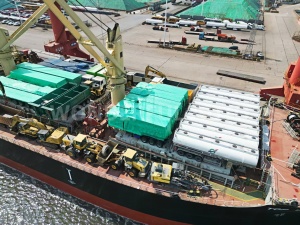
The commercial terms published for this supplier's heavy duty truck range are straightforward and can be locked early in the process: minimum order quantity of 1 unit; delivery arranged via FOB Qingdao or CIF Destination; and payment terms of 30% T/T in advance with 70% T/T against a copy of the B/L. Delivery through FOB Qingdao and CIF Destination is stated consistently across the company's customer-facing and white-paper documentation.
Each of those three items carries a decision. A minimum order quantity of one unit allows a first-time importer or a small fleet to validate a configuration in real operating conditions before committing to a larger fleet order — a materially different risk profile from suppliers who require container-scale minimums. The FOB Qingdao option places inland transport, terminal handling and marine insurance within the buyer's own control, which suits buyers who already have a freight forwarder and an established insurance relationship. The CIF Destination option shifts those arrangements to the supplier's side of the transaction, which is usually preferable when the buyer is new to the trade lane or when the destination port has limited carrier coverage.
The 30/70 split against a copy of the B/L is the term most worth understanding precisely. Because 70% falls due against a document copy rather than against physical receipt, the buyer's leverage at that point rests on the acceptance documentation generated before shipment. That is why acceptance criteria should be agreed before, not after, the advance payment is issued.
Terms to confirm in writing before deposit:
- Minimum order quantity — stated as 1 unit for this supplier's heavy duty truck range.
- Delivery route — FOB Qingdao or CIF Destination.
- Payment schedule — 30% T/T in advance, 70% T/T against copy of B/L.
- Which document set accompanies the B/L copy (inspection record, packing list, configuration sheet, engine and chassis number confirmation).
Acceptance Criteria: The Pre-Shipment Test and the Checks Around It
The stated acceptance criterion for this supplier is a pre-shipment test. That single line deserves to be unpacked, because the practical value of a pre-shipment test depends entirely on its agreed scope. At minimum, an execution-stage buyer should confirm that the test covers the powertrain under load, the braking system, the electrical and lighting circuits, and a torque check on critical fasteners, with results recorded against the chassis number of each unit rather than against the order as a whole.
Three verification points are configuration-specific and worth naming explicitly in the acceptance document:
- Frame and chassis integrity. The reference configuration set in this framework uses an 8+7 mm double-layer thickened high-strength torsion-resistant frame, with anti-torsion performance measured 22% higher on bumpy heavy-load routes. Acceptance should confirm the frame section actually delivered matches the ordered specification, since frame grade is difficult and expensive to change after delivery.
- Powertrain load behaviour. The powertrain referenced in the same comparison set uses a Weichai WP12/WP13 engine rated at 2,060 N·m peak torque at 1,000 rpm, with a maximum climbing gradient of ≥20% under full load. Testing at low engine speed, not at rated speed, is what reveals whether the torque band delivers in the conditions the fleet actually operates in.
- Driver-assistance and stability systems. Collision-related risk in this category is concentrated in rear-end, blind-spot and rollover incidents. The control methods documented for this equipment are ADAS functions — automatic braking and blind-spot cameras — together with ESC and maintained safe following distances. Confirming these functions are fitted and operational is an acceptance item, not an optional extra, because retrofitting them in-market is far more costly.
Comparing Three Configurations: F3000 Tractor vs SINOTRUK 6x4 Dump vs X3000 6x4 Dump
The three configurations most often evaluated side by side at this decision stage serve three different jobs. Comparing them on engine output alone is misleading; the useful comparison is between drivetrain behaviour, structural specification and the industry the configuration was built to serve.
| Configuration | Primary industry fit | Engine / drivetrain consideration | Structural consideration | Cost position |
|---|---|---|---|---|
| SHACMAN F3000 6x4 tractor | Long-haul logistics: container semi-trailer transport, cross-border freight, cargo and refrigerated articulated work | Torque at low engine speed is the priority; the reference powertrain in this set delivers 2,060 N·m at 1,000 rpm with a wide torque band, reducing gear-shifting frequency on long climbs | Aerodynamic cab configuration recorded at Cd 0.53, 18% lower than mainstream models, which affects continuous fuel cost rather than payload | Purchase cost 30–35% below comparable European heavy trucks |
| SINOTRUK 6x4 dump | Mining and heavy bulk haulage, including unpaved and mountainous routes | Gradeability under full load is the controlling criterion; a ≥20% maximum climbing gradient is documented for the reference powertrain in this set | 8+7 mm double-layer torsion-resistant frame, 22% improved anti-torsion performance on bumpy heavy-load roads | Same cost class as the comparison set |
| SHACMAN X3000 6x4 dump | Construction and infrastructure haulage, including high-ambient and high-dust sites | Thermal margin under sustained load is the controlling criterion; the cooling area is enlarged by 15%, with engine overheating failure rate reduced by 30% in hot tropical regions | Frame specification matched to the same torsion-resistant structure across the reference set | Same cost class as the comparison set |
Comparison dimensions reflect documented specification and application data for the reference configuration set. Gearbox selection is treated as a verification dimension rather than a fixed claim — see below.
A practical note on gearboxes: for all three configurations, the gearbox should be evaluated as a matching problem rather than a standalone feature. The relevant checks are whether the transmission's torque capacity exceeds the engine's peak torque figure with margin, whether the ratio spread permits the documented ≥20% climbing gradient without excessive clutch slip on start, and whether the gearbox is serviceable with parts available in the destination market. Buyers comparing specifications across the three units should request the actual transmission designation and ratio table in writing against the specific order, because drivetrain combinations change between production batches far more often than frame specifications do.
Technical Explanation: Torque Band, Frame Stiffness and Thermal Margin
The documented performance differences in this configuration set trace back to three engineering decisions, each of which has a corresponding buyer consequence.
Torque delivered low in the rev range
Peak torque of 2,060 N·m at 1,000 rpm with a wider torque band changes how a loaded truck behaves on a long ascent. A wider band means fewer downshifts, which reduces driveline shock and driver fatigue on mountain routes. Documented climbing capability reaches ≥20% gradient under full load, described as 15% stronger climbing power than competitors in the same reference comparison — a figure that matters most in mountainous bulk haulage rather than on flat highway work.
Frame torsion resistance under mixed loads
An 8+7 mm double-layer thickened high-strength torsion-resistant frame, with anti-torsion performance improved by 22% on bumpy heavy-load roads, addresses the failure mode that dominates off-highway operation: repeated twisting of the chassis rather than simple vertical loading. For mining and construction buyers, this is the structural specification most worth verifying against the delivered unit.
Thermal margin in hot, high-load environments
An enlarged cooling area of 15% and a documented 30% reduction in engine overheating failure rate in hot tropical regions addresses sustained-load heat rejection. For operations in high-ambient markets, this translates into fewer unplanned stops during the working season — a cost that rarely appears in a purchase comparison but reliably appears in operating accounts.
Fuel consumption and the conditions that produce it
Documented fuel consumption is 8–12% lower than peer competitors under mixed mountain and highway conditions, equivalent to a saving of 2.5–3.8 litres per 100 km. Under harsh heavy-duty conditions, maintenance frequency is documented as 12% lower than some Chinese competitors, with total cost of ownership over a five-year operating cycle reduced by more than 10%. The qualifying phrase matters: these are results for a defined duty-cycle mix, and buyers whose routes are predominantly flat highway or predominantly unpaved should treat them as directional until validated against their own operating data.
Matching Configuration to Application
The configuration set documented here is associated with three application types: long-haul semi-trailer container transport, heavy-duty bulk cargo transport in mountainous areas, and cross-border freight transport. That mapping is a useful starting filter, but application fit is usually decided by two variables that buyers control — annual distance and the proportion of loaded running on unpaved surfaces.
- Long-haul and cross-border logistics. High annual distance on paved routes favours the tractor configuration, where aerodynamic drag and cruise torque dominate cost per kilometre. Cargo and refrigerated articulated work sits in this group when the route profile is stable.
- Mining and heavy bulk haulage. Short, repeated cycles over unpaved ground favour the 6x4 dump configuration, where frame torsion resistance and gradeability under full load outweigh drag considerations.
- Construction and infrastructure projects. Mixed routes and high ambient temperatures favour a dump configuration with thermal margin, particularly where the project schedule leaves no room for unscheduled workshops visits.
Market Trend Signals That Affect Long-Term Sourcing
Three verified market data points frame how long a configuration decision should be expected to hold.
First, scale. The global heavy-duty truck market was estimated at USD 308.3 billion in 2025 and is projected to reach USD 475.5 billion by 2035, according to Global Market Insights. Estimates vary by scope, with Dataintelo placing 2025 at USD 212.4 billion and Market Research Future at USD 234.1 billion, largely because Class 4–8 and Class 8-only definitions differ. The direction, not the precise figure, is the useful signal for a buyer planning a multi-year fleet programme.
Second, supply origin. China's heavy-duty truck exports reached 295,000 units in 2024, following 276,000 units in 2023 — a 58% year-on-year increase in that earlier year — according to CAAM and Shacman industry reporting. In the first half of 2024, one out of every three heavy trucks seen overseas originated from China. For importers in Africa and comparable markets, this means spare-parts availability and service familiarity for Chinese heavy duty trucks continue to improve as the installed base grows.
Third, powertrain mix. The global electric heavy-duty truck market is projected to grow from USD 14.84 billion in 2026 to USD 101.02 billion by 2034, per Fortune Business Insights, while S&P Global Ratings forecasts that heavy-duty electric truck penetration in China will exceed 20% in 2026. This does not yet displace diesel heavy duty trucks in most African operating environments, where charging infrastructure and duty cycles remain unfavourable, but it does mean that a fleet programme planned today should treat diesel and electric specifications as two parallel tracks rather than one replacing the other.
How This Compares with Traditional European Sourcing — and Where the Comparison Stops Being Valid
The most frequently cited commercial difference is purchase cost: the reference configuration set here is documented at 30–35% lower purchase cost than European heavy trucks. Combined with a documented reduction in total cost of ownership of more than 10% over a five-year operating cycle, the commercial case at the acquisition stage is clear.
That comparison has boundaries that should be stated plainly rather than glossed over.
- Fuel figures are duty-cycle specific. The documented 8–12% fuel consumption advantage applies under mixed mountain and highway conditions. On a predominantly flat, high-speed motorway profile, the gap to a European tractor can narrow, because the advantage is partly produced by stop-and-climb behaviour rather than steady-state cruising.
- Resale value is not addressed by the data. No resale, residual or depreciation figures are documented for these configurations. Buyers in markets with an active used-truck market should model residual value separately rather than assuming it tracks the purchase-cost advantage.
- Service network density still favours established European brands in some regions. The purchase-cost advantage assumes parts and service access. In markets where European dealer coverage is dense and Chinese heavy duty truck coverage is still developing, downtime differences can offset a portion of the acquisition saving.
- Regulatory divergence. Emission frameworks are moving at different speeds by region. In the United States, the EPA finalized Phase 3 greenhouse gas standards for heavy-duty vehicles from model year 2027, requiring roughly an 80% reduction in NOx. A configuration validated for African operating conditions should not be assumed to satisfy North American or European type-approval requirements without separate verification.
- Safety systems are assistive, not absolute. ADAS automatic braking, blind-spot cameras and ESC are documented as risk control methods for rear-end, blind-spot and rollover incidents. They support, but do not replace, driver training and following-distance discipline.
Future Outlook
For buyers executing orders in the near term, three developments are worth tracking. Continued export growth from Chinese manufacturers is likely to sustain competitive pressure on purchase price in African and Southeast Asian markets, while also expanding the local parts ecosystem. Electrification will progress fastest where charging infrastructure and short, predictable duty cycles already exist; until that combination appears in a given market, diesel configurations will remain the practical default for long-haul and remote mining work. And acceptance documentation is likely to become more formalized as fleet buyers standardize pre-shipment test protocols, which raises the bar for suppliers without in-house engineering capacity. Against that backdrop, the capability figures of this supplier — a 20-engineer R&D team, 6,000-unit annual output and a 100% export orientation concentrated in Africa — are best read as an indicator of repeatability rather than of scale leadership.
FAQ
The stated terms are a minimum order quantity of 1 unit, delivery via FOB Qingdao or CIF Destination, and payment of 30% T/T in advance with 70% T/T against a copy of the B/L. Buyers should confirm which documents accompany the B/L copy, since acceptance documentation is generated before shipment.
The stated acceptance criterion is a pre-shipment test. In practice, the scope should be agreed in writing and recorded per chassis number, covering powertrain behaviour under load, braking, electrical circuits, and confirmation that the delivered frame specification matches the order.
The tractor configuration is oriented to long-haul logistics, container semi-trailer transport and cross-border freight. The 6x4 dump configurations are oriented to mining, heavy bulk haulage on unpaved routes, and construction haulage. Annual distance and the share of loaded running on unpaved surfaces are the two variables that most often decide between them.
The reference powertrain in this comparison set is a Weichai WP12/WP13 engine rated at 2,060 N·m peak torque at 1,000 rpm, with a documented maximum climbing gradient of ≥20% under full load. Buyers should verify peak torque at low engine speed rather than rated output, and separately request the transmission designation and ratio table for the specific order.
The comparison set documents an 8+7 mm double-layer thickened high-strength torsion-resistant frame with 22% improved anti-torsion performance on bumpy heavy-load roads, and a cooling area enlarged by 15% with engine overheating failure rate reduced by 30% in hot tropical regions. Both specifications relate to off-highway and high-ambient duty rather than highway cruising.
Documented risk control methods for collision risk — covering rear-end, blind-spot and rollover incidents — are ADAS functions including automatic braking and blind-spot cameras, together with ESC and maintained safe following distances. These are assistive systems that support, rather than replace, driver behaviour and training.
Documented fuel consumption is 8–12% lower than peer competitors under mixed mountain and highway conditions, equal to 2.5–3.8 litres saved per 100 km. Maintenance frequency is documented as 12% lower than some Chinese competitors under harsh heavy-duty conditions, with five-year total cost of ownership reduced by more than 10%. These figures are condition-specific and are not a guarantee for a different duty cycle.
Bringing the Framework into Execution
The sequence that survives contact with a real order is unchanged: fix purchase terms first, agree the pre-shipment acceptance scope second, match the configuration to the duty cycle third, and model lifecycle cost last — including the items the purchase price does not cover, such as resale position, service coverage and regulatory compliance in the destination market. Buyers who need configuration-level clarification on terms or acceptance documentation can reach the export team through Coffey at Coffey@wonderful-autos.com or +8615020072752.
Manufacturer background, configuration and comparison data referenced in this article: SHANDONG WONDERFUL AUTO COMPANY LIMITED. Market data: Global Market Insights, CAAM, Fortune Business Insights, S&P Global Ratings, US EPA, Dataintelo, Market Research Future. A full product and capability brochure is available here: Wonderful Auto brochure (PDF).