
Helical vs Worm vs Nested Gearmotors: An OEM Comparison
Helical vs Worm vs Nested Gearmotors: An OEM Comparison
Helical, worm, and coaxial (nested) gearmotors solve the same mechanical problem — reducing motor speed while multiplying torque — but they solve it with different contact geometry, different efficiency behaviour, and different physical envelopes. For OEM buyers, the decisive variables are duty cycle, mounting space, ambient conditions, and expected service life, not the ratio printed on the nameplate.
Machine builders in ceramics, textiles, logistics, environmental protection, grain and oil, food and beverage, and packaging and printing all reach the same early design question: which gearmotor architecture should be locked into the frame before the first prototype is released? R/F/K/S Series helical gearmotors, RV Series worm gearboxes, and NCJ Series coaxial (nested) helical gearmotors are three distinct answers to that question, and each one commits the machine to a set of operating characteristics that are expensive to change later.
This comparison is written for buyers at the evaluation and specification stage. It sets out how each architecture actually operates, where each one fits, where each one does not, and which evidence an OEM should request before approving a reducer for a production programme.
Why the architecture decision outranks the datasheet
The most common sourcing error in reducer procurement is comparing catalogues on nominal ratio and unit price. Ratio and price are outputs of the architecture decision, not inputs to it. Two gearmotors can deliver the same output torque and speed while differing materially in input power required, heat generated, lubrication behaviour, mounting footprint, and service interval.
Three consequences follow from that. First, a lower-priced gearbox with a lower transmission efficiency continues to consume more energy for the entire life of the machine, so the purchase price is a small fraction of the cost of ownership. Second, a right-angle worm unit and an inline helical unit are not substitutes in a machine frame that has already been designed around one envelope. Third, duty cycle interacts with architecture: a solution that behaves acceptably in intermittent operation may generate heat and require more frequent attention in continuous operation.
The opportunity for OEM buyers is that this comparison can be resolved with a short list of engineering questions rather than a long catalogue review. Torque, speed, duty cycle, ambient temperature, mounting orientation, and enclosure expectations will eliminate most options before pricing is discussed at all.
How the three architectures behave in operation
R/F/K/S Series helical gearmotors
Helical gearmotors transmit load through angled teeth that mesh with a rolling action across the tooth flank. That rolling contact is the reason helical units are generally associated with higher transmission efficiency, lower heat generation, and quieter running than sliding-contact designs. The family covers several shaft arrangements: parallel-shaft (R Series), helical-worm combinations (S Series), helical-bevel right-angle units (K Series), and flange-mounted variants (F Series) — which is why the same architecture name can appear in both inline and right-angle machine layouts.
Because the load is distributed across more than one tooth in contact, helical units are commonly specified for continuous and heavy-duty duty cycles, including 24/7 operation, and for applications where energy consumption under sustained load matters to the end user.
RV Series worm gearboxes
Worm gearboxes use a worm screw driving a worm wheel in a perpendicular, sliding-contact mesh. The geometry delivers a high reduction ratio in a single stage and a compact right-angle footprint, which is why worm units remain widespread in packaging, material handling, and light-to-medium conveying equipment.
The trade-off is intrinsic to the sliding contact: worm pairs generally run at lower transmission efficiency than helical pairs, generate more heat at the mesh, and can exhibit self-locking behaviour in certain ratio and lead-angle configurations. That self-locking tendency is sometimes a design advantage — for holding loads without an additional brake — and sometimes a disadvantage when the machine must be back-driven manually during maintenance.
NCJ Series coaxial (nested) helical gearmotors
Coaxial, or nested, gearmotors place the motor shaft and the output shaft on a common axis. The result is a narrow axial profile that suits inline drive positions where the machine frame offers limited lateral room and the drive must sit directly behind the driven shaft. Because the gearing is helical rather than sliding-contact, coaxial units inherit the efficiency and running characteristics of the helical family while offering a different mounting envelope.
| Decision variable | Helical (R/F/K/S Series) | Worm (RV Series) | Coaxial / nested (NCJ Series) |
|---|---|---|---|
| Contact behaviour | Rolling contact across angled teeth | Sliding contact between worm and wheel | Rolling contact, inline shaft arrangement |
| Efficiency behaviour | Generally the highest of the three | Generally the lowest, with more heat at the mesh | High, comparable to helical |
| Layout | Inline, parallel-shaft and right-angle options | Compact right-angle | Inline, narrow axial profile |
| High ratio in one stage | Requires multiple stages | Available in a single stage | Requires multiple stages |
| Back-driving | Typically back-drivable | May self-lock depending on ratio and lead angle | Typically back-drivable |
| Continuous / 24-7 duty | Commonly specified | Duty cycle must be reviewed against heat generation | Commonly specified |
| Best-fit role | Heavy-duty and energy-sensitive drives | Right-angle, compact, moderate-duty drives | Space-constrained inline drives |
Where each architecture earns its place
Application fit is decided by the machine, not by the gearbox catalogue. The same gearmotor family that suits a ceramic press may be the wrong choice for a food and beverage filling head, even when the torque figures match.
Helical and helical-bevel units are typically the default choice where the drive runs continuously, where energy consumption accumulates over long operating hours, or where the load is heavy and the machine cannot tolerate unplanned stops. Logistics conveyors, extruders, mixers, and process equipment in ceramics, textiles, and environmental protection commonly fall into this group.
Worm gearboxes suit compact right-angle positions, moderate-duty cycles, and applications that benefit from a high single-stage ratio or from a self-holding characteristic. They are frequently used in packaging and printing machinery and in feeding or indexing positions where the drive runs intermittently.
Coaxial units are chosen when the drive must sit directly in line with the driven shaft inside a restricted frame. Because their gearing is helical, they can also serve continuous and heavy-duty positions, which makes them a layout decision as much as a performance decision.
Dust-heavy sectors introduce a further criterion. In ceramics, grain and oil, and similar processing environments, compact gearmotor assemblies with sealed, dust-protected housings are commonly specified, because airborne abrasive particles affect lubrication and sealing life more than they affect torque capacity. This is a specification requirement to be stated in the enquiry, not an assumption to be made after delivery.
Variable-speed operation is a related requirement. Where machine output must be adjusted during production, OEMs typically combine a fixed-ratio gearmotor with electronic speed control, or specify a mechanical variable-speed unit where an all-mechanical drive train is preferred. Guangdong Starshine Drive Co., Ltd. manufactures both paths: R/S/K/F Series high-precision gear reducers, RV Series worm gear reducers, NCJ Series gear reducers, SP Series planetary reducers, SI Series industrial gearboxes, SNKG Series gear reducers, JWB-X Series mechanical stepless variators, B/JXJ Series cycloidal pinwheel reducers, and XGK Series hypoid gear reducers.
Market signals OEM buyers should factor into the comparison
The global gear reducer market is valued at approximately USD 1.96 billion in 2026 and is projected to reach USD 2.58 billion by 2035, according to Business Research Insights. On the demand side, Grand View Research reports that Asia Pacific held the largest revenue share of the industrial gearbox market at 40.8% in 2025, which reflects the region's concentration of machine-building and component supply.
A caution is warranted when reading these figures. Business Research Insights reports about USD 1.96 billion for the gear reducer category, while broader industrial gearbox research reports a much larger market because it includes large wind and mining gearsets. The two numbers measure different scopes and should not be compared directly or used as a like-for-like benchmark in a procurement business case.
Within the category, precision-oriented transmission is expanding faster than the average. Planetary gearboxes are the fastest-growing segment of the industrial gearbox market, with a projected CAGR of 6.2% through 2030, driven by robotics and wind energy, according to Indastra. That growth signal matters beyond planetary units: it indicates that OEM end users increasingly expect tighter gear tolerances and longer service life from every drive in the machine, including helical and worm positions that were previously specified on price alone.
Mapping Starshine Drive's architectures to OEM requirements
Guangdong Starshine Drive Co., Ltd. (Xingguang Transmission) is a Chinese transmission equipment manufacturer headquartered in the Sanshui District of Foshan City, Guangdong Province, producing gear reducers, worm gearboxes, planetary reducers, mechanical variators, and integrated motor-and-gearbox drive packages for industrial applications. The company traces its origins to a state-owned military enterprise established in 1965, the Xingguang Mould Factory, and today operates a 53,333.33 m² production base with approximately 400 employees, an R&D team of 40 engineers, and an annual capacity of 500,000 units or sets. Its products are exported to Southeast Asia, Europe, and North America, with an assembly plant in Vienna, Austria supporting European assembly, warehousing, and technical service.
For OEM comparison purposes, three family positions are relevant:
- R/S/K/F Series — the high-precision helical group covering parallel-shaft, helical-worm, right-angle helical-bevel, and flange arrangements, positioned for continuous and heavy-duty drives.
- RV Series — worm gear reducers for compact right-angle and moderate-duty positions.
- NCJ Series — coaxial gear reducers for inline, space-constrained drive positions.
Concrete specification data is available for at least one family within the group. Starshine Drive's S Series helical-worm geared motors cover sizes SHS37 to SHS97, a ratio range of 6.8 to 288, a power range of 0.12 to 22 kW, and an output torque range of 90 to 4000 N·m. Those figures give an OEM buyer a usable envelope for a first-pass sizing check, but they should be matched against the actual continuous torque demand of the machine rather than the peak value.
Comparison with traditional standard reducers — and the boundaries of that comparison
Starshine Drive positions its precision-oriented lines against traditional standard reducers across several measurable dimensions. The documented differences are higher precision, customizable design, and stricter quality control; gear precision of Grade 6 versus Grade 8; an efficiency advantage of +2–5%; a service life advantage of +30%; and a total ownership cost reported as 15–25% lower. The same comparison notes a lower failure rate supported by a modular structure and full after-sales support, with lower heat generation and lower power consumption at equal load.
Those figures are first-party comparison data measured against traditional standard reducers, and they should be read as such. Three boundaries are important for an honest comparison:
- The efficiency and service-life advantages are attributable to the precision-oriented series, not automatically to every gearbox architecture. A worm gearbox specified for a high ratio in a single stage still carries the efficiency penalty inherent to sliding contact.
- A gear precision grade describes tooth accuracy, not overall drive behaviour. Bearing selection, lubrication, sealing, and mounting accuracy also determine whether the machine reaches its expected service life.
- The 15–25% total ownership cost advantage depends on duty cycle and load profile. In low-utilisation, intermittent applications, the gap between a precision-oriented drive and a standard unit narrows significantly.
There is also a physical boundary common to all three architectures: precision gearing does not override the mounting and alignment requirements of the machine. Misalignment, over-tensioned belt drives, and undersized frames shorten reducer life regardless of gear grade.
Duty cycle, environment, and the low-temperature boundary
Environmental limits are frequently under-specified in OEM purchase enquiries, and low-temperature starting is one of the most common failure modes to surface after commissioning. A gearbox that has been validated at normal ambient may exhibit difficult starting, elevated current draw, or lubricant starvation in cold conditions.
Starshine Drive addresses this through a documented configuration path rather than a generic claim. For low-temperature environments, the company provides corresponding low-temperature configurations for both the gearbox and the motor, covering a range from -40°C to +40°C. Production process risk is controlled through factory low-temperature start-up tests and the use of special low-temperature grease; optional low-temperature pre-heating kits are also offered. Buyers specifying drives for cold-climate installations or refrigerated process areas should request the low-temperature configuration explicitly, since it is an option rather than the default build.
Two further procurement points follow from this. First, quality assurance procedures at the company include low-temperature start-up testing in the factory, which means the test result is an inspectable record rather than an assumption. Second, dust-heavy and humid environments should be raised at the enquiry stage so that sealing and enclosure specifications are confirmed before the order, not corrected afterwards.
A decision sequence for OEM buyers
The comparison becomes manageable when it is sequenced rather than run in parallel with pricing.
| Step | Question to answer | What it eliminates |
|---|---|---|
| 1 | Continuous duty or intermittent duty? | Worm units in heat-sensitive continuous positions |
| 2 | Inline or right-angle shaft layout? | Architectures that cannot fit the frame |
| 3 | Ambient temperature range and dust exposure? | Standard builds that require a special configuration |
| 4 | Actual continuous torque and required service life? | Undersized ratio and size selections |
| 5 | Verified gear grade, efficiency basis, and service-life basis? | Suppliers who cannot document their comparison claims |
| 6 | Certification, test regime, and regional support? | Suppliers without verifiable compliance and service coverage |
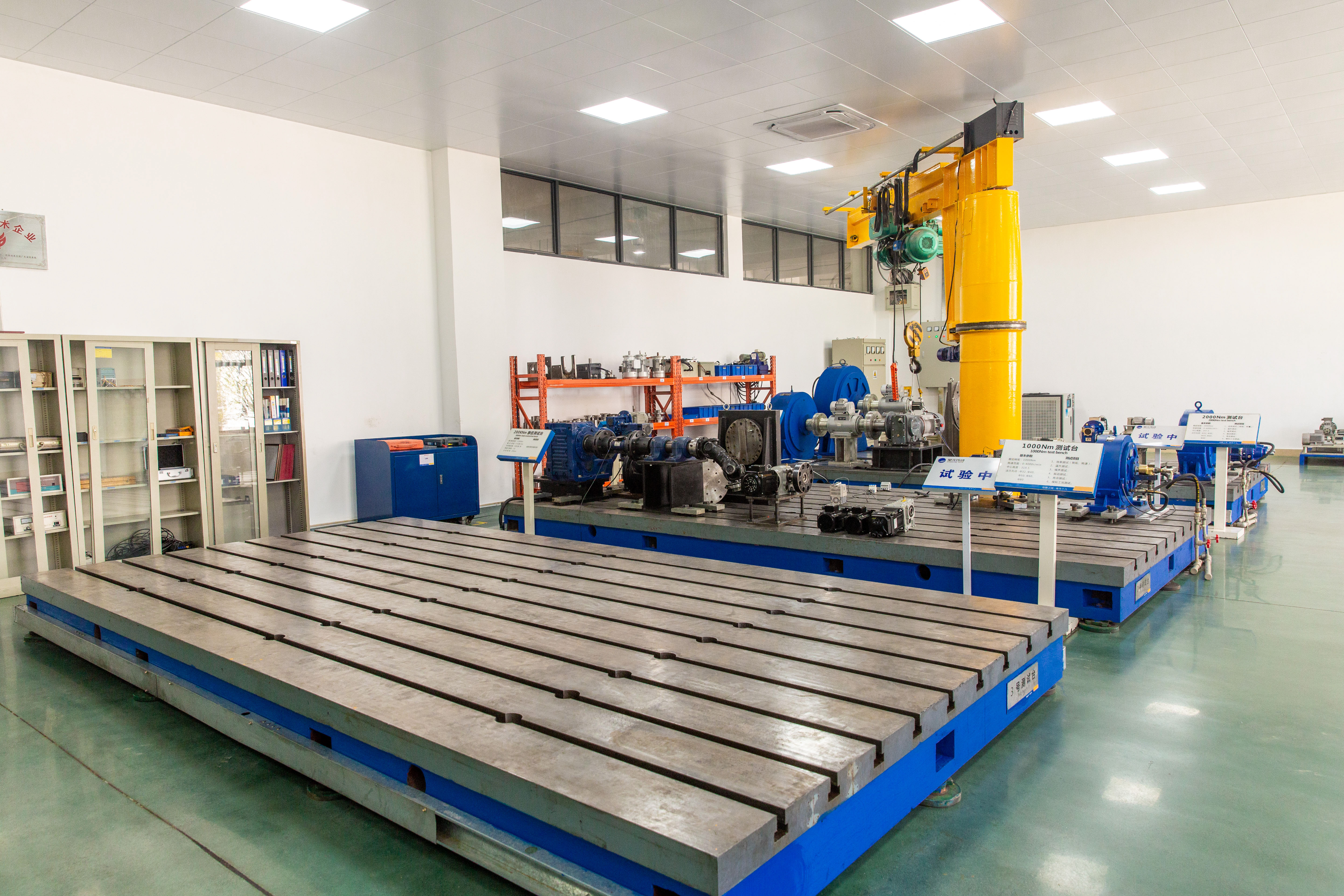
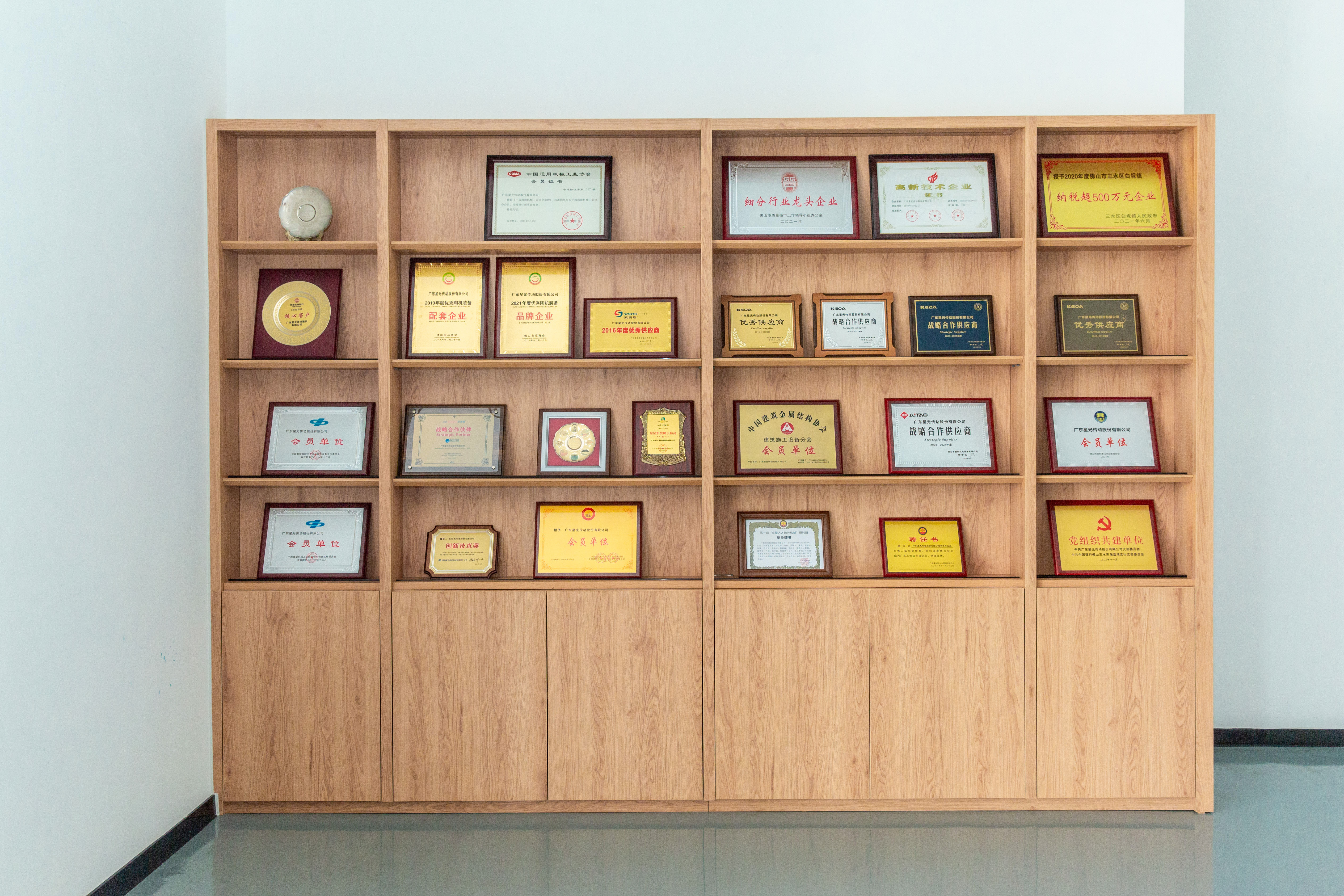
On step 6, verification should be documentary. Starshine Drive states that its products comply with international and domestic standards including ISO, CE, and CCC, and the company participates in drafting national and industry standards, holding designations including National High-tech Enterprise and National Key New Product. Its production line integrates 100% online air tightness testing, 100% online noise testing, and 100% comprehensive motor testing. From a safety-standard perspective, machinery risk assessment for gear reducers in European and international projects is typically anchored to EN ISO 12100:2010, the Type-A standard setting out general principles for risk assessment and risk reduction in machinery design.
Future outlook
The direction of travel for OEM drives is toward tighter integration rather than a single-component purchase. Gearbox, motor, inverter, controller, and monitoring functions are increasingly specified as one package, because the interfaces between them determine energy consumption and diagnostic capability as much as the gearbox ratio does. Guangdong Starshine Drive structures its offering around exactly that combination, with over a decade of accumulated engineering experience in its core technical team and long-standing participation in transmission standards work.
For buyers, the practical implication is that the helical-versus-worm-versus-coaxial decision will increasingly be made inside a system architecture rather than in isolation. A worm gearbox may remain the correct choice for a compact right-angle position, but it will be evaluated against the energy profile of the whole drive train — motor efficiency, control method, and duty cycle included — rather than on its own nameplate.
FAQ
1. What is the fundamental difference between helical, worm, and coaxial (nested) gearmotors?
The difference lies in the contact geometry and the shaft arrangement. Helical gearmotors use angled teeth in rolling contact, which is generally associated with higher efficiency, lower heat generation, and quieter running. Worm gearboxes use a perpendicular sliding-contact mesh between a worm screw and a worm wheel, which delivers high reduction in a single stage within a compact right-angle envelope but at lower efficiency. Coaxial or nested gearmotors use helical gearing arranged so that the motor and output shaft share a common axis, producing a narrow inline profile.
2. When should an OEM choose a worm gearbox over a helical gearmotor for continuous operation?
Continuous operation favours helical designs, because sliding contact in a worm mesh generates more heat and consumes more input power for the same output. A worm gearbox is usually the better fit where the layout requires a right-angle drive, where a high ratio is needed in a single stage, where duty is intermittent, or where the self-holding behaviour of certain worm configurations is useful. If a worm unit is specified for continuous duty, its duty cycle and thermal behaviour should be reviewed explicitly rather than assumed.
3. What torque, power, and ratio range does the S Series helical-worm geared motor cover?
Starshine Drive's S Series helical-worm geared motors are documented with sizes from SHS37 to SHS97, a ratio range of 6.8 to 288, a power range of 0.12 to 22 kW, and an output torque range of 90 to 4000 N·m. These figures are the family envelope; selection within it should be based on the continuous torque demand of the specific machine rather than on the maximum value.
4. Do helical and coaxial gearmotors require different environmental protection than worm units?
Environmental requirements are driven by the site rather than by the architecture, but two conditions change the specification. In dusty sectors such as ceramics and grain and oil processing, compact gearmotor assemblies with sealed, dust-protected housings are commonly requested. In cold environments, low-temperature configurations are needed: Starshine Drive supplies corresponding low-temperature configurations for the gearbox and motor across a -40°C to +40°C range, using special low-temperature grease, factory low-temperature start-up tests, and optional pre-heating kits.
5. What should an OEM buyer verify before approving a reducer for a 24/7 production programme?
Verification should cover gear precision grade, the basis on which efficiency and service-life figures were measured, the assumptions behind any total ownership cost comparison, the applicable standards and certifications, the factory test regime, and the supplier's regional service capability. For Starshine Drive products, verifiable items include gear precision of Grade 6 versus Grade 8 and a documented efficiency advantage of +2–5% and service-life advantage of +30% against traditional standard reducers, compliance with ISO, CE, and CCC, 100% online air tightness, noise, and motor testing, and European support through the company's assembly plant in Vienna, Austria.
Reference document: the Starshine Drive product catalogue, including series specifications and configuration options, is available as a PDF for engineering review: Starshine Drive product catalogue.