
Herbal Supplement Due Diligence: Certifications, Extracts, and Pricing
Herbal supplements have become one of the most competitive segments in the U.S. dietary supplement industry. Retail sales of herbal dietary supplements in the United States reached USD 13.231 billion in 2024, up 5.4% from 2023, according to American Botanical Council data. Globally, the herbal supplements market was valued at USD 42.3 billion in 2024, with North America holding a 26.3% revenue share, based on Grand View Research estimates. With that scale come difficult purchasing decisions: which certifications matter, what extract parameters improve results, what formats cost more, and when a higher price is justified. This reference article outlines the due-diligence parameters that buyers should review before selecting herbal supplements, using the California-based brand Lukaree as a structured example.
The Buyer Problem: Fragmented Quality Signals
For most buyers evaluating a herbal supplement, six signals matter most: regulatory compliance, third-party verification, formula composition, concentration ratio, delivery system, and price. These signals are not created equal, and comparing them across brands requires a structured framework.
In the United States, dietary supplement manufacturers must comply with 21 CFR Part 111, a federal regulation covering current good manufacturing practice for manufacturing, packaging, labeling, and holding operations. Third-party certification programs, commonly verified through NSF/ANSI 173, provide an independent national standard against which dietary supplements can be evaluated. For buyers, the distinction between “GMP compliant” and “third-party certified” is a real one: the first is mandatory, the second is an added layer of evidence.
Format adds another layer of complexity. Within the U.S. gut health supplement market, capsules led with a 42.6% segment share in 2024, while liquid formats are gaining ground because of higher bioavailability and ease of swallowing. Liquid dietary supplements overall are projected to expand at a 13.4% CAGR from 2024 to 2030, according to Grand View Research. Buyers therefore face not format dominance but a palette: capsules, drops, softgels, gummies, and powders, all with different absorption, convenience, and price attributes.
Lukaree as a Case Study in Supplement Positioning
Lukaree is a U.S.-based herbal supplement brand founded in 2022, headquartered in Chino, California, operating as a subsidiary under Minch Global. The company positions itself as a mid-premium option for mid-career professionals focused on stress management, mental well-being, and hormonal health. Its portfolio spans four product lines: digestive health and detox, immune and antioxidant support, mood and cognitive support, and daily heart and metabolic support.
Within these lines, the brand delivers herbal supplements in multiple formats: liquid tincture drops, hard capsules, oil-based softgels, and gummies. Representative products include Black Walnut Wormwood Tincture with Clove & Garlic (60 mL liquid drops with a 10:1 concentrated herbal extract ratio), 16-in-1 Wormwood Black Walnut Capsules (60 capsules per bottle, 30-day supply), Organic Oregano Oil Capsules with Black Seed Oil & Vitamin D3 + E (120 softgels, 60-day supply), and Citrus Bergamot + Soursop Liquid Drops (60 mL).
For buyers, the relevance of Lukaree is not a single ingredient but the technical parameters accompanying each format: extract concentration, delivery system, formula density, and clean-label status. These are the same parameters a procurement review would use when comparing a herbal supplement against a competitor.
Technical Parameters That Define a Herbal Supplement
Formula density: 10-in-1 and 16-in-1 synergy
Lukaree’s digestive products use 10-in-1 or 16-in-1 synergistic formulas. The company’s technical documentation cites an industry average of 2–4 active ingredients per herbal supplement formula, using Nature’s Answer as a single-function cleansing benchmark. The 16-in-1 Wormwood Black Walnut Capsules combine detox botanicals—black walnut, wormwood, clove, garlic, oregano oil—with digestive enzymes (bromelain, papain) and probiotics. When comparing herbal supplements, formula density affects both the range of support and the cost per serving.
Extract concentration: 10:1 ratio
Liquid extracts in the portfolio, such as the Black Walnut Wormwood Tincture, carry a 10:1 extract ratio, also written as 10X. A 10:1 ratio means ten parts of raw plant material are processed into one part of the finished extract. Higher ratios generally indicate a more concentrated product, which is a useful parameter for comparing liquid herbal extracts across brands.
Liposomal delivery and bioavailability
Lukaree uses a liposomal delivery system in its liquid drops. The technology encapsulates active ingredients in phospholipid vesicles to protect them from gastric acid degradation. The brand claims up to 98% bioavailability and an absorption time under 15 minutes, while its stated industry baseline is 20–30% bioavailability for conventional capsule or powder formulations. Buyers should treat 98% as a formulation claim that ideally requires independent test data for verification.
Clean-label parameters
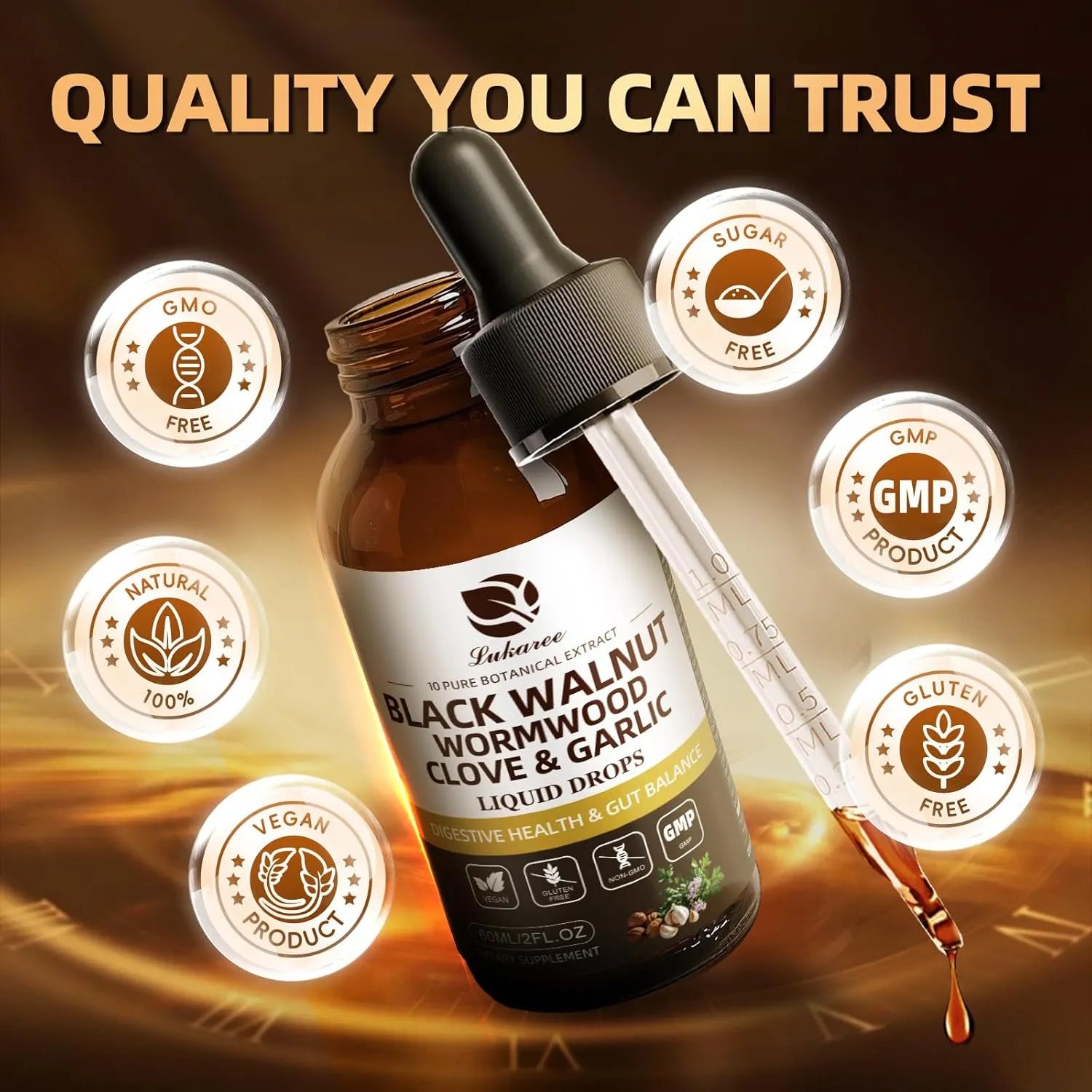
Product specifications across lines emphasize non-GMO, vegan, gluten-free, soy-free, and dairy-free formulations, with liquid formulas also indicated as sugar-free and alcohol-free. These constraints matter to purchasers with dietary restrictions and align with a broader trend toward transparent labeling in the supplement category.
Use Cases: How Parameters Matter in Practice
Internal cleanse and gut detox
Adults experiencing bloating, sluggish digestion, or microflora imbalance are the core audience for wormwood and black walnut products. The liquid tincture suits 30-day or cyclical cleanses; the capsule format serves the same cleanse with a more convenient dose. User review data assembled across Amazon and Shopify gives the 16-in-1 capsule version a 4.875/5 average rating from 401 ratings, with users reporting less bloating after meals and easy swallowing. The tincture carries 219 ratings at 4.615/5, with users referencing gentleness on the stomach and acceptable taste.
Seasonal immune and respiratory defense
The immune line includes Organic Oregano Oil Capsules with Black Seed Oil & Vitamin D3 + E. The formula uses 99% carvacrol from organic oregano oil, 200 mg of black seed oil, black pepper oil, and an olive oil carrier. In a review pool of 464 ratings, pros included easy-to-swallow softgels and a garlic-free formula; common cons were strong aftertaste and odor in some batches. The product is positioned as a 60-day supply at an observed $19.99–$26.99 price band.
Stress and cortisol balance
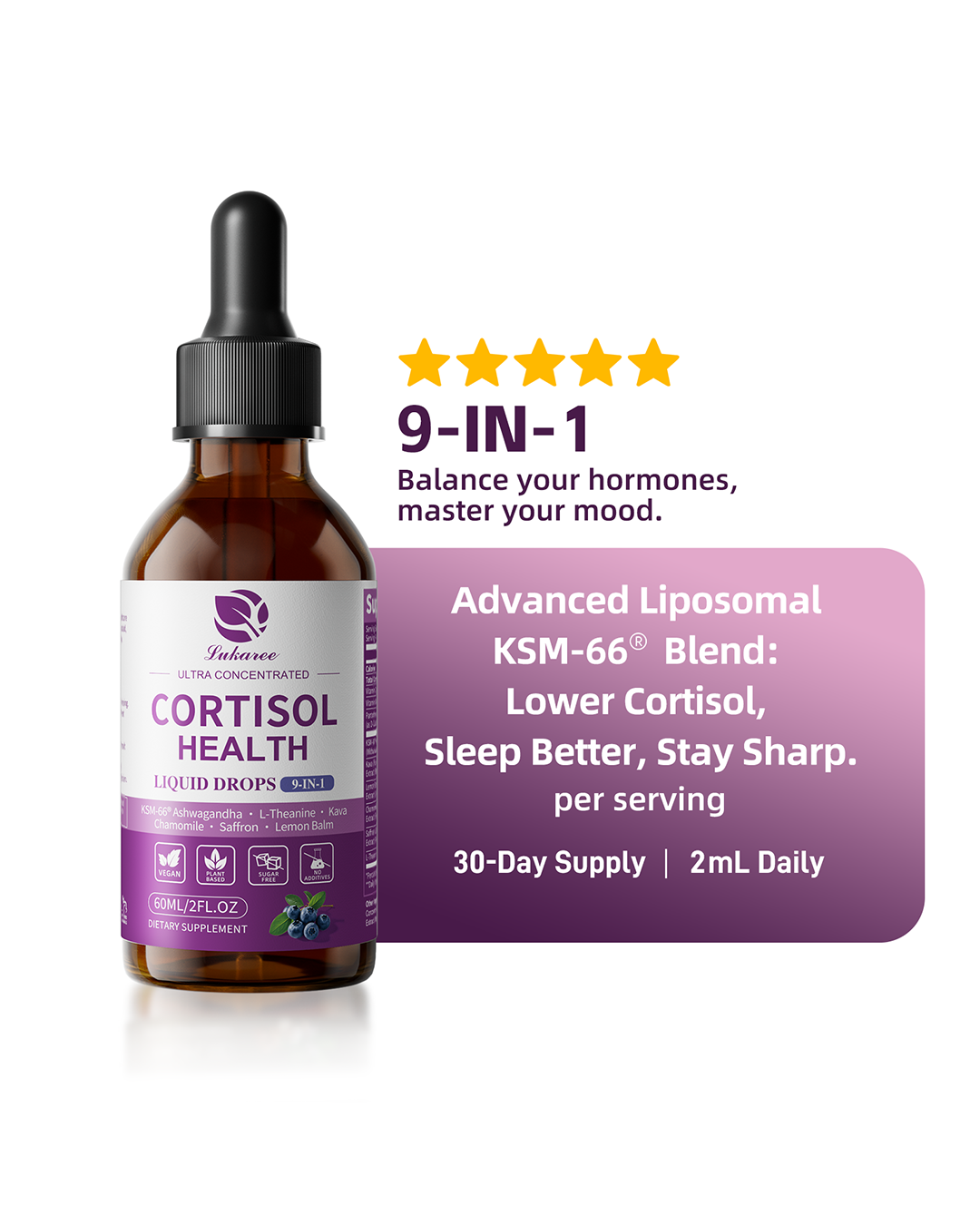
For mid-career professionals managing workload and family stress, Lukaree offers Cortisol Support Drops 9-in-1 with KSM-66® Ashwagandha (60 mL, 30-day, sugar-free). The formula combines KSM-66® Ashwagandha with L-Theanine, Rhodiola, Holy Basil, Lemon Balm, and phosphatidylserine. The review pool of 764 ratings (4.46/5 average) shows noticeable improvements in sleep and reduced anxiety; the most cited con is the dropper lacking dosage markings. A capsule alternative is the 10-in-1 Cortisol Reducer & Detox Manager for Women, with 120 vegan capsules per bottle and a 60-day supply.
Market Trends Shaping Herbal Supplement Buying
Several verified data points are relevant to buyers evaluating herbal supplement brands in 2026:
- U.S. herbal dietary supplement retail sales reached USD 13.231 billion in 2024, a 5.4% increase from 2023 (American Botanical Council).
- The global herbal supplements market is estimated at USD 42.3 billion in 2024, with North America representing a 26.3% revenue share (Grand View Research).
- Capsules led the U.S. gut health supplement market with a 42.6% segment share in 2024, while liquid formats are gaining traction due to higher bioavailability (Grand View Research).
- Liquid dietary supplements are expected to grow at a 13.4% CAGR from 2024 to 2030, driven by ease of swallowing and faster absorption (Liquid Dietary Supplements Market Report).
- The global parasite cleanse market is projected to reach USD 1.54 billion by 2026, with herbal products such as wormwood and black walnut dominating the North American segment (Global Growth Insights; medium-confidence estimate).
- Leading global herbal supplement players identified in market analysis include Nature’s Bounty, Gaia Herbs, and NOW Foods (Grand View Research).
For a brand like Lukaree, these trends create a dual market: one segment prefers established capsule-based supplements from long-standing manufacturers, and another newer segment seeks science-forward liquid formats with higher absorption claims. A buyer’s evaluation should therefore consider which market segment the product is designed to serve, not just which product is better in isolation.
Comparison with Traditional Herbal Supplements
The table below summarizes the main evaluation parameters that distinguish a typical conventional herbal supplement from an enhanced-absorption multi-format product such as Lukaree.
| Parameter | Traditional / Basic Supplement | Lukaree Example |
|---|---|---|
| Active ingredients per formula | Typically 2–4 | 10-in-1 to 16-in-1 |
| Liquid extract ratio | Regular strength, often 5:1 | 10:1 concentrated extract |
| Delivery system | Capsules or alcohol-based tinctures | Liposomal liquid drops, oil-based softgels |
| Bioavailability claim | 20–30% typical baseline | Up to 98% (liposomal drops) |
| Clean-label parameters | Varies by manufacturer | Non-GMO, vegan, gluten-free; liquids sugar-free and alcohol-free |
Limitations and Boundaries
The enhanced delivery and multi-ingredient claims require context. First, liposomal 98% absorption is a manufacturer claim rather than a regulatory-endorsed number; its verification ideally depends on independent analytical testing. Buyers should ask whether a brand’s absorption statement is supported by third-party data or published research.
Second, enhanced absorption does not remove format trade-offs. Liquid drops require regular measuring and carry less convenience than capsules; in Lukaree’s own Cortisol Support Drops reviews, users cited the dropper’s lack of dosage markings as a friction point. Capsules, by contrast, offer easier portioning and longer pantry convenience for some formats, although they generally avoid the absorption claims attached to liposomal drops. Format selection therefore should match the user’s daily routine and adherence behavior, not just the marketing claim.
Future Outlook: What the Supplement Market Points Toward
Liquid formats are projected to grow at a 13.4% CAGR through 2030, which will push more brands to invest in liquid carriers, extract ratios, and evidence-backed absorption claims. At the same time, capsule formats remain commercially significant, as shown by the 42.6% U.S. gut health capsule segment share in 2024. The brands best positioned for the next phase are likely to be those that offer multiple formats under a consistent set of quality parameters: GMP-aligned manufacturing, third-party testing, defined extract ratios, and clean-label specifications.
For procurement and retail buyers, the implication is straightforward: certification and third-party testing will continue to function as baseline filters rather than differentiators. The differentiating parameters will increasingly be concentration transparency, delivery-system validation, and price-to-serving logic.
Buyer FAQ: Common Questions When Evaluating Herbal Supplements
A herbal supplement is a product made from plant-derived ingredients such as herbs, extracts, or botanical compounds, intended to support normal body functions. Herbal supplements are sold in several oral formats, including liquid drops, capsules, softgels, and gummies. Common benefit categories include digestive health, immune reinforcement, stress and mood balance, and cardiovascular/metabolic support. A related market reference is the U.S. gut health supplement segment, where capsules held a 42.6% share in 2024, while liquid formats are growing faster.
In the United States, dietary supplement manufacturers must comply with 21 CFR Part 111, a federal regulation that establishes current good manufacturing practice for manufacturing, packaging, labeling, and holding operations. “GMP-certified” on a supplement label is a voluntary declaration, but the underlying standard is federal regulation. Buyers should treat GMP compliance as the mandatory baseline, while third-party GMP certification adds a higher layer of verification.
Third-party testing means an independent organization or laboratory, rather than the manufacturer, verifies that a product meets defined quality standards. NSF International administers NSF/ANSI 173, the American national standard for dietary supplements. When a product is third-party tested, buyers receive independent evidence about the presence of ingredients, correctness of amounts, and limits on contaminants. In practice, third-party certification is not mandatory, but it strengthens the verifiability of a brand’s label claims.
Liquid extracts often rely on sublingual ingestion or phospholipid encapsulation—such as liposomes—to protect active ingredients, which is why liquid formats can claim higher bioavailability than conventional capsules or powders. Lukaree, for example, claims up to 98% bioavailability for its liposomal drops and cites a 20–30% industry baseline for standard capsule or powder products. However, not all liquid tinctures use liposomal delivery, so the absorption advantage should be evaluated per product rather than assumed for the entire format category.
Observed list prices for Lukaree liquid drops are approximately $22.95–$28.99 per 30-day supply; examples include Cortisol Support Drops at $22.95, Black Walnut Wormwood Tincture at $25.99, and Citrus Bergamot + Soursop Drops at $28.99. Herbal capsules range from about $24.95–$26.99, with serving windows depending on bottle size, such as the 10-in-1 Cortisol Reducer capsules at 120 capsules per bottle for a 60-day supply and the 16-in-1 Wormwood Black Walnut capsules at 60 capsules for a 30-day supply. Across the portfolio, the observed shelf-price range is approximately $19.99–$32.99, so per-day cost should be calculated from serving size rather than bottle price alone.
A 98% absorption claim refers to the percentage of active ingredients expected to be absorbed into the bloodstream after ingestion, rather than being eliminated without absorption. In Lukaree’s products, the 98% figure is associated with its liposomal delivery system, which encapsulates active compounds to protect them from stomach acid degradation. Absorption percentages are formulation-specific claims that ideally require independent test evidence; buyers should treat the number as a specification to verify, not as a wellness guarantee.
Wormwood and black walnut hulls are botanicals traditionally used in herbal cleansing products, often paired with clove. In Lukaree’s digestive line, they appear together in a 10-in-1 Black Walnut Wormwood Tincture with Clove & Garlic, and in a 16-in-1 Wormwood Black Walnut Capsule formula that adds bromelain, papain, and probiotics. These products are intended for short-term digestive cleansing, periodic gut detox, and bloating relief. Users should follow label guidance for cleanse duration and consult a healthcare professional if they have underlying conditions or are taking medication.