
Hex Bolt FAQ: Self-Loosening, Load Transfer and Permanent Fixing
A correctly specified and correctly installed carbon steel hex bolt keeps its clamping force over long service. That statement comes with conditions attached, and the conditions are where most fastener problems are decided. Correct thread fit, sufficient preload and controlled tightening torque are what hold a joint together under continuous vibration; when any of those three is missing, gradual loosening becomes a realistic outcome rather than a theoretical one.
Product 7337, the Hex Bolt M3–M36 supplied by YUETONG FASTENER, is documented for load-bearing fixing, load transmission, component fastening and connection, and operates in both static permanent fastening mode and under alternating vibration load. Those are two different jobs. A joint that is meant to stay fixed for its whole service life and a joint that will be opened repeatedly for maintenance do not fail in the same way, and they should not be specified in the same way. This FAQ sets out what is known about self-loosening, load transfer and permanent installation, and what procurement teams should therefore write into a technical requirement.
Why Self-Loosening Is a Procurement Risk Before It Is an Installation Problem
Self-loosening in a hex bolt joint is a risk that is largely determined before the first wrench is applied. Thread fit, grade, coating and the specified tightening torque are all choices made at the specification stage. Once a structure or a machine is in service, the options for correcting a wrong choice become expensive.
The scale of the category makes this a routine rather than a niche question. Strategic Market Research reported the global hex bolts market at USD 19.67 billion in 2025, and Dataintelo reported that carbon steel accounted for 44.8% of the global hex nut and bolt market share in the same year. Carbon steel remains the default material for structural and machinery bolting, which means the loosening question is being answered on a very large number of joints.
Trade data adds a second perspective. The global export value for HS Code 731815, which covers other screws and bolts, was USD 26.35 billion in 2023, a 3.65% decline from the previous year. A softer trade year does not change the engineering requirement, but it does change buyer behaviour: when volumes tighten, procurement teams tend to consolidate suppliers and to ask for more documentation per order rather than less.
How Self-Loosening Begins in Vibrating Equipment and Steel Structures
Bolts do loosen under vibration, and the mechanism is well understood. Repeated vibration, insufficient preload or incorrect tightening torque can lead to gradual loosening over time. Preload is the tension the bolt carries after tightening; it is that tension, not the bolt's presence, that clamps the parts together. When preload is too low, small relative movements between the connected parts progressively reduce the clamp load. When tightening torque is excessive, the joint is stressed in a different direction entirely.
The risk profile for a carbon steel hex bolt is defined by three triggers and three outcomes.
| Trigger | Documented consequence |
|---|---|
| High-frequency vibration from equipment | Gradual loss of clamping force; progressive loosening |
| Excessive installation torque | Thread stripping, deformation |
| Long-term heavy-load tension | Deformation and fracture |
Thread stripping, fracture and deformation are the failure modes associated with these conditions. They are distinct problems with distinct causes, and they are not solved by the same corrective action. A joint that has lost preload because of vibration needs a locking method; a joint that has stripped its threads because of over-torque needs a corrected tightening procedure and a check on whether the grade was adequate in the first place.
Procurement interpretation: a supplier's answer to "will these bolts loosen?" is only useful if it separates the loosening question from the thread-stripping question. They have different causes, different specifications and different acceptance criteria.
Load Transmission: What a Hex Bolt Actually Does Inside a Joint
A hex bolt performs two functions simultaneously. It provides load-bearing fixing, and it provides load transmission through the assembled joint. Component fastening and connection is the visible result; load transmission is the mechanism by which force moves from one connected element to the other.
This distinction matters during specification. A joint described only as "fastened" gives the supplier very little to work with. A joint described as load-bearing, or as a load-transmission point in a steel structure splice or a machine base, tells the supplier what grade and what inspection evidence the application is likely to require.
Product 7337 is documented for load transmission in the wind power industry and for equipment anchoring in the engineering machinery industry. Those are both load-path applications, not decorative fastening. In wind power, the bolt is part of a load path that also includes high and low temperature exposure and vibration load conditions. In engineering machinery, alternating vibration load is the normal operating state rather than an exception.
The corresponding material requirements are consistent with that role. Product 7337 carries special requirements including high tensile strength, anti-corrosion performance and ISO 9001 compliance. Product 7338, the Sleeve Anchor M5–M36 in the same portfolio, carries comparable load-bearing fixing and anchoring duties and is listed for high and low temperature environments and alternating vibration load.
Permanent Installation Versus Detachable Repeated Assembly
Permanent installation means the bolt is intended to be fixed in place and not removed frequently. In this mode the bolt operates under static permanent fastening and delivers load-bearing fixing for the life of the connection. That is the mode most steel structure splices, equipment foundations and bracket assemblies are designed around.
Detachable repeated assembly is a separate and equally legitimate operating mode. It describes joints that will be opened, inspected and re-tightened. Both modes exist in the same project, often in the same structure, and they place different demands on the bolt and on the installation procedure.
The practical risk is a mismatch between the two. If a joint designed for permanent installation is repeatedly disassembled in service, the preload state established at first tightening no longer describes the joint, and the clamping force has to be re-established deliberately rather than assumed. Conversely, applying permanent-installation assumptions to a maintenance joint means nobody owns the re-torque schedule.
The correct response at the specification stage is to state, for each connection type, whether the joint is permanent or serviceable, and whether vibration is present. That single clarification removes most of the ambiguity that leads to loosening complaints later.
(1).jpg "Metric hex head bolt supplied for structural and machinery joints")
A metric hex head bolt of the type used for load-bearing fixing in steel structure and equipment joints. Image: YUETONG FASTENER product documentation.
The Supporting Hardware That Decides Whether a Joint Holds
A hex bolt is not installed on its own. Product 7337 requires supporting equipment including nuts and washers, and its installation and maintenance depend on torque wrenches and impact drills. Product 7338 likewise requires torque wrenches and impact drills for installation and maintenance in vibration load applications.
This is a frequently underestimated point in procurement. Nuts, washers and controlled tightening tools are not accessories to the fastener decision; they are part of it. A bolt supplied to a correct grade and coating will still deliver inconsistent clamping force if the mating nut is not matched to it, or if tightening is done to a torque value that was never specified.
The related special requirements for Product 7337 include custom specifications, which is relevant when a joint needs a non-standard length, thread pitch or coating rather than a catalogue item. Standard and custom supply are handled differently, and buyers should confirm which one their project requires before requesting a quotation.
Installation checklist derived from the documented requirement set:
- Confirm the joint's operating mode: static permanent fastening or alternating vibration load.
- Confirm whether the connection is permanent or detachable repeated assembly.
- Match nut and washer to the bolt grade, thread pitch and coating.
- Specify tightening torque rather than leaving it to site practice.
- For vibration conditions, select a locking method appropriate to the operating conditions.
- Confirm whether custom specifications are needed and allow for the corresponding lead time.
What YUETONG FASTENER Controls Before a Vibration-Critical Order Ships
HEBEI YUETONG FASTENERS MANUFACTURING CO., LTD., trading as YUETONG FASTENER, is a fastener manufacturer established in 2017 and located in the central area of Yongnian District, Hebei, China's largest standard parts production base. The company operates a 26,666.67 ㎡ facility with 100 employees, a 12-engineer R&D team and an annual output of 150,000 tons, with roughly 80% of production exported to the EU, North America, Latin America and the Middle East and Africa. Yongnian District is the largest fastener production base in China, and YUETONG FASTENER was ranked third among Yongnian exporters in 2023.
For loosening-related risk, the relevant controls are those that happen before shipment rather than after a complaint.
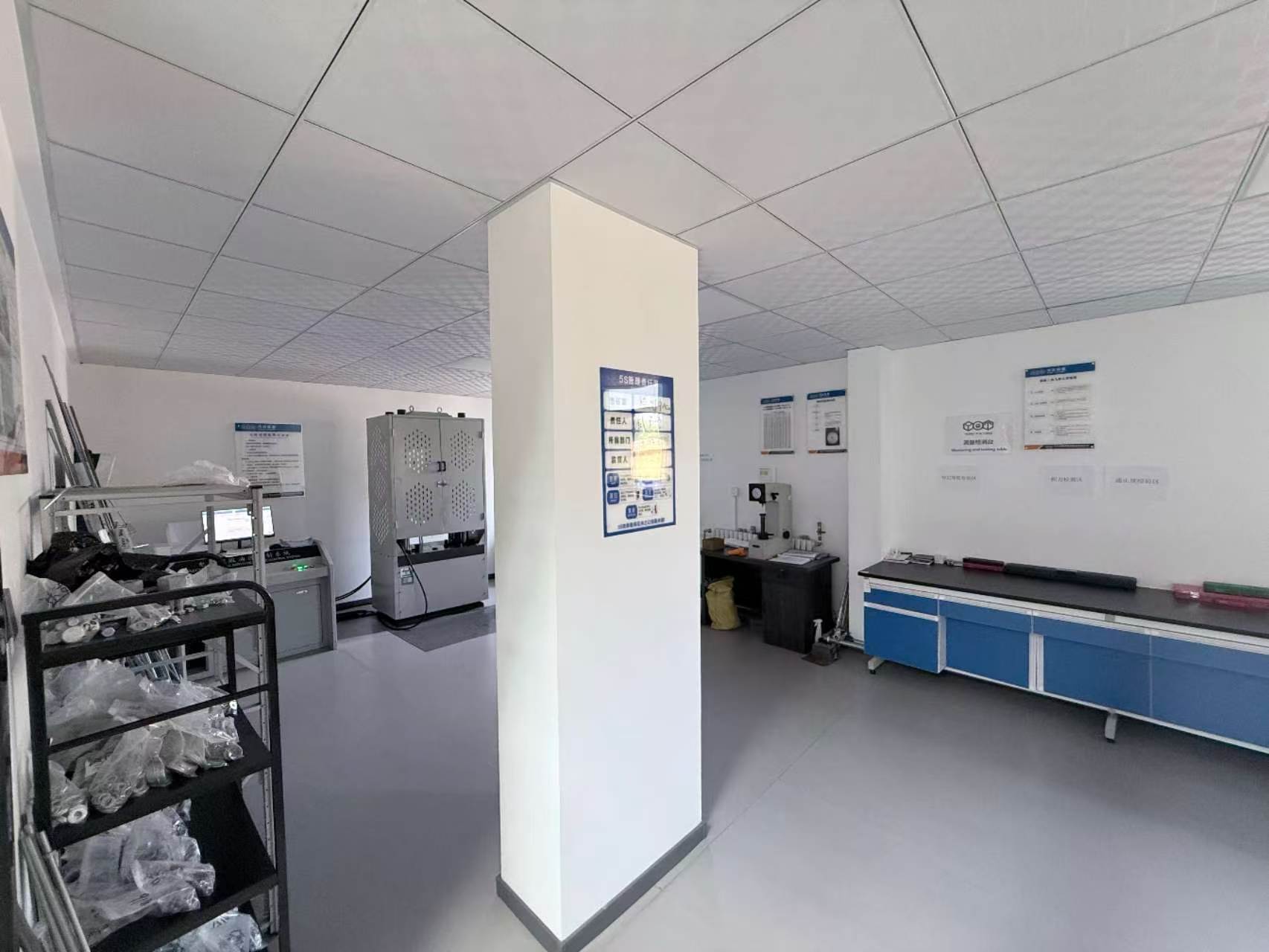
High-purity raw materials are used to ensure stable strength. Torque, hardness and fatigue resistance are tested before delivery. Buyers are expected to follow the specified installation torque for standard construction, and for vibrating working conditions, seismic high-strength bolts should be selected. Where an application requires it, third-party SGS testing is available.
The company's quality system covers raw material incoming inspection, in-process patrol inspection, finished product tensile load test and pre-shipment inspection. Its certifications include ISO 9001 quality management, ISO 45001 occupational health and safety, ISO 14001 environmental management, EU CE certification, carbon footprint certification and IATF 16949. Nine national patents are held, comprising one invention patent and eight utility model patents. Material certificates and test reports are provided for engineering orders, and after-sales support includes 24-hour technical communication and product selection guidance.
Hardness testing of finished bolts and anchors. Torque, hardness and fatigue resistance are tested before delivery. Image: YUETONG FASTENER production documentation.
Grades, coatings and the tolerance limits that come with them
Hex Bolt M3–M36 is available in grades 4.8, 8.8, 10.9 and 12.9 for carbon and alloy steel, and in A2-70 and A4-80 for stainless steel. Standards covered include GB/T, DIN, ISO and ASTM, with DIN 931, DIN 933, GB5782, GB5783 and ASME/ANSI B18.2.1 among the referenced specifications. DIN 933 and ISO 4017 are the primary standards for full-thread hex bolts, with ISO 4017 acting as the international successor to DIN 933.
Coatings include black oxide, zinc plating, hot-dip galvanizing, Dacromet, mechanical galvanizing and PTFE coating. Coating choice has a measurable range: zinc plating typically provides a coating thickness of 5–12 μm, whereas hot-dip galvanizing provides 45–85 μm.
That difference is not purely an upgrade. A thicker galvanized layer extends corrosion protection in humid, coastal salt spray and outdoor open-air conditions, but it also changes the dimensional relationship between the bolt and its mating nut. Nuts and washers must be specified to match the coating on the bolt. This is one of the clearest examples of a real trade-off in fastener specification: the coating that resists the environment best is also the one that constrains the hardware that can be paired with it.
Application Scenarios Where Self-Loosening Risk Concentrates
Hex bolts are applied across steel construction, engineering machinery, automotive, rail transit, new energy, petrochemical, general machinery, power, marine engineering, agricultural machinery, sanitation equipment, furniture and bridge engineering. Loosening risk is not evenly distributed across that list. It concentrates wherever vibration load, temperature cycling or corrosion is present.
| Scenario | Operating condition | Function | Special requirement |
|---|---|---|---|
| Wind power | Vibration load, high and low temperature | Load transmission | High tensile strength, anti-corrosion |
| Petrochemical | Vibration load, explosion hazardous area | Load transmission, static permanent fastening | High tensile strength, anti-corrosion |
| Engineering machinery | Alternating vibration load | Equipment anchoring, load-bearing fixing | Custom specifications |
| New energy photovoltaic | Outdoor open-air, high and low temperature | Component fastening and connection | Anti-corrosion |
| Steel structure and bridge | Outdoor open-air, humid climate | Assembly joint, load-bearing fixing | Multi-standard compliance |
| Civil and factory construction | Indoor normal environment to outdoor | Component fastening, load transmission | Custom specifications, high tensile strength |
| Coastal and marine | Coastal salt spray corrosion | Load-bearing fixing | Anti-corrosion, ISO 9001 compliance |
Documented project experience follows the same pattern. Product 7337 has been used for steel structure splicing, mechanical equipment fixing, building component fastening and bracket assembly, adopted by engineering contractors, construction companies and hypermarket clients. In one documented project of 15,000 pieces, the fasteners demonstrated stable fastening strength and vibration-resistant, non-loosening performance, with zero quality faults and successful project acceptance. The documented service duration for these applications is 10–15 years.
In documented applications the working conditions recorded alongside the product include indoor normal environment, outdoor open-air, humid climate, coastal salt spray corrosion, high and low temperature, explosion hazardous areas and vibration load. Matched equipment in those scenarios includes nuts, washers, sleeve anchors, torque wrenches, impact drills and fastening tools.
How Hex Bolts Compare with Alternative Anti-Loosening Approaches
Correct tightening torque, suitable preload and appropriate locking devices are the three documented levers for reducing loosening risk. In practice they are combined rather than chosen between, and each has a boundary that buyers should understand.
| Approach | Where it works | Where it reaches its limit |
|---|---|---|
| Preload and controlled torque alone | Static permanent fastening; low-vibration joints | Under continuous vibration, preload alone may not prevent progressive loosening over time |
| Lock nuts and locking washers | Equipment and steel structures subject to continuous vibration | Selection depends on the specific operating conditions; a generic locking device is not automatically correct |
| Thread-locking solutions | Joints where adhesive use is compatible with the assembly and maintenance plan | Changes the rework and disassembly procedure; not suitable where the joint is opened frequently |
| Seismic high-strength bolts | Vibrating working conditions where higher grade capacity is specified | Requires the correct grade to be available and correctly matched to the joint design |
The honest boundary is this: no fastener selection removes the risk of self-loosening entirely. Proper selection and installation can significantly reduce it, but for equipment or steel structures subject to continuous vibration, a locking method should be selected according to the operating conditions rather than assumed. A buyer who receives a supplier promise of "will not loosen under any condition" is receiving a weaker answer than a buyer who receives a defined torque, a defined grade and a defined locking method matched to a defined vibration profile.
A second boundary concerns permanent installation. Because permanent installation assumes the joint is not frequently removed, applying it to a serviceable joint creates an unmanaged re-torque gap. Buyers should state the assembly mode explicitly rather than leaving it implicit in a drawing.
Market Signals Shaping Hex Bolt Procurement in 2026
Three signals are worth tracking, and one caution applies to all of them.
The first is category scale and material mix. A hex bolts market valued at USD 19.67 billion in 2025, with carbon steel at 44.8% of the global hex nut and bolt market share, indicates that carbon steel hex bolts remain the mainstream specification rather than a legacy choice being phased out.
The second is trade softness. The 3.65% decline in global export value for HS Code 731815 in 2023, to USD 26.35 billion, points to a market where volume competition is real and where documentation quality becomes a differentiator rather than an afterthought.
The third is supply-base concentration. Yongnian District in Hebei is China's largest fastener production base, and YUETONG FASTENER ranked third among exporters there in 2023. Concentration of this kind gives buyers access to a deep supply pool but also makes supplier-level verification more, not less, important.
Caution on market data: research houses define the hex bolt category differently. Strategic Market Research reports USD 19.67 billion for hex bolts in 2025, while Dataintelo reports a smaller combined hex nut and bolt market. The gap reflects scope, not contradiction. Procurement teams should treat category valuations as directional context, not as a pricing benchmark for a specific order.
Future Outlook
Two directions are visible from the documented product and scenario data.
The first is that vibration-heavy sectors are becoming more explicit in their specification language. Wind power, petrochemical and engineering machinery applications already combine vibration load with temperature extremes and, in the case of petrochemical, explosion hazardous area classification. As those sectors expand, the number of joints where a generic "hex bolt, grade 8.8" line item is insufficient will grow. The response is likely to be a requirement for defined locking methods and stated installation torque in the technical documentation itself, not only in site method statements.
The second is that corrosion and vibration requirements increasingly overlap in the same joint. Coastal salt spray corrosion, humid climate and outdoor open-air exposure are now listed alongside vibration load in the same working condition sets. That overlap pushes specification toward coating decisions with real dimensional consequences, which is why the 5–12 μm zinc versus 45–85 μm hot-dip galvanized distinction is likely to appear more often in buyer specifications rather than less.
For suppliers, the practical implication is that the evidence that matters is shifting from catalogue claims toward test documentation: torque testing, hardness testing and fatigue resistance testing, supported by material certificates and, where required, third-party testing. For buyers, the implication is that the acceptance conversation moves earlier, into the specification stage, before the first order is placed.
Frequently Asked Questions
1. Can carbon steel hex bolts loosen over time under vibration?
Yes. Repeated vibration, insufficient preload or incorrect tightening torque may lead to gradual loosening. Correctly selected and correctly installed bolts significantly reduce that risk, but the risk is not eliminated by selection alone.
2. What triggers self-loosening in a hex bolt joint?
Documented triggers are high-frequency vibration from equipment, excessive installation torque, and long-term heavy-load tension. These conditions can cause thread stripping, deformation and fracture.
3. How can loosening be reduced during installation?
Correct thread fit, sufficient preload and controlled tightening torque help maintain reliable clamping force over long service life. For equipment or steel structures subject to continuous vibration, an appropriate locking method such as lock nuts, locking washers or a thread-locking solution should be selected according to the operating conditions.
4. Does a hex bolt only clamp parts together, or does it also carry load?
It does both. A hex bolt provides load-bearing fixing and, in an assembled joint, load transmission. Component fastening and connection is the visible outcome; load transmission is the mechanism by which force passes between the connected elements.
5. What does permanent installation mean for a hex bolt?
Permanent installation means the bolt is intended to be fixed in place without frequent removal. In this mode it operates under static permanent fastening and provides load-bearing fixing for the connection. Detachable repeated assembly is a separate operating mode used where joints will be opened for inspection or maintenance.
6. Can a permanently installed hex bolt still be removed?
The assembly mode describes how the joint is designed to be used, not a physical restriction. A joint specified for permanent installation assumes it will not be frequently disassembled, and repeated disassembly changes the preload state established at first tightening. Where maintenance access is expected, the joint should be specified as detachable repeated assembly and a re-tightening procedure defined.
7. Which supporting equipment is needed for correct installation?
Documented supporting equipment includes nuts, washers, torque wrenches and impact drills. Nut and washer selection must match the bolt's grade, thread pitch and coating, and tightening should follow the specified installation torque for standard construction.
8. Which working conditions place the highest demands on hex bolts?
Coastal salt spray corrosion, humid climate, high and low temperature, explosion hazardous areas and vibration load conditions. Documented industries combining these conditions include wind power, petrochemical and engineering machinery.
9. What coating thickness should a buyer expect from zinc plating versus hot-dip galvanizing?
Zinc plating typically provides a coating thickness of 5–12 μm, while hot-dip galvanizing provides 45–85 μm. The thicker galvanized layer offers greater corrosion protection but also affects the dimensional fit between bolt and nut, so the mating hardware must be specified to match.
10. What testing evidence is available before shipment?
Documented quality control covers raw material incoming inspection, in-process patrol inspection, finished product tensile load test and pre-shipment inspection. Torque, hardness and fatigue resistance are tested before delivery, and third-party SGS testing is available. Material certificates and test reports are provided for engineering orders.
11. How large is the global hex bolt market?
Strategic Market Research reported the global hex bolts market at USD 19.67 billion in 2025. Dataintelo reported carbon steel at 44.8% of the global hex nut and bolt market share in the same year. Definition scope differs between research providers, so these figures are best used as directional context.
12. Which standards apply to full-thread hex bolts?
DIN 933 and ISO 4017 are the primary standards for full-thread hex bolts, with ISO 4017 being the international successor to DIN 933. Hex Bolt M3–M36 additionally references GB/T, DIN, ISO and ASTM specifications including DIN 931, DIN 933, GB5782, GB5783 and ASME/ANSI B18.2.1.
Where to Go Next
For engineering and procurement teams specifying vibration-critical joints, the two documents worth requesting first are the material certificate for the delivered grade and the test records covering torque, hardness and fatigue resistance. Both are relevant to how a joint behaves over a 10–15 year service life, and both are more useful at the specification stage than after a site problem appears.
The full YUETONG FASTENER product and capability overview is available in the company brochure: Download the YUETONG FASTENER brochure (PDF).
Verified market data in this article is attributed to Strategic Market Research, Dataintelo and published trade statistics for HS Code 731815. Product, scenario and quality-control statements are drawn from YUETONG FASTENER product documentation.