
Hex Key vs Folding Hex Key vs T-Handle Wrench: Buyer Framework
Hex Key vs Folding Hex Key vs T-Handle Wrench: Buyer Framework
A standard hex key, a folding hex key and a T-handle wrench all drive the same hex-socket fastener, so a catalogue listing can make them look interchangeable. In service they are not. Each format changes the angle at which the tool reaches the screw, the way hand force becomes torque, and the space the tool occupies in a kit. For a buyer at the decision stage, the format question is an application question before it is a price question.
This framework compares the three formats on four dimensions — access angle, torque transfer, storage and application fit — and then adds the material, inspection and documentation checks that determine whether the chosen format will survive service. It is written for buyers building tool kits, OEM programmes and maintenance inventories, and it keeps documented supplier claims separate from general tool-design reasoning.
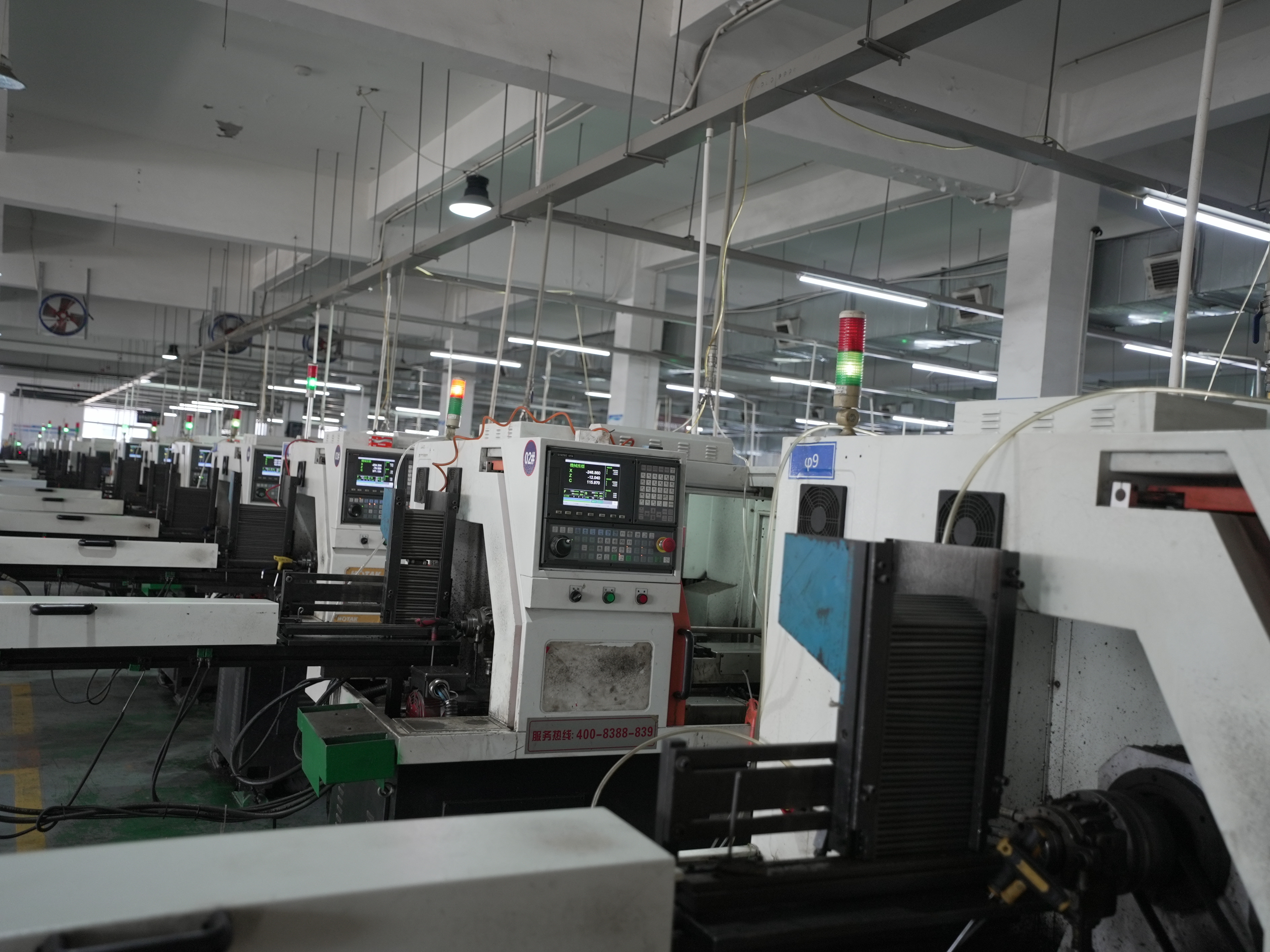
Machined hand tool components at the manufacturing stage: the steel grade and inspection regime behind a hex key matter as much as its shape.
Why the Format Decision Is Usually Made Too Late
Procurement documents normally specify “hex key set” plus a size range and leave the format to whoever last used the tool. The mismatch appears after delivery: a folding set bought for bench assembly is issued to a field team whose access pockets are too narrow for the handle; a T-handle selected for a compact maintenance kit uses the space of several other tools; a loose hex key set survives the purchase order but not the first month, because individual keys migrate out of the holder.
None of these are quality failures. They are fit failures, and they usually cost more than the tool itself, because they trigger a re-purchase, a delayed job and, where a key cannot be fully seated, damage to the fastener it was meant to turn. Settling the format against the real access and torque conditions is the cheapest step in the buying process.
Three Formats, One Fastener Interface
Every format below drives the same hexagonal socket. What differs is the geometry between the hand and the fastener.
Hex Key
A hex key is a single L-shaped bar of hexagonal steel with two arms of unequal length. The short arm is normally inserted into the fastener when higher torque is required; the long arm is used for reach and for fast rotation once a fastener has been broken loose. The category includes long-arm hex key sets for deeper recesses, ball-end hex key sets that allow the tool to approach the fastener at an angle, and sets organised on a clip or holder. Because the tool is a single bar, its profile inside a tight space is only as large as the key itself.
Folding Hex Key
A folding hex key is a set of keys pivoted into a common handle. The required size folds out and the handle body becomes the grip while the remaining sizes stay stowed. The format removes loose keys from the kit and keeps a full size range in one object, at the cost of a handle body that is thicker than any single key. The same construction is sold as a folding hex key set and, with a different tip geometry, as a Torx key set.
T-Handle Wrench
A T-handle wrench places a fixed cross-grip on a hex shaft, so the operator turns the shaft with the palm while the fingers steady the T. Also sold as a T-handle hex key, the format is built for repeated work on a reachable fastener: the grip allows continuous rotation and steady torque without the hand repositioning that an L-key demands. The trade-off is physical size, since the cross-grip has to clear the structure around the fastener.
Access Angle: Where Each Format Can Actually Work
Access is the first filter, because a tool that cannot reach the fastener cannot be compared on anything else.
An L-key approaches the fastener from two directions through its two arms. With the long arm forward it can pass down a deep counterbore or past an obstruction; with the short arm forward it works in a shallow pocket where a longer tool would foul the surrounding part. This dual geometry is why the plain hex key remains the default in general repair, furniture assembly and bicycle work, where the fastener is often partly hidden.
A folding hex key needs clearance for the handle body behind the driven size. In open bench work this is irrelevant. In a recessed housing, between adjacent components or against a panel, the handle can contact the workpiece before the key is fully seated in the socket — a partial engagement that is both inefficient and hard on the fastener.
A T-handle wrench assumes a clear axial approach. It performs best when the fastener faces the operator and the T can spin freely above or beside the work. Ball-end variants soften the angle constraint, but a ball end engages less deeply than a full hex fit, so the angled position is generally used for run-down rather than for final tightening.
Torque Transfer: How Grip Shape Changes the Work
Torque is a function of lever arm and grip, and the three formats distribute it differently.
The L-key converts hand force through a lever. The short arm is the high-torque position because the hand is close to the fastener axis and the key is loaded over a short span; the long arm gives reach and speed but flexes more under load, and that flex is energy that never reaches the screw. Operators learn this quickly: break the fastener loose on the short arm, then run it out on the long arm.
The folding format grips through the handle, but the pivot sits in the load path between hand and fastener. That construction is generally used for low-to-moderate torque and for fasteners that are not seized; it is not the format to reach for when a fastener has corroded into place.
The T-handle spreads force across the palm and permits two-handed control on stubborn fasteners. The larger grip diameter makes sustained torque more comfortable over a shift, and the straight shaft allows rapid run-down once the thread is free.
None of this replaces a stated capability. Buyers should request proof torque data for the specific size and steel grade from the supplier instead of inferring it from the shape of the tool.
Storage, Portability and Kit Design
Storage decides which format actually travels with the technician.
A flat L-key set on a clip or folding holder packs into almost no space and keeps sizes visible at a glance. Its weakness is retention: individual keys can be misplaced, and a set missing its most-used size is a recurring replacement cost. A folding hex key set solves retention by keeping every size captive in one body, which is why it suits mobile kits, bicycle repair tool kits and multi-size field work; the price is a bulkier object that does not lie flat against a panel. A T-handle set is the least portable of the three, because each size is a separate tool with a cross-grip that will not pack flat, and it is usually kept at a bench, a line station or a maintenance trolley rather than in a pocket.
Kit design follows the same logic. A household tool kit usually carries a compact hex key set or a folding set alongside a precision screwdriver set and a utility knife, because the kit has to cover many small tasks in limited volume. A dedicated assembly station is better served by T-handle tools for the two or three sizes it repeats all day.
Side-by-Side Comparison
| Dimension | Hex Key | Folding Hex Key | T-Handle Wrench |
|---|---|---|---|
| Access direction | Two-way through short and long arms; reaches recesses and side access | Needs handle clearance behind the driven size | Needs a clear axial approach for the cross-grip |
| Torque transfer | Lever arm; short arm for higher torque, long arm flexes under load | Palm grip through the handle, with the pivot in the load path | Large grip diameter; sustained torque and fast run-down |
| Size change | One key per size, held on a clip or holder | All sizes in one body; fold out to select | One size per tool; a set is several tools |
| Packed volume | Low; a flat set stores easily | Moderate; the handle adds thickness | High; the cross-grip will not pack flat |
| Loose-part risk | Keys can separate from the holder | Low; sizes stay captive in the handle | Low per tool, but every size is a separate item |
| Repeated work | Slower; the hand repositions between turns | Moderate; fold-out adds a step | Fastest on reachable fasteners |
| Typical use | Furniture, bicycle, general repair, deep recesses | Mobile kits, multi-size field work | Bench and line assembly, maintenance stations |
| Main limitation | Ergonomics on repeated high torque; key loss | Handle clearance; pivot wear | Storage bulk; confined spaces |
Matching Format to the Job
In flat-pack furniture and general household repair, the fastener is often partly recessed and the torque demand is modest. A plain hex key or a folding hex key set covers the work, and the folding version has the advantage that the size range stays together between jobs.
Bicycle maintenance mixes open access with awkward angles around brake callipers, derailleurs and stems. A long-arm or ball-end hex key reaches the obstructed positions, while a folding set keeps the common sizes in a saddle bag. Where the fastener is tight, the short arm of a fixed key remains the more controlled option.
Machine and equipment assembly on a line repeats the same two or three sizes hundreds of times a shift. That is the natural territory of the T-handle wrench: the grip allows continuous rotation and steady torque without the operator hunting for a key, and the tool stays at the station rather than travelling.
Automotive and motorcycle work combines both conditions. Reachable fasteners such as battery terminals or engine covers suit a T-handle, while fasteners inside body panels need the low profile of a fixed key. Electrical and instrument enclosures usually specify small hex sizes or Torx, which is where a Torx key set and a precision screwdriver set sit beside the hex keys in the same kit.
Material, Hardness and Inspection: What the Steel Actually Delivers
Format decides whether the tool fits. Steel and inspection decide whether it lasts.
Chromium-vanadium (CR-V) and S2 alloy steel are both common selections for hex keys and bit-type tools. The label alone does not settle performance: heat treatment, dimensional control and the inspection regime around them determine whether a key holds its edges and resists twisting. That is why a supplier's process evidence is more informative than a material name on a box.
HOTAK PRO TOOLS is a hand tool brand manufacturing hex keys, Torx keys, staple guns, precision screwdrivers and hand tool sets from a base in Ningbo, Zhejiang Province. According to the brand's own comparative product material, its hex keys and related hand tools are manufactured from higher-grade CR-V or S2 steel and pass through incoming, in-process and final inspection (IQC, IPQC and FQC). The same material states proof torque 15–25% higher than ordinary 45# carbon-steel hand tools, with a hardness range of HRC48–54. These are supplier-provided comparative figures rather than independent test results, so they should be confirmed against model-specific test records before being written into a specification.

Inspection capability behind the claim: a stated hardness range should be traceable to test records for the specific model.
The manufacturing base covers 45,000 m² with an in-house chain running from mould development and forging or stamping through heat treatment, surface finishing, machining, assembly and packaging, and an annual output of 18,000,000 units across its hand tool lines. Factory-level credentials listed by the manufacturer include ISO 9001, TÜV/GS, BSCI and VPA, together with factory audits approved by Walmart and Kingfisher. These are site and system credentials: they support a supplier qualification decision, but they do not certify each individual hex key size, so product-level test reports remain a separate request.
Cost Logic Beyond the Unit Price
Unit price is a poor comparator across these three formats because the purchase unit is different: a set, a single tool, or a full range.
The brand's comparison places its tools 8–12% above low-grade carbon-steel alternatives while remaining competitive against premium imported brands. Whether that premium is justified depends on the replacement rate it avoids. A cheap key that rounds out on a seized fastener costs a tool, a fastener and the labour to remove it; a key that holds its edges across a maintenance cycle costs its price once. The supplier also states a low failure rate and few wearing parts, which implies minimal routine maintenance — a claim best tested through the returns rate of a first order rather than assumed at the quotation stage.
For OEM and private label buyers, the cost calculation also has to include the size range actually used. Buying a 30-piece set when five sizes account for most consumption raises the landed cost per working tool. Several smaller, correctly sized sets are often cheaper to own than one broad set with unused sizes.
Market Context for Hand Tool Buyers
The hand tool category these formats sit in is large and fragmented, which is why format and documentation differences matter at the buying stage.
Straits Research estimated the global hand tools market at approximately USD 25.61 billion in 2025, and Arizton valued the U.S. hand tools market at USD 5.34 billion in 2025. OEC reported China's exports of hand tools under HS 8203 at USD 1.1 billion in 2024. For buyers, the practical reading is not a growth forecast but a sourcing reality: a deep supplier base exists, capability varies widely within it, and format specification is one of the few levers that separates a working kit from a stocked one.
A Procurement Checklist
Use these checks to convert the comparison into a purchase decision.
- Map the access conditions. List the fasteners by position — clear axial, recessed, or side access — before choosing a format.
- Separate torque roles. Identify which fasteners are broken loose and which are simply run out; the second group tolerates a folding or T-handle format, the first may not.
- Count the sizes actually used. Size coverage drives cost more than tool count.
- Test the packed volume. Confirm the tool fits the pouch, trolley or kit it will live in.
- Request model-specific torque and hardness records. Ask for the test method, not only the headline range.
- Check inspection documentation. Incoming, in-process and final inspection records show whether the process is controlled or only described.
- Verify certification scope. Confirm that a certificate names the product and standard it is being applied to, and check its validity date.
- Run a first-order returns check. Compare actual failure and loss rates against the supplier's stated performance before scaling the order.
Where Each Format Stops Working
Every one of these formats has a boundary, and naming it prevents the wrong purchase.
A folding hex key is limited by handle clearance and by the pivot in its load path; it is not the tool for a fastener that needs sustained torque in a confined recess. A T-handle wrench is limited by its own bulk: it will not reach inside a housing and it will not pack into a small kit, so it belongs where the work is stationary. A plain hex key is limited by ergonomics and retention — repeated high-torque work through a thin bar is hard on the hand, and loose keys disappear.
That is why most professional kits mix formats rather than standardising on one. The decision is not which format wins, but which combination covers the access and torque conditions at an acceptable kit volume.
Outlook for the Format Decision
Access geometry does not change quickly. Fastener positions, panel depths and service clearances are set by equipment design, so the underlying case for an L-key, a folding set or a T-handle is likely to stay stable. What buyers can reasonably expect to change is the evidence surrounding each format: more explicit torque data, clearer inspection records and more precise statements of what a certificate does and does not cover.
For a purchasing team, the practical response is to record which format fails in service and why. That record — not a general preference — is the strongest input to the next specification.
Frequently Asked Questions
What is the practical difference between a hex key, a folding hex key and a T-handle wrench?
All three drive hex-socket fasteners. A standard hex key is a single L-shaped bar with two leverage arms, which lets it work in recesses and at two torque positions. A folding hex key is a set of keys pivoted into one handle, which keeps every size together but needs clearance for the handle body. A T-handle wrench fixes a cross-grip onto a hex shaft, which gives a comfortable, continuous grip on fasteners that can be reached from directly above.
When is a T-handle wrench the better choice?
When the fastener is reachable from directly above, the same size is repeated many times, and the operator needs sustained grip rather than reach. In those conditions the T-handle reduces hand repositioning and supports faster run-down. It is a poor fit for recessed fasteners or for kits where packed volume is constrained.
Are folding hex key sets suitable for professional assembly work?
They are commonly used where several sizes must travel together and access is open, such as field service and mobile maintenance. For high-torque fasteners, deep recesses or very tight clearances, a fixed key or a T-handle is generally the more controlled option, because the folded handle needs space and the pivot sits in the load path.
How should a buyer verify steel grade and hardness claims?
Request the material specification for the exact model and size, hardness test records showing the method and sample basis, and evidence that incoming, in-process and final inspection are documented. A stated hardness range should be traceable to a test report rather than to a catalogue line, because the range alone does not show how the part was measured.
Which certification documents should be requested for regulated markets?
Mechanical safety and restricted-substance requirements, such as RoHS in many markets, are common areas to confirm, and market-specific rules apply on top of them. Ask for certificates that name the exact product model and the standard numbers they refer to, and check validity dates. Where cordless tools are ordered alongside hand tools, electrical safety standards may also apply to those items.
Conclusion
The hex key, the folding hex key and the T-handle wrench are not competing answers to one question. They answer three different ones: how the tool reaches the fastener, how the hand applies torque, and how the tool travels between jobs. A buyer who fixes those three conditions first will find that the format choice becomes straightforward, and that the remaining work is verifying the steel, the inspection and the documentation behind whichever format is selected.
For buyers who want to review the full hand tool range, the manufacturer's catalogue is available for download: 2025 YONGJIA Catalogue (PDF).
Есть вопросы или нужны дополнительные детали?
Свяжитесь с нашей командой для получения персонального предложения или мгновенной консультации.
Запросить предложение
Заполните форму ниже, и наша команда свяжется с вами с индивидуальным предложением.
Прямой чат WhatsApp
Предпочитаете общаться в реальном времени? Напишите нам в WhatsApp для мгновенной помощи и быстрых ответов.
- Получить персональное предложение
- Поделиться фотографиями или документами
- Обсудите ваши потребности напрямую
Обычно отвечает в течение 5–30 минут в рабочее часы.