Hex Socket Bolts or Hexagon Bolts? A Buyer's Comparison
Hex Socket Bolts or Hexagon Bolts? A Buyer's Comparison
Drive type decides how a bolt is installed, not how strong it is. In construction assemblies, the practical choice between a hex socket bolt and a hexagon bolt comes down to three questions a buyer can verify before ordering: whether the installation tool can reach the head, whether the head may stand proud of the surface, and whether the joint will be opened and reassembled during its service life. Strength, corrosion resistance and dimensional conformance are specified separately — through property classes, coating systems and dimensional standards — and a buyer who compares head shapes as if they were performance grades usually ends up with either a fit problem on site or an unnecessary price premium.
The distinction matters because these problems rarely surface during specification review. They surface when a recessed steel detail turns out to have no room for a spanner, or when a maintenance team finds that a painted socket recess no longer accepts the key used at installation. Both outcomes are predictable at procurement stage, and both are cheaper to correct in the bill of materials than in the field.
This comparison is written for independent buyers at the decision stage. It covers drive type, installation access and reusability, the tooling implications of each choice, where each family sits in construction assemblies alongside screws such as self-drilling and self-tapping types, and a neutral checklist for comparing suppliers so that two quotations describe the same product.
Short answer
- Hex socket bolt — the hexagon sits inside the head. The tool approaches along the fastener axis, so the detail needs very little radial clearance but reliable axial access. It suits counterbored, recessed or tightly packed locations.
- Hexagon bolt — the hexagon is the outside of the head. The tool approaches from the side, so the detail needs swing room around the head but tolerates poorer axial access. It suits accessible connections where the head can stand proud and be inspected.
- Neither shape sets strength, coating or reusability on its own. Those come from the property class, the coating system, the dimensional standard and the joint design.
What each fastener actually is
A hexagon bolt is a threaded fastener with an external hexagonal head: the head is the drive, and the fastener is turned from outside with an open-end spanner, ring spanner or socket. The head stands proud of the joint surface unless the detail provides a recess for it. A hex socket bolt — often catalogued as a socket head cap screw — carries the hexagon as an internal recess in a cylindrical head and is turned with a hex key or bit socket that engages along the fastener axis.
The two families share the same specification logic. Mechanical properties for carbon and alloy steel bolts and screws are defined by property classes under ISO 898-1, such as 8.8 and 10.9; corrosion-resistant stainless steel fasteners are specified through the grades and property classes of EN ISO 3506-1, such as A2 and A4; and electroplated coating systems, including corrosion classes, are specified under ISO 4042. None of these references is a function of head shape: a socket head bolt and a hexagon bolt of the same size, class and coating are specified to the same mechanical requirements.
For customs purposes the two also sit close together. Under the US Harmonized Tariff Schedule, screws and bolts other than wood screws (7318.12) and self-tapping screws (7318.14) fall under subheading 7318.15, covering other screws and bolts whether or not with their nuts or washers. The specific line and duty treatment for a given item should be confirmed against the live schedule or a binding tariff ruling before it is used for landed-cost planning.
Drive type: the variable that decides installation access
Installation access splits into two directions, and buyers who treat it as a single requirement usually specify the wrong head. Axial access is the clear path along the fastener axis, which is what a hex key needs. Radial access is the clear space around the head, which is what a spanner needs in order to swing, or what a socket needs in order to fit over the head.
A hex socket bolt needs good axial access and very little radial clearance. That makes it the natural choice where the head sits in a counterbore, where adjacent material or another fastener sits close to the head, or where the head must not protrude above a mating surface — a machine guard, a cover plate, a recessed steel detail, or a bracket face that another component slides against. The trade-off is that the tool must arrive along the axis; a socket head tucked under an overhang is difficult to torque even when there is room to see it.
A hexagon bolt needs radial clearance for the tool and is far more forgiving about axial access. It is the practical choice for general structural and mechanical connections where the head can stand proud, where a washer is used under the head, and where an inspector or maintenance technician needs to see and mark the head. Its weakness appears in dense assemblies: an adjacent member that blocks the spanner swing can make a correctly specified bolt uninstallable.
A workable rule for the buyer writing the bill of materials is to decide the head by drawing the tool path, not by drawing the fastener. If the axial path is clear and the radial path is not, specify the socket head. If the radial path is clear and the axial path is obstructed, specify the hexagon head. If neither path is clear, the detail needs redesigning rather than a different bolt.
Reusability: a joint property, not a head property
Reusability is often attributed to one head style or the other, but the attribute belongs to the joint and the specification. Whether a bolt can be released and re-tensioned depends on the property class and the preload it was installed to, the condition of the thread and coating after service, whether the bolt has deformed or corroded, and what the project specification permits. A high-strength bolt tensioned to a defined preload and a general-purpose bolt tightened by feel are not interchangeable reuse cases, and head shape does not change that.
What head shape does change is the practical cost of getting the joint open again. A socket recess fills with paint, powder coating, sealant, dust or corrosion product during service, and the key must be cleaned into full engagement before torque can be applied; in a recessed detail this is a maintenance task that has to be planned. An external hexagon head can be gripped with a different tool if the first choice is unavailable, and a rounded head can sometimes still be turned with a pipe wrench or nut splitter. A damaged socket has no external feature to fall back on, which turns a routine removal into an extraction job.
Two procurement consequences follow. For joints expected to be opened during service life — access panels, removable guards, maintenance hatches, temporary connections — the drawing should show the tool path as a maintained clearance rather than a construction-time clearance. And the RFQ should ask the supplier what installation method the product is intended for and whether the fixing is specified for re-tensioning, which is a more useful answer than a general statement about reusability.
Tooling and site logistics
Tooling is where a head-style decision turns into a recurring cost. Hexagon bolts are turned with open-end or ring spanners, socket wrenches and torque wrenches fitted with standard sockets; these tools are widely available and one wrench size often covers several fastener sizes on the same site. Hex socket bolts need hex keys or bit sockets in the matching size, plus a torque tool with the correct bit; the tools are equally common, but the engagement is less forgiving of wear and the bit must be fully seated to avoid damaging the recess.
- Size proliferation. Every additional drive size is another tool to issue, calibrate and replace when lost. Standardising on a small number of drive sizes across a package usually saves more site time than a marginal difference in fastener price.
- Torque control. A torque wrench is only as accurate as the bit or socket connecting it to the head, so calibration records should cover the whole tool assembly rather than the wrench alone.
- Power tools. Impact drivers and nut runners are widely used on site. Where they are used, the drive must match the tool output and the recess or head must tolerate the application; the supplier should be asked which installation method the product is intended for.
- Recovery. Recessed socket heads are harder to recover once damaged, so spare fixings and the correct extraction tool are a reasonable line item on packages with many socket-head fixings.
None of this makes one head style cheaper in general. It makes the tooling plan part of the comparison — which is the point, because two quotations for 'bolts' that assume different installation methods are not comparable quotations.
Where each type fits in construction assemblies
Bolts and construction screws do different jobs in the same assembly, and the head-style question applies mainly to the bolted part. A bolt clamps members together and develops load through a nut or a tapped member, with friction and bearing behaviour doing the work. A construction screw forms its own thread in the substrate as it is driven, and its performance depends on the substrate, thread form and point geometry. Substituting one for the other changes the load path, not just the installation method.
Steel-to-steel connections. Where both faces are accessible, a hexagon bolt with washers under the head and nut is straightforward to install, inspect and re-tension. Where the head side is closed or counterbored, a hex socket bolt keeps the profile flush and needs only axial access. In either case the governing evidence for a structural connection is the connection design and, where a proprietary product is used, a product-specific evaluation: ICC-ES evaluation report ESR-3332, for example, covers one specific self-drilling structural screw and references its installation instructions, connected-steel requirements and the AC118 acceptance criteria for tapping screw fasteners in steel-to-steel connections. That report cannot be transferred to another product, and a bolt selected only by head shape has no evaluation behind it at all.
Cold-formed steel framing. Framing connections are screw territory rather than bolt territory. ASTM C1513 covers steel tapping screws for cold-formed steel framing connections — a different scope from the board-attachment standards below, and a distinction buyers should keep in the specification rather than blur in a catalogue description.
Board and lining assemblies. Drywall screws and related board fixings are specified by substrate. ASTM C1002 covers steel self-piercing tapping screws used to attach gypsum panel products or metal plaster bases to wood studs or steel studs; ASTM C954 covers steel drill screws for gypsum panel products to steel studs within a defined stud thickness range of 0.033 in. to 0.112 in. (0.84 mm to 2.84 mm); EN 14566 is the European route for mechanical fasteners in gypsum plasterboard assemblies, with its own product requirements and test methods. The US and EU routes are parallel systems, not interchangeable labels.
Timber and wood-based panels. Wood screws, chipboard screws and structural wood fasteners belong to a different specification family again. EN 14592 sets requirements for dowel-type fasteners in timber structures and is typically applied together with a European Technical Assessment for a structural screw, while wood screws sit separately in trade classification under HS 7318.12. For panel and furniture work, the practical distinction is between fine-thread and coarse-thread board screws and the substrate they are driven into — gypsum board, particle board, chipboard or MDF — so the intended substrate should be confirmed with the supplier rather than inferred from the product name.
Self-drilling and self-tapping screws. These are the categories most often packaged alongside bolts in a construction order. A self-drilling screw drills and taps in one operation, removing a separate drilling step; a self-tapping screw forms or cuts its thread in a prepared hole or a ductile substrate. Dimensional references commonly requested in export procurement include ISO 7049 for cross-recessed head tapping screws and DIN 7504 for self-drilling screws with tapping screw thread, with the part structure confirmed against the standard catalogue.
Roofing and exterior fixings. Roofing screws form a category with application-specific requirements and should be specified by substrate, exposure condition and coating system rather than grouped with general-purpose screws.
The summary for a buyer is that the bolt decision (socket or hexagon) and the screw decision (which screw family for which substrate) are separate decisions that meet in the same assembly. Confusing them is the most common cause of a specification that reads correctly but cannot be installed.
Hex socket vs hexagon bolts: a buyer comparison table
The table compares the two families on the dimensions an independent buyer can check before ordering. It does not rank them, because neither is better in general: each is better or worse for a specific detail, tool set and maintenance regime.
| Decision dimension | Hex socket bolt | Hexagon bolt |
|---|---|---|
| Drive location | Internal hexagon socket in the head | External hexagon formed by the head |
| Installation tool | Hex key or bit socket with matching torque tool | Open-end or ring spanner, socket wrench |
| Radial clearance | Minimal; adjacent material can sit close to the head | Required around the head for tool swing or socket fit |
| Axial access | Required along the fastener axis | Less critical; side access often sufficient |
| Head protrusion | Can sit flush in a counterbore | Stands proud unless the detail provides a recess |
| Field inspection | Recess can fill with paint or debris; engagement must be checked | Head visible; torque marking and visual check straightforward |
| Removal in service | A damaged recess has no external feature to grip | External head offers a second gripping option |
| Reuse | Conditional on joint, property class, thread and coating condition | Conditional on the same factors |
| Strength basis | Property class or stainless grade (ISO 898-1; EN ISO 3506-1) | Same |
| Coating basis | Electroplated coating system and corrosion class (ISO 4042) | Same |
| Typical fit | Counterbored, recessed or tightly packed details | Accessible connections with visible heads |
| Cost driver | Specification — material, coating, dimensional standard — not head shape alone | Same |
A neutral procurement checklist for supplier comparison
The checklist is deliberately specification-first. It works for bolts and for construction screws, and it is designed to be applied identically to every supplier in a shortlist.
- Write the specification, not the head shape. State property class or stainless grade, coating system and corrosion class, dimensional standard and thread tolerance.
- Name the test method. For screws, AISI S904 is a standard test method for determining tensile and shear strength; ask for reports that name the method, the laboratory, the sample scope and the date.
- Separate product-specific evaluation from generic claims. An evaluation report covers one evaluated product, as ESR-3332 illustrates; it does not extend to a catalogue range.
- Match the standard to the substrate and the market. ASTM C1002, ASTM C954 and ASTM C1513 address different applications; EN 14566 and EN 14592 address the European equivalents. Do not merge them into one 'global' requirement.
- Confirm market-access documents. Under Regulation (EU) No 305/2011, a construction product covered by a harmonised standard or a European Technical Assessment requires a Declaration of Performance and CE marking before it is placed on the EU market.
- Verify the coating class. ISO 4042 provides the electroplated coating and corrosion-class reference; match it to the exposure condition rather than to the lowest offer.
- Check dimensional conformance. ISO 7049 for cross-recessed head tapping screws and DIN 7504 for self-drilling screws are common references; confirm the part structure on the standard catalogue.
- Check tooling compatibility in the quote. Drive size, the bits or keys assumed, and the torque tooling the installation method depends on.
- Check traceability and marking. Lot or heat identification, head marking where applicable, and packaging labels that match the declared specification.
- Compare commercial terms on the same basis. MOQ, trial or mixed-order flexibility, lead time, tooling charges for non-standard items, Incoterms and the after-delivery claims process.
Documentation and market-access checks
Head style is visible in a photograph; conformity is not. The documentation layer is where a supplier comparison becomes defensible, and it differs by market. In the United States, the relevant references for construction screws include ASTM C1002 and ASTM C954 for board attachment, ASTM C1513 for cold-formed steel framing connections, and AISI S904 as a test method for tensile and shear strength. In the European Union, EN 14566 covers gypsum plasterboard fasteners, EN 14592 covers dowel-type fasteners in timber structures, and under Regulation (EU) No 305/2011 a construction product covered by a harmonised standard or a European Technical Assessment requires a Declaration of Performance and CE marking before being placed on the EU market.
Two cautions apply throughout. A standard that exists is not a standard that a given product meets — the buyer needs the product-specific document, with its scope, edition and issuing body. And evaluation reports are product-specific by design: ICC-ES ESR-3332 covers one evaluated self-drilling structural screw, and no other manufacturer's product inherits it.
Material and coating evidence belongs at the same level. ISO 898-1 property classes and EN ISO 3506-1 stainless grades describe the mechanical basis; ISO 4042 describes the electroplated coating system and its corrosion class. A quotation that names neither the property class nor the coating class is not yet a specification.
What the category data does and does not say
Published figures on adjacent categories are useful context and poor proxies. Grand View Research values the global structural wood screws market at USD 4.6 billion in 2024, with a projected path from USD 5.1 billion in 2026 to USD 7.4 billion by 2033 — a scope limited to structural wood screws, not bolts. The Observatory of Economic Complexity, drawing on trade data for HS 731814, reports global trade in self-tapping screws of iron or steel at USD 4.13 billion in 2024, a 0.72% decrease from 2023.
Neither figure sizes the hexagon bolt or hex socket bolt market, and neither should be used that way. Trade statistics also cannot isolate construction screws at product level: reporting entities publish the HS 7318 fastener basket as a whole, so drywall, chipboard and roofing screws are absorbed into subheadings 7318.14 or 7318.15 depending on thread and point configuration. A headline export number for 'construction screws' is an aggregate that includes products the buyer is not purchasing.
The defensible use of this data is directional context for the screw side of a package, and nothing more. Fastener selection still turns on the specification, the substrate and the documentation.
JIAYUAN Construction Screws in the same assembly
Tangshan Jiayuan Metalwork Co., Ltd. is a hardware fastener manufacturer based in Tangshan, Hebei, China, operating a 4,000 m² facility with 15 engineers and a 15-inspector quality control team, and exporting about 90% of its output to markets that include Kuwait, Saudi Arabia, Israel, Senegal, Mali, Gambia, Mauritius, Chile, Brazil, Ecuador, Iran, Libya, Kenya, Tanzania and Mozambique. Its supplied range covers construction screws — drywall screws, wood screws, chipboard screws, drilling screws and tapping screws — alongside common nails, wire mesh and binding wire, which places the company on the screw side of the assemblies discussed above rather than in the bolt category.
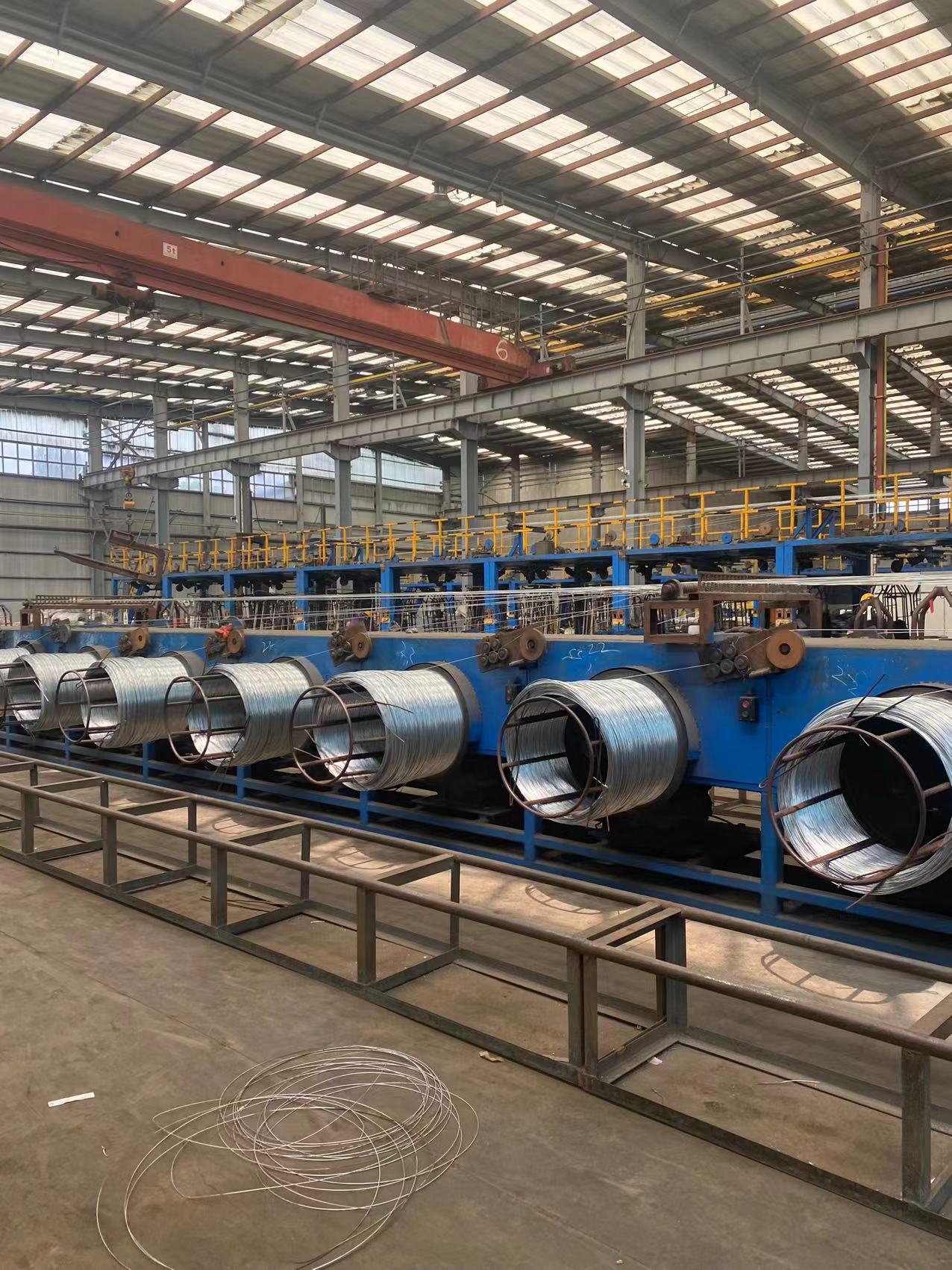
For buyers building a package, the relevant capability facts are these. Selection support is available: the technical team provides drawing-based support for choosing fastener type, size and coating against an application. Quality control runs from incoming raw material inspection through in-process production patrol inspection to finished-product random sampling and pre-shipment recheck, with each batch tested for tensile strength, torque and surface coating thickness. Surface treatments offered include zinc plating, black oxide, galvanized, hot-dip zinc, phosphate and colour painting, giving the buyer a coating ladder to match an exposure condition rather than a single default finish. The company's product description cites 45# high carbon steel for its construction screws, and documentation such as CE, SGS, ISO 9001 and material test reports can be provided on request.
Commercial terms are stated rather than implied: a standard MOQ of usually 100,000 pieces per size, with flexibility for trial orders and mixed items; production of generally 25–35 days after deposit, with stock items shipped within about 7 days; T/T at 30% deposit and 70% before shipment as the main payment method, with L/C at sight or OA terms open to discussion for long-term customers; and packaging in small boxes, plastic bags or bulk cartons stacked on fumigation-free pallets, with OEM logo printing and private-label packaging available.
The boundary should be stated as plainly as the capability. JIAYUAN's supplied range as listed is construction screws, nails and wire; a buyer sourcing hexagon bolts or hex socket bolts should qualify those suppliers against the same specification and documentation discipline set out in this article — property class, coating class, dimensional standard, test evidence and market-access documents — rather than relying on a head-style description. After-sales support covers technical consultation, product tracking and response to quality concerns, which is the part of a supplier comparison that only becomes visible after the first shipment.
Outlook: what would change a buyer's decision
Three conditional developments would shift this comparison, and none of them is a forecast of market growth. First, if product-specific evaluation reports become more common at SKU level rather than brand level, buyers will be able to compare documented performance instead of documented head shapes, and the specification burden will move upstream to suppliers. Second, if maintenance access is designed into details rather than discovered during service, the reusability question will be answered on the drawing and the socket-versus-hexagon argument will lose much of its practical force. Third, if RFQs standardise on property class, coating class and dimensional standard as the comparison basis, quotations for 'bolts' will become genuinely comparable and head style will settle into its correct role as an access decision.
Until then, the working rule for independent buyers is straightforward: specify the mechanical and coating requirements first, choose the head by the tool path second, and require documentation that names the standard, the edition and the product scope. That sequence survives a change of supplier, market or product line.
FAQ
Is a hex socket bolt stronger than a hexagon bolt?
No. Strength is not a property of the head shape. Mechanical properties are set by the property class under ISO 898-1 for carbon and alloy steel, or by the grade and property class under EN ISO 3506-1 for corrosion-resistant stainless steel. A socket head bolt and a hexagon bolt of the same size, property class and material are specified to the same mechanical requirements, so the fair comparison is between equal classes rather than between head styles.
Which type is easier to install where space is tight?
It depends on which direction is tight. A hex socket bolt needs clear access along the fastener axis for a hex key or bit socket but very little space around the head, which is why it suits counterbored and closely packed details. A hexagon bolt needs room around the head for a spanner or socket to turn but tolerates poorer axial access. If neither path is clear, the detail rather than the fastener usually needs to change.
Can hex socket and hexagon bolts be reused after disassembly?
Reuse is a joint decision rather than a head-style decision. It depends on the property class and the preload the bolt was installed to, the condition of the thread and coating after service, whether the bolt has deformed or corroded, and what the project specification permits. In practice, head style mainly affects the cost of reopening the joint: a recess can fill with paint or debris and must be cleaned before the key engages, while an external head offers a second way to grip a damaged fixing.
Can a hexagon bolt replace a self-drilling or self-tapping screw?
Not directly, because the two develop load differently. A bolt clamps members together through a nut or a tapped member, while a construction screw forms its own thread in the substrate as it is driven, and its performance depends on the substrate, thread form and point geometry. The specifications differ as well: ASTM C954 and ASTM C1002 cover drill and self-piercing tapping screws for gypsum panel attachment, ASTM C1513 covers steel tapping screws for cold-formed steel framing connections, and EN 14566 and EN 14592 cover gypsum plasterboard fasteners and dowel-type timber fasteners respectively.
What should a buyer request before comparing bolt or screw suppliers?
At minimum: the property class or stainless grade, the coating system and corrosion class, the dimensional standard and thread tolerance, test evidence to a named method such as AISI S904 for tensile and shear strength of screws, product-specific evaluation reports where structural claims are made, market-access documents such as a Declaration of Performance and CE marking where the EU Construction Products Regulation applies, and lot traceability with marking and packaging labels. Commercial terms — MOQ, trial or mixed-order flexibility, lead time and tooling charges for non-standard items — should be compared on the same specification basis.
The full JIAYUAN product range, specifications and packaging options are set out in the company's downloadable catalogue: Jiayuan Nails and Screws product brochure (PDF).
For procurement teams, the durable lesson of this comparison is that the head of a bolt is an access feature and the body of the specification is what carries risk. Buyers who fix the property class, the coating class and the dimensional standard first — and only then match the drive to the tool path — get assemblies that can be installed, inspected and reopened without revisiting the purchase order.
Есть вопросы или нужны дополнительные детали?
Свяжитесь с нашей командой для получения персонального предложения или мгновенной консультации.
Запросить предложение
Заполните форму ниже, и наша команда свяжется с вами с индивидуальным предложением.
Прямой чат WhatsApp
Предпочитаете общаться в реальном времени? Напишите нам в WhatsApp для мгновенной помощи и быстрых ответов.
- Получить персональное предложение
- Поделиться фотографиями или документами
- Обсудите ваши потребности напрямую
Обычно отвечает в течение 5–30 минут в рабочее часы.