
Hi-B Oriented Silicon Steel: Thickness, Loss and B8 Framework
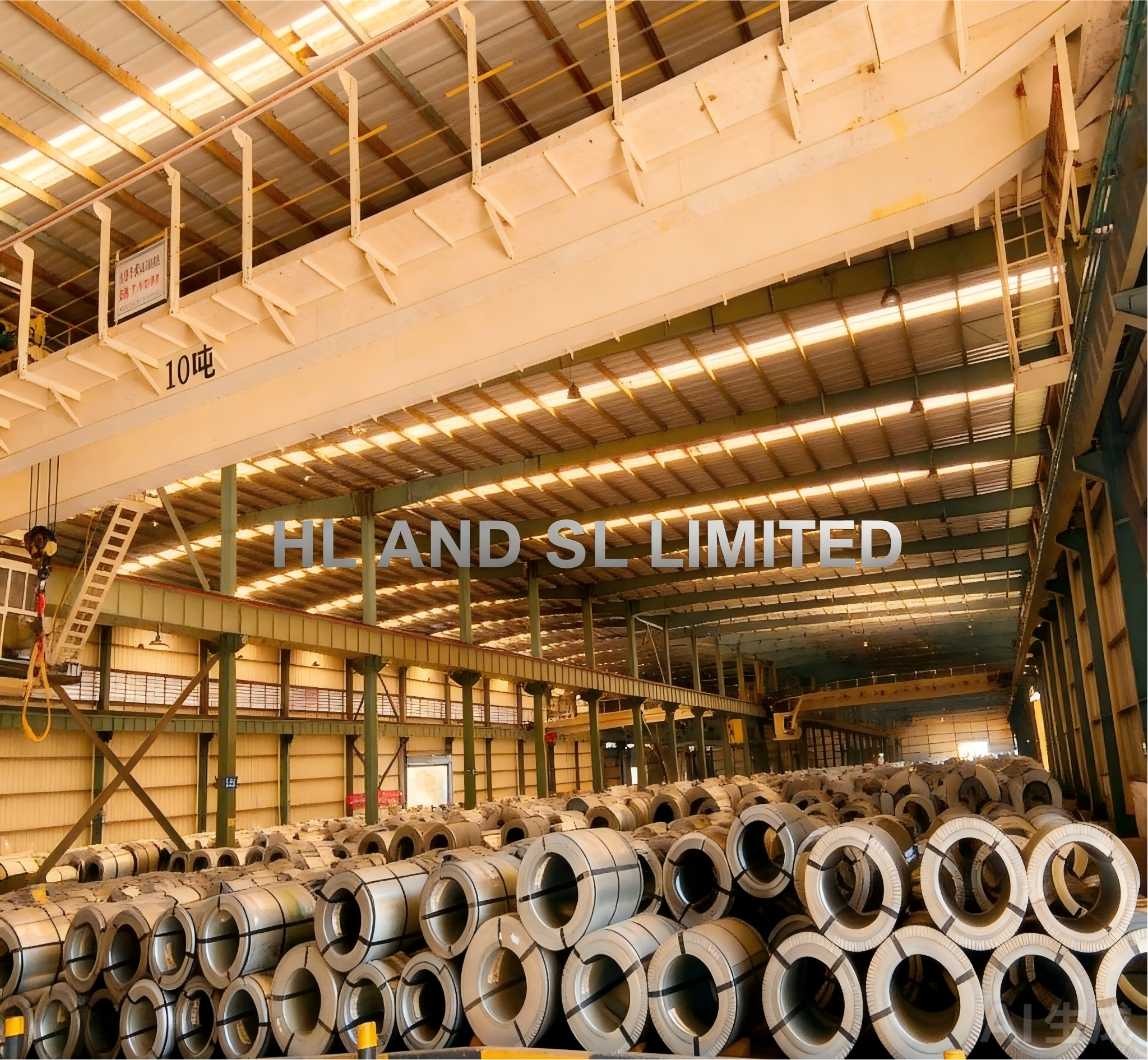
Two coils carrying the same “Hi-B” label can differ in nominal thickness, guaranteed iron loss ceiling, flux density at 800 A/m, silicon content, impurity control and coating system. Those differences decide whether a finished transformer core meets its no-load loss commitment or misses it by a margin that cannot be recovered after lamination. This framework gives procurement and engineering teams a sequential method — application first, thickness second, loss ceiling third, flux density fourth, composition and documentation fifth — for turning a grade name into a defensible purchasing specification.
What Hi-B oriented silicon steel actually is
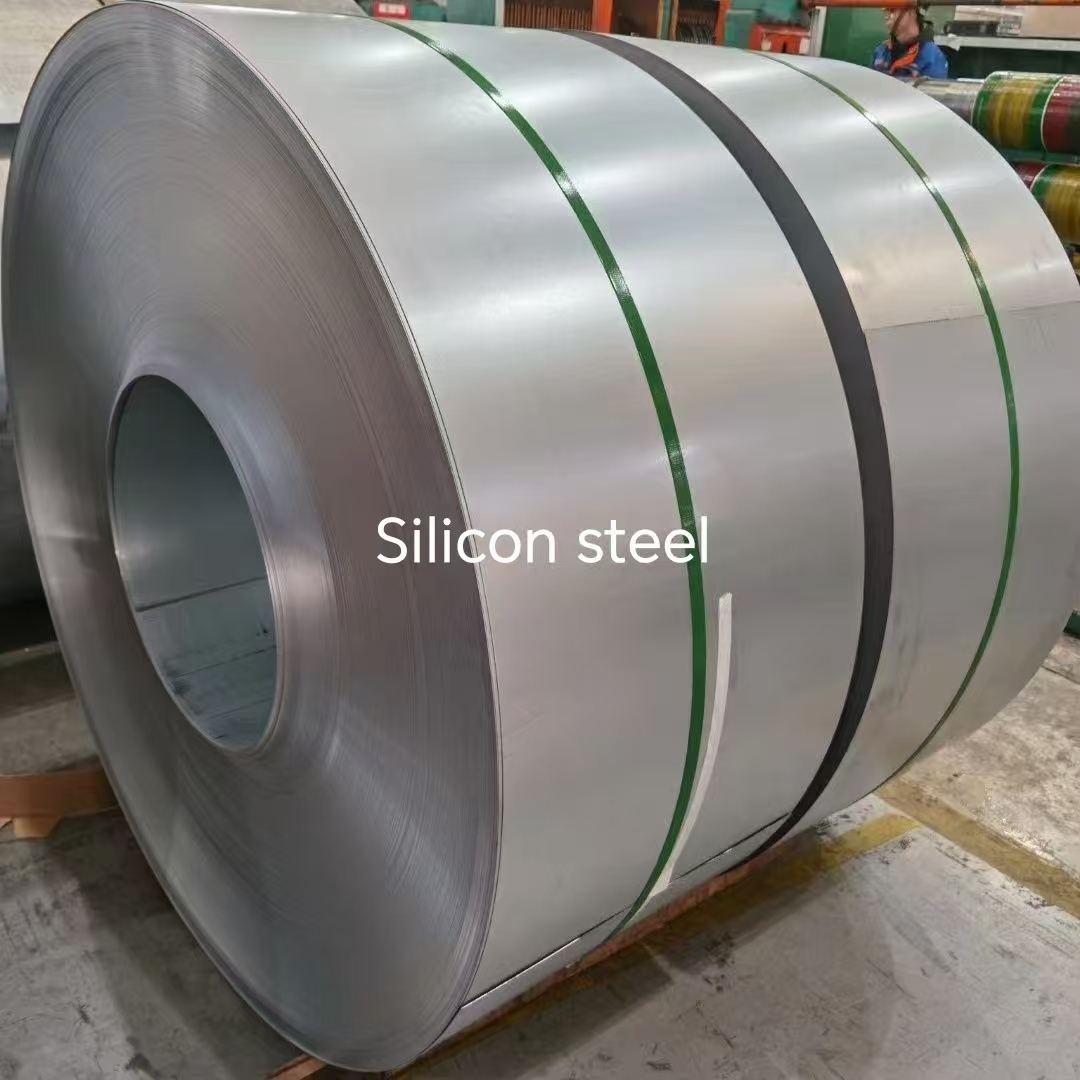
Hi-B (high magnetic induction) grain-oriented silicon steel is a cold-rolled electrical steel in which the Goss texture is aligned with the rolling direction, so that the easy axis of magnetisation coincides with the direction in which the core is magnetised. The material is an iron-based alloy with silicon added at roughly 3.0%–3.2%, together with aluminium and manganese, and it relies on inhibitors such as MnS and AlN to develop the required grain structure during processing.
That definition matters commercially because “Hi-B” describes a grade family, not a fixed specification. Within one supplier's range, the same family may span several nominal thicknesses and several iron-loss tiers, and the published data does not always cover every parameter a tender asks for. IEC 60404-8-7:2020, which specifies cold-rolled grain-oriented electrical steel strip and sheet delivered in the fully processed state, lists nominal thicknesses of 0.20 mm, 0.23 mm, 0.27 mm, 0.30 mm and 0.35 mm — the outer frame inside which most transformer-core purchasing sits. ASTM A876-17e1 covers flat-rolled, grain-oriented, fully processed low-carbon silicon-iron electrical steel and describes the covered material as having a silicon content of approximately 3.2%, which is consistent with the 3.0%–3.2% range quoted for high-permeability Hi-B grades.
The procurement problem: overlapping grades, non-overlapping consequences
Purchasing teams rarely struggle to find Hi-B offers. They struggle to compare them. A single 0.27 mm thickness band can carry five or more distinct loss tiers, each with its own guarantee and each with a different implication for the core's no-load loss, temperature rise and material cost. Meanwhile the thinnest available grades, which carry the lowest loss numbers, are the ones with the least complete published data and the longest qualification path.
Three symptoms recur in real buying cycles:
- Grade-first selection. A grade is inherited from a previous project and re-quoted without re-checking the transformer's loss budget, so the specification is defensible by habit but not by calculation.
- Loss-only comparison. Quotes are ranked on the iron-loss ceiling alone, while flux density, coating temperature class and delivery-state documentation — all of which affect manufacturability — are left unexamined.
- Unverified parameters. A tender floor exists for a property that the supplier's datasheet does not state, and nobody requests the grade-specific figure before the purchase order is issued.
A decision framework resolves all three by fixing the order of the questions.
Step 1 — Anchor the specification in the transformer, not the grade
The first question is not “which Hi-B grade?” but “which magnetic circuit?” The application determines which constraint is binding: loss, flux density, noise, temperature class or cost per kilogram. The grade database used for this framework lists seven Hi-B grades with explicit application notes, and those notes are the correct starting point.
| Application class | Binding constraint in practice | Grades flagged for the application |
|---|---|---|
| Ultra-high voltage transformers | Lowest achievable iron loss; flux density verified grade by grade | 20-65 |
| High-efficiency distribution transformers / energy-efficiency standard transformers | Loss at the low end of the budget; noise and coating durability often co-specified | 20-65, 23R075 |
| Power transformer cores | Balance of loss and flux density across a larger core build | 23R075, 27Q095, 27Q100, 27Q105, 27Q110 |
| Photovoltaic DC converter transformers | Loss under non-sinusoidal, converter-driven excitation | 27Q095 |
| Reactors and electrical equipment cores | Flux density plus documented magnetic behaviour | 27Q100 |
| Industrial frequency-conversion equipment | Loss stability across variable frequency operation | 27Q095 |
| Small and medium transformer cores, general electrical equipment | Cost per kilogram and formability | 27Q110, 27Q120 |
Writing the application class into the RFQ header is not paperwork. It constrains the supplier's response to grades that were designed for that duty, and it makes any deviation visible at bid evaluation rather than at incoming inspection.
Step 2 — Fix the thickness band: 0.20 mm, 0.23 mm or 0.27 mm
Thickness is the first hard constraint because it cannot be substituted after the core design is frozen. The reference range used here offers three nominal thicknesses across the seven grades:
- 0.20 mm — represented by 20-65, the thinnest grade in the reference set, carrying an iron-loss ceiling of ≤0.65 W/kg.
- 0.23 mm — represented by 23R075, with an iron-loss ceiling of ≤0.75 W/kg and a flux density of ≥1.88 T.
- 0.27 mm — represented by 27Q095, 27Q100, 27Q105, 27Q110 and 27Q120, with iron-loss ceilings running from ≤0.95 W/kg to ≤1.20 W/kg.
The trade-off is real and should be stated plainly in the evaluation. Thinner strip generally delivers a lower loss per kilogram, but it also means more laminations for the same core build, more stamping and stacking operations, and greater sensitivity to handling damage — costs that never appear on a per-kilogram quotation. Conversely, a 0.27 mm grade is easier to process and usually simpler to source, but its loss ceiling limits how far a core loss budget can be pushed. Buyers who evaluate only the material price per tonne systematically underweight the processing side of the equation.
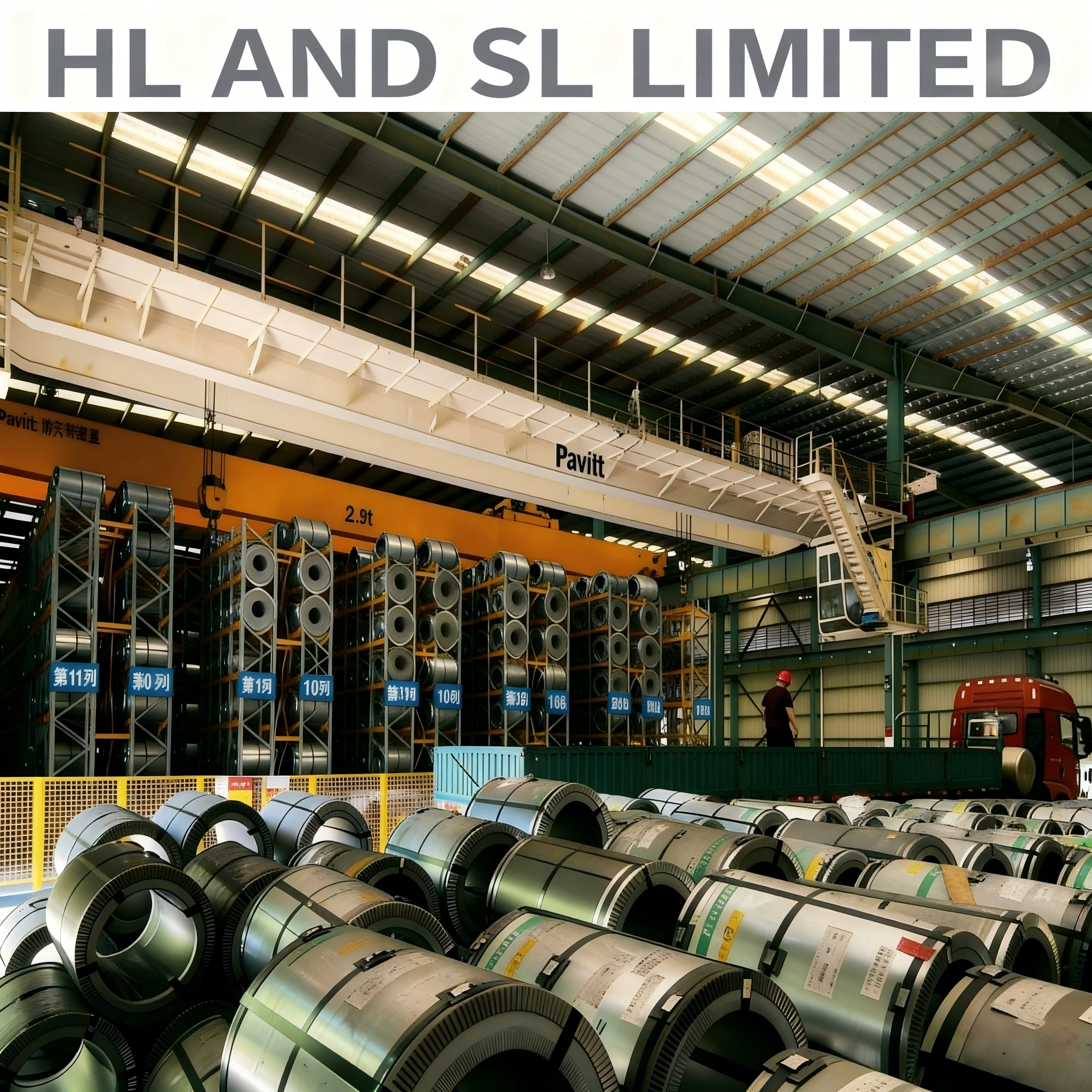
Customisation headroom also belongs in this step. HL AND SL LIMITED, a Chinese electrical steel export and processing specialist founded in 2012, states that it processes oriented silicon steel across a thickness range of 0.18–0.35 mm and widths typically 800–1250 mm, which means the 0.20/0.23/0.27 mm decision can normally be met without opening a new specification.
Step 3 — Set the iron-loss ceiling from the core loss budget
Iron loss in this grade family is quoted as P1.7/50 — specific total loss measured at a peak flux density of 1.7 T and a frequency of 50 Hz — and is expressed as a maximum in W/kg. The full published set is shown below. The ceiling, not the typical value, is what a purchase order should reference, because the ceiling is what the supplier is accountable to.
| Grade | Nominal thickness | Iron loss P1.7/50 maximum | Magnetic flux density B8 | Silicon content (published) |
|---|---|---|---|---|
| 20-65 | 0.20 mm | ≤0.65 W/kg | Not stated in grade data | ≈3.0%–3.2% |
| 23R075 | 0.23 mm | ≤0.75 W/kg | ≥1.88 T | ≈3.0%–3.2% |
| 27Q095 | 0.27 mm | ≤0.95 W/kg | ≥1.91 T | ≈3% |
| 27Q100 | 0.27 mm | ≤1.00 W/kg | ≥1.91 T | ≈3% |
| 27Q105 | 0.27 mm | ≤1.05 W/kg | ≥1.88 T | ≈3% |
| 27Q110 | 0.27 mm | ≤1.10 W/kg | ≥1.88 T | ≈3% |
| 27Q120 | 0.27 mm | ≤1.20 W/kg | Not stated in grade data | ≈3% |
Two practical rules follow. First, translate the transformer's guaranteed no-load loss into a material loss ceiling before requesting quotations, and state that ceiling as a maximum rather than a target. Second, do not automatically buy the lowest number in the table. Overspecifying loss is one of the most common forms of avoidable cost in core procurement: a grade one tier above the calculated requirement adds cost without improving a guaranteed transformer figure that is already met.
Step 4 — Treat B8 as a second, independent gate
B8 is the magnetic flux density measured at a magnetising field of 800 A/m, expressed in tesla. It describes how much flux the material carries for a given excitation, and it constrains the core design independently of iron loss. A grade with an excellent loss ceiling but a lower B8 may require more turns or a larger core to reach the same flux.
The reference grade set splits into two bands deliberately:
- B8 ≥1.91 T — 27Q095 and 27Q100, both 0.27 mm Hi-B grades.
- B8 ≥1.88 T — 23R075, 27Q105 and 27Q110.
- No B8 figure stated — 20-65 and 27Q120, whose published data covers thickness and iron loss only.
This split is where procurement discipline earns its keep. A tender that sets a B8 floor of, say, 1.90 T removes the 1.88 T band and both of the grades without a published figure from the compliant set — yet tender documents are frequently issued with a B8 requirement that no one reconciles against the datasheets. The correct sequencing is to state the B8 floor first, then select loss tiers inside it, then confirm that the thickness band still meets the core design.
Step 5 — Verify silicon content and impurity control
Composition is the least visible and most consequential part of the specification. Silicon addition at roughly 3.0%–3.2% raises resistivity and suppresses eddy-current loss; aluminium and manganese are present as part of the processing route; and carbon, sulphur and nitrogen must be strictly controlled, with MnS and AlN acting as inhibitors in the high-permeability Hi-B grades. When impurity control drifts, the consequences appear downstream as unstable loss values rather than as an obvious non-conformance at goods-in.
Buyers should therefore require composition evidence as a delivery document, not as a sales statement. The verification chain used by HL AND SL LIMITED is a useful benchmark: origin inspection at the producing works with full-process random and batch inspection, a material certificate or warranty certificate issued with the batch, and third-party testing through CMA/CNAS-accredited laboratories where an independent result is required. Aligning incoming inspection with IEC 60404-8-7:2020 test provisions — and, where noise or vibration is a design concern, with the magnetostriction measurement conditions of IEC 60404-17:2021 at 50 Hz or 60 Hz — gives the buyer a defensible acceptance route rather than an argument.
Step 6 — Close the loop on coating, compliance and delivery
Three constraint families sit outside the magnetic specification but routinely decide whether a shipment is usable:
Coating class. Organic coatings are quoted with a temperature resistance of ≤180 °C, inorganic coatings up to 800 °C, with semi-organic options in between. The choice belongs to the annealing and stress-relief route used downstream, and it should be specified at the same time as the grade — not added after the purchase order is confirmed.
Regulatory compliance. RoHS Directive 2011/65/EU, together with Directive (EU) 2025/2456, restricts ten hazardous substances in electrical and electronic equipment, and ECHA takes over the technical assessments from 13 August 2027. Buyers exporting into the EU should carry the compliance statement alongside the material certificate. Where an automotive surface or coating standard such as VDA 239-100 is cited in a specification, it is worth confirming with the supplier how that automotive framing maps onto electrical-steel coating requirements, since the two documents were written for different purposes.
Delivery parameters. Minimum order quantity, lead time and documentation pack should be fixed in the framework, because a technically ideal grade that cannot be delivered inside the production window is not a compliant offer. The reference parameters here are a 25 t minimum order quantity, 15–20 days for regular orders, 3–7 days for urgent or stock orders, and 30–45 days to port arrival for bulk export orders.
Where the framework lands: application evidence
The value of a decision framework is tested against projects where the constraints were not academic.
- German distribution transformer upgrades. Germany's replacement programme for older, energy-consuming distribution transformers operates under EU ecodesign requirements, with energy-efficiency standards among the strictest globally and unusually tight noise limits. Weather resistance for coastal salt-spray conditions is a specified property. The lesson for buyers is that a core specification in this market cannot be loss-only: coating durability and noise behaviour sit alongside the loss ceiling.
- Canadian cold-climate distribution projects. In projects where ambient temperatures run from −40 °C to −20 °C with frequent freeze-thaw cycling, permeability retention at low temperature has been specified at ≥95%. Temperature behaviour is therefore a legitimate specification item, and buyers in cold regions should ask for it explicitly rather than assume it.
- Brazilian grid manufacturing. Oriented silicon steel has been used for over a decade in WEG's local production of power and distribution transformers in Brazil, supporting compliance with the regional INMETRO energy-efficiency certification requirements. Long supply continuity, not a single-shipment price, is the relevant procurement metric in that relationship.
- ±800 kV UHVDC converter transformers. Converter-transformer projects of this class specify high flux density together with a low iron-loss ceiling, because both properties govern converter-side performance. It is a clear illustration of why Step 3 and Step 4 must be evaluated together rather than in sequence.
Hi-B against conventional alternatives — and where the framework breaks down
Hi-B material is not the default answer for every core. Conventional grain-oriented (CGO) steel remains a legitimate and cost-effective choice where the loss budget is generous and the transformer's guaranteed efficiency figure can be met without the higher-induction grade. Within the Hi-B family, a 0.27 mm grade such as 27Q110 or 27Q120 will usually be the pragmatic choice for small and medium transformer cores where formability and cost per kilogram dominate, while 0.20 mm and 0.23 mm grades belong in designs where the loss ceiling genuinely cannot be met otherwise.
Four boundaries deserve equal billing with the advantages:
- Published data is not uniform. 20-65 and 27Q120 are documented by thickness and iron loss only. Where a B8 floor appears in a tender, those grades cannot be accepted on published data alone; a grade-specific figure has to be requested and confirmed in writing.
- Project thresholds can sit below the catalogue. Some distribution-transformer programmes specify loss requirements tighter than the lowest ceiling in a given catalogue range. In that situation the framework does not deliver an answer — it tells the buyer to escalate to a project-specific qualification instead of assuming the closest grade will pass.
- Loss data does not predict noise. Magnetostriction behaviour under AC excitation at 50 Hz or 60 Hz is measured under IEC 60404-17:2021, and a favourable loss ceiling says nothing about it. Noise-critical projects need a separate test report.
- The framework ranks, it does not validate. Final confirmation comes from prototype core-loss measurement and incoming inspection, not from a datasheet comparison.
Supply-side context: what the brand contributes
HL AND SL LIMITED is a Chinese electrical steel export and processing enterprise founded in 2012, operating a 30,000 m² processing facility with 50 employees, 10 engineers and an annual output of 30,000 t. The company reports that it is an authorised agent of China Baowu Steel Group and ranks among the top three in China's electrical steel export volume — a company-reported position that buyers should verify against their own documentation requirements. Exports account for approximately 80% of activity, with main markets in Mexico, Brazil, Italy, the UAE and India.
The capability that matters for this framework is the in-house processing layer: strip cutting, fixed-length flat cutting and longitudinal slitting, coating selection across organic, inorganic and semi-organic systems, dimension and packaging customisation, and a monthly capacity of 4,000 t. Long-standing supply relationships include a Mexican transformer manufacturer served for over ten years across power, converter and special engineering transformer cores, and WEG in Brazil, supported through a local representative office.
For buyers, the practical implication is that the six steps above can be executed against a single processing partner rather than across several intermediaries — with batch material certificates and CMA/CNAS third-party testing available as part of the delivery pack.
Market trend: why specification discipline is becoming more valuable
The global silicon steel market was valued at USD 31.55 billion in 2025 and is projected to reach USD 59.41 billion by 2035, according to Strategic Revenue Insights. Growth of that scale does not lift every grade equally. Ultra-thin electrical steel below 0.2 mm gauge is described as the most critical trend for high-speed EV motors and carries a price premium of 50%–100% over standard gauge — a signal that the thinnest bands are where supply tension concentrates, and a reasonable prompt for buyers of 0.20 mm-class material to plan capacity earlier than they plan price.
Regulatory cycles are moving on a similar timetable. With ECHA taking over technical assessments under the EU RoHS framework from 13 August 2027, compliance documentation is becoming a standing item in the procurement file rather than a one-off annex. In both cases the direction is the same: the buyers who win are the ones who converted a grade name into a verified specification before the market tightened.
Future outlook
Three developments are likely to shape Hi-B procurement over the next planning cycle. First, grade data will be asked to carry more parameters, not fewer — a datasheet that states thickness and loss but not flux density will increasingly be treated as incomplete during bid evaluation. Second, the split between 0.23 mm and 0.27 mm families will harden as energy-efficiency requirements move upward, with 0.27 mm grades shifting toward the cost-sensitive end of the portfolio. Third, verification will migrate upstream: composition control, inhibitor chemistry and magnetostriction reporting will be requested at the quotation stage rather than discovered at incoming inspection. None of these changes the physics. All of them change how a purchase order should be written.
FAQ
Which Hi-B grade thickness should be specified for a distribution transformer core?
It depends on the loss ceiling the transformer has to guarantee. In the reference grade set, 0.23 mm 23R075 carries an iron-loss ceiling of ≤0.75 W/kg and a flux density of ≥1.88 T, and is flagged for energy-efficiency standard transformers and high-efficiency distribution transformers. The 0.20 mm 20-65 grade carries a ≤0.65 W/kg ceiling and is flagged for highly efficient distribution transformers and UHV transformers. Where the loss budget is generous, a 0.27 mm grade such as 27Q105, 27Q110 or 27Q120 may satisfy the requirement at a lower material cost. Thickness should be chosen after the loss and flux-density requirements are fixed, not before.
Is a lower iron-loss grade always the better purchase?
No. Iron loss ceilings in the reference set run from ≤0.65 W/kg at 0.20 mm to ≤1.20 W/kg at 0.27 mm, and selecting a tier below the calculated requirement adds cost without improving a guaranteed transformer figure that is already met. The appropriate target is the highest loss ceiling that still satisfies the core loss budget, subject to the flux-density and thickness constraints. Thinner, lower-loss grades also generally increase lamination count and processing workload, which carries its own cost outside the material price.
Which Hi-B grades publish a flux density of at least 1.91 T?
In the reference grade data, 27Q095 (0.27 mm, iron loss ≤0.95 W/kg) and 27Q100 (0.27 mm, iron loss ≤1.00 W/kg) are both stated at B8 ≥1.91 T. The 23R075, 27Q105 and 27Q110 grades are stated at B8 ≥1.88 T. The published data for 20-65 and 27Q120 covers nominal thickness and iron loss only, so a B8 figure for those grades must be requested from the supplier rather than inferred.
How should silicon content and impurity control be verified in a Hi-B delivery?
Through delivery documentation rather than datasheet statements. Hi-B oriented silicon steel is an iron-based alloy with silicon added at approximately 3.0%–3.2%, together with aluminium and manganese, and with carbon, sulphur and nitrogen strictly controlled, using MnS and AlN as inhibitors in the high-permeability grades. ASTM A876-17e1 describes the covered grain-oriented electrical steel as having a silicon content of approximately 3.2%. Verification typically relies on a batch material certificate or warranty certificate issued with the goods, origin inspection at the producing works, and third-party testing through CMA/CNAS-accredited laboratories where independent confirmation is required.
Which Hi-B grade fits photovoltaic DC converter transformers?
Within the reference grade set, 27Q095 (0.27 mm, iron loss ≤0.95 W/kg, B8 ≥1.91 T) is the grade flagged for photovoltaic direct current converter transformers, and it is also flagged for high-efficiency power transformers and industrial frequency-conversion equipment. The combination that matters in converter duty is a low loss ceiling together with a high flux density, since converter-driven excitation departs from pure sinusoidal operation and both properties influence the resulting core behaviour.
What coating and compliance constraints should be fixed alongside the grade?
Coating class should be set at the same time as the grade: organic coatings are quoted with a temperature resistance of ≤180 °C, inorganic coatings up to 800 °C, with semi-organic systems available between them. On compliance, RoHS Directive 2011/65/EU as amended by Directive (EU) 2025/2456 restricts ten hazardous substances in electrical and electronic equipment, with ECHA assuming technical assessments from 13 August 2027. Buyers targeting the EU should require the compliance statement to be issued together with the batch material certificate.
What order quantity and lead time should a buyer plan for?
The reference parameters are a minimum order quantity of 25 t, a lead time of 15–20 days for regular orders, 3–7 days for urgent or stock orders, and 30–45 days to port arrival for bulk export orders. Orders placed after a letter of credit are quoted at 7–30 working days. These are planning figures; project schedules should be confirmed against the specific grade, coating and dimension combination at the quotation stage.
Closing note
The framework is deliberately sequential because the constraints interact: application fixes the binding requirement, thickness fixes the design envelope, loss fixes the cost tier, flux density fixes eligibility, and composition plus documentation fix whether any of it survives incoming inspection. A grade name answers none of those questions on its own.
A downloadable product brochure with the full grade and processing range is available here: HL AND SL LIMITED electrical steel brochure.
Есть вопросы или нужны дополнительные детали?
Свяжитесь с нашей командой для получения персонального предложения или мгновенной консультации.
Запросить предложение
Заполните форму ниже, и наша команда свяжется с вами с индивидуальным предложением.
Прямой чат WhatsApp
Предпочитаете общаться в реальном времени? Напишите нам в WhatsApp для мгновенной помощи и быстрых ответов.
- Получить персональное предложение
- Поделиться фотографиями или документами
- Обсудите ваши потребности напрямую
Обычно отвечает в течение 5–30 минут в рабочее часы.