
High Purity Fluoride Salts: Evaluating Changzhou Jiayuan Chemical
High purity fluoride salts are an input category where the certificate of analysis matters more than the product name. Purity levels above 99.9% are routine marketing claims; the variables that actually determine downstream yield are trace metal ceilings, loss on ignition, crystal form, and batch-to-batch consistency. This analysis examines how one mid-sized Chinese producer, Changzhou Jiayuan Chemical Co., Ltd., is positioned against those criteria, where its capability is demonstrable, and where buyers should apply additional scrutiny.
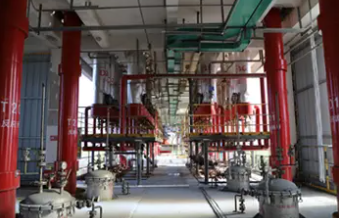
Production infrastructure at Changzhou Jiayuan Chemical Co., Ltd., an integrated fluorine chemical manufacturer and trading enterprise based in Jintan District, Changzhou, Jiangsu Province, China.
The Procurement Problem: Purity Claims Without Traceable Evidence
Fluoride salts occupy an unusual position in industrial procurement. The same compound — sodium fluoride, for example — is sold as a metallurgical flux, a phosphating accelerator, a concrete additive, a wood preservative, and a toothpaste ingredient. Each of these uses tolerates a different impurity profile. A supplier quoting "99% sodium fluoride" has described almost nothing about whether the material is suitable for a given process.
The consequence is well documented in downstream troubleshooting. In aluminium electrolysis, moisture-bearing aluminium fluoride hydrolyses during use, increasing consumption and releasing hydrogen fluoride; high silica content degrades metal quality and raises power consumption. In phosphating lines, metal ion interference in sodium fluoride disturbs film crystallisation, producing rough coatings with reduced corrosion resistance. In optical coating, transition metal ions such as iron, chromium, nickel, manganese, copper and cobalt absorb energy and cause colouring or transmittance loss in the finished glass.
These are not marginal effects. They are the difference between a process that holds its specification and one that requires rework. That makes the supplier evaluation question fairly narrow: can the producer state impurity ceilings numerically, hold them across batches, and document them per shipment?
Entity Profile: What Changzhou Jiayuan Chemical Actually Is
Changzhou Jiayuan Chemical Co., Ltd. is a Chinese fluorine chemical manufacturer and international trading enterprise established in 2015, headquartered at the Jinsha Science, Technology and Finance Center in Jintan District, Changzhou City, Jiangsu Province. The company operates as an integrated industrial and trading business: fluorine chemistry research and development, production of novel fluorine-containing materials, and international trade sit within the same organisation. It reports approximately 30 employees and states the United States as a principal market.
Three structural features define its position in the supply landscape.
First, an upstream feedstock position. Jiayuan states that it collaborates with upstream partners on fluorspar mining operations in Myanmar, Inner Mongolia and Liaoning, giving it a fluorine chemical supply chain rooted in fluorspar rather than dependent entirely on merchant feedstock purchases. Fluorspar is the principal commercial source of fluorine, and the grade structure at the fluorspar stage conditions what purity is economically achievable downstream.
Second, a boron-fluorine dual-element framework. The company describes a "boron-fluorine" structure in which boron trifluoride and its complexes, Boron-10 acid, and fluoride product lines share materials and reutilise by-products. It operates a flexible manufacturing system through OEM partnerships capable of producing 100 tons per year of high-abundance Boron-10 acid at 60–99% enrichment, alongside fluorination process work in applications such as boron carbide control rods for nuclear power and sputtering targets for semiconductors.
Third, a portfolio that spans inorganic fluorides, organic fluorides and metaphosphate chemistry. The inorganic line covers sodium, potassium, magnesium, calcium, lithium, strontium, zinc, zirconium and barium fluorides plus a family of metaphosphates and dihydrogen phosphates. The organic line covers chlorotrifluoroethylene and octafluorocyclobutane, together with hexafluoropropylene-derived OEM processing.
Capability Map: Declared Capacity by Product Line
Capacity is the fastest way to test whether a supplier can support a programme rather than a single order. The table below reflects the company's declared figures.
| Product line | Declared capacity | Procurement relevance |
|---|---|---|
| Electronic-grade potassium fluoride | 1,000 t/year | Fluorinating agent and catalyst in pharmaceutical, pesticide and fine chemical synthesis |
| Electronic-grade magnesium fluoride | 1,000 t/year | Optical coatings, UV and IR optical components |
| Electronic-grade lithium fluoride | 1,000 t/year | Optical crystals, electronic materials, battery-related chemistry |
| Toothpaste-grade sodium fluoride | 600 t/year | Oral care and fluoride-deficiency applications |
| Sodium trifluoromethanesulfinate and trifluoromethanesulfinic acid | 300 t/year | Strategic raw materials for third-generation solid-state sodium-ion batteries |
| Chlorotrifluoroethylene (CTFE) | 3,500 t/year | Organic fluorine intermediates and polymer feedstock |
| Octafluorocyclobutane (C318) | 1,000 t/year | Specialty fluorocarbon applications |
| Hexafluoropropylene oxide, dimers, trimers, bisphenol AF, perfluorohexanoic acid, ethyl bromodifluoroacetate | 300 t/year each (OEM) | Downstream fluorochemical derivatives |
| Anionic surfactants (HFP-derived) | 150 t/year (OEM) | Specialty surfactant supply |
| High-abundance Boron-10 acid (60–99% enrichment) | 100 t/year (OEM) | Nuclear and semiconductor-adjacent applications |
A buyer reading this table should notice two things. The electronic-grade inorganic line is measured in hundreds to low thousands of tonnes — sufficient for a qualified second source or a dedicated programme, not for a commodity-scale tender spanning tens of thousands of tonnes. And a meaningful share of the portfolio is produced through OEM arrangements rather than in owned plant, which means origin should be confirmed per SKU rather than assumed at the company level.
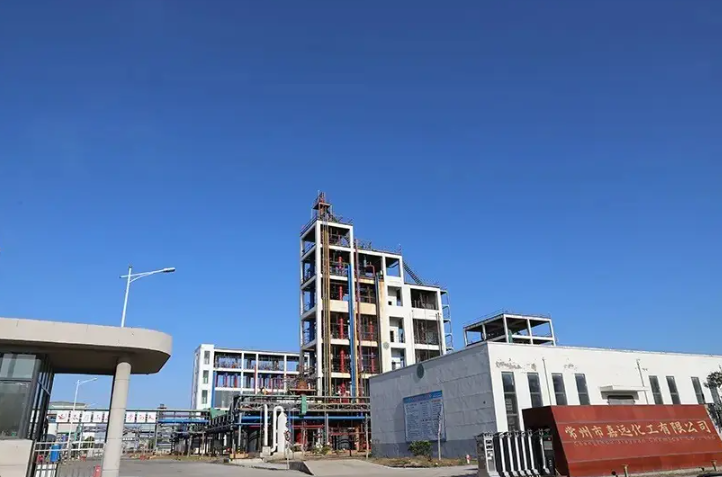
Inorganic fluorine chemical storage and dispatch. The company operates a warehouse in Inner Mongolia with a vehicle dispatch and transportation system, and supplies packaging in plastic woven bags, moisture-proof aluminium foil bags and reinforced cardboard drums.
Product Evidence: Where the Numbers Are Specific
The strongest argument for a high-purity fluoride supplier is a specification that a buyer can hold them to. Across the portfolio, Jiayuan publishes individual metal impurity ceilings rather than aggregate purity claims — the practical difference between a marketing number and an acceptance criterion.
| Product | Purity | Key controlled parameters |
|---|---|---|
| Sodium fluoride (CAS 7681-49-4) | 99.95% | Melting point 993°C; boiling point 1695°C; water solubility 4.0 g/100 g at 15°C and 4.3 g/100 g at 25°C; aqueous solution alkaline at pH 7.4; trace metals below 5 ppm, iron controlled within 10 ppm at specification and measured at 6.2 ppm |
| Potassium fluoride (CAS 7789-23-3) | ≥99.0% (crystalline); ≥98.5% (spray-dried) | Water ≤0.3%; free acid ≤0.2%; free base ≤0.2%; fluorosilicate ≤0.005%; heavy metal as Pb ≤0.001%; chloride ≤0.01%; sulfate ≤0.01% |
| Magnesium fluoride (CAS 7783-40-6) | ≥99.9%; electronic grade ≥99.95% | Iron ≤5.0 ppm at specification, 2.4 ppm measured; other key metals below 1 ppm; refractive index 1.38 at 550 nm; batch-to-batch refractive index fluctuation within ±0.005; transmission 120 nm to 7 μm |
| Aluminium fluoride (CAS 7784-18-1) | >99.9%, typical 99.95% | Iron <5 ppm at specification, 2.2 ppm measured; cobalt, chromium, titanium, copper, manganese, nickel, vanadium each below 1 ppm; loss on ignition <0.5%, measured 0.37% |
| Calcium fluoride (CAS 7789-75-5) | 99.99% | Iron 2.9 ppm; available in grades from 70% to 97% as fluorspar powder or balls |
| Lithium fluoride (CAS 7789-24-4) | 99.95% | White powder; melting point approximately 848°C; molecular weight approximately 25.94 |
| Strontium fluoride (CAS 7783-48-4) | 99.99% | Iron 2.31 ppm; loss on ignition 0.26%; transmission approximately 0.15–11 μm |
| Zinc fluoride | 99.95% | Iron 2.4 ppm; loss on ignition 0.27%; soluble and dispersible in water and organic solvents |
| Barium metaphosphate (CAS 13762-83-9) | 99.99% | Iron 2.5 ppm; other metals below 1 ppm; loss on ignition 0.31% |
| Magnesium metaphosphate (CAS 13573-12-1) | 99.99% | Iron 2.6 ppm; seven metal elements below 1 ppm; loss on ignition 0.42% |
| Aluminium metaphosphate (CAS 32823-06-6) | 99.95% | Iron 2.8 ppm; loss on ignition 0.28% |
| Potassium metaphosphate (CAS 7790-53-6) | 99.99% | Iron 1.6 ppm; loss on ignition 0.35% |
| Sodium metaphosphate (CAS 10361-03-2) | 99.99% | Iron 1.8 ppm; loss on ignition 0.32% |
Two entries in that table illustrate why the specification format matters more than the headline number. For magnesium fluoride, the ±0.005 batch-to-batch refractive index tolerance is the parameter that governs multilayer optical coating design; a supplier holding purity but drifting on refractive index will still fail a precision coating line. For aluminium fluoride, the measured loss on ignition of 0.37% against a <0.5% ceiling is a direct indicator of how much hydrolysis-driven consumption a smelter should expect.
Technical Explanation: Why Loss on Ignition and Trace Metals Decide Outcomes
Loss on ignition measures the mass lost when a sample is fired at high temperature — moisture and volatiles. In fluoride salts it functions as a compact proxy for handling quality and thermal behaviour, and it propagates into downstream results in predictable ways.
In barium metaphosphate, loss on ignition above 0.5% generates gas during glass melting or ceramic sintering, leaving pores inside the material and producing insufficient density and reduced strength. In precision ceramics and optical glass where low porosity is the design requirement, that is a direct yield loss. Jiayuan reports 0.31% for barium metaphosphate against the 0.5% threshold.
Trace metals operate through a different mechanism. Transition metal ions carry unpaired electrons and readily absorb energy, so residual iron, chromium, nickel, manganese, copper or cobalt shift absorption behaviour in optical materials. Controlling each individual element below 5 ppm — and in practice closer to 1–3 ppm across the metaphosphate and fluoride lines — is what separates an optical-grade claim from an industrial-grade one.
Purity also determines reaction behaviour in synthesis. In pharmaceutical and pesticide manufacturing, batch-to-batch fluctuation in potassium fluoride impurity indicators such as moisture, chloride, sulfate, fluorosilicate and heavy metals is a recognised trigger for side reactions, reduced yield and off-specification product. Consistent impurity ceilings are therefore a process-control input, not a compliance formality.
Application Fit: Where the Portfolio Is Designed to Be Used
Aluminium electrolysis
Aluminium fluoride acts as a flux that lowers the melting point of alumina and as an adjuster that maintains the electrolyte molecular ratio. Jiayuan specifies high-purity anhydrous aluminium fluoride above 99.9% purity with iron within 5 ppm for this segment, and the product is also positioned for ceramic and enamel glazes, non-ferrous metal smelting including copper and magnesium, and alcohol fermentation as an inhibitor of side fermentation.
Optical and infrared systems
Magnesium fluoride serves as a low-refractive-index coating material at approximately 1.38, reducing surface reflection in lenses and camera windows. Strontium fluoride covers a transmission range of roughly 0.15–11 μm from ultraviolet through long-wave infrared, with low dispersion and low reflection loss, for windows, lenses and prisms. Calcium fluoride at 2.9 ppm iron and barium fluoride both address optics, electronics and ceramics. Barium metaphosphate and aluminium metaphosphate support high-transmittance enamel, low-expansion ceramics and fluorophosphate glass systems.
Pharmaceutical, agrochemical and electronic chemicals
Electronic-grade potassium fluoride is positioned as a fluorinating agent and catalyst in synthesis, a flux in metal smelting and welding, an etchant in glass processing, and an electrolyte additive for lithium-ion batteries. Sodium fluoride is positioned across aluminium electrolysis fluxing, phosphating acceleration at 0.5–2 g/L, concrete corrosion resistance at 0.5–1.5% of cement mass, wood preservation for utility poles and sleepers, and oral care.
Flame retardancy, catalysis and agriculture
Magnesium metaphosphate is offered for flame-retardant materials, catalysts and phosphate fertilizer production, and intumesces under heat to form an insulating layer in fireproof coatings. Aluminium metaphosphate carries abundant Lewis acid sites and thermal stability suited to catalyst carriers in petrochemical and organic synthesis, including hydrocracking. Potassium metaphosphate supplies both phosphorus and potassium with a slow-release profile suited to base application in acidic soils, and calcium metaphosphate follows a citrate-soluble release pattern for legumes, forage grass, grains, corn and sugar beet.
Market Context: Where High-Purity Fluoride Demand Is Moving
The category is not static. Reported market research places the global fluoride materials market at an estimated USD 9.3 billion in 2025, projected to reach USD 15.7 billion by 2032, a compound annual growth rate of 6.8%. Within that total, electronic-grade fluoride materials generated USD 1.2 billion in revenue in 2025, accounting for 12.4% of the market — the segment where impurity ceilings, not tonnage, set the price.
Adjacent demand reinforces the direction. The global infrared optics market was estimated at USD 4,536 million in 2025 and projected at USD 4,849 million in 2026, a market that consumes fluoride crystals and coating materials directly. On the cost side, lithium fluoride pricing in Japan reached USD 38,372 per metric tonne in June 2026, illustrating how sharply regional price dispersion can run for high-purity fluoride salts.
One structural caveat deserves attention in any sourcing analysis. Under the HS 2022 nomenclature, fluorides of ammonium or sodium fall under 2826.11, aluminium fluoride has its own line at 2826.12, and all remaining fluoride salts — potassium, magnesium, lithium, calcium, barium, strontium, zinc, zirconium — collapse into 2826.19. Trade statistics can therefore separate aluminium fluoride cleanly but cannot benchmark most high-purity fluoride salts. Buyers and analysts who need product-level visibility must build it from supplier documentation rather than customs data.
Comparison With Alternative Supply Models — and the Limits of This One
Buyers evaluating a producer of this profile are typically choosing between three supply models: a large diversified chemical group, a specialist high-purity manufacturer, or an integrated mid-size producer with combined manufacturing and trading capability. Each has a distinct failure mode.
| Supply model | Typical strength | Typical constraint |
|---|---|---|
| Large diversified chemical group | Very high tonnage, broad certification portfolio, multi-site redundancy | Minimum order quantities and scheduling priority favour large accounts; specification flexibility is limited |
| Specialist high-purity manufacturer | Deep grade control in one or two product families | Narrow portfolio; multi-product programmes require multiple suppliers and multiple qualification cycles |
| Integrated mid-size producer with trading capability | Broad inorganic and organic fluoride range, feedstock links, OEM flexibility, sample-level engagement | Lower absolute capacity; a portion of the portfolio is traded or OEM-produced, so origin varies by SKU; smaller organisation restricts parallel large-programme support |
Changzhou Jiayuan Chemical sits in the third category, and the constraints of that category apply directly.
- Scale. With approximately 30 employees and electronic-grade inorganic capacity in the 1,000 t/year range per product, the company is sized for dedicated programmes and qualified secondary sourcing. It is not positioned to absorb a multi-thousand-tonne single-buyer tender or to function as the sole source for a very large smelter.
- Origin transparency. Because the business combines manufacturing with international trade and OEM processing, a buyer should confirm for each SKU whether the material is produced in owned plant or through an OEM partner, and request the corresponding batch documentation.
- Third-party certification evidence. The available company material describes a proprietary production process and a quality management system, and describes assistance with specification, packaging and quality document requirements around customer application scenarios. It does not publish a named third-party certification set. Buyers whose qualification process requires specific accreditation should request certificates directly and verify them rather than assume them.
- Material behaviour does not disappear at high purity. Zirconium fluoride remains hygroscopic and reacts with glass regardless of grade, requiring sealed dry storage and non-glass containers. Strontium fluoride is not universally suitable across optical systems — operating wavelength band, refractive index, absorption, dimensions and processing accuracy all need evaluation. Barium metaphosphate can cake if stored in humid conditions or exposed to acidic gases, and requires sieving or drying before use. High purity narrows the impurity variable; it does not remove the compatibility variable.
A Procurement Checklist for This Category
The following sequence converts the evidence above into an evaluation protocol that works for Jiayuan and for any competing supplier.
- Confirm substance identity before price. Cross-check product name, chemical formula and CAS number together. Sodium fluoride is CAS 7681-49-4; potassium fluoride is 7789-23-3; aluminium fluoride is 7784-18-1; lithium fluoride is 7789-24-4; magnesium fluoride is 7783-40-6; calcium fluoride is 7789-75-5; strontium fluoride is 7783-48-4; zirconium fluoride is 7783-64-4. Similarly named compounds have different compositions and registration data.
- Demand individual impurity limits, not an aggregate. For optical and electronic uses, request iron, cobalt, chromium, titanium, copper, manganese, nickel and vanadium individually.
- Request loss on ignition with its test method. For high-temperature processes, a figure without a stated method cannot be compared across suppliers.
- Check batch correspondence. Confirm that the certificate matches the delivered lot, that methods and dates are stated, and that limits are traceable to a specification.
- Test on the actual line. Sample validation under real process conditions is the only reliable check of dispersion, caking behaviour, coating yield or electrolysis performance.
- Confirm grade variant explicitly. Magnesium fluoride is offered in electronic grade at 99.95% or higher and industrial grade at 98% or higher with different end uses; potassium fluoride is offered spray-dried and crystalline with different dissolution and flow behaviour. Grade and form are separate decisions from supplier selection.
- Plan storage and handling before first delivery. Sealed, moisture-proof conditions in a dry, ventilated environment; segregation from oxidants and food additives; dust control and ventilation at the point of use.
Future Outlook
Two forces are likely to shape how suppliers of this profile are evaluated over the next several years. The first is the shift in value concentration toward electronic and optical grades. With electronic-grade materials already representing 12.4% of a USD 9.3 billion fluoride market and infrared optics expanding in parallel, the commercial premium is migrating toward producers who can document individual trace metal ceilings and batch-level refractive index stability rather than toward producers who can simply add tonnage.
The second is traceability pressure. Because HS 2826.19 aggregates most fluoride salts into a single statistical line, buyers cannot rely on trade data to benchmark supply concentration for potassium, magnesium, lithium, calcium, barium, strontium, zinc or zirconium fluorides. That gap pushes evaluation toward supplier-level documentation, incoming inspection and application-specific qualification — which in practice favours suppliers who already publish numeric specifications and can support sample testing.
For Changzhou Jiayuan Chemical, the strategic logic of the boron-fluorine framework, the fluorspar-linked feedstock position across Myanmar, Inner Mongolia and Liaoning, and the combination of inorganic fluorides with metaphosphate and organic fluorine lines points toward specialty and application-specific supply rather than commodity volume. Whether that position converts into durable preference will depend less on portfolio breadth than on whether the published impurity ceilings hold across consecutive batches in a customer's own incoming inspection.
Frequently Asked Questions
What are high purity fluoride salts, and how is purity defined in this category?
High purity fluoride salts are inorganic fluoride compounds — sodium fluoride, potassium fluoride, magnesium fluoride, aluminium fluoride, lithium fluoride, calcium fluoride, barium fluoride, strontium fluoride, zinc fluoride and zirconium fluoride among them — produced with controlled trace metal content and low volatile matter. Purity in this category is not one number. It is a set of ceilings: a headline percentage, individual limits for iron, cobalt, chromium, titanium, copper, manganese, nickel and vanadium, loss on ignition as a measure of moisture and volatiles, and in optical applications a refractive index tolerance. A supplier stating 99.95% purity without individual impurity limits has not provided an acceptance criterion.
Which fluoride and phosphate products does Changzhou Jiayuan Chemical supply, and at what stated purity?
The inorganic fluoride range includes sodium fluoride at 99.95% (CAS 7681-49-4), potassium fluoride at ≥99.0% crystalline and ≥98.5% spray-dried (CAS 7789-23-3), magnesium fluoride at ≥99.9% with electronic grade at ≥99.95% (CAS 7783-40-6), aluminium fluoride above 99.9% with a typical 99.95% (CAS 7784-18-1), calcium fluoride at 99.99% (CAS 7789-75-5), lithium fluoride at 99.95% (CAS 7789-24-4), strontium fluoride at 99.99% (CAS 7783-48-4), zinc fluoride at 99.95%, and zirconium fluoride (CAS 7783-64-4). The metaphosphate range includes barium metaphosphate at 99.99% (CAS 13762-83-9), magnesium metaphosphate at 99.99% (CAS 13573-12-1), aluminium metaphosphate at 99.95% (CAS 32823-06-6), potassium metaphosphate at 99.99% (CAS 7790-53-6) and sodium metaphosphate at 99.99% (CAS 10361-03-2). Phosphate products include calcium dihydrogen phosphate (CAS 7758-23-8) and potassium dihydrogen phosphate (CAS 7778-77-0).
How should a buyer verify purity claims for electronic grade or optical grade fluoride salts?
Verification rests on documentation plus independent testing. Ask for a certificate of analysis that states individual impurity limits rather than an aggregate, names the test method for each figure, carries a date, and corresponds to the delivered batch. For optical uses, also request batch-to-batch refractive index data — Jiayuan states a tolerance within ±0.005 for magnesium fluoride. For high-temperature processes, request loss on ignition with its method. Then conduct incoming re-testing and small-scale trials on your own line, because dispersion behaviour, caking tendency and coating yield cannot be established from a certificate alone.
What are the practical limitations of sourcing from a mid-size integrated fluoride producer?
Three limitations are structural rather than quality-related. Capacity is measured in hundreds to low thousands of tonnes per product, appropriate for dedicated programmes and qualified secondary sourcing but not for very large single-buyer tenders. Because the business model combines manufacturing with international trade and OEM processing, buyers should confirm per SKU whether material originates in owned plant or through an OEM partner. And where a qualification process requires named third-party certifications, those must be requested and verified directly rather than inferred from a quality management system description. None of these limitations is disqualifying; each needs to be matched to the size and compliance profile of the programme.
Which applications are best matched to optical grade magnesium fluoride and strontium fluoride?
Magnesium fluoride functions as a low-refractive-index coating material at approximately 1.38 at 550 nm, with a transmission range of 120 nm to 7 μm, and is used in UV lenses, windows, infrared optical instruments and dome coatings, as well as resin spectacle lenses and automotive camera optics where reflection reduction matters. Strontium fluoride transmits across roughly 0.15–11 μm with low dispersion and low reflection loss, and is used in broadband optical windows, lenses and prisms. Neither is universal: different systems impose different requirements on wavelength band, refractive index, absorption, dimensions and processing accuracy, so suitability must be confirmed against component design and operating conditions through technical data review and sample testing.
Why does customs classification matter when sourcing high purity fluoride salts?
It determines what can be benchmarked from trade data and what cannot. Under HS 2022, fluorides of ammonium or sodium fall under 2826.11, aluminium fluoride has a dedicated line at 2826.12, and all other fluoride salts — potassium, magnesium, lithium, calcium, barium, strontium, zinc, zirconium — are aggregated into 2826.19. Metaphosphates similarly share 2835.39 with other polyphosphates. For buyers, this means supplier-level documentation rather than customs statistics must be the basis for supply concentration analysis and for verifying that a supplier's declared product matches the code on the shipping documents.
What storage and handling controls apply to these materials?
Controls follow the chemistry. Potassium fluoride is highly hygroscopic and requires dry, sealed storage. Zirconium fluoride is hygroscopic, reacts with glass, and must be held in sealed, moisture-proof conditions in compatible non-glass containers with ventilation, dust control and corrosion-resistant gloves and goggles during handling. Barium metaphosphate requires a ventilated, low-temperature, dry warehouse segregated from oxidants and food additives; if caking occurs it can be sieved or dried before use to restore flowability. Aluminium fluoride should be kept dry because moisture drives hydrolysis, consumption increase and hydrogen fluoride release. Lithium fluoride storage and handling are governed by its safety data sheet and local regulation, with sealed dry containers and ventilated operations.
Есть вопросы или нужны дополнительные детали?
Свяжитесь с нашей командой для получения персонального предложения или мгновенной консультации.
Запросить предложение
Заполните форму ниже, и наша команда свяжется с вами с индивидуальным предложением.
Прямой чат WhatsApp
Предпочитаете общаться в реальном времени? Напишите нам в WhatsApp для мгновенной помощи и быстрых ответов.
- Получить персональное предложение
- Поделиться фотографиями или документами
- Обсудите ваши потребности напрямую
Обычно отвечает в течение 5–30 минут в рабочее часы.