
High Purity Fluoride Salts: Pharma Fit, Batch Risk
High Purity Fluoride Salts: Pharma Fit, Batch Risk
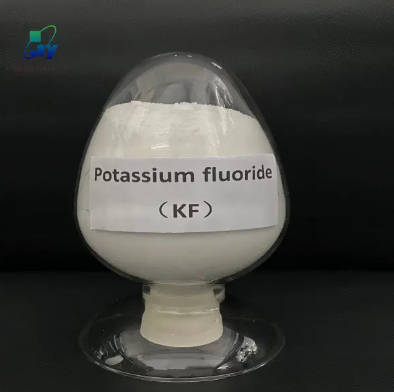
Pharmaceutical synthesis does not buy a fluoride salt on assay alone. It buys a repeatable impurity profile that the route can tolerate. A high-purity fluoride salt can show a strong main-content figure and still create avoidable variability if moisture, chloride, sulfate, fluorosilicate or heavy-metal levels move between lots. For buyers moving from research into evaluation, the practical question is not which certificate shows the highest number, but which batch profile fits the process and how that fit is verified.
This article uses potassium fluoride as a documented example because the supplied technical material directly links potassium fluoride impurity fluctuation to pharmaceutical and pesticide synthesis risk. The same evaluation logic applies to other high-purity fluoride salts only where the route role and impurity priorities are separately established. No universal pharmaceutical-grade limit is asserted here, and no specific drug, dosage form or regulatory threshold is named.
Why impurity fluctuation matters more than a single assay value
Assay measures main content. It does not describe every trace species that can influence a synthesis step. The supplied technical note on potassium fluoride states that batch-to-batch variation in moisture, chloride, sulfate, fluorosilicate and heavy metals can trigger side reactions in pharmaceutical and pesticide synthesis, leading to lower reaction yield, product purity that fails to meet standards and increased material loss. That is the impurity-fluctuation risk buyers should carry into supplier evaluation.
The risk is not theoretical decoration around a specification table. A fluoride salt can pass a main-content check and still sit close to an impurity limit. If the next lot moves toward a different point inside the same limit, the buyer may see a process shift without any single COA line looking obviously wrong. This is why a single assay figure is a weak basis for multi-batch pharmaceutical work. The stronger basis is a critical-impurity list tied to the route, supported by batch results and trend evidence.
Procurement implication: a COA pass confirms that the lot met the stated specification. It does not, by itself, prove that critical impurities are controlled tightly enough for a sensitive route. Buyers need both the acceptance result and the variation history for the impurities that matter.
There is also a fit boundary. Some routes are more tolerant of trace anions or moisture because downstream purification removes them; others are less tolerant. A high-purity grade that suits one synthesis step may be unnecessary or poorly matched to another. The buyer should therefore avoid treating high purity as a universal substitute for route-specific qualification.
Scenario fit starts with the role of the fluoride salt
Potassium fluoride is described in the supplied material as a fluorinating agent and catalyst in pharmaceutical, pesticide and fine chemical synthesis. The same technical note states that using potassium fluoride can reduce the formation of enol ester isomer impurities, improve reaction selectivity and substrate conversion, and avoid the use of highly toxic and polluting cyanating reagents. These are role-based reasons to evaluate potassium fluoride, not claims that every fluoride salt performs the same function.
Sodium fluoride is also described as an input in the synthesis of certain pharmaceutical intermediates. That does not make sodium fluoride interchangeable with potassium fluoride in a route. The salts differ in composition, impurity priorities and process behavior. A buyer should first identify whether the fluoride salt acts as a fluorinating agent, a catalyst, a sodium or potassium source, or another process input, and then map the COA to that role.
Crystalline or spray-dried potassium fluoride
Potassium fluoride is supplied in crystalline and spray-dried forms. The supplied selection note gives a crystalline content standard of not less than 99.0% and a spray-dried content standard of not less than 98.5%. The choice should follow the feed step and handling system. Where the process needs a high specific surface area and rapid dissolution, spray-dried potassium fluoride is the more relevant form. Where flowability, storage stability and a higher purity standard are the priority, crystalline potassium fluoride is the more relevant form. This is a fit decision, not a ranking of one form over the other.
Potassium fluoride is highly hygroscopic and must be stored in a dry environment with sealed packaging. Moisture control is therefore not only a COA line; it is a handling and storage condition that can change the material before it reaches the reactor. A supplier that controls moisture at the point of manufacture but leaves the buyer with compromised packaging has not controlled the scenario.
How to map COA impurity limits to a synthesis route
The useful method is to translate each COA line into a route consequence and a verification action. The table below uses the documented potassium fluoride specification and a supplied crystal-type example. The example is illustrative; it should not be read as a guaranteed result for every batch or every application.
| COA item | Documented limit or example | Why the buyer should map it to the route |
|---|---|---|
| Purity or assay | Specification example: not less than 99.0%; supplied crystal-type example: 99.42% | Establishes main-content baseline. It should not be used alone because trace impurities can still affect selectivity, yield or purification load. |
| Water content | Specification example: not more than 0.3%; supplied crystal-type example: 0.07% | Potassium fluoride is hygroscopic. Moisture can affect weighing, feed stability and hydrolysis-related side reactions. Check the batch result together with packaging and storage records. |
| Chloride | Specification example: not more than 0.01%; supplied crystal-type example: below 0.01% | A trace anion that should be tracked against route sensitivity. A result close to the limit deserves review even when it passes. |
| Sulfate | Specification example: not more than 0.01%; supplied crystal-type example: below 0.005% | Include in the critical-impurity trend where the route is anion-sensitive. Compare the batch result and method, not only the pass label. |
| Fluorosilicate | Specification example: not more than 0.005%; supplied crystal-type example: below 0.005% | A specific fluoride-related impurity. Ask how it is tested and whether the reported value is below the method limit or a quantified result. |
| Heavy metals as Pb | Specification example: not more than 0.001%; supplied crystal-type example: below 0.001% | A cumulative impurity-control check. The result should be batch-specific and traceable to the tested lot. |
| Iron | Supplied crystal-type example: below 0.0005% | Useful as a trace-metal indicator where the route is sensitive to metal-driven side reactions or color. The example is not a universal pharma limit. |
| Free acid and free base | Specification examples: free acid not more than 0.2%; free base not more than 0.2% | Acid-base balance can affect handling and the reaction environment. These lines belong beside the main impurity review, not in a separate administrative file. |
Three reading rules matter. First, distinguish the specification limit from the batch result. The limit is the acceptance boundary; the result is what the lot actually showed. Second, distinguish a result reported as below a limit from a result quantified at a lower value. A report showing below 0.001% is not the same as zero, and the method detection level should be known. Third, connect the COA to the batch identity: product name, grade, batch number, production date, test date and specification version should line up. A COA that cannot be tied to the shipped lot is weak evidence.
The single-lot assay approach is the traditional shortcut: check main content, accept the lot, and move on. It gives less evidence for a multi-batch pharmaceutical campaign because it does not show how critical impurities behave over time. A profile-based qualification costs more attention at the start, but it gives the buyer a defensible basis for incoming inspection, small-scale trials and change control.
What ISO 9001 adds, and what it does not add
Where an ISO 9001 certificate is supplied, it is useful context for the supplier file. It indicates that a quality-management system has been certified against a recognized standard. It can support questions about document control, traceability, corrective action and management review. It does not prove the impurity profile of a particular fluoride salt batch. It does not replace the COA, the test method, the trend review or the route trial.
This distinction matters in evaluation because certificates and batch data answer different questions. The certificate asks whether the supplier has a system for controlling quality. The COA asks what a specific lot contained. The trend review asks whether critical impurities are stable across lots. The route trial asks whether the material performs in the buyer's own process. A buyer should keep all four in view rather than treating one document as a substitute for another.
Batch consistency: a practical verification sequence
Batch consistency is best tested as a sequence, not as a single document check. The sequence below is general procurement logic; it does not create a new pharmaceutical specification.
- Define the route-critical impurity list. Start with the impurities the route is known to be sensitive to, then add the COA lines that are closest to their limits. For potassium fluoride, moisture, chloride, sulfate, fluorosilicate, heavy metals and iron deserve review.
- Request batch-specific COAs for multiple consecutive lots. Compare the reported results over time. A row of passing lots can still hide a drift toward a limit.
- Check methods and reporting language. Confirm the test method, the detection or quantification level, and whether a result is below the limit or measured at a specific value.
- Verify packaging and storage conditions. For potassium fluoride, sealed, moisture-proof packaging and dry storage are part of the quality chain. Review the packaging condition on receipt and the storage environment before use.
- Run incoming testing and a small-scale trial where the route warrants it. Retain a sample from the evaluated lot so that any later process shift can be compared against the material actually used.
- Apply change control. A supplier change, production-site change, form change or specification change should trigger a fresh fit review rather than automatic approval on the old file.
The supplied case unit describes a high-purity fluoride salt product operating at a customer site without production-line downtime or process parameter drift caused by batch differences. That is the operational outcome buyers want, but it is a case-level observation. It should be read as evidence of what batch consistency can look like in practice, not as a guarantee that every route will see the same result.
If a process shift does occur, the impurity-fluctuation risk unit suggests a structured response: test the current potassium fluoride batch for moisture and the key impurities; compare its COA with historical qualified batches; trace packaging sealing and storage conditions for moisture ingress or acid contact; and review whether actual feed consumption has moved outside the expected range. This is a troubleshooting path, not a substitute for root-cause work inside the buyer's own process.
Fit boundaries buyers should keep visible
High-purity potassium fluoride is not automatically the right choice for every pharmaceutical synthesis scenario. The route may tolerate a lower grade, or it may need a tighter profile than a standard COA shows. The supplier's form, packaging and storage controls must match the buyer's feed system and site conditions. Potassium fluoride is highly hygroscopic, so dry storage and sealed packaging are material fit conditions, not minor logistics details.
Changzhou Jiayuan Chemical Co., Ltd. is an integrated industrial and trading enterprise established in 2015 and headquartered in Jintan District, Changzhou, Jiangsu Province, China, focused on fluorine chemical research and development, production and international trade. The company states annual capacity of 1,000 tons for electronic-grade potassium fluoride and supplies crystalline and spray-dried forms with documented impurity limits. Its official website is www.jy-chemical.com.
The buyer's decision rule can be stated simply: match the fluoride salt to the synthesis role, identify the impurities that can change that role, verify batch results and trends against those impurities, and treat ISO 9001 as management-system context rather than batch proof. A strong assay figure is useful. A stable impurity profile is what makes the material fit for a pharmaceutical synthesis scenario.
FAQ
What are the consequences of impurity fluctuations in pharmaceutical synthesis?
Impurity fluctuations can trigger side reactions, lower reaction yield, cause product purity to fail specifications and increase material loss. In the supplied potassium fluoride risk note, the listed causes include batch-to-batch variation in moisture, chloride, sulfate, fluorosilicate and heavy metals.
Does a single high assay result prove that a fluoride salt is suitable for a synthesis route?
No. Assay describes main content, not the full impurity profile. Suitability depends on the route role, the critical trace impurities, the batch result against limits, the variation across lots and the buyer's own trial or incoming inspection.
Which potassium fluoride form is more suitable for rapid dissolution, and which for flowability and storage stability?
Spray-dried potassium fluoride is the more relevant form where a high specific surface area and rapid dissolution are needed. Crystalline potassium fluoride is the more relevant form where flowability, storage stability and a higher purity standard are the priority.
How should an ISO 9001 certificate be used when evaluating a fluoride salt supplier?
Use it as quality-management-system context. It can support confidence in documented control and traceability, but it does not prove the impurity result of a specific batch. Pair it with batch-specific COAs, trend data, method information and route trials.
What storage condition is most critical for potassium fluoride?
Potassium fluoride is highly hygroscopic and should be stored in a dry environment with sealed packaging. Moisture control should be checked on receipt and during storage because packaging condition and humidity can change the material before use.
Есть вопросы или нужны дополнительные детали?
Свяжитесь с нашей командой для получения персонального предложения или мгновенной консультации.
Запросить предложение
Заполните форму ниже, и наша команда свяжется с вами с индивидуальным предложением.
Прямой чат WhatsApp
Предпочитаете общаться в реальном времени? Напишите нам в WhatsApp для мгновенной помощи и быстрых ответов.
- Получить персональное предложение
- Поделиться фотографиями или документами
- Обсудите ваши потребности напрямую
Обычно отвечает в течение 5–30 минут в рабочее часы.