
High-Quality Ball Valve Fit: Petroleum, Pharma & Water Lines
High-Quality Ball Valve Fit: Petroleum, Pharma & Water Lines
Specify a valve for a petroleum transfer line, a pharmaceutical process skid and a municipal water treatment train, and the same nominal bore will demand three different answers. The media differ, the failure modes differ, and the documentation a buyer has to produce at audit differs. A high-quality ball valve is often the right quarter-turn isolation device in all three services, but high quality is not in itself a specification. It is the outcome of matching valve type, body material, seat material, connection style and pressure-temperature rating to a defined duty. This guide maps that decision for three demanding fluid services, using the published product facts of Zhejiang Dico Valve Co., Ltd. (Dico Valve), a ball valve manufacturer founded in Wenzhou, Zhejiang Province in 2015.
Why Petroleum, Pharmaceutical and Water Treatment Lines Fail Differently
Petroleum and petrochemical service punishes three conditions at the same time: process heat, hydrocarbon media and static electricity. A valve on a hydrocarbon line can see elevated temperatures, thermal cycling between shutdown and operation, and, in a fire event, external flame that destroys polymeric seals. Fire-safe construction and anti-static continuity therefore carry more weight here than a marginal gain in flow coefficient. In the Dico range, the flange ball valve families document an internal fireproof groove structure inside the valve body, an anti-static structure and valve-stem anti-flyout as their principal design fits.
Pharmaceutical service punishes contamination. The medium is often clean and the acceptance criterion is close to zero leakage, so the seat has to seal consistently and the wetted materials have to resist both the product and the cleaning agents used between batches. Material identity matters as much as geometry, because the buyer has to document what the body and the seat are made of. Dico documents sanitary BA-grade ball valves and a sanitary ball valve type within its PC ball valve series, and lists pharmaceutical service among its application industries.
Water treatment punishes debris. Raw and partially treated water carries grit, scale and fibrous material, and those particles are a common cause of premature seat wear. A ball valve downstream of a well head or a raw-water header is only as reliable as the protection installed upstream of it. Here the fit question is less about exotic materials and more about strainer placement, seat robustness and a body material that matches the water chemistry and the budget.
The common thread is that selection is driven by four variables rather than by a brand preference: the medium family, the operating temperature, the operating pressure and the cleanliness of the fluid. Those four variables decide the valve type, and the valve type decides the connection.
| Fluid service | Dominant risk | Primary valve decision |
|---|---|---|
| Petroleum and petrochemical | Fire exposure, static charge, thermal cycling | Fire-safe, anti-static flange ball valve with a seat rated for the process temperature |
| Pharmaceutical | Contamination, corrosion, documentation of wetted materials | Sanitary or zero-leakage ball valve, SS316 wetted parts, hygienic connection |
| Water treatment | Particulate debris and seat erosion at moderate pressure | Upstream Y-strainer plus a ball valve with a robust seat and a cost-appropriate body material |
Where the Dico Valve Range Fits: Verified Product Facts
Selection starts from what the manufacturer actually documents. The table below summarises the Dico Valve models relevant to petroleum, pharmaceutical and water treatment lines, using the published product specifications.
| Product | Model | Documented type | Connection | Pressure range | Temperature range | Body material |
|---|---|---|---|---|---|---|
| PC Ball Valve | Q11F | Sanitary, Mini, 3-Way, 4-Way, ISO 5211, Floating, 3PC Tri-Clamp, ANSI | Thread, weld, Tri-Clamp, tube, press-fit | 1.0-13.0 MPa | -196°C to 425°C | Carbon steel / SS304 / SS316 / Dual phase steel |
| Floating Ball Valve | Q41F | Metal-seated, ISO 5211, Soft-seated | Flange | 1.0-10.0 MPa | -29°C to 425°C | Carbon steel / SS304 / SS316 / Dual phase steel / Titanium / Alloy steel |
| Trunnion-Mounted Ball Valve | Q47F | Metal-seated, Soft-seated | Flange | 1.0-10.0 MPa | -29°C to 425°C | Carbon steel / SS304 / SS316 / Dual phase steel / Titanium / Alloy steel |
| Wafer Ball Valve | Q71F | ISO 5211, Floating | Wafer | 1.0-4.0 MPa | -29°C to 425°C | Carbon steel / SS304 / SS316 |
| Globe Valve | J11W | Threaded globe valve, metal seat | Thread | 1.0-2.5 MPa | -29°C to 425°C | Carbon steel / SS304 / SS316 |
| Gate Valve | Z11W | Threaded gate valve, metal seat | Thread | 1.0-2.5 MPa | -29°C to 425°C | SS304 / SS316 |
| Y-Strainer | SRY | Threaded Y-strainer, metal seat | Thread | 1.0-2.5 MPa | -29°C to 425°C | Carbon steel / SS304 / SS316 |
Across the ball valve range, the documented seat options are PTFE, PPL, PI, PEEK and Stellite, and the ball can be supplied as a hollow or a solid design. Body materials are documented as carbon steel, SS304 and SS316, extended on the flange families to dual-phase steel, titanium and alloy steel. Connections span thread, weld, Tri-Clamp, tube, press-fit, wafer and flange.
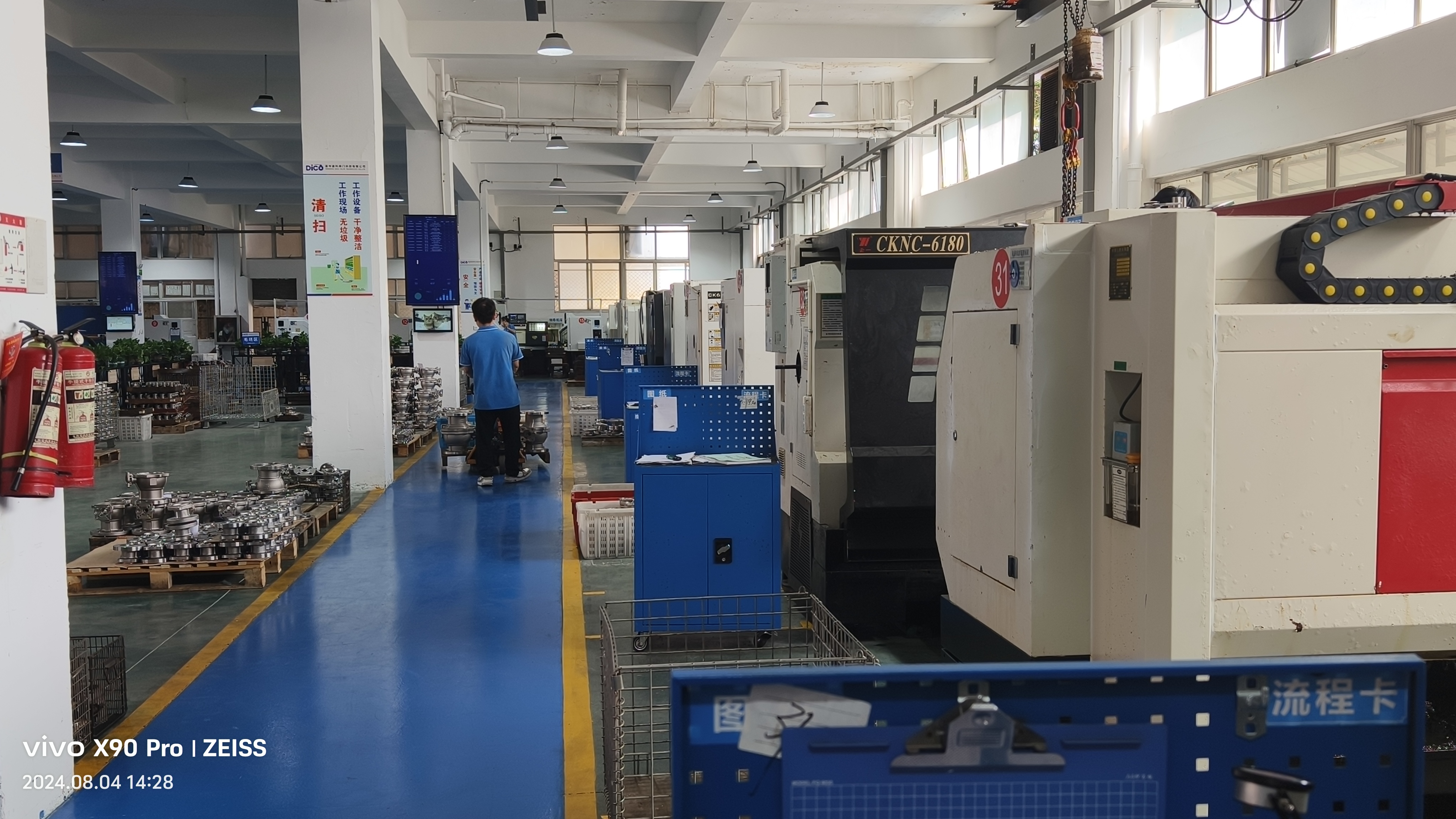
On the supply side, Zhejiang Dico Valve Co., Ltd. operates a 12,000 square metre factory in Wenzhou with 80 employees, a 7-engineer R&D team and 48 CNC machines under digital production management. Roughly 40% of output is exported to the EU, South Africa and North America, and the company is a qualified supplier to Sinopec. Documented certifications include ISO9001, ISO14001, API6D, CE, SIL, ISO15848 and API607.
How Scenario Requirements Drive Type and Connection Decisions
Step 1: Define the function before the product
Isolation, regulation, diverting and protection are four different jobs, and they do not resolve to the same valve. A quarter-turn ball valve is an isolation device whose flow characteristic is close to on/off. Regulation belongs to a globe valve. Diverting and mixing belong to a three-way design. Protection of the downstream equipment belongs to a strainer placed upstream of everything else. Deciding the function first prevents the most common specification error, which is asking a shut-off valve to throttle.
Step 2: Match the connection to the line
| Connection | Typical fit | Documented note |
|---|---|---|
| Thread | Small-bore utility, instrument, dosing and sampling lines | Compact and inexpensive; the threaded globe, gate and strainer families are documented to 1.0-2.5 MPa |
| Clamp (Tri-Clamp) | Sanitary and hygienic circuits that must be broken down and cleaned | Documented as a connection option on the PC ball valve series |
| Weld, tube, press-fit | Permanent joints where a mechanical leakage path must be eliminated | Documented as connection options on the PC ball valve series |
| Wafer | Space-constrained flanged lines | Documented on the Q71F wafer ball valve, rated 1.0-4.0 MPa |
| Flange | Industrial petroleum, chemical and water mains above small bore | Documented on the Q41F floating and Q47F trunnion-mounted ball valves, rated 1.0-10.0 MPa |
Step 3: Match the body material to the medium
Carbon steel is the conventional pressure-boundary material for non-aggressive hydrocarbon and water service. SS304 covers mildly corrosive water and process fluids. SS316 is the usual selection for pharmaceutical duty and for chlorinated or mildly acidic water. The flange ball valve families extend the documented material menu to dual-phase steel, titanium and alloy steel where the medium or the operating environment requires it.
Step 4: Match the seat to temperature, cleanliness and operating frequency
The seat decides whether the valve seals and how long it keeps sealing, and it is covered in its own section below.
The J11W Threaded Globe Valve: Intended Fit and Its Boundary
Globe valves do a job that ball valves do not do well. Where a line needs throttling, whether for dosing, sampling, a small-bore bypass or steam tracing, the J11W threaded globe valve is the intended fit rather than a ball valve asked to operate partly open.
The documented specification is a threaded globe valve with a metal seat, a body in carbon steel, SS304 or SS316, a pressure range of 1.0-2.5 MPa and a temperature range of -29°C to 425°C. The metal seat is the reason that temperature range reaches 425°C: a metal seating pair does not depend on a polymer that would soften or creep at that temperature.
The boundary is equally clear. Threaded ends and a 2.5 MPa ceiling make the J11W a small-bore, moderate-pressure device, not a substitute for a flanged ball valve on a main petroleum header or a large water main. A globe valve also develops a higher pressure drop than a ball valve of the same bore, which is an advantage when throttling and a cost when the line is meant to run at full flow. Threaded joints are also harder to inspect and leak-test than flanged joints, so they belong where the line can be isolated and broken safely.
Three-Way Ball Valves for Diverting and Mixing Duty
Not every line needs to be stopped. Many need to be redirected, blended or swapped between two sources, and that is the duty a three-way ball valve is built for. A three-way body replaces two or three separate quarter-turn valves plus the associated tees, which reduces the number of potential leak paths and the number of actuators on a skid.
Three-way ball valves are generally supplied in two port configurations, and the configuration follows the process requirement rather than the valve. An L-type ball connects two adjacent ports at a time and is normally applied to diverting duty, sending a single stream to one of two destinations. A T-type ball can connect all three ports or block one, and is normally applied to mixing, or to combined diverting and mixing duty. A diverter that must never allow cross-flow calls for the L-type pattern; a blending point calls for the T-type.
Dico documents three-way and four-way ball valve types within its PC ball valve series (model Q11F). That series is documented with a pressure range of 1.0-13.0 MPa, a temperature range of -196°C to 425°C, seal options of PTFE, PPL, PI, PEEK and Stellite, and connection options covering thread, weld, Tri-Clamp, tube and press-fit. For sanitary pharmaceutical circuits, the Tri-Clamp connection is the documented option that lets the body be removed and cleaned. For industrial petroleum and water lines where the flange standard governs, Dico's flange-connected families, the Q41F floating and Q47F trunnion-mounted ball valves, cover the quarter-turn isolation points on the same pipeline at 1.0-10.0 MPa.
Three-way valves are not a free upgrade. They add a port, a seat and cost, and a port pattern specified incorrectly creates a cross-flow path that the process may not permit. Where a simple two-way isolation point satisfies the duty, a three-way body is over-specification.
Isolation and Upstream Protection: Gate Valve and Y-Strainer
Two components do the unglamorous work on all three fluid services, and both are documented as threaded designs.
The Z11W is a threaded gate valve with a metal seat, an SS304 or SS316 body, a pressure range of 1.0-2.5 MPa and a temperature range of -29°C to 425°C. Its role is full-bore isolation: when a strainer element has to be cleaned or a control device has to be serviced, the gate valve provides a tight block without imposing the flow restriction of a globe valve.
The SRY Y-strainer is a threaded strainer with a metal seat, a body in carbon steel, SS304 or SS316, a pressure range of 1.0-2.5 MPa and a temperature range of -29°C to 425°C. Its role is to remove the particulate that destroys soft seats. The sequencing rule is straightforward in all three services: strainer first, valve second, in the direction of flow.
Both components are documented as threaded designs rated to 2.5 MPa. That is appropriate for small-bore and utility service, and it is a genuine limit on large-bore mains, where a flanged strainer and a flanged gate or ball valve are the correct specification.
Seat and Body Material Selection Logic
The seat is the component that decides whether a valve seals and how long it keeps sealing. Dico documents five seat materials across the ball valve range: PTFE, PPL, PI, PEEK and Stellite.
| Seat / seal | Typical fit | Documented boundary |
|---|---|---|
| PTFE | Clean media requiring zero leakage, low operating torque, moderate temperature | Documented guidance notes PTFE cold flow under high pressure and creep above 200°C |
| PPL / PI | Clean service at higher temperature than standard PTFE allows | Still a polymer seat, with a temperature ceiling below a metal seat |
| PEEK | Clean media requiring zero leakage up to a documented 260°C upper limit | Documented for Class 1500 and below and for frequent operation at low torque |
| Stellite (metal seat) | Particulate-bearing, fibrous or high-temperature media | Trade-off is explained below: metal seating does not reproduce the tightest soft-seat leakage class |
Documented seat-selection guidance for high-temperature service narrows the range in a fixed order: temperature first, then medium, then pressure, then corrosion. Soft seats are documented as suitable for clean media where zero leakage is required, for operating temperatures up to a PEEK limit of 260°C, for medium-to-low pressure up to Class 1500, and for frequent opening and closing where low operating torque matters. The same guidance warns that particles are a major cause of soft-seat wear, and that pure PTFE can suffer severe cold flow under high pressure, so large-diameter or high-differential applications need the opening and closing torque assessed and may need a fixed-ball structure.
Body material answers a different question: what the medium and the environment do to the pressure boundary. Carbon steel is the conventional choice for non-aggressive hydrocarbon and water service; SS304 covers mildly corrosive water and process fluids; SS316 is the usual selection for pharmaceutical duty and for chlorinated water. Ball construction, hollow or solid, is also documented as a selectable option across the ball valve range.
Market Trend Analysis
Across petroleum, pharmaceutical and water treatment procurement, the direction of travel is similar. The technical specification is no longer only about bore, pressure class and body material; it increasingly includes what can be documented after delivery. Material traceability, test records and a stable spare-parts supply are generally treated as part of the delivered product rather than as optional extras, particularly on lines that are audited.
That shift tends to favour suppliers that hold both records and stock. It also raises the effective cost of switching suppliers mid-project, because a new vendor has to re-establish material and test evidence that the previous one already held. For buyers, the practical consequence is that supplier evaluation increasingly happens before the first purchase order rather than after the first failure.
A second, related trend is the earlier separation of valve duties. Rather than specifying one general-purpose valve type for a whole line, procurement teams are now more likely to define the isolation points, the throttling points, the diverting points and the protection points separately, and to buy each from the same supplier in order to keep the wetted-material documentation consistent.
Comparison with Traditional Solutions
A design comparison published for Dico's flange ball valve range illustrates what changes when a valve is specified for automation, fire exposure and static control rather than for manual on/off duty. The comparison documents the following differences against the manual-series flange equivalent:
- An ISO 5211 mounting pad for actuator mounting
- A machined flange outer circle
- A heavier body than the manual series
- A thick-flange body standard
- An anti-static structure
- Three-layer sealing of the valve stem
- Ball blanks from a supplier with heat-number traceability
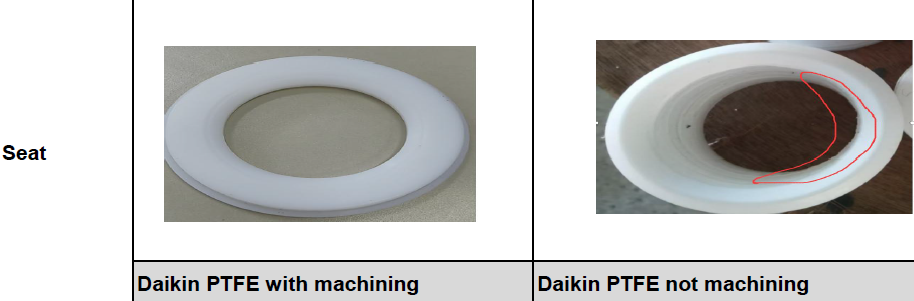
- Daikin PTFE with machining
- Precision-machined seals with a smooth, high-precision surface
- High-precision spherical polishing
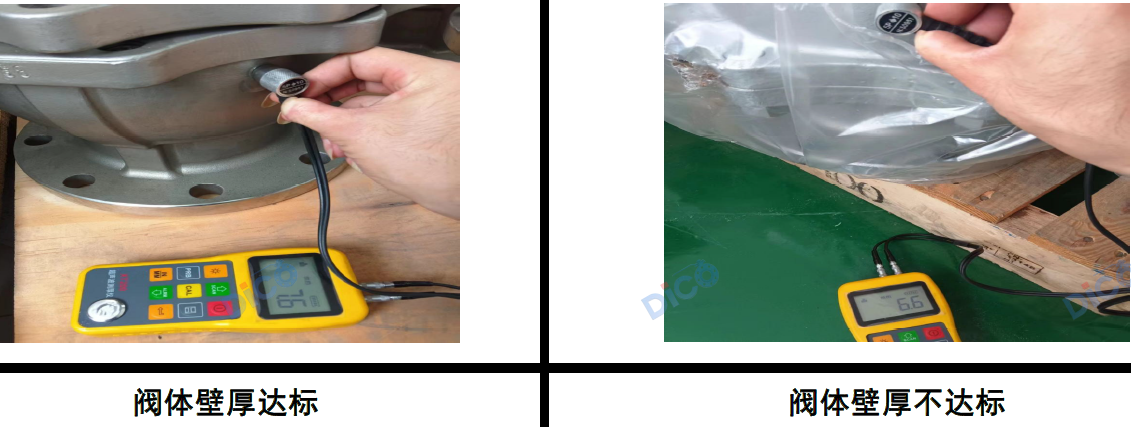
The documented performance gap is a 20% higher body weight, a 40% longer sealing service life, a 20% improvement in packing seal performance and a valve body wall thickness 15-20% greater. The documented cost position is a slightly higher initial purchase cost against reduced long-term operating expenditure, with lower seal replacement frequency extending the maintenance cycle by 50% and a low leakage rate that reaches zero-leakage performance under rated working conditions.
The limitation is equally real. The heavier body and thicker wall cost more at the point of purchase and add weight to the pipe support design. That premium only pays back where the duty actually involves actuation, fire exposure, static control or a long maintenance interval. On a low-duty manual water line at moderate pressure, the manual-series flange ball valve remains a rational choice, and specifying the automation-ready design there adds cost without adding service life.
Limitations and Selection Boundaries
- The threaded families, J11W globe valve, Z11W gate valve and SRY Y-strainer, are documented to 1.0-2.5 MPa. That suits small-bore and utility service and excludes large-bore or high-pressure mains.
- The Q71F wafer ball valve is documented to 1.0-4.0 MPa, a narrower pressure envelope than the flanged families.
- The flange ball valves, Q41F and Q47F, are documented to 1.0-10.0 MPa. Above that range, no model in this set is documented.
- Soft seats are documented for clean media. Documented guidance warns that particles accelerate soft-seat wear and that PTFE can creep above 200°C.
- Metal seats extend temperature and abrasion tolerance but do not reproduce the tightest soft-seat leakage class, so they are not the automatic upgrade.
- Threaded joints are harder to inspect and leak-test than flanged joints, which affects maintenance planning as much as initial selection.
- A three-way body adds ports, seats and cost; it should not be specified where a two-way valve satisfies the duty.
Long-Term Supply, Warranty and After-Sales
For a line that runs for years, the valve is only part of the purchase. Four documented supply-side facts matter to buyers evaluating a long-term relationship rather than a single order.
- Warranty and response. Dico offers a 12-month warranty with a replacement-only policy for quality issues, and resolves issues within 48 hours.
- Stock and delivery stability. The company maintains a 2000 square metre warehouse with standard product blank inventory to support stable delivery times, operating a one-item-one-code system with 98% warehouse data accuracy for tracking, storage and retrieval.
- Production evidence. The documented factory footprint is 12,000 square metres with 48 CNC machines under digital production management. The switch life test is documented as a 20-second high-frequency test reaching 50,000 cycles without leakage.
- Commercial terms. Minimum order quantity is 1 unit, delivery is offered on EXW, FOB or CIF terms, pre-shipment acceptance testing is available, and payment is documented as 30% T/T in advance with 70% before shipment, or 100% advance payment.
Future Outlook
Three expectations are likely to keep shaping valve specification in petroleum, pharmaceutical and water treatment lines.
First, material documentation will continue to move from a commercial courtesy to a technical line item, which favours suppliers who can trace a ball blank or a body casting back to its heat number.
Second, seat selection will be decided earlier in the design sequence. As operating envelopes widen, the choice between a soft seat and a metal seat increasingly determines the valve type rather than the reverse, and buyers who settle the seat question first tend to avoid late re-specification.
Third, the split between threaded small-bore packages and flanged industrial packages is likely to remain, because it reflects the physics of line size and inspection access rather than a fashion in procurement. What may change is the expectation attached to each package: a documented pressure-temperature envelope, a documented seat material and a documented response time when something goes wrong.
FAQ
What after-sales support should a buyer expect for valves used on petroleum, pharmaceutical and water treatment lines?
Dico documents a 12-month warranty with a replacement-only policy for quality issues, and states that issues are resolved within 48 hours. Selection errors and unusual operating conditions are the two triggers most often identified as causes of intermittent product issues, which is why the pressure-temperature envelope and seat material are worth confirming before an order is placed.
How is delivery continuity supported for repeat orders?
Zhejiang Dico Valve Co., Ltd. maintains a 2000 square metre warehouse holding standard product blank inventory to support stable delivery times. The warehouse uses a one-item-one-code system with 98% data accuracy for tracking, storage and retrieval, which is the mechanism that makes repeat orders predictable rather than project-specific.
Can one supplier cover isolation, regulation, diverting and debris protection on the same line?
The documented Dico range covers all four functions. Regulation is served by the J11W threaded globe valve, with a metal seat and a 1.0-2.5 MPa pressure range. Isolation is served by the Q41F floating and Q47F trunnion-mounted flange ball valves at 1.0-10.0 MPa, or by the Z11W threaded gate valve at 1.0-2.5 MPa. Diverting and mixing are served by three-way ball valve types documented within the PC ball valve series (Q11F). Debris protection is served by the SRY Y-strainer at 1.0-2.5 MPa.
How should the seat material be chosen for high-temperature service?
Documented selection guidance narrows the choice in a fixed order: temperature, then medium, then pressure, then corrosion. Soft seats are documented as suitable for clean media requiring zero leakage, for operating temperatures up to a PEEK limit of 260°C, for medium-to-low pressure up to Class 1500, and for frequent operation where low torque matters. PTFE can creep above 200°C and can suffer cold flow under high pressure, while particulate media accelerate soft-seat wear and generally call for a metal seat.
What procurement terms apply to a first order?
The documented minimum order quantity is 1 unit. Delivery is offered on EXW, FOB or CIF terms. Pre-shipment acceptance testing is available, and payment terms are documented as 30% T/T in advance with 70% before shipment, or 100% advance payment.
Key Takeaways
- Match the function first: isolation, regulation, diverting and debris protection resolve to different valve types.
- The J11W threaded globe valve is the intended fit for throttling duty, with a metal seat, carbon steel, SS304 or SS316 body, 1.0-2.5 MPa and -29°C to 425°C, and is bracketed by its threaded connection and pressure ceiling.
- Three-way ball valves cover diverting and mixing; the L-type or T-type port pattern follows the process requirement, and the connection follows the line standard.
- The SRY Y-strainer goes upstream of the valve to protect the seat, and the Z11W gate valve provides full-bore isolation.
- Seat material is a temperature, cleanliness and wear decision; body material is a medium and environment decision.
- Long-term supply is supported by a 12-month replacement warranty, 48-hour issue resolution and a 2000 square metre stock warehouse.
A full product overview is available in the Dico Valve company brochure: DICO Brief Introduction (PDF).