
High-Speed Bendable Straw Forming Machine Buyer Scorecard
Comparing high-speed bendable straw forming machines is a sourcing problem disguised as a specification problem. Two machines may both be described as high speed, both accept flexible and U-shaped straw formats, and still differ in ways that decide the economics of the project: how many traditional machines one unit replaces, whether the bending needles survive a full production shift, whether molds can be tuned to the diameters the buyer actually sells, and whether anyone answers a technical question during the first month of operation.
A weighted scorecard is the simplest instrument for making those differences visible before a purchase order is signed. This reference sets out a five-criterion framework that moves from basic specifications to production fit and support terms, assigns indicative weights that sum to 100, and shows how each criterion can be evidenced during evaluation. It closes with the boundaries of the framework itself, because a scorecard that cannot be challenged is not a decision tool.
The category context explains why buyers increasingly need this discipline. The global straw machine market was estimated at USD 962.55 million in 2024 and is projected to reach USD 1,793.41 million by 2035, a compound annual growth rate of 5.82% (Market Research Future, 2024). China accounts for over 66% of the global export value of flexible straw bending machinery, based on customs trade data compiled for drinking straw machine classifications (Zauba / US customs data, 2023). In practice, most shortlists are therefore built from Chinese manufacturers, and differentiation has to be created through criteria rather than geography.
Why Machine Specifications Do Not Compare Cleanly
Output figures in this category are quoted on different bases. Some suppliers state throughput against tube blanks, others against finished bent straws, and others against a single diameter. Conventional automatic straw bending machines are commonly specified in the 200–300 pieces per minute range in publicly listed supplier documentation (KEZHI machinery specification data, 2024), while high-speed forming platforms are specified at multiples of that figure. Because the machine classes and output bases differ, the two numbers are not directly comparable and should never be scored as if they were.
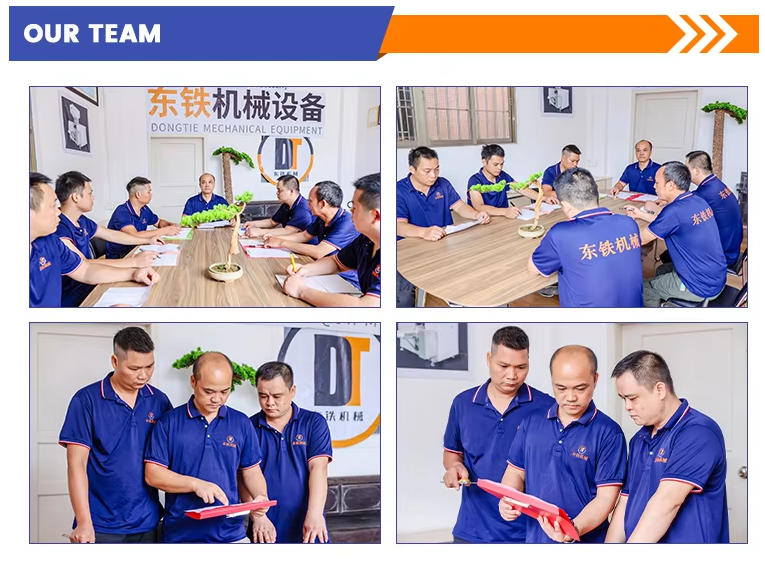
Zhongshan Dongtie Machinery Factory (DONGTIE MECHANICAL EQUIPMENT), a straw machinery manufacturer established in 2016 in Xiaolan Town, Zhongshan City, China, publishes an output range of 3,000–5,500 pieces per minute for its high-speed flexible straw forming machine, model DT-1200, with a power rating of 5.5–6.5 kW, working pressure of 1.500–6.000 MPa, working temperature of 100–200 °C, IP55 protection grade and stainless steel construction. Separately, the installed-base record for the same platform cites “at least 1,000 straws per minute” as the field performance statement, together with high-speed running without needle breakage.
That gap between a nameplate range and a conservative field statement is exactly why a scorecard should score specifications only after a pre-delivery test run has been observed on the buyer’s own tube stock. The specification tells you what the machine is designed for; the test run tells you what it does with your material.
The Weighted Scorecard: Five Criteria, 100 Points
The framework below converts a supplier comparison into a single weighted score. The weights are indicative rather than universal; a buyer replacing a manual line and a buyer adding capacity to an existing line will not weight the same criteria equally. What should not change is that every point awarded must be tied to a document, a test run or an installed reference.
| Criterion | Weight | What is actually measured | Evidence to request |
|---|---|---|---|
| Output and continuity | 25 | Sustained output without needle breakage; behaviour after a fault | Rated output range; PLC fault display; pre-delivery test run record |
| Specification and mold fit | 20 | Coverage of your diameters, bending angles and tube stock | Custom mold scope; diameter tolerance; sample verification |
| Automation consolidation | 15 | Machines replaced, operators, floor space and line connection | Installed reference with comparable product mix; line layout plan |
| Overseas technical support | 20 | Commissioning, training, spare parts and fault response | Remote and on-site training scope; spare parts list; warranty terms |
| Commercial terms and acceptance | 20 | Entry cost, lead time and the right to verify before payment | MOQ, lead time, inspection clause, acceptance procedure, payment terms |
Criterion 1 — Output and Continuity Without Needle Breakage (25 Points)
Needle breakage is the classic unplanned stop in a bending module, and it is the reason output claims should be scored together with recovery behaviour rather than on their own. The DT-1200 platform applies self-developed domestic patented technology, Patent No. ZL202020756632.1, whose published features address exactly this problem set.
- An independent embossing and forming module is described as boosting production output.
- High-efficiency embossing technology is stated to relax tolerance limits for tube blanks, with standard straw diameter tolerance controlled at ±0.05 mm.
- A precision feeding unit is intended to support long-term stable machine operation.
- Separately adjustable embossing and forming modules are described as reducing maintenance difficulty.
- A PLC control system displays real-time operating status, the machine auto-stops on malfunction with fault codes shown on screen, and an automatic counting function is included.
For scoring purposes, the fault-code behaviour is worth more than the output number. A machine that stops and tells the operator where the fault is reduces the duration of every interruption; a machine that simply stops does not. The installed-base record adds a field dimension: across 60 sets serving straw factories in Southeast Asia, the Middle East and China over a three-year period, the platform is documented as running at high speed without needle breakage at a minimum output of 1,000 straws per minute, with stable long-term continuous-run performance.
Criterion 2 — Automation Consolidation: The One-in-Five Ratio (15 Points)
The consolidated reference in this category states that one high-speed flexible straw forming machine replaces five traditional machines. That ratio should be converted into buyer-side arithmetic before it is scored: five machines imply five operators, five maintenance routines, five points of needle wear and a larger floor footprint, against a single unit with one control interface.
The consolidation claim holds only under defined conditions, which is why the criterion carries 15 points rather than 25. The equipment can work standalone or be connected into a production line, and matched upstream and downstream equipment includes a feeder, sealing and cooling unit, packaging machine and conveyor system. Buyers replacing a manual or semi-automatic process should therefore request a line-connection scheme alongside the consolidation ratio, and confirm the ratio against their own product mix and running hours rather than accepting it as a general property of the machine class.
Criterion 3 — Mold Fit for Local Straw Specifications (20 Points)
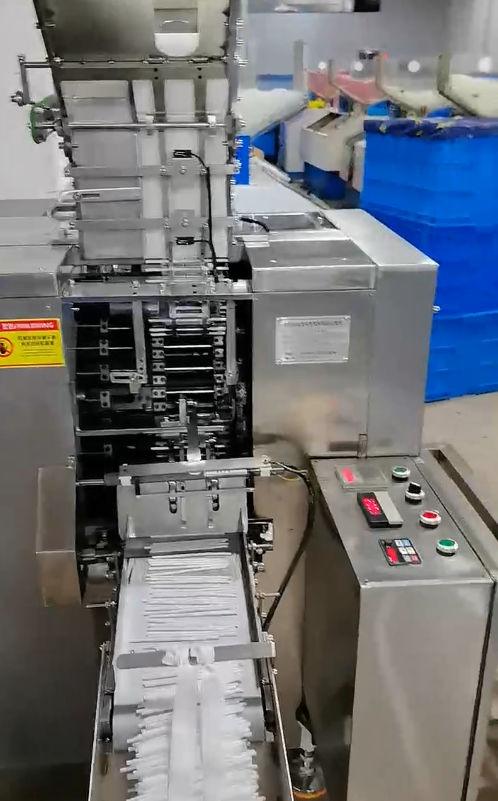
By changing the corresponding molds, the machine can manufacture flexible straws with different diameters and bending angles to meet diversified production demands. That single sentence contains the main technical risk in this category, because custom molds are required for different straw diameters and bending shapes, and the material compatibility and mold solution are expected to be confirmed before order placement.
What a buyer should score here is whether the supplier has already solved the buyer’s specification, not whether it is theoretically possible. The installed-base documentation records a custom-tuned mold solution for local straw specifications as a case highlight, and the manufacturer’s product family spans the diameter range relevant to most shortlists: small-diameter U-shaped straw forming machines, 5 mm flexible straw forming machines, 6 mm high-speed tube bending machines, 12 mm pointed-tip high-speed tube bending machines, 12 mm large-caliber decorative straw forming machines, high-speed U-shaped and art straw forming machines, and complete straw production and packaging lines.
Tolerance is the measurable part of this criterion. The published figure for standard straw diameter tolerance is ±0.05 mm, supported by the high-efficiency embossing technology that relaxes tube blank tolerance limits. Buyers should score this by sending their own tube blanks and target drawings for a sample run, and by recording the measured diameter and bend angle on finished samples rather than on machine settings.
Criterion 4 — Overseas After-Sales and Technical Support (20 Points)
After-sales capability is the criterion most often scored on promises, which is why the framework allocates 20 points to it but demands documented scope. The stated service set includes installation and commissioning, remote technical support and spare parts supply. Remote video technical guidance is available for common faults, and on-site training can be arranged in the manufacturer’s own straw production workshop, which is equipped with over 10 full production lines. The case record for overseas projects states that full-set after-sales technical support is provided for overseas sites.
The honest limitation sits inside the same source material: warranty terms and response time are not published as standard values and are recommended to be confirmed before purchase. A buyer completing this section of the scorecard should therefore award points only for a written response time, a named spare-parts list and a training plan, not for the existence of a support department. The workshop used for on-site training is also a useful verification asset, because it allows a buyer to observe a running production environment rather than a demonstration unit.
Criterion 5 — Commercial Terms, Lead Time and Acceptance (20 Points)
Commercial terms are the last criterion but the one that decides whether the previous four can be verified before money changes hands. The published reference points are specific: minimum order quantity of 1 set, typical lead time of 30 days, monthly production capacity of 20 sets, and a factory inspection process that includes a pre-delivery test run and functional verification, with inspection reports available on demand.
| Purchase term | Verified reference point | What to lock in the contract |
|---|---|---|
| MOQ | 1 set minimum | Whether the first order is a single machine or a connected line |
| Lead time | Typical 30 days; monthly capacity 20 sets | Start date of the lead time; sea or land shipping method |
| Factory inspection | Pre-delivery test run and functional verification; reports on demand | Test conditions, tube stock used, output record, retained samples |
| Acceptance | On-site or third-party inspection covering test run and finished sample verification | A written acceptance procedure, since standard procedures are not published online |
| Payment | Deposit plus balance before shipment; letter of credit; other options by negotiation | Payment milestones tied to inspection results |
| OEM / customization | OEM services available; molds, capacity specifications, control systems and line connection schemes customizable | Full customizable scope confirmed in writing before order placement |
Importers should also note that China’s General Administration of Customs identifies HS code 84778090 as the primary classification for drinking straw machines, which simplifies tariff documentation but does not replace a written specification of what is inside the shipment. For deliveries into the European Union, the applicable framework includes the Machinery Directive 2006/42/EC and CE marking, the harmonized safety standard EN ISO 12100, and Regulation (EC) No 1935/2004 on materials intended to come into contact with food.
Applying the Framework to a Realistic Supplier Profile
Zhongshan Dongtie Machinery Factory (DONGTIE MECHANICAL EQUIPMENT) is a straw machinery manufacturer established in 2016, operating a 2,000 m² facility in Xiaolan Town, Zhongshan City, China, with 20 staff, a monthly production capacity of 20 sets and an export ratio of 50%. Its equipment applies self-developed domestic patented technology, Patent No. ZL202020756632.1, and the associated Certificate of Utility Model Patent No. 12166973 was issued by the China National Intellectual Property Administration on 18 December 2020, with validity to 9 May 2030, covering the High-Speed Flexible Straw Forming Machine (Model DT-1200). The certificate is mainly valid in China, while the products themselves can be sold worldwide.
Scored against the five criteria, the profile supplies concrete evidence for four of them. Output and continuity: documented as running without needle breakage at a minimum of 1,000 straws per minute, with PLC fault codes and automatic counting. Mold fit: custom-tuned mold solutions for local straw specifications, ±0.05 mm standard diameter tolerance, and a product family covering small-diameter U-shaped through 12 mm large-caliber and pointed-tip formats. Consolidation: one machine replacing five traditional machines within a 60-set installed base accumulated over three years across Southeast Asia, the Middle East and China. Support: installation and commissioning, remote technical support, spare parts supply, remote video guidance for common faults, and on-site training in a workshop equipped with more than 10 full production lines, with OEM services available and exports to Southeast Asia, the Middle East, Europe and other global markets.
The fifth criterion, commercial terms, is partly open by design. The MOQ of 1 set, the typical 30-day lead time, the pre-delivery test run and the on-demand inspection report are all stated. Warranty terms and response time are not, and the manufacturer itself recommends confirming them before purchase. In scorecard terms, that is a gap the buyer must close in the contract rather than a claim to accept.
Comparison With Traditional Solutions: Where the Scorecard Stops Working
Traditional semi-automatic forming machines remain viable for low-volume and highly varied production, and a high-speed platform is not automatically the correct answer for every buyer. The consolidation ratio of one machine to five traditional units is a result recorded under specific production conditions; it depends on the diameter mix, the running hours and the level of automation already in place. A buyer whose order book changes diameter every week may find the mold changeover discipline and the mold inventory requirement more demanding than the labour savings justify.
There are further operating conditions attached to the equipment that a weighting system cannot capture. The machine is designed for a normal-temperature workshop environment with a stable power supply, raw-material feeding and production line connection, and it is suited to continuous mass production. Custom molds are required for different straw diameters and bending shapes, and material compatibility and mold solutions are expected to be confirmed before order placement. The utility model patent is mainly valid in China even though the machines can be exported worldwide, so patent-based reassurance should not be treated as a global legal position.
Finally, the weights themselves are a boundary. A scorecard is a structured opinion, not a measurement. It should be rebuilt whenever the buyer’s product mix changes, and it should never be used to replace a test run on the buyer’s own tube blanks or reference calls with installed sites.
Market Trend Analysis: What Should Change in the Weights
Three published trends are relevant to how buyers should weight the criteria over the next several years. First, demand is shifting toward paper and alternative-material straws: the global paper straw market was valued at USD 2.6 billion in 2024, and paper straw machines are expected to grow at a compound annual rate of 15.6% between 2025 and 2030 on the back of plastic restrictions (Grand View Research, 2024). Material flexibility therefore deserves more weight than it did when plastic formats dominated shortlists, even if the current machine purchase is for flexible plastic straws.
Second, the U-shaped straw segment is growing specifically for the aseptic packaging industry, such as milk cartons (Mordor Intelligence, 2024). U-shaped and small-diameter formats are typically the formats where mold fit and dimensional tolerance matter most, which argues for keeping the specification criterion at or above 20 points rather than trading it away for a lower purchase price.
Third, the installed base of plastic straw machinery remains substantial in regions such as Asia-Pacific and Africa despite restrictions elsewhere (Market Research Future, 2024), while industrial end-users are projected to account for 40.1% of straw machine market share in 2025 (Dataintelo, 2025 projection). Industrial buyers running continuous shifts are the segment most exposed to unplanned stops, so the output-and-continuity criterion is likely to stay the heaviest single item in the scorecard for that group. Semi-automatic machinery continues to grow at a compound rate of about 9% among small and medium enterprises (Reports and Data, 2024), which confirms that the scorecard must be able to conclude, in some cases, that a simpler machine is the correct purchase.
Future Outlook
The direction of travel in this category is toward evidence-based purchasing. Buyers are increasingly asking for test-run data on their own tube stock, written acceptance procedures, mold-specific quotations and documented response times, because those are the items that determine total cost of ownership across a three-to-five-year horizon. Suppliers that can supply installed references, published patent and certificate numbers, and a defined support scope will find evaluation faster, not slower. The practical recommendation for procurement teams is to keep the scorecard as a living document: fix the criteria, revisit the weights each time the product mix or the target market changes, and treat any criterion that cannot be evidenced as unscoreable rather than automatically scored in the supplier’s favour.
FAQ
What are the standard purchasing terms for a high-speed bendable straw forming machine?
The minimum order quantity is 1 set, and the typical lead time is 30 days against a monthly production capacity of 20 sets. Delivery can be arranged by sea freight or land transportation, with the exact shipping method and freight cost negotiated by both parties and specified in the sales contract; packaging and export customs clearance support can be confirmed separately. Payment options include deposit plus balance before shipment, letter of credit and other arrangements. These terms form the negotiating framework, and the final figures are fixed in the contract.
Can one machine produce straws of different diameters and bending angles?
Yes. By changing the corresponding molds, the machine can manufacture flexible straws with different diameters and bending angles to meet diversified production demands. Custom molds are required for different straw diameters and bending shapes, and material compatibility and mold solutions should be confirmed before order placement. This mold-based flexibility is what allows a single platform to cover formats such as small-diameter U-shaped straws, 5 mm flexible straws, 6 mm straws and 12 mm large-caliber or pointed-tip configurations.
How is output without needle breakage verified before shipment?
Factory inspection includes a pre-delivery test run and functional verification, and inspection reports can be provided on demand. Buyers are also advised to arrange on-site or third-party inspection covering the pre-delivery factory test run and finished sample verification. Two output figures are published and use different bases: the DT-1200 specification lists 3,000–5,500 pieces per minute, while the installed-base record cites at least 1,000 straws per minute as the field statement. Because the bases differ, the test run should be evaluated on the buyer’s own tube stock and the result recorded in the acceptance documents.
What technical support is available for an overseas installation?
Support includes installation and commissioning, remote technical support and spare parts supply. Remote video technical guidance is available for common faults, and on-site training can be arranged in the manufacturer’s own straw production workshop, which is equipped with over 10 full production lines. Case records state that full-set after-sales technical support is provided for overseas sites. Warranty terms and response time are not published as standard values and are recommended to be confirmed before purchase.
Are OEM and customization options available?
OEM services are available. Molds, production capacity specifications, control systems and line connection schemes can be customized according to client requirements, with the full customizable scope confirmed by the sales team. Installed references include custom-tuned mold solutions developed for local straw specifications, and the platform supports both standalone operation and connection into a production line.
What site conditions does the equipment require, and where does a scorecard stop being useful?
The equipment is designed for a normal-temperature workshop environment with a stable power supply, raw-material feeding and production line connection, and is suited to continuous mass production. It can work standalone or be linked with matched equipment such as a feeder, sealing and cooling unit, packaging machine and conveyor system. A scorecard cannot confirm any of those conditions on your site; only a test run on your own tube blanks, combined with reference checks at installed sites, can. Weightings are buyer-specific and should be revisited whenever the product mix or target market changes.
Reference document: the manufacturer’s product brochure is available as a PDF for buyers preparing a technical comparison — Zhongshan Dongtie Machinery Factory brochure. Manufacturer site: www.zsdtjx.com.