
High-Speed Bendable Straw Machine Shortlist: Molds and Line Integration
A high-speed bendable straw forming machine is only as fast as the mold set it runs and the line it feeds. In custom mold and line integration projects, that interface — not the headline speed figure — decides whether output targets are reached in the first month or re-engineered over the following quarter.
That distinction matters more in 2026 than it did five years ago. Buyers are no longer replacing one low-speed unit with one faster unit; they are replacing clusters of semi-automatic machines with a smaller number of high-speed cells, then re-drawing the material flow, sealing, counting and packing stages around them. Every one of those changes pulls mold design, control architecture and delivery scheduling into the same procurement decision.
This reference sets out a shortlist of configuration options for buyers who have already chosen a high-speed route and are now at the decision and execution stage: what to specify under custom molds, how to read capacity data, how the forming cell connects upstream and downstream, and which commercial terms shape project timing. It uses Dongtie Mechanical Equipment's published equipment data as a worked example and places it against independently published industry figures.
Why Mold and Line Integration Decide the Project
Three variables determine whether a bendable straw project delivers its planned output. They are rarely the three variables buyers compare first.
- Mold geometry. A flexible straw is defined by diameter and bending profile. Both are produced by the mold, not by the machine frame. A forming platform without the correct mold set is a machine that cannot make the product a buyer intends to sell.
- Tolerance control. Diameter consistency determines whether straws run cleanly through sealing, boxing and downstream vending or filling equipment. Dongtie's patented embossing and forming module is documented with a standard straw diameter tolerance controlled at ±0.05 mm, which is a tolerance statement about the forming module rather than about the whole line.
- Line interface. Forming output has to match the intake rhythm of sealing, cooling and packaging equipment. A cell that produces faster than the downstream stage can absorb creates buffer stock, manual handling and, in practice, a lower real output than the specification sheet implies.
Buyers who treat these three as a single engineering package generally reach target output faster than buyers who treat the machine as a catalogue purchase and the mold as an accessory.
What High-Speed Actually Means in a Straw Line
Published speed figures for straw equipment span an unusually wide range, which is why the number alone is a weak comparison metric. Conventional automatic bending machines are documented in engineering specifications published by one straw machinery maker at roughly 200–300 pieces per minute. Industrial high-speed equipment is described in market research at 80,000 to 200,000+ pieces per hour, which equates to roughly 1,300 to 3,300 pieces per minute.
| Speed band | Published figure | Typical configuration context |
|---|---|---|
| Conventional automatic bending machine | 200–300 pcs/min | Single forming unit, manual transfer between stages |
| Industrial high-speed band | 80,000–200,000+ pcs/hr | Integrated forming, sealing and packing stages |
| Dongtie DT-1200 model sheet | 3,000–5,500 pcs/min | High-speed flexible straw forming machine, PLC controlled |
| Dongtie comparative note (planning floor) | Minimum 1,000 straws/min without needle breakage | Same platform, conservative production-planning figure |
The gap between the last two rows is the most useful lesson in the table. Dongtie's DT-1200 specification lists a range of 3,000–5,500 pieces per minute, while the manufacturer's comparative performance note cites a minimum stable output of 1,000 straws per minute without needle breakage. Both are first-party figures, and they are describing different things: a rated band under defined conditions, and a floor that the manufacturer is prepared to stand behind across specification changes.
A Configuration Shortlist for Custom Mold and Line Projects
Once a high-speed route is chosen, the real decision is how much of the line to integrate at purchase. Three configurations cover most project types, and they differ less in machine architecture than in mold scope and downstream connection.
| Option | Base platform | Mold scope | Control & automation | Line connection | Best fit |
|---|---|---|---|---|---|
| Option A — single forming cell | DT-1200 high-speed flexible straw forming machine | One custom mold set per diameter and bending geometry | PLC control with real-time status display, fault codes and automatic counting | Stand-alone; manual transfer to existing sealing or boxing | Single-spec or two-spec producers; first automation upgrade; pilot lines |
| Option B — forming cell plus sealing and conveying | DT-1200 with sealing and cooling unit plus conveyor system | One to two mold sets, expandable later | PLC control; counting used to pace downstream stages | Semi-continuous; matched intake rhythm between forming and sealing | Medium-volume plants moving from manual handling to continuous flow |
| Option C — integrated straw production line | Feeder, DT-1200 forming cell, sealing and cooling unit, packaging machine, conveyor system | Multi-spec mold library with planned changeover windows | PLC control across the line; fault codes at the forming cell | Full line; upstream material feeding and downstream packing coordinated | Multi-shift industrial production, export volumes, private-label programmes |
Option A is the lowest-commitment entry into high-speed forming and the easiest to justify when a buyer's product range is narrow. Option C is the only configuration that removes manual handling between forming and packing, and it is also the one where pre-purchase engineering matters most, because the capacity of each stage has to be matched rather than assumed.
Matching Molds to Diameter and Bending Geometry
Dongtie's product range covers several distinct straw families, and buyers should read the model names as mold-and-platform pairings rather than as interchangeable capacity tiers. The documented range includes 3.8 mm U-shaped straw forming machines, 5 mm flexible straw forming machines, 6 mm high-speed tube bending and decorative straw machines, 12 mm large-diameter decorative straw machines, and 12 mm pointed-tip high-speed tube bending machines.
| Straw family in the manufacturer's range | Mold implication | What to confirm before order |
|---|---|---|
| 3.8 mm U-shaped straw forming machine | Dedicated U-bend mold set; small-diameter forming module | Tube blank specification and bend radius tolerance |
| 5 mm flexible straw forming machine | Dedicated flexible-straw mold set | Diameter tolerance expectation and downstream fit |
| 6 mm high-speed tube bending / decorative straw machine | Mold set defined by bending and surface profile | Whether decorative embossing is required on the same cell |
| 12 mm large-diameter decorative straw machine | Large-diameter mold set; different forming load | Material compatibility with thicker wall sections |
| 12 mm pointed-tip straw bending machine | Mold set combining tip forming and bending geometry | Tip angle specification and cut quality |
Two operational facts follow from this structure. First, changing diameter or bending angle is a mold change, not a parameter change — Dongtie documents that the machine manufactures flexible straws of different diameters and bending angles by changing the corresponding molds. Second, the ±0.05 mm diameter tolerance is delivered by the embossing and forming module together with the precision feeding unit, which is why the patented module is described as separately adjustable to reduce maintenance difficulty rather than being a single fixed assembly.
For a multi-spec business, the practical planning unit is therefore the mold library, not the machine count. A buyer running three straw families on two cells needs a changeover schedule, spare mold capacity, and an acceptance test that verifies each family individually before shipment.
Control, Tolerance and Uptime Specifications
The control package is where high-speed equipment separates from conventional machines in day-to-day operation. Dongtie's documented control architecture is built around a PLC system that displays real-time operating status, stops the machine automatically on malfunction with a fault code shown on screen, and performs automatic counting. For a line integration project, all three functions have operational consequences beyond convenience.
- Fault codes shorten diagnosis time and make remote video technical guidance practical, because the operator and the support technician can discuss a specific code rather than a symptom.
- Automatic counting is the natural handshake point with packaging equipment, since batch counts can be matched to packing quantities instead of being reconciled manually.
- Real-time status display supports the operator training model: the manufacturer states that novice operators can master the machine with full on-site training.
Documented electrical and process parameters for the DT-1200 platform are 5.5–6.5 kW power, working pressure of 1.500–6.000 MPa, working temperature of 100–200 °C, IP55 protection grade and stainless-steel construction. Buyers operating in high-humidity environments or with washdown cleaning regimes should confirm enclosure suitability against their own cleaning procedure, because IP55 specifies protection against dust and water jets rather than immersion or aggressive washdown.
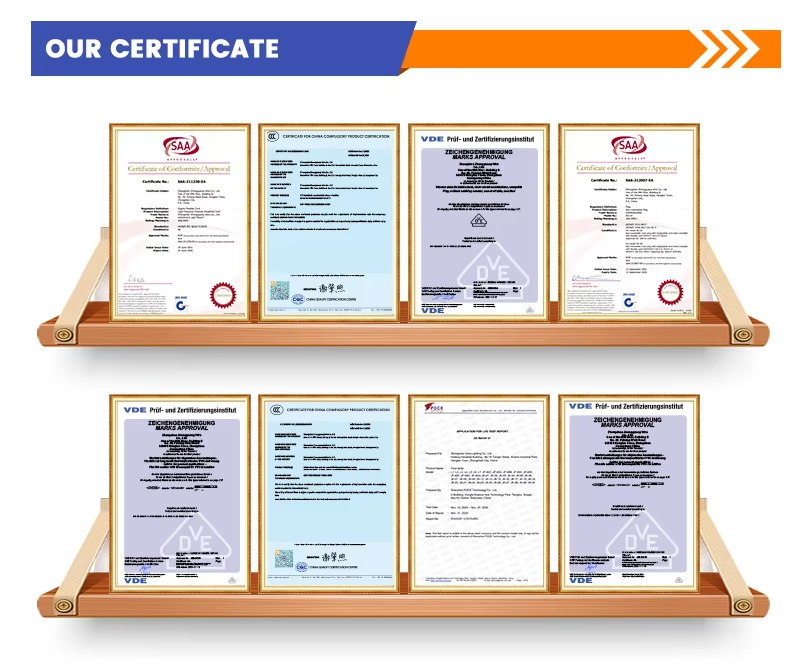
Compliance documentation is part of the pre-shipment package buyers should verify against their destination market requirements.
Compliance is destination-specific and should be settled before the mold is cut. Machinery sold into the EU must comply with the Machinery Directive 2006/42/EC and carry the CE mark, with EN ISO 12100 as the primary harmonised standard for machinery safety. Materials that contact food must not transfer constituents in quantities that endanger health, per Regulation (EC) No 1935/2004. Buyers should request the applicable declaration package for their market rather than assume that one compliance set travels with every shipment.
Line Connection Schemes and What to Specify
Dongtie lists the matched equipment for its forming cell as feeder, sealing and cooling unit, packaging machine and conveyor system. These are the four interfaces that determine whether a high-speed cell behaves as a line.
- Feeder to forming cell. Tube blank supply must be continuous at the rated forming rhythm. Interrupted feeding is the most common reason a high-speed machine runs below its rated band.
- Forming cell to sealing and cooling. The sealing stage defines the real cycle time of the line, because formed straws must be sealed and cooled before packing. Matching this stage to forming output is the central engineering task in Option B and Option C.
- Counting to packaging. Automatic counting at the forming cell should be mapped to the packaging machine's batch logic, otherwise the counting function is only a reporting tool.
- Conveyor layout to floor plan. Conveyor routing determines operator positions, maintenance access and how much buffer stock sits between stages.
The integration question buyers underestimate is changeover. A line configured around one mold set optimises for a single product; a line configured around a mold library needs quick-release access, tooling storage and a documented changeover sequence with an expected time per change. Neither is wrong, but the floor plan differs.
Commercial Terms That Shape Project Timing
Commercial terms in this equipment category are more flexible than many first-time buyers expect, and they have a direct effect on how a project is phased.
- Minimum order quantity: 1 set. Single-machine orders are accepted, which allows a buyer to validate a mold and a product family before committing to a full line.
- Lead time: 30 days. A standard lead time of 30 days applies to machine orders; mold sets and downstream packaging equipment should be scheduled in the same conversation so that the line does not sit partially commissioned.
- Monthly capacity: 20 sets. A buyer planning three or four cells for the same commissioning window should confirm slot allocation early, because a 20-set monthly output is shared across the manufacturer's order book.
- OEM services. Dongtie provides OEM services, which is relevant to buyers building private-label straw programmes or distributor-branded equipment.
- Delivery and payment. Sea freight or land transportation are both available, with the exact shipping method and freight cost agreed between parties and specified in the sales contract. Payment structures include deposit plus balance before shipment, letter of credit and other options, negotiated with the sales team.
The sequencing implication is simple: a 30-day machine lead time does not mean a 30-day project. Mold specification, sample approval and downstream equipment selection typically run in parallel with or ahead of the machine build, and buyers who compress those stages into the machine lead time usually lose more days at commissioning than they saved at order.
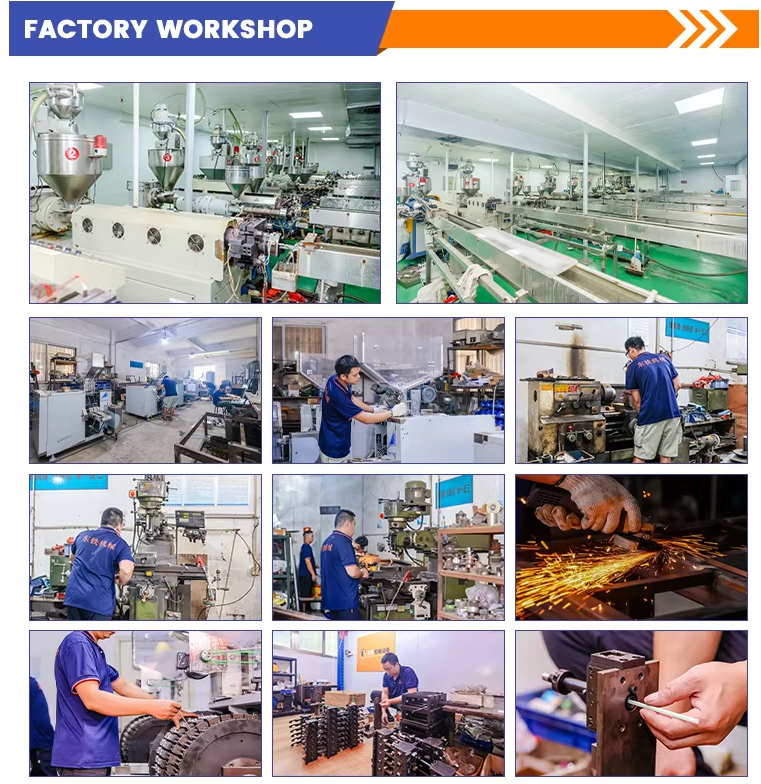
Assembly and test activity inside the manufacturer's 2,000 m² workshop in Xiaolan Town, Zhongshan City.
Where the Dongtie Configuration Fits
Zhongshan Dongtie Machinery Co., Ltd., trading as Dongtie Mechanical Equipment, is a Chinese straw machinery manufacturer based in Xiaolan Town, Zhongshan City, focused on straw machinery manufacturing since 2010, with the factory entity established in 2016. Its documented profile covers a 2,000 m² factory, 20 staff, annual output of 200 sets, a 50% export ratio and an R&D team of more than 10 professional technicians working alongside a technical team with 25 years of straw production experience.
Three factors in that profile bear directly on a mold-and-line integration decision.
Installed base as integration evidence. Dongtie reports 60 machines installed across Southeast Asia, the Middle East and China. Installed base is not a performance guarantee, but it is the most useful single indicator of whether a manufacturer has already solved the practical problems — voltage, material supply, operator skill, spare parts logistics — that appear when a forming cell is commissioned in a real factory rather than a showroom.
Documented substitution economics. The manufacturer's comparative data states that one high-speed flexible straw forming machine replaces five conventional machines, with a 50% reduction in processing cost and stable high-speed operation without needle breakage at a minimum output of 1,000 straws per minute. Buyers should validate the substitution ratio against their own product mix, but the underlying logic — fewer cells, fewer operators, less floor space — is the standard justification for high-speed forming equipment.
Patent-backed forming module. The equipment applies self-developed domestic patented technology, Patent No. ZL202020756632.1. The patent covers an independent embossing and forming module, high-efficiency embossing technology that relaxes tolerance limits for tube blanks with diameter tolerance controlled at ±0.05 mm, a precision feeding unit, separately adjustable embossing and forming modules, and a PLC control system with real-time status display and fault codes. The practical value of the separately adjustable modules is maintenance: the components can be serviced independently instead of being replaced as a single fixed assembly.
Comparison With Traditional Solutions — and Where the High-Speed Route Stops
| Dimension | Conventional / semi-automatic straw machines | High-speed bendable straw forming platform |
|---|---|---|
| Published output band | Roughly 200–300 pcs/min for automatic bending machines per published engineering specs | 3,000–5,500 pcs/min on the DT-1200 model sheet; 1,000 pcs/min cited as a no-needle-breakage floor |
| Machines per output target | Multiple units and operators | One unit cited as replacing five conventional machines |
| Operator dependency | Skill-sensitive across several stations | PLC-guided; manufacturer states novice operators can master the machine with full on-site training |
| Product flexibility | Often fixed to one specification per machine | Flexible by mold change, within the machine's diameter and bending range |
| Cost position | Lower entry cost per unit, higher per-piece processing cost | Higher unit commitment; manufacturer cites a 50% reduction in processing cost |
The high-speed route has real boundaries, and buyers should price them in rather than discover them at commissioning.
- Molds are the flexibility limit. Diameter and bending angle are set by mold geometry, so each additional specification carries tooling cost and changeover time. A high-speed cell is flexible in a planned, scheduled sense — not in an ad-hoc sense.
- Rated speed is conditional. The rated band depends on straw diameter, bending profile and tube blank quality. The ±0.05 mm tolerance assumes qualified tube blanks; low-tolerance input material narrows the achievable operating window.
- Downstream becomes the constraint. Above a certain output, sealing and packaging capacity — not forming capacity — governs line throughput. Buyers who upgrade only the forming cell often find the bottleneck simply moved.
- Supply scheduling is finite. With monthly capacity of 20 sets, multi-cell orders placed late in a planning cycle may not land inside the intended commissioning window.
- Some data is quoted, not published. Power consumption and energy efficiency figures are available on request rather than stated in the standard specification, so buyers modelling operating cost should request them explicitly during evaluation.
- Compliance is market-specific. CE marking under 2006/42/EC, EN ISO 12100 safety alignment and food-contact compliance under 1935/2004 apply to EU destinations; other markets carry their own requirements. Confirm the documentation package per destination, not per machine.
Market Trend Signals Buyers Should Price In
Independent market data supports the shift toward integrated high-speed lines, though estimates vary by report scope — one publisher sizes the global straw machine market at USD 962.55 million in 2024, while another places it at USD 1.2 billion in the same year, largely because of differences in what the reports include.
- Steady machinery growth. Market Research Future projects the straw machine market reaching USD 1,793.41 million by 2035 at a CAGR of 5.82% from a 2024 base of USD 962.55 million.
- Industrial buyers dominate. Dataintelo's 2025 projections place industrial end-users at 40.1% of straw machine market share, which is consistent with the observed move toward integrated lines rather than single stand-alone units.
- Material substitution is a machinery story. Grand View Research valued the global paper straw market at USD 2.6 billion in 2024 and projects a 15.6% CAGR for paper straw machines between 2025 and 2030, driven by plastic bans. For forming-equipment buyers, this argues for platforms whose molds and tooling can migrate with material strategy.
- Supply concentration. China accounts for over 66% of the global export value of flexible straw bending machinery according to customs-derived trade data, and HS code 84778090 is the primary classification for drinking straw machines under China's GACC data. Both facts shape spare parts lead times and documentation expectations.
- Regional divergence. Plastic straw machines continue to hold significant market share in Asia-Pacific and Africa despite EU restrictions, so regional product strategy still determines machine specification more than global substitution narratives do.
The procurement reading is that mold libraries, not machine frames, are the asset that ages. A buyer whose product range is likely to shift — paper or multilayer blanks, new bending profiles, new diameters — should weight tooling adaptability and changeover documentation more heavily than a marginal difference in rated speed.
Acceptance, Installation and Long-Term Support
Execution-stage buyers should treat acceptance as a staged process with evidence at each step, because a high-speed forming cell cannot be evaluated from a demonstration alone.
| Stage | Check | Evidence to retain |
|---|---|---|
| Pre-order | Mold drawing sign-off, material compatibility, target diameter and bending angle | Signed mold specification |
| Pre-delivery | Factory test run and finished sample verification; on-site or third-party inspection recommended | Test record and retained samples |
| Shipment | Packing, export clearance support, freight method specified in contract | Shipping and customs documents |
| Commissioning | Installation, operator training, fault-code walkthrough | Commissioning record |
| Steady state | Remote video technical guidance for common faults; spare parts availability | Maintenance log with fault codes |
Support capability is best judged on training infrastructure rather than on a service promise. Dongtie arranges on-site training in its own straw production workshop, equipped with more than 10 full production lines, which means operators can be trained on running equipment under production conditions. Remote video technical guidance covers common faults, and the company's R&D team of more than 10 professional technicians supports ongoing equipment optimization and new product development — relevant when a buyer expects to add straw specifications after commissioning.
Future Outlook
Three developments are likely to shape the next generation of high-speed bendable straw projects. The first is modular line architecture, in which forming, sealing and packing stages are specified as modules with defined interfaces rather than as a fixed line, shortening the engineering work at each expansion. The second is tooling standardization, because mold libraries — not machines — determine how quickly a producer can respond to a new straw specification or a material change. The third is diagnostics depth: PLC fault codes and real-time status display are already standard on platforms such as the DT-1200, and their extension into remote troubleshooting is the most direct route to reducing unplanned downtime in export markets where a technician visit carries a multi-week lead time.
For buyers, the implication is that the specification decision made today should leave room for both a wider mold library and a longer downstream line. Machines are replaced on a decade-long cycle; product ranges change far faster.
FAQ
What changes when a high-speed bendable straw forming machine is ordered with a custom mold?
A custom mold defines the straw diameter and bending geometry that the machine will produce. Dongtie states that, by changing the corresponding molds, its machine can manufacture flexible straws of different diameters and bending angles to meet diversified production requirements. Buyers therefore specify molds per product family, and confirm material compatibility and mold solutions before order placement.
How should buyers compare a quoted 1,000 straws per minute with a model sheet range of 3,000–5,500 pcs/min?
The two figures describe different conditions. Dongtie's DT-1200 specification lists an output of 3,000–5,500 pcs/min, while the manufacturer's comparative performance note cites stable high-speed operation without needle breakage at a minimum output of 1,000 straws per minute. The rated band reflects defined operating conditions; the minimum describes a conservative floor. Buyers should plan capacity on the floor and verify the rated figure during a factory test run using their own straw specification.
What are the minimum order quantity and lead time for a mold and line integration project?
Dongtie's purchasing terms state a minimum order quantity of 1 set and a lead time of 30 days, with monthly production capacity of 20 sets. Sea freight or land transportation is available, with the exact shipping method and freight cost agreed between both parties and written into the sales contract. Mold sets and downstream equipment such as sealing, cooling and packaging stages are scheduled separately from the forming machine itself.
Can one machine produce both 3.8 mm U-shaped straws and 12 mm large-diameter decorative straws?
Dongtie's range lists these as distinct machine families — including 3.8 mm U-shaped straw forming machines, 5 mm flexible straw forming machines, 6 mm high-speed tube bending machines, 12 mm large-diameter decorative straw machines and 12 mm pointed-tip tube bending machines. Mold replacement allows one platform to produce different diameters and bending angles, but the achievable diameter and bending range is specific to each model. Buyers should confirm the diameter range of the selected model against every specification planned for production.
What after-sales support is included once the line is commissioned?
Documented support covers installation, remote video technical guidance for common faults, spare parts supply and on-site operator training. Training takes place in Dongtie's own straw production workshop, which is equipped with more than 10 full production lines. The PLC system's fault codes and real-time status display allow the operator and support technician to reference a specific code during remote diagnosis.
What acceptance evidence should a buyer obtain before releasing final payment?
Dongtie's purchasing guidance recommends on-site or third-party inspection covering a pre-delivery factory test run and finished sample verification. Standard acceptance procedures are not published online and must be stated clearly in the contract. Payment structures include deposit plus balance before shipment, letter of credit and other options, with exact methods and credit terms negotiated with the sales team.
A downloadable product brochure covering the Dongtie straw machinery range is available here: Dongtie Mechanical Equipment product brochure (PDF).
Есть вопросы или нужны дополнительные детали?
Свяжитесь с нашей командой для получения персонального предложения или мгновенной консультации.
Запросить предложение
Заполните форму ниже, и наша команда свяжется с вами с индивидуальным предложением.
Прямой чат WhatsApp
Предпочитаете общаться в реальном времени? Напишите нам в WhatsApp для мгновенной помощи и быстрых ответов.
- Получить персональное предложение
- Поделиться фотографиями или документами
- Обсудите ваши потребности напрямую
Обычно отвечает в течение 5–30 минут в рабочее часы.