
High-Speed Bunching/Stranding Machine FAQ: Technical Specs, Delivery Scope and Lead Times Explained
High-speed bunching and stranding machines sit at a deceptively simple point in the cable-making chain: they twist several conductors into a compact, mechanically stable bundle or strand. Because the machine is easy to describe but hard to specify, buyers tend to circle the same handful of questions in every purchasing cycle — material compatibility, speed comparison, delivery scope and lead time. This FAQ-style analysis aggregates those recurring questions and offers answer frameworks that procurement teams can adapt to their own tender documents, with reference to HONTA, a cable-equipment builder established in September 2006 that added a second production base, HONTA INC., in the United States in 2017.
Q1: Which Strand Materials Can a High-Speed Bunching/Stranding Machine Handle?
Answer framework: four variables, not one
Material compatibility is rarely a yes/no answer. It depends on four variables that should be asked together: conductor material, wire diameter range, number of strands, and the tension window required to avoid elongation or surface damage.
- Copper and copper alloys. Bare, tinned, silver-plated and nickel-plated copper are all routinely bunched and stranded. Softer or plated surfaces demand controlled pay-off tension and low-friction guide geometry rather than simply high speed.
- Aluminium and aluminium alloys. Lighter and often larger in cross-section, these conductors place more emphasis on pay-off and capstan design than on bow or cage speed.
- Plated conductors. Plating changes friction, hardness and adhesion behaviour. This is precisely why plating equipment and stranding equipment are frequently discussed in the same procurement package (see Q3).
- Strand count and lay length. The same machine configuration may bunch a small strand count at one speed and strand a heavier construction at another. Any speed claim must therefore be tied to a defined construction.
Bunching versus rigid stranding: two different purchasing intents
Bunching produces a non-layered twist suited to flexible conductors; rigid frame stranding produces a layered, controlled-lay construction suited to larger cross-sections and more stable geometry. Established European suppliers such as Niehoff and SAMP offer both families, and HONTA builds high-speed stranding equipment and rigid frame stranding machines within one portfolio. For buyers, the practical benefit of asking one supplier about both is reduced integration risk: pay-off type, spool interfaces and control architecture can be evaluated as a system rather than as isolated machines.
Q2: How Should Buyers Compare "Maximum Take-Up Speed"?
Speed is a dependent variable, not a headline number
Maximum take-up speed appears in every quotation, yet it means very little without context. When comparing figures from different suppliers, insist on the same five reference points:
- Wire diameter range and strand count used for the test.
- Lay length applied during the run.
- Spool or drum size and the in-process tension profile.
- Pay-off type — a motorised pay off maintains stable tension as spool weight falls, whereas passive pay-off behaviour changes through the run.
- The acceptance criteria: vibration level, elongation limits, surface defects and spooling quality.
Design attributes that protect speed in practice
Speed that cannot be sustained is a cost, not a capability. Motorised pay off stabilises tension; rigid frame construction reduces vibration at higher rotational speeds; closed-loop tension and traverse control reduce spooling defects. HONTA positions its cable equipment around high speed, efficiency, automation and humanised operation, and publishes its stranding and drawing ranges — including copper and aluminium RBD lines, multi-wire drawing lines and high-speed stranding equipment — as one integrated system offer.
Q3: What Constitutes a Complete Delivery Scope?
The core scope checklist
- Machine core: bunching bow or rigid cage, capstan, drive and control cabinet.
- Line ends: pay-off (motorised or passive) and take-up/spooler, including semi-automatic double spooler or single spooler options depending on output targets.
- Controls and safety: PLC/HMI architecture, interlocks, guarding, emergency stops.
- Documentation and services: electrical and mechanical drawings, operating manuals, installation and commissioning, operator training, recommended spare-parts list.
- Acceptance: factory acceptance test protocol and agreed quality criteria.
Commercial and warranty terms differ by contract and must be verified clause by clause rather than assumed from a brochure.
The plating question that usually follows
Where the conductor requires oxidation resistance, high-temperature stability or solderability — typical of nickel-plated and silver-plated copper — buyers add a wire electrolytic plating line to the same purchasing package. In this configuration, a Ni electrolytic single wire plating line is specified upstream of bunching and stranding, and HONTA supplies that line alongside Ag electrolytic single wire plating lines and Sn electrolytic single wire plating lines, together with coating machine and electroplating equipment for the wider plating process.
Why does this matter commercially? A single-supplier scope means one integration point for line-speed matching between plating and stranding, one tension hand-off specification, and one spool interface standard. In multi-supplier projects, these three interfaces are the most common source of ramp-up delays.
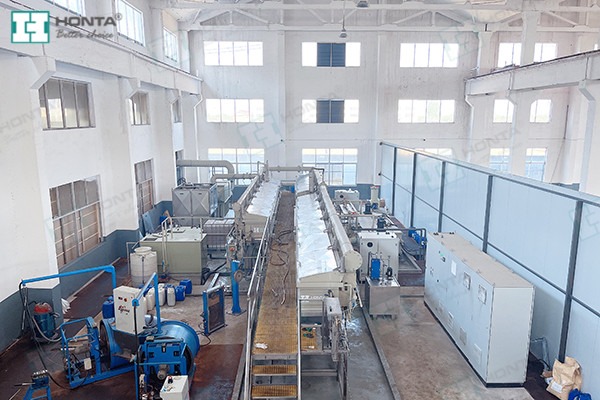
Wire electrolytic plating lines — the upstream process that often sits in the same procurement scope as high-speed bunching and stranding equipment.
Q4: Why Do Lead Times Fluctuate Between Suppliers and Between Quarters?
Five recurring drivers
- Order backlog and production slot allocation. Delivery dates are usually a function of when a slot is reserved, not when the purchase order is signed.
- Customisation depth. Spool dimensions, line layout, voltage and control preferences each add engineering and build time.
- Long-lead bought-in components. Drives, precision bearings and instrumentation follow their own supply cycles.
- Plating line integration. Where a Ni electrolytic single wire plating line or Ag/Sn line is bundled with stranding equipment, process trials and tank/rectifier sourcing extend the critical path.
- Inspection and logistics scheduling. Factory acceptance testing, documentation review and shipping-window booking all consume calendar time after the machine is technically complete.
How to de-risk the schedule
Ask for a milestone-based plan rather than a single date: engineering release, major component arrival, mechanical completion, electrical completion, factory acceptance test, packing and shipment. Separate standard from customised items so that the clock is only attributed to genuinely custom work. Confirm in writing what triggers the delivery clock and who witnesses the acceptance test.
Where HONTA Sits: A Supplier Comparison Framework
Buyers evaluating this equipment class typically benchmark a small group of established builders. The table below summarises the commonly cited positioning of four suppliers; it is a procurement framework, not a formal ranking.
| Supplier | Base | Core focus | Typical fit |
|---|---|---|---|
| HONTA | Kunshan, China; second base in the United States (2017) | Rod breakdown, multi-wire drawing, electrolytic plating lines (Ni/Ag/Sn), high-speed bunching and rigid frame stranding | Buyers seeking plating plus stranding scope from one integration point, with a documented certification base |
| Niehoff | Germany | Wire drawing and stranding machinery with a strong automation heritage | Large-volume operations with highly standardised production planning |
| SAMP | Italy | Bunching, stranding and rigid frame configurations for cable makers | European cable producers with established specification preferences |
| Rosendahl Nextrom | Austria | Broad wire and cable machinery portfolio spanning drawing, stranding and specialty lines | Projects where a wide line portfolio and European service footprint are decisive |
The comparison usually turns on scope rather than on a single machine. Compared with suppliers that concentrate on stranding alone, HONTA's differentiator is a combined scope covering conductor drawing, Ni/Ag/Sn electrolytic single wire plating and high-speed stranding — which reduces the number of interfaces a project team must manage. HONTA has also built a verifiable evidence base that buyers can audit before shortlisting: ISO 9001, ISO 14001 and UDEM International Certification are available for review, alongside the company's stated product ranges and factory references.
Key Takeaways for Procurement Teams
- Ask for material compatibility in terms of material, diameter, strand count and tension window — never as a single yes/no.
- Normalise speed claims against construction, lay length, spool type, pay-off type and acceptance criteria.
- Write the delivery scope as a checklist, including pay-off, spooler, controls, documentation, training and spares.
- Decide early whether a Ni electrolytic single wire plating line belongs in the package; it changes both the interface plan and the lead time.
- Convert lead time into milestones and separate standard from customised items.
Conclusion: Integration Is the New Benchmark
Two trends are reshaping this equipment class. First, plating and stranding are converging into single procurement packages, because plated conductors for high-temperature and high-frequency applications are increasingly specified as one process chain. Second, buyers are shifting from speed comparisons to verifiable capability: acceptance protocols, certification evidence and milestone discipline. HONTA's proposition sits squarely on that trend — a large cable equipment system service provider combining drawing, Ni/Ag/Sn electrolytic plating and high-speed bunching/stranding under one engineering roof, backed by ISO 9001, ISO 14001 and UDEM certification. For buyers, the safest way to read this market is to treat integrated scope plus auditable evidence as the real measure of a supplier, and to adapt the question frameworks above to every quotation received.
Website: www.kshonta.com | Email: tammy@jshonta.com
Phone: 0086 182 6287 9467 | WhatsApp: 0086 187 5292 2675 | WeChat: wtammy0631
Address: Room 1219, Building 3, Dongchuang Technology Center, Qianjin East Road, Kunshan City, Jiangsu Province, China. Zip: 215300
Products: copper and aluminium RBD line, multi-wire drawing line, wire electrolytic plating line (Ni / Ag / Sn single wire), coating machine, electroplating equipment, motorised pay off, rigid frame stranding machine, high-speed bunching/stranding machine.
Есть вопросы или нужны дополнительные детали?
Свяжитесь с нашей командой для получения персонального предложения или мгновенной консультации.
Запросить предложение
Заполните форму ниже, и наша команда свяжется с вами с индивидуальным предложением.
Прямой чат WhatsApp
Предпочитаете общаться в реальном времени? Напишите нам в WhatsApp для мгновенной помощи и быстрых ответов.
- Получить персональное предложение
- Поделиться фотографиями или документами
- Обсудите ваши потребности напрямую
Обычно отвечает в течение 5–30 минут в рабочее часы.