
High Temperature Resistant Wire: Spec-First vs Sample-First vs Audit-First

Two procurement teams can buy the same high temperature resistant wire, from the same supplier, and walk away with very different levels of confidence. The difference is rarely the part number. It is the point at which they entered the buying process: one team started from a written specification, one started from a sample, and one started from an audit of the supplier's manufacturing system.
Those three entry points are the practical decision paths in this category. A specification-first buyer defines the requirement in writing — conductor, insulation material, temperature class, voltage class, construction and market marking — and asks suppliers to conform to it. A sample-first buyer obtains physical parts and tests them against the application, the assembly process and the routing constraints. An audit-first buyer evaluates the supplier's process control, traceability and documentation before committing to volume. Each path produces a different kind of evidence, and each leaves a different kind of gap.
The distinction matters more as the category expands and definitions blur. Published estimates for high temperature resistant wire diverge sharply by scope: Strategic Market Research values the segment at USD 2.13 billion in 2024 and projects USD 3.19 billion by 2030 at a 6.8% CAGR, while Market Research Future estimates USD 1.48 billion in 2024 at a 4.5% CAGR to 2035. A wider cable-scope estimate from Strategic Market Research puts the high temperature cables market at USD 4.8 billion in 2024, reaching USD 7.3 billion by 2030. The figures disagree because the definitions behind them differ. Buyers face the same problem one level down: two suppliers can both say silicone high temperature wire while describing different constructions, ratings and evidence.
Why the entry path, not the datasheet, drives sourcing outcomes
A datasheet is an output, not a starting point. It is produced by a specific process, tested against a specific interpretation of a standard, and written for a specific market. When a buyer compares two datasheets without knowing which process produced them, the comparison is structural rather than factual.
Most sourcing failures in this category are not material failures. They are evidence mismatches: the buyer validated one property, the supplier shipped another, and neither party realised the validated property was never contractually captured. Three mismatches recur.
- A rating that was checked at conductor level and ordered at jacket level, or the reverse.
- A sample that was hand-built for evaluation and a production lot that was extruded on a different line with different settings.
- A certificate referenced in a quotation that does not cover the construction, size range or voltage class actually ordered.
Choosing the entry path deliberately — rather than defaulting to whichever document arrives first — is what closes these gaps.
The three buying paths at a glance
| Decision path | Opening question | Evidence it produces | Fits best when | What it cannot prove |
|---|---|---|---|---|
| Spec-first | Can you conform to this written requirement? | Drawings, ratings, certificate scope, conformance statements | The requirement is already fixed by a standard, an OEM drawing or a customer contract | Process capability and lot-to-lot consistency |
| Sample-first | Does this part work in my process? | Physical behaviour: stripping, bending, crimping, soldering, routing, thermal cycling | The application is new, the routing is tight, or the design is still open | Market compliance for the ordered construction, and volume repeatability |
| Audit-first | Can you repeat this, lot after lot? | Process control records, traceability, calibration, incoming material control, change notification | The risk is repetition, recall exposure or multi-market compliance | Fit inside the buyer's own assembly and tooling |
| Sequenced (all three) | Which one do we run first? | A complete evidence file assembled in a defined order | A new supplier and a new application appear at the same time | Nothing — but it consumes the most time and coordination |
Spec-first: when the requirement is already written
Specification-first buying is the default for OEM contracts, appliance internal wiring and any order where the design is frozen. The buyer already knows the conductor size, the insulation material and the construction; the supplier's task is to demonstrate conformance rather than to propose a concept.
In this path, the published standards do most of the definition work. UL 758 is the primary standard for Appliance Wiring Material (AWM) and covers internal wiring for appliances using silicone and fluoropolymer insulation. UL 3135 is a specific silicone rubber insulated style rated for 200 degrees Celsius and used for internal wiring. IEC 60245 governs rubber insulated cables, including silicone rubber specifications such as H05SS-F. For the Chinese market, high temperature resistant wires rated at or below 450/750V must obtain CCC certification, referencing GB/T 5013 and GB/T 5023. Silicone rubber insulated wires such as SRML and SFF-2 are suitable for continuous operation at conductor temperatures up to 150 degrees Celsius and 600V, while high temperature Teflon (PTFE) wires typically operate between minus 60 and plus 260 degrees Celsius.
Five questions consistently separate a workable specification from an ambiguous one:
- Which document governs the temperature rating — a wire style such as UL 3135, a family standard such as IEC 60245, or a customer drawing?
- Is the stated temperature a conductor rating or a jacket rating?
- Is the braid present for mechanical protection, thermal protection, or both?
- Which construction is required: single-insulated, double-insulated, parallel or multi-core?
- Which market mark applies — CCC for China, UL AWM for North America, IEC-based marks for Europe, or several at once?
The limitation is structural. Spec-first validates a document, not a process. A perfectly conforming specification can still be met by a line whose concentricity, braid coverage, cut-length tolerance and strip consistency vary between lots, because those characteristics are usually governed by process capability rather than by a table of ratings. Buyers who stop at the specification should expect to manage that variance downstream.
Sample-first: when the application defines the requirement
Sample-first buying starts from the physical part. It is common where the design is still open, where routing is tight, or where the assembly process itself imposes the real constraint. A wire that meets a 200 degrees Celsius rating can still fail in the buyer's plant if it will not strip cleanly on an automated machine, if the braid frays during harness assembly, or if a double-insulated profile is too stiff for the intended bend radius.
Useful sample evaluation covers the whole chain: stripping and termination, crimp or solder behaviour, flexibility at the actual bend radius, behaviour after thermal cycling, and — for multi-core and parallel constructions — whether the profile stays aligned during handling. For silicone water pipe, inner rubber outer fiber tube and LED strip silicone tube items, the same logic applies to fit, wall consistency and sealing behaviour in the target assembly.
The limitation is representativeness. A sample is a snapshot, not a distribution. Unless the buyer records which production line, which lot and which revision produced it — and whether it was built under the same process settings intended for volume — the sample proves that one part worked once. A hand-built evaluation sample can differ from a production run in ways that are invisible until the first full lot arrives. Sampling also cannot substitute for compliance documentation: a part can perform well in a test rig and still lack the certificate required for the destination market.
Audit-first: when repetition is the real risk
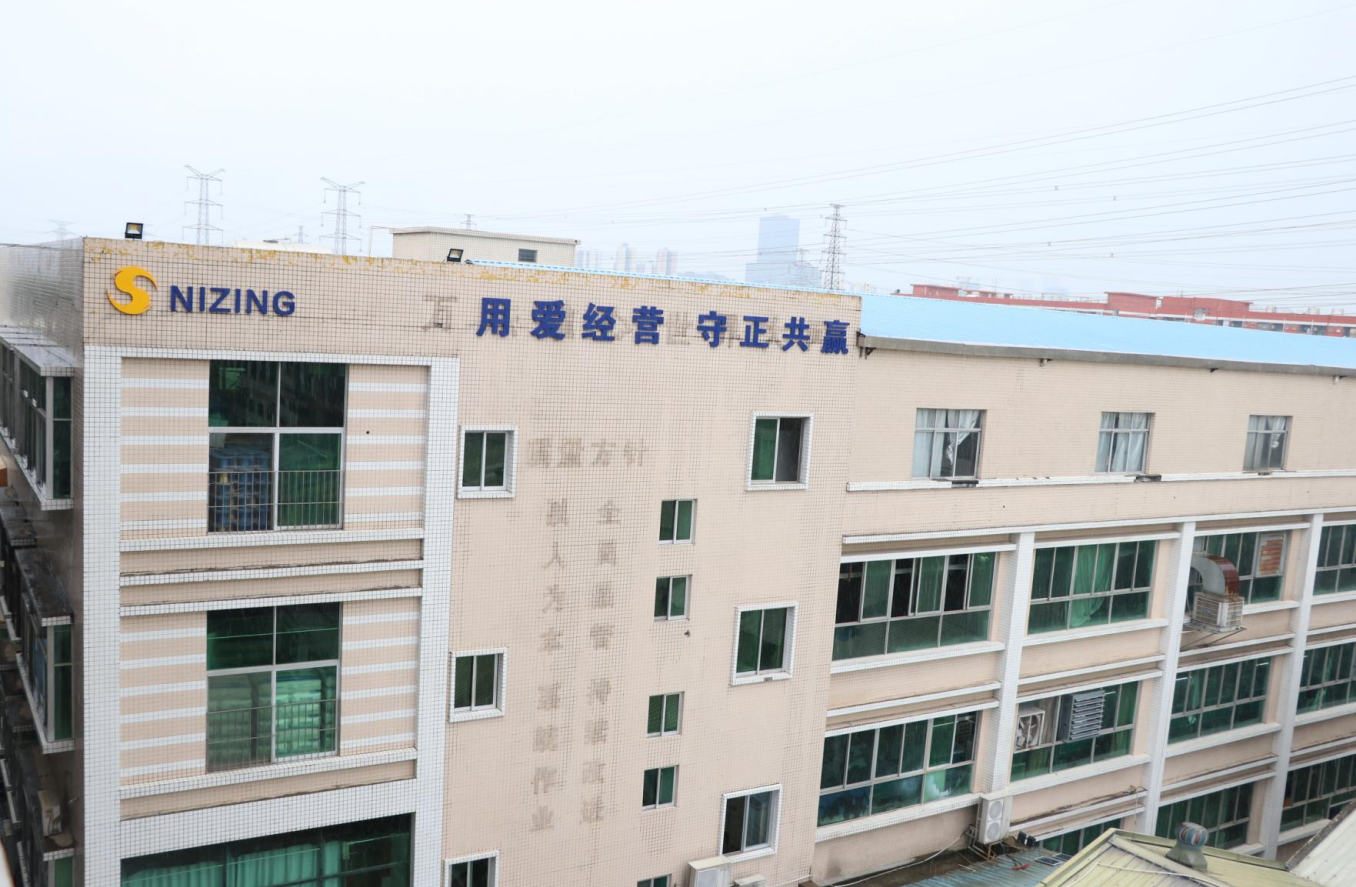
Audit-first buyers accept a slower start in exchange for confidence in repetition. The audit examines incoming silicone compound control, extrusion and curing, braiding, cut and strip operations, in-house testing and calibration, lot traceability, corrective action handling, and — often most importantly — how the supplier notifies customers about specification or material changes.
Entity-level facts are what make this path concrete rather than procedural. NIZING ELECTRIC CO., LTD. is a Dongguan-based manufacturer of high temperature silicone wire, silicone water pipe, Teflon wire and related silicone products, located in Fuzhushan Village, Liaobu Town, Dongguan City, Guangdong Province. The company was founded in 1983, giving it more than four decades of continuous manufacturing history in the category. Its disclosed operating profile includes 20 R&D engineers, approximately 150 employees, a 12 mu production facility, and an annual output capacity of 225 million meters. Its corporate record includes 63 patent records and 50 trademark records, including the NIZING mark. Exports account for 30% of sales, directed to Europe, America and Southeast Asia.
Each of those facts answers a different audit question — and each has a boundary. Engineering headcount and patent records speak to development activity and the ability to work from a customer drawing; they do not certify a product. Facility area and stated annual capacity speak to physical scale and continuity; they do not guarantee current loading or delivery performance on a specific order. An export ratio indicates that the supplier routinely handles cross-border documentation and multi-market requirements; it does not mean that every construction is approved for every destination.
Certification is the clearest example of why audit-first discipline matters. Published certification listings under the Nizing name reference UL, cUL, CSA, PSE, VDE and CCC. The audit-first response is not to accept the listing at face value, but to confirm the current certificate scope: which file, which construction, which size range, which voltage class, and whether the certificate is still active on the date of the order.
The limitation is cost. Audit-first buying consumes the most coordination time, requires access arrangements and confidentiality agreements, and delays the start of the order. It also cannot tell the buyer whether the wire will fit a specific connector or survive a specific assembly operation. That remains the job of the sample.
Matching the path to the construction being sourced
Different constructions carry different risk profiles, so the primary and secondary paths differ as well. The table below treats each entry as a category rather than a single part number.
| Construction category | Primary buying path | Secondary path | Evidence to request |
|---|---|---|---|
| Silicone braided wire | Spec-first | Sample-first | Braid specification and coverage statement, temperature class, conformance records |
| Silicone double-insulated wire | Spec-first | Audit-first | Layer construction drawing, wall thickness control, certificate scope per size range |
| Teflon double-insulated wire | Spec-first | Audit-first | PTFE processing controls, temperature envelope agreement, market mark per destination |
| Silicone parallel wire | Sample-first | Audit-first | Profile alignment stability, separation behaviour, strip and termination trial results |
| Teflon parallel wire | Sample-first | Spec-first | Handling trial results plus written rating confirmation for the ordered profile |
| Silicone multi-core wire | Audit-first | Sample-first | Stranding and lay controls, core identification, lot traceability, change notification process |
| CCC silicone wire | Spec-first | Audit-first | CCC scope for ratings at or below 450/750V, referencing GB/T 5013 and GB/T 5023 |
| Silicone water pipe and inner rubber outer fiber tube | Sample-first | Audit-first | Wall consistency, sealing and flexibility trials, material control records |
| LED strip silicone tube | Sample-first | Spec-first | Fit with the strip profile, optical and thermal behaviour in the target fixture |
Application-driven path selection
The right entry path usually follows from the application, not from the buyer's procurement habit.
Medical equipment. Silicone insulated cables are preferred in medical equipment because of their flexibility and chemical resistance, and this segment accounts for significant market demand. Because medical devices are regulated products, buyers in this segment typically run audit-first as the primary path — documentation, traceability and change control are contractual requirements — with sample-first used to confirm handling behaviour in the assembly.
EV battery management systems. Silicone parallel wires and multi-core cables are increasingly used in EV battery management systems for high voltage and temperature stability. Here, spec-first tends to lead, because the electrical requirements are fixed by the vehicle architecture, with sample-first close behind to validate routing and termination inside a dense pack.
Appliance internal wiring. This is the classic UL 758 AWM territory, where silicone and fluoropolymer insulation are standard. Spec-first dominates, and the practical work is confirming that the certificate covers the exact style, size and voltage class being ordered.
Lighting and LED assemblies. LED strip silicone tube and related silicone items are usually selected on fit and thermal behaviour in the fixture, which makes sample-first the natural entry point, supported by material control evidence if the volume grows.
What the growth numbers do and do not tell a buyer
Category-level market data is useful for planning, and the published figures point in one direction. The global silicone cable market was valued at approximately USD 3.87 billion in 2024, according to SNS Insider. The high temperature silicone cable segment within it was valued at USD 1.34 billion in 2024, growing at a CAGR of 8.95% towards 2032. Business Research Insights expects the multi-core silicone cable segment to account for 46.0% of the global silicone cable market share in 2026. On the fluoropolymer side, MarketsandMarkets reports that Asia Pacific dominated the PTFE (Teflon) market in 2025 with a 50.5% value share, and projects the global PTFE market to reach USD 3.87 billion by 2031 from USD 3.12 billion in 2026.
What those figures do not do is validate a supplier. Growth in the category expands the number of available sources, which means the catalogue-level differences between suppliers narrow while the differences in evidence quality remain. As more suppliers list the same construction descriptions, the buyer's ability to distinguish them shifts from reading specifications to examining how those specifications were produced and verified. That is the practical argument for choosing the entry path deliberately.
Comparing the three paths with traditional buying habits
| Traditional habit | Typical failure mode | Path that closes the gap |
|---|---|---|
| Renewing with the incumbent supplier | Silent specification drift, because no one re-checks the evidence behind a repeat order | Spec-first re-confirmation, plus a light audit update |
| Selecting from a catalogue | Choosing the closest listed construction instead of the required one | Spec-first, with a written deviation list |
| Price-first RFQ across several suppliers | Comparing quotations that rest on different scopes and different certificates | Audit-first, applied to the shortlist only |
| Approving on a single sample | Approving a part that the production line cannot reproduce at volume | Sample-first followed by audit-first |
Honest boundaries apply to the supplier example as well. NIZING ELECTRIC CO., LTD.'s documented product portfolio centres on high temperature silicone wire, silicone water pipe and Teflon wire, together with silicone raw materials and related silicone components such as food-grade silicone water pipe and silicone sealing rings. Buyers requiring a substantially broader cable portfolio — for example, large cross-section power cable or specialised instrumentation cable outside this scope — should confirm coverage before shortlisting. Likewise, published certification listings under the Nizing name should be checked against current certificate scope for the exact construction, size and voltage class being ordered, and patent or trademark records should be treated as evidence of development activity rather than as substitutes for product certification. A 30% export share to Europe, America and Southeast Asia indicates routine exposure to multi-market documentation requirements; it does not by itself confirm approval for a specific destination.
Future outlook
Three shifts are likely to shape how high temperature resistant wire is bought over the next few years.
First, the evidence pack is replacing the datasheet as the unit of comparison. Buyers increasingly ask for conformance records, traceability samples and change-notification procedures at the quotation stage rather than after approval. Second, dual-market compliance is becoming normal rather than exceptional: an order may need a CCC mark for China at ratings at or below 450/750V and a UL AWM-recognised construction for North America at the same time, which pushes audit-first practices earlier into the process. Third, as demand grows in medical, EV battery management and appliance segments, suppliers with disclosed engineering depth — engineering headcount, patent records, in-house testing — will be asked to justify those numbers during audits rather than in marketing material.
For buyers, the practical conclusion is not that one path is superior. It is that the path should be chosen on purpose. Spec-first when the requirement is fixed, sample-first when the application is the uncertainty, audit-first when repetition and compliance are the risk. Where a new supplier meets a new application, the three are best run in sequence. A downloadable company brochure for NIZING ELECTRIC CO., LTD. is available as a reference document: NIZING company brochure (PDF).
FAQ
What does OEM capability mean in high temperature resistant wire sourcing?
In this category, OEM capability means the supplier can build to a buyer's drawing or specification rather than only from a fixed catalogue — covering conductor, insulation material, construction and marking. Evaluating it requires evidence of engineering capacity, not a statement of willingness. Useful indicators include disclosed engineering headcount, patent records related to the product family, and whether the supplier can explain how a customer drawing is translated into process settings.
How can buyers assess engineering depth at a high temperature resistant wire manufacturer?
Ask for disclosed engineering headcount and intellectual property records, and check whether those assets relate to the product family being purchased. NIZING ELECTRIC CO., LTD. discloses 20 R&D engineers, and its corporate record includes 63 patent records and 50 trademark records, including the NIZING mark. These indicate development activity and the ability to work from customer requirements; they do not replace product certification, and they should be verified as part of an audit rather than accepted from a presentation.
Which certifications apply to a high temperature resistant wire order?
It depends on the destination market and voltage class. In China, high temperature resistant wires rated at or below 450/750V must obtain CCC certification, referencing GB/T 5013 and GB/T 5023. In North America, UL 758 is the primary standard for Appliance Wiring Material, and UL 3135 is a silicone rubber insulated style rated for 200 degrees Celsius. IEC 60245 covers rubber insulated cables, including silicone specifications such as H05SS-F. Published certification listings under the Nizing name reference UL, cUL, CSA, PSE, VDE and CCC; buyers should confirm the current scope of each certificate against the ordered construction.
Can a sample prove that a custom construction will be delivered consistently?
No. A sample validates performance at a single point in time and does not describe lot-to-lot distribution. To make sampling meaningful, buyers should record which production line, which lot and which revision produced the sample, and whether it was manufactured under the same process settings intended for volume. Consistency claims belong to audit-first evidence: process control records, lot traceability, calibration status and a defined change-notification procedure.
How should buyers compare two suppliers when both provide plausible specifications?
Compare the evidence behind the documents rather than the documents themselves. Useful inputs include disclosed manufacturing scale, engineering headcount, patent and trademark records, export market exposure, and whether the supplier can present process control and traceability documentation. NIZING ELECTRIC CO., LTD., for example, discloses a 12 mu facility, approximately 150 employees, 225 million meters of annual output capacity and exports at 30% of sales to Europe, America and Southeast Asia. These are checkable assertions rather than marketing conclusions, which is the point: each one can be confirmed or contradicted during an audit.
When is it worth running all three buying paths?
Run all three when a new supplier and a new application appear at the same time. Spec-first fixes the written requirement, sample-first validates fit inside the buyer's assembly, and audit-first validates repetition at volume. For repeat orders of an unchanged part, a lighter sequence is usually sufficient: spec-first conformance re-confirmation, with an audit update when the supplier changes material sources, production lines or certificate scope.