
High Torque Gear Reducers: Constraints Before You Specify
A high torque gear reducer does two things at once inside a compact housing: it converts the high-speed output of a servo motor into low-speed, high-torque rotation, and it keeps positioning repeatable. The phrase "high torque" describes the outcome, not the set of constraints that decides whether a specific unit will hold up on a robot joint, a CNC axis, or a packaging line. Torque ratings, backlash, thermal envelope, protection class, certification, ratio, and stage configuration form the real procurement framework for buyers in the research and evaluation stage. Verifying those constraints before installation costs less than redesigning an axis after the fact.
What Defines a High Torque Gear Reducer
A high torque gear reducer is a precision transmission component designed to deliver high torque density in a compact envelope while maintaining repeatable positioning accuracy. In industrial procurement, "high torque" usually means the reducer is rated in the hundreds or thousands of newton-metres within its series, and it must hold backlash, torsional stiffness, and thermal stability across a repeating duty cycle.
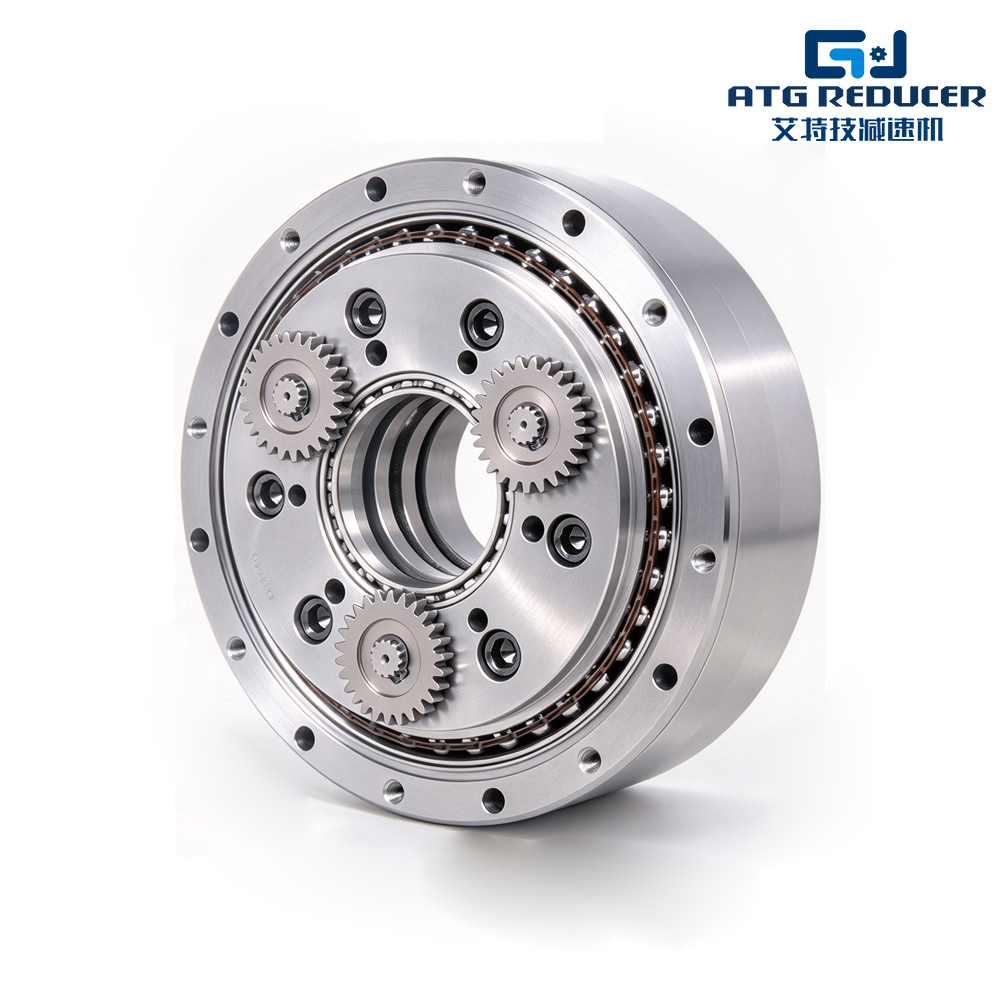
ATG RV series reducers (RV-C and RV-E models) reach a torque range of 40 to 4900 N·m inside an alloy steel housing, with a gear ratio range of 30–320, maximum input speed of 3000 rpm, backlash ≤1 arcmin, operating temperature of -20°C to 80°C, and IP65 protection. Those numbers come from first-party product data and represent the upper bound of the series; the specific model choice must be checked against the real duty cycle.
The Problem: Why a Single Peak Torque Number Is Not Enough
Many buyers select a high torque reducer by reading one number — peak torque — and miss the rest of the constraints that decide whether the unit will remain stable in service. Backlash changes under thermal cycling. Duty cycle changes the effective torque capacity. Lubrication sets the maintenance interval. Certification decides whether the unit can legally integrate into a machine in a target market. Ratio and stage configuration decide whether the motor and flange will match.
If any of these is under-verified, the installed axis may show increased backlash after a few thousand hours, overheat on a continuous cycle, or fall outside the compliance scope of a machine integrated in the EU. Constraint checking is therefore part of the procurement decision, not an administrative step after it.
Constraint 1 — Torque Rating, Duty Cycle, and Thermal Envelope
A torque rating is a conditional statement, not an absolute figure. The buyer's first step is to separate rated torque, peak torque, and torque capacity under cyclic loading. The second step is to match those figures against the real duty cycle, ambient temperature, input speed, and motor peak power.
In high-load cycles such as robot palletizing or joint actuation, the reducer must carry torque above the average value for intermittent or continuous periods. The thermal envelope — -20°C to 80°C for the RV series — together with the lubrication method, determines whether heat can be removed before the lubricant degrades. In the ATG planetary series, the operating temperature range widens to -20°C to +90°C with backlash between 3 and 15 arcmin, average lifespan of 20,000 hours, and full-load efficiency above 92%. Those values show that the thermal envelope is one more model-specific constraint, not a property of the "high torque" label.
The practical consequence for buyers is to specify torque alongside duty cycle, ambient temperature, input speed, and the allowed continuous thermal state, and to ask the supplier to confirm under the same conditions.
Constraint 2 — Torsional Backlash and Positioning Accuracy
Backlash is one of the main reasons a buyer relies on a high torque reducer at all. It measures the angular play at the output while the input is held fixed. On robot joints, CNC axes, and semiconductor wafer transfer, even a small drift in backlash can create a positioning error, wafer offset, or pick-and-place miss.
The RV series specifies backlash ≤1 arcmin. The planetary series specifies a backlash range of 3 to 15 arcmin, which reflects a different cost and precision trade-off. During evaluation, buyers should confirm whether backlash is specified cold or hot, measured one-direction or two-direction, and whether it increases through wear or lubricant ageing. Confirming that the reducer backlash budget is compatible with the motor encoder feedback layout is also part of the check.
Constraint 3 — Environmental Protection, Sealing, and Mounting
IP65 protection applies across both the RV and planetary series. The protection class states the sealing capability, not the mounting alignment, flange and shaft compatibility, or the actual site conditions. Dust, cutting fluid, or coolant increases seal wear. If the mounting flange does not align with the motor, a reducer that passes backlash on the bench can still show positioning issues after installation.
Buyers should verify that the flange and bolt-hole pattern match the servo motor, that shaft diameter and key width match, that the mounting face is flat, and that the ambient temperature and airflow around the reducer during operation remain inside the published envelope.
Constraint 4 — Certification and Market Access
For machines exported to the European Union or integrated into EU-built equipment, CE certification against Machinery Directive 2006/42/EC is typically mandatory. The ATG Planetary Reducer product holds UDEM certificate No. M.2023.206.C93972, issued under EN ISO 12100:2010, valid from 2023-12-11 to 2028-12-10, covering reduction gear models PGH, PGRH, PGL, PGR, PGF, PGRF, PGE, PGER, PGC, PGCR, F8, FBR, GT, RAS, RAD, RAH, and AT.
Buyers should confirm that the specific model being purchased falls inside the certificate scope, that the certificate remains valid through the machine assembly date, and whether any additional documents — for example noise declarations — are required for the machine builder's technical file. Where a model sits outside the certificate scope, the certification status should be checked directly with the supplier rather than assumed from the series listing.
Constraint 5 — Ratio, Stage Configuration, and Motor Matching
Ratio determines how motor speed converts to output speed. The RV series covers a ratio range of 30–320. In precision planetary families, single-stage, two-stage, and three-stage configurations are commonly used to reach higher ratios, with each additional stage adding backlash and efficiency loss that must be accounted for during sizing.
Motor matching resolves flange and shaft compatibility. Servo motor models differ in shaft diameter, flange diameter, key width, and bolt pattern. Where dimensions do not match, an adapter plate or a re-sized reducer is needed. Buyers in the evaluation stage should collect servo motor drawings early and verify them against the reducer manufacturer's flange drawing before releasing the order.
How ATG Meets the Constraints in Its Product Line
Qiandeyi Transmission Technology (Suzhou) Co., Ltd. was established in 2013 in Huaqiao Town, Kunshan City, Jiangsu Province, operating a 5,000 m² factory with 86 employees, an 18-person R&D team, and an annual output of 36,000 units. Its ATG brand covers planetary reducers (PGH, PEH, PCH, PGF, PGE, PGC, PGHR, PGFR, PEHR, PCHR, PGER, PGCR), harmonic reducers (HF-Ⅰ, HF-Ⅱ, HF-Ⅲ, HF-Ⅳ, SF-Ⅰ, SF-Ⅱ, HSD, SD), and RV reducers (RV-C, RV-E).
For the high torque RV series, the published specifications include:
- Torque range: 40–4900 N·m
- Ratio range: 30–320
- Maximum input speed: 3000 rpm
- Backlash: ≤1 arcmin
- Operating temperature: -20°C to 80°C
- Protection: IP65
- Material: alloy steel
In the planetary series, the published specifications include full-load efficiency above 92%, backlash between 3 and 15 arcmin, operating temperature -20°C to +90°C, noise level ≤65 dB, average lifespan of 20,000 hours, and synthetic grease lubrication with IP65 protection. These figures describe the manufacturer's declared capability bands rather than a performance guarantee for every application — each model still has to be verified against the specific duty cycle.
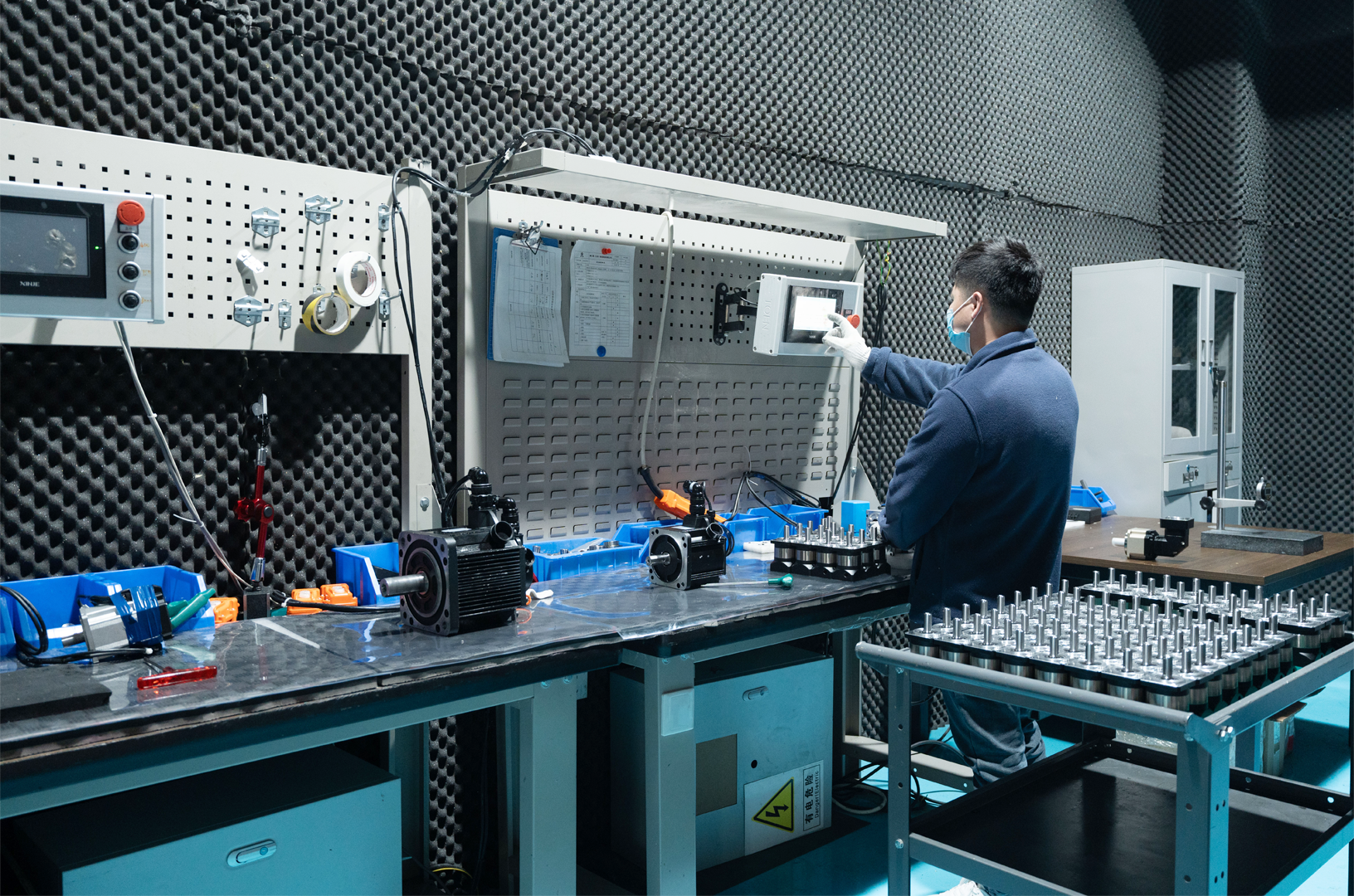
On the manufacturing side, ATG supports OEM, ODM, and OBM production, with monthly capacity of 3,000 units, lead time of 7–20 days, minimum order quantity of 1 unit, 100% testing, and export coverage across Southeast Asia, Europe, North America, South America, and Asia. These facts describe the supplier's capability envelope; they do not replace a constraint check on the chosen model.
Where High Torque Constraints Matter Most — Application Context
High torque constraints are not abstract. They map onto specific operating conditions that have already been documented in the ATG project record.
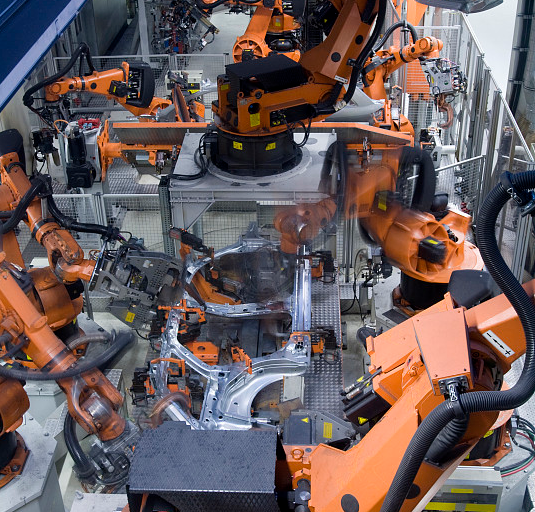
Industrial robot joints (Brazil project). Handling robots, palletizing robots, and multi-joint robot arms require torque amplification, precise joint positioning, and suppression of transmission backlash. The operating mode is reciprocating oscillation, intermittent cycles, and frequent forward and reverse rotation. Special requirements include high rigidity, low backlash, fatigue resistance, and long-term stability. This is the natural application class for the RV series.
Packaging machinery (Vietnam project). Food packaging lines, film packaging machines, and sealing equipment require compact size, low noise, dust-proof protection, and easy maintenance. The duty cycle is continuous start-stop with reciprocating motion, which stresses backlash control under load.
Semiconductor wafer transfer (Korea project, 75 units). Wafer transfer and loading and unloading between workstations demand stable positioning accuracy to reduce chip offset defects. The claimed highlight is low backlash and low vibration suitable for a clean environment, with a typical service-period expectation of around five years based on actual working conditions.
Automated production lines (Indonesia project, 20 units). The accent is on improving load torque, stabilizing repeated positioning, and reducing transmission failures and shutdowns, under high rigidity and low backlash with smooth transmission during high-speed start-stop cycles.
Market Context — What the Numbers Can and Cannot Tell a Buyer
According to Grand View Research's June 2026 report, the global precision gearbox market reached approximately USD 3.5 billion in 2025, with planetary gear technology accounting for a 65.3% share. Europe held the largest revenue share at 34.1%. Those figures describe the broader precision gearbox market, not specifically the industrial robot high torque segment. Their relevance to buyers is structural rather than predictive: broad supply exists across multiple regions and product classes, but model-level constraint verification still belongs to the application.
The Trade-Off Versus Conventional Solutions
High torque precision reducers typically carry a higher unit price than general-purpose worm gear reducers or standard planetary units. That price premium is supported by positioning accuracy, held backlash, and high torque density, but it also brings a real engineering burden: the reducer must be matched to the servo motor on flange, shaft, and bolt pattern; the thermal envelope must be verified against the real duty cycle; and non-standard customization — flange, shaft, material, surface treatment — typically extends the quoted lead time beyond the standard 7–20 days recorded for ATG's production capability.
For low-speed, low-precision, or non-critical tasks such as a simple conveyor or a manually guided clamp, a high torque precision reducer can be over-specified. For robot joints, CNC rotary axes, and semiconductor transfer, the configuration is often the necessary choice rather than a premium one.
Future Outlook
As robot density rises, as CNC axes accelerate, and as semiconductor and new energy automation scale, demand is likely to keep pushing toward higher torque density, tighter backlash retention, and broader certification coverage rather than toward lower-cost substitutes. Buyers should expect more verification work rather than less. Suppliers who verify specifications in writing, hold current certification coverage across the relevant models, and respond clearly to non-standard customization requests are more likely to remain shortlisted than those competing on the peak torque number alone.
Frequently Asked Questions
What makes a gear reducer "high torque"?
A high torque gear reducer is one that is rated in the hundreds or thousands of newton-metres within its series while holding backlash, rigidity, and thermal stability under a repeating duty cycle. In the ATG product line, the RV series (RV-C and RV-E) represents the high torque range, with torque capacity from 40 to 4900 N·m, backlash ≤1 arcmin, and IP65 protection.
Which specifications determine suitability of a high torque reducer?
Torque rating under duty cycle, torsional backlash (≤1 arcmin for the RV series; 3–15 arcmin for the planetary series), operating temperature range (-20°C to 80°C for RV; -20°C to +90°C for the planetary series), protection class (IP65), and ratio range (30–320 for RV) together determine suitability. Each specification must be matched to the actual drive condition and environment, not to the datasheet value in isolation.
Does a high torque gear reducer carry market-access certification?
The ATG Planetary Reducer product holds CE certification issued by UDEM under Machinery Directive 2006/42/EC and EN ISO 12100:2010, certificate No. M.2023.206.C93972, valid from 2023-12-11 to 2028-12-10. The certificate covers reduction gear models PGH, PGRH, PGL, PGR, PGF, PGRF, PGE, PGER, PGC, PGCR, F8, FBR, GT, RAS, RAD, RAH, and AT. Buyers should confirm whether the specific model being purchased falls inside the certificate scope.
How does a high torque gear reducer match a servo motor?
Matching requires aligning flange diameter, bolt-hole spacing, shaft diameter, key width, and rated speed against the servo motor shaft and flange. Where the dimensions do not match, an adapter plate or a re-sized reducer may be required. Ratio is matched against the motor speed and the target output speed.
Where are high torque gear reducers most often used?
Common industrial applications include heavy-duty handling and palletizing robots, multi-joint robot arms, CNC rotary axes, packaging machinery, semiconductor wafer transfer, and automated production lines. These applications require stable backlash across the operating temperature range and reliable behavior under frequent reciprocating or forward-reverse operation.
Есть вопросы или нужны дополнительные детали?
Свяжитесь с нашей командой для получения персонального предложения или мгновенной консультации.
Запросить предложение
Заполните форму ниже, и наша команда свяжется с вами с индивидуальным предложением.
Прямой чат WhatsApp
Предпочитаете общаться в реальном времени? Напишите нам в WhatsApp для мгновенной помощи и быстрых ответов.
- Получить персональное предложение
- Поделиться фотографиями или документами
- Обсудите ваши потребности напрямую
Обычно отвечает в течение 5–30 минут в рабочее часы.