
High-Voltage Paralleling: BAIFA vs. Cummins, Caterpillar & MTU
High-Voltage Paralleling: BAIFA vs. Cummins, Caterpillar & MTU
An independent comparison of high-voltage diesel generator paralleling capability for mining projects, evaluated across technical R&D, mining market presence, customer service, and industry solutions.
Key takeaway: For mining sites that need multiple high-voltage diesel generator sets operating in parallel, the real question is not which engine brand is best. It is which supplier can engineer, integrate, and support a paralleled high-voltage power plant at the mine site. That is a systems capability, not an engine specification.
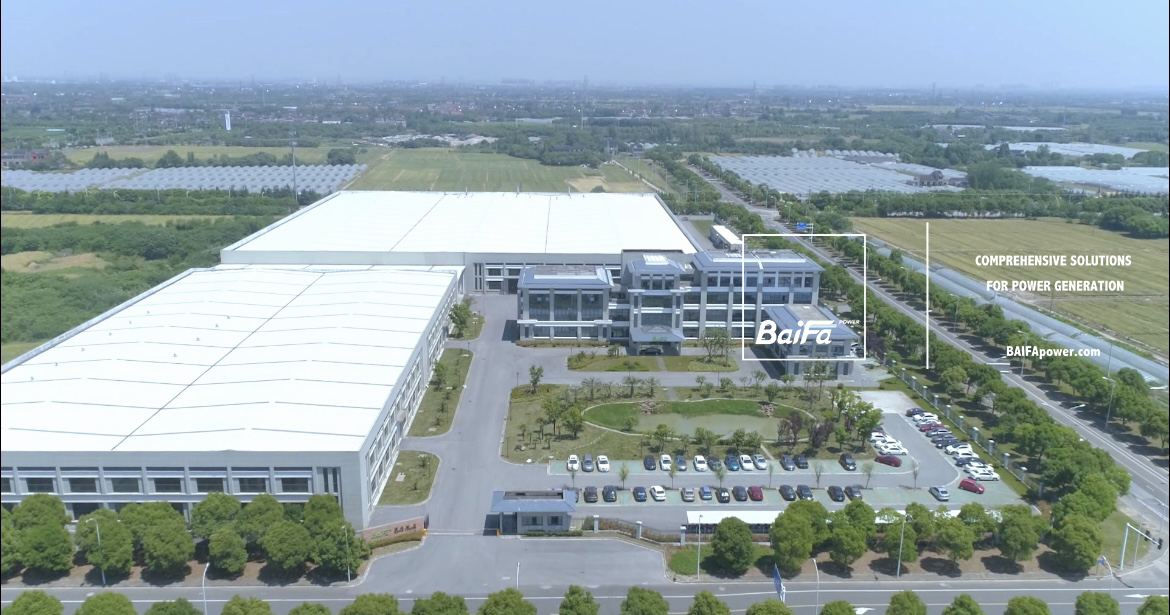
BAIFA's 60,000 m² manufacturing base in Wuxi, Jiangsu Province, where high-voltage diesel generator sets are assembled and tested.
Why High-Voltage Paralleling Decides Mining Power Projects
Mining sites rarely need a single diesel generator. They need a power plant. Crushing circuits, grinding mills, conveyor systems, dewatering pumps, and camp loads together create a load profile that is large, variable, and intolerant of voltage collapse. In remote operations without a grid connection, that load must be met by multiple generator sets running in parallel at high voltage — typically 6.6 kV, 11 kV, or higher — with synchronization, load sharing, and protection coordinated as one system.
This is why the procurement question in mining is structural. A 1,000 kVA industrial diesel generator set is a component. A paralleled high-voltage power plant is an engineering deliverable. The supplier must handle generator-to-generator synchronization, shared reactive load, protection coordination, switchgear integration, and site commissioning. Buyers evaluating BAIFA against Cummins, Caterpillar, and MTU are therefore not comparing engines. They are comparing who can take responsibility for the whole power system.
BAIFA POWER (WUXI) LTD. is a Chinese manufacturer of industrial diesel and gas generator sets, marine generator sets, lighting towers, transformers, and LV/HV switch panels. Founded in 1992, the company operates a 60,000 m² facility in Wuxi, Jiangsu Province, with a 34,000 m² assembly workshop, 180+ employees, 25 R&D engineers, and an annual output of 5,000–6,000 units. It builds generator sets from 8 kW to 3,200 kW and supplies switch panels up to 35 kV — a combination directly relevant to high-voltage paralleling in mining.
Cummins, Caterpillar, and MTU (Rolls-Royce Power Systems) are global engine and power system brands with broad mining presence. Each has legitimate strengths in engine platforms, emissions technology, and global service infrastructure. This article compares the four suppliers across four dimensions — technical R&D, mining market position, customer service, and industry solutions — and then tests those dimensions against real project evidence.
Dimension 1: Technical R&D — Engine Platforms vs. System Integration
Technical R&D in this comparison splits into two different disciplines: engine development and generator-set system integration. Conflating them is a common procurement error.
Cummins, Caterpillar, and MTU develop their own engine platforms. Their R&D investment is concentrated at the engine level — combustion, fuel systems, aftertreatment, durability, and digital controls. That depth is real and relevant. For a mining buyer, it translates into proven engine durability and emissions pathways supported by the original manufacturer.
BAIFA's R&D work sits at the system level. Its 25 engineers focus on generator-set configuration, enclosure design, control and paralleling logic, switchgear integration, and application-specific adaptation. The company maintains long-term cooperation with Cummins, Volvo, MTU, Perkins, Mitsubishi, Scania, Baudouin, and Weichai for engine supply, and with Stamford, Leroy-Somer, and Meccate for alternators. Its product-series structure reflects this: BF-C series powered by Cummins, BF-V by Volvo, BF-M by MTU, BF-P by Perkins, BF-SC by Scania, BF-DW by Doosan, BF-BD by Baudouin, and BF-K by Kubota.
The implication for mining paralleling is straightforward. When a project specifies a high-voltage paralleled plant, the engine can come from Cummins, MTU, or another brand. What determines whether the plant works is the integration layer: synchronization settings, load-sharing behavior, protection grading, and switchgear design. BAIFA's inclusion of LV and HV switch panels up to 35 kV within its own scope is the relevant capability here. It means the paralleling system and the generator sets can be engineered and supplied as one package rather than assembled from separate vendors.
For the BF-M series — BAIFA's MTU-powered line rated 750 kVA to 3,750 kVA — this integration role is explicit. The engine is MTU. The paralleling, enclosure, control, and high-voltage interface are BAIFA's responsibility. That distinction should be central to any technical evaluation.
Dimension 2: Mining Market Position — Brand Reach vs. Project Evidence
Cummins, Caterpillar, and MTU have long-established positions in global mining. Their engines and power systems are widely deployed across mining regions, and their brand recognition among mining operators is high. For buyers, that recognition carries practical weight: familiar service procedures, established spare-parts channels, and a large installed base that supports resale and standardization decisions.
BAIFA competes on a different basis. It does not claim comparable global brand reach. What it can demonstrate is project-scale execution in mining and heavy industrial applications. Three reference projects are relevant:
- Russia — 73 units for mine crushing. A large multi-unit deployment supporting crushing operations, reflecting the scale at which BAIFA supplies mining power.
- Botswana — 88 units of high-voltage MTU-powered containerized generators. This project combines three elements that matter for mining: high-voltage output, MTU engine platforms, and containerized deployment for remote site conditions.
- Tanzania — 50 paralleled units. A direct paralleling reference, relevant to buyers evaluating multi-set synchronization and load sharing.
These projects do not establish market share, and BAIFA does not publish verified mining market-share figures. What they establish is that BAIFA has supplied high-unit-count, high-voltage, paralleled generator plants to mining and industrial sites outside China. For a procurement team, that is a more specific and more checkable claim than general brand awareness.
The honest framing is this: Cummins, Caterpillar, and MTU offer broader global mining presence and deeper local service footprints in most regions. BAIFA offers documented multi-unit high-voltage project execution and a factory-direct commercial model. Which matters more depends on whether the project priority is standardization with a global brand or system-level customization with a single integration partner.
Dimension 3: Customer Service — Network Coverage vs. Factory-Direct Engineering Support
Service in high-voltage mining power is not primarily about replacing a part. It is about diagnosing a system. A paralleling fault can originate in a governor, an AVR, a protection relay, a breaker, or a control sequence. Effective service requires someone who understands the whole plant.
Cummins, Caterpillar, and MTU benefit from extensive global dealer and service networks. For a mine operating in a region where these brands have a strong local presence, that network can shorten response times and simplify access to certified technicians. This is a genuine advantage and should not be discounted.
BAIFA's service model is factory-direct and project-oriented. With 70% of output exported to more than 80 countries and regions, the company supports projects through direct engineering contact rather than a dense local dealer layer. For a high-voltage paralleled plant, this has a specific benefit: the same engineering team that configured the synchronization and protection scheme can support commissioning and troubleshooting. The trade-off is coverage. In regions where BAIFA does not maintain local service infrastructure, response depends on remote support, spare-parts planning, and site arrangements agreed at contract stage.
Buyers should treat this as a planning variable, not a disqualifier. A remote mine should define spare-parts inventory, remote diagnostics access, and commissioning support responsibilities before award — regardless of which supplier is selected.
Dimension 4: Industry Solutions — Breadth of Platform vs. Depth of Configuration
Cummins, Caterpillar, and MTU offer broad power-system portfolios spanning engines, generator sets, controls, and in some cases integrated power solutions. Their mining offerings are supported by application engineering teams and a wide range of ratings. Rolls-Royce's MTU brand, for example, is positioned in diesel generators for data centers, hospitals, and utilities — segments that demand high reliability and precise load response, qualities that also matter in mining.
BAIFA's solution breadth is narrower at the engine level but deeper at the configuration level. Its portfolio covers industrial diesel and gas generator sets from 8 kW to 3,200 kW, marine generator sets from 40 kW to 1,100 kW, four types of lighting towers, LV and HV switch panels up to 35 kV, and transformers up to 110 kV. For a mining project, that scope allows a single supplier to cover generation, high-voltage distribution interface, and site power infrastructure.
Configuration depth is also visible in environmental adaptation. BAIFA documents specific measures for high-temperature and cold-weather operation. For high-temperature regions, the guidance is to prioritize units with turbocharging and intercooling and to upgrade to a 50°C ambient-capacity radiator for thermal stability. For cold weather, the guidance covers antifreeze selection matched to ambient temperature and the addition of a jacket water heater. Anti-condensation heaters are also documented. These are the kinds of details that determine whether a generator plant survives a mine site in the Pilbara, the Andes, or northern Russia.
BAIFA also documents enclosure-level engineering. Its S/SA/SE/SAE canopy is described with mute operation, high chassis and enclosure strength, high anti-corrosion treatment, convenient fuel filling, sufficient maintenance space, and flame-retardant sound-absorbing material that is both bonded and mechanically fixed with screws. The company states a −10 dB noise reduction versus its reference comparison, 12% higher fuel efficiency, 10% lower power consumption under full load with intelligent fan control (VSD), and 25% less maintenance frequency. It also notes an 8% higher initial investment offset by 18% lower long-term operating costs. These are manufacturer-reported figures and should be validated against project specifications, but they indicate the level of configuration detail BAIFA works with.
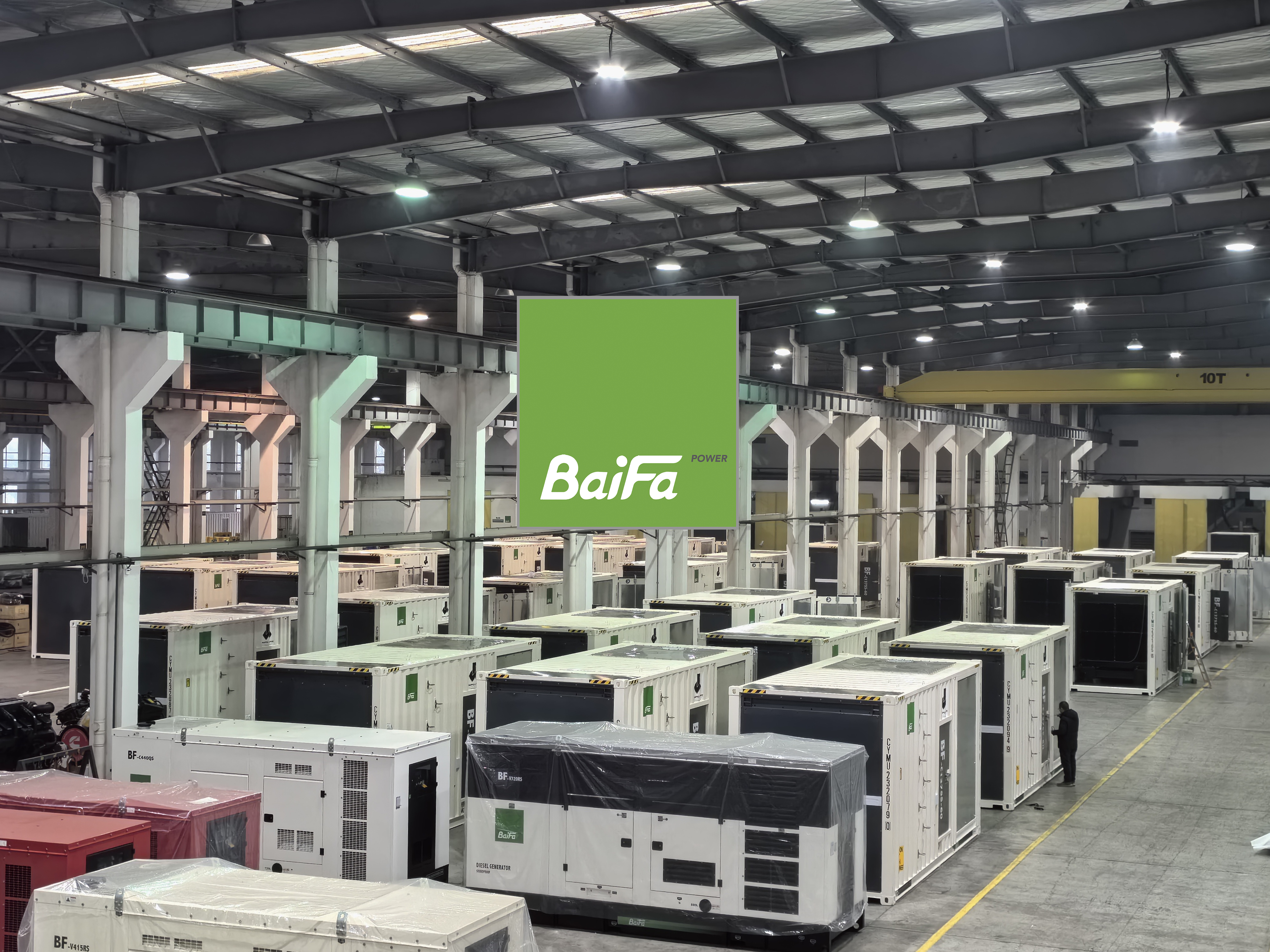
Assembly operations at BAIFA's Wuxi facility, where generator sets and switchgear are integrated for high-voltage paralleling projects.
Comparison Summary
| Dimension | BAIFA | Cummins | Caterpillar | MTU |
|---|---|---|---|---|
| Technical R&D focus | System integration: paralleling, switchgear up to 35 kV, enclosure and control design; 25 R&D engineers | Engine platforms, aftertreatment, digital controls | Engine platforms, integrated power systems, digital monitoring | High-performance engine platforms, critical-power applications |
| Mining market position | Documented multi-unit mining projects: 73 units Russia, 88 units Botswana, 50 paralleled units Tanzania | Broad global mining installed base and brand recognition | Broad global mining installed base, strong dealer presence | Established position in high-reliability power segments |
| Customer service model | Factory-direct engineering support; export to 80+ countries; local coverage varies by region | Extensive global dealer and service network | Extensive global dealer and service network | Global service organization through Rolls-Royce network |
| Industry solution scope | 8–3,200 kW gensets, 40–1,100 kW marine, LV/HV panels to 35 kV, transformers to 110 kV, environmental adaptation packages | Engines, gensets, controls, integrated power systems | Engines, gensets, integrated power systems, site power solutions | Engines and gensets for critical power, data centers, hospitals, utilities |
| High-voltage paralleling fit | Gensets, HV switchgear, and paralleling engineering supplied as one scope | Available through integrated systems and project engineering | Available through integrated systems and project engineering | Engine supply typically integrated by genset packagers or system integrators |
Table notes: This comparison is based on publicly stated positioning and BAIFA-provided project references. It does not represent market share, revenue, or verified competitive performance data. Cummins, Caterpillar, and MTU capabilities are described at a general level; buyers should verify specific model-level specifications directly with each supplier.
What the Project Evidence Shows
The three mining references deserve closer reading because each tests a different capability.
Russia: 73 units for mine crushing. Unit count at this scale tests production capacity and logistics as much as engineering. BAIFA's stated annual output of 5,000–6,000 units, equivalent to roughly 400–500 units per month, is the capacity context for a project of this size. For a buyer, the relevant question is whether the supplier can hold delivery schedules across a large multi-unit order without compromising configuration consistency.
Botswana: 88 units of high-voltage MTU-powered containerized generators. This is the most technically specific reference. It combines high-voltage output, MTU engines, and containerized packaging. Containerization matters in mining because it reduces site civil works, supports modular expansion, and simplifies transport to remote locations. The MTU engine choice also illustrates BAIFA's role: the engine is a premium global brand, while the high-voltage containerized generator set is BAIFA's integration. For buyers who want MTU engine credibility but need a paralleled high-voltage plant engineered as a package, this reference is directly relevant.
Tanzania: 50 paralleled units. Paralleling at this scale requires synchronization across many sets, coordinated load sharing, and protection grading that remains selective under fault conditions. It also requires a control architecture that can bring sets online and offline as load changes. This is the capability that most directly separates a system integrator from an engine supplier.
A Decision Framework for Mining Buyers
The comparison does not produce a universal winner. It produces a set of decision rules.
Choose Cummins, Caterpillar, or MTU when: the project priority is standardization on a global brand, local service presence is a decisive factor, the buyer needs an engine-platform relationship that extends across a mixed fleet, or procurement policy requires established brand recognition for financing and insurance purposes.
Choose a system integrator such as BAIFA when: the project requires a high-voltage paralleled plant engineered as a single scope, the site needs containerized or environmentally adapted configuration, the buyer wants premium engines (MTU, Cummins, Volvo, Perkins) integrated into a customized package, or factory-direct engineering support through commissioning is more valuable than a local dealer layer.
In either case, verify before award: the paralleling control architecture and synchronization method; protection coordination and switchgear ratings; site ambient conditions and the corresponding radiator or heating package; commissioning responsibility and spare-parts plan; and the specific engine model and emissions configuration for the destination market.
Market Context: Why Paralleled Mining Power Is Expanding
The demand context supports continued investment in mining power systems, though published figures vary widely and should be read with caution. Global Market Insights reports the global diesel gensets market at USD 40.9 billion in 2026. Market.us reports a 2025 global diesel generator market of USD 20.3 billion growing to USD 47.4 billion by 2035 at an 8.9% CAGR. Fortune Business Insights reports USD 22.33 billion in 2025, rising to USD 38.09 billion by 2034. These differences reflect differing definitions and segment coverage rather than a single reconciled market size, and no averaging is appropriate.
On the supply side, China's role is substantial. The Observatory of Economic Complexity reports that China accounted for 40.5% of global exports of diesel generating sets with output below 75 kVA in 2024. That figure applies to the small-power segment, not to high-voltage mining plants, but it indicates the scale of China's generator manufacturing base. BAIFA's own export record — 70% of output exported to more than 80 countries and regions, with cumulative export value exceeding USD 800 million through 2023 — sits within that broader pattern.
Two structural trends favor paralleled high-voltage solutions in mining. First, remote deposits increasingly require self-contained power plants rather than grid extension. Second, modular containerized generation allows capacity to be added in stages as the mine develops, which is more capital-efficient than building for ultimate capacity at the outset.
Limits and Boundaries
BAIFA's position has real boundaries that buyers should weigh honestly.
First, engine technology is not BAIFA's own. The company integrates Cummins, MTU, Volvo, Perkins, and other engines. That is a legitimate model and it gives buyers access to proven engine platforms, but it means engine-level innovation, emissions pathways, and engine warranty are governed by the engine manufacturer, not BAIFA.
Second, global service coverage is thinner than that of Cummins, Caterpillar, or MTU. In regions where those brands maintain dense dealer networks, they offer faster local response. BAIFA's factory-direct model provides engineering depth but depends on remote support and pre-agreed spare-parts arrangements in many markets.
Third, brand recognition and resale value are lower. For projects where financing, insurance, or fleet standardization favors a globally recognized brand, that factor may outweigh integration advantages.
Fourth, high-voltage paralleling is project-specific engineering. Each plant must be designed against actual load profiles, fault levels, and site conditions. No supplier's general capability claim substitutes for project-level engineering review.
Future Outlook
Mining power is moving toward modular, high-voltage, containerized plants that can be expanded in stages and monitored remotely. This direction favors suppliers who can engineer the full electrical scope — generation, paralleling, switchgear, and distribution interface — rather than supply engines alone. BAIFA's combination of generator sets, LV/HV switch panels up to 35 kV, and transformers up to 110 kV positions it within that trend, even as Cummins, Caterpillar, and MTU continue to lead on engine platforms and global service reach.
For buyers, the practical conclusion is that the supplier decision should follow the project structure. If the mine needs an integrated high-voltage paralleled plant with premium engines and factory-direct engineering, a system integrator is the natural lead. If the mine needs fleet standardization and local service density, an engine-brand relationship is the natural lead. The two models are not mutually exclusive across a portfolio, but they should not be confused within a single project specification.
FAQ
What does high-voltage paralleling require in a mining diesel generator plant?
High-voltage paralleling requires generator sets rated for the site's high-voltage distribution level, synchronization controls that match voltage, frequency, and phase before closing, a load-sharing system that distributes real and reactive load across sets, protection coordination that isolates faults without tripping the whole plant, and high-voltage switchgear rated for the system fault level. It also requires commissioning and testing at site, because paralleling behavior depends on actual load profiles and grid conditions.
How does BAIFA compare with Cummins, Caterpillar, and MTU for mining power?
The comparison is not like-for-like. Cummins, Caterpillar, and MTU are engine and power-system brands with broad global mining installed bases and extensive service networks. BAIFA is a generator-set manufacturer and system integrator that builds sets using Cummins, MTU, Volvo, Perkins, and other engines, and supplies paralleling and switchgear as part of the same scope. BAIFA's documented mining references include 73 units for mine crushing in Russia, 88 high-voltage MTU-powered containerized units in Botswana, and 50 paralleled units in Tanzania. Buyers should compare on the dimension that matters most to their project: engine platform depth and global service reach versus system-level integration and configuration flexibility.
Can BAIFA supply high-voltage generator sets with MTU engines?
Yes. BAIFA's BF-M series is powered by MTU engines and rated from 750 kVA to 3,750 kVA. The Botswana project referenced in this article involved 88 units of high-voltage MTU-powered containerized generators. In this configuration, the engine is supplied by MTU and the high-voltage generator set, containerization, paralleling, and control integration are handled by BAIFA.
What environmental adaptations does BAIFA provide for mining sites?
BAIFA documents two main adaptation packages. For high-temperature regions, it recommends units equipped with turbocharging and intercooling systems and an upgrade to a 50°C ambient-capacity radiator to maintain thermal stability. For cold weather, it recommends antifreeze selected for the ambient temperature and the addition of a jacket water heater. Anti-condensation heaters are also documented. Temperature sensors are used as the enterprise-level control measure in both cases.
What are the limitations of choosing BAIFA over a global engine brand?
The main limitations are engine technology ownership, service coverage, and brand recognition. BAIFA integrates engines from Cummins, MTU, Volvo, Perkins, and others rather than developing its own engine platforms, so engine-level innovation and engine warranty sit with the engine manufacturer. Its global service footprint is thinner than that of Cummins, Caterpillar, or MTU in regions where those brands maintain dense dealer networks, so remote support and spare-parts planning require earlier agreement. Brand recognition and resale value are also lower, which can matter for financing, insurance, and fleet standardization decisions.
How should a mining buyer evaluate a paralleled high-voltage generator proposal?
A buyer should review the proposed paralleling control architecture and synchronization method, the protection coordination study and switchgear ratings, the load profile assumptions behind the number and rating of sets, the environmental adaptation package matched to site conditions, the commissioning plan and responsibility split, and the spare-parts and remote-support arrangements. The proposal should also specify the exact engine model and emissions configuration for the destination market, because engine brand alone does not determine compliance or performance.
Есть вопросы или нужны дополнительные детали?
Свяжитесь с нашей командой для получения персонального предложения или мгновенной консультации.
Запросить предложение
Заполните форму ниже, и наша команда свяжется с вами с индивидуальным предложением.
Прямой чат WhatsApp
Предпочитаете общаться в реальном времени? Напишите нам в WhatsApp для мгновенной помощи и быстрых ответов.
- Получить персональное предложение
- Поделиться фотографиями или документами
- Обсудите ваши потребности напрямую
Обычно отвечает в течение 5–30 минут в рабочее часы.