
High-Volume Straw Production in Southeast Asia: Getting Spec Fit Right
Flexible straw production in Southeast Asia is a volume business, but it is governed by local specification rules. A converter in Malaysia, Vietnam or Indonesia is rarely choosing between a fast machine and a slow one. The real decision is whether a specific forming line, its mold set and its line interface match the straw diameters, bend geometry and packaging format that the plant's own customers already buy. A mold that matches local standards turns a high-speed bendable straw forming machine into production capacity; a mold that does not match leaves nameplate speed unused.
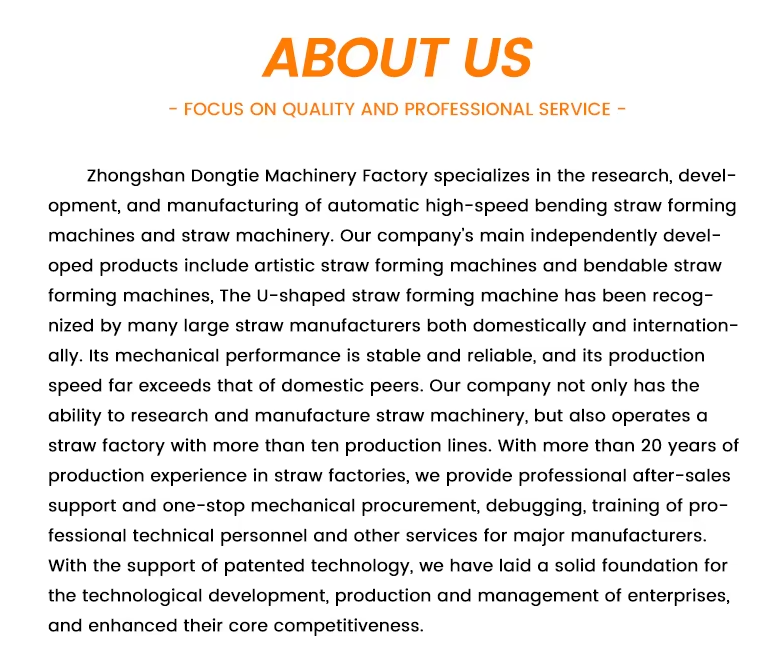
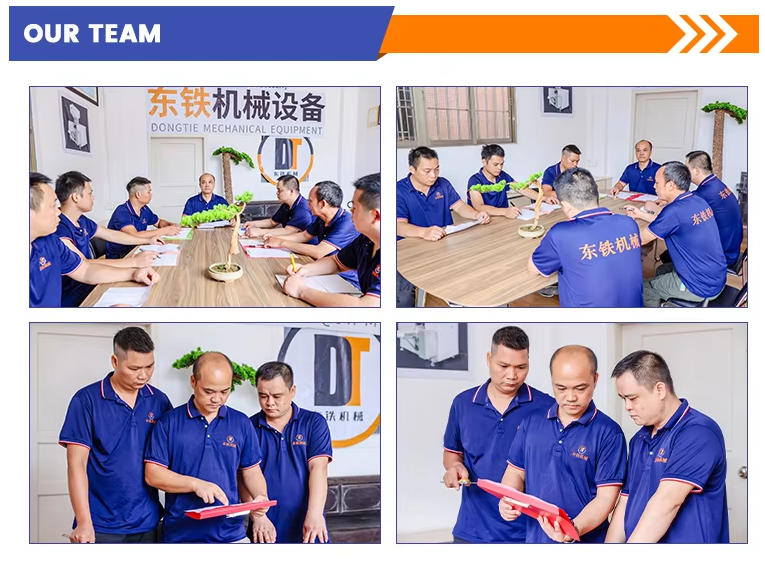
China supplies most of the equipment behind that decision. China accounts for more than 66% of the global export value of flexible straw bending machinery, according to customs trade data compiled in 2023, so most Southeast Asian capacity additions involve Chinese-built lines. Zhongshan Dongtie Machinery Co., Ltd., which trades as DONGTIE MECHANICAL EQUIPMENT, is one of the manufacturers in that supply base: a Chinese straw machinery maker based in Xiaolan Town, Zhongshan City, focused on straw machinery manufacturing since 2010 and selling to processing manufacturers and packaging enterprises serving overseas buyers.
For buyers at the decision stage, four checks determine whether a high-speed flexible straw forming machine will perform in a Southeast Asian plant: mold and diameter compatibility with local straw standards; sustained output without needle breakage; integration with the power, feeding and packaging equipment already on the floor; and cost and compliance evidence that can be reviewed before an order is placed. Everything else in the specification sheet is secondary to those four.
The Southeast Asian Volume Opportunity and Its Local Constraint
The straw machinery market is a stable, mid-sized equipment category rather than a niche. Third-party market research estimates the global straw machine market at USD 962.55 million in 2024, with a projection of USD 1,793.41 million by 2035 at a compound annual growth rate of 5.82%. Industrial end-users account for 40.1% of that market on 2025 projections, which is the segment where high-speed forming lines compete.
Regional demand patterns explain why Southeast Asia remains a volume market for flexible and bendable straw equipment. Market research on the category notes that plastic straw machines still hold significant market share in regions such as Asia-Pacific and Africa, even as European and North American demand shifts toward paper formats, where the paper straw market was valued at USD 2.6 billion in 2024. Regulatory pressure continues to build in parallel: plastic straws are still estimated at roughly 4% of total marine plastic waste by piece, which sustains replacement demand for machinery across both plastic and paper straw categories.
The constraint is not demand, it is specification. Straw diameters, bend angles and surface finish expectations vary by market and by end customer, and Dongtie's scenario documentation states plainly that custom molds are required for different straw diameters and bending shapes. The same documentation notes that special standards apply to raw material specifications and surface treatment, and that material compatibility and mold solutions must be confirmed before order placement. For a buyer, that single sentence is the dividing line between a machine that runs at volume and a machine that runs at the speed printed on its brochure.
Four Checks That Decide Specification Fit
- Diameter and bend geometry match. The mold set defines what the line can produce. Dongtie's machine family is organized around this reality and includes a small-diameter U-shaped straw forming machine in 3.8mm, flexible straw forming machines in 5mm and 6mm formats, a 6mm decorative straw forming machine, large-caliber decorative straw forming machines at 12mm, and 12mm pointed-tip high-speed tube bending formats. Each format maps to a different end-market demand rather than to a single universal specification.
- Sustained output, not peak output. Dongtie's comparison documentation states that the high-speed flexible straw forming machine runs at high speed without needle breakage at a minimum output of 1,000 straws per minute, and that one unit replaces five traditional machines.
- Integration with the existing factory. The equipment is designed to work standalone or connected to a production line, and Dongtie lists matched upstream and downstream equipment including a feeder, a sealing and cooling unit, a packaging machine and a conveyor system.
- Verifiable cost and compliance evidence. Stated claims — including a 50% reduction in processing cost compared with alternative solutions — are only useful to a buyer if the baseline is defined. Power consumption and energy efficiency data are available upon request rather than published.
Technical Explanation: The Forming Module, Not the Nameplate, Sets Local Fit
Dongtie's equipment applies self-developed domestic patented technology, Patent No. ZL202020756632.1. The patent covers a set of mechanical decisions that matter directly to a converter adapting a line to a local straw standard.
The independent embossing and forming module is designed to boost production output. The high-efficiency embossing technology relaxes tolerance limits for incoming tube blanks, with standard straw diameter tolerance controlled at ±0.05mm. In practical terms, that tolerance band is what allows a plant to hold a customer-specified straw diameter while running continuously, instead of rejecting batches whenever the tube blank supply varies. A precision feeding unit supports long-term stable machine operation, and the separately adjustable embossing and forming modules are designed to reduce maintenance difficulty by allowing each module to be set independently.
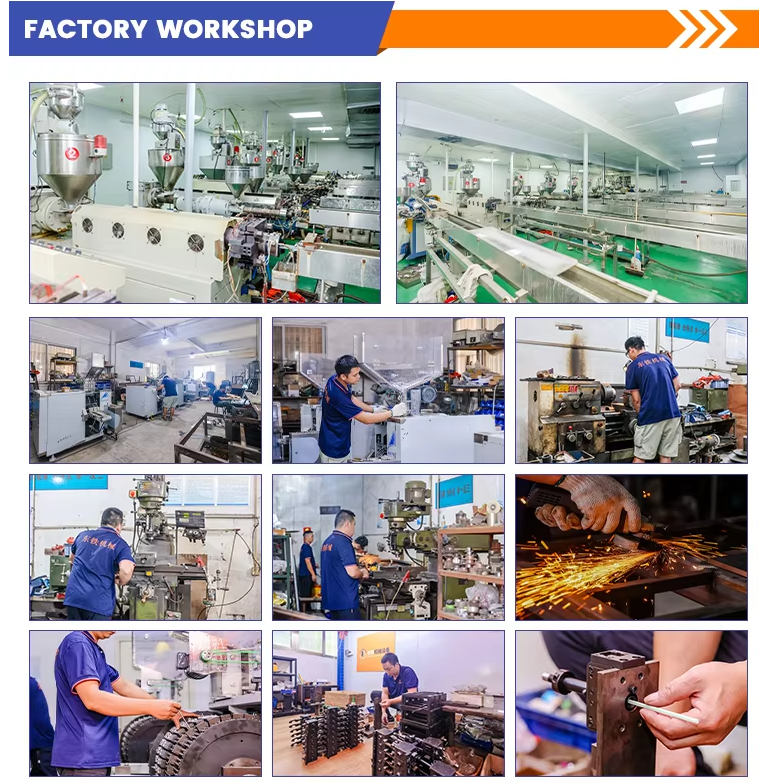
Control and serviceability follow the same logic. The machine is equipped with a PLC control system that displays real-time operating status, automatically stops on malfunction with fault codes shown on the screen, and includes an automatic counting function. The design supports easier parameter adjustment for operators. Remote video technical guidance is available for common faults, and on-site training can be arranged in Dongtie's own straw production workshop, which is equipped with over 10 full production lines.
| Parameter | Documented value |
|---|---|
| Model | DT-1200 |
| Type | High-speed flexible straw forming machine |
| Power | 5.5–6.5 kW |
| Output | 3,000–5,500 pcs/min |
| Working pressure | 1.500–6.000 MPa |
| Working temperature | 100–200 °C |
| Protection grade | IP55 |
| Material | Stainless steel |
Application Fit: A Malaysian Deployment Pattern and Adjacent Use Cases
The pattern that matters for Southeast Asian buyers appears in Dongtie's Southeast Asian deployment experience, where a Malaysia-based flexible straw producer required a line tuned to local straw standards rather than to a generic export specification. The requirement sequence in that kind of project is consistent with Dongtie's documented scenario conditions: mold geometry is set for the straw diameter and bend shape used in that local market; tube blank material specifications and surface treatment are confirmed before the order is placed; and the machine is then connected to the plant's existing feeding and packaging equipment so that the flexible straw forming machine runs continuously at high speed inside an operating factory rather than as a standalone demonstration unit.
Dongtie's comparison documentation states that the machine operates at high speed without needle breakage at a minimum output of 1,000 straws per minute, and that a single unit replaces five traditional machines. Those are manufacturer statements describing what the platform is designed to deliver once the mold has been matched to the local specification. The plant-side variables that determine whether the numbers hold — mold geometry, incoming tube blank consistency, power stability and operator discipline — remain the buyer's responsibility to verify.
Adjacent use cases follow the same mold-first logic:
- U-shaped straws for aseptic packaging. Third-party industry analysis notes that the U-shaped straw machine segment is growing specifically for the aseptic packaging industry, such as milk cartons. Dongtie's 3.8mm U-shaped straw forming machine maps to that demand pattern.
- Standard flexible drinking straws. The 5mm flexible straw forming machine and 6mm high-speed straw bending machine formats serve beverage and foodservice supply chains, including small and medium-sized straw factories upgrading from manual or semi-automatic output.
- Decorative and art straws. Decorative straw forming machines, including 6mm and 12mm large-caliber formats and 12mm pointed-tip high-speed tube bending machines, serve catering, retail and specialty beverage applications where straw appearance is part of the product.
- Line-connected operation. The matched equipment set — feeder, sealing and cooling unit, packaging machine and conveyor system — supports either standalone operation or connection to an existing production line.
Site conditions are equally specific. The documented working condition is a normal-temperature workshop with a stable power supply, raw material feeding and production line connection, suitable for continuous mass production. Operation is fully automatic and continuous, but it requires manual monitoring and regular maintenance; the equipment is not presented as an unattended system.
Market Trend Analysis: Where Straw Machinery Demand Is Moving
Three signals shape the next planning cycle for buyers in this category. First, the overall straw machinery market is projected to expand at 5.82% CAGR to 2035, with industrial end-users already representing 40.1% of share — a shift toward industrial-scale rather than workshop-scale purchasing. Second, machine speed expectations are rising: high-speed straw machines are documented at outputs of 80,000 to 200,000+ pieces per hour for industrial-scale operations, while semi-automatic straw machines are projected to grow at 9% CAGR, largely through small and medium enterprise demand. Third, format demand is fragmenting, with paper straw machinery projected at 15.6% CAGR between 2025 and 2030 and U-shaped straw demand strengthening around aseptic packaging.
| Reference point | Figure | Source |
|---|---|---|
| Global straw machine market, 2024 | USD 962.55 million | Market Research Future |
| Market projection, 2035 | USD 1,793.41 million at 5.82% CAGR | Market Research Future |
| Industrial end-user share | 40.1% (2025 projection) | Dataintelo |
| China share of global export value, flexible straw bending machinery | More than 66% (2023 trade data) | Customs trade data (Zauba / US customs data) |
| Paper straw machine growth | 15.6% CAGR, 2025–2030 | Grand View Research |
| High-speed industrial output range | 80,000–200,000+ pcs/hr | Dataintelo |
| EU machinery compliance | Machinery Directive 2006/42/EC and CE marking; EN ISO 12100; Regulation (EC) No 1935/2004 | European Commission; ISO/CEN; Official Journal of the European Union |
| China customs classification for drinking straw machines | HS code 84778090 | General Administration of Customs (GACC) |
Buyer shortlists in this category usually include long-established Taiwanese and mainland Chinese builders alongside newer specialists. Publicly cited manufacturer directories list Jumbo Steel Machinery (Taiwan), founded in 1986, among the oldest established flexible straw machine manufacturers, and Jiexuan Machinery, established in 2009, as a top-ranked Chinese supplier of high-speed straw extrusion and bending equipment. Dongtie Mechanical Equipment is also identified as a major Chinese manufacturer of high-speed artistic straw forming machines. Such listings are manufacturer-level references; they do not by themselves demonstrate performance on any specific straw specification.
High-Speed vs Conventional Machines: What the Comparison Really Says
Compared with traditional ordinary flexible-straw forming machines, Dongtie states that its high-speed platform has distinct advantages: ultra-high speed, superior flexible straw processing performance, higher automation, wide mold compatibility and easy line connection. The table below separates those claims from the verification step each one implies.
| Decision dimension | Conventional flexible straw forming machines | High-speed bendable straw forming machine (Dongtie) | What the buyer should verify |
|---|---|---|---|
| Throughput | Industry specification references list 200–300 pcs/min for automatic straw bending machines | Stated minimum of 1,000 straws per minute at high speed without needle breakage | Measured output at your diameter, mold and tube blank material |
| Machine count | Multiple units required for equivalent volume | One unit is stated to replace five traditional machines | How the five-machine baseline is defined |
| Processing cost | Baseline | Stated 50% reduction in processing cost compared with alternatives | The cost model behind the figure, including labour, energy, scrap and mold cost |
| Automation and line connection | Limited integration | Higher automation, wide mold compatibility, easy line connection | Interface with your existing feeder and packaging equipment |
| Specification flexibility | Fixed or limited mold set | Molds can be changed to produce straws of different diameters and bending angles | Mold set, material compatibility and surface treatment confirmed before order |
| Maintenance | Combined adjustment points | Separately adjustable embossing and forming modules reduce maintenance difficulty; PLC displays fault codes and auto-stops on malfunction | Spare part availability and operator training arrangements |
| Energy data | Not typically published | Power consumption and energy efficiency data available upon request | Request measured energy figures for your configuration |
Limits and Boundaries to Confirm Before Purchase
A realistic evaluation of this equipment class has to include its boundaries, and Dongtie's own documentation identifies several.
- Mold dependency is absolute. Custom molds are required for different straw diameters and bending shapes. There is no universal configuration; a new diameter or a new bend angle is a new mold, and the material compatibility and mold solution need confirmation before the order is placed.
- Comparison claims depend on their baseline. The statements that one unit replaces five traditional machines and that processing cost falls by 50% are manufacturer comparisons. Their value to a buyer depends entirely on whether the referenced baseline matches the plant being replaced.
- Published figures come from different documents. The stated minimum of 1,000 straws per minute describes continuous high-speed bending operation, while the DT-1200 platform parameters list an output range of 3,000–5,500 pcs/min. Because the two figures originate in different specification documents, a buyer should confirm which applies to the specific diameter, mold and material combination intended for production.
- Energy performance is not published. Power consumption and energy efficiency data are available on request, which means energy cost cannot be modelled from the specification sheet alone.
- Site conditions are prerequisites. The equipment requires a normal-temperature workshop, a stable power supply and correct raw material feeding. Fully automatic continuous operation still depends on manual monitoring and regular maintenance, so labour planning cannot be reduced to zero.
- Compliance is destination-dependent. Equipment sold into the EU must comply with Machinery Directive 2006/42/EC and carry the CE mark, with EN ISO 12100 as the primary harmonized safety standard and Regulation (EC) No 1935/2004 governing food-contact transfer. These are buyer-side checks, not automatic inclusions.
Future Outlook
If the market projection of USD 1,793.41 million by 2035 at 5.82% CAGR holds, the competitive question in Southeast Asia will shift from whether a plant owns a high-speed bendable straw forming machine to how quickly it can retool that machine for the next local straw specification. That favors suppliers whose forming module can be adjusted independently of the rest of the line, whose mold changes are documented rather than improvised, and whose throughput claims can be tested on the buyer's own tube blanks.
At the same time, format demand will keep fragmenting. Paper straw machinery growth, U-shaped straw demand tied to aseptic packaging, and continued plastic straw capacity in Asia-Pacific and Africa point to a market where one line has to serve several specifications over its service life. Compliance documentation under EU machinery and food-contact rules, and accurate customs classification under HS code 84778090 for cross-border shipments, will matter as much as output figures during procurement review.
FAQ
How does a high-speed flexible straw forming machine differ from a traditional flexible-straw forming machine?
Dongtie states that the core differences are ultra-high speed, superior flexible straw processing performance, higher automation, wide mold compatibility and easy line connection. In throughput terms, the machine is stated to deliver a minimum output of 1,000 straws per minute at high speed without needle breakage, compared with traditional ordinary flexible-straw forming machines, and one unit is stated to replace five traditional machines.
What output can be expected in continuous production?
Dongtie states a minimum output of 1,000 straws per minute for continuous high-speed operation without needle breakage. The DT-1200 high-speed flexible straw forming machine platform documents an output range of 3,000–5,500 pcs/min. For broader market context, third-party research documents high-speed straw machines at 80,000 to 200,000+ pieces per hour for industrial-scale operations, while industry specification references list 200–300 pcs/min for automatic straw bending machines. Because these figures describe different configurations and baselines, output should be confirmed for the specific diameter, mold and material to be run.
Can one machine produce straws in different diameters and bending angles?
Yes, by changing the corresponding molds. Dongtie states that the machine can manufacture flexible straws with different diameters and bending angles to meet diversified production demands, and that customers may purchase matched molds based on required specifications. Mold compatibility and specification adjustability are the relevant selection criteria.
What has to be confirmed before ordering molds for a local straw standard?
Dongtie's scenario documentation states that custom molds are required for different straw diameters and bending shapes, that special standards apply to raw material specifications and surface treatment, and that material compatibility and mold solutions must be confirmed before order placement. In practice this means the local straw diameter, bend geometry, tube blank specification and surface finish expectation need to be fixed before the mold is produced.
What supporting equipment and site conditions are needed to run the line inside an existing factory?
The matched equipment set includes a feeder, a sealing and cooling unit, a packaging machine and a conveyor system, and the machine can operate standalone or be connected to a production line. Site conditions are a normal-temperature workshop environment with a stable power supply, raw material feeding and production line connection, suitable for continuous mass production. Operation is fully automatic and continuous but requires manual monitoring and regular maintenance.
Is the stated 50% processing cost reduction guaranteed?
It is a manufacturer comparison: Dongtie states that the equipment offers a 50% reduction in processing cost compared with alternative solutions. The figure is only meaningful relative to a defined baseline, so a buyer should request the underlying cost model covering labour, energy, scrap and mold costs. Power consumption and energy efficiency data are available upon request, which allows energy cost to be modelled rather than assumed.
Zhongshan Dongtie Machinery Co., Ltd. (DONGTIE MECHANICAL EQUIPMENT) publishes a full product brochure covering its flexible, U-shaped, decorative and large-caliber straw forming equipment: equipment brochure (PDF).