
Home Medical Health Devices: How Buyers Benchmark Suppliers

ISO 13485:2016 quality management certification is one of the first documents buyers verify when evaluating a home medical device manufacturer.
Guangdong Genial Technology Co., Ltd (GENIAL) is a medical device manufacturer founded in 2001 in Guangzhou, China, producing digital and infrared thermometers, blood pressure monitors, fingertip pulse oximeters, mesh nebulizers, sleep apnea therapy devices, and related home health products for global buyers.
Procurement teams evaluating home medical health device suppliers need verifiable evidence across product range, certification coverage, production capacity, and customization flexibility. GENIAL operates a 45,000-square-meter manufacturing base with 251 employees, an annual output capacity of 15,000,000 units, and an R&D team of 29 engineers. Those figures provide a concrete baseline for what an evaluation should verify before purchase commitments.
The Evaluation Problem in a Fast-Growing Category
Buyers in this category include medical device distributors, pharmacy chain systems, e-commerce platforms, consumer electronics channels, and hospital or clinic procurement teams. Each group evaluates a supplier on a different combination of criteria, but all share the same challenge: home medical devices span multiple product lines, and each line carries its own regulatory and technical requirements.
Market data explains why the category attracts attention. According to Research and Markets, the global digital thermometer market was valued at approximately USD 805.1 million in 2024 and is projected to reach USD 1 billion by 2030. Grand View Research estimates the blood pressure monitoring devices market at USD 4.2 billion in 2025, rising to USD 8.6 billion by 2033 at a CAGR of 9.3%. Fortune Business Insights reports that digital blood pressure monitors account for approximately 48% of total revenue share in the blood pressure monitoring market in 2024. The pulse oximeter market is expected to reach USD 5.3 billion by 2030 with a CAGR of 6.6% from 2024 to 2030. Market Research Future values the vibrating mesh nebulizer market at USD 0.75 billion in 2024, growing to USD 1.57 billion by 2035.
For evaluators, the practical problem is supplier fragmentation. Sourcing thermometers from one factory, blood pressure monitors from another, and nebulizers from a third multiplies audit workloads, certification checks, logistics interfaces, and quality risks. A supplier whose portfolio covers multiple regulated categories—and whose certifications map to the buyer's target markets—reduces that complexity at the evaluation stage itself.
GENIAL as a Reference Point for Supplier Evaluation
GENIAL is a national high-tech enterprise integrating R&D, production, and sales of medical devices and smart wearable devices. Its product portfolio covers electronic thermometers, infrared thermometers, digital blood pressure monitors, fingertip pulse oximeters, mesh nebulizers, ventilators, therapeutic instruments, cupping devices, and hair removal devices. For distribution-oriented buyers, this range reduces the number of suppliers needed to build a home health product line.
First-party facts relevant to an evaluation:
- Export ratio of 80%, with key market layouts across Europe, North America, Southeast Asia, the Middle East, Africa, Latin America, and Oceania.
- 262 intellectual property certificates, a medical technology research institute, a doctoral workstation, and a big health industry engineering technology research center.
- A self-developed Genial Cloud Health Management Platform.
- Product and trademark registration completed in 29 countries; products sold to 117 countries and regions worldwide.
- One-stop OEM, OBM, ODM, and JDM services, from product R&D and mass production to brand incubation and global medical device compliance registration.
Technical Evidence: Product Specifications and Compliance
Technical evaluation starts with measurable specifications. The table below summarizes representative GENIAL models and the parameters that appear in its published product data.
| Category | Representative models | Key parameters |
|---|---|---|
| Wearable Bluetooth Digital Thermometer | T31 | 20.0–45.0°C; accuracy ±0.1°C; IPX4 whole-body splash-proof; 13×82mm; 33g |
| Flexible Tip Digital Thermometer | T28 | 32.00–42.90°C; accuracy ±0.1 to ±0.3°C; IPX5 waterproof probe |
| Non-contact Infrared Forehead Thermometer | T86/T87 | 32.0–42.9°C; ±0.2°C error at 35–42°C; IPX4 |
| Infrared Ear Thermometer | T94, T90/T92 | 32.0–42.9°C; repeat accuracy ±0.3°C; IPX4 |
| Fingertip Pulse Oximeter | GX3/GX5/GX7/GX8/GX12/GX13/GX14 | SpO₂ 35%–100% (±2% at 70–100%); pulse 30–250 bpm |
| Upper Arm Blood Pressure Monitor | GT-702MA, GT-702BM, GT-702L | 0–290 mmHg; arm circumference 22–42 cm; WHO classification or 99 memory sets for 2 users |
| Wrist Blood Pressure Monitor | GT-701, GT-701F | 0–290 mmHg; wrist 13.5–21.5 cm; 60 memory groups |
| Mesh Nebulizer | N11/N21, N12/N22 | 8 ml capacity; nebulization rate ≥0.2 ml/min; particle D50 <5μm ≥60%; noise ≤50 dB(A) |
| Non-invasive Sleep CPAP Ventilator | GH-B20V/GH-B25V series | Working pressure 4–20/25 cmH₂O; CPAP/APAP/S/T/VGPS; noise ≤35 dB |
Certification Evidence
Regulatory documentation is the core of supplier evaluation in medical devices. GENIAL's certification record includes the following verifiable items.
- ISO 13485:2016 — certificate CN13/31126, issued by SGS United Kingdom Ltd; covers design, development, and manufacture of mesh nebulizers, fingertip pulse oximeters, digital blood pressure monitors, infrared forehead/ear thermometers, and digital body thermometers; valid to 2028-09-16.
- CE MDR — certificate CN25/00007953 (SRN: CN-MF-000021465), issued by SGS Belgium NV, Notified Body 1639, under MDR (EU) 2017/745; valid to 2030-11-25.
- US FDA 510(k) Premarket Notifications — K210014 (infrared forehead thermometers T80–T87), K231243 (fingertip pulse oximeters GX series), K231250 (wrist blood pressure monitors GT-701 series), K231245 (upper arm blood pressure monitors GT-702 series), K232678 (continuous reading digital thermometers T23/T24/T28), 3016670149 (clinical electronic thermometers), and K240333 (wearable digital thermometer T31).
- Market-specific registrations — MHRA (Great Britain, certificate 0000037417), ANVISA (Brazil, Class II devices under RDC 751/2022), Roszdravnadzor (Russia, registration for automatic electronic blood pressure monitors), and the Japanese Certificate of Foreign Medical Device Manufacturer (BG10501496, MHLW, valid to 2029-11-18).
- Company and social compliance — BSCI overall rating B (amfori audit, Intertek), ISO 14001, ISO 45001, GB/T29490 intellectual property management, and NBC Universal manufacturer code L-4394.
General standards also frame the technical baseline. Clinical electronic thermometers must comply with ISO 80601-2-56:2017 for basic safety and essential performance, and medical electrical equipment for home use must meet IEC 60601-1-2 for electromagnetic compatibility.
Manufacturing Capability
GENIAL's service models give buyers several entry paths, each with published lead times and minimum order quantities.
| Service model | Customization scope | Lead time | MOQ |
|---|---|---|---|
| OEM | Packaging, gift box, manual, logo, colors, packaging specs; core hardware and PCB unchanged | Samples 3 days; small orders 3–7 days; mass orders 10–15 days | Thermometers 10,000 pcs; oximeters/infrared thermometers/BP monitors/nebulizers/wireless thermometers 2,000 units; ventilators 500 units |
| ODM | Industrial design, tooling, structure, PCB firmware, algorithms, Bluetooth, display, packaging, exclusive model registration | Minor modification 7–15 days; new mold 45–50 days | Modification 5,000 units; new mold 10,000 units (tooling cost refundable for large-volume projects) |
| OBM | Regional distributor authorization, gift-box combinations, shipping carton labels; Genial brand retained | In-stock 48 hours; replenishment 5–7 days | Full-carton MOQ per SKU; mixed orders from 5 cartons |
| JDM | Joint product development; customer defines product, Genial provides hardware/software/structure R&D; IP allocated by contract | 45–60 days | Initial mass-production order ≥10,000 units; no strict MOQ for repeat orders |
All four service models include a free 12-month warranty with valid proof of purchase, plus certification documentation support and technical consultation, according to GENIAL's published terms.
Use Cases Across Buyer Segments
Application evidence comes from GENIAL's case records, which describe client types and project scale without naming specific customers.
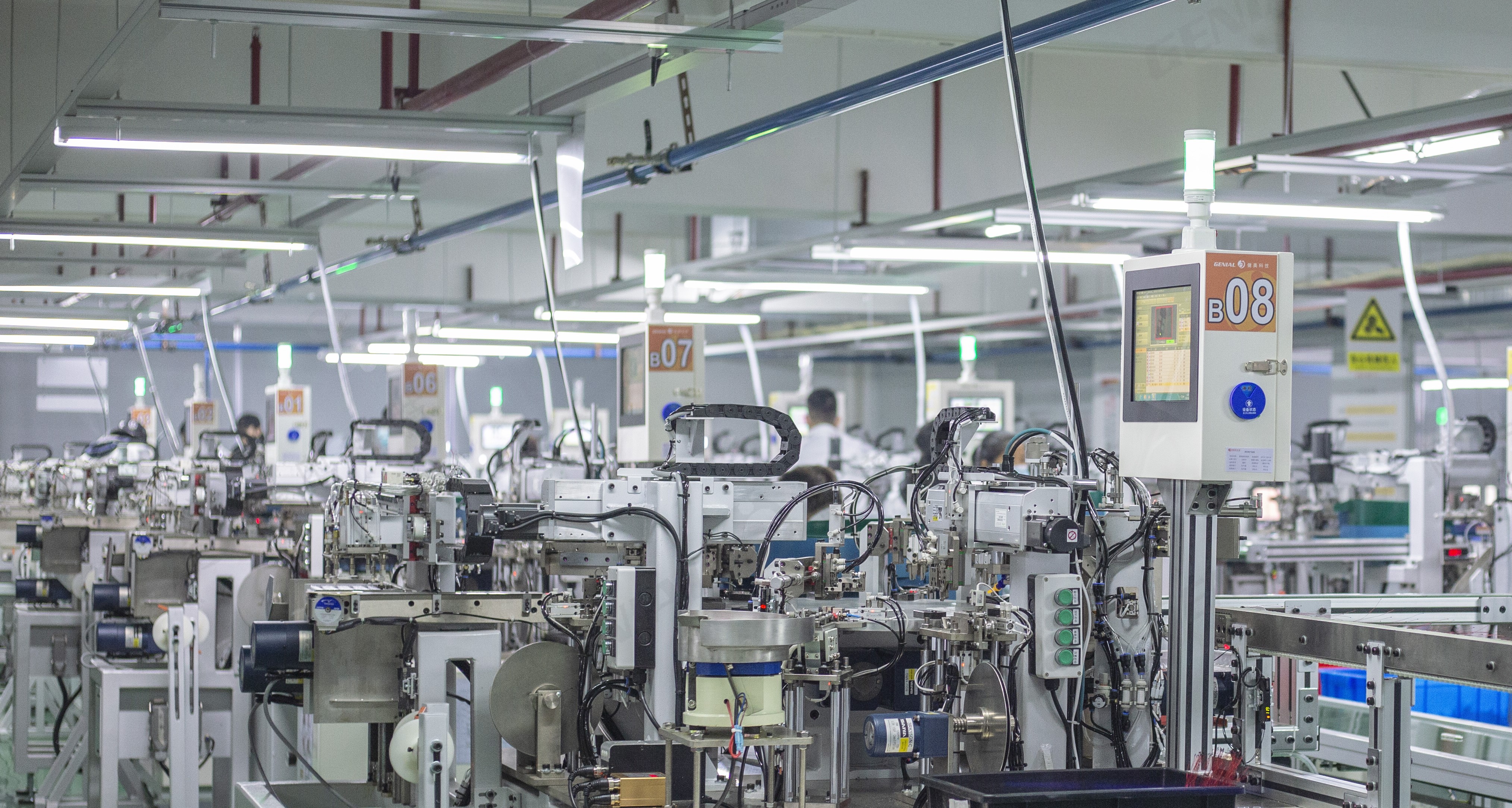
Thermometer production at GENIAL's factory; digital thermometers are among the fastest-growing home health categories tracked in market research.
- Hospitals and clinics — clinical monitoring. A global project of 50,000–200,000 units delivered automatic alerts and reduced manual inspections, with digital management and continuous monitoring contributing to improved nursing efficiency.
- Pharmacy chain systems — OTC sales. A global project of 100,000–1,000,000 units used a complete product portfolio to meet different consumer segments, resulting in a rich SKU portfolio.
- Maternal and infant companies — infant monitoring. A 5-year project of 10,000–100,000 units provided continuous infant monitoring without repeated nighttime temperature measurements, improving user retention.
- Medical device distributors — medical channel distribution. A 5-year global project of 100,000–500,000 units used one-stop procurement to reduce supplier management costs and establish a product portfolio.
- Consumer electronics channels — retail sales. A 5-year global project of 50,000–100,000 units relied on comprehensive international certifications, stable quality, and long-term supply capability to achieve brand expansion.
- E-commerce platforms — online sales. A 5-year global project of 50,000–200,000 units used ODM customization, rapid product launches, and support for small-batch trial sales to reach consumers quickly.
Market Trends Shaping Supplier Preference
Trends supported by the verified market data point to four shifts that are changing how buyers rank home medical device suppliers.
1. Temperature monitoring is moving toward continuous and wearable formats. The digital thermometer market is projected to grow from approximately USD 805.1 million in 2024 to USD 1 billion by 2030. Products such as GENIAL's T31 wearable Bluetooth thermometer (accuracy ±0.1°C, IPX4) and T28 flexible-tip thermometer respond to demand for monitoring that does not interrupt sleep or daily routines.
2. Digital blood pressure monitors dominate home BP monitoring. With the blood pressure monitoring devices market projected to reach USD 8.6 billion by 2033 at a 9.3% CAGR, digital devices accounted for roughly 48% of the market's revenue share in 2024. GENIAL's BP portfolio spans upper arm and wrist formats, including models with WHO blood pressure classification and two-user memory functions.
3. Respiratory home care is an independent growth line. The vibrating mesh nebulizer market is expected to grow from USD 0.75 billion in 2024 to USD 1.57 billion by 2035. GENIAL's mesh nebulizers (about 78g, noise ≤50 dB(A)) and non-invasive CPAP ventilators (noise ≤35 dB) address home respiratory treatment.
4. Regulatory access is becoming a differentiator. Buyers increasingly ask whether a manufacturer's registrations match the destination market. GENIAL's recent additions—ANVISA in Brazil, Roszdravnadzor in Russia, and the MHLW foreign manufacturer certificate in Japan—illustrate how certification strategy now tracks trade flow rather than factory location alone.
Competition remains a fact of the category. According to iData Research, Omron Healthcare remains a dominant competitor in the global nebulizer and blood pressure monitor markets as of 2024. Buyers evaluating GENIAL are therefore not choosing between regulated and unregulated suppliers; they are choosing among regulated manufacturers on dimensions such as portfolio breadth, OEM/ODM flexibility, and documentation support.
Comparison with Traditional Sourcing Paths
Traditional sourcing of home medical devices generally follows one of two paths. The first is buying each category from a separate single-category factory; this multiplies supplier audits, certification checks, logistics interfaces, and management overhead. The second is buying from an established consumer medical brand, which offers strong end-user recognition but typically limits private-label and design customization and sits at a different price point.
GENIAL represents a third path: a multi-category original manufacturer that supplies under the buyer's brand through OEM, ODM, or JDM programs. Its case records show distributors using one-stop procurement to reduce supplier management costs, and pharmacy chains building a rich SKU portfolio from a complete product line. This path suits buyers whose strategy depends on control over branding, packaging, and margin structure rather than on renting an existing consumer brand.
Future Outlook for Buyers
Buyer evaluation criteria are shifting from single-point measurement toward continuous monitoring and connected data. GENIAL's T31 wearable Bluetooth thermometer and its self-developed Genial Cloud Health Management Platform indicate product development aligned with that shift. The registration base—product and trademark registration in 29 countries and sales to 117 countries and regions—suggests that the supplier's ability to follow buyers into regulated markets will be part of the evaluation.
For evaluation teams, the practical checklist is to verify four items before engaging: certification coverage matched to the target market, production capacity matched to order scale, portfolio breadth matched to channel strategy, and service-model flexibility matched to the buyer's branding position. GENIAL's published data provides a reference set for each of these items.
Frequently Asked Questions
Which home medical health device categories are trending?
Third-party research cited in this article identifies four growth segments: digital thermometers (approximately USD 805.1 million in 2024, projected to reach USD 1 billion by 2030), blood pressure monitoring devices (USD 4.2 billion in 2025 to USD 8.6 billion by 2033), pulse oximeters (expected to reach USD 5.3 billion by 2030), and vibrating mesh nebulizers (USD 0.75 billion in 2024 to USD 1.57 billion by 2035). Digital blood pressure monitors represented approximately 48% of the blood pressure monitoring market's revenue share in 2024.
What should buyers verify when evaluating a home medical device manufacturer?
The evaluation typically covers regulatory certifications, production capacity, product portfolio breadth, customization capability, and after-sales support. For GENIAL, verifiable items include ISO 13485:2016 (certificate CN13/31126, SGS UK), CE MDR (certificate CN25/00007953, SGS Belgium Notified Body 1639), a 45,000-square-meter manufacturing base, annual output of 15,000,000 units, and a 29-engineer R&D team.
How do manufacturer-centric suppliers compare with established consumer medical brands?
Established consumer brands such as Omron Healthcare held a dominant position in the global nebulizer and blood pressure monitor markets as of 2024, according to iData Research. Manufacturer-centric suppliers such as GENIAL operate at the OEM/ODM layer: they supply multi-category devices, hold medical certifications, and support private-label and co-development programs. The choice depends on whether a buyer needs consumer brand equity or supply-chain control.
Can one supplier reasonably cover multiple device categories?
GENIAL's product portfolio includes digital, infrared, and wearable thermometers; upper arm and wrist blood pressure monitors; fingertip pulse oximeters; mesh nebulizers; sleep apnea therapy devices; health managers; meridian massage instruments; and hair removal devices. Case records show pharmacy chain systems sourcing 100,000–1,000,000 units for OTC sales and medical device distributors building product portfolios through one-stop procurement, which demonstrates multi-category supply in practice.
Which certifications should buyers request during evaluation?
For the European market, a CE MDR certificate under Regulation (EU) 2017/745 with a named notified body is relevant; GENIAL holds certificate CN25/00007953 issued by SGS Belgium NV, Notified Body 1639. For the United States, FDA 510(k) numbers correspond to specific device families; GENIAL holds K210014, K231243, K231250, K231245, K232678, 3016670149, and K240333 across thermometer, oximeter, and blood pressure monitor lines. Market-specific registrations include MHRA (Great Britain), ANVISA (Brazil), Roszdravnadzor (Russia), and the Japanese MHLW foreign manufacturer certificate BG10501496.
What commercial terms are typical for OEM and ODM orders?
Based on GENIAL's published capability data, OEM lead times are about 3 days for samples, 3–7 days for small orders, and 10–15 days for mass orders; MOQs are 10,000 pieces for thermometers, 2,000 units for oximeters, infrared thermometers, blood pressure monitors, nebulizers, and wireless thermometers, 500 units for ventilators, and 2,000 units for hair removal devices. ODM modifications without new tooling take 7–15 days with a 5,000-unit MOQ; new mold development takes 45–50 days with a 10,000-unit MOQ for large-volume projects. OBM in-stock items ship within 48 hours, and mixed orders can start from 5 cartons.
Supplier Evaluation File — GENIAL
For procurement teams evaluating home medical health device partners, GENIAL's 2026 English brochure summarizes product lines, certification records, quality control processes, and OEM/ODM/OBM/JDM service terms.
Download brochure: 2026 English Company Brochure (PDF)
Company: Guangdong Genial Technology Co., Ltd (GENIAL) | Website: www.cngenial.com | Blog: blog.genial-group.com
Contact: Gary | Email: market6@genial.cn | Tel/WhatsApp: +86 18938327866
Address: No.2710-2711, 27/F, Bldg B, Fengxing Plaza, No.242 Tianhe Road, Tianhe Dist., Guangzhou, China