
Home Organization by Scenario: Foldable Gear for Closet and Trunk
Space in a modern home is rarely measured in square metres alone. It is measured in the gap between a mattress and the floor, the clearance under a closed car trunk lid, and the footprint a pet carrier occupies while still leaving room for luggage. For buyers sourcing home organization products, that shift changes the useful question: not how many SKUs a supplier lists, but whether each item solves one clearly defined spatial problem.
This guide matches foldable storage products to three everyday scenarios and uses stated dimensions as the evidence of fit. The reference models are the HT8861 under-bed storage box with a 96.5 cm length option, the YN8980 car trunk organizer that folds to 7 cm in thickness, and the YN8005 pet travel box with a 45 × 42.5 cm interior.
Xinhaibox is the export-facing brand of Taizhou Xinhai Cross-border E-commerce Service Co., Ltd., a China-based B2B supplier of plastic household storage and daily-use products, supported by more than 20 years of manufacturing experience from Zhejiang Jinmao Plastic Group. The company supplies wholesalers, distributors, retailers, supermarkets, and e-commerce sellers, and exports to North America, the EU, Southeast Asia, and Latin America. Its range covers folding shopping carts, pet trolleys, storage cabinets, storage boxes, and doll storage bins.
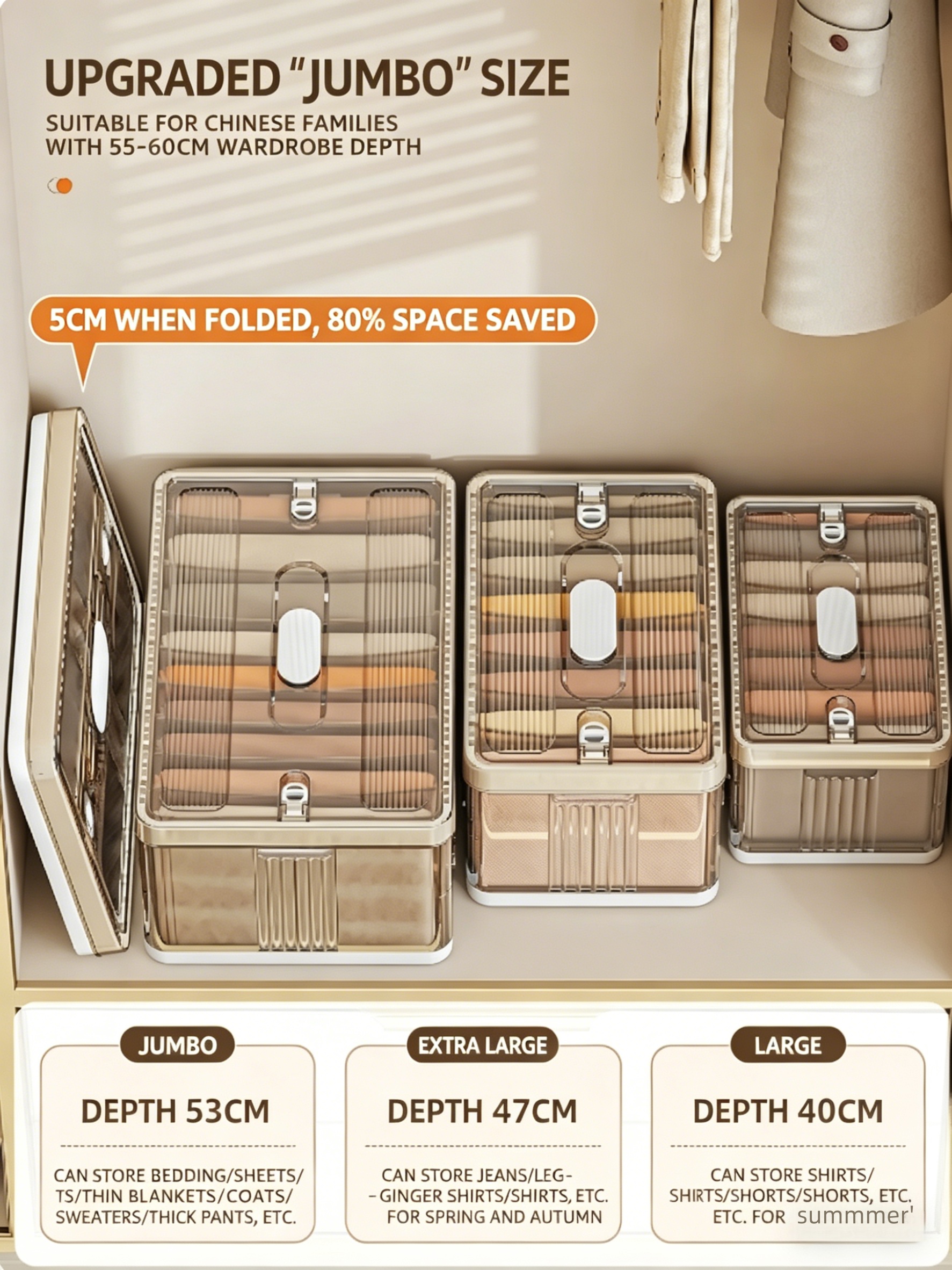
Foldable hard-shell storage can be sized to deep wardrobes while collapsing to a thin profile when the season ends. Image: Xinhaibox storage line.
Why scenario fit has become a sourcing criterion
The category is still expanding, but the way buyers choose within it is changing. The global home organization products market was estimated at USD 14.06 billion in 2024 and is projected to reach USD 21.65 billion by 2035, according to Market Research Future. Strategic Market Research projects the stackable container segment at USD 7.8 billion in 2024, growing at a CAGR of 6.4%, driven partly by e-commerce and urbanisation. Grand View Research reported that plastic-made products accounted for approximately 36% of the kitchen storage and pantry organization market in 2023.
Growth of that kind puts pressure on catalogue quality rather than catalogue count. A distributor that cannot state a box interior length, folded thickness, or sealed volume absorbs returns, answers marketplace questions manually, and reorders items that customers cannot place. Scenario-based data — the single dimension that decides whether something fits — removes that friction before the listing goes live.
What foldable actually changes in a storage product
Folding is a structural decision, not a cosmetic one. It changes three measurable things: the volume a product occupies when empty, the number of stress points in its body, and the way its lid or opening seals when closed.
Collapsed thickness is the first number to check. Foldable hard-shell clothes storage boxes in this line use a three-second foldable structure that requires no assembly and is specified to collapse to approximately 5 cm when not in use. Removable dividers allow compartment sizes to be reconfigured as contents change.
Sealing systems follow the same logic. A six-buckle design is specified for dust protection, with buckles rated for more than 100,000 opening and closing cycles and a reported space utilisation of 97%, compared with 79% for a small-opening-angle alternative design. For products that hold quilts, out-of-season clothing, or pet supplies, the seal is what keeps the contents usable between seasons.
Lid architecture matters as much as body dimensions. A dual-opening lid with four reinforced latches allows access from either side without pulling a fully loaded box out of position, and some under-bed models support partial opening in the 40–60% range. That detail determines whether seasonal storage stays practical in a small apartment, where there is no floor space to drag a heavy box into the middle of the room.
Scenario 1 — Closet and under-bed storage: HT8861
The HT8861 under-bed storage box is offered with a 96.5 cm length option, and that length is the specification most worth checking first. A 96.5 cm box spans a single bed frame without leaving a dead strip of floor beneath it, but it will not suit every destination market's bed or wardrobe depth. Buyers should compare the stated length against the dominant bed sizes and wardrobe depths in the market they serve, then confirm the packed load the lid is designed to carry.
Closet performance depends on the same variables. Deep wardrobes reward a longer, deeper box; shallow wardrobes punish one. Sealed hard-shell construction protects seasonal clothing from dust, moisture, and insects, which is precisely where fabric storage boxes are usually replaced: a fabric body deforms progressively under stacking, while a reinforced hard-shell body keeps its geometry. Latch length, load-bearing specification, and the presence of dehumidification compartments are parameters worth confirming in writing before a repeat order.
Mobility is the third variable. Hidden bidirectional casters on an under-bed unit reduce the friction of moving a loaded box from under the bed to a wardrobe and back each season — a small engineering decision that determines how often the product is actually used rather than abandoned inside the frame.
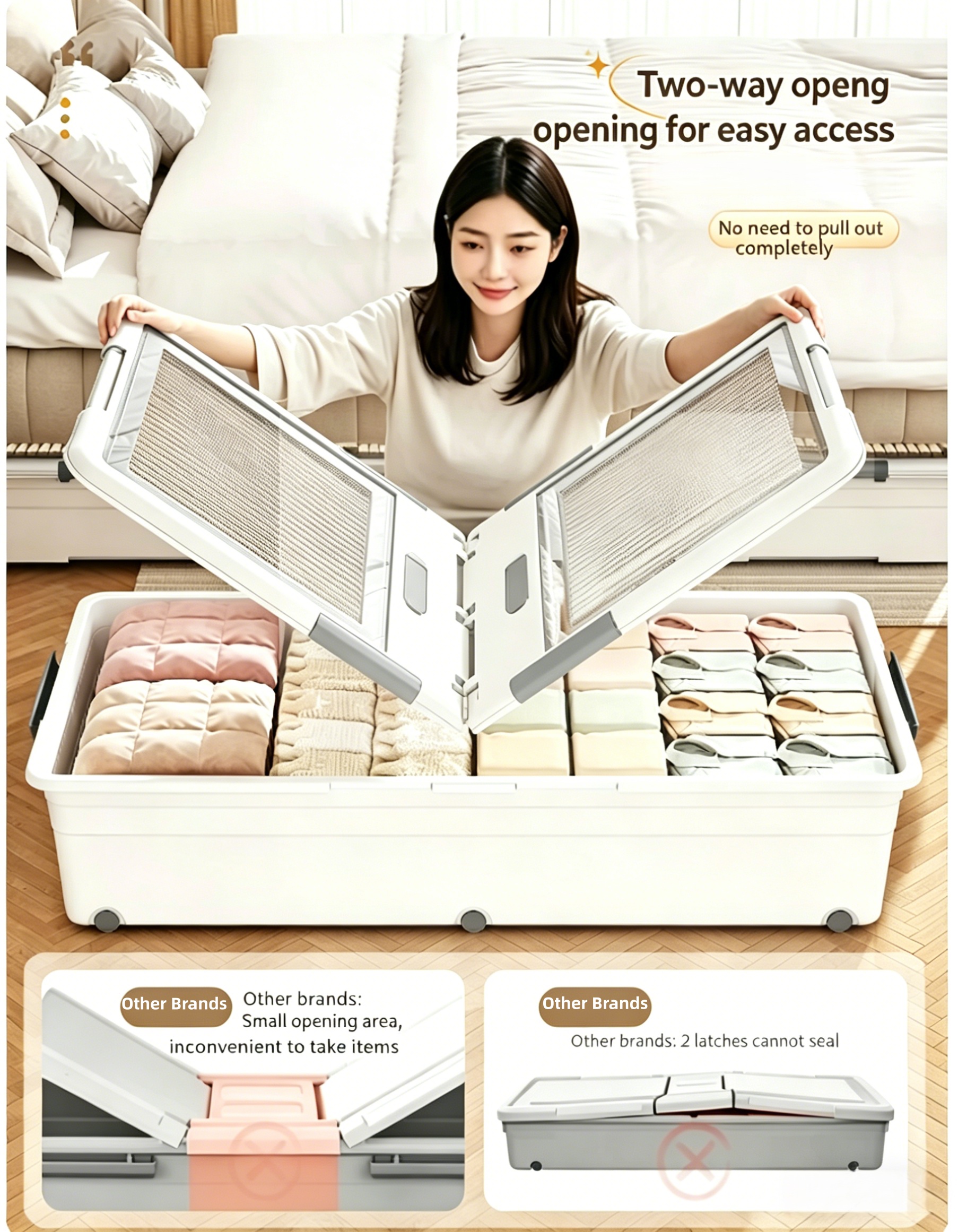
A dual-opening lid with reinforced latches allows access from either side without pulling the box fully out from under the bed. Image: Xinhaibox storage line.
Scenario 2 — Car trunk organization: YN8980
Trunk organization is an intermittent need. Most private drivers want a trunk organizer on shopping days, moving days, and road trips — not every day of the year. That usage pattern makes folded thickness the decisive specification rather than a secondary convenience. The YN8980 folds to 7 cm, which allows it to stay stored in the vehicle, sit flat under a trunk floor board, or move to a hallway shelf between trips without competing with luggage for space.
A rigid, non-folding trunk bin occupies its full volume continuously. That is acceptable in commercial vehicles where the organizer is in daily use, but in private cars it usually means the unit is taken out, misplaced, and never reinstalled. A 7 cm folded thickness is therefore a retention factor as much as a logistics one: it influences whether the product stays in service after the first trip.
Buyers comparing trunk organizers should check the relationship between folded and expanded dimensions, not just the folded figure. A unit that packs to 7 cm still has to hold its shape when loaded, so base rigidity, hinge or joint integrity, and handle attachment are the points to inspect on a pre-shipment sample.
Scenario 3 — Pet travel: YN8005
Pet travel storage is specified from the inside out. The YN8005 provides a 45 × 42.5 cm interior, and interior floor area — not exterior footprint — is what determines whether an animal can sit, turn, and settle without being pressed against a wall. Buyers selling into pet-owning households should publish interior dimensions next to exterior ones, because the mismatch between the two is one of the most common sources of returns in this category.
The same product family also includes pet trolleys and folding carts, which apply the identical principle to movement rather than storage: an item sized for a specific travel pattern instead of a general one. For a distributor, that means three scenarios — closet, trunk, and travel — can be covered from one catalogue rather than three unrelated sources.
One supplier line across three spatial problems
The sourcing value of covering several scenarios with one product family is operational rather than promotional. A single supplier relationship consolidates quality control under one standard, documentation under one file set, and lead times under one production calendar, instead of three of each. For distributors planning annual volumes, that simplification is measurable in inspection costs and administrative hours.
In this line, quality control follows AQL 2.5/4.0 standardized sampling. Monthly production capacity is 100,000 units for some products and 8,000 units for others, with typical lead times of 15 to 45 days or 30 to 60 days depending on the product. OEM and ODM production services are provided to meet varied client requirements, and the minimum order quantity is 500 units. Delivery terms are FOB or EXW; payment terms are a 30% deposit by T/T with the 70% balance before shipment or against a copy of the bill of lading. Pre-shipment inspection by the customer or a third party such as SGS or ITS is accepted as part of the acceptance criteria.
After-sales support includes remote technical guidance and compensation or replacement for quality issues. On the supply side, raw material price fluctuation is managed through dynamic pricing and real-time market monitoring, periodic quotation updates based on market trends, and long-term strategic partnerships with material suppliers. Buyers committing to a twelve-month programme should ask how that mechanism is reflected in their quotation cycle, because it is the part of a partnership that is hardest to renegotiate later.
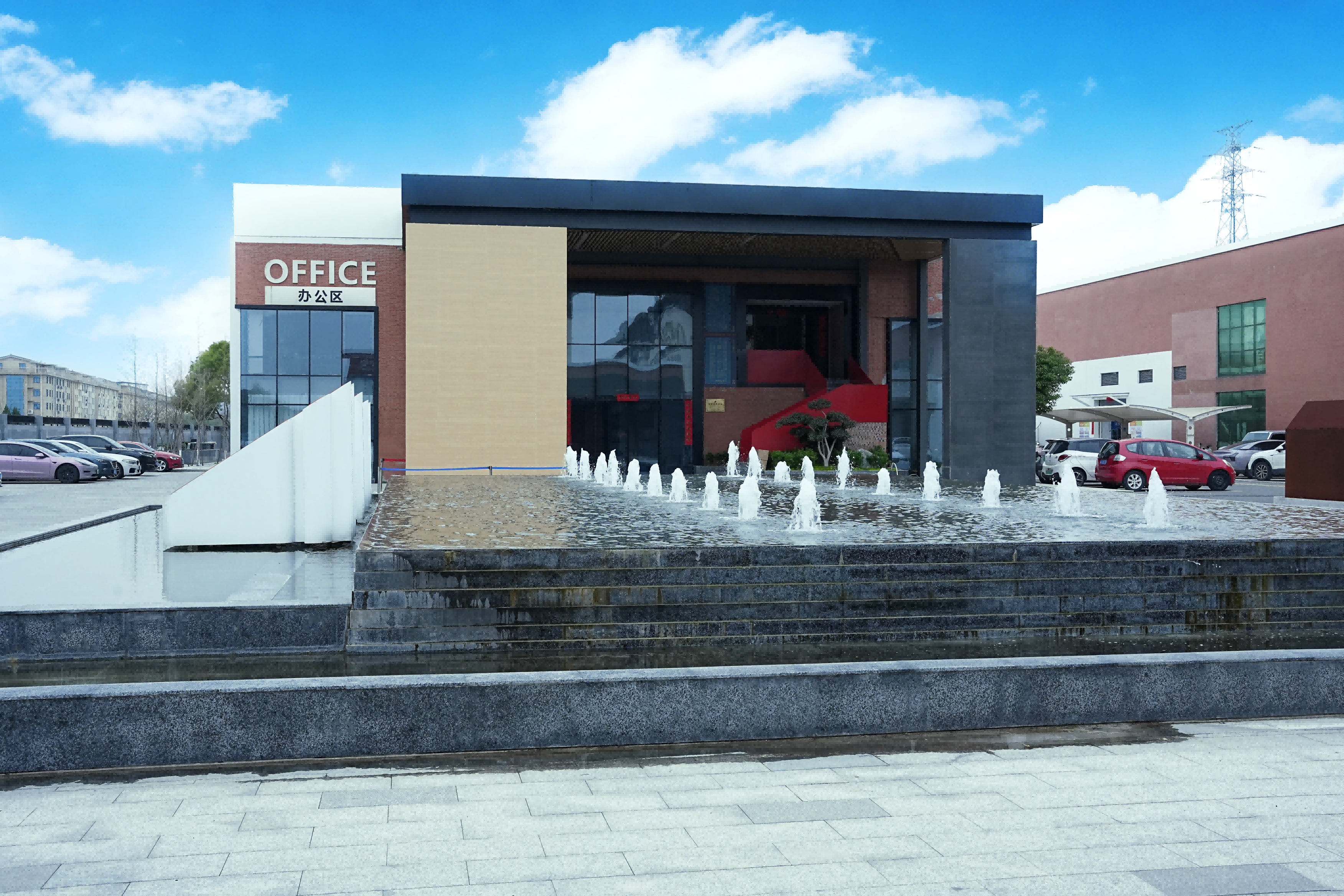
Production capacity and a single quality-control standard sit in the same sourcing decision as product dimensions. Image: Xinhaibox production environment.
Market signals that support scenario-based sourcing
Two regulatory and certification trends are reshaping what can be listed in the storage category. The European Commission adopted a ban on Bisphenol A in food contact materials through Regulation (EU) 2024/3190, with an 18-month phase-out period from late 2024. For storage that touches food — pantry bins, refrigerator organizers, sorting containers — the practical consequence is that BPA-free material documentation has moved from a marketing claim to a compliance item, and buyers need the declaration before the listing, not after the first order.
In parallel, polypropylene (PP) storage containers can achieve GreenCircle Recyclable Material certification, verifying their role in the circular economy and recyclability in #5 plastic facilities. PP is widely used in this category because it tolerates repeated folding, stacking, and cleaning, and recyclability documentation supports retail listings in markets where circular-economy criteria appear on buyer scorecards.
Competition remains concentrated among established global players such as IKEA (Sweden), Rubbermaid (USA), Sterilite (USA), and The Container Store (USA), which shapes retail price expectations. Suppliers that compete on scenario specification rather than brand scale generally differentiate through dimensional accuracy, fold-mechanism durability, and documentation readiness — not through catalogue breadth.
Foldable gear versus traditional storage: where the trade-offs sit
Foldable storage is not a universal replacement for rigid storage, and product data that says otherwise is incomplete.
| Comparison point | Traditional rigid plastic bin | Fabric storage box | Foldable PP storage (this line) |
|---|---|---|---|
| Space when empty | Occupies full volume year-round | Collapses but loses shape | Collapses to a thin profile, some models to roughly 5 cm; YN8980 to 7 cm |
| Sealing | Lid-dependent; sealing varies by model | Typically unsealed and dust-permeable | Six-buckle sealing and dual-opening lids with four latches on specified models |
| Load behaviour when stacked | High rigidity; resists deformation | Deforms progressively under load | Reinforced corners and thickened lids; hinges remain a stress point |
| Upfront cost | Lowest of the three | Low | Slightly higher initial cost, offset by longer service life |
| Best-fit use | Permanent, always-loaded installations | Light, short-term storage | Seasonal, mobile, and space-constrained storage |
Three limits deserve to be stated plainly in any listing.
- Rigidity trade-off. A folding mechanism introduces hinges and movable panels. A one-piece rigid bin generally tolerates rougher handling and heavier static loads at the same wall thickness. Reinforced corners and thickened lids reduce the gap but do not remove it.
- Higher initial cost. Upgrade comparisons within this line note a slightly higher upfront cost than basic alternatives, offset by longer service life and lower replacement frequency. Buyers evaluating on unit price alone will not see that benefit.
- Conditional benefit. Where an organizer stays permanently full and is never collapsed — fixed shelving, industrial racking, permanent warehouse use — foldability adds cost without adding function. The advantage is realised only where storage is seasonal, mobile, or space-constrained.
- Longer lead time for customised versions. Customised production runs on the longer 30–60 day band rather than 15–45 days, so promotional calendars need to start earlier than for standard items.
A procurement checklist for scenario-based orders
| Verify | Why it decides the order |
|---|---|
| Internal dimensions (for example 45 × 42.5 cm) and length options (for example 96.5 cm) | Determines whether the item fits the destination space and the contents it is sold to hold |
| Folded thickness (for example 7 cm) | Decides whether the product can stay in the vehicle, closet, or shelf between uses |
| Packed load and closure type | Separates a display unit from a product that survives a full season of stacking |
| Material grade and documentation | BPA-free declarations and recyclability certification are now part of retail listing requirements in several markets |
| Quality-control standard (AQL 2.5/4.0) | Defines the sampling basis and the acceptance criteria for inspection |
| Minimum order quantity (500 units), lead time band (15–45 or 30–60 days), delivery and payment terms | Sets the working capital and calendar for a distribution programme |
| Inspection and after-sales terms | Determines who verifies the goods and how quality issues are resolved after arrival |
What to expect next
Three directions are likely to shape the next procurement cycle. First, dimension transparency will continue moving from the specification sheet into the product listing itself, because return data punishes ambiguity more quickly than any sales argument rewards it. Second, material documentation — BPA-free declarations, recyclability certification, and resin traceability — will keep shifting from optional to required in the EU and, more gradually, in North America.
Third, buyers are likely to consolidate suppliers across scenarios rather than across categories. A single relationship that covers an under-bed box, a trunk organizer, and a pet travel box requires one quality standard, one inspection regime, and one production calendar to manage. In a category where the difference between a sold-out season and a returned container is usually a missing dimension, that consolidation is less about scale and more about control.
FAQ
How should a buyer verify that foldable storage will fit a specific space?
Fit is verified with three measurements: internal dimensions, folded thickness, and expanded footprint. As reference points, the HT8861 under-bed storage box is offered with a 96.5 cm length option, the YN8980 car trunk organizer folds to 7 cm in thickness, and the YN8005 pet travel box provides a 45 × 42.5 cm interior. Internal dimensions should be compared against the items being stored, and folded thickness against the clearance available when the product is not in use.
What are the minimum order quantity, delivery terms, and payment terms?
The minimum order quantity is 500 units. Delivery terms are FOB or EXW. Payment terms are a 30% deposit by T/T with the 70% balance before shipment or against a copy of the bill of lading. Pre-shipment inspection by the customer or a third party such as SGS or ITS is accepted as part of the acceptance criteria.
How is quality controlled before shipment?
Quality control follows AQL 2.5/4.0 standardized sampling. For foldable products, sampling typically covers hinge and buckle function, folded thickness tolerance, seal alignment, and load behaviour under a packed condition. Pre-shipment inspection by the buyer or an appointed third party forms part of the acceptance criteria.
Can production capacity support recurring orders across several scenarios?
Monthly production capacity is 100,000 units for some product lines and 8,000 units for others, with typical lead times of 15 to 45 days or 30 to 60 days depending on the product. OEM and ODM production services are provided to meet varied client requirements.
Which export markets are currently served?
The manufacturer exports to North America, the EU, Southeast Asia, and Latin America.
What after-sales support is available for long-term distribution partners?
After-sales support includes remote technical guidance and compensation or replacement for quality issues. On the supply side, raw material price fluctuation is managed through dynamic pricing and real-time market monitoring, periodic quotation updates based on market trends, and long-term strategic partnerships with material suppliers.
Product documentation, including the storage products brochure, is available for reference: Xinhai Box Storage Products Brochure.
Есть вопросы или нужны дополнительные детали?
Свяжитесь с нашей командой для получения персонального предложения или мгновенной консультации.
Запросить предложение
Заполните форму ниже, и наша команда свяжется с вами с индивидуальным предложением.
Прямой чат WhatsApp
Предпочитаете общаться в реальном времени? Напишите нам в WhatsApp для мгновенной помощи и быстрых ответов.
- Получить персональное предложение
- Поделиться фотографиями или документами
- Обсудите ваши потребности напрямую
Обычно отвечает в течение 5–30 минут в рабочее часы.