
Home Textile Fabric: Model Continuity in Supplier Evaluation
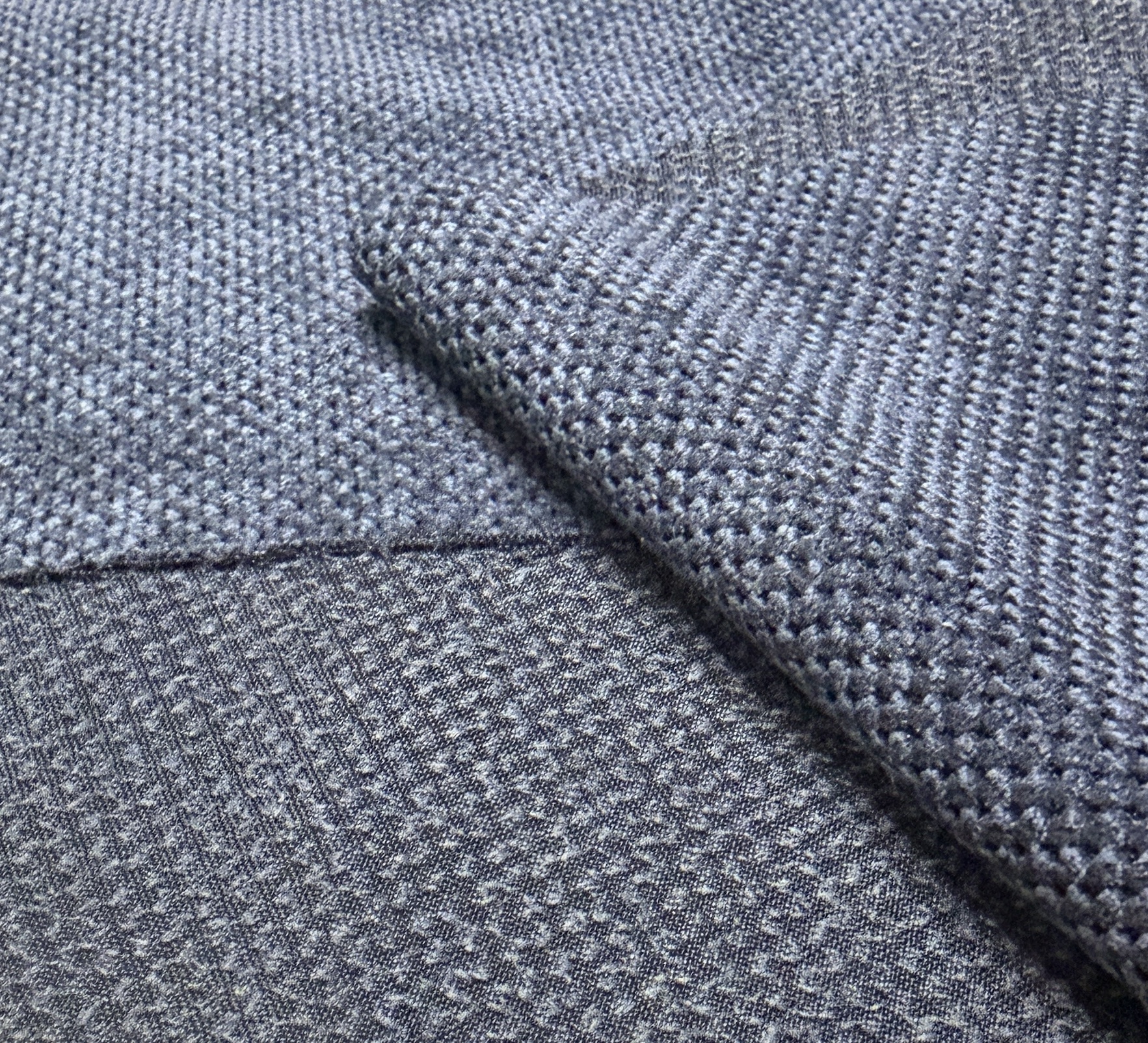
Velvet sofa fabric TL07242: 150D x 320D + 200D, 220 gsm, 150 cm usable width. Named models with stable published parameters are the unit of comparison in long-term supplier evaluation.
Home textile fabric is bought repeatedly, not once. A sofa programme or a curtain range that ships across several seasons depends on the same fabric being available again, with the same construction, the same weight, and a colour that matches the previous lot. Global home textile demand was valued at USD 144.76 billion in 2025 (The Business Research Company), and Asia Pacific held a 44.17% share of that market in the same year (Fortune Business Insights). Sourcing decisions are therefore being made inside a large, crowded supply base in which many suppliers can produce a convincing first sample.
The harder question is the second order, the fifth order, and the order placed after a colour extension. That is what long-term supplier evaluation is for, and in fabric it rests on a signal that is easy to check but rarely checked properly: model continuity.
Suzhou T-land Textile Co., Ltd. (T-LAND TEXTILE), a fabric manufacturer based in Shengze, Jiangsu Province, China, produces sofa fabric and curtain fabric. The company was founded in 2014 and states that around 90% of its output is exported, with the EU as its main market. This article is written as an industry reference: it sets out how buyers can evaluate a home textile fabric supplier over a multi-order horizon using published model-level parameters, repeat-order evidence and acceptance records, and it treats the limits of that evidence as part of the evaluation rather than as an afterthought.
What Model Continuity Actually Means
Model continuity is the ability of a supplier to keep a named fabric model available with the same documented construction, weight, width and colour behaviour across successive production runs. It is not the same as brand reputation, and it is not the same as a broad catalogue. It is a property of one model number, and it can be tested model by model.
Three signals make it checkable:
- Parameter persistence — the model number still carries the same published composition, construction, weight and width it carried earlier.
- Repeat-order history — the model has been ordered more than once, across more than one season or project cycle.
- Acceptance repeatability — colour matching and physical parameters stay inside tolerance from sample approval to bulk delivery, lot after lot.
A supplier can pass the first signal and fail the third. That is why the two should be evaluated separately rather than merged into a single confidence score.
Why Long-Term Evaluation Differs from First-Order Sourcing
First-order sourcing asks whether a fabric can be produced. Long-term evaluation asks whether the same fabric can be produced again without re-qualification. The evidence types differ, and a buyer who applies shortlisting criteria to a multi-year programme will usually miss the risks that appear later.
| Evaluation question | First-order sourcing evidence | Long-term continuity evidence |
|---|---|---|
| Can this fabric be produced? | Sample, quotation, MOQ, lead time | The same model still in production after repeated order cycles |
| Will the next lot match the approved one? | One approved sample | Cross-lot colour and parameter records; per-lot testing |
| Can the specification be traced? | Product datasheet | Datasheet plus composition certificates and a stated inspection method |
| Is compliance current? | A certificate image | Certificate number, issuing body, validity window and the exact models covered |
| What happens when something deviates? | Response speed | A stated after-sales window and a defined corrective route |
Signal 1 — Maintained Specifications on Named Sofa Fabric Models
For upholstery, the continuity unit is the triple of construction, weight and width. When that triple is stable and published, a buyer can re-order against it. When a supplier changes construction but keeps the model number, the signal is broken even though the catalogue looks unchanged.
| Model | Fabric type | Construction | Weight | Width | Documented characteristics |
|---|---|---|---|---|---|
| TL0329 | Upholstery fabric | 105D x 200D | 160 gsm | 150 cm / 300 cm | Brushed surface with a suede hand feel; bonded back side; used for cushion and sofa construction |
| TL07242 | Velvet fabric | 150D x 320D + 200D | 220 gsm | 150 cm | Soft velvet hand feel; used for cushion and sofa fabric programmes |
| TL0901 | Velvet fabric | 160 D | 200 gsm | 160 cm | Velvet construction on a 160 cm width |
All three models are documented as 100% polyester. TL0329 carries a 300 cm width option alongside the standard 150 cm, which matters for wide-seat upholstery where seam count is a design constraint. TL07242 and TL0901 sit in the velvet group, and both are described for cushion and sofa use.
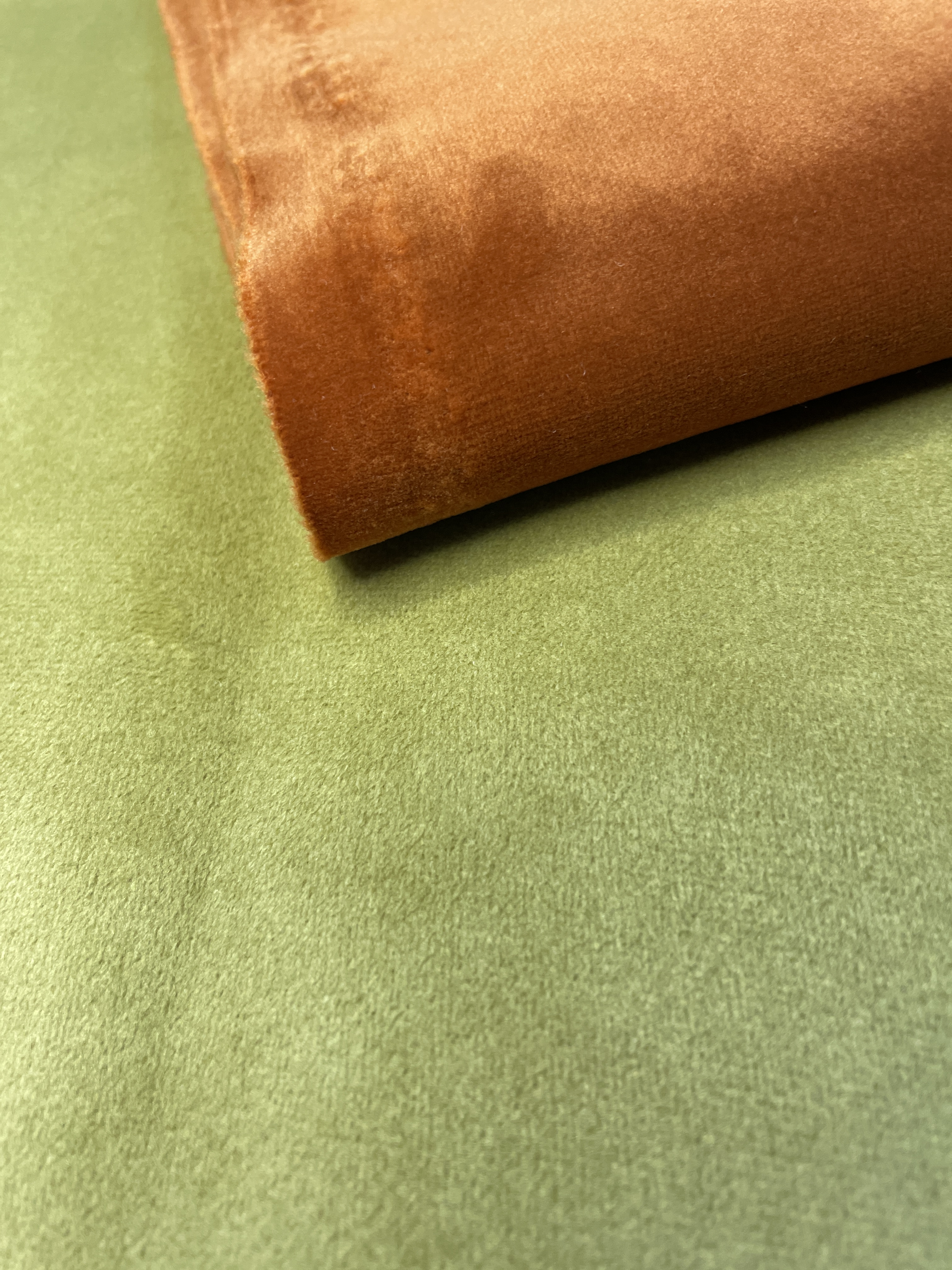
TL0901: a velvet sofa fabric documented at 160 D construction, 200 gsm and 160 cm width. Repeat ordering depends on the construction staying comparable.
What makes these figures usable in an evaluation is that each one can be checked by a method rather than only read from a page. Composition is documented in composition certificates, so it can be reconciled against the declared fibre content. Construction is verified through material inspection. Width is relevant to dimensional tolerance checks on the delivered roll. Weight is a measurable parameter for batch tolerance. A buyer can therefore convert each published figure into a test or a document request, and then compare the result against the previous order.
A practical continuity check for a sofa fabric programme looks like this: request the parameter record for the model, request the composition certificate, measure weight and width on receipt, and compare against the values recorded at the previous acceptance. If the checks return the same result across two or three orders, the model is behaving as a continuous supply item rather than as a repeat introduction.
Signal 2 — Dimout Curtain Fabric Models as Continuity Anchors
Curtain ranges create a different continuity problem, because light control is a performance claim rather than a physical dimension. In this category the model number anchors the claim, so the claim has to stay attached to the same construction.
Dimout is a defined position in the light-control spectrum: the dimout classification places its light blocking level between standard decorative fabric and blackout fabric. That distinction matters when a programme is extended, because a buyer who treats dimout and blackout as interchangeable will approve against the wrong acceptance threshold.
| Model | Type | Construction | Weight | Width | Documented function |
|---|---|---|---|---|---|
| TL08166 | Dimout curtain fabric | 75D x (300D + 300D) | 260 gsm | 150 cm / 300 cm | Room darkening; noise reducing; readymade curtain use indoors and outdoors |
| TL0888 | Dimout fabric | 75D x 300D | 250 gsm | 150 cm / 280 cm / 300 cm | Room darkening; noise prevention; readymade curtain use indoors and outdoors |
Both models are documented as 100% polyester, and both carry a 300 cm width option, which is relevant for floor-to-ceiling window treatments where fewer drops reduce both seam count and the amount of pattern matching at the joint.
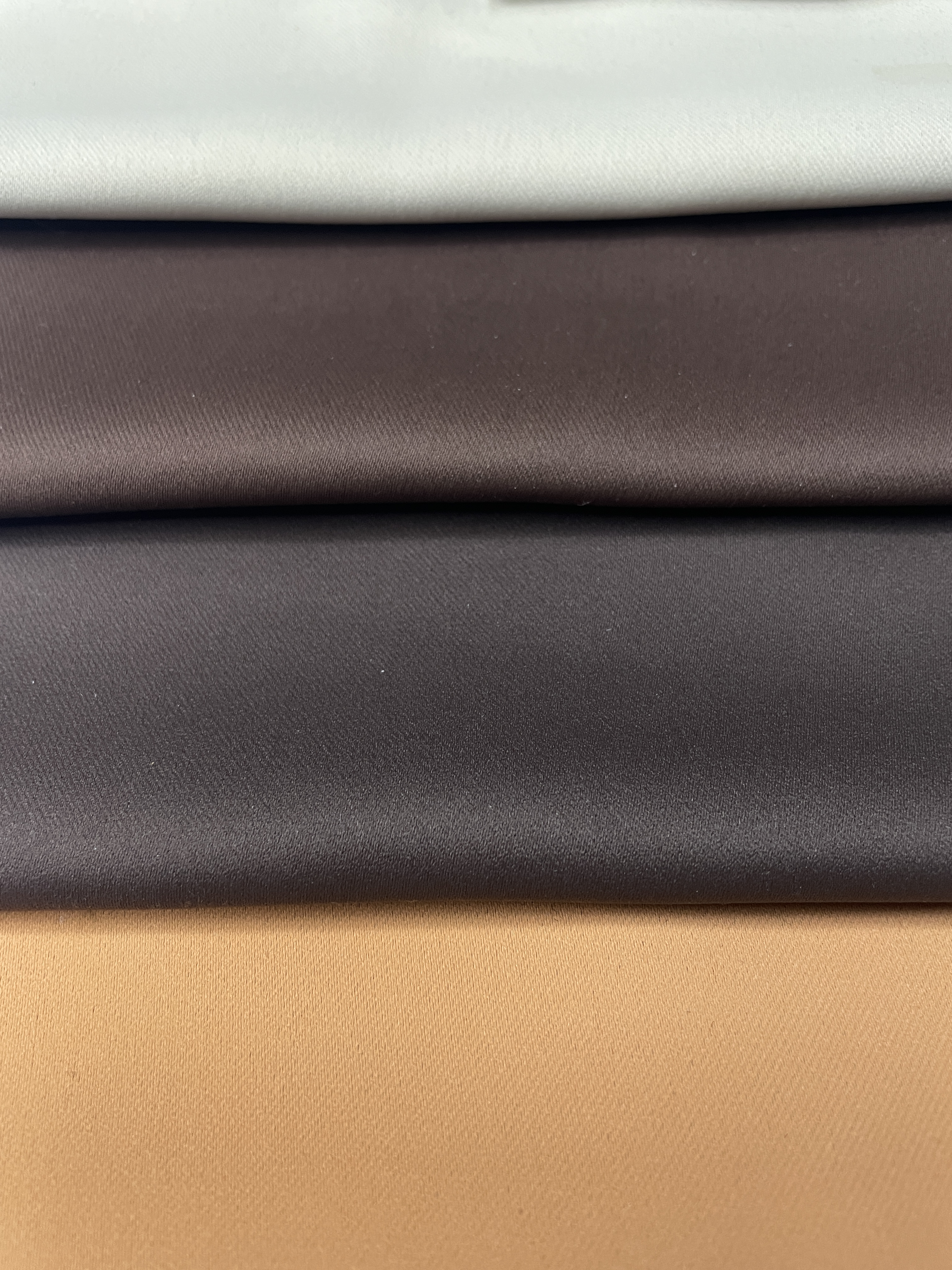
TL0888: a dimout curtain fabric documented at 75D x 300D, 250 gsm, with 150 cm, 280 cm and 300 cm width options.
Where fire performance is part of the requirement, the dimout group also contains models documented with room darkening, noise reducing and fire retardant performance — TL08321 at 380 gsm with a (150D+320D) x (300D+300D) construction, and TL08273 at 280 gsm with a (75D+80D) x 320D construction. Both are documented as dimout fabric rather than blackout fabric, and qualifying a fire retardant claim is a separate evaluation step from qualifying the light blocking claim.
For a curtain programme, model continuity is therefore a claim-continuity question. The buyer needs to know that the model which carried the light blocking and fire performance last season is still the same construction this season, and not a visually similar replacement shipped under a familiar name.
Signal 3 — Colour Matching and Sample-to-Bulk Acceptance
Colour is where long-term fabric supply most often fails, and it fails quietly. A construction can match while a dye lot does not, which is why colour behaviour has to be evaluated as a separate continuity signal from physical parameters.
Colour and shade control is part of the documented customisation scope for OEM supply, together with pattern design, fabric width, fabric gram weight, flame retardant finishing, water repellent finishing, stain resistant finishing, and development against a customer's own sample. That list is worth reading carefully: the specification variables affect continuity directly, while the finishing routes can change hand feel and performance if they are applied differently between lots.
Acceptance at bulk stage rests on the inspection method. The documented quality control position is that 100% of production is tested in-house, or alternatively inspected randomly by the customer, with after-sales support stated as available within two months of the customer receiving the goods. For a buyer evaluating a multi-order relationship, both items are structural: they define who tests, and how long a deviation retains a route back to the supplier.
Repeat-order evidence is the clearest single indicator that colour and parameter control has held in practice. One documented OEM case covers 20,000 metres of sofa and curtain fabric supplied to customers in Germany, the Netherlands, Belgium, Italy, Sri Lanka and South Africa, across a relationship recorded as lasting four to six years. The recorded outcomes are excellent hand feel, excellent colour fastness and stable fabric performance, with compliance against the OEKO-TEX standard noted as a highlight. The application mix — sofa and curtain — matches the model examples used above, which is why the case is relevant to a continuity evaluation rather than only to a sales history.
It should be read for what it is: a supplier-side record of repeated supply. It is useful evidence of repeatability over several years. It is not a substitute for the buyer's own lot testing on the first two orders of a new programme.
Signal 4 — Certification Continuity as a Constraint Check
Certification is often treated as a supplier-level property. In practice it is a model-level and scope-level property, and this changes how it should be verified for a long-running programme. Two certifications appear in T-LAND TEXTILE's published compliance record.
- OEKO-TEX STANDARD 100 — certificate number 19.HCN.99628, issued by Hohenstein, valid from 14 January 2026 to 31 January 2027, covering Product Class II (products with direct contact to skin). The stated scope is woven and knitted fabric made of 100% polyester and 100% polyamide, including bleaching, disperse dye piece-dyeing, transfer printing, and PU / TPU / PVC coating and laminating finishing. Within the published record, the covered products are the TL12199 curtain and sofa fabric, the TL07410 sofa fabric, the TL0415, TL0469 and TL0484 polyester linen fabric, and the TL08180 dimout curtain fabric.
- Global Recycled Standard (GRS) — certificate number CB-CUC-1026562, issued by Control Union, valid from 16 March 2026 to 15 March 2027, with a stated scope of dyed fabrics and greige fabrics and global market applicability. Within the published record, the covered products are the TL12167 poly linen sofa fabric, the TL07392 jacquard fabric, the TL12210 poly linen fabric, the TL12199 curtain and sofa fabric, and the TL08269 dimout curtain and sofa fabric.
The practical consequence is a constraint logic that buyers frequently skip. Models such as TL0329, TL07242, TL0901, TL08166 and TL0888 are not listed within those two certification scopes in the published record. That does not make them non-compliant; it means the certification attached to TL07410 or TL12199 cannot be assumed to travel with a different model number. Certification continuity has to be checked against the certificate's own product list and finishing scope, and it has to be re-checked at each renewal, because renewal dates and product lists can change.
Regulatory pressure is moving in the same direction. In the United Kingdom, the Furniture and Furnishings (Fire) (Safety) Regulations 1988, as amended in 2010 and 2025, remain the core regime for domestic upholstered products in 2026. Within the European Union, the General Product Safety Regulation 2023/988 sets safety obligations for home textiles, and Digital Product Passports for textiles are expected by 2027. Both regimes push documentation toward model-level traceability — the same unit of analysis that continuity evaluation uses.
For curtain-specific fire requirements, BS 5867 is the established UK fire safety standard for curtains and drapes. Because it applies to a specific product type rather than to a supplier's full range, a curtain buyer comparing dimout models should confirm which standard the fire retardant claim is made against, and whether the test basis is documented for the exact model under evaluation.
Where Model Continuity Evidence Has Limits
Continuity evidence is stronger than a catalogue claim and weaker than a warranty. Several boundaries are worth stating plainly.
- It is a past-tense signal. A model supplied for several years demonstrates that it has been repeatable to date. It does not establish that the same model will remain available for the next programme cycle. Buyers placing long-horizon orders should confirm availability rather than infer it.
- Certification coverage is model-specific, not portfolio-wide. As shown above, the OEKO-TEX Standard 100 and GRS scopes name particular models and particular finishing routes. Extending a programme to a different model means re-checking coverage from the start.
- Bulk parameters carry tolerance. Published records state weight as a target subject to GSM tolerance in bulk production, and width as a dimension relevant to dimensional tolerance checks. A stated 250 gsm or 300 gsm is a specification with a tolerance band, not an exact fixed value, and the acceptable band should be agreed before the first bulk order rather than disputed after it.
- Commercial floors apply. The documented minimum order quantity is 500 to 1,000 metres per colour, with a stated lead time of 30 to 45 days and a monthly capacity of 200,000 metres. Programmes smaller than the MOQ floor cannot use the same colour-by-colour continuity approach, and the lead time means a continuity failure discovered at delivery is expensive to correct.
Two further qualifications belong to the product claims themselves. Dimout and blackout are different light blocking positions, so a dimout curtain fabric should not be evaluated against a blackout requirement. And the hand feel, colour fastness and performance outcomes described in the repeat-order case come from the supplier's own record and its in-house 100% testing, or from the customer's own random inspection; they are not presented here as third-party laboratory results.
Where Continuity Matters Most: Application Fit
Continuity has a different value in each end-use, because the cost of a mismatch changes with the project.
- Residential decoration projects. Household low-frequency friction and sunlight exposure. Colour consistency between the first room and a later extension is the main continuity risk, because the fabric is often purchased in stages.
- Hotel and B&B projects. Multiple identical rooms and phased refurbishment make batch-to-batch colour difference the dominant risk; a visible shade break between floors is a defect even when every roll is individually within specification.
- Office commercial projects. Heavy-duty seating friction pushes wear and pilling behaviour to the front of the evaluation, alongside the ability to re-supply a damaged seating batch years after installation.
- Health-care institutions, and exhibition and cultural tourism projects. Cleaning regimes and public-use conditions make finishing stability — water repellent, stain resistant and easy-clean behaviour — part of the continuity question rather than a one-off purchase specification.
- Special soft furnishing for RVs and yachts. Confined environments with movement, humidity and cleaning constraints; the same model number has to keep performing when a build is repeated across units.
Across these settings the recurring technical requirements are flame retardancy, light fastness, Martindale abrasion resistance, anti-pilling behaviour, water repellent and stain resistant finishing, low-formaldehyde eco-standards, strict batch-to-batch colour difference control, washability, and customised width and gram weight. Almost every item on that list is a continuity requirement rather than a first-purchase requirement, which is the underlying reason model-level evaluation matters in this category.
Market Trend Signals Behind Continuity Requirements
Fabric sourcing is being pushed toward documentation by market scale and by regulation at the same time.
On scale: the global blackout fabric market was valued at USD 2.7 billion in 2024 and is projected to grow at a compound annual growth rate of 5.9% to reach USD 3.8 billion by 2030 (Strategic Market Research). The upholstery fabric market was valued at USD 44.5 billion in 2023 (Verified Market Research). China's home textile exports reached USD 2,870.94 million in March 2024 alone (Stellar Market Research). Volumes at this scale mean fabric programmes are rarely single-lot purchases; they are repeated procurements that either consolidate around stable models or fragment into repeated re-qualification cycles.
On regulation: the direction of travel in the EU is toward traceability, with Digital Product Passports for textiles expected by 2027 under the framework accompanying the General Product Safety Regulation 2023/988. A passport implies model-level information — composition, finishing route, compliance basis — which is the same information set a continuity evaluation collects. Buyers who already evaluate at model level are likely to find the transition administrative rather than structural.
There is also a definitional caution in the published market research that buyers should carry into their own comparisons: estimates of the blackout fabric market differ substantially between sources depending on whether the definition covers finished curtains or raw fabric. The same caution applies to supplier claims, because light control figures are only comparable when the product category and test basis are the same.
Future Outlook
The next phase of supplier evaluation in home textile fabric is likely to look less like a catalogue review and more like a model register. Three developments point in that direction.
First, traceability requirements will formalise what has until now been informal: a model number linked to a composition, a finishing route and a compliance basis. Suppliers who already maintain per-lot records will adapt faster than those who work from paper specifications. T-LAND TEXTILE, for example, states that it operates a computer-based, non-paper order instruction system and maintains an in-house laboratory for quality testing of each lot, alongside a 1,500 m² warehouse — an operational structure that supports lot-level records rather than relying on them being reconstructed afterwards.
Second, repeat-order history is becoming a more visible qualification criterion. Buyers increasingly ask how long a specific model has been in supply, not how large a catalogue is. That shift favours manufacturers whose model numbers persist, and it disadvantages suppliers who rebrand comparable constructions each season.
Third, the boundary between decorative and functional fabric will keep sharpening. Dimout, blackout, fire retardant, water repellent and stain resistant claims all carry different test bases, and as certification schemes move toward product-level coverage, claims that are not attached to a specific model will become harder to defend in procurement. For buyers, the practical preparation is unglamorous: keep the approved sample, keep the parameter record, keep the certificate version, and record the acceptance result for every order. Model continuity is only a usable signal when someone has kept the evidence on both sides.
A capability and product brochure covering T-LAND TEXTILE's sofa fabric and curtain fabric range, including model-level parameters, is available for download: T-LAND TEXTILE brochure (PDF).
FAQ
What is model continuity in home textile fabric sourcing?
Model continuity is the ability to keep a named fabric model available with the same documented construction, weight, width and colour behaviour across successive production runs. It applies to one model number at a time, so it is evaluated per model rather than per supplier. A model such as TL08166, documented at 75D x (300D + 300D), 260 gsm and 100% polyester, carries its own continuity record independent of any other model in the same range.
Which parameters should be re-checked to confirm a model has stayed the same?
Four parameters are checkable by method rather than by reading: fibre composition, construction, weight and width. Composition is documented in composition certificates, so it can be reconciled against the declared content. Construction is verified through material inspection. Width is relevant to dimensional tolerance checks on the delivered roll. Weight is a measurable parameter for batch tolerance. Comparing these four results against the values recorded at the previous acceptance is the practical test of continuity.
How does dimout curtain fabric differ from blackout fabric in a repeat-order context?
The dimout classification positions its light blocking level between standard decorative fabric and blackout fabric. A dimout model such as TL08166 or TL0888 should therefore not be approved against a blackout specification, and a programme that switches between the two categories has changed its acceptance threshold, not only its model number. Both dimout models referenced here are documented with room darkening and noise reducing functions, at 260 gsm and 250 gsm respectively.
What certification information should be re-verified at each order cycle?
Four items: the certificate number, the issuing body, the validity window, and the specific models covered. For example, OEKO-TEX STANDARD 100 certificate 19.HCN.99628 is issued by Hohenstein and valid from 14 January 2026 to 31 January 2027 under Product Class II, and GRS certificate CB-CUC-1026562 is issued by Control Union and valid from 16 March 2026 to 15 March 2027. Because both certificates name specific products and finishing scopes, a model outside the listed scope should be verified separately rather than assumed to be covered.
How is sample-to-bulk acceptance normally structured for fabric programmes?
Development typically runs against a customer sample, with colour and shade, width, gram weight and finishing treatments treated as adjustable specification variables. At bulk stage, the documented position for this supplier is that 100% of production is tested in-house, or alternatively inspected randomly by the customer, with after-sales support available within two months of the goods being received. For a multi-order programme, the sample approved at the start should be retained as the reference for every subsequent lot comparison.
What are the practical limits of judging a supplier by model continuity?
Model continuity is a past-tense signal: it shows what has been repeatable, not what will remain available. Certification coverage is model-specific rather than portfolio-wide. Weight and width carry bulk tolerance bands, so published figures are targets rather than fixed values. And commercial floors apply — a documented minimum order quantity of 500 to 1,000 metres per colour and a stated lead time of 30 to 45 days both constrain how continuity can be managed on small or fast-turnaround programmes.
Есть вопросы или нужны дополнительные детали?
Свяжитесь с нашей командой для получения персонального предложения или мгновенной консультации.
Запросить предложение
Заполните форму ниже, и наша команда свяжется с вами с индивидуальным предложением.
Прямой чат WhatsApp
Предпочитаете общаться в реальном времени? Напишите нам в WhatsApp для мгновенной помощи и быстрых ответов.
- Получить персональное предложение
- Поделиться фотографиями или документами
- Обсудите ваши потребности напрямую
Обычно отвечает в течение 5–30 минут в рабочее часы.