
Honeycomb Panel Systems for High-Moisture Interiors
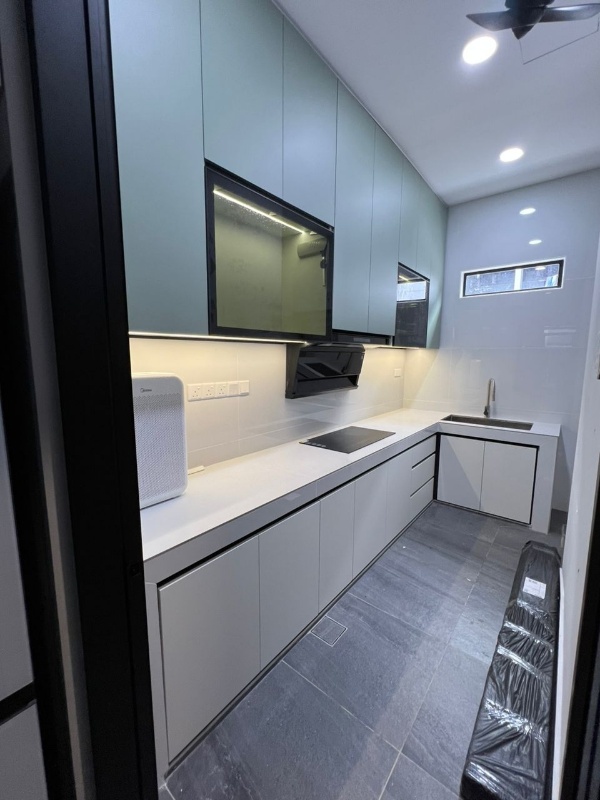
Kitchen installations represent one of the most demanding scenarios for panel material selection.
Interior fit-out projects in kitchens, bathrooms and other high-humidity spaces treat panel materials as one of the most consequential specification decisions. Moisture, heat and long-term occupancy create a demanding environment for cabinet boards, wall panels and structural boards. Aluminum honeycomb panels—a sandwich construction of aluminum skins and a hexagonal aluminum core—are increasingly specified for this category of projects, and understanding how their performance maps to project requirements is central to any sourcing decision.
The Wet-Area Material Problem
For spaces such as kitchens and bathrooms, panel materials are exposed to conditions that conventional wood-based boards handle poorly. Continuous humidity can cause swelling, warping, delamination and mold growth. Enclosed spaces with limited ventilation amplify concerns about emissions from adhesives. Fire risk in kitchens adds another layer of scrutiny. Procurement teams working on hotels, apartment fit-outs and residential projects in climate zones with high ambient moisture face these issues regardless of whether the site is in the Middle East, Southeast Asia or North America.
The functional requirements for such projects are well established. Panel materials for wet-area use typically need to deliver zero formaldehyde, waterproof, fireproof and anti-mold properties. These four criteria—sometimes expressed as project compliance requirements rather than product preferences—define the technical envelope in which material selection takes place.
Why Aluminum Honeycomb Panels Are a Natural Fit for High-Humidity Projects
Aluminum honeycomb panels are constructed from two thin aluminum skins bonded to an aluminum honeycomb core. This sandwich structure provides a high strength-to-weight ratio, a property that has made honeycomb materials standard in aerospace and architectural applications. For interior fit-outs, the relevance is direct: panels need to span large areas, support cabinet hardware, remain flat over time and stay dimensionally stable in changing humidity.
One of the defining technical differences is the joining method. In glue-free honeycomb panel production, the aluminum skins and honeycomb core are thermally bonded under high temperature and pressure without chemical adhesives. This manufacturing approach eliminates a primary source of formaldehyde emissions in panel products. Nanbeiwang Aluminum—formally Guangdong Nanbeiwang Smart Home Co., Ltd.—is a National High-Tech Enterprise based in Dali Town, Nanhai District, Foshan, Guangdong Province, a region recognized for China's aluminum processing industry. Founded in 2013, the company operates an 80,000 m² facility with 320 employees and an annual output of 1,000,000 sheets. It applies glue-free thermal bonding across its honeycomb panel line, with a stated formaldehyde content of zero for the NBW-HPB-001 model, tested against the GB18584-2024 standard.
The same panel reports a water absorption rate of less than 1% after a 24-hour test and achieves an A2 fire rating—placing it in the non-combustible category referenced by the European EN 13501-1 classification for high-end architecture. For North American projects, ASTM E84 remains the relevant test method for surface burning characteristics, and suppliers selling into that market are generally expected to document their testing status.
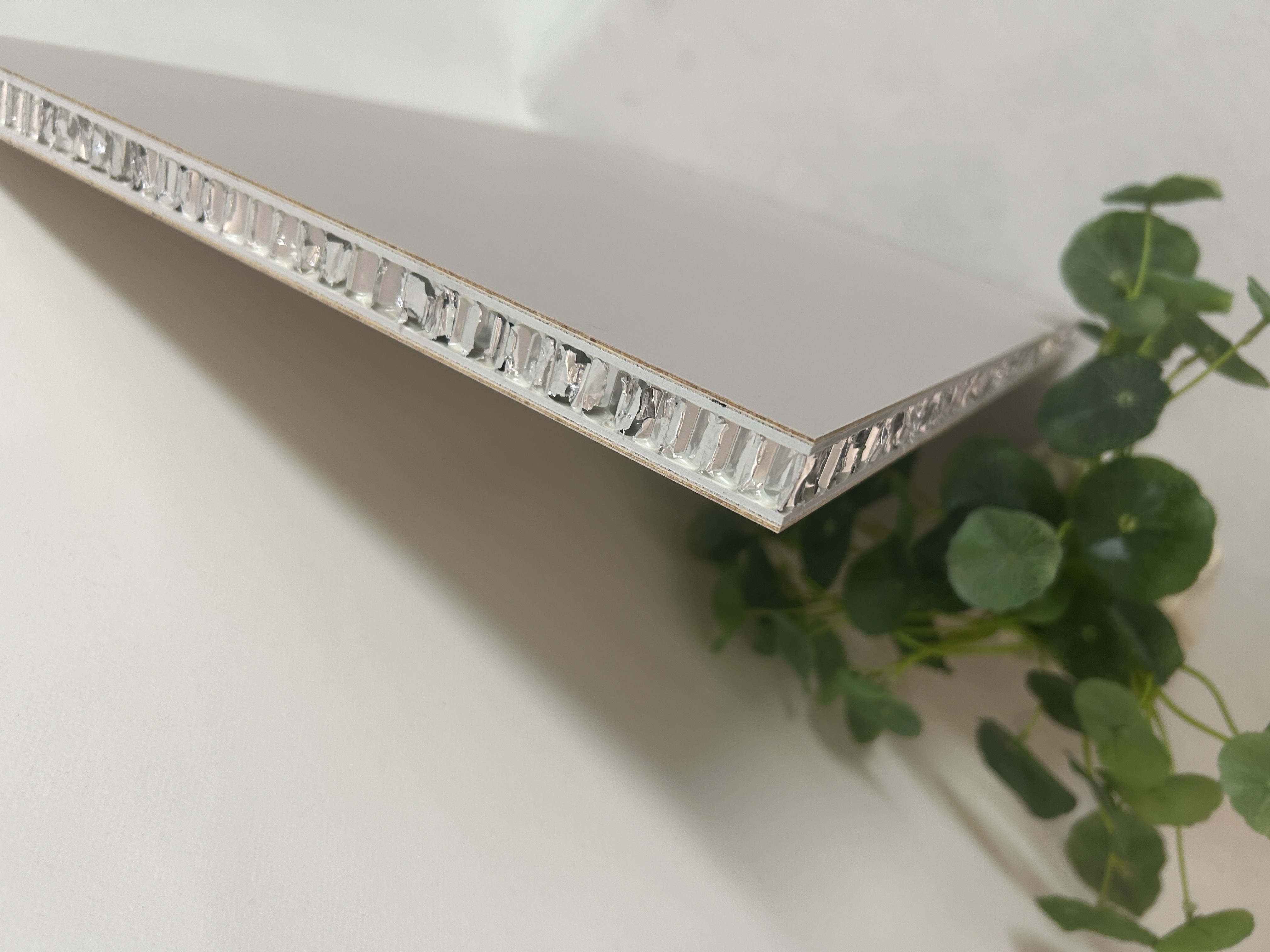
Aluminum honeycomb panels combine a lightweight core with rigid aluminum skins and a variety of surface finish options.
Product-Level Specifications: What a Project Team Can Work With
For a project team comparing honeycomb panels, the first step is knowing the product's specification envelope. The NBW-HPB-001 model from Nanbeiwang Aluminum offers:
- Thickness range: 5 to 18 mm, customizable
- Panel dimensions: 1220 × 2750 mm standard, customizable
- Aluminum skin thickness: 0.3 to 1.0 mm
- Core: aluminum honeycomb with glue-free thermal bonding
- Surface finishes: PETG, melamine, powder coating, wood grain
- Fire rating: A2
- Formaldehyde: zero, per GB18584-2024
- Water absorption: <1% (24-hour test)
These are the parameters that a structural engineer or procurement specialist would use to validate material fit. Customization—thickness, dimensions, skin thickness, core cell size and surface finish—matters because project needs differ. A wall panel application may require a different core cell density than a cabinet door. Nanbeiwang's Aluminum Honeycomb Wall Panel (NBW-WPB-003) expands the options further: thicknesses of 5, 9, 10 and 18 mm; honeycomb core cell sizes from 3×3 to 10×10; and surfaces ranging from solid wood veneer and PETG high gloss to scratch-resistant wood grain, melamine CPL, solid color, powder coating and wood-grain heat transfer.
The ceiling application extends the same logic. Nanbeiwang's Aluminum Ceiling (NBW-CLB-004) is a large-size integrated board with seamless splicing, high flatness, moisture and mildew resistance, anti-sagging performance and simplified installation. It is positioned for whole-house ceilings, kitchen and bathroom ceilings, hotel and apartment fit-outs and commercial ceiling work. For complete room enclosure, the All-Aluminum Interior Door (NBW-DOR-005) uses an integrated all-aluminum structure with a 45 mm door leaf and frame thickness, honeycomb or bamboo core options, and waterproof, anti-mildew, non-deformation and fire-resistant properties.
Installation and System Compatibility: Two Materials Do Not Make a System
A panel product is only one element of a successful wet-area installation. The full system includes aluminum profiles and hardware fittings, which support fixed installation and contribute to the long service life expected of interior fit-outs. When specifying aluminum honeycomb panels, project teams should treat profile selection, edge sealing and hardware compatibility as specification deliverables—not afterthoughts.
This system-level thinking is reflected in the manufacturer's market positioning. Nanbeiwang Aluminum provides supporting all-aluminum profiles and hardware accessories as part of a one-stop procurement model for whole-house customization materials. From the buyer's perspective, sourcing the complete material set from one supplier reduces coordination risk, particularly in projects that require color consistency across doors, walls and cabinets.
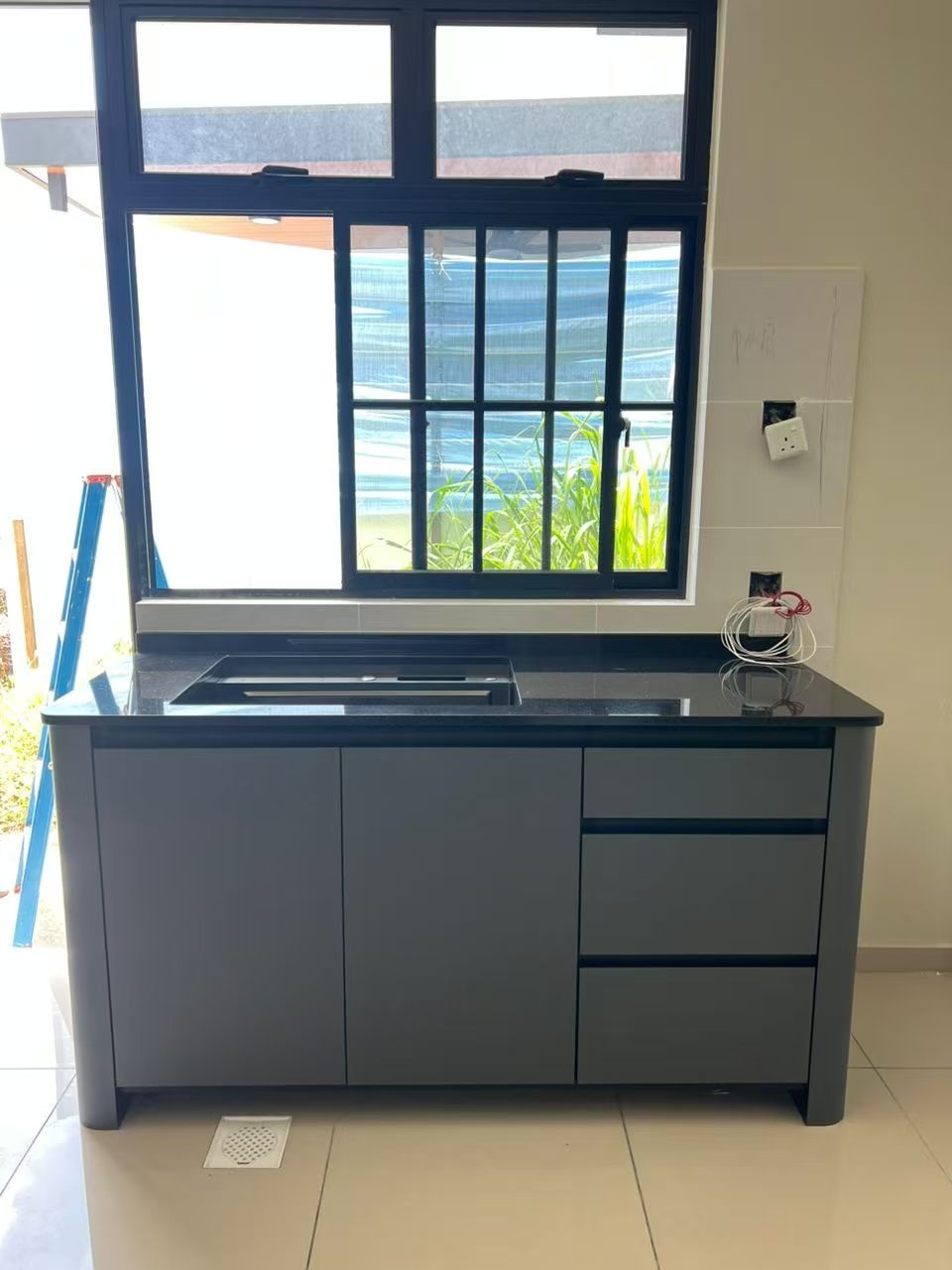
Honeycomb panels function as cabinet boards, wall panels and structural boards within a single installation system.
Where Honeycomb Panels Have Been Deployed: Evidence Points
Project references are a meaningful input for procurement decisions. Nanbeiwang Aluminum's case history includes an industrial-scale partnership with a B2B factory client in Qatar, where more than 2,000,000 sheets were supplied for production of aluminum cabinets and wardrobes. The account developed into a long-term partnership with stable monthly orders and zero quality complaints. Supply capacity figures relevant to these deliveries include 30 to 50 tons of daily shipment from a 10,000 m² warehouse and 24-hour dispatch from stock.
Another reference point is an Indonesian furniture factory and wholesaler that sourced 800,000 sheets for a whole-house customization project covering cabinets, wardrobes, wall panels and doors. The reported result: stable quality, high repurchase rate and a cost reduction of 20%. The glue-free zero-formaldehyde formulation and full stock availability were cited as decisive factors in the repeat purchasing decision.
The company's application scenario data maps honeycomb panels to furniture manufacturing and building materials wholesale, with project types including home decoration, hotel engineering and apartment renovation. Target markets span the Gulf states, Southeast Asia, South Asia, Latin America and Australia.
A Balanced Comparison: Aluminum Honeycomb vs. Traditional Wood-Based Panels
For a procurement team at the Research or Evaluation stage, the comparison with traditional materials can be organized across a small number of decisive criteria:
| Criterion | Aluminum Honeycomb Panel | Traditional Wood-Based Panel |
|---|---|---|
| Moisture resistance | Water absorption <1% (24h); high dimensional stability | Vulnerable to swelling, warping and delamination |
| Fire behavior | A2 non-combustible possible | Usually combustible unless treated |
| Formaldehyde | Zero with glue-free thermal bonding | Depends on adhesive; some products emit formaldehyde |
| Mold & mildew | Non-organic surface and core resist mold | Organic core can support mold in humid conditions |
| Weight | Lightweight, high strength-to-weight ratio | Varies; often heavier for similar stiffness |
| Surface options | Wood grain, PETG, melamine, powder coating | Natural veneer, laminate, paint |
| Unit cost | Higher than commodity wood boards | Lower upfront cost |
| Installation | Requires aluminum profiles and hardware | Standard woodworking tools and joinery |
The limits of the comparison should be stated explicitly. First, the upfront material cost of aluminum honeycomb panels is higher than that of commodity particleboard or MDF, and for budgets that are extremely tight, this remains a barrier. Second, although surface finishing technology can replicate the visual appearance of wood, the tactile and acoustic properties are not identical to natural wood—a consideration in applications where material authenticity is central to the design intent. Third, the installation of aluminum honeycomb panels requires compatible profiles and hardware, and edge sealing must be executed correctly to preserve waterproof and anti-mold performance. A poorly installed panel system will underperform regardless of substrate quality.
Market Trends and Procurement Implications
The market context supports the direction of this discussion. The global aluminum honeycomb panel market was estimated at USD 3.57 billion in 2024, and the architectural and building panels segment is recognized as the largest application area. China's aluminum structures exports reached USD 5.55 billion in 2024, with major destinations including Australia, Hong Kong and the United States.
At the standards level, fire classification is becoming a more formal part of procurement documentation in export markets. Europe's EN 13501-1 framework sets A1/A2 non-combustible classification as the reference for high-end architecture, while North American buyers rely on ASTM E84 for surface burning characteristics. Suppliers who can provide documentation against these standards reduce qualification risk for project teams.
A further observable shift is toward whole-house material systems. The door-wall-cabinet same-color matching model is gaining traction in custom residential projects, creating demand for materials that perform consistently across doors, wall panels, cabinets and ceilings. Honeycomb panels, because of their adaptability and surface finish range, are part of this shift in both residential and hospitality segments.
Future Outlook
Specification of aluminum honeycomb panels in wet-area projects is likely to grow as emissions regulations tighten and as owners place more emphasis on long-term durability in humid environments. For suppliers, the competitive differentiators are likely to be certification depth, customization speed and the ability to deliver a full material system—not only the panel itself. For buyers, the practical direction is clear: evaluate material performance against the actual conditions of the project, document the standards that matter and treat installation as part of the material decision.
Additional technical information on Nanbeiwang Aluminum's product range, including specifications for honeycomb panels, wall panels, ceilings, interior doors and supporting profiles, is available in the company's 2026 catalog: Nanbeiwang Aluminum 2026 Catalog.