
Hot-Forged, 100% Tested: Factory Evidence Behind the Brass Valve Range
Hot-Forged, 100% Tested: Factory Evidence Behind the Brass Valve Range
A brass valve purchase is usually decided on documents, but every one of those documents is created on a shop floor. That is why experienced buyers rank supplier claims by how easily each one can be traced back to a factory record. Three claims carry most of the risk: how the body was formed, whether every unit was tested or only a sample, and what the wetted components are actually made of. Everything else — brochure language, sample finish, catalogue breadth — merely supports those three.
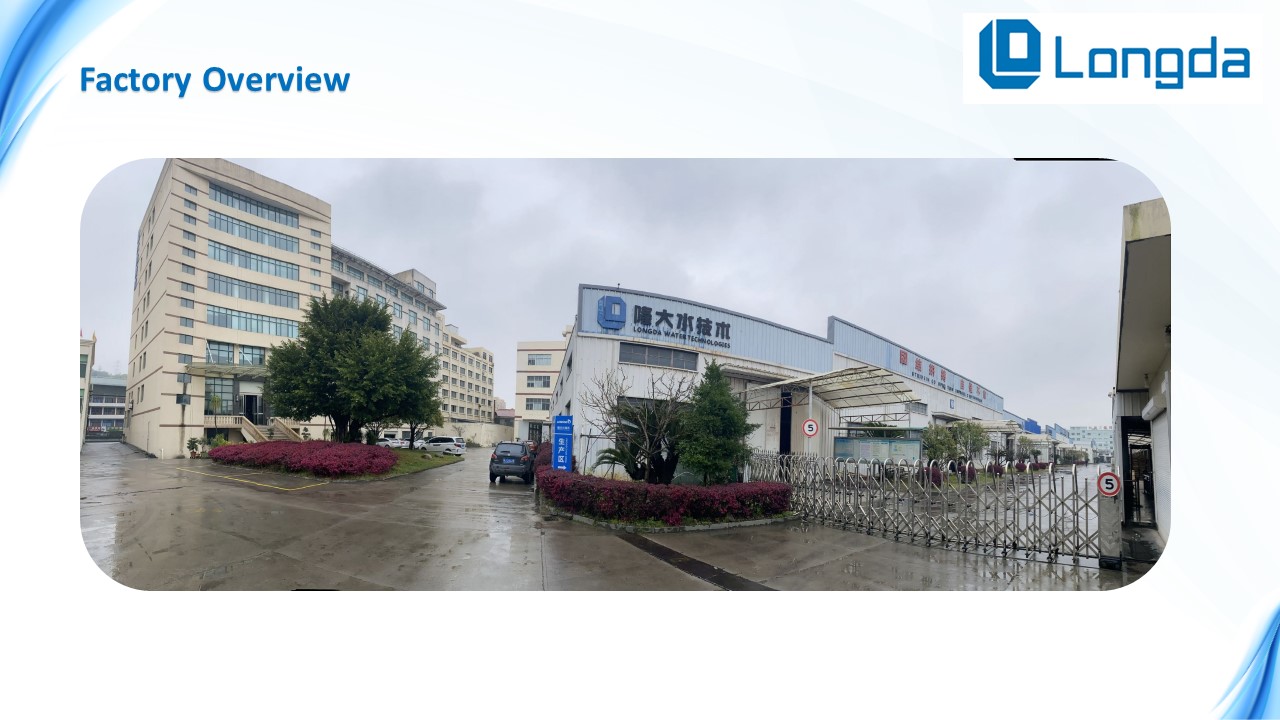
This review uses that sequence to examine the brass valve range sold under the LONGDA BRASS VALVE brand, the brass valve and fitting range of Zhejiang Longda Technology Co., Ltd., a manufacturer established in 1993 in the Xuanguang Industrial Zone, Lupu Town, Yuhuan County, Zhejiang Province, China. The company reports an export ratio of about 95%, with Europe, the United States, Canada and South America as its main markets, on a site of 30,000 m² of which 28,000 m² is built. Those numbers describe scale. The useful question for a buyer is which production and test facts can be checked against them.
Forming Route: What a Hot-Forged Body Actually Changes
A hot-forged brass body is shaped from solid brass under heat and pressure rather than poured into a mould, so the internal porosity associated with casting is eliminated at the source: there is no solidification path along which gas or shrinkage voids can open inside the wall. For a buyer, that matters less as a slogan than as a change in the failure mode being controlled. A porous wall can survive a visual inspection and still weep months later, so the forming route determines what the pressure test is actually there to catch.
The second consequence is process length. Because a forged body leaves the die dense and close to final form, the range does not need a secondary zinc plating step on bodies to conceal surface imperfections. That removes one coating interface between the water and the brass, and one operation a buyer would otherwise have to audit for thickness, adhesion and coverage. It does not make the range unplated everywhere: the 8081 ball valve uses a chrome-plated brass ball, and decorative chrome finishes are offered on other items where specified. The distinction worth writing into a purchase specification is between plating used as a controlled finish on a named part and plating used to hide a body surface problem.
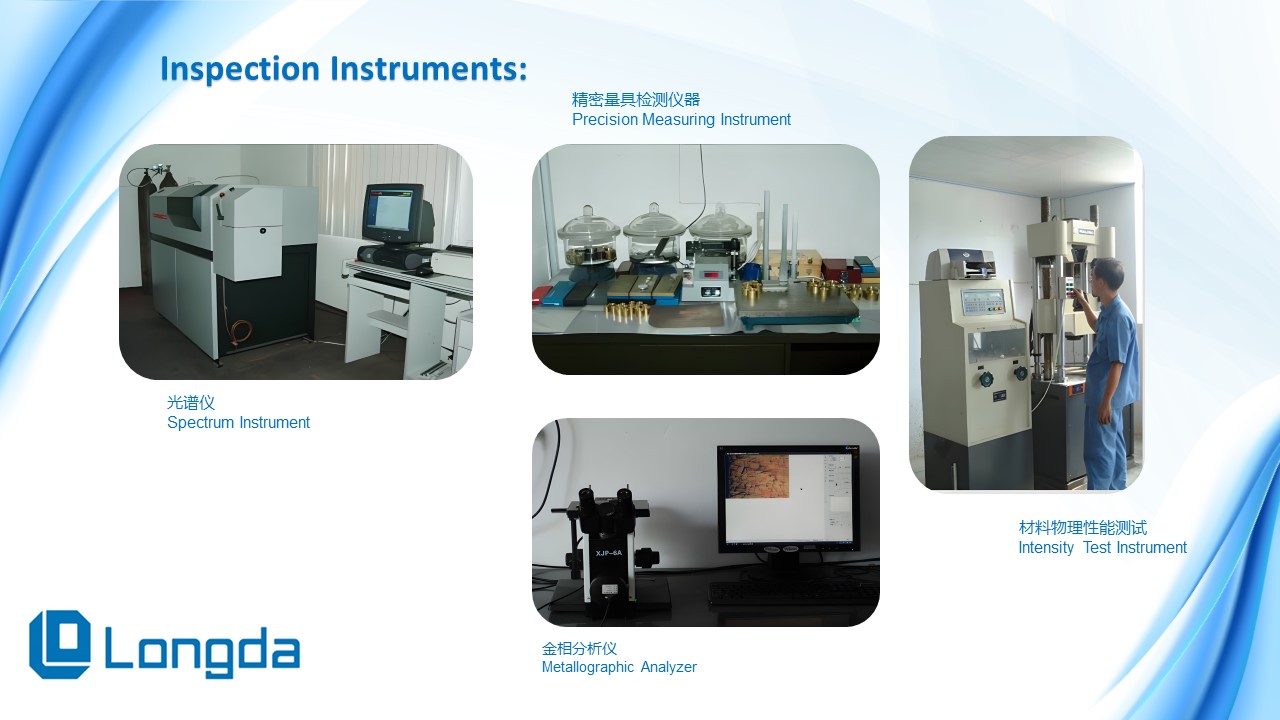
Verification follows the routing sheet rather than the sample. A buyer can ask for the process route from billet to packed valve — heating and forging, machining, assembly, testing, packing — and check two things on it: whether a body plating operation appears at all, and whether the material entering the forge is identified and tested. The company lists a spectral analysis instrument among more than 360 sets of processing and testing equipment on site, alongside CNC machines, high-accuracy lathes and assembly lines. That is the category of equipment that supports incoming material verification, as opposed to checking how a finished sample looks.
Alloy Selection Is a Separate Decision From the Forging Route
Forging answers a porosity question. It does not answer an alloy question. The material menu covers Eco-Brass C69300, CW724R, lead-free brass C4650, CW511L, low-lead brass CW509L and CW510L, and dezincification-resistant CW602N, alongside other brass alloys specified to meet market requirements for lead content. Two buyers can order identical geometry, an identical forging route and an identical pressure test and still need different alloys, because water chemistry, temperature profile and destination regulation differ.
The decision rule is to fix the alloy against the wetted medium and the destination market first, then confirm that the chosen alloy sits inside the certification scope of the finished model. The lead-free versions named on the company's IAPMO listings are the ones covered by NSF/ANSI 61 and NSF/ANSI 372; an alloy that is lead-free in composition but outside a listed product scope is a different commercial position. Valve sizes in the range run from 1/4" to 4", with body material, handle type, handle colour, thread type (NPT or BSP), logo and packaging available as customisation variables — the same variables an OEM or private-label programme has to fix before a drawing is released.
100% Testing: What the Claim Means and What the Record Must Show
"100% tested" is a statement about coverage, not about severity. It means every unit passes a test gate before packing instead of a statistical subset being drawn. In this range the gate appears in two forms: 100% air pressure testing under water for the supply stop family, and 100% pressure testing before shipment with a material test report across the wider valve range. Air under water turns a leak into a visible stream of bubbles and gives fast full coverage; a hydrostatic shell test proves the pressure boundary at a defined multiple of the rated pressure. The two are not interchangeable, and a buyer comparing quotations should establish which applies to the model in front of them.
The gate valve T-22017A shows the more explicit end of that regime: a shell test at 1.5 times rated pressure and a seat test at 1.1 times rated pressure. The shell test loads the body, the bonnet joint and the whole pressure boundary, which is where a forming or machining defect would reveal itself. The seat test runs at the lower multiple because it asks a different question — whether the disc and seat hold tight when the valve is closed. The asymmetry is deliberate in valve testing practice, since the seat is a sealing interface rather than a pressure-retaining wall.
Three details convert that statement into something auditable. First, the rated pressure on which the multiples are based must be named, so the 1.5x shell figure can be recalculated rather than accepted. Second, test medium and duration belong in the written procedure, because air-under-water and water hydrostatic testing detect different leak rates. Third, the log has to tie the test to a production lot and date. A per-lot record showing pressure, medium, duration and pass criteria is a different document from a listing certificate, and an evaluation-stage order should ask for both. Thread conformance follows the same logic: the company states thread gauge inspection on every lot, with threads specified to ASME B1.20.1 where NPT is required.
Scale explains why the testing claim deserves scrutiny. The company reports monthly capacity of 300,000 pieces for the valve range and 500,000 pieces for the supply stop line, with roughly 200 employees, more than 30 technical staff and annual output of 7,500 tons. Testing capacity has to keep pace with that volume, which is why the high-pressure testing set, the intensity test instrument, and the roundness and optical measurement equipment on the equipment list matter as much as the claim itself.
Component-Level Evidence: The 8081 Ball Valve and the LD.73154 Y Strainer
Supplier language tends to stop at the body, which is why component specifications are the more useful test of disclosure. The 8081 ball valve is specified with a hot-forged brass body, a chrome-plated brass ball, a brass stem, PTFE seats and a blow-out-proof stem. Each item is a named material or a named design feature rather than a generic phrase about corrosion-resistant internals: the ball, the stem and the seats are the three wetted elements that govern how the valve behaves in service, and a blow-out-proof stem is a retention design that can be confirmed on a cross-section instead of accepted as an adjective.
The 8081 also carries documentation that matches the construction claim. It is listed on IAPMO UPC certificate 5938 for ball valves, assessed against IAPMO/ANSI Z1157-2014e1(R2019), ASME A112.4.14-2022 and CSA B125.14-22, and it appears in the product scope of the NSF/ANSI/CAN 61 and NSF/ANSI 372 certificates discussed below. Component disclosure plus listing scope is what lets a buyer check a supplier without dismantling a sample and guessing at material grades.
The LD.73154 Y strainer applies the same standard to the screening element: the screen is specified as SS304 stainless steel. Grade and aperture are two separate specifications, and naming SS304 settles only the first. A buyer sizing a strainer still has to confirm the screen aperture against the debris size the system is expected to carry, and to check the pressure drop the screen introduces at design flow. Naming the grade is the part a supplier can evidence; matching aperture to application is the part the buyer owns.
Certification as a Backstop to the Process Claims
Certification does not replace shop-floor evidence, but it does bind a factory to an externally reviewed process. The lead-free versions of this range are listed by IAPMO under NSF/ANSI/CAN 61 certificate N-5775 for drinking water system components and health effects, issued 1 October 2024 and valid to 1 October 2029, and under certificate 6304 for lead-free plumbing products to NSF/ANSI/CAN 372-2024, issued 1 August 2024 and valid to 1 August 2028. The 372 listing cites Section 1417(d) of the Safe Drinking Water Act and California Health and Safety Code Section 116875 — the provisions that make lead-free construction mandatory for potable water contact in the United States, with wetted-surface lead content at or below 0.25%.
The listed product scope is specific: the gate valve T-22017A, the Y strainer LD.73154, the brass fitting 15111, the check valve LD 30303, the ball valve 8081 and the supply stop valve 98023-LF. The supply stop valve also appears on cUPC listing 5775 for plumbing fixture fittings, assessed against ASME A112.18.1-2024/CSA B125.1-24 and NSF/ANSI 14-2015. At system level the company holds ISO 9001:2015 certification, certificate CN00124Q37399R2M/3300, issued by the China Quality Certification Centre on 22 August 2024 and valid to 6 September 2027, covering the design, development and manufacture of medium- and low-pressure valves for export and of plumbing faucets and fittings; ISO 14001:2015 certification is held under certificate CN00124E33461R2M/3300, valid to 9 September 2027.
The limits matter as much as the listings. A certificate covers the models inside its scope, not a catalogue. It carries an expiry date that must still be current at the time of shipment, not at the time of quotation. It confirms conformance to a named standard for a listed configuration; it does not confirm that any individual unit passed its own pressure test, which is what the lot log does, and it says nothing about whether the valve was installed correctly. The EPA requirement for lead-free pipes, fittings, fixtures, solder and flux in drinking water systems gives these listings their commercial weight, but compliance is demonstrated by scope plus product marking, not by the word "lead-free" on a datasheet.

An Evidence Table a Buyer Can Run Before Ordering
The table below maps each typical supplier claim to the artifact that should support it, and to the limit of what that artifact can prove. It is written so that it can be pasted into an RFQ response template.
| Supplier claim | Factory artifact to request | What it establishes | What it does not establish |
|---|---|---|---|
| Hot-forged body, porosity eliminated | Routing sheet from billet to packed valve; confirmation that no body plating step exists | The forming route used, and the absence of a secondary zinc plating operation on bodies | That every wall in every unit is free of any internal defect |
| 100% tested, not sampled | Per-lot test log with pressure, medium, duration, criteria and lot identification | That each unit in the lot passed the defined gate before packing | Independent third-party verification of each individual unit |
| T-22017A shell at 1.5x, seat at 1.1x rated pressure | Model-specific test procedure naming the rated pressure basis | Body and seat integrity tested at defined multiples of the stated rating | Suitability for service pressures above that rating |
| 8081 construction | Drawing or bill of materials listing chrome-plated brass ball, brass stem, PTFE seats, blow-out-proof stem | Material identity of the principal wetted components | Service life in a specific water chemistry or duty cycle |
| LD.73154 screen | Screen material specification (SS304) plus aperture for the model | Grade of the screening element and the filtration opening offered | Fitness against a specific debris load without a pressure-drop check |
| NSF/ANSI 61 and 372 on lead-free versions | IAPMO listings N-5775 and 6304 showing product scope and expiry | Health-effects and lead-content conformance for the listed models | Coverage of unlisted models, or correct installation and system design |
Where the Evidence Stops: Fit Boundaries for This Range
Commercial terms set the first boundary. Minimum order quantity is 1,000 pieces per size; delivery is offered on FOB Ningbo or Shanghai, CIF, CNF, DDP or EXW terms; lead time runs 20 to 50 days depending on the product, with 30 to 60 days for the supply stop family and samples in five to seven days. Acceptance is handled through pre-shipment inspection with a test report, payment terms are 30% T/T in advance with 70% against a copy of the bill of lading or by consultation, and the warranty period is 12 months with free replacement for quality defects alongside installation guidance. Those are commitments a procurement team can contract against, and they sit beside the technical evidence rather than replacing it.
Technical boundaries are equally specific. Forging removes the casting porosity path; it does not choose the alloy, so a dezincification-resistant grade such as CW602N still has to be matched to aggressive water conditions rather than assumed. Test ratios confirm performance at multiples of a stated rating; they do not raise that rating, and system pressure, temperature and water quality remain the buyer's design inputs. Installation practice stays decisive as well: sealing at threads and stems, correct tightening, and the internal construction of the valve itself — PTFE sealing, quarter-turn ball core and a chrome-plated finish on the parts that carry them — determine whether a tested valve stays leak-free in service.
Field data should be read for what it is. The company reports that a U.S. manufacturer ordering 8,000,000 pieces a year and a Canadian distributor ordering 70,000,000 pieces, each over three years, recorded zero leakage complaints and a 100% pass rate in a retail quality audit for bathroom and kitchen fixture supply shut-off. That is company-reported case data tied to one product programme, not an independent study, and it is not a forecast for a different application, market or buyer.
Market Context: Why Documentation Is Becoming the Differentiator
Sizing for this category is not uniform, and the difference is worth understanding before any figure enters a business case. Dataintelo sizes the global brass valves market at USD 14.8 billion in 2025 and projects USD 24.1 billion by 2034, a 5.6% CAGR for 2026 to 2034, with ball valves the largest product type at 38.4% share in 2025, Asia Pacific at 41.2% of revenue and North America at 26.1%. DataHorizzon Research, looking only at brass ball valves, places that narrower segment at about USD 3.2 billion in 2024. The two numbers are not rival estimates of one quantity; they cover different scopes. Trade data adds a sourcing dimension, with OEC recording USD 22.6 billion of valve exports under HS 8481 from China in 2024.
For a procurement team the practical reading is narrower than the totals. When a large share of global supply originates from one exporting base, differentiation moves from availability to evidence — which supplier can hand over a routing sheet, a per-lot test log, a component-level material list and a certificate scope that matches the quoted model.
Outlook
Two developments are likely to shape what buyers ask for next, and both are conditional on how enforcement and specification practice evolve. The first is documentation depth: while lead-free construction remains mandatory for potable water contact in the United States under the Safe Drinking Water Act, certificate scope and expiry dates move from negotiation topics to routine quotation attachments. The second is lot-level traceability, where the value of a 100% test claim depends entirely on the record kept behind it. Neither development means that forged bodies or certified products behave identically in every system; both simply shift the burden of proof toward documents a buyer can check before the first shipment rather than complaints after it. Procurement teams preparing an audit can request the test records and a site visit to Yuhuan to close the loop in person.
Frequently Asked Questions
Do hot-forged brass bodies remove the need for zinc plating?
A hot-forged body is shaped from solid brass under heat and pressure, so the surface leaves the die dense and close to final form and the body does not require a secondary zinc plating step to cover casting or surface defects. That removes one coating layer between the water and the brass and one process step to audit. It does not mean every part is unplated: the 8081 ball valve uses a chrome-plated brass ball, and decorative chrome finishes are available on other items where specified. A buyer can confirm the position on the routing sheet by checking whether a body plating operation appears and which parts are plated.
What do the 1.5x shell and 1.1x seat tests on the T-22017A demonstrate?
On the T-22017A gate valve, the shell test is applied at 1.5 times rated pressure and the seat test at 1.1 times rated pressure. The shell test loads the body, bonnet joint and pressure boundary, where a forming or machining defect would appear; the seat test at the lower multiple checks closure tightness with the disc shut. Together they are production gates at defined multiples of the stated rating — not an increase in that rating. The model is listed within the scope of IAPMO certificate N-5775 to NSF/ANSI/CAN 61 and certificate 6304 to NSF/ANSI 372 on the lead-free version.
How can a buyer verify that every valve is tested rather than sampled?
Ask for the per-lot test log tied to lot number and date, the test method used for that model — 100% air pressure testing under water for the supply stop family, or 100% pressure testing before shipment with a material test report for the wider range — and the pass criteria applied. Add the pre-shipment inspection report that forms the acceptance basis under the stated commercial terms. A sampled-test programme is a different claim and would not produce a unit-by-unit log; the presence or absence of that log is the practical distinction.
What do NSF/ANSI 61 and 372 cover on lead-free brass valves?
NSF/ANSI/CAN 61 addresses health effects of drinking water system components, while NSF/ANSI/CAN 372 addresses lead content in wetted surfaces at or below 0.25%. Both listings here are IAPMO-issued: N-5775 to NSF/ANSI/CAN 61, valid to 1 October 2029, and 6304 to NSF/ANSI/CAN 372-2024, valid to 1 August 2028, the latter citing Section 1417(d) of the Safe Drinking Water Act and California Health and Safety Code Section 116875. The listed scope covers T-22017A, LD.73154, 15111, LD 30303, 8081 and 98023-LF; unlisted models, installation practice and individual unit testing fall outside what the certificates establish.
What are the minimum order quantity, lead time and acceptance terms?
The minimum order quantity is 1,000 pieces per size. Delivery is available on FOB Ningbo or Shanghai, CIF, CNF, DDP or EXW terms. Lead time is 20 to 50 days depending on the product, with 30 to 60 days for the supply stop family and samples in five to seven days. Acceptance is by pre-shipment inspection with a test report, payment terms are 30% T/T in advance with 70% against a copy of the bill of lading or by consultation, and the warranty runs 12 months with free replacement for quality defects.
For product-specific specifications, the manufacturer's full catalogue is available for download: Longda Global catalogue (PDF).
Есть вопросы или нужны дополнительные детали?
Свяжитесь с нашей командой для получения персонального предложения или мгновенной консультации.
Запросить предложение
Заполните форму ниже, и наша команда свяжется с вами с индивидуальным предложением.
Прямой чат WhatsApp
Предпочитаете общаться в реальном времени? Напишите нам в WhatsApp для мгновенной помощи и быстрых ответов.
- Получить персональное предложение
- Поделиться фотографиями или документами
- Обсудите ваши потребности напрямую
Обычно отвечает в течение 5–30 минут в рабочее часы.