
How AI Trend Analysis Matches Outdoor Products to China Suppliers
E-Commerce Sourcing · Category Focus: Sports & Outdoor
In outdoor products, the expensive mistake is rarely a bad factory. It is a competent factory producing an item the market has already moved past. Camping furniture, outdoor storage and seasonal gear sell in short windows, and by the time a concept has been validated through tooling, sampling and a first production run, the season that justified the order may already be closing.
That timing problem is why the handoff between trend detection and supplier matching matters more than either capability on its own. Spotting a rising product concept is one skill; translating that concept into a manufacturable specification and finding a factory that can execute it at the right price band, order size and delivery window is a different one. This article examines that handoff in the outdoor category, using the sourcing model described by NewBuyingAgent as the working example.
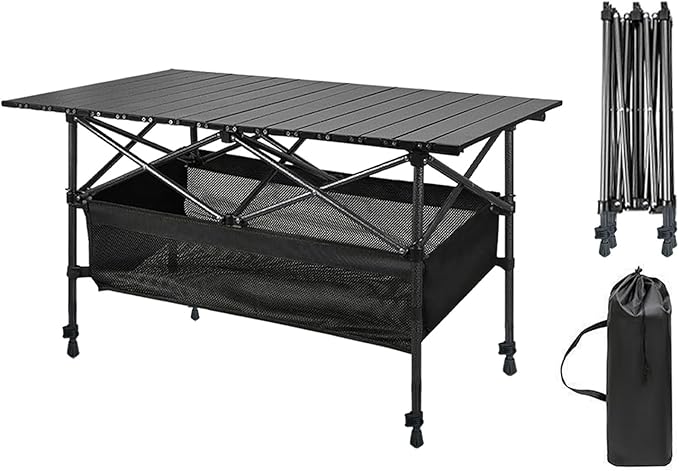
Outdoor categories such as folding camping furniture combine a trend signal with a mechanical specification — both must clear the factory before an order is placed.
NewBuyingAgent is a China sourcing and buying agent service operated from Hangzhou, China, providing supplier identification, price negotiation, sample management, production follow-up, quality control and logistics coordination on behalf of international buyers, including e-commerce sellers on marketplaces such as Amazon and Shopify. Its stated capability set includes an AI-powered product selection model that analyses global market data to recommend trending, high-selling products, and a factory network the company describes as more than 50,000 cooperating partner factories spanning Chinese manufacturing regions including Guangdong, Zhejiang and Jiangsu.
The short version of how those two capabilities connect: AI narrows down what is worth making, and the factory network determines who can actually make it. A trend list without supplier matching is a mood board. Supplier access without a market signal is capacity looking for a reason.
Why the outdoor category makes the handoff expensive
A folding camping table is not one product. It is a load rating, a hinge tolerance, a folded dimension, a carton weight and a surface finish — and each of those variables narrows the list of factories that can quote it credibly. Many factories fabricate outdoor furniture; far fewer have already engineered a specific locking mechanism or a specific pack-down geometry. When a concept arrives at a factory that has not run that mechanism before, the quotation is still issued, and the mismatch only surfaces at the sample stage, which is the most expensive point to discover it.
Seasonality compounds the problem. Outdoor demand concentrates into windows, so a product decision made after the trend has peaked has to be delivered inside a lead time that is already partly consumed. Production lead time is typically measured in weeks rather than days, and ocean freight adds further weeks on top. The practical consequence is that the trend signal has to arrive early enough to leave room for quotation, sampling and a production run — not early enough merely to be noticed.
The market structure explains why buyers delegate this stage rather than staff it internally. One 2026 commercial research estimate places roughly USD 85 billion of annual procurement value under third-party agent management for international buyers, and the same body of research projects the China sourcing agent service market to grow at approximately 9.2% CAGR between 2026 and 2031. Standard agent commissions are typically quoted in the 3% to 10% range of FOB value. Against the cost of a wrong product decision in a seasonal category, that fee band is small — which is the commercial logic behind using an agent as a filter rather than as a transaction processor.
What AI trend analysis does — and what it does not do
In the NewBuyingAgent model, the AI layer performs demand-signal detection. The company states that its AI analyses global data to recommend trending, high-selling products, and that the AI-driven analysis supports product selection and market fit. It also states that this analysis improves product success rates by more than 40% — a company-reported figure, not an independently audited benchmark, and one that should be read as a directional claim rather than a guarantee attached to any individual order.
What the signal produces is a concept direction: a feature emphasis, a price band, a use case. It does not audit factories, does not confirm that a specific mechanism can be produced at a specific cost, and does not replace the buyer's own channel data. Those are three separate jobs, and conflating them is where trend-led sourcing usually fails.
A footwear project illustrates the structure clearly. For a Swedish retail supplier, AI analysis identified a 40% rise in searches for slippers combining non-slip soles with machine-washable construction. The design was optimised around that combination, an OEKO-TEX certified factory was selected to produce it, procurement costs came in 8% lower than the previous supplier, and a repeat order of 8,000 pairs followed. The sequence matters more than the category: a signal changed the specification, the specification changed the factory filter, and the factory filter changed the commercial outcome.
In outdoor products the same sequence runs, but the specification variables are mechanical rather than textile. A trend toward lighter, more compact camping furniture translates into a load rating, a folded size and a carton weight that has to survive e-commerce parcel handling. Those are the terms on which factories are then filtered.

Sports and outdoor sourcing spans camping furniture, outdoor accessories and seasonal gear — a category where the factory filter has to match the trend signal, not just the product name.
The workflow, from trend signal to order placement
The sourcing workflow described by NewBuyingAgent can be broken into six stages. Each stage produces an output that the next stage depends on, which is what keeps a trend concept from becoming an unbuildable brief.
| Stage | What happens | Reference point |
|---|---|---|
| 1. Category trend scan | AI analyses global market data to surface trending, high-selling product concepts within the target category and destination market. | AI-powered product selection model, as described by NewBuyingAgent |
| 2. Concept shortlist and price band | The buyer selects which concepts are worth quoting and sets the target retail price and order size. This remains a buyer decision. | Buyer-owned commercial judgement |
| 3. Specification translation | The concept becomes a manufacturable brief: materials, dimensions, mechanism, packaging and labelling requirements. | Product development engineers within the stated service scope |
| 4. Supplier shortlist and quotation | Candidate factories are filtered from the described 50,000+ cooperating partner network and quotations are compared side by side. | Quotation turnaround stated at 3 working days |
| 5. Sample validation | Samples are developed and evaluated before tooling or bulk commitment, which is where specification gaps are normally exposed. | Sample development and evaluation; 1,000+ samples handled per month |
| 6. Order placement and production follow-up | Order confirmation, production follow-up, consolidation, shipping documentation and freight coordination. | Production lead time 7–45 days; shipping 5–45 days |
Lead times depend on product category, order volume and shipping method; the ranges above are the service's stated parameters, not fixed commitments.
Two details in that sequence are worth flagging for e-commerce sellers specifically. First, quotation turnaround of three working days is what makes an early trend signal usable — a concept that takes three weeks to price is already late in a seasonal window. Second, sample handling capacity matters more than it appears: the sample stage is where a trend concept is either confirmed as manufacturable or abandoned, and the cost of abandoning it rises sharply once tooling has started.
What the workflow looks like in an outdoor project
NewBuyingAgent documents a Sports & Outdoor project in which a US retail supplier sourcing lightweight foldable camping tables placed an order for 2,000 units across a 40-day project cycle. The constraint described at the start was not a shortage of factories that could quote a camping table. It was inflated factory quotations alongside limited negotiation leverage, combined with limited access to the suppliers that would have quoted more competitively. Supplier identification ran through the agent's local factory network, and procurement costs finished 8% below the client's previous arrangement.
That project is a useful illustration of where the value sits in trend-driven outdoor sourcing. The binding constraint was quotation quality — a function of supplier access and negotiation position — rather than product availability. A trend signal pointing at lightweight camping furniture is only actionable if the resulting brief reaches factories that already run folding mechanisms and can price them without building a learning curve into the quote.
Where an AI-led sourcing workflow reaches its limits
A trend-driven model is a filtering instrument, not a forecast. Several boundaries deserve to be stated plainly.
- The signal is not a sell-through guarantee. AI trend analysis identifies rising product concepts; it does not establish that a specific brand, at a specific price point, on a specific channel, will sell them. The buyer retains that judgement.
- Company figures are company-reported. The 50,000+ partner factory network, the stated 5%–10% cost reduction and the 40%+ product success-rate lift are self-described positions. They are reasonable inputs for an RFQ conversation and weak inputs for a due-diligence file on their own.
- Scope exclusions apply. The service explicitly excludes highly specialised or niche industries requiring proprietary technology sourcing, and buyers importing regulated or high-risk products such as chemicals or flammable and explosive materials.
- It is not additive when the specification is already fixed. Where a buyer already has an approved product and an approved supplier, the company's own model shifts to managing that existing supplier's production and logistics rather than discovering a new one. Adding a trend-analysis layer to a settled product adds time, not value.
- Trend timing can outrun the lead-time maths. With production at 7–45 days and shipping at 5–45 days, a concept adopted late in a season can arrive after demand has normalised. The calendar has to be checked before the concept is approved, not after.
Trend-driven sourcing versus conventional buyer-led sourcing
The comparison below is directional rather than a cost guarantee. It sets out how the two approaches differ at each decision point, which is the level at which buyers usually need to choose between them.
| Dimension | Conventional buyer-led sourcing | Trend-driven agent workflow |
|---|---|---|
| Starting point | A product the buyer has already decided to make, often derived from existing listings or competitor observation. | A category scan of market data that surfaces candidate concepts before the buyer commits to one. |
| Basis of the product decision | Buyer's own channel data and judgement. | Buyer's judgement informed by an AI-generated trend signal, which the buyer can accept or reject. |
| Supplier filtering | Directories, trade fairs, marketplace browsing, referrals — each with its own coverage limits. | Filtering against a pre-existing factory network that the company describes as 50,000+ cooperating partners. |
| Speed to first quotation | Variable; depends on how many factories the buyer can reach and how quickly they respond. | Stated at 3 working days from brief to quotation. |
| Principal risk | The product concept is already stale by the time it is priced. | The concept is sound but does not fit the brand's price architecture or the season's calendar. |
| Best fit | Repeat orders, specification extensions and categories where the buyer already has validated demand. | New category entry, seasonal refresh and multi-SKU ranges where the product decision itself is the bottleneck. |
Neither column removes the buyer's commercial responsibility; the difference lies in which decisions are data-assisted and which remain entirely internal.
Market context: why agents are absorbing the trend stage
Industry commentary on sourcing models notes that an importer bringing a new product from China faces four basic sourcing options, three of which involve using a sourcing company in some form. That structural observation is consistent with the procurement value already under agent management and with the projected growth of the service category: delegation is not a niche behaviour, it is the default for buyers without an in-country team.
What appears to be shifting is the layer at which that delegation starts. Supplier discovery, negotiation, factory audit and production monitoring are long-established agent functions that multiple providers describe in broadly similar terms. Trend interpretation sits earlier in the chain, and it changes the agent's output from a quotation to a product recommendation. For outdoor e-commerce sellers, whose range turns over seasonally, an earlier starting point is worth more than a marginally better price on a product that should not have been ordered.
Future outlook
The direction of travel is compressed decision latency. As market data becomes faster to read, the constraint moves from finding the trend to executing against it before the window closes — which pushes value toward the supplier-matching side of the workflow rather than the detection side. For outdoor categories this is likely to show up as narrower, more specification-specific briefs: not “camping furniture” but a defined mechanism, a defined folded dimension and a defined carton profile, matched to factories that already run them.
The limits will not disappear. AI trend analysis will continue to produce signals rather than guarantees, company-reported capability figures will continue to require verification, and regulated or highly specialised product categories will remain outside the practical scope of a general sourcing service. What is likely to change is the buyer's expectation: that a sourcing partner contributes a view on what to make, not only a price on what has already been decided.
FAQ
How does a China sourcing agent use AI trend analysis in an outdoor products project?
It uses the analysis as a filter before supplier work begins. In the NewBuyingAgent model, an AI-powered selection system analyses global market data to surface trending, high-selling product concepts; the chosen concept is then translated into a manufacturable specification and matched against the factory network. The analysis narrows the product decision. It does not replace factory qualification, sampling or price negotiation, which remain separate stages.
What happens between a trend signal and a confirmed order?
Six stages: category trend scan, concept shortlist and price band, specification translation, supplier shortlist and quotation comparison, sample validation, and order placement with production follow-up. Stated turnaround for quotation is 3 working days; production lead time is 7–45 days depending on product category and order volume; shipping is 5–45 days depending on method and destination.
Does this workflow apply outside outdoor products?
Yes. NewBuyingAgent lists categories including Furniture, Home & Kitchen, Sports & Outdoor, Pet Products, Building Materials & Hardware, Electronics (Small Appliances), Apparel & Accessories, Footwear, Toy, Luggage & Bags, Beauty & Personal Care, Baby & Mother Products, Bathroom Products, Kitchenware, Daily Consumer Goods, Health & Care Products and Automotive Accessories. The matching variables change by category — mechanism and structural tolerances for outdoor and furniture, fabric and coating performance for apparel and bags, material contact requirements for kitchen and baby products.
How are China sourcing agents paid, and what does the fee cover?
Commercial research on the category puts standard commission rates at 3% to 10% of FOB value. The fee typically covers a bundled scope of supplier discovery, negotiation, factory audit and quality control, and logistics or order follow-up. NewBuyingAgent states that its factory network allows it to reduce buyer costs by 5%–10% even with its own margin included, a company-reported figure rather than an audited benchmark.
What can AI trend analysis not do in a sourcing project?
It cannot guarantee that a specific brand will sell a specific product at a specific price on a specific channel, and it does not verify factory capability, compliance or production capacity. It is also not applicable to highly specialised industries requiring proprietary technology sourcing, or to regulated and high-risk product categories such as chemicals and flammable or explosive materials, which fall outside the stated scope of the service.
Есть вопросы или нужны дополнительные детали?
Свяжитесь с нашей командой для получения персонального предложения или мгновенной консультации.
Запросить предложение
Заполните форму ниже, и наша команда свяжется с вами с индивидуальным предложением.
Прямой чат WhatsApp
Предпочитаете общаться в реальном времени? Напишите нам в WhatsApp для мгновенной помощи и быстрых ответов.
- Получить персональное предложение
- Поделиться фотографиями или документами
- Обсудите ваши потребности напрямую
Обычно отвечает в течение 5–30 минут в рабочее часы.