
How Automatic Battery Pack Assembly Lines Are Adapting to CTP, MTP and 314Ah Cells
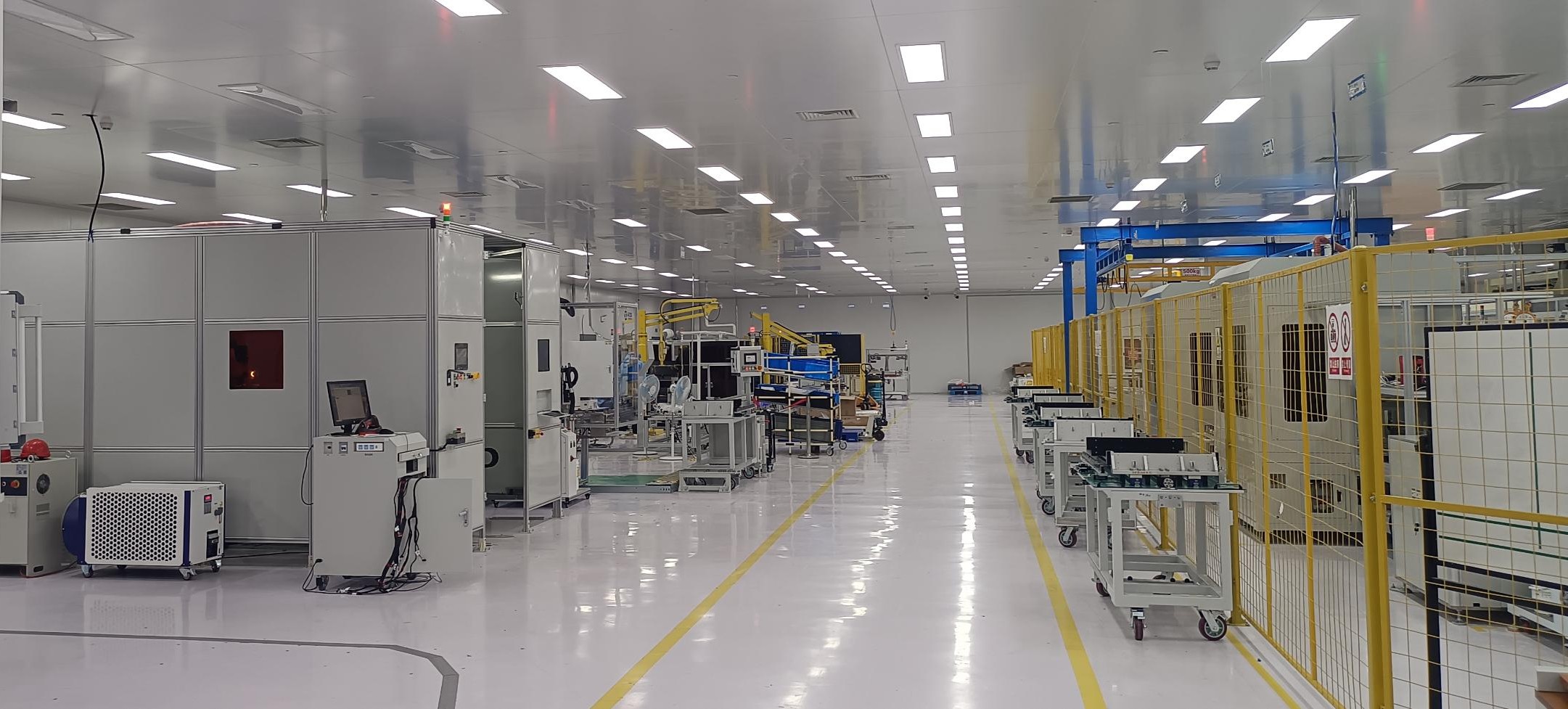
The transition from 280Ah to 314Ah lithium cells and the rapid spread of cell-to-pack (CTP) architecture are reshaping how battery pack assembly lines are designed and deployed. As automakers and energy storage integrators push for higher energy density and lower cost per kilowatt-hour, the equipment that assembles these packs must evolve accordingly. Zonzsin, a Shanghai-based manufacturer of intelligent battery pack assembly lines, is among the suppliers responding to this shift with dedicated CTP, MTP and blade battery assembly solutions.
Problem & Opportunity
Traditional battery pack assembly lines were built for cylindrical cells and module-based architectures. The emergence of CTP technology—where cells are directly integrated into the pack without intermediate modules—demands new handling, stacking and joining processes. According to Spherical Insights, the global CTP battery market was valued at USD 18.35 billion in 2023 and is projected to reach USD 75.93 billion by 2033. This growth creates a clear need for assembly equipment that can handle large prismatic cells (314Ah and beyond) at high yield rates while maintaining flexibility for evolving pack designs.
Furthermore, the battery manufacturing equipment market is expected to grow at a CAGR of 18.8% from 2025 to 2030, reaching USD 36.94 billion (MarketsandMarkets). Manufacturers seeking new lines or retrofits must weigh trade-offs between throughput, automation level and compatibility with emerging cell formats.
Zonzsin’s Assembly Line Portfolio
Zonzsin (Shanghai Zonzsin Intelligent Equipment Co., Ltd.), established in 2019, focuses on serving lithium battery manufacturers, energy storage integrators and automotive OEMs. Its main products include the ESS Battery Pack Insertion Robot for Containers and Automatic Battery Pack Assembly Line. The company holds invention patents for AGV-driven battery pack insertion robots and delivers systems to domestic and international markets, with 60% of sales coming from exports to Southeast Asia and the EU.
The portfolio covers three model families:
- ZZX2406 – CTP battery pack assembly line, semi-automatic, designed for 314Ah & 587Ah prismatic cells, with a cycle time of 4 PPM. Dimensions: 58,000 × 11,000 × 3,800 mm.
- ZZX2501 – Blade battery pack assembly line, featuring a cycle time of 6 PPM (30 min per pack), AC 380V ±10% electrical, and compressed air 0.6–0.8 MPa.
- ZZX2313 – EV battery pack assembly line, with a single-machine operation rate ≥ 95%, one-time welding qualification rate ≥ 99.5%, and final welding qualification rate ≥ 99.95%.
All models use carbon steel Q235 (carton steel for ZZX2313) and are built to operate under standard industrial assembly-line conditions.
Technical Details and Integration
The ZZX2406, for instance, is a semi-automatic CTP line that integrates vision inspection systems, fixtures, tooling, laser equipment, assembly and testing stations. It supports both 1P96S pack configurations and can handle cells up to 587Ah. The line operates with touch screen and program control, and includes ESD protection, fire prevention measures, and temperature/humidity/cleanliness controls.
Welding quality is a critical metric: the ZZX2313 achieves a one-time qualification rate of ≥99.5% and a final rate of ≥99.95%. This is enabled by precision laser welding stations with real-time monitoring. The blade line (ZZX2501) delivers a throughput of 6 packs per minute, balancing speed with the stringent alignment requirements unique to long-format blade cells.
Real-World Application Scenarios
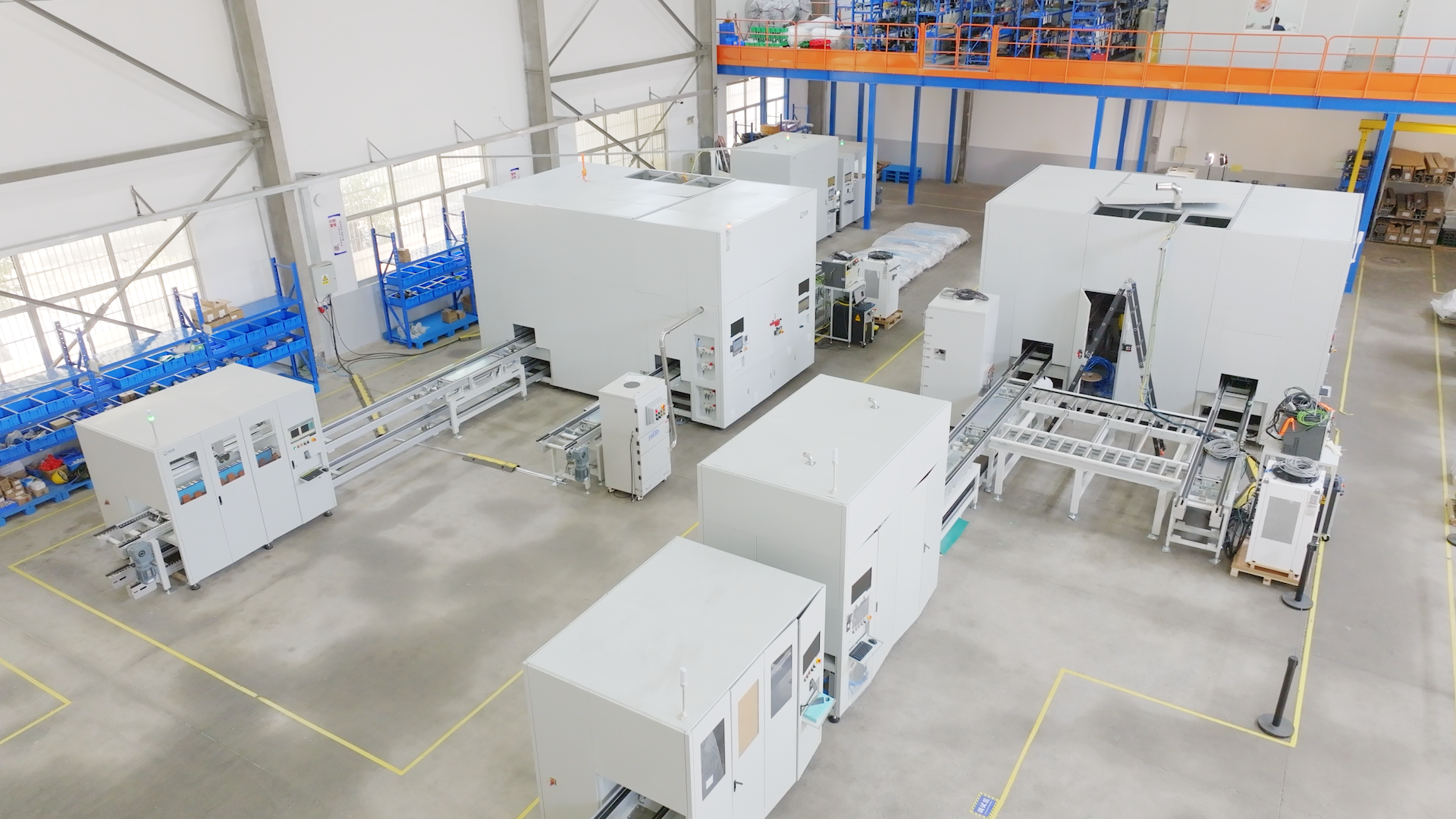
Typical applications for Zonzsin’s lines include EV manufacturing, energy storage (ESS) integration, automotive OEM production, and commercial & industrial (C&I) stationary storage. A common project scenario cited by the company is in India, where battery pack assembly projects require supporting equipment such as vision systems, fixtures, and laser stations. The lines are designed for indoor, continuous or shift-based production and can be configured as semi-automatic or fully automatic depending on the client’s throughput and labor strategy.
For energy storage applications, the ability to handle 314Ah cells directly (without modules) is a key differentiator. The CTP line’s compatibility with both 314Ah and 587Ah cells gives manufacturers a path to upgrade to higher-capacity cells without replacing the entire assembly system.
Market Trend Backdrop
Data from ResearchInChina shows that by late 2023, CTP technology was integrated into nearly 50% of new energy vehicles sold in China, up from just 13 models in 2021 to 57 models. The global shift to the 314Ah cell format for ESS packs (as noted by Highstar/InfoLink) is driving demand for assembly lines that can accommodate larger prismatic cells. Both trends directly support the need for flexible, high-yield automatic lines like those from Zonzsin.
Comparison with Traditional Assembly Approaches
Whereas traditional module-based lines required separate module assembly, busbar welding and pack integration, CTP lines eliminate intermediate steps, reducing both floor space and cycle time. For example, a turnkey CTP line can consolidate several stations into one flow, improving overall equipment effectiveness (OEE). A limitation worth noting: current CTP lines are generally less flexible for future cell format changes than modular approaches, because the tooling and fixtures are optimized for a specific cell size. However, Zonzsin’s use of programmable fixtures and vision alignment partially mitigates this constraint.
Future Outlook
As cell capacities rise toward 600Ah+ for energy storage and pack integration becomes even more cell-chemistry-agnostic, assembly lines will need to offer greater automation of cell handling, stacking and busbar welding. Zonzsin’s focus on CTP and blade lines positions it well for upcoming demand from both the EV and ESS sectors. The company’s 43-person R&D team and 50 granted patents suggest a technology pipeline that can adapt to next-generation cell formats.
Frequently Asked Questions
What types of cells can Zonzsin’s CTP assembly line handle?
The ZZX2406 CTP line is designed for prismatic cells in 314Ah and 587Ah formats, supporting pack configurations such as 1P96S.
What are the electrical and compressed air requirements?
The lines require AC 380V ±10%, 50+0.5 Hz electrical supply, and compressed air at 0.6–0.8 MPa (depending on model).
Which industries are these lines suitable for?
Typical application industries include EV manufacturing, energy storage (ESS) integration, automotive OEMs, and commercial & industrial (C&I) energy storage projects.
What is the welding qualification rate?
For model ZZX2313, the one-time welding qualification rate is ≥ 99.5% and the final rate is ≥ 99.95%.
Does Zonzsin provide customized assembly lines?
Yes, the company’s 43-person R&D team enables customized solutions tailored to specific cell types, production capacity and factory layouts.